Silicon Valley’s has its hoodie-wearing tech entrepreneurs as the poster kids of innovation and fundraising (read our guide on how to raise your first green capital here). You can find a similar story over in Silicon Alley New York (like at AlleyNYC), or in Tel Aviv, Israel. Disruption is the name of the game.
But according to a new study by Thomson Reuters the real source of innovation starts at government. The conclusion of their survey finds that innovators working to create change in this world are more likely to wear suits and hold civil service jobs in Grenoble, Munich or Tokyo than go to Berkeley or MIT.
That’s the conclusion of Reuters’ Top 25 Global Innovators – Government, a list that identifies and ranks the publicly funded institutions doing the most to advance science and technology. Consider that it took a government agency to put a man on the moon, and even in the age of the Internet, governments are still moving science and technology forward. What would medical imaging be without armies and the aerospace industry?
It takes pure research from universities and government bodies to make bold steps in innovation: a limitation that private companies often find it hard to justify and afford. Of course this is changing with Elon Musk, Jeff Bezos and Richard Branson who are working to send people to space and also to Mars.
Consider, though, publicly funded organizations split the atom, invented the Internet, and mapped the human genome.
Government groups with the most innovation
Want to collaborate with the best? European institutions dominate the list, accounting for nine out of 25 ranked institutions, more than any other continent. Asia comes in second with eight institutions. North America might have only seven institutions on the list, but taken on a country-by-country basis, the United States dominates, with six organizations ranked. France and Japan each have four, and Germany has three.
To compile the ranking, the IP & Science division of Thomson Reuters began by identifying more than 500 global organizations – including universities, nonprofit charities, and government-funded institutions – that published the most articles in academic journals.
Then they identified the total number of patents filed by each organization and evaluated each candidate on factors including how many patents it filed, how often those applications were granted, how many patents were filed to global patent offices in addition to local authorities and how often the patents were cited by other patents.
Candidates were also evaluated in terms of the number of articles published by researchers in academic journals, how often those papers were cited by patents and how many articles featured a co-author from industry.
Finally, they trimmed the list so that it only included government-run or funded organizations, and then ranked them based on their performance.
So if you are looking to seed invest in startups, this list might point the way.
The Reuters Top 25 Global Innovators – Government
1. Alternative Energies & Atomic Energy Commission (France)
2. Fraunhofer Society (Germany)
3. Japan Science & Technology Agency (Japan)
4. U.S. Department of Health & Human Services (U.S.)
5. National Center for Scientific Research (France)
6. Korea Institute of Science & Technology (South Korea)
7. National Institute of Advanced Industrial Science and Technology (Japan)
8. U.S. Department of Energy (U.S.)
9. Agency for Science, Technology & Research (Singapore)
10. French Institute of Health & Medical Research (France)
11. Helmholtz Association (Germany)
12. U.S. Department of Veterans Affairs (U.S.)
13. RIKEN (Japan)
14. National Research Council of Canada (Canada)
15. Max Planck Society (Germany)
16. Chinese Academy of Sciences (China)
17. Pasteur Institute International Network (France)
18. National Institute for Materials Science (Japan)
19. United States Navy (U.S.)
20. Commonwealth Scientific & Industrial Research Organisation (Australia)
21. Spanish National Research Council (Spain)
22. Academica Sinica (Taiwan)
23. United States Army (U.S.)
24. National Aeronautics & Space Administration (U.S.)
25. Russian Academy of Sciences (Russian Federation)

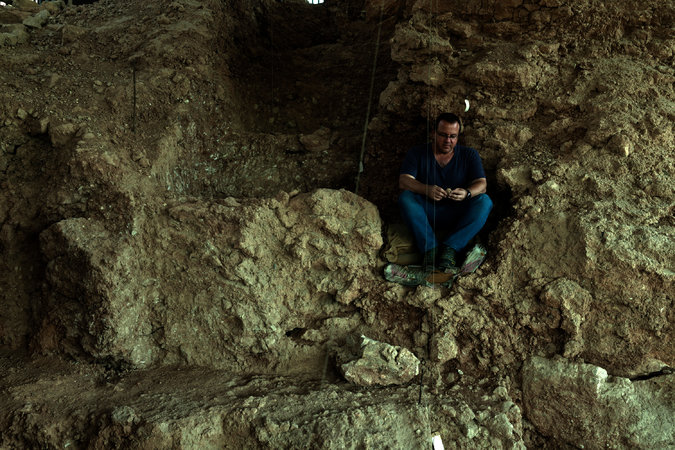
 Just in time for St. Paddy’s Day, scientists from Dublin and Belfast have evidence that stone age Irish settlers had genetic origins in the Middle East. Thank the Vikings for the DNA that gave rise to red hair and freckles, introduced when they invaded the island nation at the end of the eighth century. But dial back 6,000 years, and discover genes for dark eyes and raven tresses that trace to the










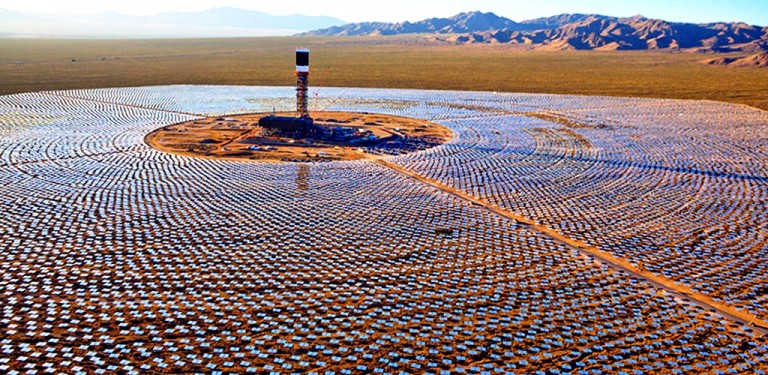
 Morocco has activated the Noor I concentrated solar power (CSP) plant, the first part of a three-phase
  The World Bank predicts that the plant will bring down the industry-wide CSP costs, but the future of the technology is uncertain given rapid price decline in solar photovoltaics (PV). The plant’s cost is around US$6 per watt, whereas utility-scale solar PV projects are coming in below US$2 per watt. The recent bankruptcy of the largest global CSP developer, Spain’s Abengoa, has further undermined interest in future CSP investments. That said, the technology is well-suited for harnessing the desert’s solar energy.
 Unlike PV systems, CSP output doesn’t dip when skies are momentarily overcast, and they do not need battery back-up to store energy for nighttime use. The technology works like this: concentrated sunlight hits the mirrors, which heat fluids in a system-wide pipeline, which create steam that, in turn, drives turbines which produce electricity. The Ouarzazate system uses 39-foot-tall parabolic mirrors to focus energy on that pipeline causing fluids to reach temperatures of 739 degrees Fahrenheit. Surplus heat can be stored in a tank of molten salts for use during nighttime or on overcast days; Noor 1 is designed to keep three hours worth of such storage, which presently is a lower cost alternative to battery storage.
 Sit four people around the dinner table, and at see that least three are tethered to their