
 An octopus at New Zealand’s National Aquarium decided he’s had enough of life in captivity and deftly devised his own escape to the sea. His amazing getaway won Inky the octopus instant fame, and raises new questions about cephalopod intelligence.
“Heavily-armed” octopus escapes from aquarium!

البنك الدولي يتعهد ب16 مليار دولار لمكافحة تغيير المناخ
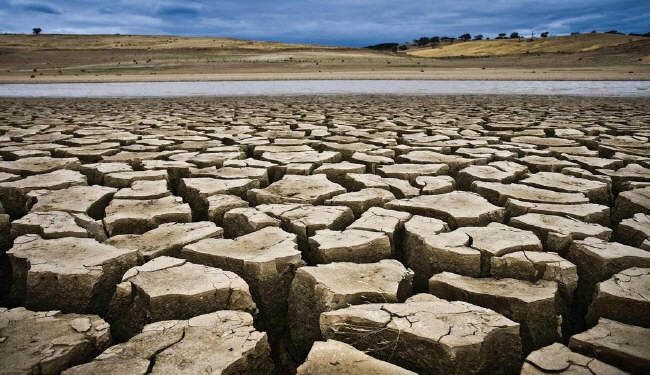
تعهد البنك الدولي بتخصيص حصة قدرها %28 من موازنته المالية لعام 2016 للمشاريع التي من شأنها لجم تغيير المناخ العالمي، ذلك وفقا لبيان صدر مؤخرا عن البنك الذي يعد أكبر ممول للدول النامية. و سيأخذ البنك من الآن فصاعدا التغيير المناخي كعامل أساسي في تحديد المشاريع التي يتبنى تمويلها، حتى تلك التي تعنى بالتعليم و الصحة. و في هذا الصدد، علق مدير شؤون تغيير المناخ بالبنك جون روم قائلا: هذا تغيير جذري في كيفية تعامل البنك مع مشاريعه. شؤون تغيير المناخ أصبحت أساسا في أروقة المؤسسة. و تأتي هذه المبادرة من البنك في ظل تقديرات عن الكوارث البيئية المتوقعة و التي قد تسبب بالدفع بأكثر من 100 مليون شخص إلى الفقر من جراء نقص الأغذية و الجفاف
و كانت قد اتفقت الدول المتقدمة على تمويل قريناتها النامية بملغ قدره 100 مليار دولار في السنة بحلول العام 2020 خلال مؤتمر باريس الأخير في ديسمبر من العام الماضي. و ذكر موقع اتفاقية الأمم المتحدة المبدئية بشأن التغير المناخي أنه بإمكان هذا التمويل أن يكون من مصادر خاصة أو عامة – ثنائية كانت أم متعددة الأطراف
و من جهة أخرى، قال مدير البنك الدولي جيم يونغ كيم: يجب أن نتخذ خطوات جريئة للحفاظ على كوكبنا للأجيال القادمة عقب قرارات مؤتمر باريس الأخير. و يجب علينا أيضا التحرك بسرعة لمساعدة الدول بالقيام بتحولات من شأنها زيادة الطاقة البديلة و تقليل مصادر الطاقة ذات الكربون المرتفع، بالإضافة إلى تنمية أنظمة مواصلات صديقة للبيئة و بناء مدن حيوية و مُستدامة و قادرة على استيعاب النمو السكاني
و قرر البنك الدولي صرف مبلغ 16 مليار دولار سنويا و فورا لملف من مشاريع الحد من تغيير المناخ، و من ضمنها الآتي: مشاريع الطاقة المستدامة لإمداد 150 مليون منزل، مشاريع تفعيل أنظمة إنذار مبكر للكوارث البيئية كالأعاصير و الفياضانات ل100 مليون شخص، مشاريع أنظمة الزراعة الذكية التي من شأنها تقليل استهلاك المياه و الطاقة و المحافظة على خصوبة التربة، و أخيرا مشاريع تنمية بنى تحتية صديقة للبيئة للمواصلات و الحياة المدنية. و تطمح تلك المشاريع باستقدام مبلغ 13 مليار دولار كتمويل من القطاع الخاص بحلول العام 2020
و في هذه الأثناء، لا يزال أكثر من مليار شخص في العالم يعيشون في ظل دمار و عدم مساواة في العديد من الدول النامية. و يهدف البنك الدولي للدفع بالمساعدات العالمية و الدولية في اتجاه العمل على إنهاء شبه تام لحالة الفقر و إرساء المساواة على الأرض. و هاهو الآن يبدأ معركته ضد التغيير في المناخ العالمي
العالم يكسر رقمه القياسي في الحرارة – مجددا
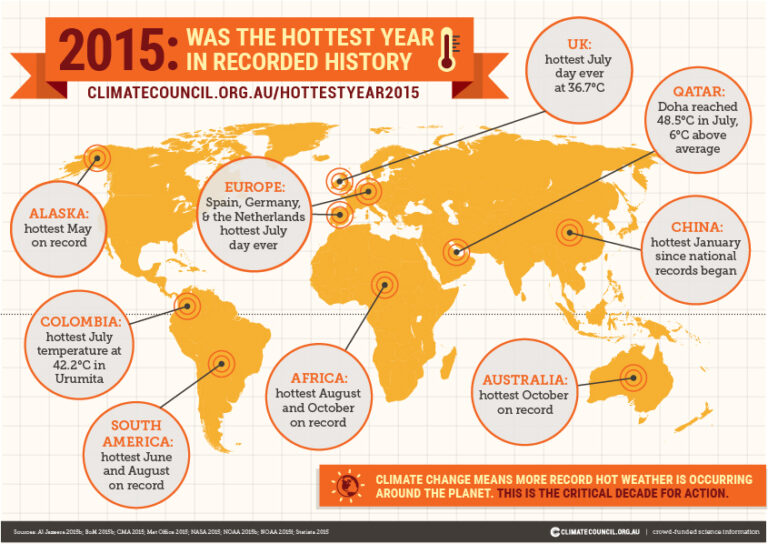
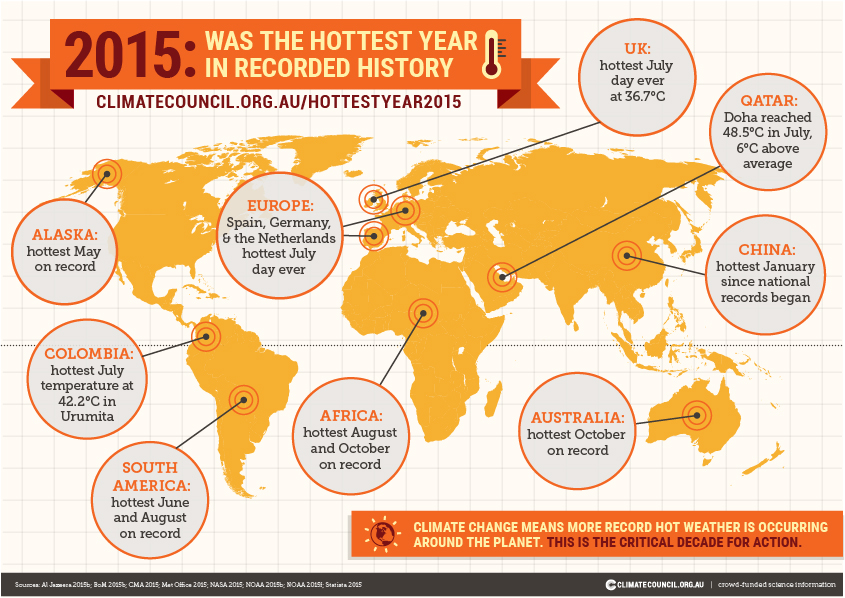
كشف تقرير أعده مجلس المناخ الأسترالي أن معدل درجة حرارة العالمي قد بلغ ذروته لسنة 2015، كاسرا بذلك الرقم القياسي المسجل لعام 2014 بزيادة قدرها 0.16 درجة مئوية، و علما أن سجلات الحرارة العالمية بدأت تُدون منذ العام 1880. و سَجلت تلك الحرارة القياسية 0.9 درجة مئوية زائدة عن المعدل العالمي للقرن العشرين، آخذة بذلك الاعتبار لنزعة حرارية متواصلة الارتفاع منذ العام 1970 حتى أواخر القرن الماضي
و تغطي هذه النزعة الحرارية مناطق مختلفة على الخريطة العالمية بما فيها الشرق الأوسط و شمال أفريقيا، اللذان يُعدان من المناطق الأكثر عُرضة للخطر البيئي. وقد اتضح هذا الخطر في يوليو الماضي عندما تَسبب مرتفع جوي اجتاح المنطقة لخلق قبة حرارية كانت قد خيمت فوق جنوب العراق و مناطق من إيران، مسببة بدورها درجات حرارة و نسب رطوبة غير مسبوقة في تلك الأماكن الحارة أصلا. ففي مدينة السماوة العراقية على سبيل المثال، بلغت درجة الحرارة المعلنة 48.5 درجة مئوية، بالإضافة إلى درجة تكثف بقيمة 29.5 مئوية – مما يجعل ناتج الحرارة المحسوسة عن طريق جلد الإنسان تبلغ 71 درجة مئوية. أما في البحرين، بلغت تلك الحرارة المحسوسة 53 درجة مئوية
هذا التغيير في المناخ العالمي و ارتفاع معدلات الحرارة هو نتيجة طبيعية للارتفاع الكبير في كمية الغازات الدفيئة المنبعثة إلى المجال الجوي من قبل الصناعات المعتمدة على حرق النفط و الغاز و الفحم، و من المتوقع أن تزداد الأمور سوءا إن لم يتم العمل على خفض تلك الغازات الضارة. و في هذا الصدد، اتفقت 195 دولة في مؤتمر باريس للمناخ في ديسمبر الماضي على برامج شبه ملزمة قانونيا تهدف إلى تفعيل تغييرات من شأنها الحد من ارتفاع معدل الحرارة العالمي بنسبة درجتين مئويتين حتى نهاية القرن الحالي
لتحميل تقرير مجلس المناخ الأسترالي اضغط هنا
مصدر الصورة: Climate Council of Australia, Ltd.
Lions on the loose – the cost of humans on animal habitats

Human-caused damage to the earth’s natural environment has resulted in a number of serious ecological problems, including global warming and rising sea levels. Human encroachment on natural habitats have been a serious factor in world habitat destruction, especially in the Middle East.
Africa’s natural habitats, particularly wildlife habitats, have been decimated in recent years by human encroachment, poaching, and other human caused activities which could eventually result in many animal species becoming extinct in the wild.
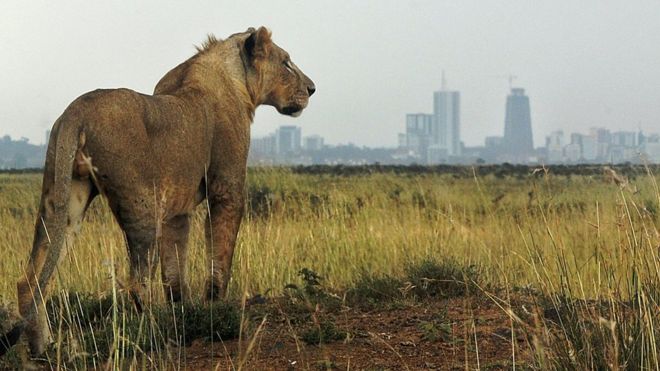
A prime example of human encroachment is occurring in Kenya, where human development activities are threatening natural habitats of many animal species, including lions. A recent incident involving lions that escaped from the Kenya National Park near the capital Nairobi, resulted in an elderly man being attacked and the lion shot dead by police.
According to a story on the BBC and other news sources, lions have been leaving the national park and coming into populated areas near Nairobi to search for food. The main reason for this happening is being attributed to human infringement on the natural habitat of the lions, resulting in it being more difficult for the lions to find enough animals they depend on for food. Lions and other large African carnivores, like cheetahs and leopards, depend on plains animals like wildebeests, zebras and various species of antelopes as prey. When their natural habitat is made smaller by farming and construction projects, carnivores like lions have more problems in finding food.
This problem is known all too well in the Middle East, where natural animal habitats have been disappearing at an alarming rate. Species like lions disappeared in countries like Jordan, Iran and Israel well over 100 years ago. Other carnivores such as leopards are highly endangered and on the verge of extinction in Israel, Jordan, Oman and other Middle Eastern countries.
As for Africa, continuing human encroachment on natural animal habitats will result in more incidents of lions and other large carnivores paying “visits” to human populated areas.
Read more on human destruction of natural habitats:
It’s not the tide. It’s not the wind. It’s us
Despite ruinous bridge, Saudi and Egypt vow to Protect the sea
Amazing “Atlas” tracks Arab world habitat destruction over time (video)
Emirati Royalty Threaten 48,000 Maasai in Lucrative Hunting Deal
Photo of lion near Nairobi Kenya by the BBC/AFP
Take a time machine through culture to understand climate change

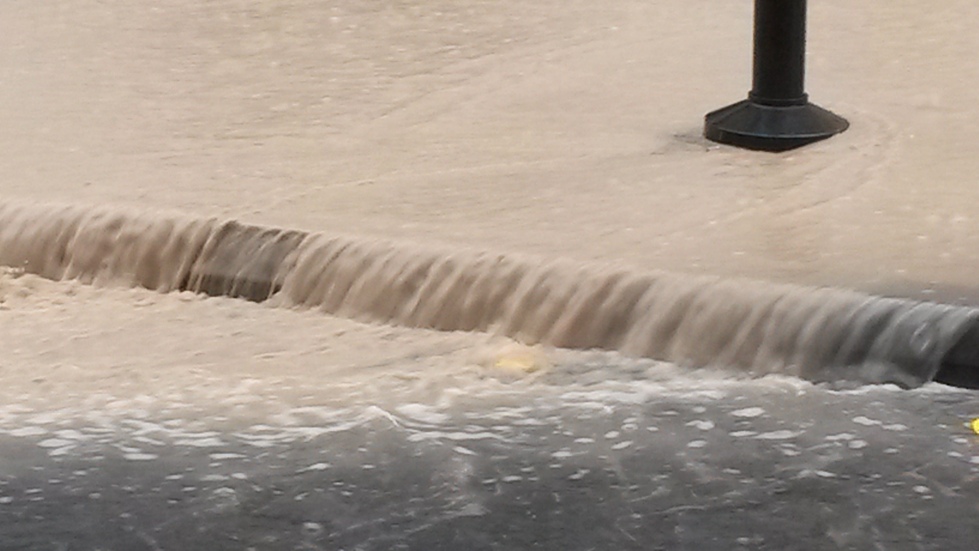
This past March Abu Dhabi city has witnessed its most intense rain storm in recent memory. Storms usually do not make it to Arabian cities on the Gulf; they jump on summer monsoon winds from the Indian Ocean only to break on unfortunate shores of Oman. I happened to spend my teens in Abu Dhabi, and the scenes of destruction (albeit mild) in the aftermath is a novelty. From my experiential frame of reference, climate has changed.
How did we end up with this current state of affairs? Here’s one take on the original sin when it comes to the global environmental crisis. First, we need to switch on the time machine.
The environmental crisis started to become present in the consciousness of the West (Europe & North America) only in the 1960’s, once the works of 19th century European philosophies realized themselves on the physical, global stage. Capitalism was bound to create wealth, and Marxism emerged as a proposed solution to the distribution problem created by the former.
At the core of both doctrines, however, lies one god: material progress; for its sake which the natural world was sacrificed remorselessly by its worshipers. The god of material progress entailed massive industrialization by the European powers of the 18th & 19th centuries, which made available the technology and arms to embark on colonization sprees around the globe. Suddenly, the movers and shakers of Europe ruled over new worlds with infinite natural and human resources.
The wealth and land amassed gave the European powers a sense of complete independence from both Heaven and Earth. This philosophical revolution in the minds of Europeans had its roots in the Renaissance of the 16th & 17th centuries, during which the totality of Christianity started to weaken (in southern Europe at least), and the conception of man and his role in the universe was questioned.
All civilizations express themselves by means of arts that contain components of both the infinite and the absolute, and during the Renaissance period in Europe, Christian mysticism (representing the infinite) was relegated by more anthropomorphic art (the absolute).
It’s not a coincidence that Michelangelo’s sculptures, an icon of Renaissance art, were as concrete and absolutist as it gets. The sense of loss of the -heavenly- infinite in the psyche of Renaissance Europe was reflected in the continent’s expedition to rediscover it on earth during the scientific and industrial revolutions of the next couple of centuries.

- Michelangelo’s Pietà, St Peter’s Basilica
One might ask, what about the colonized?
Throughout the centuries, indigenous peoples of the Americas, India, Africa, the Middle East, Asia and Australia, did not lose their sense of limited terrestrial existence, and hence kept their human yearning to the infinite to the vertical, heavenly realm. Buddhism, Hinduism, Shintoism, Islam, Zoroastrianism, Judaism, African traditional religions, Mesoamerican religions, along with more localized traditional religions; all insisted on the sacredness of the natural world and limited its exploitation by their subscribers.
This explains the reason behind resisting heavy industrialization in these nations, or at least the absence of a scientific/industrial revolution à la 17th century Europe, and that’s despite the presence of prerequisite scientific thought and availability of raw materials (higher mathematics in Muslim Persia and gun powder in China, for corresponding examples).
These nations, however, had to eventually succumb to the colonizers’ ways to fight fire with fire and create the wealth needed to sustain this expensive route. The natural world became fully and justifiably exploitable in the minds of the (historically environmentally-prudent) colonized. Only then, heavy industrialization crept through non-Western nations throughout the 19th & 20th centuries: chemicals in India, fossilized energy in the Middle East, mining in Africa, forestry in South America, military industries in Japan, and manufacturing in China; the latter which became the poster child for everything wrong with unchecked heavy industrialization when it comes to the environment.
One figure, though, was the canary in the coal mine during that period: Ghandi; who believed India’s salvation lies in reviving the nation’s crafts as opposed to emulating the West. He encouraged Indians to wear what they weaved and put economic pressure on England, which was getting its cotton and yearn for next-to-nothing from India and selling it globally (including to India itself) for huge profit margins. Ghandi’s economic efforts didn’t stand against the English titanic industrial machine, of course, but his thought of non-violently challenging the status-quo outlived him and inspired countless human and environmental rights movements globally; most notably that of Martin Luther King, Jr. in the United States.
So, how did India do, environmentally speaking, as it surrendered to heavy industrialization? A paper published in the Journal of Indian Geophysical Union (July 2005) titled “Extreme Weather Events over India in the last 100 years” studied climatic extremes as defined by (i) Cold wave, Fog, Snow storms and Avalanches; (ii) Hailstorm, Thunderstorm and Dust storms; (iii) Heat wave; (iv) Tropical cyclones and Tidal waves; (v) Floods, Heavy rain and Landslides; and (vi) Droughts, concludes that “losses due to extreme events are increasing steeply specially in the last decade of the twentieth century…the global loss of US $ 50-100 billion annually are caused due to these natural hazards together with the loss of life is about 2,50,000.
However, these increased losses may be either due to a real increase in the frequency of the extreme weather events or due to increased vulnerability of cities, towns and the associated infrastructure and installations which have grown rapidly to meet the needs of a growing population.”
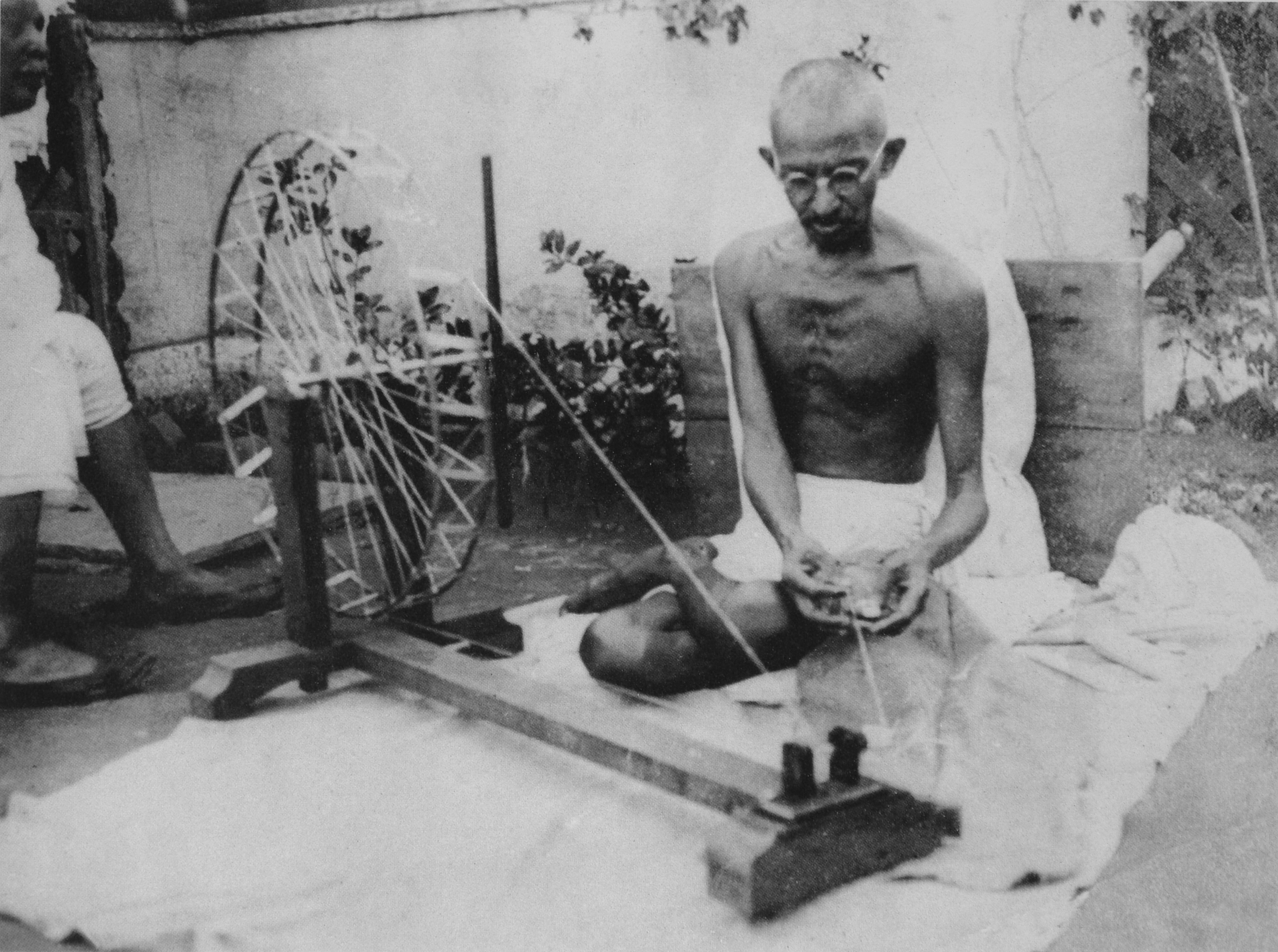
- Mahatma Gandhi spinning yarn
Back to the Future
The emergence of green parties in the 1970’s in Europe, followed by the rest of the world, was a logical political expression to what seemed socio-economic phenomena and their impact on the natural world. They advocated ecological wisdom, social justice, and non-violence, but didn’t always practice what they preached; for example, the German Green Party remained in a coalition and supported Chancellor Gerhard Schröder’s government in the 2001 war on Afghanistan.
Although green parties have had variable success in their electoral performance in Europe, they remain perceived as parties of protest in the US, UK, Canada, and Australia, vis-à-vis more traditional parties on both sides of the political spectrum. International cooperative efforts, on the other hand, hadn’t prove to be effective (yet) in combating climate change.
Twenty years after the birth of United Nations Framework Convention on Climate Change (UNFCCC), signatories of the Treaty seem to have failed in achieving their targeted emission reductions. Most recently, the 21st Conference of the Parties (COP21) held in Paris has failed to put forth binding fine print to the Treaty’s sections, in effect, surrendering to realpolitik and the corporate bottom line.
What is it that must be done?
Many intellectuals have written or lectured on the roots of the environmental crisis and what must be done to reclaim the lost balance. Seyyed Hossein Nasr, Lynn White, Andrew Weaver, Naomi Klein, David Suzuki, and Chris Hedges come to mind in North America. Each has tackled the issue from a different angle; be it political, scientific, activist, or behavioral, but all agreed that more technology is not the magic bullet that will save humanity from the wrath of nature. Eventually, the price that should be paid is death and rebirth: to fundamentally change the way we look at the world and our place in it. It is adopting St. Francis of Assisi’s belief that it is man’s duty to protect and enjoy nature as the steward of God’s creation; to live in a democracy of creation in which all creatures are respected.
This state of harmony with the exterior, however, cannot be achieved without creating a sense of interiority within man. Detachment from the material, and growth in the domain of the vertical, immaterial is an extremely difficult task, especially in a world awash with electronic hallucinations. Sporadic meditation doesn’t help either. Inner equilibrium requires decades-long and meaningful discipline in which meditation is only ancillary.
Once inner equilibrium is established within man, it can only then radiate to the exterior. Of course, not everyone in the West (or anywhere, for that matter) is expected to become a Zen master. But since the West has been setting the trends on the global stage for the past several millennia, it is imperative in the eyes of its sages to revive forgotten knowledge of Western spirituality and traditions within its populations if they are to resolve the questions of the environment.
Abu Dhabi city might have witnessed its most severe storm in recent times, but, unfortunately, the worst is yet to come. The city is expected to become a ghost town in a matter of few decades if climate change remains unchecked.
World Bank pledges $16B to climate change projects
The World Bank, the biggest provider of public finance to developing countries is not gambling on our future! It has just earmarked 28% of its 2016 budget for projects that mitigate climate change, according to a statement released on Thursday. All of its future spending will take global warming into account, and all projects considered for WBG funding, including health and education, will now be screened for climate change resiliency. Refocusing investment towards green initiatives represents a significant adjustment to its overarching mandate to reduce global poverty.
John Roome, World Bank senior director for climate change, said in a statement, “This is a fundamental shift for the World Bank. We are putting climate change into our DNA.”
Climate related disasters such as food insecurity and drought could to push another 100 million people into poverty within the next 15 years.
Last December, the Paris Conference of Parties (aka COP 21), agreed that wealthy nations would fund developing countries involved in the pact with $100 billion USD per year by 2020. The United Nations Framework Convention on Climate Change website states that funding could come from bilateral or multilateral, public or private sources, including creative financing (such as France’s contribution to the financial transaction tax). Public financing was equally flexible, and could take the form of multilateral funds such as the Green Climate Fund; regional institutions such as the World Bank; and government contributions.
“Following the Paris climate agreement, we must now take bold action to protect our planet for future generations,” said Jim Yong Kim, World Bank Group (WBG) president. “We are moving urgently to help countries make major transitions to increase sources of renewable energy, decrease high-carbon energy sources, develop green transport systems and build sustainable, livable cities for growing urban populations. Developing countries want our help to implement their national climate plans, and we’ll do all we can to help them.”
Beginning immediately, WBG will give at least $16 billion USD annually to be spent on a portfolio of climate change projects including renewable energy development to power 150 million homes; construction of early warning systems for climate-related disasters – think extreme storms and floods – for 100 million people; “smart” agriculture systems, which use less water and energy and keep soil fertility; development of transport and urban infrastructure that produce less carbon. It also aims to mobilize an extra $13 billion from private sector contributions by 2020.
More than 1 billion people still live in destitution. At the same time, inequality is rising in many developing nations. The World Bank works to galvanize international and national support around two goals: to almost end extreme poverty in a generation and to push for greater equity. Welcome them now to the fight against climate change.
Scientists discover bacteria’s natural sunscreen


‘Everything in moderation’ is good advice, especially when it comes to sunshine. Humans know this, especially in the Middle East, mastering all means of shading devices, and protective clothing. But what if you are an organism without access to sunscreen? Two scientists at Israel’s oldest university have discovered how bacteria protect themselves from overexposure.
Watch a Green Prophet become a lean, green, health machine…or die of internet embarrassment!

 The weeks that girdled Christmas and New Year’s had me living like a fois gras goose, endlessly stuffed with food and drink as my family raced from Jordan to England to the US for clan-centric rituals ranging from a funeral to a birthday, with the usual winter holidays in between. I recently scanned the snapshots, and there it was before my eyes (and under my chins, and around my was-once-there waist. I am fat.
Iraqi-born architect Zaha Hadid dead at 65

 Zaha Hadid, the first female architect (and first Muslim) to win the prestigious Pritzker Prize, died yesterday in a Miami hospital after suffering a heart attack while being treated for bronchitis. The Iraqi-born mathematician and architect whose designs were both celebrated and divisive, was 65 years old.
When it comes to water cooperation, where is the Middle East?
 United Nations-sponsored World Water Day was celebrated this week in a series of events around the world ranging from races to speeches to demonstrations of how individuals could conserve consumption of this most-critical of natural resources. To mark the occasion, two experts in international water policy have co-authored an Op-Ed exploring the future of water, not only as a critical resource for all life, but as a tool in achieving Middle East Peace.
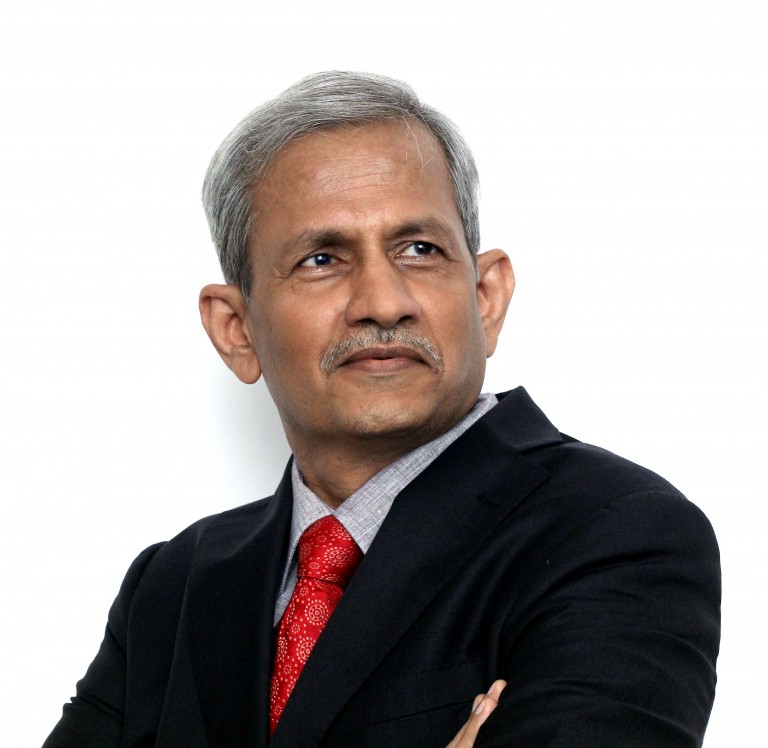
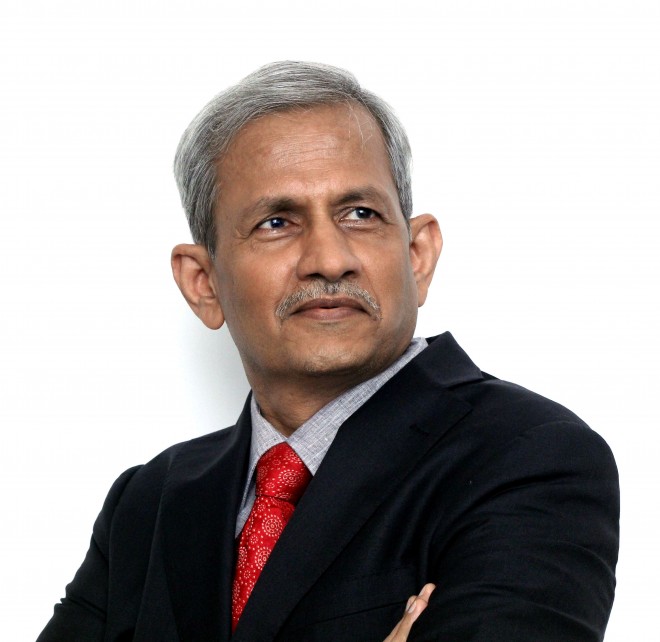
The following editorial is from Dr. Sundeep Waslekar, president of international think tank Strategic Foresight Group, and Dr. Danilo Turk, former President of Slovenia, current Chair of the Global High-Level Panel on Water and Peace, and a nominee for next UN Secretary-General after Ban Ki Moon.
 Since last September when the United Nations declared water as a sustainable development goal, a number of countries have intensified efforts to promote water cooperation with their neighboring countries. The Middle East is missing in this action.
For decades, Iraq, Syria and Turkey negotiated treaties for cooperating on the Euphrates and Tigris Rivers without reaching any conclusion. The failure of the states to find a settlement has resulted in an advantage for the non-state actors, particularly Daesh. The violent extremist groups in the region now control some of the dams, pipelines, storage tanks and monitoring stations. They use water as a weapon to force people to surrender to their wishes. This state of affairs has made it impossible to maintain the Mosul dam in the Northern Iraq. Several experts have warned about the risk of imminent collapse of the dam which could drown and kill half a million people in a few hours.
The Middle East is caught up in a cascade of catastrophes. There are no easy solutions. The only way out is for all countries to accept big compromises and to negotiate a comprehensive peace agreement with water cooperation prominently included in it.
Water issues usually form an important part of peace agreements. In 2015, we commemorated the bicentennial of the Congress of Vienna, which established the regime for the river Rhine and the Central Commission for the Navigation of the Rhine. This year marks 160 years since the Paris Peace Treaty establishing the first Commission on the Danube. Both commissions exist today in their modernized forms and are among the elements of European stability.
In constructing the post-Cold War Europe, water played an important part. Slovenia subscribes to the Danube Protection Agreement and is a depository state of the Sava River Agreement. The latter is the first multilateral issue oriented agreement in South East Europe concluded after the Dayton Peace Agreement which stopped the war in Bosnia. There is a close relationship between regional peace and water cooperation.
A similar pattern of relationship between water and peace was established in Central America. As soon as the Central American Peace Plan was successfully negotiated by the Costa Rican President Oscar Arias in the 1980s, it was followed by a set of regional water cooperation agreements.
The relationship between water and peace is not only a matter of post-conflict arrangements. Water management is an important instrument for the prevention of conflict. The establishment in 2010 of the Commission on the Administration of the River Uruguay, following the peaceful resolution of a bitter dispute between Argentina and Uruguay, is an example of the political necessity of administrating environmental matters in an effective and preventive manner.
Moreover, there exist other initiatives, far ahead those known in Europe, that lay down the foundations for long-term regional cooperation and stability. The Mekong River Commission is one of them. So far it excluded China from its fold. Last November, Chinese foreign minister, Wang Yi, announced the establishment of Lacang Mekong cooperation mechanism to foster cooperation on the Mekong River between China and her Southeast Asian neighbors.
The countries in the Nile River Basin are also giving up their old rivalry in favor of joint management of their water. Exactly a year ago, the Presidents of Ethiopia, Egypt and Sudan met in Khartoum to agree on joint planning of the Great Ethiopian Renaissance Dam.
The Senegal River Basin Organization is probably the most far reaching arrangement today. The Organization manages the water assets in Mali, Senegal, Mauritania and Guinea as a “regional common”, transcending national interests. Inspired by the Senegal River Basin Organisation, the basin organisations in Congo and Gambia rivers are expected to intensify their cooperation this year.
When governments not only in Europe and North America but also in Africa, Asia and Latin America can nurture trans-boundary cooperation, what is holding the Middle East back?
The discussion in the Middle East is characterized by the fears of potential losses resulting from regional cooperation. The countries in other parts of the world focus on potential benefits. It is about choice between the psychology of benefits and the psychology of losses.
Last November, 15 countries came together to co- convene the Global High Level Panel on Water and Peace. This provides an opportunity for the leaders of the Middle East to engage in order to draw lessons from the successful examples of cooperation in other parts of the world and craft their own future. The risk of the likely breakdown of the Mosul dam indicates that it is no longer about merely the collapse of the states. It is about the survival of large segments of population. The choice is between compromise and catastrophe, between dignity and death, and the region does not have much time left to make the obvious choice.
Images of Dr. Sundeep Waslekar and Dr. Danilo Turk courtesy of Strategic Foresight Group
Shipping containers morph into urban food miracle machines
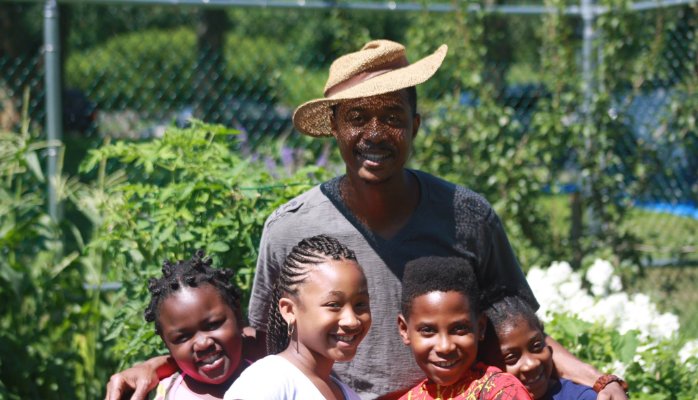
Leigh Ofer and her company Seed Street in Harlem gives new meaning to the term circular economy:
We meet over the Internet and find a mutual passion for urban farming in New York City –– we’re kindred souls who see cities as our future food production engines. I am interested in technology for improving urban food and social welfare. She’s interested in kids and education and how fresh, hyper-local food produced in the right framework can grow bodies, minds and spirits.
Ofer, 26,  is an international citizen of the world. She was born in Hong Kong and grew up in Singapore, Switzerland, New York, and Tel Aviv.
She is devoted to her mission of creating better access to healthy food and improving food and health education through the shipping container farms she is building at Seed Street.
Starting at the Children’s Aid Society in Harlem, where the flagship farm is installed, the youth’s lives she touches are people who grow up in food deserts –– with virtually no access to fresh food. Forget about organic.
DJ Hannah Bronfman (pictured below), a young NYC lifestyle and fitness icon and DJ, is Ofer’s partner ad co-founder at Seed Street.
The aim is to show kids how to grow their own food in the middle of the city using hydroponics and vertical farming, with the aim of replicating what they do at the Children’s Aid Society in Harlem to every single city in the United States and beyond.
While Harlem appears to be well beyond the violence and tough inner-city life portrayed on television and films, there are still big social problems there: lack of access to fresh, local food, and how lack of education on food affects more than just expanding waistlines and insane rates of obesity.

Ofer and Bronfman are building the stage to make big changes in the United States which is battling rising obesity rates, and struggling to get more kids interested in STEM – science, technology, engineering and math. For both of woman, growing food in shipping containers is the answer to helping youth get involved in their own food destinies.
On one level the kids are starting to engage food directly by growing it in upcycled shipping containers.
The beauty of the shipping crates is that when insulated they can provide possibilities for low-cost year-round climate control. Meaning: you can grow organic tomatoes and strawberries in the middle of a Manhattan winter. Seed Street shows kids how to be self-sufficient. No weeding and no pesticides required. When done right an acre of food can be grown in a shipping container.
The two women are also turning to their other passions, Ofer in art, and Bronfman in fitness and beauty education. Bronfman creates community and speaks to young women through her personal site HBFIT.
A number of American companies are taking shipping containers (like Freight Farms or Podponics), outfitting them with sensors and software and turning them into franchised businesses that grow food.

Or like Ofer, turning them into non-profit green machines that help grow more health-conscious human beings.
Using shipping crates as farms in an elegant story for Ofer whose family owns ZIM, one of the world’s largest shipping businesses. Her family’s empire extends to other diverse businesses such as semi-conductors. It’s a noble business for her to take on urban farming so passionately, but if we look at surveys done by organizations like the National Gardening Association, it is exactly people in her age bracket that are now gardening for food faster than any other group in the United States.
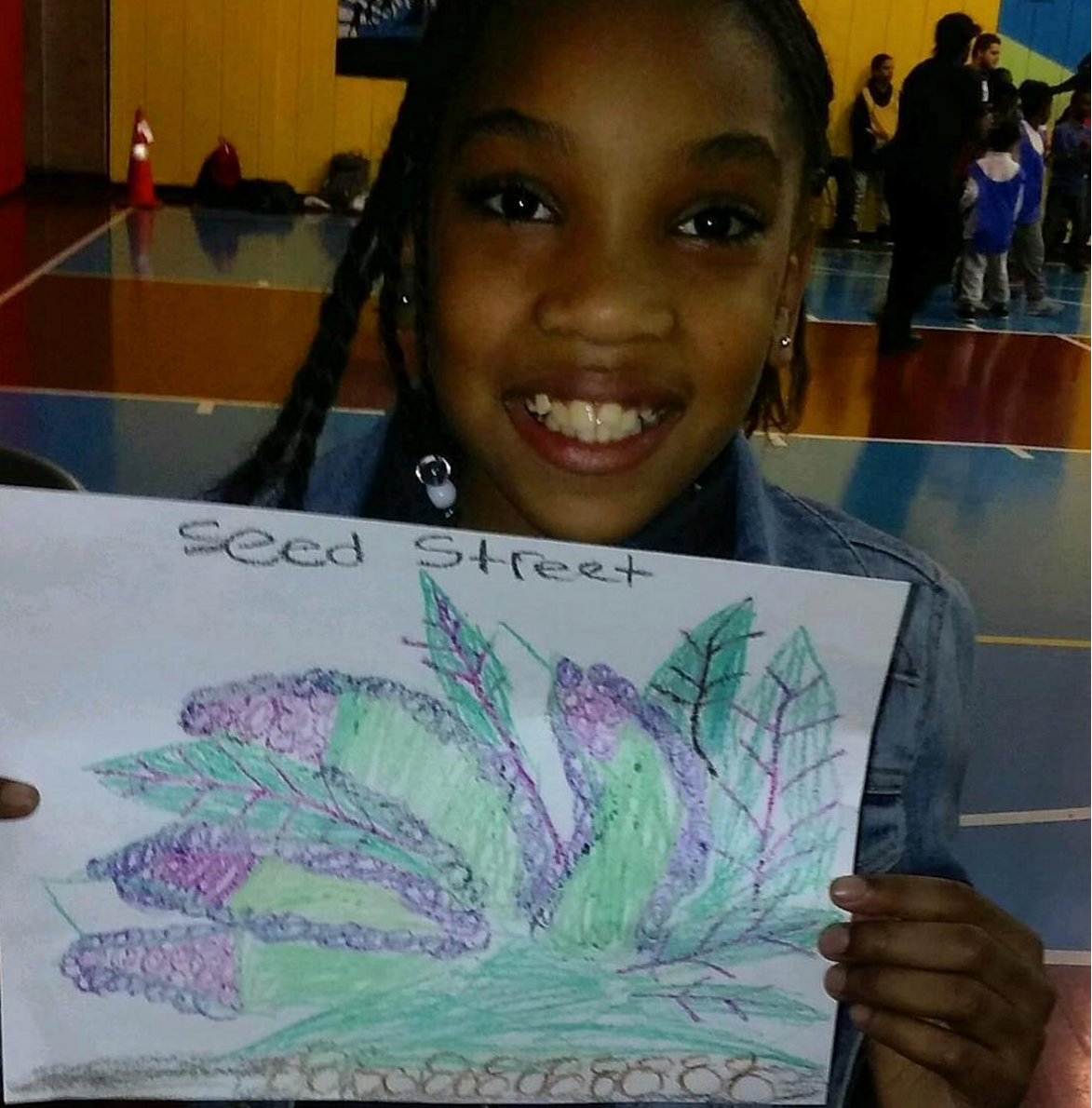
I visit the first roots of her vision in Harlem where an eloquent and passionate Farmer Randy Cameron (below), the Head Farmer in charge, is putting the paint on the first shipping crate farming. He’s setting up the various hydroponic systems and is nurturing some seedlings. Randy used to farm in the Bronx using a kind of hydroponics called aquaponics), or water based medium to grow food that includes fish in the tank. He’s seen violence; he’s seen massive societal problems in the Bronx. He saw a kid die in his mother’s arms. He believes that getting kids into food gets them out of trouble. Showing them how to grow food is his mission.

One seedling at a time Seed Street is working to fix the broken way that kids grow up in marginalized communities. I’ve met mothers farming in Harlem who have told me that their kids once ate chocolate bars for breakfast, and now they want fresh mustard greens picked from the source in their hydroponic garden.
There is a lot of wisdom in teaching the simple things in life to kids who live in cities: How a root sprouts, how and why a small green of leaf stretches for light, and how good things that go inside of our bodies make us better, more productive human beings.
At a later date Ofer and I get a chance to take a walk along the Highline Park in Manhattan. We chat about her life and how it connects to Israel, where she completed army service. About how she can take a legacy from her family business, the old shipping containers, and up-cycle them into something with a deeper meaning.
She’s hasn’t yet used a ZIM container for a farm, but that’s the future dream she’ll take to the family.
At the end of the park and down the elevators we say our goodbyes, but not before popping into an art gallery on the corner. Ofer likes art. She’s stopped at a couple places from where we started. And at this last stop I see her lingering: she spots some prints of a shipping yard that she might like to buy.
Saudi economy trashed by cheap oil
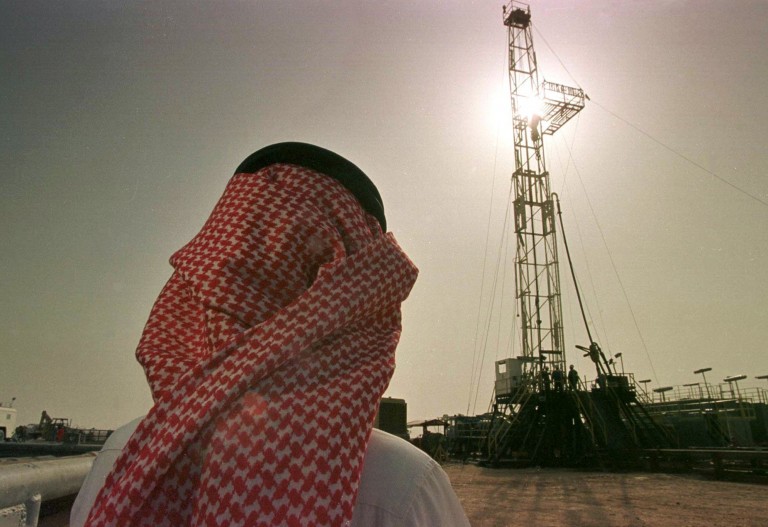

Despite the forecast of dire effects of global warming in the Middle East, oil producing countries like Saudi Arabia have continued to keep oil production at high levels. Located in one of hottest regions on earth, the Arabian Peninsula, Saudi Arabia has also expressed high interest in building nuclear power plants, despite being a country rich in solar energy potential.
The present specter of falling oil prices is adding a new harsh reality to a country that depends on oil production for nearly its entire economy. Crashing oil prices are hurting this desert kingdom tremendously. The headlines in a February article in Britain’s Sunday Express newspaper appears to say it all: Welcome to AUSTERITY, Saudi Arabia: Crashing oil prices sends economy into meltdown.
On record for years as being the world’s largest oil producer, the Kingdom of Saudi Arabia is now rapidly using monetary reserves to finance the wasteful lifestyles of its extended royal family. With oil prices presenty hovering at around $34 a barrel (see chart), Saudi Arabia will soon be unable to finance the various subsidies given to its citizens for education, energy, health care, and water allocations. Subsidies included free or dirt cheap gas.
Water resorces, almost entirely coming from giant desalination plants, are not only very costly for the Kingdom, but evironmentally damaging as well. Low oil prices will make it more difficult for Saudi Arabia to embark on plans to have as much as a third of its own energy needs met in twenty years by using solar energy. The use of solar energy to create electric power has been planned for years in the Kingdom; with a $109 Billion solar energy plan announced in the Spring of 2012. What happened there?
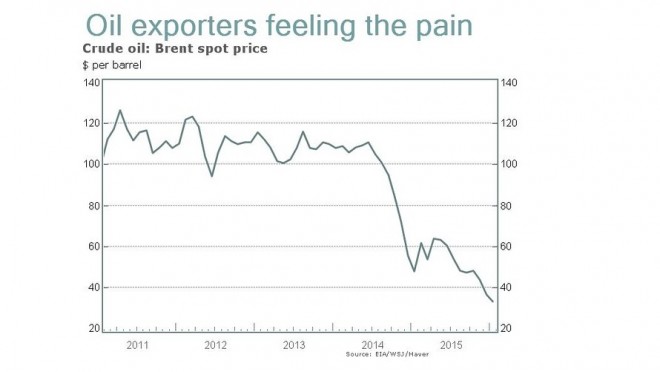
Low oil prices will force the Kingdom introduce massive austerity programs. These include reduction or cancellation of previously mentioned subsidies, drastic scale-backs of construction and infrastructure programs; and certain, painful belt-tightening in the Saudi royal family itself.
Without sufficient oil revenues to keep its economy afloat, there simply are not other means to provide needed foreign currency to keep the country going. Even sand, once another income source for the Kingdom, due to its use in the construction industry, is less available now.
In adddtion to Saudi Arabia, other oil income-dependent countries, including Russia, Azerbaijan, Venezuela, and the United Arab Emirates are also suffering economically from low oil prices. The situation is not forcasted to improve in the near future. Masood Ahmed, head of the Middle East department for the Sunday Express, was quoted in regards to the Saudi economy: “This (oil price collapse) will have to be part of a multi-year adjustment process.”
We hope it doesn’t end in conflict, an all too common story here in the Middle East.
Read more on oil:
Saudi Arabia dumps oil in time for U.S. election season
Solar rich Saudis running after nukes
The wrath of global warming and the Middle East
Saudi Arabia’s Desalinaton Market a $50 Billion opportunity
Photo of Saudi Oil Well by Green Tech Media
Shining a light on #EarthHour2016
Earth Hour is upon us. It comes every year on Saturday 19 March, as the clock strikes 8:30 PM around the globe. It’s a worldwide movement that aims to unite the global community on a broad range of environmental issues, working on a grassroots level to enact mass behavioral change. Join the fun by turning off non-essential lights for one hour as a symbol for your commitment to the planet.
Heavily polluted Israeli stream cuts beach in half
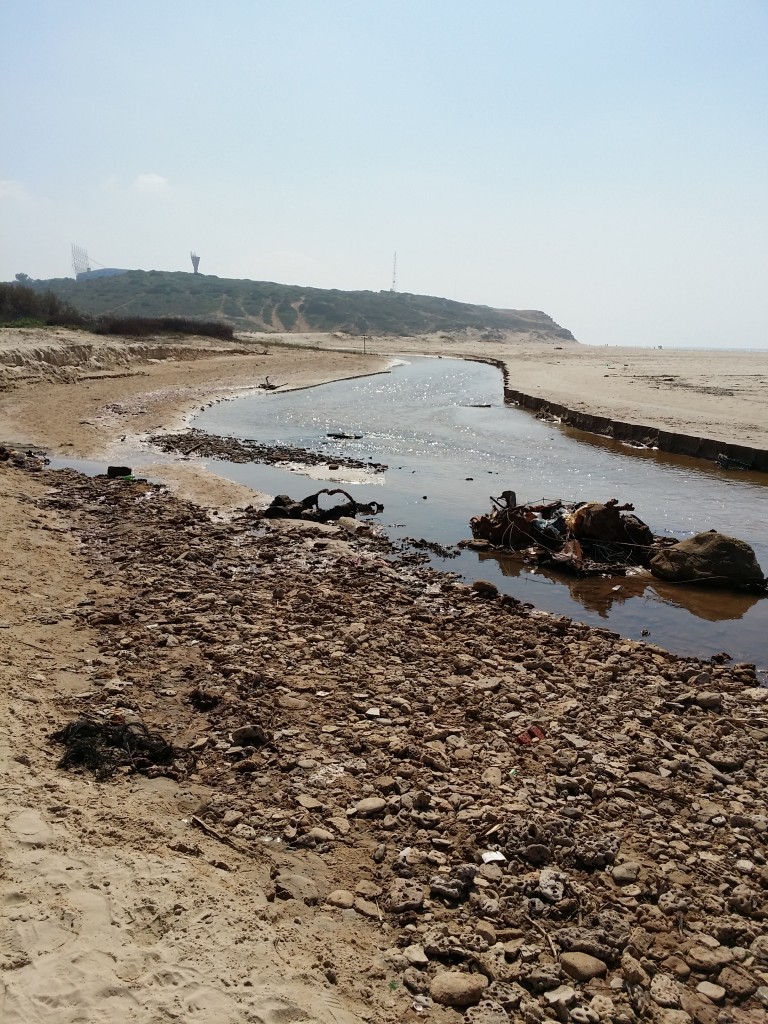
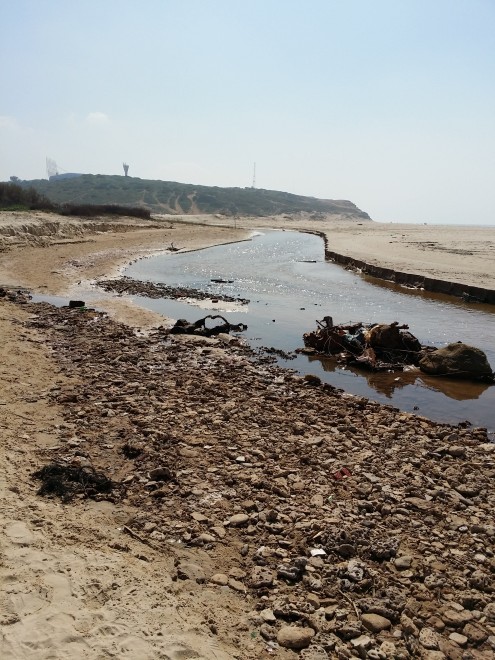
The world’s increasingly polluted seas and oceans, as well as rising sea levels, are now becoming a sad reality as Mankind’s contribution is becoming increasingly evident. Whether this causes massive fish die-offs, or other ecological catastrophes like toxic coast pollution, more and more of the world’s environmental problems are being linked to human caused abuse of natural resources.
Israel’s long Mediterranean beachfront, stretching from Gaza all the way to Lebanon, is no exception to this sad fact. A number of heavily polluted streams empty from Israel into the Eastern Mediterrnean, adding to the sea’s already increasing pollution.
One of these streams, the Poleg Stream, now empties into the sea just meters from one of the city of Netanya’s most prestigious beachfronts, Poleg Beach. Until recently this steam, which originates in the hills of the West Bank and meanders through the country’s Sharon region, emptied south of the main Poleg beachfront; or virtually disappeared into the sand during the hot summer months. Due to recent heavy rains, however, the course the stream has changed. It now empties its polluted contents into the Mediterranean, almost in the center of the Poleg beachfront; literally cutting it in half. On a recent weekend visit, children were observed by this writer actually walking into and playing by the stream.
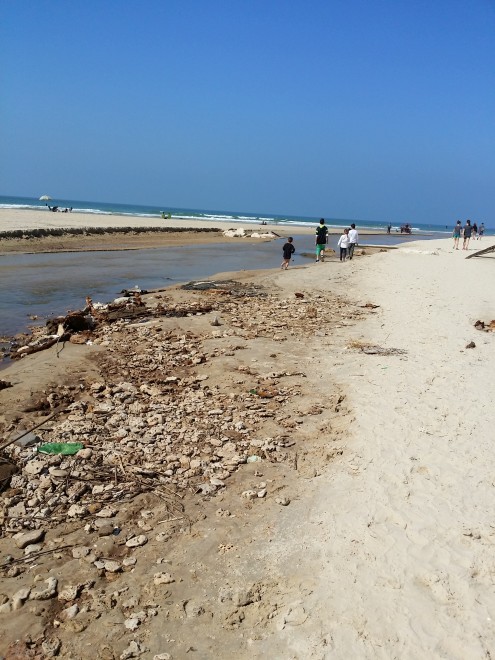
Poleg Beach’s popularity stems largely from the fact that visitors can literally drive their cars down to the beach area, instead of having to park some distance away and then descend flights of stairs or walk down steep inclines to reach the beachfront. Even during the winter “off months”, the beachfront is a popular attraction on warm sunny days.
Upon contacting one of Israel’s leading environmental watchdog NGOs, Zalul (meaning “clear”), one of their spokespersons, Lilach, said that they are aware of the problem which was caused by a natural diversion of the stream’s flow. “The main issue at the moment is who will be responsible for dealing with this situation: the Netanya municipality or another body such as the Nature and Parks Authority,” she told Green Prophet.
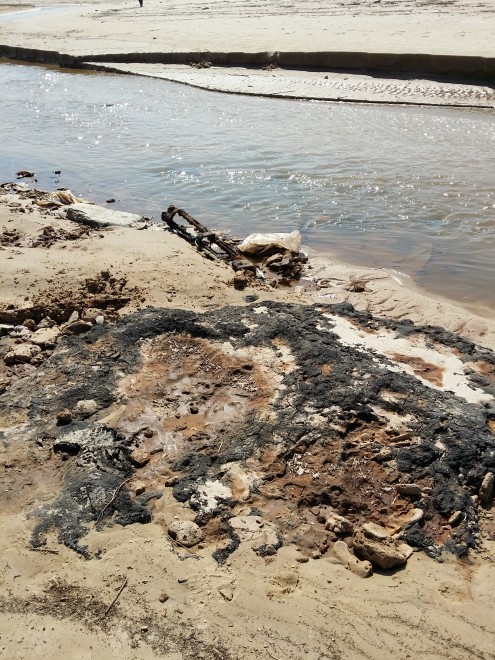
Close examination of the water flowing in the stream and the various types of trash and other objects found there indicate that the current situation is definitely a health hazard that will become even more serious as it gets closer to the official beach season, around the end of May. A considerable amount or work is needed to re-divert the stream’s flow to a “safer” area further south; an area which falls under the jurisdiction of the Nature and Parks Authority.
In the meantime, beach visitors will have to contend with the changed course of the stream, that in better times included an estuary for sea turtles to come and lay their eggs. Those times are long gone now, unfortunately.
Read more on marine and coastal pollution in the eastern Mediterranean :
Mysterious fish die-off in Tunisia sparks world-ending debate (video)
Lebanon: Greenpeace investigation reveals toxic coast pollution
Oceans spiralling downward, threatening life on earth
Photos of the Poleg Stream by Maurice Picow
Can organic fertilizers impact the global food crisis?
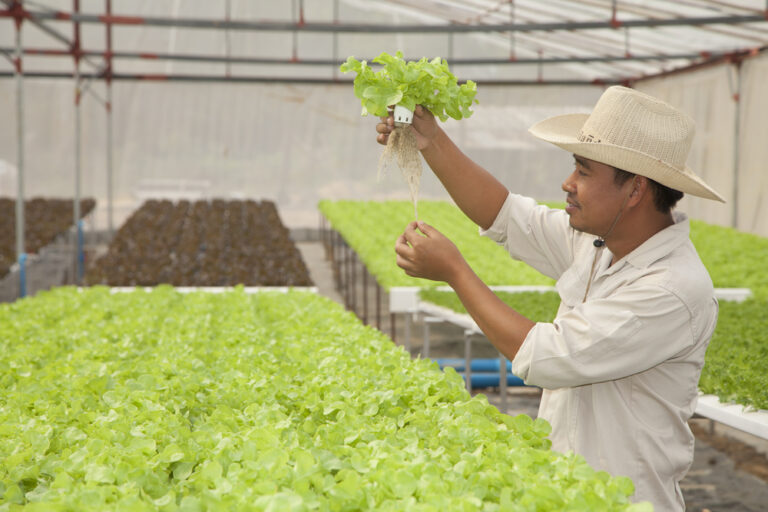
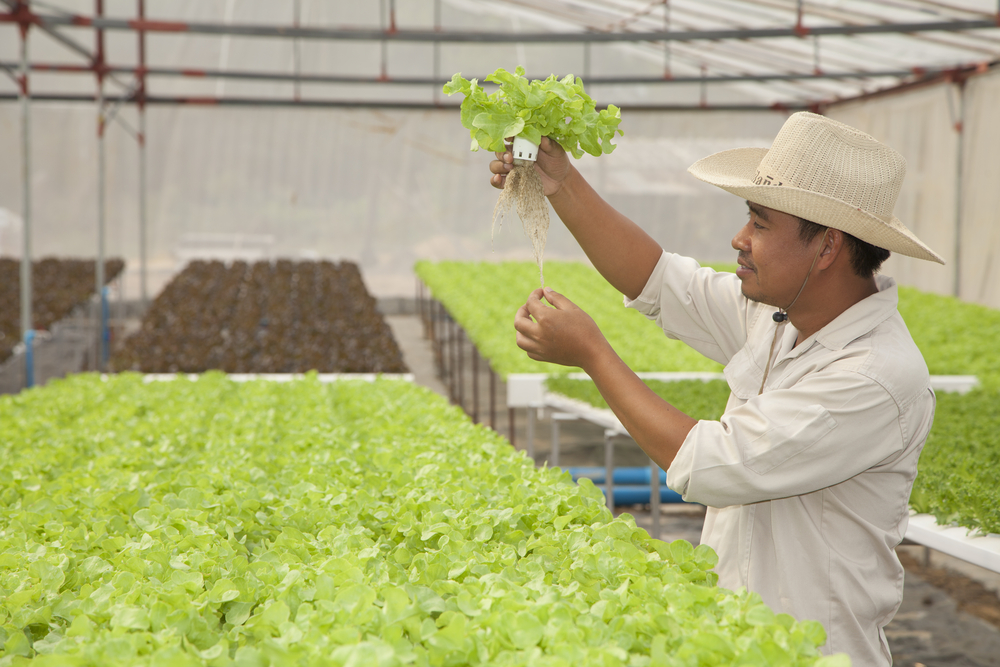
Some 795 million people worldwide are food insecure: they do not have enough food to lead a healthy life, and with the earth’s population increasing these numbers are about to rise even higher. By 2050, the world needs to produce at least 50% more food in order to feed its growing population. What can we do to fight hunger and malnutrition?
Throughout history hunger and malnutrition have been an issue, especially in development countries and areas of military conflict. And even though we are nowadays in possession of highly developed mediums of transportation and communication we do not seem to be able to tackle these problems.
Due to climate change (getting worse year by year), long periods of drought, floods and tropical storms are on the increase – there are tremendous consequences for those already living under difficult circumstances.
Only if we make use the modern technologies that we have, we will be able to fight this global crisis. A recent initiative encourages governments to give open access to their data to support farmers worldwide in making good, evidence-based decisions on these and other data such as weather forecasts, satellite images and information exchange with other farmers worldwide.
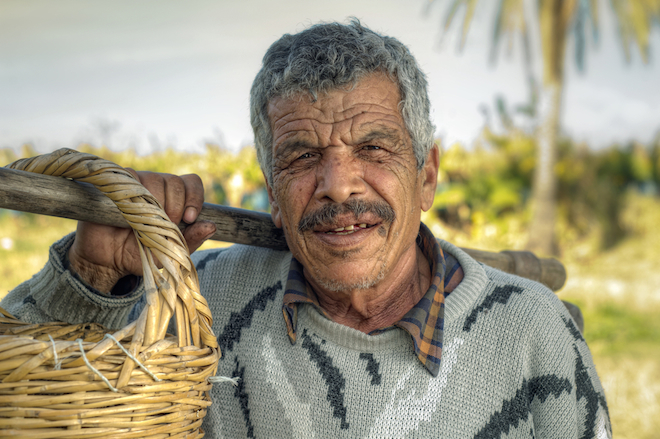
The ‘the more – the better’ strategy many large companies in the food and agriculture sector followed is slowly but surely replaced by a more sustainable, environment-friendly approach: An overall shift in the mentality towards long-term investment for sustainable businesses is noticeable.
In recent years, a growing number of agriculture executives have taken up on the concept of sustainable and organic fertilizing, which has an important effect on the earth’s soil and therefor the yield. Organic fertilizers improve the mineral content of the soil, prevent erosion and increase the size, nutrition and speed of growths of the crops.
The international agriculture company Ferm O Feed has a range of organic and biological fertilizer that are exported to more than 60 countries all over the world. Initiatives such as the ‘2Scale Project‘ that was realized in cooperation with IFDC in Benin or the story of the farmer Mr.Truc from Vietnam who increased his yield by 50% show how organic fertilizers can have a very positive effect not only on the soil but also on the people’s lives.