

Like Cloud, Big Data and other technological buzzwords, the definition of the Internet of Things (IoT) is often stretched to fit a corporate sales pitch. IoT. But what is it? The internet of things connects ordinary objects to the internet. So now we can Google missing luggage and use an online dating service to match our socks? The reality of IoT is only slightly less imaginative. IoT promises to become the technological bricks and mortar that helps us build smart cities.
Want to build your career in IoT brick by brick? Check the Intellipaat Internet of Things training to get ahead!

Someone peeked inside the refrigerator. A jar tilted against the rubber seal preventing it from re-closing tightly. The door was slightly ajar for only about an hour. But the incandescent refrigerator light bulb had done the damage. Ninety-five percent of its 15 watts went into heating the well-insulated box and spoiling $50 worth of food. It had happened before. It would happen again. So I jury-rigged an alarm that squeals every time the fridge light comes on. The alarm annoyed my family, but a neighbor asked me to make one for him. A photoresistor, a battery and a piezoelectric beeper shouldn’t cost more than $5. But when I researched these 1970s vintage components, I learned that they had evolved into microprocessors and eventually the internet of things.
I found a $5 device capable of measuring temperature and humidity and transmitting the results over WiFi. It could post,“Hey stupid, you left the fridge open again!” on my Facebook wall when it detects a temperature rise.
I showed this to an Iraqi architect who immediately saw how it could be used to improve the curing of pre-stressed concrete– a process that should rely more on science and less on gut instinct and luck. What else can be done with this internet of things?
When Ireland squandered too much of most abundant resource (rain) — smart water meters were installed on millions homes. These devices measure water consumption, detect leaks and transmits its findings via a smart-meter network to a monitoring truck which passes this information to the billing department. My electricity meter does the same thing.
Worldwide the growth of this technology is approaching the frantic pace of PCs, smart phones and the internet itself. IoT is already implemented in some cars to put drivers in touch with mechanics and tow companies in the event of a break-down or crash. Cars can also notify each other of road hazards and traffic congestion.

SamTech of U.A.E. uses IoT to track buses, taxis and other vehicles. GreenQ of Israel uses IoT to track garbage. Silicon Oasis is installing IoT for smart streetlights in Dubai. flux is using it to listen to the health of plants. Smart thermostats like Nest can adjust the temperature of your home when it detects that your smartphone (and presumably you) are nearing the house. And last but not least, IoT is being used for refrigerators. Refrigerators can send a recommended grocery list based on what my family has used and at what rate and remind them when they are eating too much unhealthy food. It can even show its contents via a video display so there is no longer a need to open the door and peer inside and risk leaving the door open.




 ines
ines

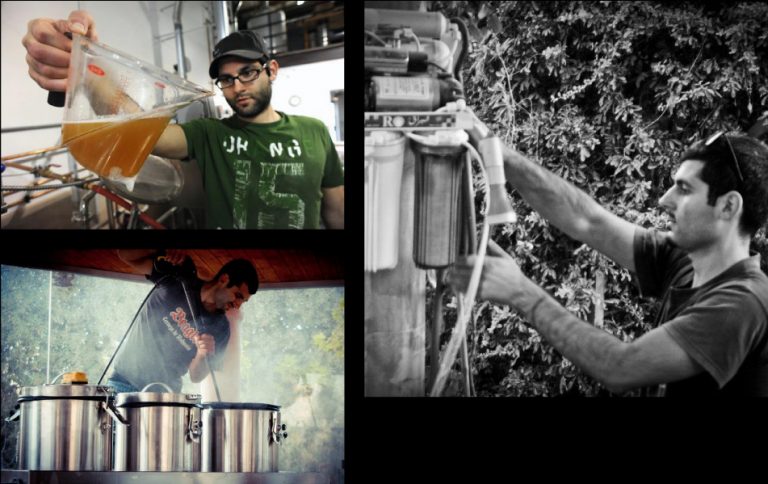
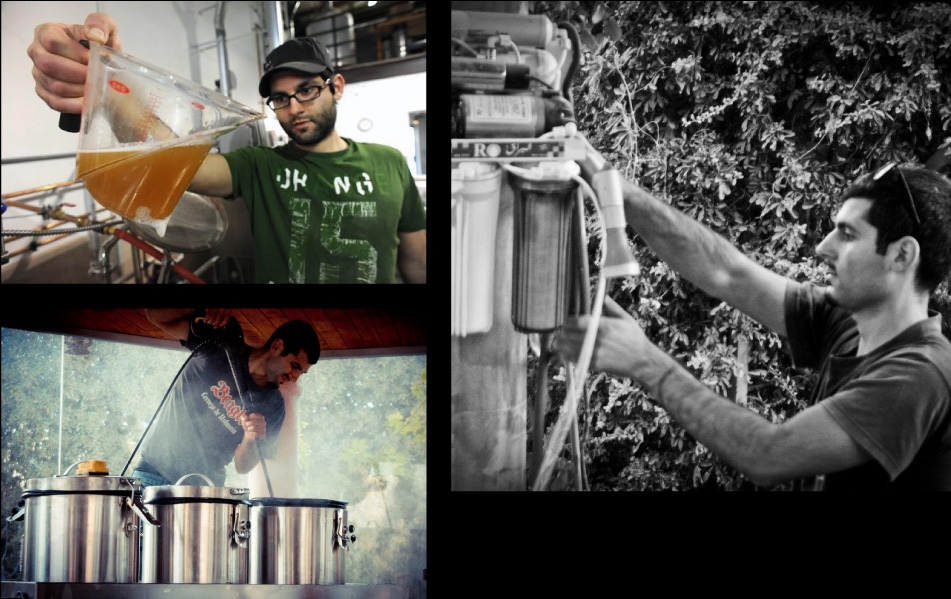

 Thanks to a french import Yossi Dan, and his company Challengy, Israel is about to put some serious spice into the international Food tech scene. Dan is looking for 100 Food Tech companies to duke it out Battleground style, at the Google Campus in Tel Aviv later this month.
 Details about the pitch:




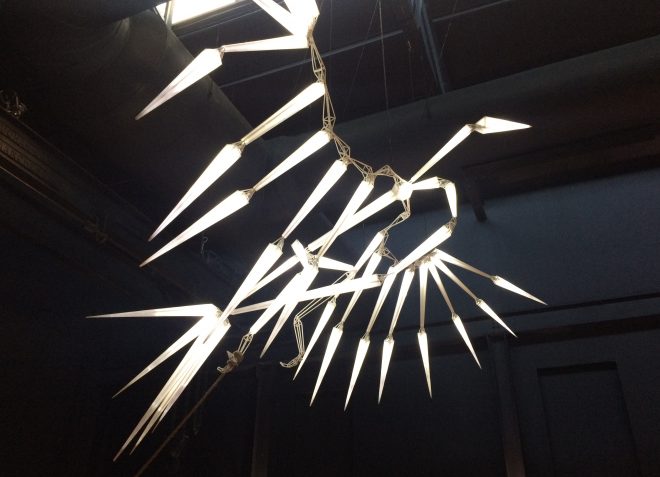 Pieces include a gigantic soaring bird made of electric light tubes by Iraqi artist Adel Abidin (above) and an intricately woven screen made of fine copper wire by Jordanian architect Hiba Shahzada (below).
 Architects Yazeed Obeid and Jeries Al Ali contributed a skeletal tower that references the welded metal minarets towering over rural Jordan. The sculpture morphs with movement; walk around it and the shape of the internal void creates new illusions of mass.
 There are spectacular furnishings made from marble and granite, some carved with lasers to mimic Palestinian embroidery. Arabesque motifs inspire the “Unfolding Unity Stool Marble Edition” by Aljoud Lootah Design Studio (below).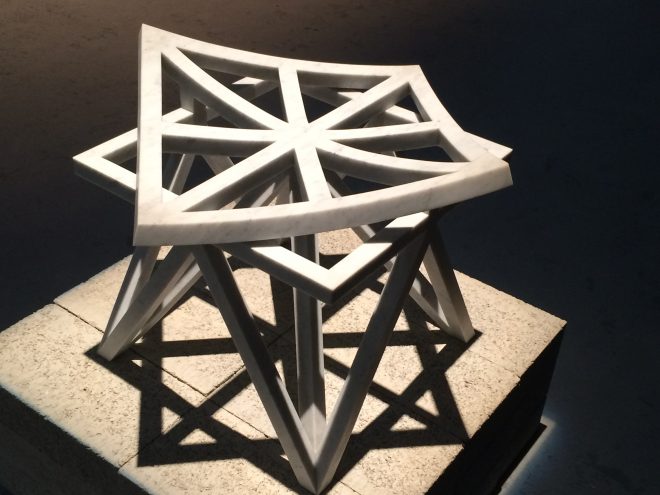
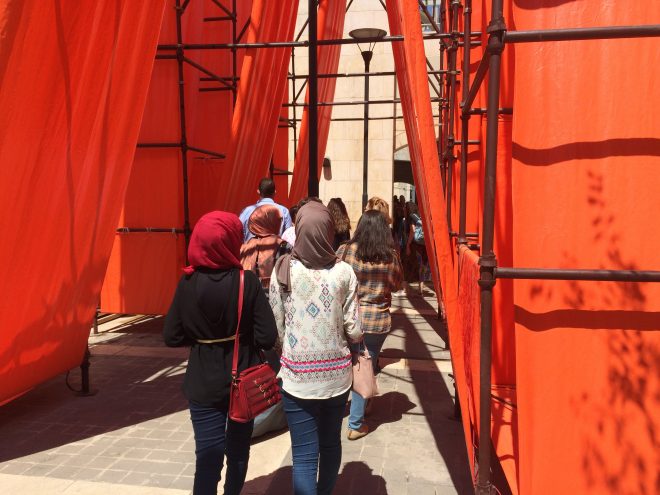
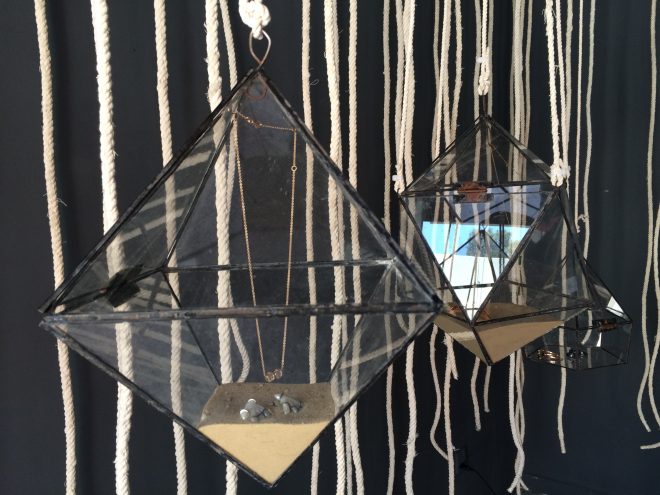
 The pieces begin to engage more fully with their urban surroundings at the Raghadan Tourist Terminal, where portions of the facility have been wrapped with brilliantly colored fabric and rope, creating marvellous shadows that move with the sun (above and below).
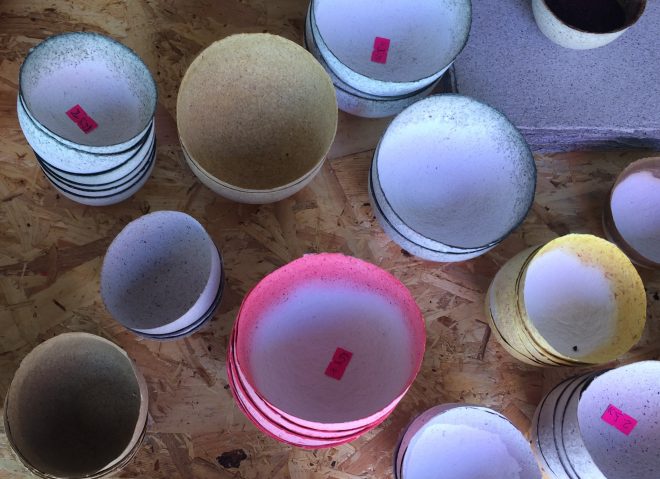
 Find handmade paper cards, notebooks, and home accessories by the Association of Iraq Al Amir Women, a small community south of Amman supported in part by the craft collective. Their colorful paper spice bowls are shown, below.
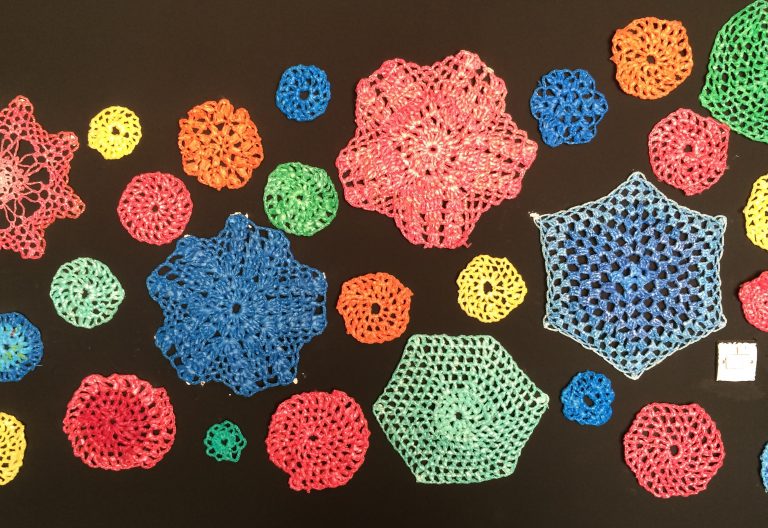
 Twenty-seven artists crocheted the #KeesChic Canopies providing shade along the marketplace corridors (below), diverting 25,000 plastic bags from local landfills.



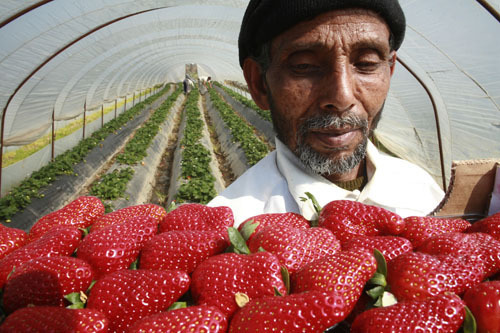
 If a tree falls in the woods, does it make a sound? If a food worker in Egypt fails to properly wash his hands, does it cause an epidemic in another nation? More than 80 people in seven US states have been infected with food-born Hepatitis A, and at least 32 people have been hospitalized. The outbreak is linked to frozen strawberries from Egypt that were served up in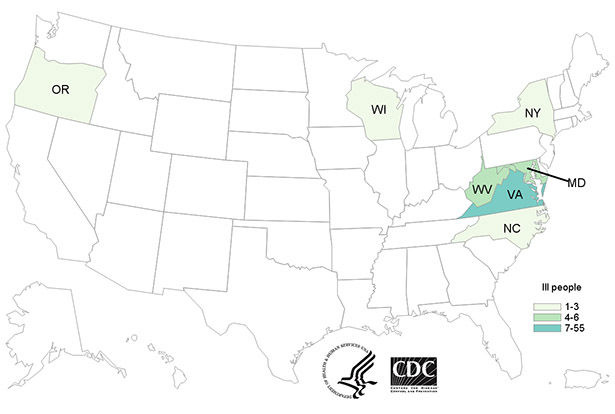
 Jerusalem’s Bezalel Academy of Art and Design – Israel’s oldest institution of higher learning – is a prolific incubator of brilliant ideas, with its post-grads serving as the school’s best advertising. They move on to produce beautiful artifacts, while kicking forward the antique design credo of “build a better mousetrap”. Now one student has developed a device that can
  The sun may be setting on a popular morning brew. According to a new report issued by the Climate Institute, global warming will underpin an estimated 50 percent drop in coffee production by 2050. Bad news for
 “Our concern is primarily for the 25 million farmers out there whose entire livelihoods depend on this incredibly important global commodity,” Molly Harriss Olson, chief executive of Fairtrade Australia and New Zealand, which commissioned the report, told ABC. “We’ve got to build a new economy that doesn’t threaten things in our lifestyle such as our coffee.”