Health insurance is a regulated financial product. Insurers operate under binding contracts, overseen by state insurance commissioners, that legally obligate them to pay claims meeting policy terms. Policyholders who believe a covered claim was wrongfully denied have legal recourse through state regulatory channels.
The New Zealand Merino Company, now rebranded as Zentera, has quietly removed the phrase “world’s leading ethical wool brand” from its website, a notable change that comes after a disturbing investigation by PETA Asia-Pacific into the company’s ZQ-certified wool supply chain, PETA reports to Green Prophet.
Somehow vegetables with short seasons excite the imagination and appetite more sharply than produce that’s available all year around. Good Middle Eastern cooks have many recipes for delicate fava beans, and this turmeric-fragrant soup is one.
Health insurance is a regulated financial product. Insurers operate under binding contracts, overseen by state insurance commissioners, that legally obligate them to pay claims meeting policy terms. Policyholders who believe a covered claim was wrongfully denied have legal recourse through state regulatory channels.
The New Zealand Merino Company, now rebranded as Zentera, has quietly removed the phrase “world’s leading ethical wool brand” from its website, a notable change that comes after a disturbing investigation by PETA Asia-Pacific into the company’s ZQ-certified wool supply chain, PETA reports to Green Prophet.
Somehow vegetables with short seasons excite the imagination and appetite more sharply than produce that’s available all year around. Good Middle Eastern cooks have many recipes for delicate fava beans, and this turmeric-fragrant soup is one.
Health insurance is a regulated financial product. Insurers operate under binding contracts, overseen by state insurance commissioners, that legally obligate them to pay claims meeting policy terms. Policyholders who believe a covered claim was wrongfully denied have legal recourse through state regulatory channels.
The New Zealand Merino Company, now rebranded as Zentera, has quietly removed the phrase “world’s leading ethical wool brand” from its website, a notable change that comes after a disturbing investigation by PETA Asia-Pacific into the company’s ZQ-certified wool supply chain, PETA reports to Green Prophet.
Somehow vegetables with short seasons excite the imagination and appetite more sharply than produce that’s available all year around. Good Middle Eastern cooks have many recipes for delicate fava beans, and this turmeric-fragrant soup is one.
Health insurance is a regulated financial product. Insurers operate under binding contracts, overseen by state insurance commissioners, that legally obligate them to pay claims meeting policy terms. Policyholders who believe a covered claim was wrongfully denied have legal recourse through state regulatory channels.
The New Zealand Merino Company, now rebranded as Zentera, has quietly removed the phrase “world’s leading ethical wool brand” from its website, a notable change that comes after a disturbing investigation by PETA Asia-Pacific into the company’s ZQ-certified wool supply chain, PETA reports to Green Prophet.
Somehow vegetables with short seasons excite the imagination and appetite more sharply than produce that’s available all year around. Good Middle Eastern cooks have many recipes for delicate fava beans, and this turmeric-fragrant soup is one.
Health insurance is a regulated financial product. Insurers operate under binding contracts, overseen by state insurance commissioners, that legally obligate them to pay claims meeting policy terms. Policyholders who believe a covered claim was wrongfully denied have legal recourse through state regulatory channels.
The New Zealand Merino Company, now rebranded as Zentera, has quietly removed the phrase “world’s leading ethical wool brand” from its website, a notable change that comes after a disturbing investigation by PETA Asia-Pacific into the company’s ZQ-certified wool supply chain, PETA reports to Green Prophet.
Somehow vegetables with short seasons excite the imagination and appetite more sharply than produce that’s available all year around. Good Middle Eastern cooks have many recipes for delicate fava beans, and this turmeric-fragrant soup is one.
Health insurance is a regulated financial product. Insurers operate under binding contracts, overseen by state insurance commissioners, that legally obligate them to pay claims meeting policy terms. Policyholders who believe a covered claim was wrongfully denied have legal recourse through state regulatory channels.
The New Zealand Merino Company, now rebranded as Zentera, has quietly removed the phrase “world’s leading ethical wool brand” from its website, a notable change that comes after a disturbing investigation by PETA Asia-Pacific into the company’s ZQ-certified wool supply chain, PETA reports to Green Prophet.
Somehow vegetables with short seasons excite the imagination and appetite more sharply than produce that’s available all year around. Good Middle Eastern cooks have many recipes for delicate fava beans, and this turmeric-fragrant soup is one.
Health insurance is a regulated financial product. Insurers operate under binding contracts, overseen by state insurance commissioners, that legally obligate them to pay claims meeting policy terms. Policyholders who believe a covered claim was wrongfully denied have legal recourse through state regulatory channels.
The New Zealand Merino Company, now rebranded as Zentera, has quietly removed the phrase “world’s leading ethical wool brand” from its website, a notable change that comes after a disturbing investigation by PETA Asia-Pacific into the company’s ZQ-certified wool supply chain, PETA reports to Green Prophet.
Somehow vegetables with short seasons excite the imagination and appetite more sharply than produce that’s available all year around. Good Middle Eastern cooks have many recipes for delicate fava beans, and this turmeric-fragrant soup is one.
Health insurance is a regulated financial product. Insurers operate under binding contracts, overseen by state insurance commissioners, that legally obligate them to pay claims meeting policy terms. Policyholders who believe a covered claim was wrongfully denied have legal recourse through state regulatory channels.
The New Zealand Merino Company, now rebranded as Zentera, has quietly removed the phrase “world’s leading ethical wool brand” from its website, a notable change that comes after a disturbing investigation by PETA Asia-Pacific into the company’s ZQ-certified wool supply chain, PETA reports to Green Prophet.
Somehow vegetables with short seasons excite the imagination and appetite more sharply than produce that’s available all year around. Good Middle Eastern cooks have many recipes for delicate fava beans, and this turmeric-fragrant soup is one.
Eggplant is the poor man’s meat in the Middle East, but when you serve it stuffed with good local cheese and sweet cherry tomatoes, it’s a luxury. We also do a variation on eggplant Parmesan, here.
This recipe is different in that the eggplants are simmered whole in water before filling and baking, rather than being baked beforehand. This results in a soft, rather than chunky filling. In handling the hot eggplants, take care not to crack or pierce the skins.
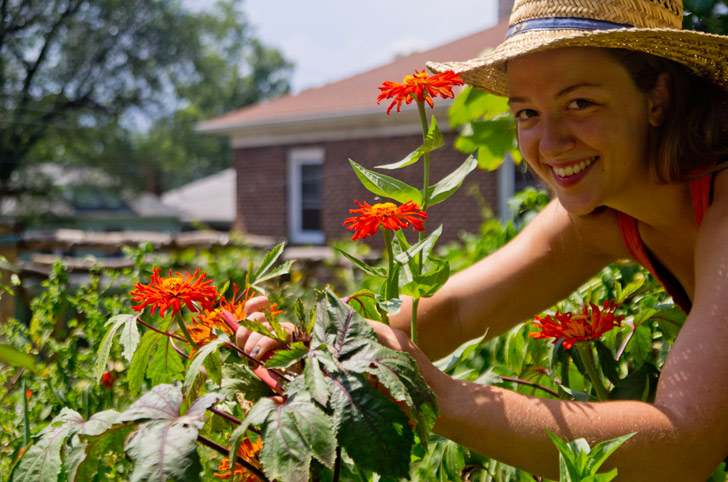
Try and find baladi eggplants like the one Karin is holding here. They make for flavorful, tastier eggplant anything. Look for shiny and heavy as signs of freshness. If soft or brownish, dull: don’t buy.
Pair two stuffed eggplant halves per person with plenty of salad and a basket of crusty bread, and you have a delicious, light, vegetarian meal.
Eggplant Stuffed With Cheese And Tomatoes
8 servings – enough for 4 people, or 8 appetizers
Ingredients
4 large, whole and unpeeled eggplants
3 tablespoons olive oil
12 mixed yellow and red cherry tomatoes, halved
1 large onion, chopped fine
2 cloves garlic, finely chopped
1 cup grated cheese of choice (recommended: mozzarella, feta, or kashkeval)
1 tsp. salt, or to taste
2 tablespoons fresh basil leaves, chopped
Salt and pepper
1/4 cup pine nuts
Olive oil for drizzling
Putting it all together
Preheat the oven to 350°F/175°C.
Have ready a large pot (or two, if the eggplants don’t fit into one). Place the whole eggplants in the pot and cover with room-temperature water.
Bring the water to a boil. Cover the pot and cook the eggplants 10 minutes, until tender but not mushy.
Carefully lift the eggplants out. Drain them in a colander and set them on a platter to cool.
While the eggplants are cooling, fry the onions and halved cherry tomatoes in the olive oil until the onions are wilted and the tomatoes are soft and wrinkled. Add the chopped garlic and cook 1 more minute. Remove the skillet from the heat.
Slice each eggplant in half horizontally, leaving the stem on.
With a spoon, remove the flesh from the eggplants.
Place the eggplant shells on a baking tray lined with parchment paper.
Chop the flesh and add it to the skillet with the onions and tomatoes.
Put the skillet back on medium heat and stir the vegetables. Add the cheese, chopped basil and salt and pepper to taste. If using a salty feta, you may not need to add much salt.
Cook and stir another few minutes, just enough to mix everything.
Fill the eggplant halves with the eggplant mixture. Pile it up.
Sprinkle each eggplant half with pine nuts.
Drizzle a little more olive oil over the filling.
Bake for 20 minutes.
Serve hot, and enjoy!
More Middle Eastern Recipes? Try:
Want some more Middle East recipes? Those good for lazy vegewarians?
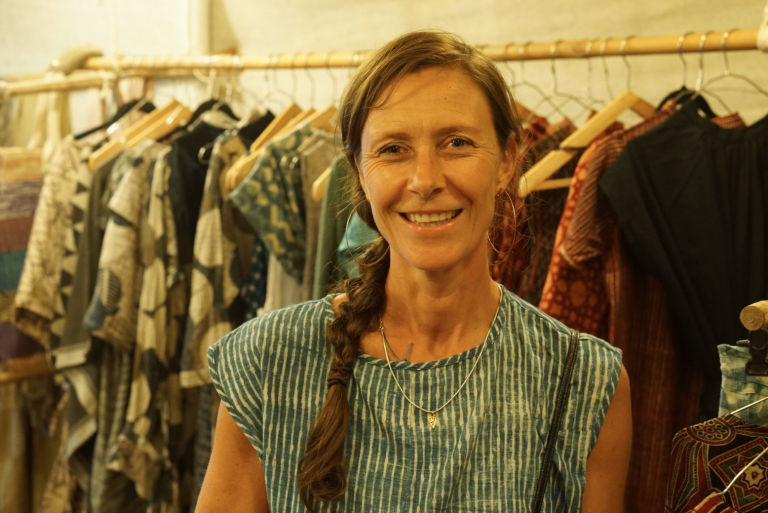
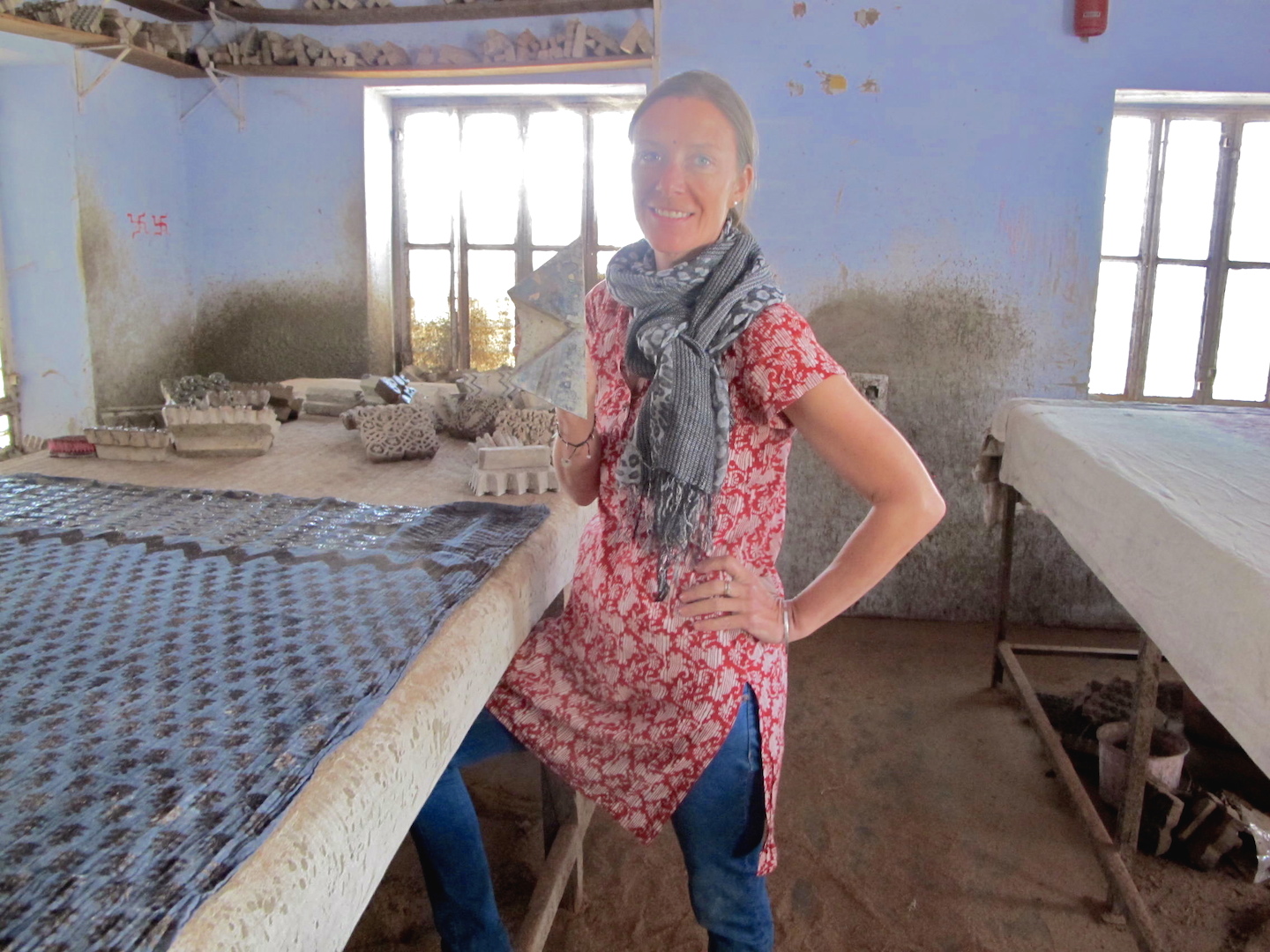
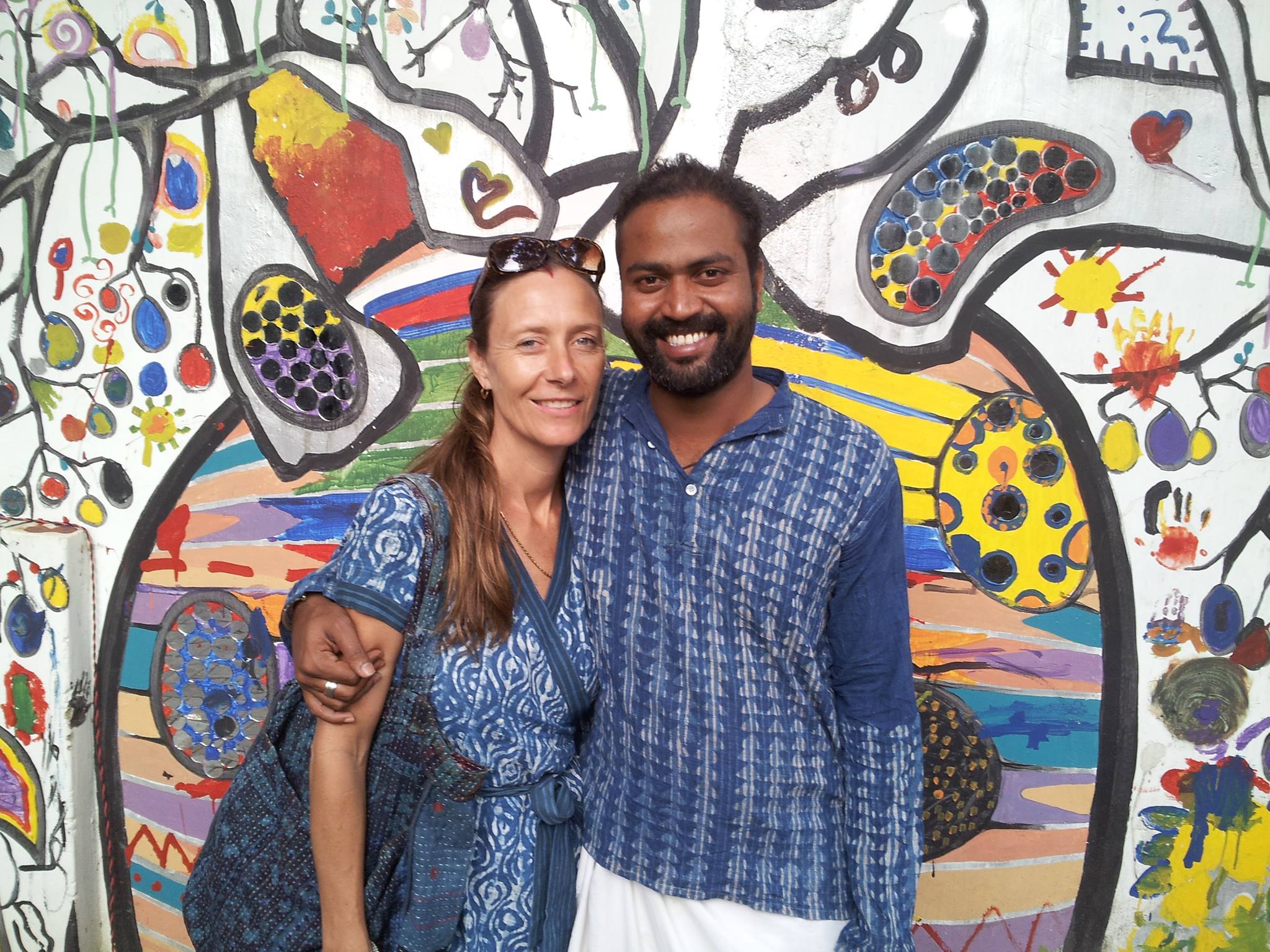
Meet Ondi McMaster-Chullil, yoga adherent and founder of mindful textiles & clothes company in India, AtelierOM + OM khadi She started her business because of Gandhi.
I don’t follow gurus but I saw video by one, not too long ago and it made me think over and over again. This “happiness guru” said: a smart person does what they love. A genius does what they must.
It stayed with me when I travelled to India earlier this year. That saying came to life when I met Ondi McMaster-Chullil. She was one of the yoga teachers at the Artjuna Cafe in Goa, India. I would later learn that she made clothes that I love, basically the main things I bought for myself in India.
I know it’s not entirely possible and that our egos serve us as humans in specific ways, but Ondi –– as a teacher –– seemed to be egoless. She was there, for you as a teacher. Some weeks later I found out she made clothes, and the shop I had been admiring next door, was hers. I would later learn that Ondi, at least to me, and at least in this moment was one of those geniuses that does what she must. And she would be one of the women I would need to know better as I try to understand my own path to womanhood, personhood.
We usually throw our heart’s values out the window when it comes to work. Most of us work for others, with a value culture already instilled that workplace, or we have to bend what works with our freelance or small business dreams in order to make real money for ourselves and family.
Ondi felt different. She hasn’t stepped out of society, she’s glued herself into the middle of her world, a world she cares about, a world she has the power to transform. She lives in India, but is also connected to the Western world. Find her in New York and the West Coast this summer as she makes and sells her special sustainably-made clothes in India and around the world.
“Trying to be meaningful is not the purpose of this business,” she says. “I am trying to make my life more meaningful to me.”
Ondi is married to an Indian man whom she met at the Gandhi Ashram. He is a South Indian, from the Kerala Tribe, a warm group of people believed to be among the “original Indians,” says Ondi. Today you see a lot of mixed races but their tribe is more ancient, the Dravidian Race she explains: “Our meeting at the Gandhi Ashram was synchronistic. I started my business because of Gandhi,” she says.
Ondi and her main squeeze
Accepted to the National Institute of Design in 1995 to study textiles yet decided against it due to financial costs, she went on to travel independently and study craft makers across India in the 90s, “I needed a mission. If you come to India without one you will get one pretty fast,” she says.
The southern Californian describes herself as laid-back casual. She graduated from highschool in Japan, and out of college worked for Issey Miyake in NYC a company built on the highest form of Japanese aesthetic. “He’s my mentor in terms of design.” You could say that all the work I am doing now in India, I could also accomplish this in Japan.”
OM khadi textiles are hand spun, hand woven, the way Gandhi had encouraged the Indian people to “spin” as an act of resistance to industrialisation”… during their Independence movement in the 1940s.
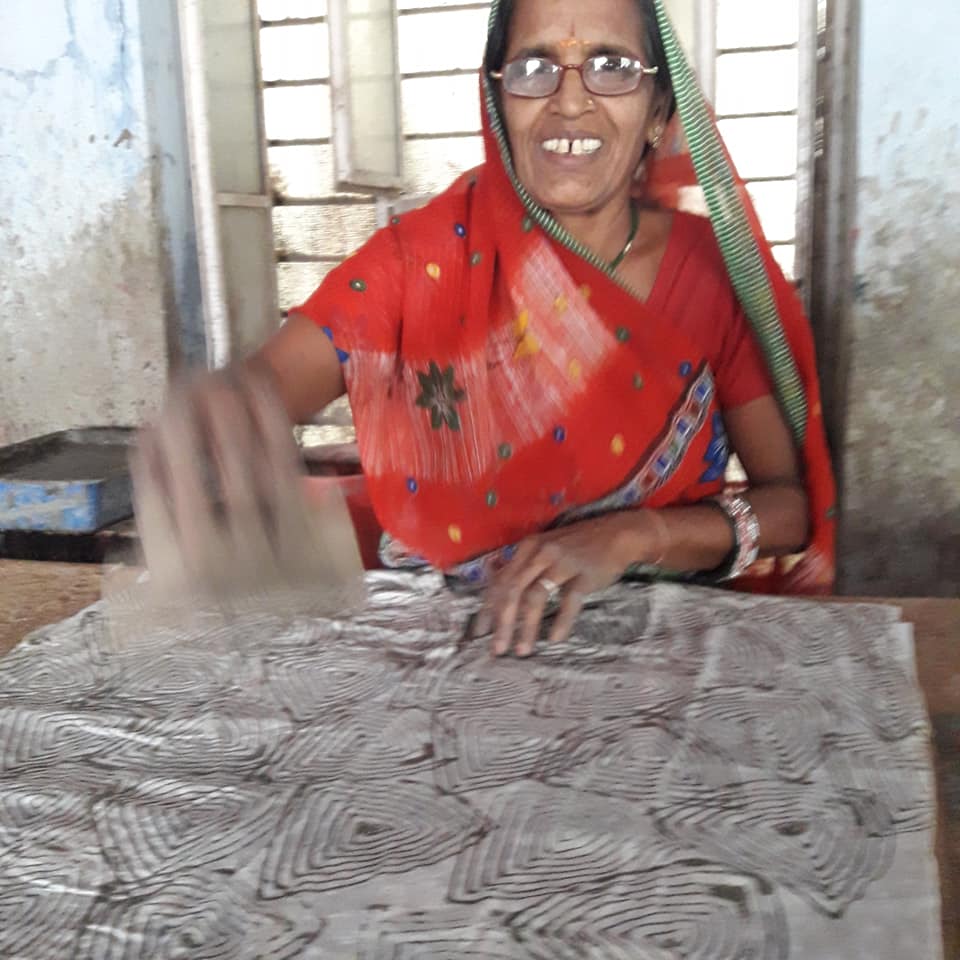
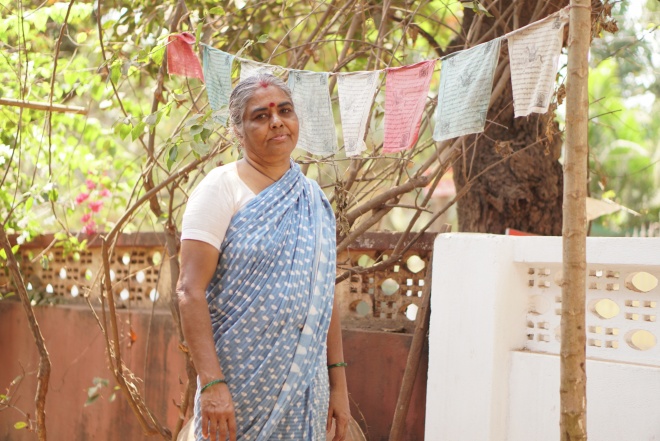
One of the craftswomen that works with Ondi to create the Atelier Om look.
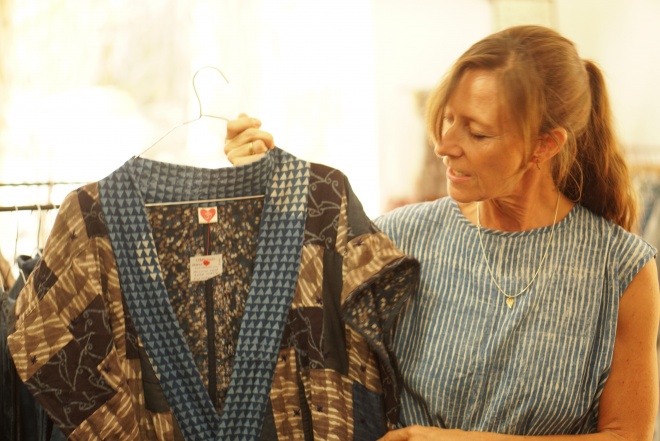
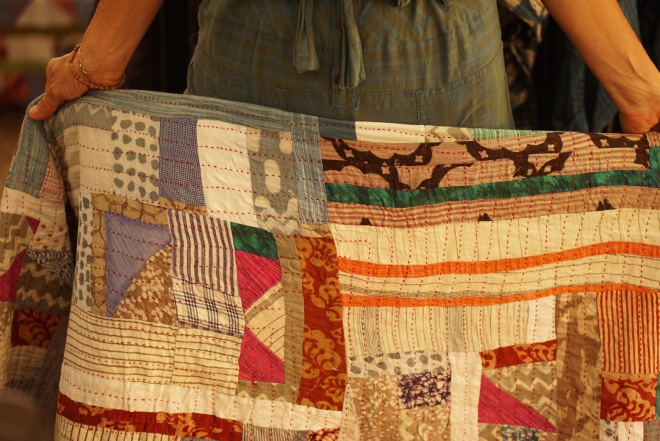
Like Gandhi suggested his people do, Ondi’s clothes are anti-industrial, slow-made, 100% made by hand – even her upcycled fabrics are hand quilted into new fabrics. Among the people and companies she works with in India – the spinners, weavers and dyers- she supports women 100% first, if she can. In total Ondi works with about 20 organizations that are ethically producing parts of her end-product, from raw materials to the detailing, and she works with them to invigorate their own traditions, while adding a bit. “I’ve inspired the quiltmakers to work a bit differently,” she says, often encouraging oddly fitting pieces to go together in unbalanced ways. “To make things more randomly,” she explains. “When I grow, they grow.”
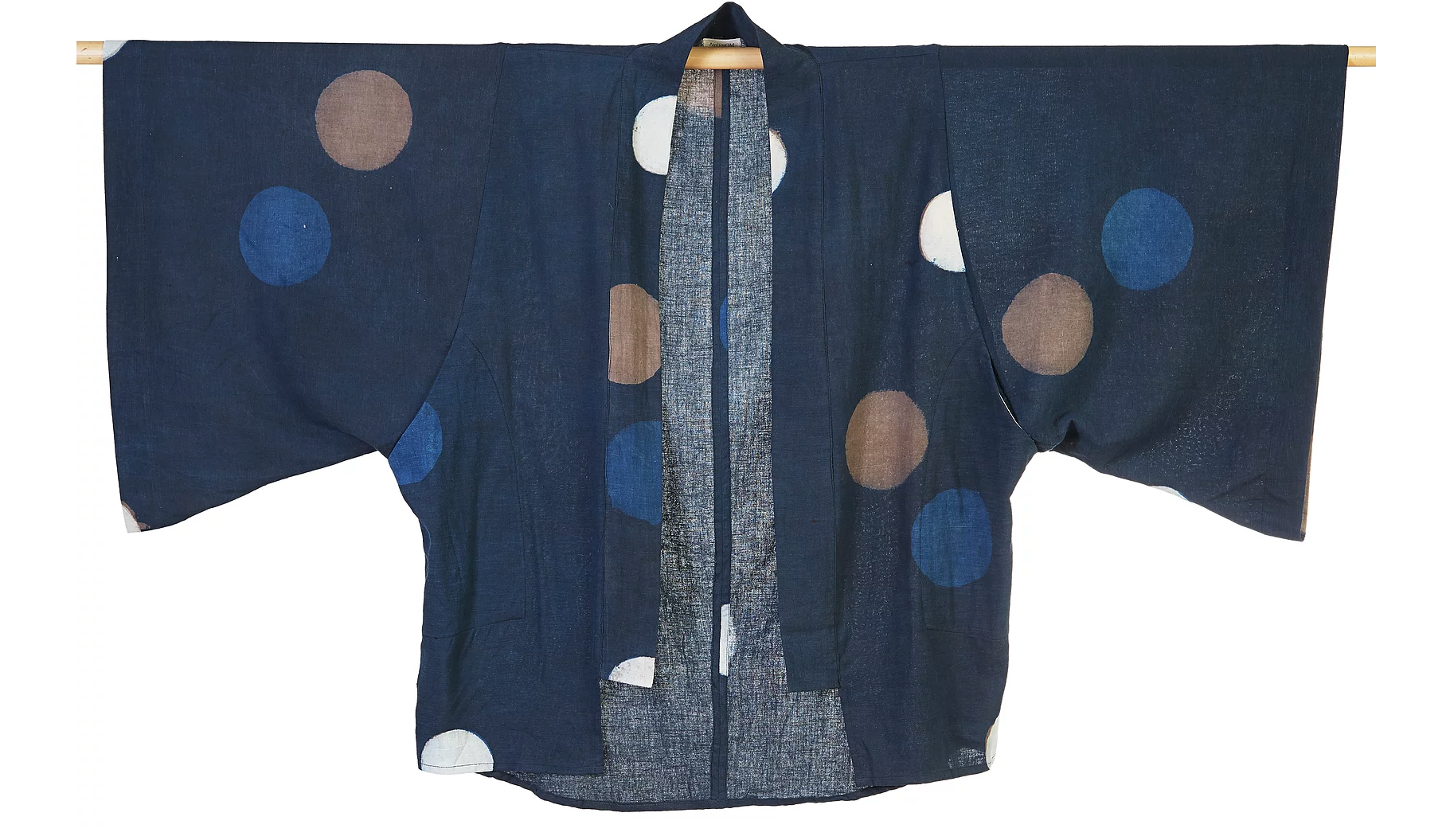
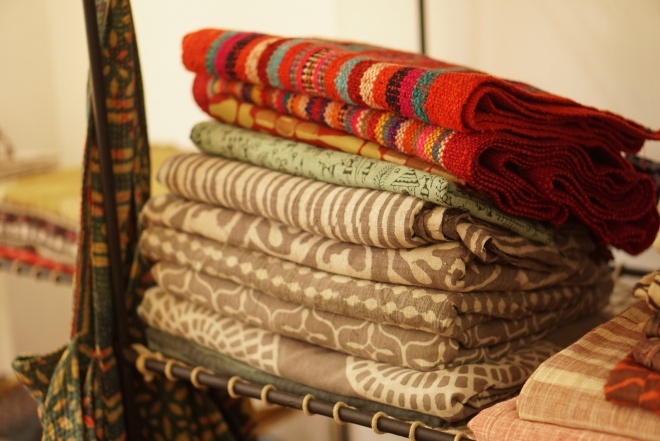
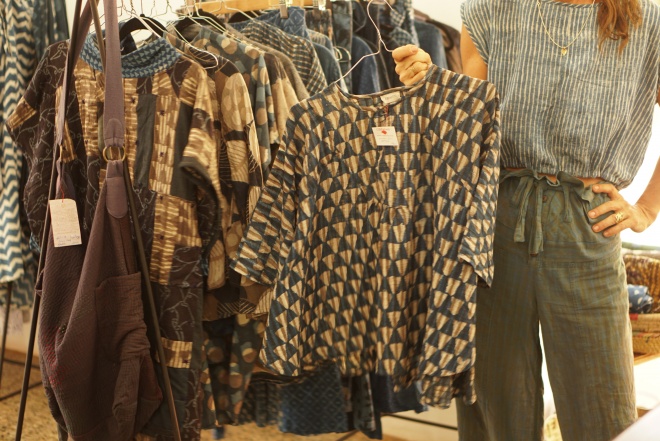
A total of 50 different fabrics can be found on the floor of her small showcase store in Anjuna, and she carries a similar and wide variety of products at the famous Saturday night flea market. Some of her materials are pure organic cotton, silk and cotton weaves, linen or non-violent silk. She uses all natural dyes in blockprinting, like indigo.
I now own the same coat as Lenny Kravitz
You can “feel” Ondi and her process in the clothes. I ended up splurging and bought 4 coats: an overcoat (the same one owned by Lenny Kravitz she tells me and which is very Japanese), a kimono, a hand-dyed navy blazer and a pink wrap jacket which reminded me of the caftans from Azerbaijan. Compared to shops like H&M or Zara, you can’t compare her pieces to a mass manufactured piece of dead weight. You feel the difference. Your soul does, for sure.
“Yeah I do believe that there is a vibrational quality to my clothes,” says Ondi. “Everything is a vibration and how it was made is implicit in this energy. Every vibration in this room is a record. I heard that if potters had the right laser to listen to their wares you could hear the sounds in the room while they were making their pots.”
This resonates with me, because I used to be a potter.
Ondi’s mother in law
She goes deeper still. “Dosha” is an ephemeral sheath on our body. There are finer sheaths there too, until you reach the first one, the closest to your native spirit in its pure form. It is organic, made of this world.
I watch Ondi go through her things, showing me the patterns, the designs. She’s a woman but carries an innocence with her. She’s strong, beautiful and has a gorgeous body. You can see it. But she’s not exaggerating it. Her clothes accentuate this “sensual” energy or sheath, not the often vulgarized sexual energy played up in fashion today to sell clothes to teenagers.
“Why parade your sexuality for the universe?” she asks. “When there can only be one person you desire.”
We agree that women in burkas are an extreme revolt against this sexualization. Or it’s the “Catholic School Girl Mentality, telling us we can’t so we do. Patriarchy is exerting its last hand on us,” she prophesizes. “It’s killing us and invigorating us. We need to find the moderate way.
“Our consciousness is not the same [as a man’s] and it will never be the same. You need to protect it, knowing that courage is not always being the one on the frontline.”
Clothes can help us, with a “need to be more discriminating in how we act, clothes as a sheath on us, clothes give meaning,” she explains.
OMkhadi, the clothes started as an art installation with Khadi since the hand spun fabric was that which Gandhi always promoted. “And I did some costume design for film and TV around this idea and some world’s came together about the consciousness of materials. I wanted all of those worlds to collide,” Ondi explains.
Look at the result? She does all her hand blockprinting by hand, twice a year. Then works with the raw materials to pull them together into pieces you could wear for years.
While it’s best to travel to Anjuna in Goa to go to her shop or to visit Ondi at the famous Saturday night flea, she does pop up shops in New York City and on the West Coast in the summers. Be in touch here for OMkhadi coming near you. Turns out one of the style of coats I bought is also owned by rocker Lenny Kravitz, says Ondi, not supplying more details. I am sure he feels like a rock star when wearing it.
Also Ondi is producing a few boutique travel India tours so people can also meet what she loves and knows about the crafts, flavors and movements of India. Follow her on Instagram to get the latest.
I confess: my first thought when I wake up in the morning is, “Yay, coffee!” It’s only one cup every day, but I feel grumpy until I get it. The good news is, the daily cuppah fills me with energy and and a good mood.The bad news is, I’m addicted. As addicted to my one cup as the gal drinking 8 cups daily. That’s why the world seems grey on a sunny morning. By the time I wake up, I’ve been too long without my caffeine fix. We have a great article on coffee and health here.
Some experts debate the correctness of using the term “addiction” with regard to coffee and caffeine in general. After all, there’s none of the damage to individual health and society associated with addiction to alcohol and drugs. But if stopping coffee involves physical and emotional symptoms like irritability, fatigue, headache and depression, “addiction” is good enough for me..
Luckily, I’m the earliest riser in the house, which gives me time to make and savor The Drink To Raise The Dead before greeting the family. Otherwise, they’d get a morose face and short answers from me, with “What did I do to deserve that?” reactions, and everyone going around in a huff. An alarming scenario; but preventable, if I just get that coffee magic into me first thing.
The abstract of a scholarly study on the effects of caffeine use from Science Direct states: ” Caffeine is the most widely used psychoactive substance and has been considered occasionally as a drug of abuse. … After sudden caffeine cessation, withdrawal symptoms develop in a small portion of the population but are moderate and transient.”
Research by the Coffee&Health organization indicate that the peak level of plasma caffeine is 15-120 minutes after drinking a normal-sized mug, depending on the health map of the individual drinking it. The uplifted effects may last up to 4 hours.
But coffee is a mysterious, contradictory substance. A review published in the Journal of Alzheimer’s Disease suggests that one cup every four hours will improve mood, but that those who consume high doses may suffer opposite mood swings, with depression, anxiety and the jitters.
What’s a high dose? According to the Mayo Clinic, more than 4 cups a day can cause a variety of unpleasant symptoms, including irritability, fast heartbeat, and migraine. It makes sense that if a person drinks a cup of coffee or an energy drink every few hours to stay alert after restless or too-short sleep, their body will be fighting to shut down and get some rest. Grouchy usually goes with tired.
So what’s the wisest way with coffee? Given that 90% of the world uses caffeine in one form or another, the key word is watchfulness. Enjoy your coffee, but limit it to one cup every four hours. Drink your last cup early in the evening to avoid the well-known insomnia effect that would otherwise catch up with you later that night.
And make sure to make your loved ones feel valued, even before that first cup.
Anywhere you live, whether it’s the hot, dry desert, or the more temperate states like New York or anywhere in Canada, when you want to get those seedlings to grow and stay warm overnight or on cool cloudy days as summer is coming in, there is nothing like a greenhouse. Of course you can start your seedlings on your kitchen counter, but if you have plans for a garden that wants to expand, you will need more space. Maybe you’ll even create a little cosiness that you can sit in after your seedlings have grown out of their first home.
If you have been following some of my gardening adventures you’ll have caught on that I have been using a plastic biodome, built by a company in Turkey. It’s a great starter tent and place to stay but it’s all 100% plastic and I’ve noticed that the covers don’t last for more than one season. My plastic transparent cover has shrunk and ripped from the blazing sun, and the canvas cover, too, hasn’t weathered so well in the damp but not overly wet Middle Eastern winter.
That’s why I find the Dirt Church built by hand by our friends over at Piebird very appealing as a starter greenhouses – if you don’t have the energy or skills to DIY it. You can add a low cost plastic cover or mosquito net when needed. Or you can buy or easily make a canvas cover for it to turn it into a bunkie after your seedlings have outgrown it.
I love that it’s made by hand by Yan and that the income they make goes to supporting a small but important animal rights sanctuary they have built in Northern Ontario, Canada. They even give honeybees sanctuary. Read all about it here.
A cathedral for your kale
Says Yan, “The gothic arch architecture is a funky space for your soil worship. It’s a cathedral for your kale! The back flower opens to vent. ‘The Seed’ is lightweight but very strong. It comes apart into two stackable sections that easily fits into a 4ft wide truck bed for transport. It takes just minutes for you to assemble.
Pick-up at Piebird Farm Sanctuary is preferred (it’s a good reason to visit!); they are in in Nipissing, Ontario. Delivery available for extra charge. This model pictured above called the Seed is $850 CAD or about $600 USD. To order, send half as a deposit to [email protected](e-transfer or paypal) and your “Seed” will be ready shortly.
The model here includes 6 mil greenhouse covering. If using for a shed, they can supply an opaque poly option, or canvas covering for a bunkie. And it can be made longer by adding more bows.
Watch this great video about Piebird… “Be strucken by the stars!”
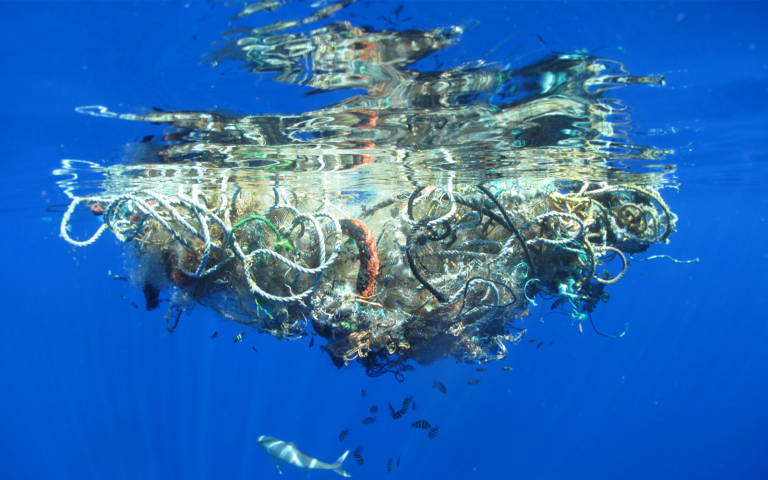
The growing threat of plastic pollution in the world’s seas and oceans has been a great concern for marine environmentalists and oceanographers. These include Dr. Sylvia Earle, a world famous American oceanographer and marine biologist as well as an undersea explorer. Dr. Earle has spent much of her life conducting research and exploration of the marine environment in the world’s oceans.
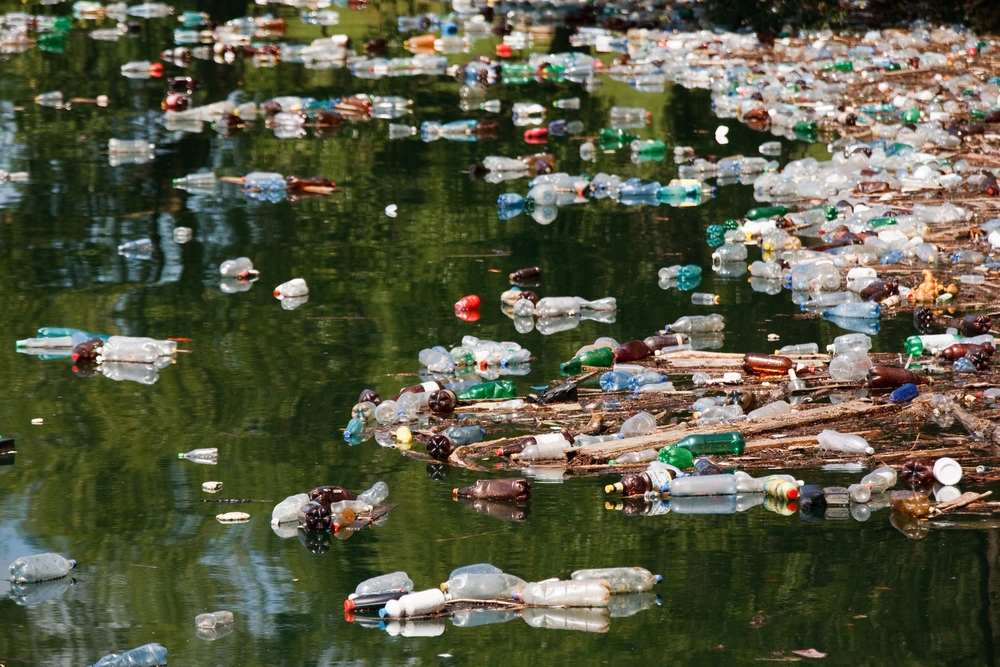
Coinciding with the plastic pollution theme of this year’s Earth Day 2018, Dr. Earle speaks widely about the large amounts of plastic waste material now found in the oceans. Dr. Earle, 82, has devoted more than 65 years studying and photographing ocean marine life. Earle told CNN recently that since 2014, as much as 5 trillion pieces of plastic material, much of it single use “throwaway” plastic bags and bottles are floating in the world’s oceans. She added that as much as 8 million tons of plastic material enters the oceans annually; a large part of it being single use plastic items that are discarded on beaches by people who are simply ignorant of the dangers this material is to marine life.
One of more tragic examples of marine plastic pollution can be seen on the beaches and in the waters surrounding the mid-Pacific Midway Island atoll, home to large numbers of albatross and other sea birds. Stomachs of dead marine birds collected on the beaches of the atoll have been found to contain large amounts of plastic material; including such items as plastic bottle caps, pull-off bottle top rings and other material.
The birds ingest this plastic material, thinking it to be food. Eventually, the birds’ stomachs become full of this material (photo), that dooms them to die. “The oceans are the basis for our life support; and plastic material becomes part of the food chain. Humans are responsible for this plastic epidemic,” says Dr. Earle, adding that single use plastic material, discarded by people, is a big component.
It takes between 500 and 1,000 years for plastic material to break down organically. This means that such material can literally float around in the oceans for centuries. “Plastics themselves are not the problem – humans are” Earle says. One ray of hope to rid the oceans of such material, deals with a plastic eating enzyme, discovered by scientists, that appears to literally eat plastic bottles and other material. Other ideas include use of giant sieves to trap and scoop up this material in the seas. The giant sieve idea for trapping small plastic particles was conceived by Boyan Slat of the Netherlands in 2013. Slat’s project, The Ocean Cleanup, won the Katervera Award, the environmental equivalent of the Nobel Prize for Sustainability in 2016.
There’s still a lot to be done for even making a small dent in cleaning up the massive plastic amounts in the world’s oceans. Even concerted efforts on behalf of world bodies will have a hard time cleaning up the waste material of “floating garbage patches” found in areas like the Great North Pacific Gyre. But a start has to be made, including greater efforts to educate people about the dangers of throwaway plastic bags and bottles that wind up being washed out to sea.
More about the dangers of plastic pollution and other marine environmental issues:
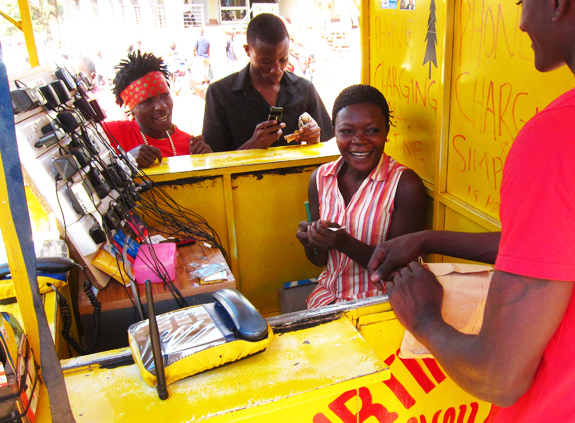
African banking systems are mostly accessed by phone, and ripe for disruption.
Forex trading became a massive industry due to the volatility of international currencies. One day the price for the Venezuela Petro can be up, the next day down. And the reverse. In between the foreign exchange volatility (forex volatility) there is a space to earn. That’s why historically people banked up American dollars or hid Swiss franks in their basements. If the Yen tanked, then well having American money is almost as good as gold, as the theory goes.
Now Forex has seen some harsh criticisms in the recent years mainly because of the lack of control in the industry. It happens, like the gaming industry, that certain fly-by-night companies pop up promising the every-day person get rich quick schemes so they can retire from the factory job. Most of the time these promises don’t pan out and the person loses all of the money that they thought was going into foreign currency.
Some other ideas if foreign currency investment is something you are interested in is putting your money in a banking system of a slightly volatile country, because if you do your research you will see that some of the banks offer very attractive interest rates (from 5 to 10%) that you simply cannot get at American banks. We wouldn’t suggest you do this without a trusted friend or advisor who has experience in this area.
Other areas of interest in risk currencies can also be found in the crypto currency space. Bitcoin has exploded, then receded, then leveled out. Early buyers in this international currency with no home country now find themselves with a nice next egg, and for very little work. The boom of Bitcoin is probably over, but there are new currencies or blockchain currencies you can buy today which also put a social good message ahead of their get-rich quick promise. If you don’t get rick quick at least you can know you have supported something with an eco or impact vision.
Some of these companies include flux, a company developing a grow robot called Eddy to help people grow food in emerging economies.
Agriledger for creating a blockchain-based network of farmers and suppliers to give co-ops and small producers immediate access to accurate information about market costs transaction agreements to ward off corruption.
Bloom is uses blockchain ledgers to create stable IDs for each user, which can then be used to report on existing debt arrangements and provide an alternative credit score for individuals who might have bad credit.
Alice supports crowd-funded philanthropy, where individuals like us can give small amounts online to social projects. Alice ensures that a project receiving funds is spending the funds ethically.
Traveling is a time of discovering new places, new places in the world but also within yourself. It’s for sharing new experiences, and enjoying with your friends and family. It is the best way to make new friends and enjoy life. You are able to see amazing views and sights wherever you go. Traveling allows you to explore the world.
Freeze your unforgettable memories with a drone
Travelling creates unforgettable memories for you. It makes your life meaningful and richer. You feel happy about creating memories with your friends and family.
Discovering new perspectives and conquering your fears with your friends while traveling gives you the most unforgettable experiences of life.
You don’t want to miss the opportunity of capturing your memories in a picture while having the most wonderful time of your life.
Mutilated drones help you capture the most amazing experiences of your life in the pictures. You don’t have to be a professional photographer to use your drone camera. You can take spectacular pictures with this remarkable technology.
A drone is your best companion
We are living in a digital world where we are able to take our traveling experience to the next level by using mutilated drones for taking photographs of our most exotic memories. Drones are great companions for you while traveling.
Mutilated drones help you capture the most amazing experiences of your life in the pictures. You don’t have to be a professional photographer to use your drone camera. You can take spectacular pictures with this remarkable technology. Drones allow you to take pictures from various angles and positions, which you cannot even imagine taking with an ordinary or even an advanced digital camera.
Dragging a drone camera from one place to another is not easy, if you are new to this technology, you might find it confusing to operate it at first. But once you get a hang of it, you will find there is no better way to create images of your great memories.
Mutilated drones are shaping our world in a different way
Drones are changing the world we live in for the better. The use of drones is not for ware and target killing anymore. With the advancement of technology, drones are being used by everyone in the world.
This modern technology has a great impact on the business world. There are a number of industries using this device to gather visual information in the most efficient manner. They are able to get the images they want very quickly without much hassle. For them, it’s a cheap eye spy in the sky which helps them get the real-time information.
Drones are being used for many purposes all around the world. Just with a touch of a button and use of GPS technology, drones help you get the first aid you want if you have an emergency. Drones can save your life. You don’t have to wait for an ambulance or wait in traffic to reach the hospital when you get yourself injured. Drone aid is there for you to give you the proper aid.
Conclusion
Drone is a navigation equipment which is remotely operated. These devices are being used everywhere. Drones help you save lives and take pictures while traveling. They are being used all over the world for multiple purposes.
Drones are tremendously impacting the world we live in. People from all walks of life, whether they are militants or scientists or simply travelers, are using this device very meaningfully.
When you plan for a theme for baby room decoration, the most efficient thing to do is to give much attention to detail. Select the motif that would be eye-catching to your visitors, appealing to you, and more importantly eco-friendly, comfortable to your baby. A well lighted room could be pretty provided it does not strain the eyes of your baby.
In terms of baby furniture, it consists of pieces which would make your baby feel comfortable in eating and sleeping. An ideal baby crib (formaldehyde-free) could supplement a comfortable and tranquil sleep, night stands which should be in one place, and changing tables and makeup furniture to set the baby. We all know that the most essential furniture for your baby room is the crib. It has to be durable and strong. It should withstand years of growing. It should not have any rough edges or protrusions that are not necessary. Another important parameter is the paint which should not be lead-based. Never. You have to ensure that no decorative items are present which could hurt its limbs, back and head. There are cribs which comprise of a one sided or double sided openings. You will also find cribs that are portable and convertible to beds. There are cribs which has a gentle rocking motion to emulate the rocking the baby.
On the other hand, the baby room décor should practically possess soothing color schemes and combinations which could blend or complement with your furniture. Non-toxic paint should be utilized. Plant based is best. It costs double, but there will no off-gassing. You should also think of getting interesting wallpapers and good hypoallergenic carpets. You can settle for vivid and vibrant wallpapers of you can select wallpapers which could catch attention of your baby’s eyes like animations or cartoon characters.
It is truly a pride for every parent to come up with a beautiful baby room décor. It is like supplying the most extravagant place for your baby. Not only you are designing it for your baby but you are also making it look lovely and special in similar manner. If tentative wallpapers are not in your mind because you might fancy new designs in the future, you could use solid colors on the walls.
On the other hand, you could also try removable wallpaper by which you have a freedom to change from time to time. You could also complement it with rugs or hardwood floor. Hardwood floors are not that messy because they are not really dust collector. You can easily replace your rugs in due time. Frames and lamps are added as a complement where you can put of your baby and your whole family.
Incorporate soft dolls and toys which are non-toxic. Purchase the best night lamps and stands so you can put your baby’s garments, bottles and what-nots. The night stand should have a color that can complement the room as a whole and should be near the bed and the changing table. The height of the table should be of the proper type. You also have to pay close attention to the windows. One excellent tip in baby room décor for windows would be maintaining that curtains ending at the window sill. If the blinds or curtains drop all the way down to the floor, there is a chance at it can cause accident for the baby especially during crawling period.
Baby room decoration ideas are not a complex job at all, You just have to regard your baby’s safety, space and the comfort needed for its movement. You have to put your heart in to it so that you can be able to put smile on your baby.
If you are a new parent in need of useful tips and suggestions, here are some recommendations you might find helpful:
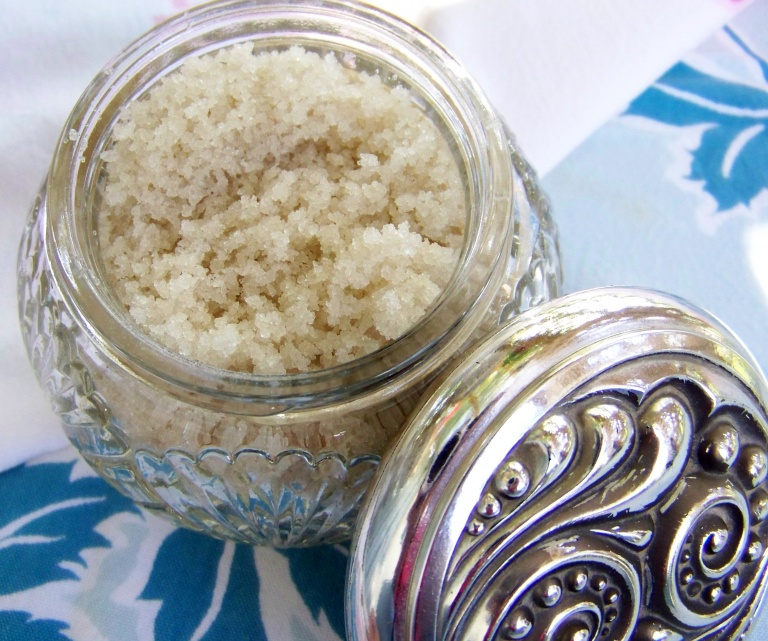
Sugar scrubs refresh and moisturize your skin, leaving a lovely fragrance behind. And why should you pay for a commercial product if you can make your own scrub at home? The ingredients are inexpensive, and you probably already have them in your pantry.
After all, a sugar scrub is only sugar, a good oil, and if you want, a natural fragrance like rosewater or a few drops of essential oil.
You can use just about any essential oil but please know that you must use ones that are safe and compatible for your skin. It’s worth reading this essential oils guide to make sure you are choosing the right oil for your skin. Skin is the body’s largest filter, the barrier that shields us from the outside environment. It makes sense to protect it for your health, and keep it supple and smooth for beauty. That’s where sugar helps. It exfoliates (gently rubs away dead skin cells and dirt) and leaves the skin moist and smooth. You can safely use a face and body sugar scrub once a week.
Here’s how you make a sugar scrub. It should take all of two minutes.
Ingredients: I cup sugar 1 cup good-quality oil For a body scrub: 2-3 drops essential oil or a tablespoon rosewater (optional, see notes below.) I wide-mouth glass jar for storage Mix the sugar and oil in the jar. Add the optional fragrance. Voilá. Store the sugar scrub, covered, in the refrigerator, up to two weeks or as long as the oil smells fresh.
Now that you have your sugar scrub, how do you use it?
That’s the luxurious part. Enter your shower and let warm water stream over you for 5 minutes, to soften and warm the skin. You can wash with soap in the usual way before applying the scrub. Take a small handful of sugar scrub into your palm and gently make circles with it on your skin, all over.
No need to scrub hard. It will feel wonderful. Take particular care with your hands and feet. Rinse off with warm, not hot, water. Pat yourself dry, leaving a film of moisture on your skin. And if you’ve made a batch of your own herbal moisturizer, this is the time to smooth it on. That’s it!
Notes:
White sugar works well, but brown sugar melts more easily.
Use any good oil: olive, almond, avocado and coconut are favorites.
Perfuming the oil is optional, but a nice way to spoil yourself. I suggest essential oils of lavender, rose geranium or chamomile, which aren’t expensive and are known to be skin-friendly. Or use rosewater: a drop of the concentrated, oily product or a tablespoon of the more watery kind. If you really want to splash out, essential oil of rose, jasmine or ylang-ylang are exquisite. Do not apply an essential oil to the skin unless you know that it’s mild and safe. Citrus oils are too rough to apply to the face, but work well for the feet.
The safest fragrance for a facial scrub is rosewater. Essential oils, and certainly commercial fragrances, are too strong to apply next to the eyes. Use them for body and feet scrubs.
You may halve the recipe quantity if you prefer to make a fresh scrub more often.
Caveats:
People with broken facial veins, sunburn, a rash or other skin irritation should not use a scrub. People with acne may scrub with plain brown sugar and warm water twice or even three times a week.
The floor of your shower will be slippery with the oil. Take the safety precaution of putting a small towel down on the shower floor for you to stand on.
If you shave your legs, shave on a day when you haven’t done a sugar scrub. Shaving just before or after a sugar scrub will feel prickly and irritated.
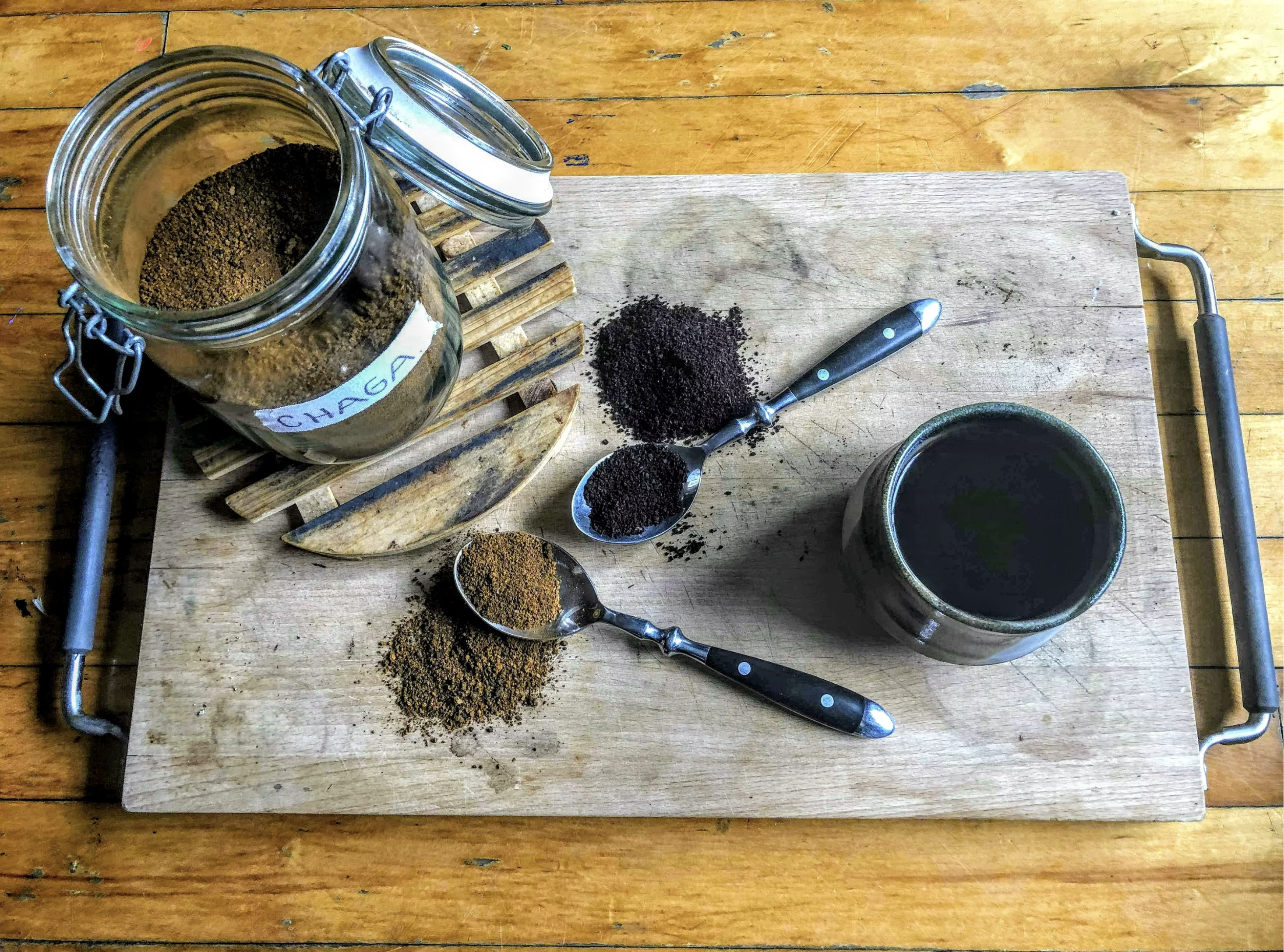
There is tea and then there is tea. According to your friends you can pretty much make a tea from anything these days, from chaga mushrooms to Russian brick tea (made from actual bricks) to panda dung tea. But here we are only going to talk about true tea. The kind the Queen of England drinks. If you are more curious about coffee and its positive health effects, click here.
True tea is made from tea leaves. All “true” tea comes from the leaves of the Camellia Sinensis plant, an evergreen shrub native to Asia — although many tea varietals from black teas like English Breakfast and Earl Grey to Chinese and Japanese green teas and white teas, can be derived from this one plant depending on how the leaves are processed.
Camellia Sinensis, the tea plant
As you probably know tea is the the world’s most frequently sipped beverage worldwide after plain water. Typically cheaper than coffee, it’s as beneficial to your budget as it is for your health. Research shows tea can lower risk of heart disease, stroke, and Type 2 diabetes. It helps with glaucoma and cognitive decline, and is at once soothing and energizing.
But with more than 3,000 tea varieties on the market, which are the healthiest? Turns out, all of them.
What is the basic difference between black and white tea?
White tea and black tea are made the same way by infusing leaves of the same plant in hot water. What makes these teas so different from each other is the way the leaves are treated in the production process. White tea is only lightly processed while black tea leaves undergo a longer process known as oxidation.
White tea has the least caffeine, green the most, with black tea in the middle range.
Approximately 80 percent of Americans are tea drinkers, and that percentage is even higher for millennials. This story doesn’t cover herbal teas, or tisanes, which aren’t actually teas at all. Herbal teas such as chamomile or ginger are simply infusions of herbs and spices.
Grow teas in your garden or front lawn.
No-calorie true teas offer a way to up our intake of disease-fighting plant compounds, such as flavonoids – one of the antioxidants behind for many of tea’s health benefits.
“In the U.S., tea drinkers have the highest flavonoid intake,” says Jeffrey Blumberg, Ph.D., a professor of nutrition at Tufts University. He suggests choosing a different tea to go with different meals or times of day, just like we do with wine and fruit juices.
Mint tea service
There’s no standard recommendation as to how much we should drink, although – as with other plant foods – more is generally a good thing. Typically having 2 to 3 cups per day produces health benefits.
Recently, the European Food Safety Authority (EFSA) released a report on the safety of catechins from green tea, concluding that the catechins from green tea as a beverage are generally safe, even if you drink a lot of green tea. However the same does not apply to green tea extract supplements, which have been linked to liver damage. So skip the supplements, and grab a cuppa instead.
Omar is a Swahili man from Lamu. Here our writer Tafline pictures him drinking tea.
What are the different varieties of tea?
White Tea is made by rapidly steaming and drying young tea buds to inactivate the enzymes that cause browning. White teas contain the most catechins, a type of flavonoid that may help keep blood vessels open and help the body break down fat.
Green Tea is made by immediately steaming fresh picked leaves so that they retain their green color. Green tea is a good source of plant compounds called catechins, which have been found to reduce LDL (bad) cholesterol and counter inflammation. Added bonus: squeeze lemon juice into green tea to help its beneficial compounds survive digestion.
Oolong tea, which is between a green and a black tea, is briefly exposed to oxygen before it is steamed.
Black Tea is made by rolling or crushing leaves, releasing an enzyme that oxidizes the catechins. The fermentation creates the brew’s rich flavor and dark color. Black brews may help strengthen your skeleton. Post-menopausal women who regularly drank black tea had higher bone mineral density in the lumbar spine and hip, according to a Japanese study that tracked 498 women over five years.
Reconsider that splash of milk, however, as milk proteins can bind with some of the beneficial compounds in black tea, reducing your body’s ability to absorb them.
How to steep tea
Various tea types come with their own requirements for steeping. “White and green teas are best with cooler water and shorter steeping times,” explains Melanie Barbusci, customer engagement director for David’s Tea. She adds that if you don’t like green tea, you may be burning or over-steeping the delicate leaves. It should taste sweet and vegetal — not bitter. Black tea, on the other hand, can handle a hotter temperature and slightly longer steeping time.
Still, the average brewing time for tea is relatively short, but that’s not the case with tisanes. “While the perfect cup of tea might take two or three minutes to steep, an herbal infusion or tisane will take anywhere from four to 15 minutes,” explains Kristi Grotsch, a tea sommelier-in-training with the Shangri-La Toronto. “It takes time for the flavors to develop,” she says.
Another secret to a perfect tisane is using boiling water — and keeping your cup or teapot covered while it’s steeping to preserve the heat and prevent aromas from escaping.
If “breakfast” evokes a chilly bowl of cornflakes and a fast cup of coffee, it’s time you treated yourself better. It’s hard to say which meal is our favorite, but here are the reasons to make the day’s first meal a good one. For a quick, healthy breakfast, avocado is your ally.
Half a medium-large avocado will be enough for two slices of toast. Keep the pit inside the unused avocado half, wrap it in a clean, previously-used plastic bag (here’s why we never throw plastic bags out), and store it in the refrigerator for a snack or guacamole later on.
While the toast is toasting, cook the scrambled eggs, then assemble everything on a plate. The whole thing shouldn’t take longer than 10 minutes.
Avocado and Egg Toast
Makes 2 slices of toast with toppings
Ingredients:
1-2 eggs
2 tablespoons chopped onion
1 tablespoon olive oil or butter
2 slices whole-grain toast
1/2 medium-large avocado
Salt, pepper, and paprika to taste
Sliced baby radish or other vegetable for garnish
A few coriander leaves or scallions
You’ll need 1-2 eggs, depending on the egg size and how loaded you like your toast.
Fry the chopped onion in the oil or butter until soft, but not browned.
Break the eggs into the skillet, reduce the heat, and cook, stirring, until the eggs are scrambled with the onions: about 2 minutes.
Season to taste.
Place the avocado half on a chopping block or flat plate. Cut 4-6 slices into the flesh, diagonally. With a large spoon, ease 2-3 slices right onto one slice of toast. Use a fork to gently smush the avocado slices onto the toast. Repeat with the second slice of toast. Salt the mashed avocado.
Spoon the scrambled eggs over the avocado. Sprinkle a little paprika over all. Garnish the toast with slices of baby radish, or a halves of cherry tomatoes, or a sliced cucumber, or a slice from a colorful bell pepper. Scatter the chopped cilantro or scallions over the plate. Remember to eat the garnish.
Not sure how to pick a good avocado? This video has great tips.
UK Green Investment Bank and UAE’s Masdar hope agreement will deliver better solar future.
Organizational skills, effective scheme, and money can make you a successful businessperson. Majority of people think that they will open shop and customer are at the doorstep. It is a hard job to take the small business to great heights. Appropriate use of time, implementation of planning and proper investment of money are keys to success in the business world. Remember, you have to compete with the business tycoons to rise and prosper.
Take Your Business Out of the Crowd
You must be a creative person to attract and target the customer in the implementation of your business plan. If you are offering the traditional products, people don’t find any reason to buy your product. Your competitors have already won the customers’ trust. Uniqueness and quality can bring people to your doorstep. Consult with the professionals who have experience in the field. They may tell you about the new approaches, seek these new ideas and apply them.
Know the Risks and Rewards
No business can give you 100% guarantee of success. Business may collapse so you must understand the risks and rewards associated with the business. Demand and supply is the principle that plays the primary role in the success of a business. Don’t invest money in a business that is out of order. It is true that risk is necessary to grow, but you should take the calculated risk. Many businesses push to the wall only because their owners to take into consideration the business’ downsides.
Look for the Most Profiting Business
Always go for the profiting business. Don’t invest money in an industry that may collapse like a bubble. Investment in a real estate is a fascinating option. It gives enormous profit; that’s why it is called cash deposit business. Additionally, investment in stock markets can provide the massive advantage. You can give a physical form to your dreams. However, similar to other business, you may lose hard-earned money in stock markets. Get help from the professionals of different forums such Investors Hangout to mitigate the challenges and risks.
Learn from Your Competitors
Your competitors can be your teachers who teach how you can build a successful business. Analyze the companies that are ruling over the market. Study their tactics and apply them to your business. It is better to polish their schemes instead of copying them thoroughly. You must remember that success doesn’t come within few nights. Show your patience and work hard until reaching the wished destination. Your business logo will be a brand, but it will take time. Also, you must have excellent knowledge of the business. If you invest money without experience, you are going to flop; this is a rule of thumb. You can beat your competitors with knowledge and positive approach.
Get Advice from the Professionals
You must look for the sources of inspiration and intelligence. All of us have limitations so we can’t be the master of everything. Always learn from the professionals and seek experienced advice people who know how to run the business. There will be many well-wishers who want to take you a better place. Join the community of business people; it is a hub of new ideas. Follow the suggested provisions and enjoy the warmth of successful life.
These days people seem to be much more preoccupied with living healthier lifestyles and embracing a greener way of life. This is great because it helps us ensure that we are doing more to look after the planet and protect the environment. You can make changes to your life that will help you to start becoming more environmentally friendly and putting Mother Earth first.
The great news is that it is easier than ever to be more eco-friendly nowadays, so there is no excuse. You must make sure you come up with changes in your life that can help you be greener. It’s important for you and your family to embrace this, and you will notice positive changes as a result. These are some of the great things you can to become more eco-friendly in your life.
Renewable Energy
More and more people each year are turning their attention toward the world of renewable energy. It’s so great that we can embrace things like wind energy and solar power these days, and you need to make sure you do more to integrate this into your life. For instance, you might decide to go for solar panels on your property as a way of enjoying free energy. Sure, there will be some outlay initially, but you’re going to be making a lot of savings as a result.
Recycling
Recycling needs to be much more of a focus in your life as well. Fortunately, this is something we are all generally pretty good at – but we could also probably do more. There are so many things that make recycling important, and it is essential for protecting animals and the environment. Make sure you recycle everything you possibly can as this will ensure that you do your bit to help protect the planet.
Change Your Skincare Products
We use so many cosmetics and skincare products on a daily basis, and we often don’t think about what they are doing to the environment. That’s why you need to make sure you change to products that are a little greener. This might involve educating yourself about cosmetics through places like the Ogle School in San Antonio or even researching individual products. Many of these are much less toxic and damaging than others and finding out which is which is really important.
Drive Less
Driving causes pollution which is harmful to the planet. We all know that, and yet many of us drive on a daily basis. You should try to cut down on your car usage in order to help protect the planet more. You could do a car share with friends, use more public transport, or cycle and walk instead. Driving less is one of the most important factors when trying to reduce your carbon footprint and embrace a greener way of life.
Going green is the first step toward making the planet a better and healthier place once again. There are a lot of options when it comes to things you could do to be more eco-friendly. Start at home, and then try to incorporate a greener approach into other areas of your life.
If a tree falls in the forest, does anyone hear? Does your artificial intelligence-driven software even ponder this philosophical paradox? With so much of our world out of whack these days, I mean, you know … you are reading the news. The ice caps are melting. The North Pole is warmer than Bucharest, and famines in Africa are so dire that it hurts to hear more about them. We can easily trace our planetary perils to humanity, a hungry species that has tipped the scales, and has created imbalance in resource allocation. And yet another agtech startup comes along, sometimes with hardware, sometimes with software — or both — claiming they have the answer to world hunger and that it’s called artificial intelligence.
How does that work? Artificial intelligence isn’t a plug and play solution that you can build in a bunker or basement at an MIT weekend hackathon or buy through the Google Play app store. It’s a distinctly specific thing that is architected from day 1 into the company business model and which should be superbly flexible, sophisticated and nuanced in design, application, deployment and oversight.
Now, hundreds of new agriculture companies are springing up building greenhouses, putting sensors into the ground or onto satellites. They are sending out drones and airplanes to collect scads of data from millions of IoT sensors. We know this pattern. It’s the same as what we have done in the past but only faster now. But as eloquent as the technical white papers may promise in these new companies, artificial intelligence is only as good as the people and values creating the rules. It is only as good as the players and stakeholders.
I am going to give you an example. AI is supposed to be a rule-based system. Define, let’s say, what success looks like on a farm, such as ample fertilizer to the tomatoes, quickly-remediated pest infestation, a harvest that’s bountiful, and red. And indeed those sound like reasonable goals. But today when we dream up what we want from or food system, we are setting them with human rules from the West, with our limited understanding of how people and nature behaves.
Developing Nations where most food is farmed is a black box. Nature, which presents infinite complexities is even more vexing. It represents the equivalent of billions of black boxes stacked like the (those Russian dolls…?). We are just beginning to learn how the vast communication networks in forests as species of the same even learn to communicate outside their species “caste” to other unrelated species about where nutrients, water and the sunshine lies. There is a notion that if the forests survives, we all survive. Read the book The Hidden Life of Trees for a primer.
In many ways the way of Nature is to think like a mountain, as famed American environmentalist Aldo Leopold put it. Decades ago, he witnessed the destruction of wild wolves on the mountains of Wisconsin and how their extinction there led to the overpopulation of deer which then destroyed all the trees on the mountain. The mountain was not happy and took decades to recover. Leopold coined the term “mountain thinking” to mean having a complete appreciation for the profound interconnectedness of the elements in our ecosystems. Think like a mountain, rather than an isolated individual.
Today, I see how simplistic the rule-based system is for artificial intelligence and I see who is building these systems: young guys drinking Soylent in Silicon Valley. They are often isolated individuals or worse, profit-only driven enterprises. And we know well how that story has been doing until now… (Psssst .. Monsanto, Syngenta, Dow, Dupont…)
So when we humans are building AI for a planet in peril and when we need to recalibrate our food system, we need to consider all the stakeholders, not just us. What about the trees, the wolves, the deer, the aspen trees, the mountains? The mycelium, the bees, the bacteria that should live in the soil had we not destroyed it by over fertilizing and over pesticiding it? Are they not stakeholders too?
Consider the barriers you as a parent, uncle or auntie might setup up for a toddler. You would just step over the baby gates, right? That’s about how easy it is for a far more intelligent AI than us to bypass the rules and morality we are putting in place. If we don’t think about this now, it might be too late and computers will try to do it for us. We aren’t alone, and we aren’t crazy.
We love Elon Musk, not because he sends cars in space, or builds Boring Companies, we love him mainly because he shares our concerns. That AI not built correctly, will be more dangerous that nuclear warheads in the hands of a Middle East dictator. We desperately need a coalition of bright minds, elders, scientists, naturalists; we need to understand the language of plants, of the wind and the soil, and only then can we begin to lay down the rules of how nature should be governed. Of how AI can be created for the planet.
We believe that using blockchain technologies we can connect billions of people to billions of data points, and together decide unanimously what is morality and what success should look like.
To continue a recent Musk quote at the SXSW 2018, “that AI should maximize the freedom of actions of humanity,” we’d like to add that AI should maximize the freedom of actions of humanity and the natural world. In short, to survive and thrive into the next 100 years we need to go back to a little more like mountain thinking.
In September of 2017, Orb Media, a non-profit digital newsroom based in Washington, released the results of the first scientific study on the presence of microplastics in tap water. The study tested water flowing from taps in 14 countries around the world. From New York to Uganda, microplastics were present in 83% of the samples. The challenge today is to reduce plastic pollution in water and the air. We’re not sure if installing a refrigerator water filter will do the job, but it might at least make you feel better.
What are microplastics? They’re minuscule particles of plastic that break free from all kinds of products in daily use, such as fabrics based on synthetic fibers, and from industrial waste. These particles continue splitting off into ever smaller pieces by ordinary friction – for example, in the rub and tumble of polyester-based clothes in your washer and dryer. That’s a major contributor to microplastic pollution. Or the tides grinding plastic bags against the ocean’s rocks and sand.
Microplastics originating in homes and factories get rinsed away into the water system, or are released into the air. Such as tire dust, the dust rubbed off tires in use. It enters water ways via sewers when rain rinses streets and highways. House paint and paint for industrial use erode, and their dust drifts into the atmosphere to settle on the surface of the ocean.
Plastic never goes away, it just keeps breaking down. That’s how it can enter the human body. According to the Orbs report, microplastics may erode into particles minute enough to pass through the intestinal wall and travel through the body to settle in the lymph nodes and organs.
Consider lymph nodes, those body filters that fight invading viruses and microbes. How well can they function when clogged with plastic sludge? According to the National Cancer Institute, the number of cancer cases will grow to 22 million in the next 20 years. Can it be said that microplastics in our bodies are one more factor raising today’s rampant cancer statistics?
Molly Bibngham, founder of Orb Media, says, “Scientists say they don’t really know how these microplastics reach our taps or what the health risks might be. But microplastics have been shown to absorb toxic chemicals from the marine environment, and then release them when consumed by fish and mammals.”
In other words, microplastics are like sponges for toxins from sewage, industrial chemicals, pesticides, and other pollutants in the oceans. Fish absorbing the toxin-laden microplastic particles pass them back to us when we eat the fish. This news isn’t new. Studies have been conducted on the topic for years, such as this one, published in 2013. We reported on deaths of marine creatures from plastic pollution back in 2011.
What about meat from animals who drank water polluted with microplastics? Or even vegetables irrigated with such water? And ultimately, how is plastic already affecting the billions of adults and children who absorb the invisible particles in their drinking water – inhale them with every breath?
The scenario looks dire, but there’s hope. The Orb Media investigation has raised red flags with environmental scientists around the world. Movements such as The Story of Stuff Project got microbeads banned from consumer products in the US in 2015. You can do your bit too.
Examine labels on cosmetic products – if they contain polyethylene, polypropylene, polyethylene terephthalate or polymethyl methacrylate, they contain plastic. If you can, buy clothes made from natural cotton, wool, hemp, linen and silk fabrics. Wash laundry less often (use your bath towel at least twice, for example).
Take the plastic supermarket bags you already have to the store and re-use them, instead of putting your purchases into new ones. Never mind looking like an eco-nut; soon recycling bags at the store will be mainstream.Take your own mug or drinking glass to work or school, instead of using disposable cups. Buy a metal straw or two so you won’t be tempted to pull out a plastic one out when you buy a drink.
You get the idea. Choose the natural over the synthetic; reuse what plastics you have. It would take an unprecedented, globally coordinated effort for individuals to make a difference, but at least, you’ll be setting an example. The best thing you can do is educate yourself and make your voice heard via petitions and trustworthy bodies dedicated to reducing plastic pollution. Spread the word.







 Anywhere you live, whether it’s the hot, dry desert, or the more temperate states like New York or anywhere in Canada, when you want to get those seedlings to grow and stay warm overnight or on cool cloudy days as summer is coming in, there is nothing like a greenhouse. Of course you can start your seedlings on your kitchen counter, but if you have plans for a garden that wants to expand, you will need more space. Maybe you’ll even create a little cosiness that you can sit in after your seedlings have grown out of their first home.











 Sugar scrubs refresh and moisturize your skin, leaving a lovely fragrance behind. And why should you pay for a commercial product if you can make your own scrub at home? The ingredients are inexpensive, and you probably already have them in your pantry.
 There is tea and then there is tea. According to your friends you can pretty much make a tea from anything these days, from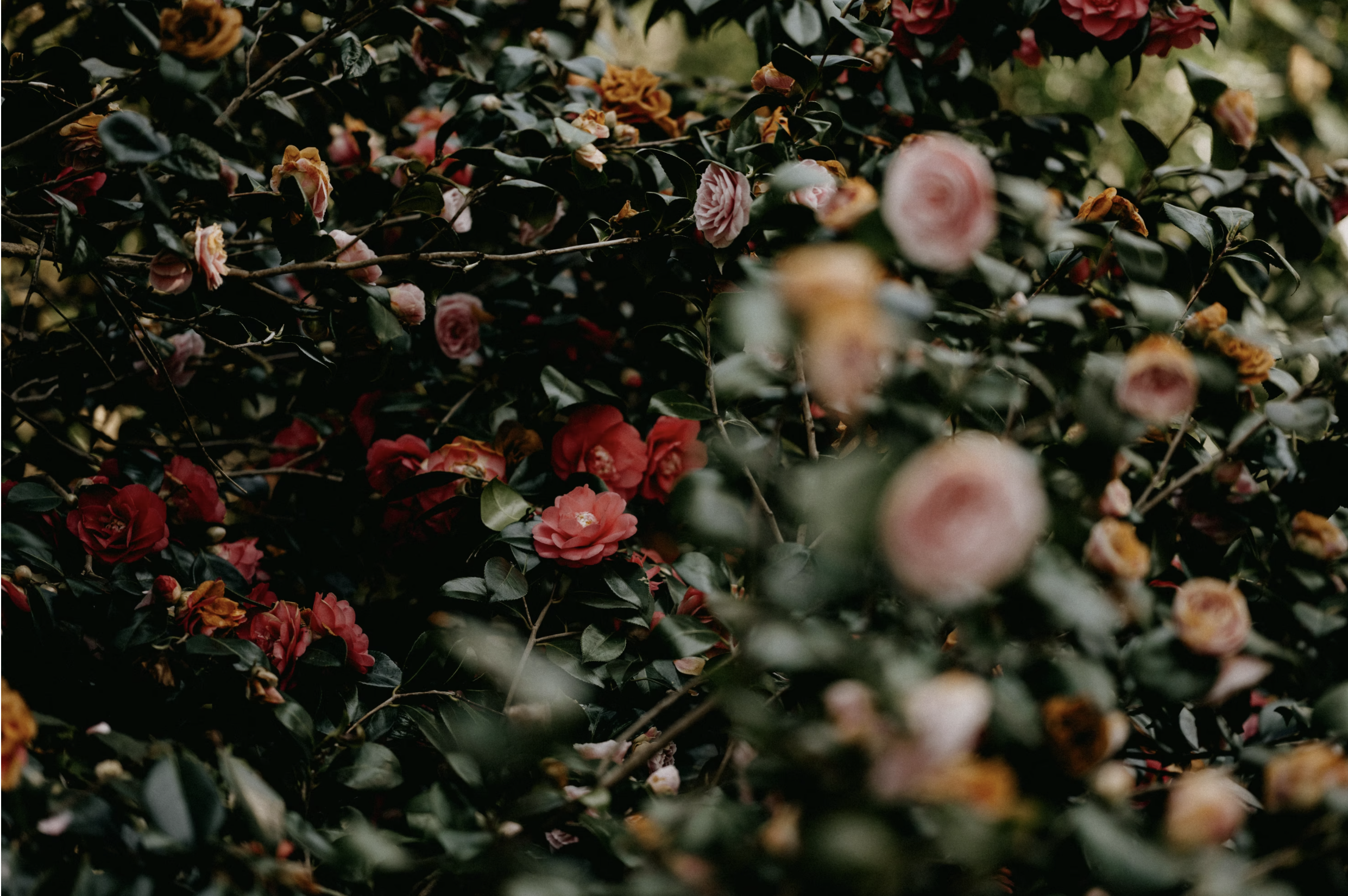




 And for maximum health rewards, avoid added flavorings and sugars. Don’t like the taste? Try making sunscreen from tea instead!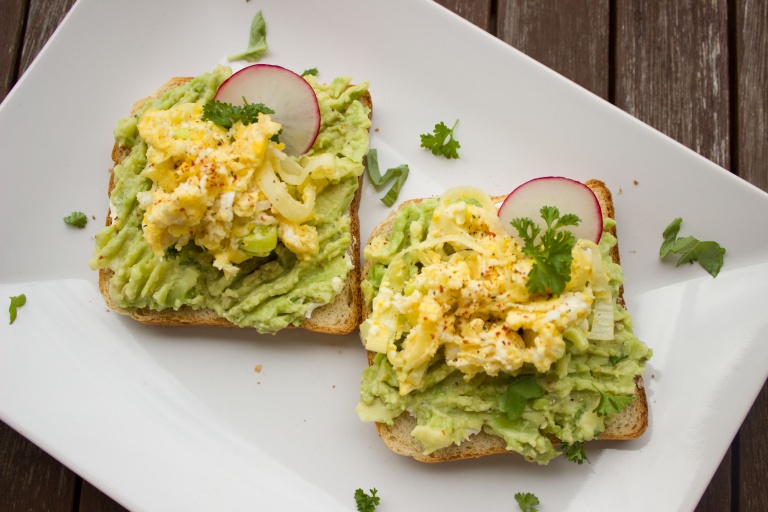











 Karin Kloosterman is the editor of Green Prophet and the founder of