The Dead Sea Scrolls are ancient handwritten fragments from every book of the Old Testament except for the Book of Esther. They are about 2,000 years old and were found by a Bedouin herdsmen in caves near the Dead Sea in the 1950s. The Dead Sea Scrolls have been called the greatest archaeological find of the 20th century.

Now using advanced imaging equipment, the Israel Antiquities Authority has discovered letters and text on fragments of parchment paper that were previously invisible to the naked eye. The new discovery adds pieces to the mysteries, and open new ones too.
Original Dead Sea manuscripts
The never before revealed fragments were shown today as part of the international conference – The Dead Sea Scrolls at Seventy. New fragments were discovered and identified from the Books of Deuteronomy, Leviticus and Jubilees -– scrolls that researchers are already familiar with.
During the 1950s archaeologists and Bedouin discovered the scrolls in caves near Qumran at the Dead Sea. Among the cache were tens of thousands of parchment and papyrus fragments written 2,000 years ago and belonging to approximately 1,000 different manuscripts.
Due to their small size and precarious physical state, some of these fragments were placed in boxes without being sorted or deciphered. Now they have been taken out and scanned. Read below for some of the messages.
New imaging technology (originally developed for NASA) used in the digitization project can identify script on some fragments. The identification of new letters and words provides new data for the study of the scrolls. One of the fragments may even indicate the existence of a previously unknown manuscript.
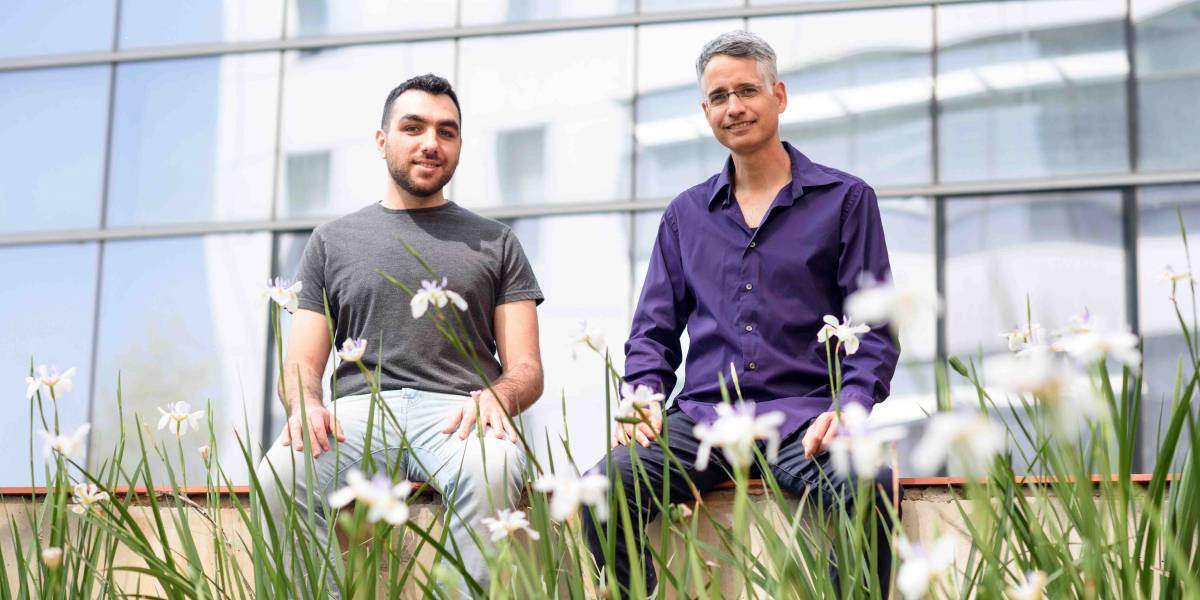
The new script was discovered by Oren Ableman (below) – a scroll researcher at the Dead Sea Scrolls Unit of the Israel Antiquities Authority and a PhD student at the Hebrew University of Jerusalem. He examined a few dozen fragments that were discovered in “Cave 11” near Qumran and was excited to discover traces of ink on many fragments that appeared blank to the naked eye.
Although only a few letters survived in these small fragments, sometimes this was enough to reconstruct the text. Still, due to the fragmentary nature of the evidence these reconstructions are not certain, but are highly likely.
Fragments of particular interest that provide new insights for the research of the Dead Sea Scrolls include the following:
A fragment belonging to the Temple Scroll, a text dealing with directions for conducting the services in the ideal Temple. In current scholarship there is a debate if there are two or three copies of the Temple Scroll found in Cave 11 near Qumran. The identification of the new fragment strengthens the theory that a manuscript given the number 11Q21 is indeed a third copy of this text from Cave 11.
In addition, a fragment has been identified as belonging to the Great Psalms Scroll (11Q5). The new fragment preserves part of the beginning of Psalm 147:1. The end of the same verse is preserved in a large fragment that was purchased and originally published by Yigal Yadin. The new fragment indicates that the text of Psalm 147:1 in this manuscript was slightly shorter than the Hebrew text commonly used nowadays.
Another fragment contains letters written in the ancient Hebrew script (paleo-Hebrew). This fragment could not be attributed to any one of the known manuscripts. This raises the possibility that it belonged to a still unknown manuscript.
New research from the University of East Anglia has confirmed a dramatic decrease in oxygen in the Gulf of Oman part of the Arabian Sea. But the environmental disaster is worse than expected.
The ‘dead zone’ was confirmed by underwater robots called Seagliders – which were able to collect data in areas of water previously inaccessible due to the piracy and geopolitical tensions.
The robots are about the same size as a small human diver, but can reach depths of 1000 yards and travel the ocean for months, covering thousands of miles.
Two gliders were deployed in the Gulf of Oman for eight months. They communicated by satellite to build an underwater picture of oxygen levels, and the ocean mechanics that transport oxygen from one area to another. Where they expected some oxygen, they found an area larger than Florida or the country of Scotland with almost no oxygen left.

The research was led by Dr Bastien Queste from UEA’s School of Environmental Sciences, in collaboration with Oman’s Sultan Qaboos University.
Dr Queste said: “Dead zones are areas devoid of oxygen. In the ocean, these are also known as ‘oxygen minimum zones’ and they are naturally occurring between 200 and 800 meters deep in some parts of the world.
Disaster waiting to happen
“They are a disaster waiting to happen – made worse by climate change, as warmer waters hold less oxygen, and by fertiliser and sewage running off the land into the seas.
“The Arabian Sea is the largest and thickest dead zone in the world. But until now, no-one really knew how bad the situation was because piracy and conflicts in the area have made it too dangerous to collect data.
“We barely have any data collected for almost half a century because of how difficult it is to send ships there,” he says.
Pirates and kidnapping make it nearly impossible for researchers to want to go out and venture there. Some do like this group EcoOcean who run an eco-ship.
“Our research shows that the situation is actually worse than feared – and that the area of dead zone is vast and growing. The ocean is suffocating.
“Of course all fish, marine plants and other animals need oxygen, so they can’t survive there. It’s a real environmental problem, with dire consequences for humans too who rely on the oceans for food and employment.
“Another problem is that when oxygen is absent, the chemical cycling of nitrogen – a key nutrient for plant growth – changes dramatically. Nitrous oxide, a greenhouse gas 300 times more potent than CO2 is produced,” he added.
Computer simulations of ocean oxygen show a decrease in oxygen over the next century and growing oxygen minimum zones. However these simulations have a difficult time representing small but very important features such as eddies which impact how oxygen is transported.
The team combined their Seaglider data with a very high-resolution computer simulation to determine how oxygen is spread around the north-western Arabian Sea throughout different seasons and the monsoons.
They found that the deadzone moves up and down between seasons, causing fish to be squeezed in a thin layer near the surface.
“Management of the fisheries and ecosystems of the western Indian Ocean over coming decades will depend on better understanding and forecasting of oxygen levels in key areas such as the Gulf of Oman,” added Dr Queste.
When Vital Zinger was a baby, she was paralyzed by cancer. Today, Vital is a world champion dancer, a pioneer for accessibility, and a queen of wheelchair sport!
As an Israeli dancer and a disabled dancer who has won awards for her latin dance, she not only knows how to dance in a wheelchair and succeed in sports with her disability, she has the pride, determination and spirit to work past any adversity.
Vital has become an activist in Israel for wheelchair accessibility, achieving her first victory at her own high school when she was just 16 years old. She went on to be a lawyer and discovered a serious passion – and talent – for latin para dancing!
Now, Vital is a world champion wheelchair dancer, and has proved that with perseverance, you can transform any challenges into success.
She’s not the only one to dance through adversity. See the hero that helps Syrian children dance through their troubles, below.
This 1.5 MW solar PV project in Jericho was the largest solar energy installation in the West Bank, until now
We want to high five you whenever we hear news like this, news that trumps violence and despair: Two new large solar energy photovoltaic (PV)projects are being built in the West Bank with energy output totalling 17MW. The project is part of the Noor Palestine Program which is designed and implemented by the Palestine Investment Fund (PIF).
Msader for Energy Systems Co and ET Solutions International will build and oversee the solar energy installations.
With a total capacity of 17 Megawatts, the two projects will operate Jericho and Tubas by the end of 2018. These two PV plants will be connected to grid and to the Jerusalem Distribution Electricity Company and the Tubas Distribution Electricity Company. The two PV plants will cover the electricity needs of public facilities, factories, households and schools. Solar panels will be placed on top of the facilities.
Solar energy projects in Palestine have a strategic economic, social and political dimension, as they contribute to the creation of jobs for graduates and engineers working in the sector and also develop their skills. Also, electricity bills can be reduced by about 50% over the next 25 years.
Investing in such projects can also reduce the need to import electricity from the Israeli Government, which constitutes more than 80% of the electricity imported to Palestine. If the Palestinian Authority can produce its own power it can certainly be more proactive and stable in governing its future. And of course the issue of climate change and greenhouse gases is a meaningful one in the Middle East where temperatures are almost unlivable in some summer months.
Solar water heaters in Israel
Like Israel does, over half of all households in Palestine utilise solar energy heaters to heat their hot water. In Israel the tanks on the roofs are white, the West Bank they are black. The Jericho plant was commissioned in 2014, but it’s a tiny drop in the bucket to what is needed. Although a very high percentage of Palestinian houses are connected to the central grid, powering remote villages with smaller-scale photovoltaic systems (PV) would be much more feasible than extending the grid.
Comet ME solar energy panel
One of the local NGOs I know and have visited is Comet-ME, who along with the Dutch Government erected solar/diesel hybrid systems in the Palestinian village of Jubbet ad-Dib. They are constantly in conflict over building permits but continue to educate and install solutions for solar and water to those that need them most.
The first Tesla 3 has arrived to Morocco thanks to a group of electric vehicle enthusiasts, the Tesla Club Morocco. One of the challenges, the biggest challenge, for any nation or individual looking to import electric cars is making sure there is constant and reliable access to electricity.
There are 3 older Tesla models circulating the nation, and enthusiasts there boast that 20 have visited from foreign countries like Portugal, Germany and Austria.
See the image above, and the Tesla 3’s first Moroccan test drive with Khalil, who has put in a significant amount of effort into organising the EV community in Morocco. He and a few other members of Tesla Club Morocco dug deep into their own pockets to install a $25,000 fast-charging station along the highway for public use.
They also purchased Tesla destination chargers to install for the public using their own money as the country is not supported in the destination charging programme. Funny thing is, he doesn’t even own a Tesla yet and is putting in more effort to advance the Tesla community than most people out there!
Glitz and glamour will be the hallmark of the annual 2018 VGMAs scheduled for Saturday, April 24 at the Accra International Conference Center. News in Ghana report that it will be 19th edition of the event with the theme ‘Our Music beyond Borders.”
The VGMAs is one of the most prestigious events in the music industry that aims to honor, reward and identify key players for their outstanding works in the music year 2017/2018. Many have taunted it as the ‘Grammy’s’ of Ghana. We reflect on some of the awards that have been held in the 18 years organized by Charterhouse Ghana whose reign may come to an end.
https://www.youtube.com/watch?v=4NJfNiQVbvo
Retention Artiste of the Year Award
The award is currently held by Joe Mettle who also broke the record for becoming the first Gospel musician to take home the award. It seems like history will repeat itself this year as he is also in the nomination list for the award. If Joe Mettle wins the award again, he will also hold the record of first artiste to retain the award.
First posthumous winner
This is a new category introduced at the 2018 VGMAs. In the history of the event, there has not been a posthumous awardee. The favorite for the nominations will be the late Ebony Reigns who died in a tragic accident. This will add to her sixth nomination at the event.
First Female Artiste of the Year
Gender inclusivity has become part of the award scheme as this year saw the opening of the award. The women in the music industry have really leveled the playing field to battle it out with their male counterparts.
All eyes will be on the late Ebony Reigns, who despite her death has really elevated the female musicians in the country. Despite other deserving female artistes nominated for the award, it will be a no-brainer that the late star will take home the first ever female award at the 2018 VGMAs.
Most Awards won in a night
Stakes are running high to see who will break the record set by Highlife stalwart Ofori Amponsah in 2005 when he took home seven awards at the VGMAs. All eyes will be on veteran rapper Sarkodie to break the streak with nine nominations in different categories. All he has to do is add one more honor to beat the record.
Artiste of the Year awards
Ever since the debut of the award at the VGMAs, only two artists have had the privilege to take home the award two times in a row. It will be multi-talented artist VIP who rebranded to VVIP who took the award in 2004 and 2011 versus rapper Sarkodie who bagged the award in 2010 and 2012. It will be interesting to see who of the two acts will be crowned three time winner of the award.
Activists dressed as penguins by the Dead Sea in Israel, asking for an Antarctic Ocean Sanctuary on Penguin Awareness Day 2018.
Of course animals don’t live in the Dead Sea, except for maybe a strange bacteria that can tolerate the high salinity and mineral content. If so what were penguins doing at the Dead Sea and in Israel’s desert? In fact you might have seen penguins exploring a city near year earlier this year or even today. The ruse is Greenpeace’s way to say wake up, people. We need to build a sanctuary in the Antarctic Ocean as ice caps start melting.
The two-legged walking about town started on Penguin Awareness Day 2018 (20 January, this year), where groups of penguins have been popping up in iconic locations around the world. Volunteers hope to build an international Antarctic Ocean Sanctuary –– a safe haven for penguins, whales and seals, putting the waters off-limits to the industrial fishing vessels sucking up the tiny shrimp-like krill which Antarctic life relies on.
The proposed reserve will be five times the size of Germany.
To help mark the occasion, Tel Aviv’s city hill lit up with the image of a penguin to mark Greenpeace’s Penguin Awareness Day back in January.
In a statement, the environmental group said the image displayed in lights on Tel Aviv’s city hall would be shared worldwide as part of its campaign for the creation of a nature reserve on Antarctica’s shores.The city halls’s lights are often used to show solidarity with different causes or following terror attacks around the world.
The benefits of an Antarctic Ocean Sanctuary would be global. Healthy oceans sustain precious wildlife, help limit climate change and provide food security for billions of people.’
Activists dressed as penguins by the Dead Sea in Israel, asking for an Antarctic Ocean Sanctuary on Penguin Awareness Day 2018.
الدار البيضاء، ٢٩ نيسان ٢٠١٨: انضم اليوم مئات الأشخاص إلى لافتة غرينبيس البشرية على شكل الشمس تقول: “تحرر – طالب بالطاقة الشمسية”، مع المعلم مسجد الحسن الثاني في الخلفية في الدار البيضاء -المغرب.
أرسل المشاركون رسالة في اللغات الثلاث، العربية والإنجليزية والأمازيغية، تدعو قادة العالم ولاسيما قادة الشرق الأوسط وشمال أفريقيا إلى تسريع الانتقال إلى الطاقة المتجددة ووضع حد لعصر الوقود الأحفوري القذر.
قال جوليان جريصاتي، مسؤول حملات غرينبيس المتوسط في العالم العربي وشمال أفريقيا: “لقد اخترنا المغرب لأن لا يمكن الجدل في انه القائد العالمي في مجال الطاقة المتجددة، وبالتالي فهو البلد الذي نتوقع منه الأكثر!”
وأضاف جريصاتي “اكتشف العالم خلال مؤتمر الأمم المتحدة حول المناخ (كوب 22) تفاني الشعب المغربي القوي في محاربة التغير المناخي. واليوم أظهروا مرة أخرى عزمهم الراسخ على رؤية عالم مدعوم بالطاقة المتجددة بنسبة 100٪ وتحررهم من قبضة الوقود الأحفوري القذر. “
وعلى الرغم من أن المغرب سجل إنجازات كبيرة في انتقاله نحو الطاقة المتجددة بفضل مشاريع الطاقة الشمسية والرياح الضخمة، إلا أن البلاد لا تزال متأخرة كثيراً عندما يتعلق الأمر بتوزيع الطاقة الشمسية. هناك حاجة لتعديل قانون الطاقة المتجددة الحالي (13-09) لجعله أقل إزعاجًا وبيروقراطيًا للأفراد لإمتلاك وبيع الطاقة المتجددة، وتطبيق القانون 58-15 الذي يتيح توصيل أنظمة الطاقة المتجددة الى الجهد المنخفض للشبكة.
وأضاف جريصاتي: “على صناع القرار في المغرب أن يضعوا تركيزهم في التغلب على العقبات التنظيمية والبنى التحتية والمالية التي تمنع الأسر المغربية من إنتاج وبيع الكهرباء من النظم الكهروضوئية”. “يجب أن تكون ملكية أنظمة الطاقة الشمسية متاحة لكل مواطن، ولدينا إيمان قوي بأن المغرب سيكون مثالاِ يحتذى به في هذا المجال!”
وختم جريصاتي: “لم يكن هذا اليوم ناجحاً دون جهود المئات من المتطوعين، وشركائنا من المنظمات غير الحكومية، بما في ذلك التحالف المغربي من أجل المناخ والتنمية المستدامة (AMCDD) والحكومة المحلية التي سهّلت التنظيم واللوجيستيات والتراخيص”.
وقد تم تنفيذ هذا النشاط بعد تقديم تدريب بعنوان “تحرك مع غرينبيس” للمتطوعين الشباب المغربيين وممثلي المنظمات غير الحكومية المحلية لتعزيز مهاراتهم في التواصل والتعبئة.
وهذان الحدثان هما جزء من الحراك العالمي Break Break، الذي يهدف إلى إنهاء عصر الوقود الأحفوري وبناء عصر مستدام يرتكز على الطاقة المتجددة. كما أنهما يندرجان تحت عمل غرينبيس في المغرب الذي يدعو إلى توفير الطاقة الشمسية اللامركزية للجميع.
يتمحور حراك “Break Free” منذ العام 2016 حول الناس وهو مدعوم بالتعبئة والعصيان المدني والمواجهة الخلاقة. الآلاف من الأشخاص من أكثر من 25 دولة يقودون التحركات التي تغير مسار الطاقة في عالمنا. ويهدف حراك Break Free إلى إلقاء الضوء وتسهيل وتضخيم وتعزيز المقاومة المستمرة من المجتمعات الأمامية في جميع أنحاء العالم من خلال خلق مليار عمل شجاع.
Hundreds of people in Casablanca joined today Greenpeace sun-shaped human banner reading: “Break Free – Go Solar” with the landmark mosque Hassan II in the background in Casablanca-Morocco.
Participants delivered a message in English, Arabic and Amazigh calling on world leaders notably from the Middle East and North Africa to accelerate the transition to renewable energy and put an end to the era of dirty fossil fuel.
Julien Jreissati, Arab world & North Africa campaigner at Greenpeace Mediterranean said: “We chose Morocco because it is an incontestable global renewable energy leader and therefore the country we should expect most from!”
Jreissati added “During the COP22 the world has discovered the Moroccan people’s strong dedication to fight climate change. Today they have yet again shown their unwavering resolve to see a world powered by 100% renewable energy and freed from the grasp of dirty of fossil fuel.”
Although Morocco has recorded great achievements in its transition towards renewable energy thanks to its mega solar and wind projects, the country is still lagging far behind when it comes to distributed solar energy. There is a need to amend the current renewable energy law (13-09) to make it less troublesome and bureaucratic for individuals to own and sell renewable energy and implement law 58-15 which enables connection of renewable energy systems to low voltage distribution grid.
When I travelled to Morocco, I was surprised to see this solar powered airport at Marrakesh.
“Ownership of solar energy systems should be made available and accessible to every citizen and we have strong faith that the Moroccan government will lead by example!” added Jreissati.
“This day would not have been a success were it not for the hundreds of volunteers, our NGO partners including the Moroccan Alliance for the Climate and Sustainable development (AMCDD) and the local government who facilitated organization, logistics and authorisations” concluded Jreissati.
Prior to this activity, a training called “Act with Greenpeace” was delivered to young Moroccan volunteers and representatives from local NGOs to boost their engagement and mobilisation skills.
These activities are part of the global movement Break Free, which aims at ending the era of fossil fuels and building the sustainable age of renewable energy. They also fall under Greenpeace’s continuous work in Morocco calling for decentralised solar energy for all.
Since 2016, Break Free has been a people-centered movement that is powered by mobilisation, civil disobedience, and creative confrontation. Thousands of people from more than 25 countries drive the actions that are changing the energy that powers our world. Break Free aims to forefront, facilitate, amplify and strengthen the ongoing resistance from frontline communities around the world by creating a billion acts of courage.
Eggplant is the poor man’s meat in the Middle East, but when you serve it stuffed with good local cheese and sweet cherry tomatoes, it’s a luxury. We also do a variation on eggplant Parmesan, here.
This recipe is different in that the eggplants are simmered whole in water before filling and baking, rather than being baked beforehand. This results in a soft, rather than chunky filling. In handling the hot eggplants, take care not to crack or pierce the skins.
Try and find baladi eggplants like the one Karin is holding here. They make for flavorful, tastier eggplant anything. Look for shiny and heavy as signs of freshness. If soft or brownish, dull: don’t buy.
Pair two stuffed eggplant halves per person with plenty of salad and a basket of crusty bread, and you have a delicious, light, vegetarian meal.
Eggplant Stuffed With Cheese And Tomatoes
8 servings – enough for 4 people, or 8 appetizers
Ingredients
4 large, whole and unpeeled eggplants
3 tablespoons olive oil
12 mixed yellow and red cherry tomatoes, halved
1 large onion, chopped fine
2 cloves garlic, finely chopped
1 cup grated cheese of choice (recommended: mozzarella, feta, or kashkeval)
1 tsp. salt, or to taste
2 tablespoons fresh basil leaves, chopped
Salt and pepper
1/4 cup pine nuts
Olive oil for drizzling
Putting it all together
Preheat the oven to 350°F/175°C.
Have ready a large pot (or two, if the eggplants don’t fit into one). Place the whole eggplants in the pot and cover with room-temperature water.
Bring the water to a boil. Cover the pot and cook the eggplants 10 minutes, until tender but not mushy.
Carefully lift the eggplants out. Drain them in a colander and set them on a platter to cool.
While the eggplants are cooling, fry the onions and halved cherry tomatoes in the olive oil until the onions are wilted and the tomatoes are soft and wrinkled. Add the chopped garlic and cook 1 more minute. Remove the skillet from the heat.
Slice each eggplant in half horizontally, leaving the stem on.
With a spoon, remove the flesh from the eggplants.
Place the eggplant shells on a baking tray lined with parchment paper.
Chop the flesh and add it to the skillet with the onions and tomatoes.
Put the skillet back on medium heat and stir the vegetables. Add the cheese, chopped basil and salt and pepper to taste. If using a salty feta, you may not need to add much salt.
Cook and stir another few minutes, just enough to mix everything.
Fill the eggplant halves with the eggplant mixture. Pile it up.
Sprinkle each eggplant half with pine nuts.
Drizzle a little more olive oil over the filling.
Bake for 20 minutes.
Serve hot, and enjoy!
More Middle Eastern Recipes? Try:
Want some more Middle East recipes? Those good for lazy vegewarians?
Meet Ondi McMaster-Chullil, yoga adherent and founder of mindful textiles & clothes company in India, AtelierOM + OM khadi She started her business because of Gandhi.
I don’t follow gurus but I saw video by one, not too long ago and it made me think over and over again. This “happiness guru” said: a smart person does what they love. A genius does what they must.
It stayed with me when I travelled to India earlier this year. That saying came to life when I met Ondi McMaster-Chullil. She was one of the yoga teachers at the Artjuna Cafe in Goa, India. I would later learn that she made clothes that I love, basically the main things I bought for myself in India.
I know it’s not entirely possible and that our egos serve us as humans in specific ways, but Ondi –– as a teacher –– seemed to be egoless. She was there, for you as a teacher. Some weeks later I found out she made clothes, and the shop I had been admiring next door, was hers. I would later learn that Ondi, at least to me, and at least in this moment was one of those geniuses that does what she must. And she would be one of the women I would need to know better as I try to understand my own path to womanhood, personhood.
We usually throw our heart’s values out the window when it comes to work. Most of us work for others, with a value culture already instilled that workplace, or we have to bend what works with our freelance or small business dreams in order to make real money for ourselves and family.
Ondi felt different. She hasn’t stepped out of society, she’s glued herself into the middle of her world, a world she cares about, a world she has the power to transform. She lives in India, but is also connected to the Western world. Find her in New York and the West Coast this summer as she makes and sells her special sustainably-made clothes in India and around the world.
“Trying to be meaningful is not the purpose of this business,” she says. “I am trying to make my life more meaningful to me.”
Ondi is married to an Indian man whom she met at the Gandhi Ashram. He is a South Indian, from the Kerala Tribe, a warm group of people believed to be among the “original Indians,” says Ondi. Today you see a lot of mixed races but their tribe is more ancient, the Dravidian Race she explains: “Our meeting at the Gandhi Ashram was synchronistic. I started my business because of Gandhi,” she says.
Ondi and her main squeeze
Accepted to the National Institute of Design in 1995 to study textiles yet decided against it due to financial costs, she went on to travel independently and study craft makers across India in the 90s, “I needed a mission. If you come to India without one you will get one pretty fast,” she says.
The southern Californian describes herself as laid-back casual. She graduated from highschool in Japan, and out of college worked for Issey Miyake in NYC a company built on the highest form of Japanese aesthetic. “He’s my mentor in terms of design.” You could say that all the work I am doing now in India, I could also accomplish this in Japan.”
OM khadi textiles are hand spun, hand woven, the way Gandhi had encouraged the Indian people to “spin” as an act of resistance to industrialisation”… during their Independence movement in the 1940s.
One of the craftswomen that works with Ondi to create the Atelier Om look.
Like Gandhi suggested his people do, Ondi’s clothes are anti-industrial, slow-made, 100% made by hand – even her upcycled fabrics are hand quilted into new fabrics. Among the people and companies she works with in India – the spinners, weavers and dyers- she supports women 100% first, if she can. In total Ondi works with about 20 organizations that are ethically producing parts of her end-product, from raw materials to the detailing, and she works with them to invigorate their own traditions, while adding a bit. “I’ve inspired the quiltmakers to work a bit differently,” she says, often encouraging oddly fitting pieces to go together in unbalanced ways. “To make things more randomly,” she explains. “When I grow, they grow.”
A total of 50 different fabrics can be found on the floor of her small showcase store in Anjuna, and she carries a similar and wide variety of products at the famous Saturday night flea market. Some of her materials are pure organic cotton, silk and cotton weaves, linen or non-violent silk. She uses all natural dyes in blockprinting, like indigo.
I now own the same coat as Lenny Kravitz
You can “feel” Ondi and her process in the clothes. I ended up splurging and bought 4 coats: an overcoat (the same one owned by Lenny Kravitz she tells me and which is very Japanese), a kimono, a hand-dyed navy blazer and a pink wrap jacket which reminded me of the caftans from Azerbaijan. Compared to shops like H&M or Zara, you can’t compare her pieces to a mass manufactured piece of dead weight. You feel the difference. Your soul does, for sure.
“Yeah I do believe that there is a vibrational quality to my clothes,” says Ondi. “Everything is a vibration and how it was made is implicit in this energy. Every vibration in this room is a record. I heard that if potters had the right laser to listen to their wares you could hear the sounds in the room while they were making their pots.”
This resonates with me, because I used to be a potter.
Ondi’s mother in law
She goes deeper still. “Dosha” is an ephemeral sheath on our body. There are finer sheaths there too, until you reach the first one, the closest to your native spirit in its pure form. It is organic, made of this world.
I watch Ondi go through her things, showing me the patterns, the designs. She’s a woman but carries an innocence with her. She’s strong, beautiful and has a gorgeous body. You can see it. But she’s not exaggerating it. Her clothes accentuate this “sensual” energy or sheath, not the often vulgarized sexual energy played up in fashion today to sell clothes to teenagers.
“Why parade your sexuality for the universe?” she asks. “When there can only be one person you desire.”
We agree that women in burkas are an extreme revolt against this sexualization. Or it’s the “Catholic School Girl Mentality, telling us we can’t so we do. Patriarchy is exerting its last hand on us,” she prophesizes. “It’s killing us and invigorating us. We need to find the moderate way.
“Our consciousness is not the same [as a man’s] and it will never be the same. You need to protect it, knowing that courage is not always being the one on the frontline.”
Clothes can help us, with a “need to be more discriminating in how we act, clothes as a sheath on us, clothes give meaning,” she explains.
OMkhadi, the clothes started as an art installation with Khadi since the hand spun fabric was that which Gandhi always promoted. “And I did some costume design for film and TV around this idea and some world’s came together about the consciousness of materials. I wanted all of those worlds to collide,” Ondi explains.
Look at the result? She does all her hand blockprinting by hand, twice a year. Then works with the raw materials to pull them together into pieces you could wear for years.
While it’s best to travel to Anjuna in Goa to go to her shop or to visit Ondi at the famous Saturday night flea, she does pop up shops in New York City and on the West Coast in the summers. Be in touch here for OMkhadi coming near you. Turns out one of the style of coats I bought is also owned by rocker Lenny Kravitz, says Ondi, not supplying more details. I am sure he feels like a rock star when wearing it.
Also Ondi is producing a few boutique travel India tours so people can also meet what she loves and knows about the crafts, flavors and movements of India. Follow her on Instagram to get the latest.
I confess: my first thought when I wake up in the morning is, “Yay, coffee!” It’s only one cup every day, but I feel grumpy until I get it. The good news is, the daily cuppah fills me with energy and and a good mood.The bad news is, I’m addicted. As addicted to my one cup as the gal drinking 8 cups daily. That’s why the world seems grey on a sunny morning. By the time I wake up, I’ve been too long without my caffeine fix. We have a great article on coffee and health here.
Some experts debate the correctness of using the term “addiction” with regard to coffee and caffeine in general. After all, there’s none of the damage to individual health and society associated with addiction to alcohol and drugs. But if stopping coffee involves physical and emotional symptoms like irritability, fatigue, headache and depression, “addiction” is good enough for me..
Luckily, I’m the earliest riser in the house, which gives me time to make and savor The Drink To Raise The Dead before greeting the family. Otherwise, they’d get a morose face and short answers from me, with “What did I do to deserve that?” reactions, and everyone going around in a huff. An alarming scenario; but preventable, if I just get that coffee magic into me first thing.
The abstract of a scholarly study on the effects of caffeine use from Science Direct states: ” Caffeine is the most widely used psychoactive substance and has been considered occasionally as a drug of abuse. … After sudden caffeine cessation, withdrawal symptoms develop in a small portion of the population but are moderate and transient.”
Research by the Coffee&Health organization indicate that the peak level of plasma caffeine is 15-120 minutes after drinking a normal-sized mug, depending on the health map of the individual drinking it. The uplifted effects may last up to 4 hours.
But coffee is a mysterious, contradictory substance. A review published in the Journal of Alzheimer’s Disease suggests that one cup every four hours will improve mood, but that those who consume high doses may suffer opposite mood swings, with depression, anxiety and the jitters.
What’s a high dose? According to the Mayo Clinic, more than 4 cups a day can cause a variety of unpleasant symptoms, including irritability, fast heartbeat, and migraine. It makes sense that if a person drinks a cup of coffee or an energy drink every few hours to stay alert after restless or too-short sleep, their body will be fighting to shut down and get some rest. Grouchy usually goes with tired.
So what’s the wisest way with coffee? Given that 90% of the world uses caffeine in one form or another, the key word is watchfulness. Enjoy your coffee, but limit it to one cup every four hours. Drink your last cup early in the evening to avoid the well-known insomnia effect that would otherwise catch up with you later that night.
And make sure to make your loved ones feel valued, even before that first cup.
Anywhere you live, whether it’s the hot, dry desert, or the more temperate states like New York or anywhere in Canada, when you want to get those seedlings to grow and stay warm overnight or on cool cloudy days as summer is coming in, there is nothing like a greenhouse. Of course you can start your seedlings on your kitchen counter, but if you have plans for a garden that wants to expand, you will need more space. Maybe you’ll even create a little cosiness that you can sit in after your seedlings have grown out of their first home.
If you have been following some of my gardening adventures you’ll have caught on that I have been using a plastic biodome, built by a company in Turkey. It’s a great starter tent and place to stay but it’s all 100% plastic and I’ve noticed that the covers don’t last for more than one season. My plastic transparent cover has shrunk and ripped from the blazing sun, and the canvas cover, too, hasn’t weathered so well in the damp but not overly wet Middle Eastern winter.
That’s why I find the Dirt Church built by hand by our friends over at Piebird very appealing as a starter greenhouses – if you don’t have the energy or skills to DIY it. You can add a low cost plastic cover or mosquito net when needed. Or you can buy or easily make a canvas cover for it to turn it into a bunkie after your seedlings have outgrown it.
I love that it’s made by hand by Yan and that the income they make goes to supporting a small but important animal rights sanctuary they have built in Northern Ontario, Canada. They even give honeybees sanctuary. Read all about it here.
A cathedral for your kale
Says Yan, “The gothic arch architecture is a funky space for your soil worship. It’s a cathedral for your kale! The back flower opens to vent. ‘The Seed’ is lightweight but very strong. It comes apart into two stackable sections that easily fits into a 4ft wide truck bed for transport. It takes just minutes for you to assemble.
Pick-up at Piebird Farm Sanctuary is preferred (it’s a good reason to visit!); they are in in Nipissing, Ontario. Delivery available for extra charge. This model pictured above called the Seed is $850 CAD or about $600 USD. To order, send half as a deposit to [email protected](e-transfer or paypal) and your “Seed” will be ready shortly.
The model here includes 6 mil greenhouse covering. If using for a shed, they can supply an opaque poly option, or canvas covering for a bunkie. And it can be made longer by adding more bows.
Watch this great video about Piebird… “Be strucken by the stars!”
The growing threat of plastic pollution in the world’s seas and oceans has been a great concern for marine environmentalists and oceanographers. These include Dr. Sylvia Earle, a world famous American oceanographer and marine biologist as well as an undersea explorer. Dr. Earle has spent much of her life conducting research and exploration of the marine environment in the world’s oceans.
Coinciding with the plastic pollution theme of this year’s Earth Day 2018, Dr. Earle speaks widely about the large amounts of plastic waste material now found in the oceans. Dr. Earle, 82, has devoted more than 65 years studying and photographing ocean marine life. Earle told CNN recently that since 2014, as much as 5 trillion pieces of plastic material, much of it single use “throwaway” plastic bags and bottles are floating in the world’s oceans. She added that as much as 8 million tons of plastic material enters the oceans annually; a large part of it being single use plastic items that are discarded on beaches by people who are simply ignorant of the dangers this material is to marine life.
One of more tragic examples of marine plastic pollution can be seen on the beaches and in the waters surrounding the mid-Pacific Midway Island atoll, home to large numbers of albatross and other sea birds. Stomachs of dead marine birds collected on the beaches of the atoll have been found to contain large amounts of plastic material; including such items as plastic bottle caps, pull-off bottle top rings and other material.
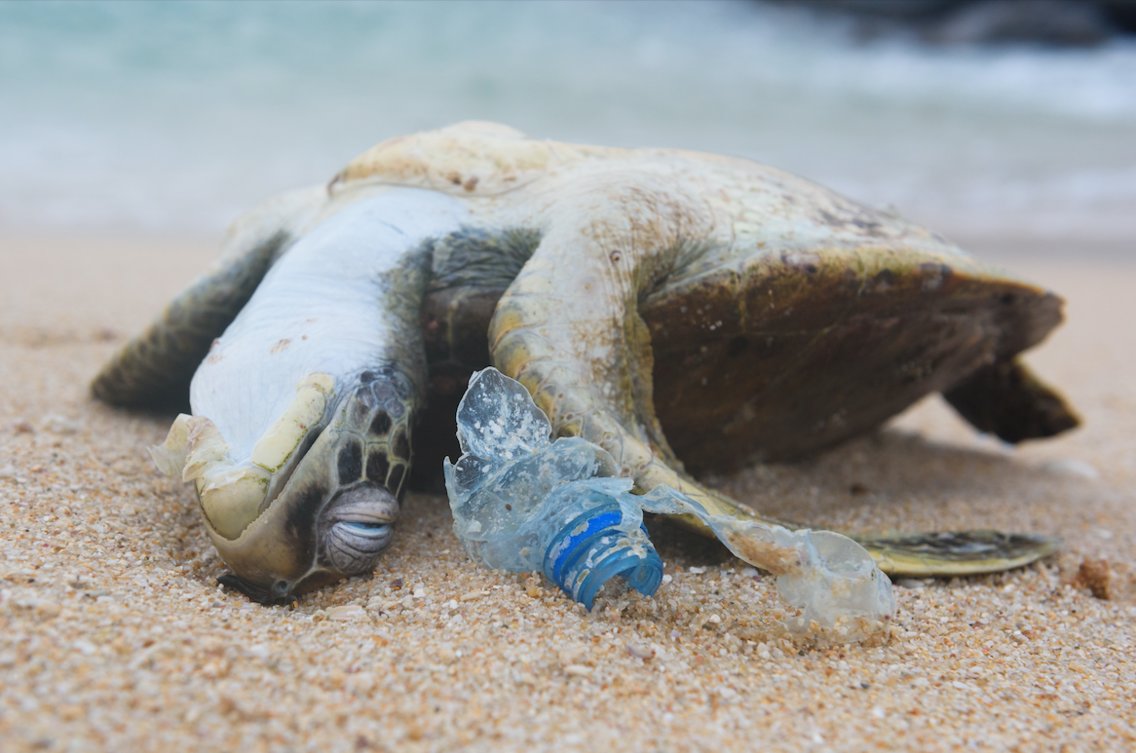
The birds ingest this plastic material, thinking it to be food. Eventually, the birds’ stomachs become full of this material (photo), that dooms them to die. “The oceans are the basis for our life support; and plastic material becomes part of the food chain. Humans are responsible for this plastic epidemic,” says Dr. Earle, adding that single use plastic material, discarded by people, is a big component.
It takes between 500 and 1,000 years for plastic material to break down organically. This means that such material can literally float around in the oceans for centuries. “Plastics themselves are not the problem – humans are” Earle says. One ray of hope to rid the oceans of such material, deals with a plastic eating enzyme, discovered by scientists, that appears to literally eat plastic bottles and other material. Other ideas include use of giant sieves to trap and scoop up this material in the seas. The giant sieve idea for trapping small plastic particles was conceived by Boyan Slat of the Netherlands in 2013. Slat’s project, The Ocean Cleanup, won the Katervera Award, the environmental equivalent of the Nobel Prize for Sustainability in 2016.
There’s still a lot to be done for even making a small dent in cleaning up the massive plastic amounts in the world’s oceans. Even concerted efforts on behalf of world bodies will have a hard time cleaning up the waste material of “floating garbage patches” found in areas like the Great North Pacific Gyre. But a start has to be made, including greater efforts to educate people about the dangers of throwaway plastic bags and bottles that wind up being washed out to sea.
More about the dangers of plastic pollution and other marine environmental issues:
African banking systems are mostly accessed by phone, and ripe for disruption.
Forex trading became a massive industry due to the volatility of international currencies. One day the price for the Venezuela Petro can be up, the next day down. And the reverse. In between the foreign exchange volatility (forex volatility) there is a space to earn. That’s why historically people banked up American dollars or hid Swiss franks in their basements. If the Yen tanked, then well having American money is almost as good as gold, as the theory goes.
Now Forex has seen some harsh criticisms in the recent years mainly because of the lack of control in the industry. It happens, like the gaming industry, that certain fly-by-night companies pop up promising the every-day person get rich quick schemes so they can retire from the factory job. Most of the time these promises don’t pan out and the person loses all of the money that they thought was going into foreign currency.
Some other ideas if foreign currency investment is something you are interested in is putting your money in a banking system of a slightly volatile country, because if you do your research you will see that some of the banks offer very attractive interest rates (from 5 to 10%) that you simply cannot get at American banks. We wouldn’t suggest you do this without a trusted friend or advisor who has experience in this area.
Other areas of interest in risk currencies can also be found in the crypto currency space. Bitcoin has exploded, then receded, then leveled out. Early buyers in this international currency with no home country now find themselves with a nice next egg, and for very little work. The boom of Bitcoin is probably over, but there are new currencies or blockchain currencies you can buy today which also put a social good message ahead of their get-rich quick promise. If you don’t get rick quick at least you can know you have supported something with an eco or impact vision.
Some of these companies include flux, a company developing a grow robot called Eddy to help people grow food in emerging economies.
Agriledger for creating a blockchain-based network of farmers and suppliers to give co-ops and small producers immediate access to accurate information about market costs transaction agreements to ward off corruption.
Bloom is uses blockchain ledgers to create stable IDs for each user, which can then be used to report on existing debt arrangements and provide an alternative credit score for individuals who might have bad credit.
Alice supports crowd-funded philanthropy, where individuals like us can give small amounts online to social projects. Alice ensures that a project receiving funds is spending the funds ethically.