Home Blog Page 179

When Will the US Legalize Marijuana on the Federal Level?

0

woman smiling smoking cannabis

Barely two months ago, on November 20, the U.S. House Judiciary Committee — a group of representatives tasked with overseeing the administration of justice — finally took action on an issue affecting millions of American citizens: the federal status of marijuana.

The House Judiciary Committee, with a vote of 24 to 10, decided to approve a bill that fully legalizes weed across the United States. This means that the bill will move into the full House of Representatives, where all 435 reps will have a chance to speak on the matter and vote yay or nay. Currently, with the Democrats controlling the House, the chances of finally legalizing marijuana seem high — but will the vote happen any time soon? Or will the issue continue to be pushed aside, leaving millions of Americans without access to medical treatment and recreation?

To understand when the issue of marijuana legalization will come to a head, we first need to understand the federal government’s history with marijuana and the various obstacles between this bill and any future law.

legalize cannabis sign, man in front of yellow cannabis sign

The History of Marijuana Legislation

Cannabis is baked into the history of the United States, and understanding its legal ebbs and flows is critical to understanding the current controversy surrounding marijuana at the federal level. The roots of marijuana in the New World begin before the Revolutionary War, when the very first settlers and colonists were encouraged to grow hemp for use in clothing, role, sales and other textiles. In fact, in 1619, the Virginia Assembly passed a law requiring every farmer to have a help crop, a tradition followed even by Founding Fathers and Virginia natives George Washington and Thomas Jefferson. 

Cannabis and hemp production flourished in America through the 19th century. Smoking hashish became a short-lived trend in the US during this time thanks to chic French smokers. After the Civil War, burgeoning industrial processes made other materials more advantageous than hemp, but as medical knowledge improved, marijuana became a staple product in pharmacies across the country. Some of the maladies treated by marijuana include typhus, cholera, rabies, alcoholism, leprosy and menstruation.

How Alan Shackelford changed cannabis as medicine

This attitude toward cannabis started to change at the beginning of the 20th century and hemp was packaged inside the vilification of cannabis, even though hemp contains only trace amounts of THC, the chemical that makes you high. You can find loads of articles that outline the differences between hemp and cannabis with the take home being:

  • Hemp has low concentrations, often less than 0.3 percent per dry weight. It’s non-psychoactive and non-intoxicating.
  • Hemp is still from the cannabis family and does not differ that much from other common strains.
  • Marijuana, meanwhile, contains at least 0.3 percent THC and is generally grown to maximize the growth of flowers and increase the concentration of THC to produce the effects desired.

Confused yet about hemp and cannabis and marijuana?

During this time, the U.S. was in the process of bringing several Southwest territories into statehood, flooding the rest of the country with Americans of Mexican heritage. What’s more, the Mexican Revolution of 1910 sent Mexican immigrants heading for American lands. Unlike most Americans at the time, Mexicans viewed marijuana as a medicine and an amusement; like alcohol, it offered medical benefits but could also provide good ol’ fashioned fun.

cannabis dispensary colorado

Unfortunately, fear and prejudice from non-Mexican Americans spurred anti-drug campaigners to warn against the “marijuana menace” and attribute terrible crimes to Mexicans who used marijuana. When the Great Depression caused massive unemployment, white Americans continued to resent the Mexican immigrants who seemingly threatened the job market. A rash of research linked marijuana use with violence and deviant behavior, and by 1931, 29 states had outlawed marijuana outright.

The first major federal legislation against marijuana occurred in 1932 with the Uniform State Narcotic Drug Act, a weak act encouraging states to adopt uniform legislation without giving them the police power to search and seize drugs or punish those in possession of them. After the widespread release of “Reefer Madness,” a propaganda film against marijuana, the Feds passed the Marijuana Tax Act in 1937, effectively making the drug illegal to anyone unable to pay a steep tax on its possession and use.

Meanwhile, cannabis remained a vital crop for textiles. During World War II, the military leaned heavily on hemp growers for a variety of military necessities, like parachutes. In 1943, American farmers claimed more than 375,000 acres of hemp.

Despite this, recreational and medicinal use of marijuana was becoming more dangerous. The Feds passed a number of laws throughout the 1950s to set mandatory sentences for drug-related offenses. During this time, a first offense of marijuana possession would have landed offenders up to 10 years in prison and a $20,000 fine, which would be more than $187,000 today, corrected for inflation. Regardless, recreational use of marijuana soared in the 1960s and 1970s, as jaded youth participated feverishly in counterculture activities.

Throughout the second half of the 20th century, research revealed that marijuana is not nearly as dangerous as early (read: biased) investigations assumed. In fact, in the 1970s, Congress repealed the mandatory minimum sentences and Nixon was heavily encouraged to decriminalize marijuana — but he refused. Later, Presidents Reagan and Bush declared the War on Drugs, raising federal penalties for drug possession and sales.

Then, something monumental happened: In 1996, California legalized medical marijuana use across the state, allowing access to the drug for those suffering from AIDs, cancer and other grave, painful diseases. Several states followed suit over the next decade. In 2012, something even more important occurred: Both Colorado and Washington legalized recreational use, taxing sales to benefit the state government. Today, only eight states have not taken steps to decriminalize or legalize marijuana in some capacity, speaking to the general consensus that marijuana is not dangerous and can, in fact, be beneficial, as believed by the New World’s first colonists.

How Legal Marijuana Will Become Law

Insiders on the Hill and elsewhere in the marijuana industry believe that the bill drafted the House has already been buried behind the Senate building. The conservative-dominated Senate has been unwilling to entertain the idea of repealing Republican-established federal legislation against weed, especially when they have control of the White House, too. However, 2020 is an election year — one that could see the Dems overtake Congress and the Oval Office. What is more important than anything, if federal legalization of marijuana is a voter’s top priority, is voting for the right candidates come November 3.

How You Can Improve the Functionality of Your Business

0

windows of office buildings at night new york

Running a successful business means understanding what the latest trends and advancements are. And because technology is evolving at such a rapid rate, it means keeping up is more difficult. The implication there is if you’re one of the few businesses that can stay ahead of the curve, then you’ll stand out from your competitors who lag behind. One of the best ways of being able to achieve this is to make sure you work on boosting the functionality of the business. 

This means you are going to need to consider what your company can do to adapt and evolve in the right sort of way. This is something that plays a big part in taking things to the next level. You are going to have to do as much as possible to keep this in mind moving forward. Think about what it takes to achieve this, and consider these as some of the key changes that can improve the functionality of the business.

Go Digital

One of the key things you need to make sure you get right is to go digital in your business as much as possible. There are a lot of benefits to going digital as a modern brand, and it can definitely help your company to be more functional and operate in the best possible way.

Get Your Website Sorted

Making sure you get your website sorted is imperative when chasing success as a business. You have to do as much as you can to make sure the company is well looked after, and the best way of achieving that is to ensure you have the perfect business website. There are numerous ways you can achieve this, including using a ping monitor, hiring web design experts, and adding a blog to the site. If your website is in the CBD niche and you are looking for a cannabis web design agency then we recommend using Cude Design.

Communicate Better

Doing as much as you can to communicate better is really important. There are plenty of key things you can do to improve your business moving forward, but better communication has to be one of the most essential ideas that are going to help you with this. Making sure you communicate with your staff better can pay dividends, not to mention allowing you to improve the productivity and functionality within the company.

Prepare for the Future

You are going to need to do as much as you can to take your business forward in the right way, and that means preparing for the future. Think about what you can do to take your company forward in the best possible way in order to achieve success. Prepare for the future, and do as much as you can to keep your business up to date and relevant.

Taking your company forward to the next level is so important, and there are a lot of things you can do to help you achieve this. It is essential that you come up with ideas to help you improve, and this is something you’re going to need to factor in. Here are some of the best ideas to help you improve the functionality of the business right now.

Solar Generators – Clean Energy At Home

0

solar panel house off grid

Technological advancements in the energy sector have made it easier for consumers to access renewable and green energy like solar. Green energy has proven to be reliable and cleaner compared to other power sources. It is friendly to the environment and can help consumers to save money.

Homeowners are wary of using gas-powered generators because of the risks they pose and their cost. The gas that runs the generators is highly flammable, the cost of maintaining them is high, and they are unfriendly to the environment. Solar-powered generators are a better alternative. They are economical, and safe for the environment and your family.  However, there are suggested compatibilities of generators and solar panels out there.  Solar generators also come in different sizes. It is therefore essential to learn how to identify the solar-powered generator that can meet your needs prior to making a purchase. You should get a unit that can power your appliances, electronics, and home properly when there is no electricity.

How solar generators work

Solar generators work by converting natural sunlight from the solar panels into electric power. These generators then store the power in a high capacity battery. The stored energy is then released through an inverter for use with different appliances and devices at home, including lights, refrigerators, TVs, laptops and smartphones. The benefits of solar using generators include:

1. Low maintenance

The solar generator does not need fuel to run, and there are no moving parts in it. Therefore, it does not require much maintenance. You will not have to worry about gas prices or replacing oil filters.   

2. Durable

Compared to gas generators, solar-powered generators have a longer lifespan. Both the generator and the solar panels have been designed to last long.

3. Silent

Since the generator does not have any moving parts, it provides a peaceful energy source. Unlike gas-powered generators, there is no clattering of a running engine.

4. Clean energy

Since the generator uses sunlight, it is not necessary for it to have an exhaust. The system produces no waste when running, which is not only good for you but also for the environment.

5. Self-sufficient

Solar generators require minimal maintenance. It is unnecessary to tend to or fuel them.

6. Indoor use

Solar generators are not that different from batteries. You can keep them indoors since they are silent and do not produce any toxic smoke.

7. Safety

The generators depend on solar energy, not flammable liquids to run. You will not have to worry about their family’s safety. However, you need to take some precautions when using the generator. Make sure the generator does not come into direct contact with water because it can damage the unit. You also need to protect the generator from rain and floods.  Hiring professionals to install the solar generator is also essential. If you decide to install it yourself, you may void its warranty or damage the whole system. Professionals can easily install the solar generator without damaging it and the warranty will remain intact. You should also learn the basics of using the generator so you can maintain it properly.

sun on roofs of apartments in barcelona

The cons of solar generators include:

1. Upfront cost

Solar generators can be costlier than gas-powered generators. The cost depends on the size and kind of unit that can serve your home. The upfront costs can be high because of solar panels, battery, and installation.

2. Subject to weather

Sunlight fuels, solar generators. Sometimes, the weather can be cloudy or rainy, and the solar panels may not receive enough sunlight. That can significantly affect the power supply in your home.

3. Space

Solar generators consume more space than conventional gas-powered generators because the solar panels need space to function as they should. This can be a drawback for homeowners with limited space. 

Having a generator available to back up your house in the event of a power outage in a smart idea. Solar powered generators make sense since they are environmentally friendly and durable. Even though the upfront cost may be high, it does not take a lot of work to maintain them. Therefore, you do not have to spend much money on your solar generator over the course of its life. It is environmentally friendly, safe for your family, and useful.       

How Kynect Can Help You Give Back to Your Community

0

community of hipsters hanging out by the river

The most successful and celebrated business people don’t just turn a profit – they found ways to pass their massive success on to others. You can see this at every level, whether you’re reading about Microsoft founder Bill Gates’ decision to leave the majority of his fortune to charity or discovering that the manager of your local grocery store is matching donations to help feed the needy each winter. No matter what you’re passionate about, there’s someone in the world who could use your help.

As a Kynect Associate, you have the power not just to sell energy, wireless, and protective services to people looking to save money and have a personal connection with their provider. You also have the unique ability to forge meaningful connections within your community, empower others, and simultaneously grow as an entrepreneur, friend, and human being. Here are just a few things you and your network can do to make your world a better place:

1. Organize a fundraiser

Through the Kynect Foundation, it’s easy to host a fundraiser to positively impact verified, proven partner organizations connected to one of the Kynect Foundation’s three pillars: veterans, first responders, and children with critical needs. By simply submitting a volunteer request form, you can work directly with Foundation staff members to easily put together a fundraiser.

Even if you’re too busy to make time to lead a dedicated event, or you have trouble getting your family or friends to commit time out of their schedules, you can still make a huge difference by hosting an online fundraiser. Simply show your support of the Foundation / partner organization across your social media accounts. It’s an easy way to make a big impact, and a great way to spread awareness for the causes you care about.

To get started, all you need to do is find a local organization, or ask the Kynect Foundation for help connecting with one, and fill out this form.

2. Host a volunteer day

If your schedule allows for you and other members of your community to spend an evening or a weekend helping out, it’s almost always hugely appreciated. Organizations that assist veterans, first responders, and children with critical needs are often as much in need of your time as they are your money, and by connecting through the Kynect Foundation, you can do good in your community.

Volunteer efforts can include helping medical providers in hospitals that are frequently understaffed and underfunded, answering phones, supporting other fundraisers, or simply spending time with kids who may otherwise not have a support network available to them. Again, by completing the form above, you can become a Kynect for Community advocate and get started – as well as receive all the support you might need from the Kynect Foundation along the way to make your event as successful as possible.

3. Simply make a donation

Whether you’re just starting your business or have been growing for years, you can always set aside a portion of your monthly income to give back. The Kynect Foundation makes it easy to give a tax-deductible donation to organizations and change lives for the better. You can either make a single or recurring monthly donation of an amount as low as $1 or as much as you can possibly spare, either for yourself or in honor or memory of someone you love, with all of your donation going to one of the Foundation’s “Three Pillars.”

Scientists works to cure cancer – and shrimp

0
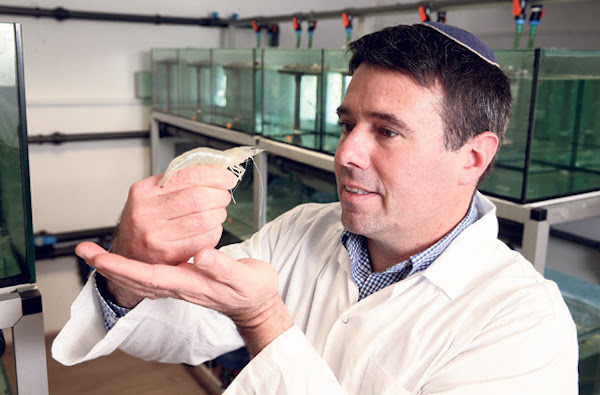
Avi Schroeder Technion, cures shrimp virus and cancer
Taking care of all things big and small. Initial work with mRNA in cancer has led to a new commercial breakthrough that can alleviate a devastating shrimp virus crippling the shrimp industry. He may keep kosher, but he is happy to help.

Avi Schroeder’s lab at the Technion Israel Institute of Technology is tiny but mighty. Thirty researchers crowd it daily, covering areas such as biology, chemistry, medicine, pharmaceuticals, and even mechanical engineering.


Schroeder’s life’s work is to advance liposome-based cancer treatments. While there’s still work to do on that front, Schroeder’s innovations to date have brought on a surprising twist for the kosher-keeping, yarmulke-wearing yeshiva graduate: for the past few years, he has been busy curing that very unkosher crustacean, the shrimp.

To his mother, Schroeder initially said he was working on a cure for cancer, which was a white lie—in Hebrew, the same word is used for both cancer and crab. He considers himself a liberal person, one who doesn’t care about what other people put on their plates, he said. “The important thing for me is that I am saving a crucial food source for many people. Indeed, people here sometimes tease me about the fact that I don’t know how tasty shrimp is and about what I’m losing out on, but I don’t care about that.”

The connection between Schroeder and shrimp was accidental, the result of his specialization in drug delivery methods. Six years ago, he gave a lecture at Israeli pharmaceutical company where he met molecular biologist Shai Ufaz.

Ufaz found the lecture enlightening. He previously worked for a marine agriculture company and understood the span of the damage shrimp growers contend with. Hearing the lecture, it dawned on him that Schroeder’s direction could offer a solution to a very wide-spread problem.

The disease Ufaz was thinking about is white spot syndrome, a virus that affects a wide variety of crustaceans and is viral among shrimp, especially in east Asia, where most commercial farming—an industry with an annual turnover of over $30 billion—is located.

An infected shrimp farming pond has a mortality rate of around 80%, with deaths occurring within hours of infection. To date, most attempts to control the virus and prevent it from spreading to other parts of the world focused on bettering sanitation and thinning out the animals, but these measures are only partly effective.

The syndrome causes damages of around $6 billion a year.

In a little cabin at the edge of the Technion’s campus, a few dozen small aquariums have a great view of Haifa bay. Inside those containers, thousands of test shrimp (for the new company ViAqua) await their midday meal.

There is one special ingredient inside the little food pellets they receive—a food additive that should provide immunity to the virus. “We created a substance that is made of a shrimp’s usual food sources, so it is defined as a food additive and not a drug,” Ufaz explained. “We want to reach the shrimp when they’re still young and inoculate them against the disease before they have a chance to catch it.”

 Schroeder's team. Photo: Doron GolanSchroeder’s team
 

The Technion cabin only hosts ViAqua’s base trial, for the pellet formula. As Israel forbids bringing the white spot syndrome virus into the country, even for research purposes, the company’s clinical trial is held in three locations in Europe, Asia, and the U.S. Company data shows inoculated shrimp experience a drop of over 50% in mortality rates.

ViAqua’s vaccine is based on RNAi. In 1998, American researchers Andrew Fire and Craig Mello discovered that RNA molecules can under certain circumstances, inhibit gene expression or translation. They won the 2006 Nobel Prize in medicine for their discovery, called RNA interference, or RNAi.

“In 2012, when I arrived at MIT for my post-doc, the discovery of the RNAi mechanism was still completely new, and many people attempted to harness it for cancer-related applications, like the prevention of metastatic cancer,” Schroeder said.

When cancer cells leave the original tumor and invade the lungs, for example, they require a certain protein to attach themselves to lung tissue. It has been proven that if the production of that protein is delayed, there is less metastation, Schroeder said. “We can synthesize a molecule called siRNA, which knows to replace the body’s original RNA. We can create this molecule with a certain sequence that will stop cells from becoming infected and metastating, and such a molecule with a different sequence will make the cell more vulnerable to drugs.”

The process is the same in both humans and shrimp, Schroeder explained. “For the virus to pass from one cell to another in shrimps, it needs certain proteins, the production of which we now know how to stop.” In shrimps, though, there is only one protein responsible for the virus that needs targeting, while in cancer cells, there are multiple ones.

ViAqua’s product is currently in the process of receiving regulatory approval in 11 countries, and if all goes well, it will hit the market within the next 12 months. The company, which forecasts revenues of 5 million euros for the first year, has recently signed an exclusivity agreement with Nutreco, one of the industry’s leading companies for animal nutrition and aquafeed.

Nutreco NV also became a partner in ViAqua. 

Before shrimps, however, there was cancer. Schroeder’s first run-in with the disease was during his BSc days, when he studied chemical engineering at Ben-Gurion University of the Negev. At the time, he was a low-level employee at Teva Pharmaceutical Industries Ltd. who dreamt of a career as a pharmaceutical engineer.

He was sent to assist at the lab of Hebrew University biochemist Yechezkel Barenholz, a medical nanotechnology pioneer and one of the developers of breast cancer treatment Doxil, the first liposomal drug and nano-medicine approved by the U.S. Food and Drug Administration. Barenholz was working to develop liposome-based technology for the safe conduction of chemotherapy drugs in hopes of finding a way to bypass chemotherapy’s debilitating side effects. While the project failed to reach commercialization, it changed Schroeder’s life.

“I had no intention of continuing in academia, I wanted to develop drugs, but when I understood the things research can accomplish I realized my place was in academic research and not the industry,” he said.

Schroeder is still focused on cancer but just understands now that curing shrimp is faster than curing cancer. But he is optimistic. “I feel, and this is supported by research data, that in the upcoming decade, we will solve most problems with cancer treatment,” he said. “By 2030, we will reach a place where most cancer patients will be cured. All developments are converging into personalized treatments, with a maximal delivery capability, that will enable a drastic reduction of chemotherapy’s side effects.”

Colorado College is now carbon neutral – and they didn’t buy their way out

0
plant researcher colorado college carbon neutral
How do lazy people and companies declare carbon neutrality? By carrying on in their old ways and by buying carbon credits. This university started in 2009 and they did not take the short-cut. This is how you lead the next generation forward.

Colorado College has achieved carbon neutrality, a goal it set in 2009 when it committed to becoming carbon neutral by 2020. After a decade of work, the ambitious target has been met — even as the college increased its building footprint by more than 10% during that time. CC is only the eighth institution in North America, and the first in the Rocky Mountain region, to achieve this goal.

Colorado College stands out among other schools that have reached carbon neutrality in an important way. The selective liberal arts school at the base of Pikes Peak, has the greatest emission reductions on campus while buying fewer offsets than any other US campus. This means the milestone has been achieved primarily by steep reductions in the college’s carbon footprint on campus.

Not buying their way to becoming carbon neutral

solar panels colorado campus
“We’ve done the difficult work of reducing our on-campus emissions first, rather than what some see as ‘buying our way’ to neutrality through offsets,” said Director of Sustainability Ian Johnson.

Colorado College has done this in a replicable and scalable way, meaning nearly any other institution could apply the strategies used by CC to achieve its goal of carbon neutrality. Offset market development also is critical, notes Johnson, but only after working to reduce on-campus emissions as much as possible.

Another significant factor is that Colorado College is the only carbon-neutral institution located in a high carbon intensity electric grid with two functioning coal plants operating in the city. This is noteworthy, said Johnson, because “electricity use in our region generates more carbon emissions than most any other region, making major reductions in our footprint all the more difficult to achieve as our electricity use pushes up emission faster than other institutions.  It also means our renewable energy generation and use have bigger impacts on global emissions than in other regions.”

Colorado College embarked on its journey to carbon neutrality in 2009. Since the college’s baseline year in 2008, CC has reduced on-campus emissions by 75%. Colorado College achieved neutrality through a variety of initiatives, including efficiency upgrades, building renovations, campus engagement, on-site renewable energy and local renewable energy purchases, reducing its carbon footprint even as its physical footprint expanded by 10% with the alliance with the Colorado Springs Fine Arts Center in 2017.

Between the Fine Arts Center and the Bemis School of Art, CC added more than 142,000 square feet to its building footprint.

Because climate change is linked to and influenced by many different factors — from environmental racism to human health and income inequality, clean water, food production and access, and more — achieving carbon neutrality impacts far more than just the college’s operations, says Johnson.

Many of the initiatives the college is undertaking, including adding more sustainability courses and finding new ways to make the college more accessible to students from diverse geographic, ethnic and socioeconomic backgrounds, increase students’ literacy and understanding across majors and strengthen the institutions that build the resilient society that will be needed to adapt to impacts from climate change.

Some of the college’s major carbon neutral initiatives have included:

  • A behavioral change program involving 14 weeks, 14 habits and a 14% reduction in electricity, heat and water use. CC saved nearly $100,000 in utility costs through the “aCClimate14” effort.
  • Colorado College’s first high-performance energy design guidelines were written for new and renovated buildings. 
  • Tutt Library became the nation’s largest academic net-zero energy library following a massive underground geothermal energy project and major renovations.
  • East Campus Housing opened with sustainable architecture and energy systems.
  • Numerous solar PV installations were constructed on and off campus, originally initiated by a student in 2008.
  • CC has worked with Colorado Springs Utilities over the past decade to find ways to partner and meet its goals. This helped lead to the addition of the 255 megawatts of solar in current and planned projects for the utility.

To account for remaining emissions, which include difficult-to-avoid emissions such as college-related air travel, study abroad, commuting and wastewater, Colorado College is investing in carbon offsets — innovative projects that reduce or eliminate greenhouse gas emissions elsewhere.

Specifically, the college has invested in a methane destruction project at the Larimer Country landfill in Northern Colorado. This project prevents methane (CH4), a very potent greenhouse gas, from entering the atmosphere, and instead uses the CH4 to generate electricity directly to the Larimer County community.

Although Colorado College has met its carbon neutrality goal, it does not mean the work is finished. 

Colorado College also is looking at options to not simply purchase carbon offsets, but to invest in developing new projects that are more socially and environmentally responsible, thereby benefiting its core academic mission, developing markets as part of the solution to climate change and providing positive social benefits for the community and region.

Carbon defined:

How is “climate neutral” defined?

Climate-neutral means that the operation of the business does not increase the amount of greenhouse gases in the atmosphere. However, there are differences in how CO2 can be avoided.

A business can either reduce the emissions on-site itself by adapting its processes or by participating in certified projects to compensate for CO2 production, i.e. the business pays fees to an organization that finances projects to reduce the number of greenhouse gases in emerging and developing countries.

Both options contribute to reducing CO2 emissions into the atmosphere.

Climate-positive goes even further; more CO2 is compensated for through climate protection projects or own process optimizations than is actually produced, thus making a positive contribution to the environment.

Zero emissions are defined by the fact that neither the construction nor the operation of the business produces environmentally harmful emissions

Boy mushroom hunting uncovers ancient “Bel Air” tombstone in Israel

0

stav meir mushroom hunting finds ancient tombstone

Thirteen-year-old Stav Meir, from Caesarea, Israel went out a week ago with his father Zohar, his brothers and cousins, ​​to look for mushrooms in the Caesarea area after the rains. The plentiful rains recently meant the harvest would be good. In his hunting the boy found a slab of marble poking out of the ground, with Greek letters.

“I immediately recognized that it was something ancient,” said Stav, a seventh-grader. “I studied archeology in school together with the Israel Antiquities Authority, so I can easily identify antiquities when I see them,” he noted.

The excited Stav, who understood the importance of reporting such a find, quickly reported his discovery of the slab with the Greek inscription to the Israel Antiquities Authority, and an archaeologist came to collect it for research.

The Bel Air of Ancient Times and Present

The archaeologists familiar with the site confirm that the slab is  part of a tombstone, the quality of which well illustrates the extraordinary wealth of Caesarea’s rich some 1500 years ago.

According to the archaeologist Dr. Peter Gendelman, a Caesarea researcher at the Israel Antiquities Authority, “This is a burial inscription – a marble slab with an inscription engraved in Greek, and started with a cross. The slab, which apparently indicated the grave’s location in the cemetery and the identity of the deceased, reads:

“The grave of …. and of Anastasius, or Anastasia ……” Gendelman added that, “Already, in ancient times, Caesarea was a center of attraction for a wealthy population.

“The quality of the slab discovered by Stav, indicates the wealthy status of the person entombed, as well as the customs and beliefs of inhabitants of Caesarea in the Byzantine period. This inscription joins a large collection of burial inscriptions previously discovered around ancient Caesarea.”

During the Byzantine period, the rich of Caesarea built magnificent mansions in the suburbs of the city. These buildings gave their owners quality of life, and thus they enjoyed the rural character of the area on the one hand, and proximity to the heart of the city on the other.

Future Indiana Jones

To this day sections of five magnificent mansions have been discovered each covering an extensive area. The best known being the ‘Bird Mosaic’ mansion, whose area is estimated to cover a dunam and a half. Most of the floors, in the sections of the complex that have been excavated, were colored mosaics and some are open to the public today.

The country’s recent rainstorms have uncovered archeological finds buried in the ground. 

forest mushrooms hunting variety

Thousands of schoolchildren across the country study archeology with the Israel Antiquities Authority. The curriculum breathes life into cultures and ancient times, in classroom and field studies, combining archeological finds, puzzles, workshops, archaeological excavations, and tours.

Palestinians cultivate the West Bank’s first organic mushrooms!

Greta Thunberg is reshaping how stakeholders invest

0

Greta Thunberg on a sign protesting

Microsoft, Stripe, Goldman Sachs. They are investing billions in a trillions market opportunity. We can thank Greta Thunberg, says the deVere Group. “Greta is not just helping to save the planet – she is reshaping the global investment industry,” says the head of one of the world’s largest independent financial advisory organizations.

The comments from Nigel Green, the chief executive and founder of deVere Group, which operates in 100 countries worldwide, come as the high-profile young Swedish environmental activist urged political and business leaders and the media at the World Economic Forum in Davos to heed the science as she warned time was running out to tackle global warming.

Thunberg said: “With today’s emissions levels, the remaining budget is gone in less than eight years. These aren’t anyone’s views, this is the science,” Thunberg said, citing a 2018 Intergovernmental Panel on Climate Change (IPCC) report. “I know you don’t want to report this or talk about this but I will keep repeating the numbers until you do.”

Her comments at the elite meeting in the Swiss mountain town came just before US President Donald Trump – a global warming sceptic – was due to make a keynote address.

deVere CEO Nigel Green affirms: “Greta’s message is a consistent one, one based on science and fact, and one that is likely to hit home with millennials and Gen Z.

nigel green devere

“Typically, these generations – those born from the early 1980s onwards – seem to ‘get’ the climate emergency we’re facing, and the urgency with which it needs to be tackled, far better than older generations.

“This is why it is crucial that she was at Davos in order to drive her message through to the political and business leaders who can actually do something about it right now.”

He continues: “These younger generations who will listen to the message and warnings of Greta Thunberg, amongst others, are going to be the beneficiaries of the biggest-ever generational transfer of wealth – likely to be around $30trn – over the next few years.

planet is melting sign with gen z

Children and Exercise

0

While most of us enjoyed playing outside and being active often when we were growing, today kids tend to spend a lot less time exercising and in the outdoors. This lack of activity leads to physical, emotional, and mental issues for many youngsters as a result.

As such, parents must find ways to make exercise more enjoyable for their children, so they’re more inclined to move their bodies. Here are some strategies you can try in 2020.

Change the Language You Use

If you want your children to be more open to exercise and not seeing it as a chore to be dreaded, be careful how you talk about movement yourself. The language you use to describe exercise will have an impact on how your children view and do it. If you speak about exercise in a way that makes it seem it’s something that must be done, as a job, or that is about purely losing weight or looking a particular way, you will set up negative links in their mind.

Instead, try to concentrate more on words such as fun, healthy, activity, movement, outdoors, etc., and all the wonderful physical, emotional, and mental benefits that come from being physically active.

Be a Positive Role Model

Similarly, make sure you’re a positive role model for your children by exercising yourself. After all, kids always look to their parents to see what they do, so if you’re not active, your children will wonder why they should be, and why it’s only something you try to make them do. This all leads to more negative associations.

If you exercise regularly, your kids are more likely to follow your lead. Let them know when you’re off to the gym, for a walk, or to swim some laps, and so on, and let them see you pack your bag and otherwise get ready for workouts. Also, talking to them about why you exercise and how good you feel after will help encourage them to want to be active like you.

Get Outdoors More as a Family

Another great way to make exercise more enjoyable for your children is to get outdoors more as a family, moving and being active together. Rather than spending all your family time sitting down watching movies, eating, playing board games, and so on, make sure you incorporate plenty of times where you can also move your bodies as part of family activities.

For example, walk the dog daily, spend time at the beach, do some yoga, go for hikes through nature, have a friendly game of basketball, swim in the pool, learn karate together, go rollerblading or ice skating, hit the slopes, or do anything else that appeals.

Integrate Movement in a Natural Way

man spinning kids into sunset, at the sea, two kids

It also helps to get kids to integrate movement naturally throughout the day. For instance, rather than driving them right to school, why don’t you all walk there together of a morning or at least drop your kids a few blocks away so they can stretch their legs and get their brain nicely oxygenated before they have to start concentrating at school?

You can also encourage things like taking the stairs rather than the lift, doing chores around the home (e.g. vacuuming, mopping, cleaning), and getting help carrying groceries and other shopping. Through these kinds of activities, kids will increase the amount of incidental exercise they do each day without noticing too much.

Up the Social Aspect of Activity

Even the most introverted of people are still social animals, so to get your kids enjoying movement, look for ways to make it more interactive for them. If you up the social aspect of activity time, they will be more focused on laughing with friends or making new ones than on the fact that they’re exercising.

For example, let your child invite one or more of their friends over to play each week, and enroll them in school sports where they can join a team, or in organizations like the Scouts or Girl Guides. Also, consider social activities during vacation periods, such as spring or fall tennis camps, or karate boot camps, or swimming sessions at the local beach or pool.

Three other ways to up the fun of exercise for your children are:

girl in lotus position yoga saying om

  • Consider your child’s interests and find activities to match
  • Add variety, so that kids get to try lots of different sports and exercises
  • Incorporate more games and creative ideas into movement sessions, so kids focus on the fun

Exercise is an essential part of being a healthy, happy human. As such, parents should try various strategies to help their children, even those who aren’t naturally coordinated or athletic, to enjoy moving their bodies daily.

Trillians to be made from carbon credits – Microsoft, Goldman Sachs show how

0

hydro electric dam drone viewThunderbird School of Global Management released a new report today projecting that the world can realize at least $1 trillion – $3 trillion dollars in market opportunities and $3 trillion – $5 trillion dollars in broader economic, social and environmental benefits per year by 2030.


Thunderbird’s Director-General and Dean, Dr. Sanjeev Khagram authored the new report and shared it at a cross-sectoral gathering hosted by Thunderbird with the Foundation for Climate Restoration in Davos during the World Economic Forum’s annual meeting.

“Together, we must rapidly deploy natural and technological solutions to remove gigatons of carbon dioxide from our air, restore ocean ecosystems, and preserve Arctic ice, while dramatically reducing emissions and adapting to climate change impacts,” said Dr. Khagram. “Climate restoration is the critical third pillar of climate action alongside climate mitigation and adaptation.” 

Global Climate Restoration Task Force Launched to Drive Action

greenhouse coffee shop

To catalyze and connect the mounting initiatives and reach the scale necessary for climate restoration efforts to realize their full potential, Thunderbird and The Foundation for Climate Restoration launched a new Global Climate Restoration Task Force at a high-level event at the World Economic Forum’s Annual Meeting in Davos, Switzerland, along with founding partners from the private sector, government, and civil society.

“Climate change and the devastating impacts of rising global temperatures are impossible to ignore. But I know we can not only achieve climate transformation, we can also do so in a way to advance inclusive and sustainable prosperity worldwide,” Khagram said. “That is the challenge of this new decade of action.” 

Leaders in the global movement for climate restoration are demonstrating momentum including:

Microsoft, Stripe, Goldman Sachs release billions in investment opportunities

• This week Microsoft announced it will be carbon negative by 2030, and launched a $1 billion fund for carbon reduction, capture, and removal technologies over the next four years, committing to remove all carbon it has emitted since 1975. 

• In August 2019, Stripe committed to pay, at any available price, for the direct removal of carbon dioxide from the atmosphere and its sequestration in secure, long-term storage. 

• In December 2019, Goldman Sachs pledged to spend $750 billion on sustainable finance projects over the next decade. 

• In December 2019, a record 631 investors managing over US$37 trillion signed the Global Investor Statement to Governments on Climate Change, which called for an acceleration of private sector investment into the low carbon transition and improving climate-related financial reporting. 

• In December 2019, Blue Planet Ltd and KDC Announce A Global Partnership to scale carbon-negative concrete worldwide to the company making limestone aggregate to produce carbon-negative concrete that allows for carbon-negative building materials to be readily available for the global commercial market and will help remove the excess trillion tons of CO2 from the atmosphere. 

“There are over 5,000 identified sites for Blue Planet and KDC. If KDC and Blue Planet were to initially develop 100 of these in the US by 2025, it alone could equate to enough emission reductions of nearly 5% – 10% of the entire U.S.’s Paris Treaty obligations.” -Brent Constantz, CEO of Blue Planet 

• In April 2019, Arizona State University and Silicon Kingdom Holdings (SKH) announced an agreement to deploy carbon-capture technology developed by Professor Klaus Lackner, director of ASU’s Center for Negative Carbon Emissions. 

• At Davos, Ice911 Research announced that they will deploy testing of their climate restoration material on sea ice [In addition, Ice911 Research announced a new $50 million investment in the research of ice restoration technologies on Arctic sea-ice.] 

• At Davos, Cambridge Centre for Climate Repair at Cambridge (CCRC) and the Foundation for Climate Restoration, announced a new partnership to expand research on the deployment of climate restoration solutions in oceans and the Arctic. “Working in partnership with the Foundation for Climate Restoration provides the needed research and solution testing structure in order for us to make effective evidence-based decisions and actions to tackle the climate emergency that threatens life on Earth as we know it.” -Sir David King, Founder and Honorary Executive Chair, CCRC, Fellow, Downing College, Cambridge and Former Chief Scientific Advisor to the UK Government

Climate Restoration is the global endeavor to return the Earth’s climate systems to the safe and healthy state in which humans evolved and thrived. This requires returning atmospheric CO2 to proven safe levels of less than 300 parts per million (PPM) and restoring sufficient Arctic ice to prevent permafrost melt and the resulting disastrous methane emissions.  

A most convincing argument to include anglers in AI development

0
angler in water, flyfishing
Well can you believe it dears? University scientists understand a way to include layman (fisherman) smarts into understanding complex ecological systems.

Have we got a fish story for you. Any angler beginning a yarn like that usually ends up spinning a tall tale, an exaggeration or bald-faced lie. Michigan State University researchers, however, have demonstrated that anglers can produce accurate and complex environmental models similar to those of trained scientists.

The study, led by graduate student Payam Aminpour and Steven Gray, community sustainability professor, shows that fisheries stakeholders can accurately predict pike populations, predator abundance, habitat and fishing pressure.

“This is a novel and potentially revolutionary way to estimate the status of the environment,” Gray said.

The survey was conducted in Germany and involved more than 200 anglers, fishing clubs board members and others. They were asked to create drawings that represent ecological relationships influencing the pike population, including fishing pressures and nutrient availability. The individuals’ models were then mathematically combined into a collective model representing the community’s understanding of the ecosystem.

Computer system results improved with angler input

“The solution produced a model of ecological relationships that is similar to scientists’ understanding of pike ecology,” Aminpour said. “The accuracy of the results improves when more anglers are involved.”

Aminpour found that it is important that the opinions of different types of anglers – recreational, fisheries managers and board members of fishing associations – are taken into account. If the knowledge of only one type of angler is considered, their biases lead to an inaccurate solution.

“Our study shows that it makes sense to involve as many different interest groups as possible, such as anglers, hunters, foresters and conservationists,” Gray said. “If as many ideas as possible are involved, the result will be particularly good.”

Applying Galton’s wisdom of the crowds

The foundational theory supporting the study is known as “the wisdom of crowds” or “collective intelligence.” Popularized by Francis Galton in 1907, the theory has been applied to many situations over the past century, from people estimating the number of jellybeans in a jar to predicting the winners of major sporting events – often with high rates of success.

Using the wisdom of crowds to better understand the environment is a new approach to managing natural resources. The researchers advocate for gathering the knowledge of local people to understand ecosystems where scientific information is limited.

“About 100 years after the introduction of the wisdom of crowds phenomenon, we have expanded this theory by demonstrating that the collective judgment of large crowds can have incredible scientific accuracy,” Aminpour said. “We have shown that this phenomenon exists not only in simple estimation tasks but also in more complex tasks, like predicting the relationships that drive a fishery ecosystem.”

The MSU Human-Environment Interactions Lab and their international team of collaborators are applying the principles of collective intelligence to address some of the most pressing environmental issues, such as warming oceans, the impact of climate change on coastal communities, wildfires, degraded wildlife ecosystems and other sustainability issues.

Additional scientists contributing to the study include Antonie Jetter from Portland State University, Robert Arlinghaus from Leibniz Institute for Freshwater Ecology and Inland Fisheries in Berlin, and Joshua Introne and Alison Singer, former MSU-affiliated scholars. 

Returning memories to a spotless mind

0
photograph memory, old house, kids at chain link fence
Your brain state before you build a memory determines if you will remember it or not? Can we create superbrains that will remember every single little thing? With the age of computers, will we want that – or maybe we want a spotless mind?

Elevated activity in areas of the brain associated with attentional control just before events increases the probability that we will remember the event. This finding emerged from a new international study undertaken at the University of Haifa in cooperation with the Weizmann Institute and the Universities of Colombia, Cambridge, and Zurich. The study was published in the journal Cerebral Cortex.

“Our lives can be viewed as a string of scenes in a play, transitioning from one event to another (like taking the bus and then bumping into a friend on the street). Our study found that what determines whether we will remember a given event, such as a chance encounter with a friend on the street, isn’t just our brain activity during the event itself, but the state of our brain moments before the event began,” explains Dr. Noga Cohen of the Faculty of Education at the University of Haifa, one of the authors of the study.

Our daily lives are full of events and experiences. But what in our brain determines which events will be remembered and which forgotten? Most studies in the field of memory concentrate on the encoding and consolidation of memory– that is, what happens to the brain from the moment the event begins.

The study included 50 participants who watched over 100 video clips, each several seconds long, featuring various scenes from everyday life. Each clip included one significant scene, such as a conversation between two people.  The participants were told in advance which clips they should remember, so that they were not required to remember all clips. The participants watched the clips while lying inside an MRI scanner that measured their brain activity. Participants were then asked to remember the central scene in each clip – even for clips they were told beforehand that they didn’t have to remember.

The study revealed that before watching the scenes that they remembered – whether they attempted to memorize them or not – there was elevated activity in the cingulo-opercular network (CON), relative to scenes that were not remembered. The researchers explain that CON is known to be associated with attentiveness and focus on current goals. Activity in this network just before the scene was associated with enhanced activity during the scene itself in other areas of the brain involved in encoding information, while reducing activity in areas of the brain associated with mind wandering.

Dr. Cohen notes that the fact that this network was active even in cases when the participants were not actively trying to remember the scene shows that it can also operate in a non-voluntary way.

“This suggests that the activity in this network is important not only when we are making a deliberate effort to remember something, but also during routine daily activities. The understanding that the memory process begins before the event itself is important, and may lead to the development of tools that will be able to help people suffering from memory impairments,” Dr. Cohen concluded. 

Plantain, the medicinal green weed in your backyard

0
plantain weeds growing medicine
Plaintains grow on rocky driveways and derelict lawns. Look for your salad on your doorstep. or maybe you have heard of Psyllium husks or Metamucil? Yes, thank you plantain. 

We’re talking about plantain weed, not the banana. It’s a common wild green that grows in empty lots, along the side of the road, and unnoticed patches of dirt. And in your lawn. Some 200 species of plantain are known, but the two you’re most likely to encounter in urban settings are ribwort Plantago lanceolata with the long leaves and cute umbrella flowers and greater, or broad-leaf plantain Plantago major with the long stripes of flowers.

plantain weed growing on lots

They grow all over the world, and pop up in early spring. It’s still winter where I’m writing from – Israel – but already I’ve seen some healthy stands of plantain, and gathered some juicy green leaves for home remedies.

plantain the weed makes great medicine

Plantain leaves are edible for a short time in spring, while they’re still small and tender. Mature leaves are too tough to enjoy as a vegetable. The great thing about plantain is its multiple uses as medicine, its numerous potential health benefits, and its versatility (it can be naturally processed to extract flavanoids, tannins, and terpenes in bulk.) 

Plantain soothes inflammations

A poultice of crushed plantain leaves, or a cotton pad soaked in strong plantain tea and applied to the irritated part brings down insect bites, rashes, acne, hemorrhoids, or swellings around wounds. For example, a gargle of plantain tea will reduce the swelling and pain in the mouth after a tooth is removed.

Plantain leaves pull infected matter out

Let’s say a splinter in your finger got infected. Soak the finger in warm plantain tea and the splinter will draw out easily; and so will the pus around it.  A compress of plantain tea will help bring painful acne and boils to a head, and clean them out. This is especially effective if you add a teaspoon of fresh or dried chickweed to the tea. 

Having heard stories of how crushed fresh plantain draws out the poison of insect and spider bites, I tried it myself when some creature deep inside a plant I was harvesting bit me. I still don’t know what it was, but a field poultice of plantain leaves crushed between my palms, then applied to the bite, brought down the swelling and pain within minutes. There was no infection or irritation afterward.

Plantain leaf  is antiseptic and soothing

Drinking plantain tea helps conquer internal infections too. It brings up mucus when there’s unproductive coughing. It’s a mild diuretic, which together with its soothing mucilage cools down irritation in the urinary tract.  Plantain leaf tea also soothes inflammation in the digestive tract. Read the caveats at the bottom of this post about taking plantain internally.

You can harvest plantain leaves any time they’re above ground, but best is to take them in spring and early summer, when they’re still green and vibrant. Take no more than 1/3 of any one plant, and make sure you’re not taking the “mother” plant (see our post about ethical foraging here). 

Recipe for plantain earache remedy

I infuse fresh plantain leaves in olive oil to treat earaches. Rinse the leaves to get rid of roadside dirt and towel-dry them carefully. Hang them up to dry further for a few hours, or spread them out on a clean, dry towel. Water in the infused oil will turn it rancid.

ribwort plantain medicinal plants

Chop the leaves finely, put them in a very clean, very dry jar and cover them with good olive oil. Close the lid on the jar and place it in a saucepan; pour water into the pan to come up about 3/4 of the jar’s height.

Cook the jar at a medium-low temperature for 2 hours: add more hot water if it looks like it’s evaporating away. Either let the jar cool in the water bath or remove it from the pan and set it down on a folded towel to avoid shocking the glass. 

Strain the oil into another clean, dry jar. Label it with the contents and the date, and keep it in a dark, cool place. It will last a year if carefully prepared and stored.

This remedy works for common earaches. If there is major pain, deafness or pus exuding from the ear, see a doctor immediately.

Maybe you heard about psyllium at Whole Foods?

psyllium husk powder
You might have seen it at Whole Foods. You can order psyllium husk powder online too.

Psyllium, or plantain seeds. Best known as a bulk laxative, psyllium is the husk of plantain seeds. 

Psyllium absorbs water or other liquids, swelling and becoming mucilaginous – goopy, in other words. This beneficial mucilage soothes the digestive tract and brings down inflammation, while the fibrous material stimulates the bowels. The well-known laxative Metamucil is largely made up of psyllium. 

You can make your own laxative by gathering a good quantity of plantain stalks and hanging them up to dry upside down. Keep a sheet of newspaper under them, to catch any seeds that fall when dry. Once the seeds are thoroughly dry, draw the flower heads through your fingers to loosen the seeds.  Or just pick the stalks in late summer, when the flowers and seeds have dried.

image-plantain
Also known as the white man’s footsteps for the white man who tracked the seeds around on their feet.

Before ingesting the seed, let them soften and swell in water. A tablespoon of seeds in juice, water, tea or even a smoothie should do it. Just make sure to drink a large glass of liquid afterward, to ensure that the psyllium moves along inside you and does the job.

There are few caveats with plantain, but they’re worth knowing

Avoid plantain if you’re taking blood thinners or have blood clotting issues.  If suffering from acid reflux, avoid plantain.  Pregnant or nursing women should consult a qualified herbal practitioner about taking plantain. Do not take plantain internally if taking Lithium and digoxin, as plantain may affect absorption of these drugs.

Plantain is a mild diuretic, but should not be taken if you’re already taking prescription diuretics; the combination may exacerbate potassium loss.  

Medicinal plants are exactly that: medicine.

As with all medicines, there may be allergic reactions. Plantain is so mild a remedy that it’s generally considered safe, but it’s always a good idea to know what you’re taking.

The Critical Role of Transportation for Businesses Today

0
shipping freight at sea from above
They don’t call it shipping for nothing. When you order from an online store consider the environmental impact needed to bring your goods to your home.

It doesn’t matter what industry your company happens to represent. Transportation is extremely important when considering your business model. The products and goods that you provide to your customers must be transported efficiently to an array of locations. This might involve being moved from manufacturers to your physical destination or shipping to vendors.

Many businesses will be looking for commercial trailers for sale in the coming year. This type of purchase can serve dual purposes for small and medium-sized businesses and companies. One of these is to find an affordable way to move goods from one location to another. Another purpose is to be able to meet the competition by getting products delivered to stores and merchants effectively.

According to the American Trucking Associations, in 2018 there were 11.49B tons of freight transported by trucks with trailers. Included in this were shipments both locally and nationally to customers making purchases. There were also deliveries of products for stores of all types so that inventories could be maintained. Some business owners and private contractors will be interested in buying a trailer in 2020.

Different Types of Trailers

There are multiple types of trailers that can be either rented or purchased. These may be found based upon how you would like to use them, as well as, the types of products that need to be transported. Some companies have high volumes of apparel that need to be moved on a regular basis to retail stores and shops. A flatbed trailer may be used for these jobs or another type of trailer.

Flatbed trailers typically need to be loaded via a crane or some other piece of heavy equipment. Truck drivers with CDLs then drive these vehicles to their destination. A customer who wants to have canned groceries transported may need a closed trailer or a utility trailer. There are specialty trailers and equipment trailers that are available depending on specific purposes.

Finding a Supplier

Some customers will want to find local suppliers for their trailer needs. It is possible to look for commercial trailers for sale by using an authorized distributor. These suppliers will provide customers with a selection of these trailers that can be rented or purchased. They understand the diversity of these products and what a customer needs for transportation activities.

Authorized distributors are experts when it comes to finding OEM that are of high quality. The internet is a great tool to use to locate commercial trailer suppliers. You may look these up in a search engine, as well as, visiting individual websites. Making contact with a distributor is the best way to learn what options are available.

Best Uses for Trailers

It is possible to use these trailers for both commercial business and personal projects. New business owners learn through trial-and-error how best to transport their products. Vans, for example, maybe the cheapest way to do this in some instances. The problem with this is that fewer products can be loaded at one time.

Trailers not only allow you to move more things in one trip. They are also great resources to use when trying to expand your business opportunities. Companies that have storage facilities are good candidates for purchasing trailers. They will end up saving time and money when it comes to regular delivery services.

Things to Consider before Buying or Renting

There are a number of things that business owners need to consider before buying or renting trailers. Does your business need a high volume of products on a weekly or bi-weekly schedule? This may be one of the top things to consider, which involves your budget. If you fit into this category, there are options for both buying and renting.

Another thing to consider is where your trailer will be when it is not on the road? Commercial parking lots are one location that businesses use. These are free of cost if they are owned by the business itself. Paying to park or store trailers is not difficult but something to think about in advance.

Transportation’s Role in Supply and Demand

The majority of the goods and products that the average consumer buys are transported on trailers. In some cases, these are things that are being delivered from one city in a state to a different one. Statistics show that 71.4% of the nation’s freight is moved by trucks, including those with diverse trailer types to accommodate products.

These are often high volume deliveries that are moved across the country. Having dependable trailers plays a major role in how things are supplied in response to demand.

All You Need To Know About Flight Cancellation Compensation

0
Van life under the stars
#VanLife was the plan. You rented the VW, planned your itinerary around the most fabulous nature sites, and then oops suddenly you have to cancel. What do you do? You can get compensation.

If you have made travel plans with your family, it is important that you are familiar with all of the guidelines, rules, and regulations that govern the airline that you will be traveling with. Since you may be entitled to refunds and other types of compensation, you need to learn as much as you can on a variety of different topics, including those that discuss all you need to know about flight cancellation compensation.

You Can Check for Compensation for Flight delays or cancellations

It is relatively common for a flight to be delayed or even canceled after a passenger arrives at the gate to catch their next plane. The reasons for these delays are often due to bad weather, planes that need to be repaired and other things beyond the control of the airline. Whatever the case or situation, provisions have already been made and addressed for passengers that suffer harm from problems that they encounter. In some cases, you may be able to apply for cancelled flight compensation from an airline if the situation warrants it.

Things that Can Go Wrong on a Personal, Family or Vacation Trip

Traveling from one city or state to another can be an exciting time for everyone on vacation. Before packing up, however, you may want to take a little extra time to plan. From buying the right airline tickets to choosing the best luggage for your journey, there is usually a lot that has to be done prior to boarding the airplane. Even though the plans you make may even be flawless, there are some things that can easily go wrong. For instance, if the plane cannot take off at its regular time, the passengers may be notified of canceled flight if the weather is bad.

If you are taking a trip that is connected to another flight to reach your destination, your entire day may need an overhaul. Also, if the flight has been canceled and you miss an important meeting, you can check with the airline as quickly as possible to determine if you are eligible for a certain amount of compensation. To ensure that you are getting the right compensation amounts for the circumstances that you encounter, it is very important that you are reporting your claim as soon as possible. A delay in reporting a flight cancellation claim may cost you a portion or all of the compensation that you are more than likely due. You should also remember that each airline’s rules, guidelines, and terms can vary from one airline to another.

Finding cheaper flights and Flight Cancellation Compensation Policies

If you are traveling across the country or internationally, the price that you pay can easily add up to hundreds to thousands of dollars and more. To prevent a huge expensive bill when you buy your airline tickets, you should do a thorough job of researching the net well in advance. With so much valuable information available online today, you can visit sites that can help to secure your tickets a lot easier at the low prices. Many of these sites will help you to buy tickets that can save you as much as 40% and more.

Before you make these purchases, you need to know what the guidelines and rules are prior to buying seats that may not always be guaranteed. By looking at what it entailed in the cheaper flights, you can make sure that you are fairly compensated for if the flight is delayed or canceled for any reason. For example, in some of the cheaper flight rate purchases, the terms may already state that there is no refund or compensation if the flight is delayed or too crowded for everyone who has an airline ticket to board.

Conclusion

Before you buy your airline tickets online or any counter in the airport, you need to know what the flight cancellation compensation guidelines and terms that you will need to abide by. Each airline’s policies are often different from others in the airline industry with the exception of those that says making sure to report a flight cancellation compensation claim as soon as it is possible.