Until we have a world full of driverless, electric cars, stay safe on the road, especially in the Middle East where drifting is a sport.
Every year, thousands of vehicular accidents happen in the state of Illinois, many of them could have been avoided. One example is when you’re in a situation where a driver has rear-ended your car. This could have been avoided if you and/or the car behind you has left enough space between you and the car in front. This way the sudden stop would have given both of you the option to move away or has allowed you some space to have a gradual stop.
Defensive driving is described as the practice that drivers should take in order to minimize the dangers associated with driving. These techniques are centered on avoiding collisions, or any untoward incidents. It prioritizes safety, which saves lives and costs can also help in car maintenance and reduces fuel consumption.
Here are reasons why you should practice defensive driving:
Legal Implications
When you follow all of the safety precautions and guidelines but still fall victim to an incident because the other driver is haphazardly taking over the road, you can be entitled to compensation and other fees. Legal recourse will be, more often than not, favorable to you in this situation, but Malman Law believes if you’re injured in an accident, having a knowledgeable lawyer to represent you will help you get the maximum compensation you deserve. You will also have to gather information, seek medical attention, and avoid talking to insurance providers.
Being Aggressive and Distracted Causes Harm
Over a third of accidents are caused by aggressive drivers, the numbers for inattentive or distracted drivers are also high. Being emotionally unstable or mentally impaired while driving will cause you to do unsafe practices that could very well lead to accidents. Also, doing other things while driving limits your ability to react and to make the right decisions in a split second. So avoid texting, reading emails, or watching TV while you’re on the wheel.
Awareness
Defensive driving focuses on your awareness as well as keeping other drivers aware of your intentions through signaling. Being aware of potential hazards and taking measures in advance to avoid them is the key to defensive driving. You should always scan your mirrors, lower the volume of your stereo, and look beyond the car that’s in front of you to help you be aware of hazards before it’s too late.
Reaction Time
Being able to stay alert and react immediately to dangers is one reason why safe driving techniques should be followed. If you’re driving too fast or too close to the car in front as mentioned in the example above will not give you enough time and space to react when you suddenly need to stop. Furthermore, driving while intoxicated or sleep-deprived is also as dangerous because your body won’t be able to respond on time when you need to.
Getting There safely
Driving defensively because we all want to get home safe and sound. You, the people crossing the pedestrian and sidewalks, and many of the drivers you see on the road have a family waiting for them to get home. We must do our part that we all get home safely to our loved ones.
Driving on public roads is a privilege and there’s no other way of driving other than doing it defensively. Saving lives, money, and headache can be largely attributed to safe driving practices. For this to be effective, everyone must follow these practices because we all one to get to our destination in one piece.
The gold dust bought at Walmart may make your graduation photo pretty. But one blow and it’s forever cycling as microplastics that will get into our lungs.
I wonder all the time about Covid 19. Why now? Why aren’t we stopping it? How did it get to invade us in such a quiet way, with such a profound impact on our lives? Most of us didn’t get the message with the planet heating up. Global warming was one message for the way humanity is scaling its growth on a planet that once seemed so giant, which now seems very small. But most of us didn’t listen. Covid-19 is now personal and it’s an important messenger when we link pollution exposure to lung health.
A new study by researchers from Utah State University show that microplastics, the tiny bits of plastic that pervade our oceans and now the stomachs and bodies of marine life, and ultimately us –– has found a new route into our body: through the air we breath. And it’s everywhere.
A recent study that looked at dust at 11 American locations from the Joshua Tree National Park in California to the Wind River Range in Wyoming found that up to 6% of all the dust collected at those locations were made up from microplastics. That’s scary since outdoor pollution causes about 7 million premature deaths a year in the world, and is associated with pulmonary disease.
Could it be that microplastics in our lungs just makes it easier for Covid-19 to take over?
According to Janice Brahney, an assistant professor at Utah State, microplastics may be more toxic than other industrial pollution and dust. The fact is that we just don’t know. “That we can breath in microplastics has been known for decades,” she says in an opinion article in the NY Times, “we just haven’t fully appreciated the scale of the problem.”
Microplastics come from the cheap synthetic clothing we buy at H&M (they tried being sustainable once) and Forever 21. They come from the cheap plastic toys and floating unicorns you buy for the kids at the lake. They come from plastic bags and packaging that your baby cucumbers come in at the supermarket. They may be banned in cosmetics, but they come from car tires, Dollar Store toys, and basically most of the non-organic trash you throw away every single day.
Bioplastics made from organic material
Of course we need sustainable alternatives, like advancing technologies that use non-plastic solutions. Like algae-based plastics, or plastics made from potato starch, or cocoa bean shells made by the Dutch duo designers Eric Klarenbeek and Maartje Dros. Leave it to the Dutch to be dreamers. They know how to plug away at practical solutions when facing adversity. Growing up in a Dutch household I was often told the story of our strength is as small as your thumb. You don’t need to be a giant to think about sticking your thumb into a hole to plug a leaking dyke.
Other organic options include corn starch, straw, woodchips, sawdust, and recycled food waste. While cities around the world rush to ban plastics, very little happens after the feel good statement. It’s impossible to enforce plastic bans in cities where shops do what they want and then as an alternative sell the much more polluting and ugly plastic reusable bag that don’t stand the test of time and which just build up in your basement until you throw them out. Get some canvas options that look good and you will use less plastic.
So much of the plastic we use needs to go away and that starts with ending our addiction to takeaway and bottled soda, plastic bags for everything and packaging everywhere including on the fruits and veggies we eat.
LEGO, anyone over in HQ listening? Can’t you make one of the world’s favorite toys in a more sustainable way?
Those weird people that challenge themselves to be “carbonauts” or take low-carbon and zero-plastic waste challenges are running a waste-free marathon for themselves. They are doing it for us to show it can be done.
Bioplastic producers include
3fD
BASF
BioApply Polymers
Braskem
Biofase
BioSphere Plastic
Cardia Bioplastics
Purac
8 tips for cutting down on microplastics:
Avoid shampoos and creams that have pearly textures. And polymer beads. The “pearls” are microplastics. The beads unless certified otherwise are likely plastic. Buy body care products at a health food store that hires knowledgable people. The mom and pop shops are usually the best.
Bring your own bottle and cool coffee cup. Find them in ceramics, with a silicon lid
Buy cotton, better organic, and avoid synthetic throw-away clothing
Buy second hand clothing at vintage and thrift shops
Say no to plastic bags at checkout, and say yes only to cool canvas bags or backpacks –– easier to carry by bike or electric moped
Give up synthetic gum, buy the real stuff instead at natural food stores
Buy tea bags made with cotton, or just buy tea leaves (better, fresher)
Say no to straws, glitter, Dollar Store plastic novelty items, cling wrap
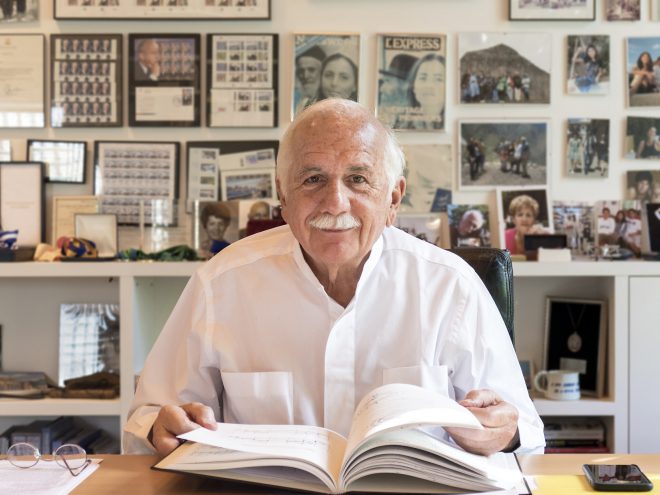
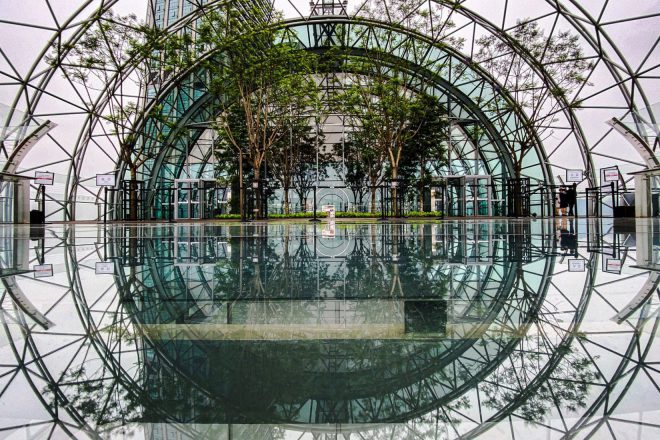
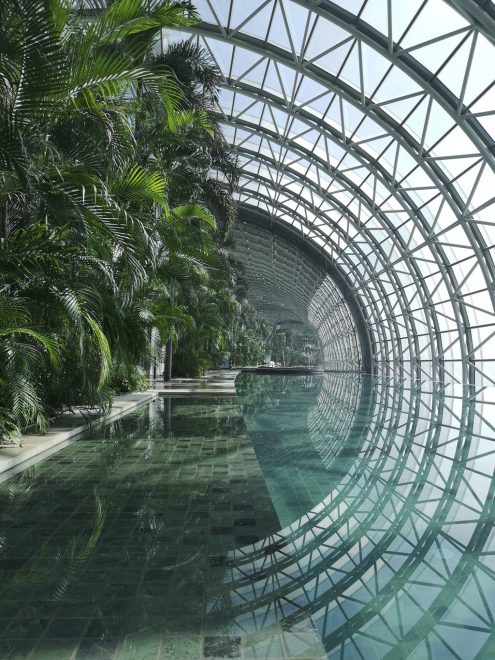
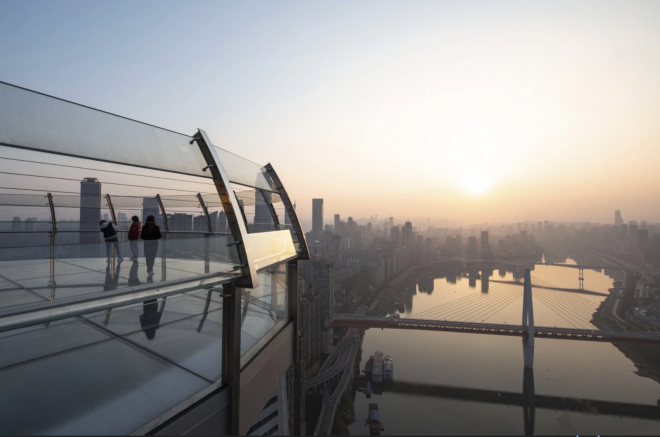
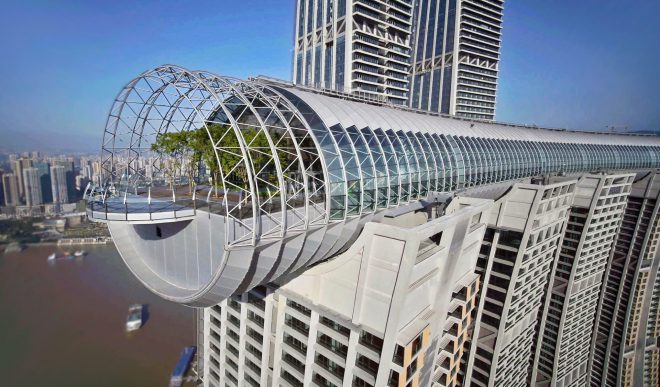
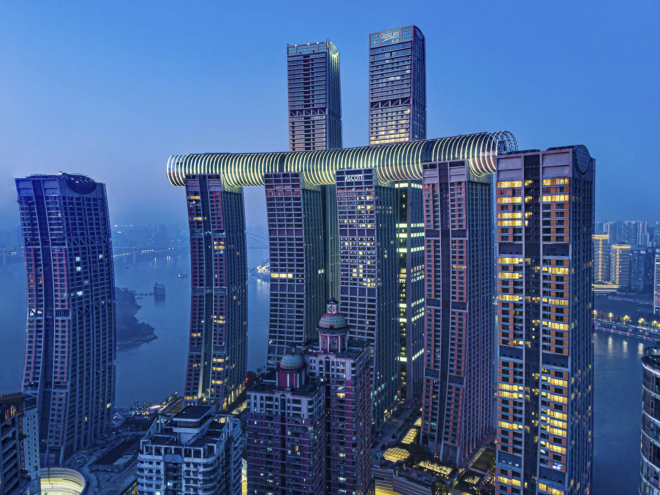
With more cities legislating for the use of green roofs, one Israeli-Canadian dream architect Moshe Safdie has taken the task to hand to inspire the world and show us how it’s done. While we’d take a real forest anyway, if you are lost in the urban jungle be mesmerized by Moshe Safdie Crystal skywalk, a 300 meter cylindrical promenade some 250 meters up in the sky.
Moshe Safdie on the Crystal:
Located in the Chinese megacity Chongqing and costing a whollong $3.4 billion, Safdie likely garnered some tips from the Sky Garden in London, where developers were tasked to create a public garden high in the sky.
Green roofs on a several story city complex are already a challenge. My designer professor friends tried building a tiny one on their roof in Tel Aviv, inspired by facing the green building of Checkpoint across from them, but after one year it leaked, they had to take it down.
No doubt Safdie faced these technical challenges with water, humidity, the need for hydroponics systems and fertigation equipment to keep the forest of plants alive in this real life urban jungle. We will see how architecturally sound the construction is as the years go by.
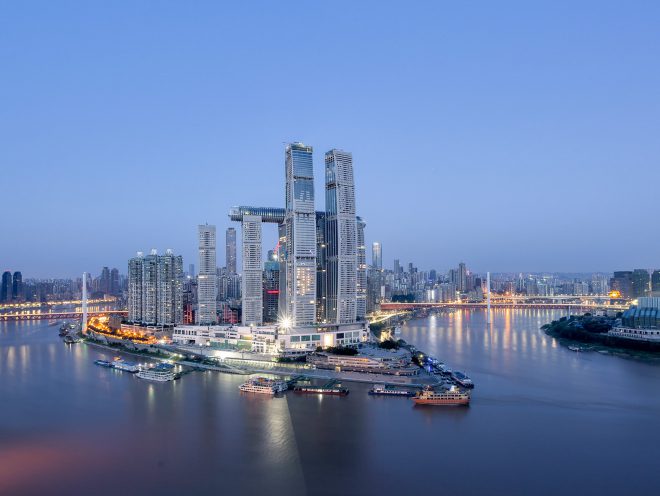
The Crystal skywalk project built as part of Raffles City, was planned by both Safdie and CapitaLand, one of Asia’s largest real estate development companies. Some 3,000 people a day can visit the Crystal given they keep social distancing.
This new historic site in Chongqing has been built at the center of the city, in a densely developed infrastructure.
The Crystal is part of a large housing complex, hotels, retail space, as well as a subway, bus, and ferry terminals.
Crystal is set atop 4 of 8 towers in this multi-use project called Raffles City, and includes an exploration deck, gardens with hundreds of trees, artificial pools, bars, restaurants, a hotel lobby – and also a view of the Yangtze and Jialing rivers below through a glass-bottom, open-air viewing deck.
All in all some 12,000 tons of steel, 3,000 sections of glass panels and 5,000 aluminum panels were used in the construction of the Crystal.
Moshe Safdie has always been a dreamer among architects and joins the ranks of other beloved Middle East architects such as the late Zaha Hadid from Iraq – the first female and first Muslim to win the Pritzker Prize.
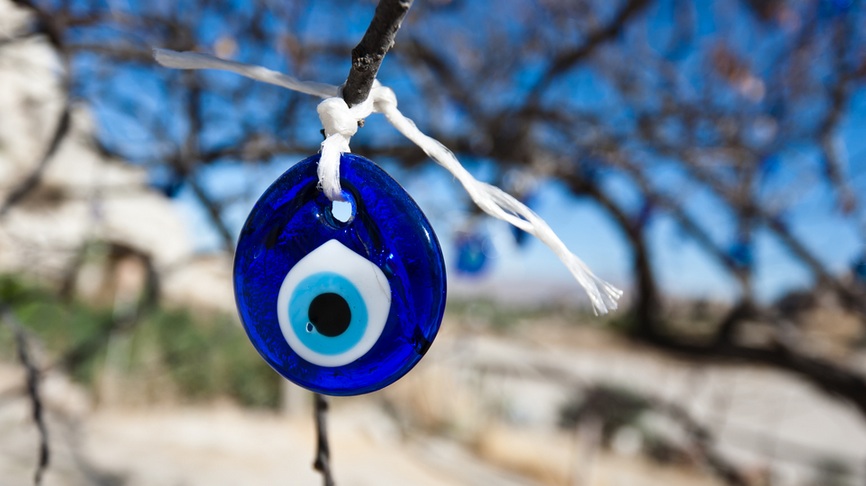
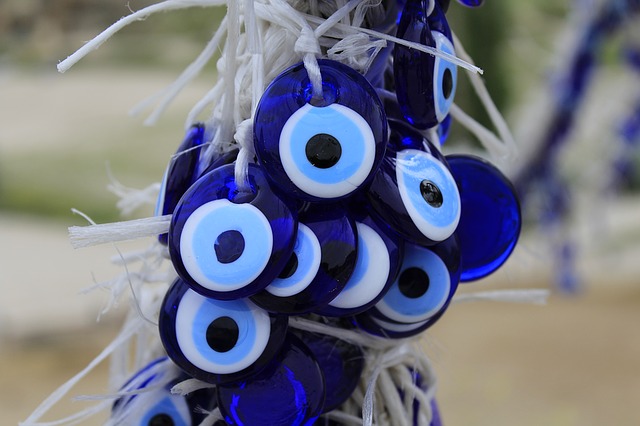
We wrote about smudging to clear bad vibes out, and now let’s have some folklore from the Middle East. Brisk business being done in protective amulets at the Carmel Shuk, Tel Aviv (in pre-Corona times). Belief in the Evil Eye, hostile spirits, and bad luck goes back to very ancient times.
As you see, people believe in the Evil Eye to this day, and are willing to go to some lengths to avert it. Even this Westerner, from decades of living in the Middle East, has come around to the idea that ill-wishing someone, talking about bad things, or feeling jealousy, can invoke bad mojo.
In the Middle East, deflecting these dangers is an involved, emotional, and mysterious business. Here’s a vignette from my Israeli experience.
Sitting at a café, gazing abstractedly out at the street, I noticed a young mother carefully moving her baby carriage out of my field of vision. It took me a minute to realize she thought I was looking at her baby, possibly jealously, and wished to avoid my loaded gaze.
I was insulted; why should she think I, a stranger, was jealous…? But I forgave her a minute later, understanding that naturally, every loving mother wishes to protect her baby. Never mind that she didn’t know me or what I was thinking; the thing was to avoid bad vibes. I’ll bet that pinned to the inside of the baby’s carriage was at least one Hamsah, also known as the Hand of Fatima – the five-fingered amulet that’s said to avert that old Evil Eye, sorcery, and demons.
People whose origins are steeped in Islamic cultures invoke the Hamsah charm freely, raising open palms and repeating “Hamsah” five times. I’ve seen this many times with my Moroccan/Tunisian family connections, at weddings, henna celebrations and circumcisions; also in earnest discussions over life issues. And you can expect to see at least one Hamsah amulet hung around the house wherever Middle Eastern traditions live on.
Having a Hamsah amulet displayed on a wall, or keeping a small one in your pocket, is believed to bring good luck. In Israel, the Hamsah motif has moved from traditional to hip. It’s incorporated in jewelry, key chains, artwork, and, naturally, lottery tickets.
The color blue itself is thought to bring peace, prosperity, and safety. Blue beads representing eyes are also a popular device for warding off the Evil Eye.
Often a Hamsah will incorporate an eye in the center of its design. A double whammy is to buy a large Hamsah with an Arabic or Hebrew blessing inside it.
Designs representing fish are sometimes juxtaposed with other devices, fish being symbols of plenty and purity.
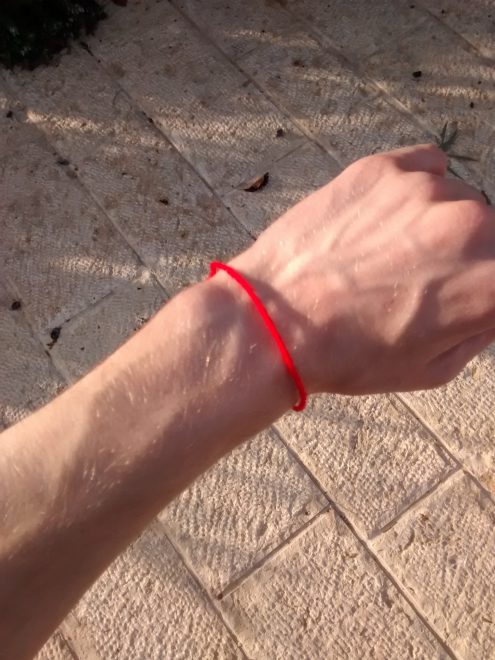
You may see people wearing an evil eye ring as well as a red thread around the left wrist; these are sold by street peddlers who claim that the threads are blessed through kabbalistic methods. This isn’t ancient practice; no more than about 120 years old. The threads are to be tied by seven knots. In some places in Israel, “blessed” red threads are for sale at the tombs of great rabbis and sages. Vendors claim that they have walked seven times around the tomb holding the threads and praying for all good things to happen to people who wear them. And good luck to the customers, I say.
The red thread was briefly fashionable among some celebrities when Madonna began to wear them.
Jewish Eastern European tradition is to spit three times to avoid bad luck. Nowadays, people are content to simply say a phrase of deterrence in Yiddish (”K’neineh horeh”) or Hebrew (”Bli ayin harah”), meaning “No evil eye!” followed by a symbolic, spoken, “Tfu, tfu, tfu!”
Either phrase can be said in earnest, or simply politely, to show the person you’re speaking to that you have no bad intentions toward them. As in: “There haven’t been any new Corona infections in my town, tfu tfu tfu!” Or: “What a pretty child you have, tfu tfu tfu!” It’s the Ashkenazic equivalent of saying “Hamsah!” five times.
In Jewish thought, merely saying the correct name of an illness should be avoided. These days, it’s mostly the Ultra-Orthodox who say “The illness” when referring to cancer.
Maybe I’ve caught on to that way of thinking; I really dislike saying “Corona virus,” or even the more genteel-sounding “Covid-19.” In conversation, I refer to the disease scourging the world today as “the pandemic.” Do I believe that saying its name might bring it closer? Well, that lays a cold finger on the little place in the heart where superstition lurks. I just don’t like saying it.
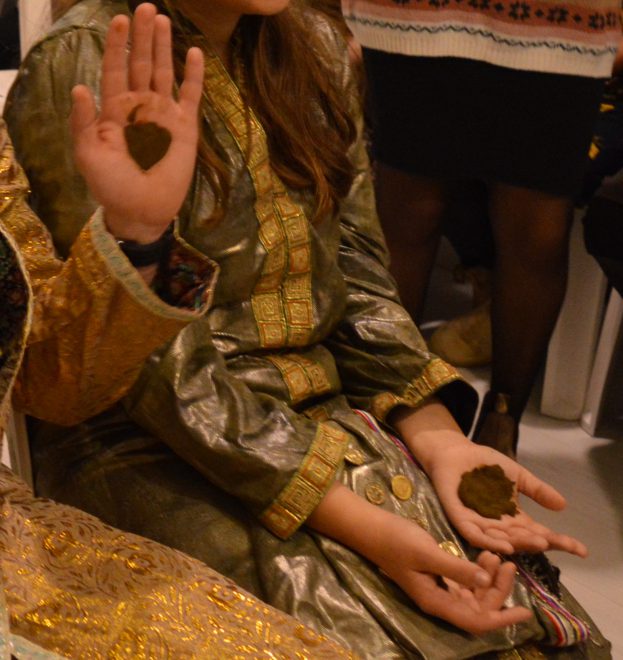
A large dot of henna in the palm of the hand is also a sign of celebration and deterrence of the Evil Eye. A Yemenite friend brought a basin full of the orange-colored paste to an engagement party I attended, and insisted on smearing it on the young couple’s palms. I asked for some too, to be polite; so did many others.
Did it work? Well, years on, the couple are still devoted to each other and raising a family – tfu, tfu, tfu.
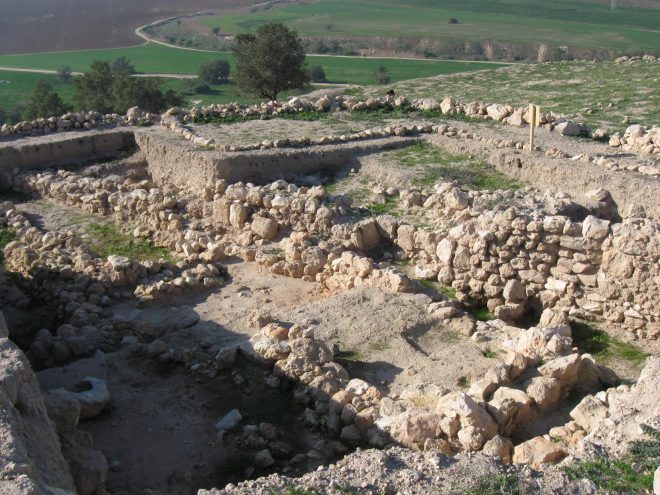
An overview of the upper section of Gath – photo via Eric Welch, University of Kansas
Somewhere halfway between Jerusalem and Ashkelon, there is a place known as Tell es-Safi and it represents a multi-period site – where numerous cultures over time lived and overlapped and built again. It teaches us that history was never black and white, and that interactions between different cultures has never been a smooth ride, but always in motion, as shown unearthed in ancient dig sites.
Although Philistine and Judahite states have been perceived as rivals, recent finds highlighted very complex religious, mundane, linguistic and commercial ties in the Iron Age found at Gath, also believed to be the hometown of the biblical giant Goliath.
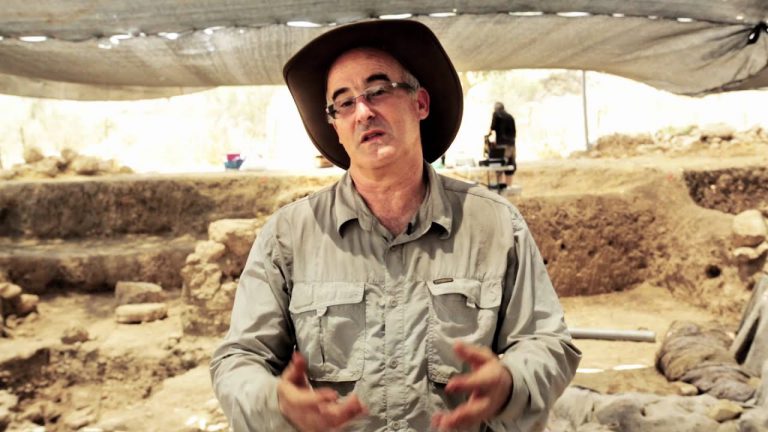
In the Bible the settlement was known as Gath and scholars have reference to the site in various biblical sources as well as in Egypt’s Amarna letters and Assyrian texts, notes Professor Aren Maeir from Bar Ilan University in Ramat Gan, Israel who leads The Tell es-Safi/Gath Archaeological Project.
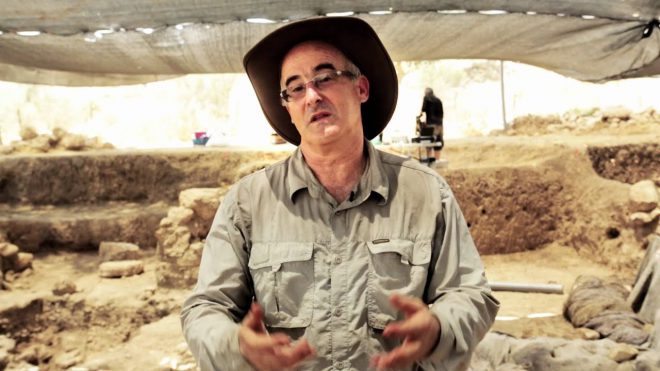
Aren Maeir, researcher at Gath
Goliath, the giant who was overtaken by King David’s slingshot, is described in the biblical Book of Samuel as a Philistine giant defeated by the young David in single combat. It is believed that Goliath was originally from Gath.
Tell es-Safi had an extensive population in the Early Bronze Age III (2700 to 2200 BCE), the Late Bronze Age (1550 to 1200 BCE) and the Iron Ages. The site was one of the most significant pre-classical settlements in the southern Levant.
Three notable groups lived there: the Israelites, the Canaanites and the Philistines lived in the area and their relations were complex: “At times friendly, at times less. There were differences between the cultures but also similarities,” Maeir underlined.
As a testimony of turbulent political times, Gath was destroyed in 830 BC by King Hazael of Aram-Damascus, “and this event is mentioned in the Bible – II Kings 12:17/18 – and on the site is evidenced by a massive siege system and a sitewide destruction,” Professor Maeir elaborated, adding that the site was again destroyed in the Iron II B (late 8th century BCE) most probably by the Assyrians.
In Iron Age, Gath was one of five cities of the Philistine “Pentapolis”, and Hazael’s demolition of the site can be interpreted as consolidation of his political power in the southern Levant.
A pentapolis is a geographic and/or institutional grouping of five cities. Like the boroughs of New York. Cities in the ancient world probably formed such groups for political, commercial and military reasons, as happened later with the Cinque Ports in England.
According to Maeir, the evidence of the conquest and destruction of Tell es-Safi by Aramean forces is supplemented by a large siege system that is connected to this campaign.
He expands: “The system included a deep trench and a berm that surround Gath, clear evidence of which was found on the eastern, southern, and western sides of the site. In addition, at least two, and perhaps three, towers that are associated with the trench and berm have been noted, as well as hints to the possible existence of other features, such as camps, in other nearby locations.”
“The trench itself was dug into the bedrock to a depth of about eight meters and a width of up to five meters, and the materials from the trench were consistently piled up on the side away from the city, forming a berm/embankment. All of these elements formed a siege system, similar to a Roman circumvallation, constructed to enclose the besieged city, preventing the defenders from escaping and receiving supplies, and from attacking the besieging forces,” Maeir emphasized.
The mention of a similar siege by Bir-Hadad, Hazael’s son, in the Aramaic Zakkur Inscription from northern Syria, strengthens this interpretation, the archaeologist said.
Pottery found at the site is a testimony of the interregional trade and intercultural links between Gath and other states and cities of the region. The socio-economic and geopolitical relations are manifested by trade and cultural influences between the Philistines and other peoples of the area.
While in the past it was often assumed that during the early Iron Age, after the initial appearance of the Philistine culture, there was little foreign connections with Philistia, in recent years, more and more evidence of various types of connections have emerged and the excavations at Tell es-Safi/Gath have provided relevant evidence for these connections from different stages of the Iron I and Iron IIA, Dr.Maeir stressed, adding that this includes exchange of decorated pottery between Gath and other cities in Philistia as well as an ivory bowl similar to bowls found in Megiddo.
On the other hand, the copper found in Tell es-Safi originated from Wadi Faynan in Arabah region on the East Bank while pottery forms had been imported from Judahite-controlled territories.
“These and other finds are an indication of the different levels of inter-regional trade and inter-cultural connections that went on during the Iron I and Iron IIA, including the close connections between Gath and the Judahite region,” Maeir pointed out, noting that Gath was a center of copper trade between Arabah and the coastal area.
Although Philistine and Judahite states have been perceived as rivals, recent finds highlighted very complex religious, mundane, linguistic and commercial ties in the Iron Age. The peak of the copper trade in Wadi Faynan corresponds with the zenith of Gath as the most eastern Philistine city, Maeir underscored.
Alexei Grigoriev and his helicopter-inspired 3D solar panel
An Israeli-Russian electro-mechanical engineer has created a new mechanical solution to optimize efficiencies in solar power plants. And when you see it working on your balcony, you might wonder when you will have lift-off! The new invention spins off-the-shelf solar panels in such a way that they minimize heat exposure and dust, while capturing more angles of the sun. The solution can work off-grid and even indoors near a window.
Scientists already agree that when it comes to optimizing solar power efficiencies, two-sided solar panels are better than one. An MIT study (links to a PDF) shows major opportunities for 3D photovoltaic systems. Based on these findings, ‘it was necessary to make only one step up to create a PV helicopter,” jokes inventor Alexei Grigoriev who has devised a novel machine to capture the most sun for consumers and niche businesses.
Today, most technologies are devoted to large solar power plant builds. And in many ways this mindset slows down advances. Typically power plant operators bid for tenders, but by the time the plants get funded and built, the technology is obsolete. This is what happened at the Ashalim solar power plant in Israel. Grigoriev is well aware of the problem and as Israel touts itself as a solar energy pioneer, sees the lack of solutions beyond the industrial market.
Here’s what’s happening today
In order to make solar power cost effective, or competitive with natural gas, nuclear, or oil, researchers are constantly upgrading their solar power systems, in materials and software, to gain the ultimate goal: to capture the most sun versus the cost of the system.
Other companies work on software or inverters to squeeze a little bit more energy out of the system, basically work to optimize them, but they can’t “add energy that’s not there,” says Grigoriev, now building his rotating solar panel solution into startup called SolarAce to make solar power accessible to everyday people like us. He’s made a system that uses a rotary motor and off the shelf solar panels to collect the maximum amount of sun they can, anywhere in the world. See a video of the protype on Grigoriev’s balcony, below.
The idea came to him in 2013 when a heavy series of rains knocked out his power for 3 days. And no one seemed to care.
“If you look to what’s happening in the industry,” Grigoriev tells Green Prophet, “governments are not interested in promoting or pushing solutions for consumers, but rather they want industrial solutions to create large power plants. Energy-intensive to fund and build, the consumer market is almost completely overlooked,” he says.
The electro-mechanical engineer with a background in airplane mechanics, and who worked for 20 years on mechanics for the number of companies including the Israel Electric Company, believes he has found the ultimate win needed to help companies and communities get power lift off in situations where they are not able to access the electricity grid. Current solar panels and systems are achievable, but for every day people and companies, not entirely reliable or efficient.
Low-tech solutions from Israel like Nova Lumos has pioneered some off-grid ideas for Africa as business models, but they haven’t made leaps in technology advance. More than half of all of Africa and most of Asia in villages of China are not connected to a reliable power network. Refugees, hundreds of millions of them, are not connected to the grid. Large server farms powering blockchain and crypto operations for bitcoin now require massive server solutions, often with unreliable power solutions. Same with hospitals. And now cannabis labs in Canada and the United States growing hemp and marijuana for THC and CBD – they need power night and day to fuel the energy-intensive growing lights.
What happens if the lights go out on any of these operations? It’s unthinkable to any number of businesses. The “Helicopter” can even function inside a room collecting the sun as the rays hit the open space. See the video below working in Israel:
Grigoriev’s approach is to apply a mechanical solution, constantly moving, and which can be fixed with multiple panels, thus collecting and tracking the sun light any time of the day, in any temperature situation.
Tracking systems for single and bifacial panels do exist, says Grigoriev, but “why only optimize with 2 panels when you could use 3 or 6 or a dozen or more?” he tells Green Prophet: “In my plans I am talking about a 1 to 1 ratio between power output and ground area. That means basically 4 times more energy than traditional PV static single face systems.”
According to independent tests he has done in the field, his solution “helicopters” in the sun’s rays –– in the hot climes of the relentless desert to the snow packed fjords of Norway.
“My solution is solving three massive problems,” he explains. “One is temperature. Although panel manufacturers tell you that their panels might get an efficiency of 24% (for example) that’s only true in a lab-like, controlled setting. What if you are in a 45 degree C desert? There is no way you are getting those efficiencies and that has an important effect on your return on investment. Since we are working with a series of panels, we can move them around before they overheat. This increases efficiencies tremendously, up to 20%,” Grigoriev attests.
Don’t maintain dust or snow
“Another feature of the ‘helicopter’ solution is that the mechanical movement deflects dust and snow, constantly helping panels achieve their advertised efficiencies. My solution here isn’t in the panels, but in the way they are working to collect the energy.”
Solar panel tracking systems have been on the market for over a decade. They are mechanical supports that move along with the rising and setting sun so that the angle of incidence of solar energy is directly impacting the solar panel. Recently, innovations in two-sided or bi-facial solar panels that use tracking systems have generated even larger amounts of solar energy.
The third achievement Grigoriev is offering is freeing up space. Solar panels arranged in a series can take one-thirdof the space, and not sprawl out over your roof. His solution could be used on a balcony, on an electric car (are you listening Elon Musk?), or even on a solar airplane.
Grigoriev says his application might cost more, but it’s a solution that will actually work for off-grid communities that need power, or for large server farms or hospitals that can’t risk being without dependable power even for a minute a day. But mostly this product is oriented for personal clients that needs specific amounts of energy anywhere. It’s like helicopter that has to be landed with special loads on the most remote islands.
(That’s why Grigoriev –– coming from aviation –– compares his solution to a helicopter.) And off course it’s very close to the traditional generator. Except powered by the sun. This could be an excellent solution for gold mines.
Grigoriev says: “No one argues that there is no place for helicopters in aviation. They have a specific purpose and in no way do they, or can they, compete with airplanes. You can’t land an airplane in the middle of the city, or move in 3 dimensions. The same is true with my invention. Yes it will cost a bit more, but if applied where needed it will give homeowners and businesses the freedom to move, live, work and play, without interruption, using the sun.”
Grigoriev who started on the prototypes two years ago is looking for business partners to commercialize the technology. He estimates that a $1 million USD investment will advance the technology to a first run product. Of course there is marketing and all that entails, but he believes the solution will speak for itself.
And –– a big bonus Grigoriev adds –– “my system easily connects to the wind.”
Cousin to the cannabis plant, hemp is also considered a healing herb – and one that is legal anywhere to grow. High amounts of CBD make it an interesting anti-anxiety medicine for many folks.
The hemp industry is booming, and an increasing number of acres of farmland that were once used for other crops are being handed over to hemp farmers. For both hemp smokers and environmental activists, however, some of the attributes of outdoor-grown hemp might be less than ideal. Check out these five simple reasons that indoor hemp flower is better for our bodies and the ecosystems that surround us.
1. It’s better for soil
Hemp is a bioaccumulator, which means that it sucks contaminants out of soil. At first glance, this attribute might make it seem like hemp and making hemp oil is good for soil, but contaminants aren’t the only substances that Cannabis sativa accumulates. If you choose to grow hemp indoors, there are many advantages to using a hydroponic system.
In addition to removing contaminants, hemp also removes everything else present in soil including nutrients. Once nutrients are stripped from soil by greedy crops like hemp, it can take generations for them to regenerate. When multiple hemp crops are grown in succession in the same soil, nutrient depletion can become so severe that growing crops in that area again becomes impossible.
Indoor-grown hemp, on the other hand, is commonly grown in small pots of topsoil, which leaves vital tracts of farmland fully intact. It’s even possible to grow indoor hemp hydroponically, and this method does not use any soil whatsoever.
2. It’s more efficient
Indoor-grown hemp flower produces 2-3 times the cannabinoids as outdoor-grown flower. Therefore, indoor-grown flower can be used to make more than twice the number of finished products as outdoor-grown flower, and the effects of indoor-grown hemp flower are also more than twice as potent as those offered by outdoor-grown hemp flower.
As a result, indoor hemp cultivators can grow less flower but still provide better results than outdoor hemp cultivators. This increase in efficiency is better for the environment, and hemp bud that’s more potent is also a better deal for consumers.
3. It reduces pesticide and herbicide use
Growing hemp outdoors exposes your crop to all sorts of different dangers. In addition to environmental fluctuations and the threats posed by natural disasters, outdoor hemp crops are frequently plagued by pests and invasive plant species that damage foliage, eat buds, and compete for root space.
To protect against ravaging insects and invasive weeds, outdoor hemp cultivators are forced to rely on pesticides and herbicides. While many outdoor hemp cultivators use organic, non-toxic pest-killers and weed-deterrents, these substances can still be dangerous.
Other hemp growers simply use the cheapest and most plentiful agricultural tools available with little thought for the environment or their end consumers. Pesticides and herbicides hurt the planet, and if they remain in hemp flower once it is dried, cured, and ready for distribution, these harmful chemicals can also hurt consumers.
Indoor hemp, on the other hand, is cultivated in climate-controlled, hermetically sealed environments in which invasive species can’t flourish. If pests show up on indoor hemp plants, the affected plants can be quarantined and treated individually, removing the possibility of environmental pollution and making it easier to ensure that pesticides don’t end up in hemp products intended for consumers.
4. It’s less prone to contamination
Even with the best organic and sustainable cultivation methods in place, hemp producers can’t control the agricultural practices of their neighbors. The vast majority of outdoor hemp cultivation operations are located within major agricultural zones, and while hemp is generally a cleaner industry than most sectors of the agricultural economy, cultivators of other crops routinely use products that contain heavy metals, petrochemicals, and other harmful substances.
When neighboring farmers spray their fields with dangerous pesticides and herbicides, this airborne mist can make its way onto hemp crops. The water runoff from neighboring fields can also make its way into hemp cultivation areas via either above-ground or below-ground routes. Unless you grow your hemp miles away from any trace of civilization, it’s impossible to keep outdoor hemp crops perfectly clean. With indoor hemp, however, it’s easy to keep your growing environment perfectly sealed, which utterly prevents heavy metals or other contaminants from making their way into your end products.
5. It reduces monocropping
The basic premise of regenerative agriculture is that soil performs better when it is planted with multiple crops. In some cases, these crops may rotate throughout multiple seasons, but in other circumstances, more than one type of crop may be planted in a particular area at the same time.
Almost the entirety of the contemporary agricultural economy, however, is composed of monocropping operations. Monocropping is when a single crop is grown in an area over and over again, and this practice depletes soil while also harming the surrounding environment.
Since hemp has suddenly become such a profitable crop, most cultivators have decided to engage in monocropping instead of interspersing their hemp plants with other plant species. As we covered above, hemp also strips soil of its nutrients with disturbing efficiency, so monocropping with this particular crop is especially harmful.
Growing hemp indoors, however, is a type of sustainable monocropping. Since indoor-grown hemp doesn’t leach nutrients from soil, it doesn’t harm the environment, and growing hemp indoors leaves more space in agricultural communities that farmers can use to engage in sustainable, multi-crop operations.
She wants bling, so make is sustainable and a lab-grown diamond
Remember that story years ago about turning your loved one’s ashes into a diamond? That was the first time I heard about lab-grown diamonds, and well that’s what we are expected to return to anyway, no? Stardust and flecks of diamonds in the sky? Like stars and diamonds, we are carbon-based and to carbon – one day – we will return.
While I love all things that sparkle, for me, I opted out of a diamond wedding ring when my husband asked me what I wanted. A simple gold ring will do just fine I told him. In the back of my mind, I was remembering that Leonardo DiCaprio movie Blood Diamonds and the hell that people in Africa go through to mine our little shiny things.
there is also the environmental degradation that goes along with it, and very high cost for the purchaser, always trying to buy a little more than he can afford. Who needs debt at a time like this?
Jewellers cannot tell a mined diamond from a lab-grown diamond
A good diamond means I love you. So if the diamond is bigger and better it means you love me more? Maybe but only if it’s lab-grown, because seriously we are beyond violating human rights in diamond mines and lab-grown diamonds also mean forever. I met my home-town jeweller in the summer and while my mom was asking him to reset her diamond ring from the 60s, I asked him: can you tell the difference between a lab diamond and a mined diamond, and he said absolutely not.
Diamonds have surely had a great marketing campaign for decades and hey, I think they are a lovely thing. Even lovelier now when you can find heirloom diamonds on the market –– a second-hand diamond. But then your mind wanders. Why did the family sell it? Were they under duress or going through a divorce? That’s what comes to my mind when I think about estate sales.
The really only conceivable way to buy a diamond today and be a serious environmentalist is to buy a lab-grown or lab-created diamond. You don’t need to have it made from the ashes of Uncle Peter or your dog, but just from carbon that the lab chooses for you. This is what happens in nature anyway: heat and energy and a lot of time make diamonds. In the lab, they just speed that all up.
So how are lab grown diamonds made?
A lab-grown diamond simply put is a diamond made in a lab. They share the identical molecular structure as a “natural” diamond, and optically they look exactly the same. Lab-grown diamonds also look “rare” because they also have flaws and inclusions just like mined diamonds.
How are lab-made diamonds eco?
Good for the land
In the past, people mined diamonds –– they still do it today. But there is no need for disturbing that 100 square foot parcel of land for your carat of diamond. Lab sourced diamonds, made using high pressure and heat generate a very tiny ecology footprint compared to the 6000 pounds of mineral waste and pollution created by the traditional diamond mining industry.
Good for people
Forget about the underground trade, arms dealing and shady sides of the business –– one in a thousand miners are severely injured when mining for diamonds, sometimes beaten and forced into slave labor, and only earn a tiny fraction of that they see.
Don’t believe the seriously flawed Kimberly Process which might claim that your diamond is conflict-free? The industry is notorious for ignoring human rights abuses, and exploiting people. The Kimberly Process only means that the diamonds were not financing rebel movements against governments from where they were mined. The poverty continues, the environment continues to be mired. Crimes are still done against people. Lab-created diamonds bring jobs locally to you, and zero people get hurt while creating them. And they sparkle just the same.
Looking for some companies that ship from online? Try here. Some have bricks and mortar shops so you can feel for the size, design and quality.
A team of Israeli students have completed a maiden voyage of a 3D printed airplane. The big idea is to find a way to redesign aircraft of the future so they are more fuel efficient and less damaging to the planet.
Now all they need to do is scale up the model and partner up with the Swiss team that flies solar and they might have a match made in eco-heaven. Aviation needs greening, says moonshot seeker Geoffrey Lipman, founder of a new organization to scout for solutions in the industry.
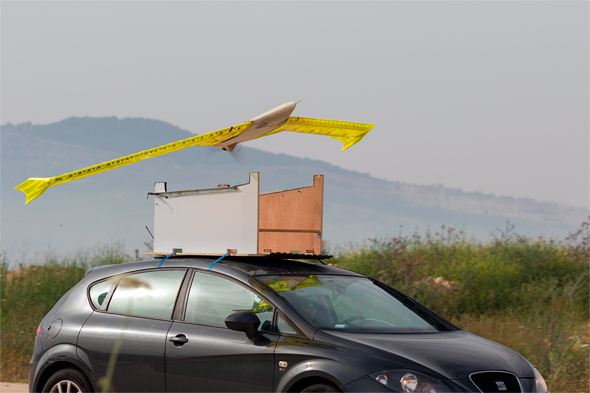
The Israeli solution is not just a plane, but a test pad for testing new ideas: their A3TB – Active Aeroelastic Aircraft Testbed – is an experimental platform for studying phenomena related to wing flexibility and future flexible aircraft design that are eco friendly, says the team.
Designing modern aircraft includes numerous challenges, including the economic-environmental challenge of reducing fuel consumption and decreasing pollution. One of the solutions is designing lightweight aircraft structures with a large wingspan, thus reducing the drag forces.
Lengthening the wings inevitably leads to increased flexibility, which spurs structural tremors and sometimes even a loss of stability. Engineering solutions, such as control mechanisms, require complex multidisciplinary R&D that combine mathematical and numeric models with simulations in the lab, as well as test flights essential for verifying performance. During these flights, one must also take into account the risk of crashing.
For this reason, there is a need for inexpensive and safe testing platforms which can be “sacrificed” at relatively low cost in both money and project time. With the A3TB platform, optimal production design can be presented at a high speed and low cost. This platform therefore signals a breakthrough in the design of a flexible wing platform manufactured using a 3D printer.
For the past two years, two groups of students at the Faculty of Aerospace Engineering have been developing an aeroelastic tester of this sort – a light aircraft whose wings are long and flexible, and whose performance can be evaluated during flight so that special control mechanisms can be designed to improve its performance, response to wind gusts, and stability.
The A3TB platform weighs 10 kg, and its wingspan is 3 meters. It was designed by two groups of students under the guidance of Dr. Lucy Edery-Azulay and Professor Daniella Raveh, in collaboration with Israel’s Ministry of Defense.
The first test flight that was conducted on May 15 demonstrated that the platform is capable of flying straight and horizontal at sea level, including maneuvers. This flight is an important milestone in the platform’s continued development.
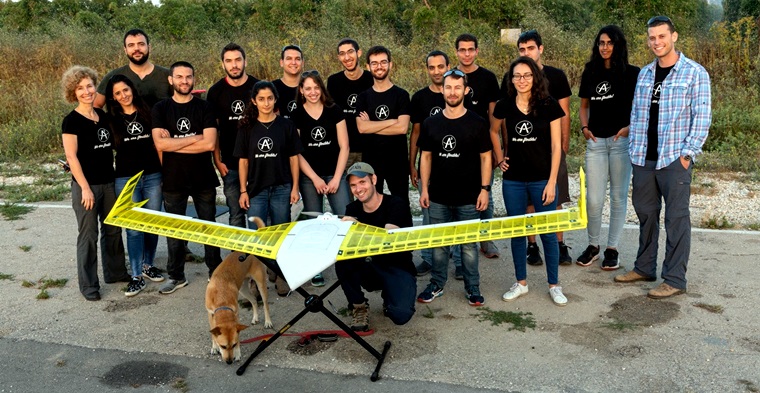
The team of students from the Technion in Israel. The big mission is a test pad to launch new, greener solutions for aviation.
Since it is a test airplane that is expected to crash at some point, these features make it possible to make many improvements without large investments. The group is currently working on an automatic control mechanism that will be installed on the second generation of the aircraft, A3TB-G2, in the next few months, and we hope to report on additional interesting results in the near future.
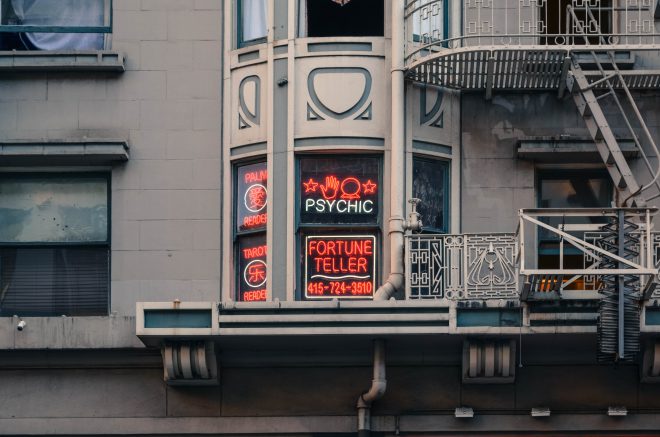
Anxious about the future? Some of us dig into our inner subconscious with the help of a card reader.
A tarot card reading is the process of getting in touch with the past and the present to gain an insight into what the future holds through the use of a special deck of cards. More often than not, people who read tarot cards have the passion to do so because they are gifted with extrasensory perceptions that allow them to interpret the cards based on how they feel about the subject. Nevertheless, anyone can learn how to read tarot cards and use the reading to guide them with the steps they need to take to ensure a better future.
Thereby, you can consult with a seasoned psychic who is well adept into tarot card reading, or try to read the tarots yourself. If you opt for the former, take the advice of seasoned psychic to heart: that the skills and talents of psychics can vary dramatically. Thus, you need to center yourself and keep an open mind when it comes to the psychic who will be able to help you find happiness through spiritual enlightenment and self-discovery. If you are keen on utilizing tarot cards as a means to do so, below are some of the things you should know before getting a tarot card reading.
Prepare Your Questions
Before getting a tarot card reading, it will help if you prepare a set of questions that you want to be answered. The questions you prepare will guide the direction of your tarot card reading. Thus, it is important for you to centralize your thoughts and reflect on what you want answers for. Also, be prepared to know more than what you have asked for.
The Predictions May or May Not Be Accurate
There are several ways to shuffle the cards and there are also a number of ways to lay them out on the table. The way that the cards are shuffled and presented may have an effect on your reading, and there are instances wherein the predictions may not be accurate. Thereby, it is best to come without any expectations of getting a reading that is a hundred percent accurate.
A Tarot Card Reader Can Help You Interpret the Cards
Be open with the reader and place your trust in them because they will be able to help you interpret the cards. Your interaction with them greatly matters in the reading process and by sharing your thoughts and emotions to the reader, they will have the opportunity to guide you better. Rest assured that they will not judge you, nor will they lecture you.
It May Take a While Before You Realize What the Tarot Signifies
Tarot cards symbolize a number of different things that can translate to various aspects in your life. You may not be able to understand immediately what the readings mean right after the process. But as soon as you watch it unfold in your life, you may be able to recognize the connection.
There are No Bad Tarot Cards
There are tarot cards with a bad reputation, but you have to understand that there are really no bad tarot cards. For instance, the card of death rarely signifies literal death. Rather, it symbolizes a significant change in your life, such as graduating from college or moving to a new home. Thereby, this card may actually provide you with an opportunity to reflect on how you can transform your life.
You May Feel Positive
During a tarot card reading, you can expect to feel positive, energized, or healed. More often than not, the readings will leave you motivated and inspired, particularly if you drop all your restraints and allow yourself to be healed. Thereby, just keep an open mind and consider a tarot card reading as something good for your well-being.
Embrace the Unknown
Finally, when you go for a tarot card reading, prepare yourself to embrace the unknown. Have fun in exploring and discovering yourself through the symbols that the cards will present to you.
To wrap things up, before getting a tarot card reading, make sure to have a set of questions that you want to be answered. Just keep in mind that the answers you may obtain from the cards may not be always accurate. Nevertheless, allow the reader to help you interpret the cards and soon after, you may realize what the cards may signify. Rest assured that there are no bad tarots, rather, the cards may help you feel energized or healed. Perhaps this is the perfect time for you to embrace the unknown through tarot card readings.
As cities in the United States continue to grow, wildlife wandering into big cities is becoming more and more common. In the suburbs, where public parks provide the perfect environment for a variety of animals, countless encounters with wild animals are seen. But how do you deal with these encounters? How do you keep your household safe while ensuring the safety of the animals? Read on and I’ll guide you through it, covering two commonly encountered animals.
Keeping You And Them Safe:
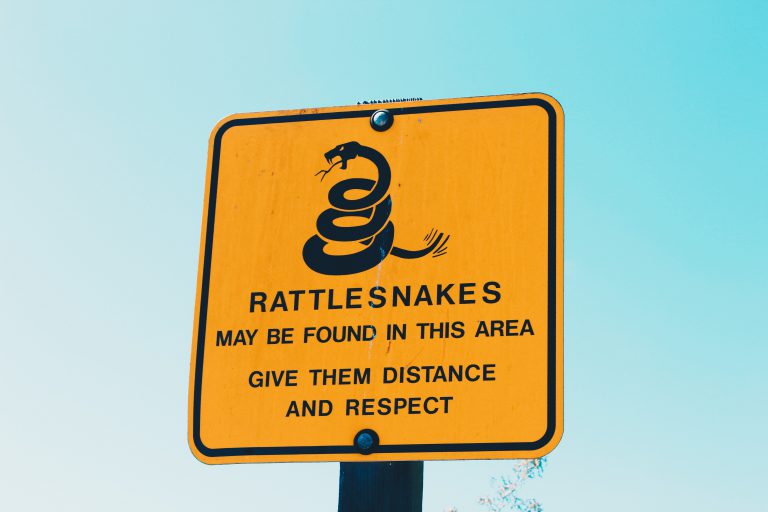
Snakes are fast-moving reptiles with a notorious reputation and a fierce personality. Despite what you may hear about snakes and the fear-striking snake photos you may see, they should not be feared. Oftentimes a snake you encounter in your home life is a non-venomous snake that doesn’t need to be feared. Most times, an encounter with a snake will happen outside. In this case, the resolution is simpler than you may think. To handle the encounter, follow these steps:
If you stepped on the snake, quickly back up from the snake and stay still. Generally, a snake can strike two-thirds of its own body length. Try to stay at least two yards away from the snake.
Be sure the snake has room to escape and isn’t in a position where it may feel cornered.
Note what the snake looked like- it’s crucial to identify the snake.
If you find the snake is venomous, it should be removed from your property.
If you must remove a snake from your property, it doesn’t need to be killed. If you wish to remove a snake from your property, here are a few tips:
Remove any places where a snake could make a home. Snakes like to hide in weeds, piles of debris, or other animals’ burrows. Be sure to cut any weeds, clean up debris, and fill burrows with soil or gravel.
Try a snake repellent. You can use a mix of cinnamon oil, clove oil, and eugenol to create a smell that snakes can’t stand, and will promptly vacate the area.
The best way to remove a snake, though, is to call your local animal control or wildlife control professionals. They will humanely remove a venomous snake without putting you in harm’s way.
In some unfortunate cases, though, snakes take shelter inside your own home. In that case, it’s crucial to remove the snake from your house as soon as you can. This helps both you and the snake avoid encounters that could become dangerous. The most important thing to remember is to stay calm- it can be scary, but staying calm will lower the risk of harm to you or the snake significantly. Here are some ways you can deal with a snake encounter inside your house:
Avoid disturbing or charging the snake, which would drive it into hiding. Approach the situation calmly.
If possible, open a door and use a long broom to usher the snake outside.
If the snake doesn’t move, is unresponsive, or coils up, put a basket or trash can on top of the snake and put a weight over it. Call an experienced professional.
If neither is possible, try to herd the snake into a secluded corner that is accessible but cluttered enough for the snake to hide in. Call a professional and be sure the snake doesn’t escape.
Snakes aren’t the only animals you’ll encounter, though. Foxes are a common animal that is found in urban areas. Foxes are small, curious animals identified through their small size and unique yellow-red colored fur. Foxes are precarious creatures, usually skittish of humans. However, they often lurk around neighborhoods, creating a risk for small pets, or even children. If you find yourself dealing with a bold fox that approaches you, you can do the following:
Make a loud noise and make yourself look like a threat to the fox.
Throw a soft object towards the fox. Be sure the item won’t harm the fox. If you have water handy, splash it towards the fox.
Most times, though, a problem with a fox will stem from it making itself cozy in your own yard. It should be noted that, though not dangerous to older children or adults, a fox should not be treated as a pet. In the case that the fox is rabid, it should be avoided and animal control should be called. If a fox is in your yard, you can take these steps:
Keep all pets indoors, not letting any out.
Pack leaves, dirt, or gravel in front of the den to annoy the fox.
Place objects that smell of humans, such as sweaty clothes near the den. This will frighten the fox.
Place shiny balloons or other uncommon objects near the den.
Motion-triggered alarms or other noisemakers will scare a fox away.
If foxes are a recurring problem, consider burying an L-shaped footer along the fence line to prevent the fox from borrowing under. In any case where a fox is an immediate threat, call animal control or wildlife control professionals. Any pet or person bit by a fox should immediately see a doctor or veterinarian.
What to Remember:
Animal encounters can be frightening. But, wild animals are just as scared of us as we are of them. It’s always important to stay calm and keep a logical state of mind. Animals do not need to be harmed, and will often move out without causing damage. In any case of a wild animal living in or near your home, keep pets indoors, and monitor where small children go. Never approach the animal. For more information, go to wildlifepest.org.
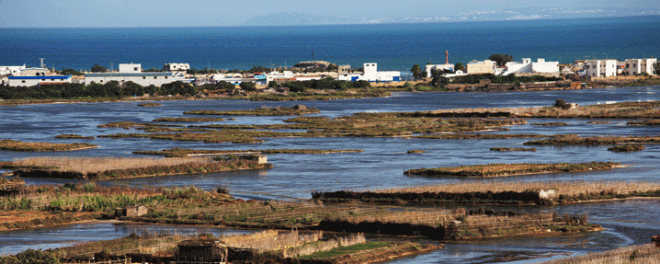
Tunisia’s traditional Ramli agricultural systems in the lagoons of Ghar El Melh (above) and its hanging gardens from Djebba El Olia, have been recognized as Globally Important Agricultural Heritage Systems (GIAHS), a designation managed by the UN Food and Agriculture Organization (FAO). It is the second time Tunisian sites have won the GIAHS recognition, after Gafsa Oases in 2011.
Both sites reflect profound bonds between the cultivated crops and the natural ecosystem, local fauna and flora, while promoting the preservation of traditional knowledge and biodiversity conservation. Their recognition as GIAHS sites will encourage local communities to better treasure and conserve their heritage for future generations.
Ramli cropping practices in Ghar El Melh
Ramli, meaning “on sand”, are agricultural practices that consist of growing crops on sandy substrates. Unique not only in Tunisia but in the whole world, these gardens were created in the 17th century by the Andalusian diaspora to cope with the lack of cultivable land and fresh water.
The ingenious practices are based on a passive irrigation system where the roots of the plants are fed throughout each season by rainwater stored and floating on the surface of the sea through the movement of the tides.
The traditional knowledge preserved over the centuries enables farmers to maintain the lagoon plots through the precise supply of sand and organic matter so that the crops reach the right height, allowing the roots to be irrigated by a fine fresh water and not to be affected by salt water.
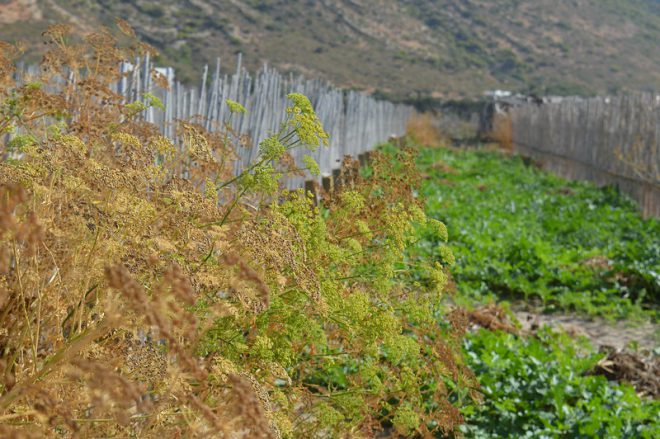
Hedges of fruit trees and shrubs on the lagoon barrier protect the cultivated plots from wind and sea spray, help slow down evaporation and fix the sand. Such a multifaceted system makes it possible to grow crops all year round without artificial water supplies, even during periods of drought.
Today, fishing and agriculture are the main subsistence activities in the area. The farms of Ghar El Melh are small (81 percent have less than 5 hectares) and their primary production includes potatoes, beans and onions “on ramli”.
Hanging gardens of Djebba El Olia
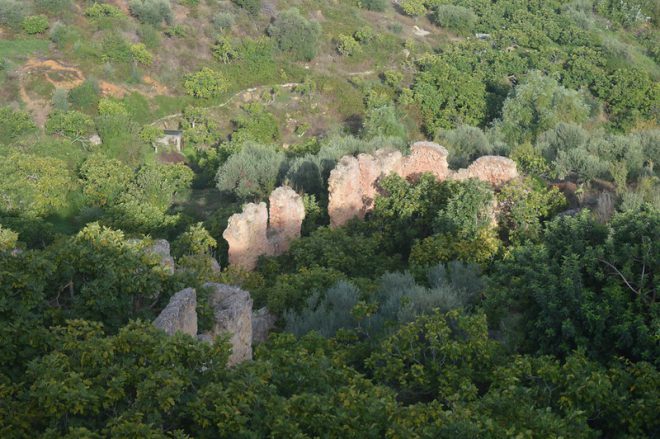
Perched on the heights of Mount el Gorrâa, the gardens of Djebba el Olia form a unique agroforestry system. At an altitude of 600 metres, farmers have been able to shape this mountainous landscape to their advantage by integrating agriculture on terraces derived from natural geological formations or by building them out of dry stone.
Reinforced by an efficient irrigation system, the hanging gardens are examples of innovative and resilient agroforestry that meets the food needs of the local communities throughout the year. Thanks to the preservation of the forests at high altitude and the multitude of species in the tree stratum of the gardens, Djebba El Olia benefits from a particular microclimate.
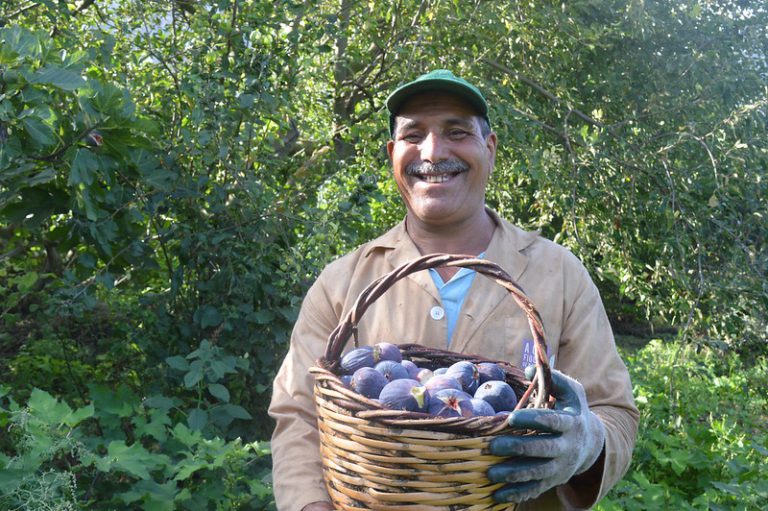
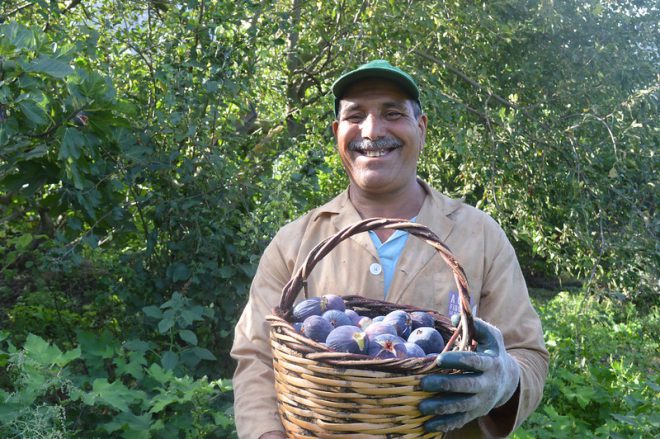
Based on practices combining agroforestry and agroecology, fig tree cultivation is the mainstay of a varied and resilient polycultural system supported by extensive livestock farming. Apart from figs, a large number of vegetables, pulses and fruit species are produced in the gardens, including solanaceous plants (tomato, pepper) as well as squash, broad bean, onion, bean and potato.
Livestock breeding is also a big part of the site’s biodiversity, in particular the local breed of sheep “Black Thibar”, adapted to the rugged terrain, and the Brown Atlas cattle breed known for its hardiness.
These gardens benefit from the nearby forests and wild flora and fauna species ensuring that wild pollinators also support biodiversity. The art of managing cultivated and wild species is the basis of the site’s ingenious knowledge. The quality of products is highly appreciated – Djebba’s AOC labelled figs, fresh and dried fruits and processed products (jams) are all highly sought after locally and abroad, representing an important source of income.
About the GIAHS Programme
The addition of the two Tunisian sites brings the total number of GIAHS worldwide to 61 in 22 countries. This FAO landmark programme highlights unique ways that rural communities have over generations forged to foster food security, viable livelihoods, resilient ecosystems and high levels of biodiversity, all while contributing to the formation of remarkable landscapes.
Until we all own one of these, getting cleaner fuel at the pump should be on your radar.
Okay the electrified Tesla you are dreaming about doesn’t exactly match your budget thanks to layoffs or a reduced workload from COVID-19. And there are fewer cars on the road –– at least until this summer, likely, when everyone will want to head to the hills to get out of their cramped apartments or suburban routine. Newspapers like the New York Times are estimating an upswing in road travel and local vacations this summer as flying will be challenging, and international travel uncertain.
Energy transition fuel before we all go electric
So there you are in your 2001 Honda Civic wondering if your car will last longer than the plague. Yes you want something better, your car and your reality, but this is what you have. Now when you are filling up at the pump, and know how every drop of fuel goes to greenhouse gas emissions, might feel a bit relieved knowing there are solutions being used by industry and at gas stations to increase fuel efficiency and reduce smog.
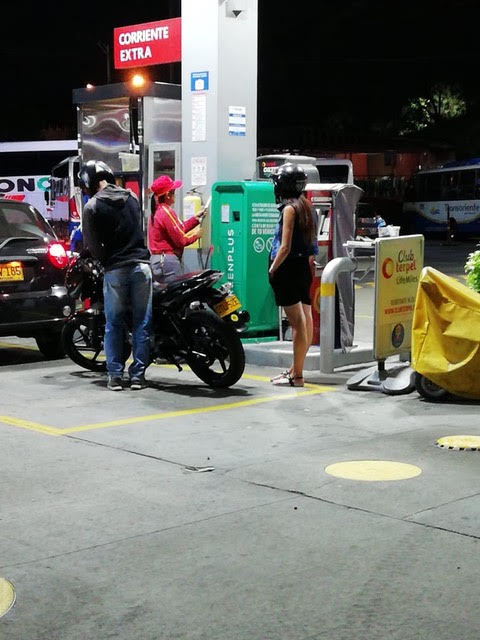
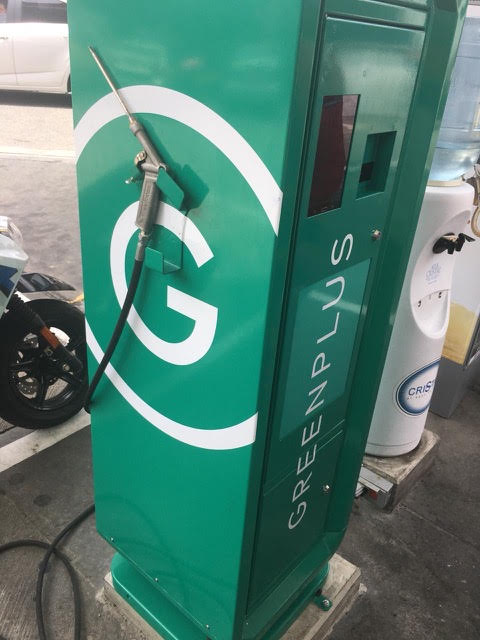
Consider the American company Biofriendly has a fuel additive you get at the pump that scrubs smog and increases fuel efficiency by up to 7%. Every percent counts these days: we all don’t want to contribute to climate change. To know if your pump is carrying the solution look for Greenplus at the pump.
Besides the consumer at-the-pump solution, Biofriendly also a fuel transition product that works with marine, freight and oil companies to help them reduce their emissions as well, with a track record going back to 2003.
The company counts 20 billion miles of on-road and on-ocean use of its product, by far the most used fuel enhancing product to date. We talked with Noel Carroll, the company’s CEO, because he is a Green Prophet.
“Our goal with Green Plus Energy Transition Fuel is to do something about greenhouse gas emissions right now,” says Carroll. “We fully support the global shift toward renewable energy and electric vehicles, but something needs to be done to fight climate change in the meantime, and our energy transition fuel is not only effective for that, it’s also cost efficient.”
Carroll’s background stems from years of experience in the entertainment industry. Most notably, he co-wrote, produced and co-starred in Machinima’s hit YouTube series’ “Good Cops and Tumbleweed”. And from that experience, Carroll has been trying to access consumer and business hearts using the media experience. The company offers entertaining ways to learn more about sustainability and the environment in its e-magazine, podcast and media network, Biofriendly Planet.
“We have discovered that a significant amount of people have felt shamed by the green community in the past for ‘not doing enough,’ and now believe that a sustainable lifestyle is too challenging to achieve,” Carroll tells Green Prophet. “Our mission is to connect with these people and present a welcoming and pain-free alternative message through our content. Changing someone’s thinking and perspective doesn’t happen overnight. Biofriendly aims to be a beacon of light in a gloomy environment.”
Can you tell us more about the podcast and e-magazine?
Carroll elaborates: “With Biofriendly Planet e-magazine, we offer a comprehensive one-stop-shop for the green community filled with uplifting images, educational articles, and helpful DIY tips. With the Biofriendly Podcast, we utilize our background in the entertainment industry to bring a humorous, light-hearted approach on all things green without all the pessimism and despair that is often attributed to environmentalism.
What is the future of the fuel industry?
Carroll: “There is an apparent “energy transition” we see happening right now, but this clear transition is a long way away. Oil is a non-renewable resource and an air pollutant when burned. This has led to a transition away from fossil fuels for both transportation and energy on our planet. This can be seen in the growing market share of Electric Vehicles (EVs) and solar power over the past decade.
With the emergence of electric cars, do you think the need for fuel will ever greatly decrease?
Carroll: “According to the EPA, there are still 1 billion fossil fuel powered vehicles on the road today. We do believe that the need for fuel will greatly decrease, but not for a long time. Automotive experts have forecasted that EVs could potentially be 60-80% of the market sold in 2050, but that is still 30 years of significant greenhouse gases that Biofriendly believes should be prevented from entering the atmosphere.
“By adding Green Plus to your fuel, it immediately becomes an Energy Transition Fuel, thus producing 7% less greenhouse gas emissions and 30% less particulate matter. This can help to significantly reduce the pollution created by traditional fuels, while the planet transitions to its next phase of transportation and energy.”
Among the clients who use Biofriendly in the US are the Israeli company Delek Group. We imagine their use in the US will help expand the products to other regions in the Middle East which are way too smoggy for anyone’s good. We need to keep our lungs in tip top shape. Any one got leads for Cairo, Amman or Tehran (among the smoggiest in the world), cough cough? They could use a little 7% off their emissions. Well more like 77% but we need to start somewhere.
Strengthening your immune system is crucial to avoid contracting diseases. This is especially true because we are amid the life-threatening coronavirus or COVID-19 pandemic. Aside from eating nutritious foods, incorporating food supplements like CBD oil in your diet can boost your immunity. Of course, you must exercise and get enough rest and sleep to stay healthy.
In this article, you’ll learn when to try CBD products in your everyday life.
What Is CBD?
Cannabidiol (CBD) is a cannabinoid or cannabis compound that’s present in the leaves, stems, and other parts of the cannabis plant, mainly the hemp and the marijuana varieties. Knowing the differences between hemp oil vs. CBD oil will help you choose the best natural alternative and adjunct treatment to traditional medications.
When to Try CBD
Take the Average Dose of CBD Every Day
The side effect and toxicity profile of CBD is favorable for daily use. This cannabinoid is subject to increasing clinical research and investigation in the medical and commercial industries to treat different clinical conditions. Taking the average daily dose (10 mg/kg) of a CBD tincture is highly recommended, as it’ll produce positive results in generalized social anxiety disorder or SAD.
Here are some ways you can take CBD daily:
CBD Infused in Foods and Drinks: You can add a few drops of CBD oil or tincture to your favorite food or drink for a fun way to take CBD every day.
CBD Taken Under the Tongue: A fast way to take your daily dose of CBD is by putting a few drops under your tongue or sublingually.
Eat CBD Edibles: CBD edibles are commercially available and include CBD gummies and CBD cookies.
Take CBD When You’re in Pain
CBD can help soothe the pain you’re experiencing because of an injury or a disease. It has analgesic properties, which makes it a great alternative to over-the-counter pain medications. CBD doesn’t have unwanted side effects such as stomach upset or nausea.
Clean the skin area with water and mild soap or cotton soaked with alcohol.
Apply a pea-sized amount of CBD cream or an ample amount of any CBD topical to the injured area.
Massage the area gently using rotating motion to let the skin absorb cannabidiol and fully feel the pain-relieving and soothing effects.
Take CBD When You’re Stressed Out or Anxious
According to preliminary research, CBD can help reduce stress and anxiety, including improving sleep patterns. So, if you’re overly stressed out, taking CBD is a good idea to help calm your senses. While you can ingest CBD, a faster way to feel the relaxing effects of cannabidiol is vaping. CBD e-juices are now commercially available for vaping.
Vaping technology allows users to benefit from the therapeutic effects of CBD, fast and easy. For those who smoke cigarettes to relieve stress and anxiety, vaping is a healthier method, getting rid of the chemical exposure they get by smoking cigarettes. CBD flowers are also available for vaping by using dry herb vaporizers.
Here are the steps in using CBD vape when you’re under stress or pressure:
Choose a dry herb vaporizer according to your vaping needs and budget.
Power on the dry herb vaporizer and prime by heating it for a few minutes.
Grind the CBD buds but don’t powder it too much.
Place the ground CBD on the heating chamber using a scooping tool (may come with your vape device) and flatten the surface without making it too compact.
Set the desired temperature on your vaping device.
Start inhaling CBD vapor until you feel that your lungs are filled. Pause your breath for about a minute to let the lung capillaries absorb CBD.
Take CBD When You have Problems Sleeping
Sleep deprivation or lack of sleep can affect your everyday routine. That’s why it’s advisable to consult a doctor to assess if you’re suffering from a sleep disorder or an underlying medical condition. Hyperthyroidism is one such condition and it impedes sleep due to the stimulating effects of increased levels of thyroid hormones in the blood. Taking CBD helps when you have trouble getting sleep. This is because CBD helps reduce stress and anxiety which are the major causes of not getting enough sleep.
Conclusion
It’s a good idea to take CBD as a supplement in addition to dietary nutrient sources. CBD helps to keep your immune system strong and helps improve overall health. Also, CBD alleviates stress and anxiety and helps you sleep well. CBD can be used to reduce pain, with or without traditional medicine. Sometimes, CBD can work along with other medicines and the synergy can help you become healthy, happier, and pain-free.
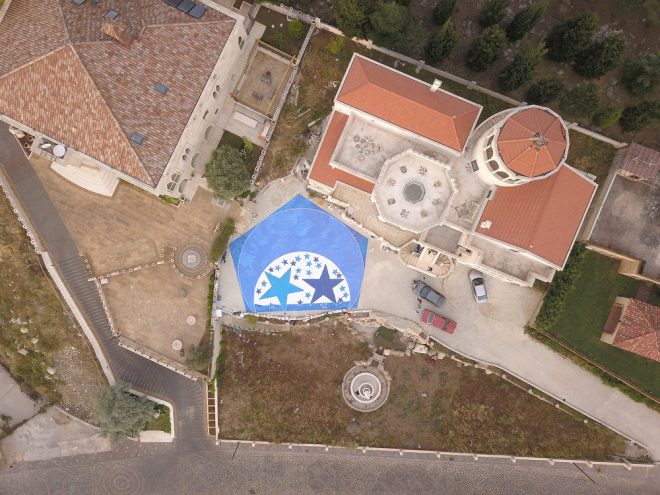
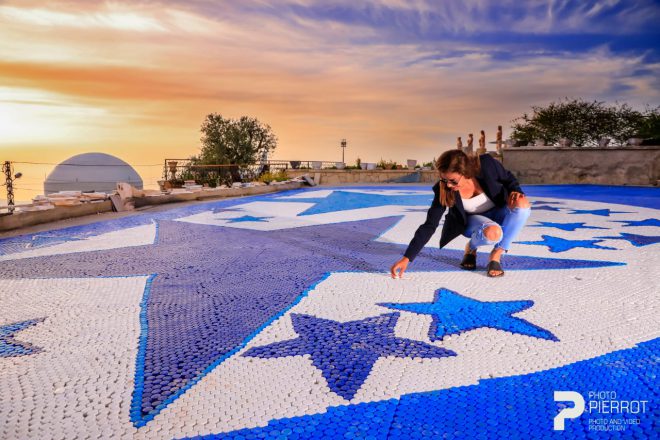
After several months of daily solo work, environmental activist Caroline Chaptini, a Lebanese national set another Guinness World Records title, having put together the largest bottle cap mosaic in a public park in the town of Miziara in north Lebanon. The measurement was solely dependent on the complete space area of 196.94 sqm, breaking the previous record of 108.568 sqm achieved in Japan in 2019.
Guess if you have enough time on your hands like we did during COVID then anything is possible.
Driven by her passion toward the environment, Chaptini is a second-time Guinness World Records title holder, following the achievement of the tallest plastic bottle sculpture measuring 28.1 meters in height alongside the Municipality of Chekka in December 2019.
Calling her followers to spare all bottle caps three months ago, Chaptini started to receive thousands of these from inside and outside Lebanon turning the initiative to a regional environmental cause. For her recent attempt, Chaptini collected no less than 400,000 bottle caps of five different colors including various shades of blue and white. She selected a public park next to her parents’ house in north Lebanon to create the two-dimensional mosaic depicting an image of a crescent made from bottle caps.
Using commercially available bottle caps, Chaptiniglued the outer outline of the mosaic in order to withstand the high winds and weather conditions. However, the weather demolished the arrangement 4 times throughout the process, and with no one around during social distancing, she had to re-do the mosaic on her own every time.
All the bottle caps were sent to a recycling company, which in turn generated funds that were donated to a children’s cancer organization ‘Kids First Association’, a humanitarian entity that looks after children with cancer who do not have the financial means to seek proper treatment.
“The original plan for this project was to involve volunteers from all over the country and have it displayed in a large gathering. But due to social distancing measures, I had to execute the project on my own in around 160 hours. Severe weather conditions forced me to restart multiple times. This is my gift for Lebanon, the environment and the kids of the Arab world.”
With over 100,000 bottles in Chekka, and 400,000 bottle caps in Miziara, Chaptini’s environmental achievements stood tall and proud, and sent a message of hope for a better future.





















 Livestock breeding is also a big part of the site’s biodiversity, in particular the local breed of sheep “Black Thibar”, adapted to the rugged terrain, and the Brown Atlas cattle breed known for its hardiness.