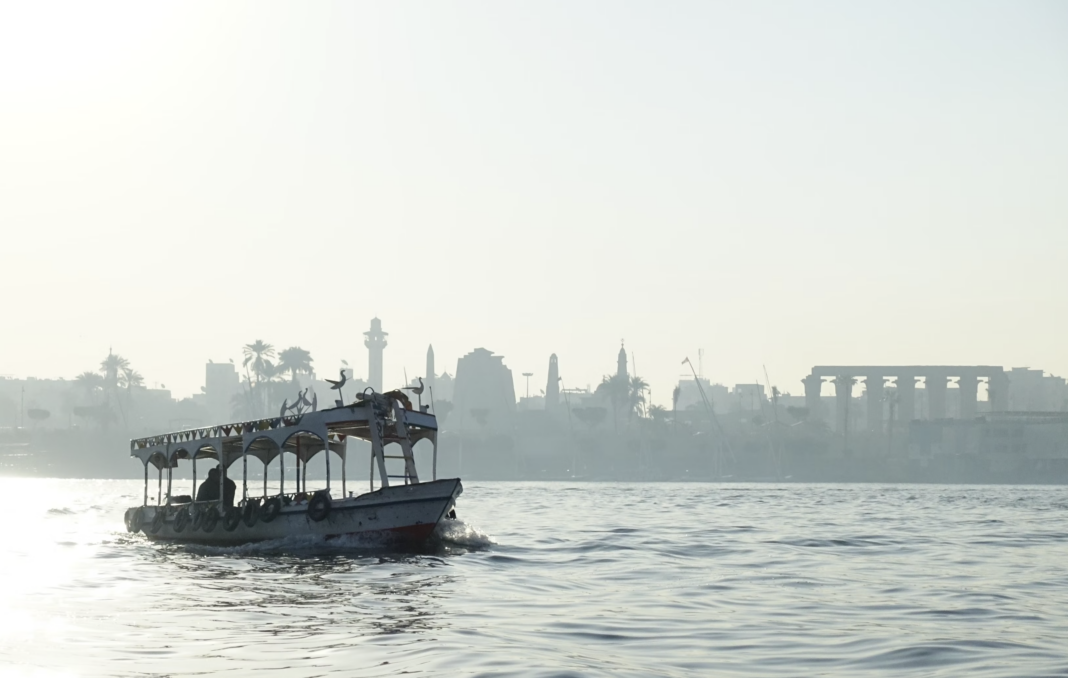


The Nile is one of the most important and well known rivers of the world. Researchers have just found something very exciting: the remains of an ancient branch of the Nile River has been found near the Giza pyramid complex in Egypt — hinting at why so many pyramids were built there.
Satellite images and geological data now confirm that a tributary of the river — which researchers have named the Ahramat Branch — used to run nearby several thousand years ago. The waterway would have provided a convenient way to transport materials to the sites.

The pyramids there are now many miles away from the Nile but thousands of years ago the ancient Nile branch probably carried people, supplies and wealth right to the pyramids.
In Egyptian pyramid complexes, the valley temples at the end of causeways acted as river harbors, write the researchers.
“These harbors served as an entry point for the river borne visitors and ceremonial roads to the pyramid. Countless valley temples in Egypt have not yet been found and, therefore, might still be buried beneath the agricultural fields and desert sands along the riverbank of the Ahramat Branch,” they explain.
Five of these valley temples, however, partially survived and still exist in the study area. These temples include the valley temples of the Bent Pyramid, the Pyramid of Khafre, and the Pyramid of Menkaure from Dynasty 4; the valley temple of the Pyramid of Sahure from Dynasty 5, and the valley temple of the Pyramid of Pepi II from Dynasty 6. All the aforementioned temples are dated to the Old Kingdom.
“These five surviving temples were found to be positioned adjacent to the riverbank of the Ahramat Branch, which strongly implies that this river branch was contemporaneously functioning during the Old Kingdom, at the time of pyramid construction,” they write.
Revealing this extinct Nile branch can provide a more refined idea of where ancient settlements were possibly located in relation to it and prevent them from being lost to rapid urbanization, the researchers said. This could improve the protection measures of Egyptian cultural heritage. “It is the hope that our findings can improve conservation measures and raise awareness of these sites for modern development planning,” they conclude.
Tourism to areas like Sinai and Dahab and Cairo is scant now due to the Palestinian and Israeli war, with tourists afraid of Hamas terror in Egypt, but there is no doubt that Egypt will always be one of the must-see countries of the world.
Related: Egypt asks Saudi Arabia to help them with the Nile
The Nile of course is not without its own major political problems. Ethiopia is home to the Blue Nile, one of the tributaries of the Nile River and Ethiopia has created a hydro-electric dam, known as GERD to harvest energy from the river. If it traps enough water long enough it may destroy up to half of Egypt’s agriculture. This does not make Egyptians happy as it threatens them downstream with loss of tourism, and water for agriculture.
Related: Nile cruise ship spills diesel into lake
The Blue Nile is a river originating at Lake Tana in Ethiopia. It travels for approximately 1,450 km through Ethiopia and Sudan. Along with the White Nile, it is one of the two major tributaries of the Nile and supplies about 85.6% of the water to the Nile during the rainy season. The Blue Nile and White Nile meet in Sudan to make The Nile River where it travels to Ethiopia.

The Nile is a major north-flowing river in northeastern Africa. It flows into the Mediterranean Sea. The Nile is the longest river in Africa and has historically been considered the longest river in the world, though this has been contested by research suggesting that the Amazon River is slightly longer. It is different from the Suez Canal which is a man-made channel that connects the Red Sea to the Mediterranean Sea to make shipping routes from the Indian Ocean closer to Europe. It was built by Egypt yet currently Egypt has no control over stopping the terrorists targeting ships as they head to the Suez Canal.
The Suez Canal also has brought invasive species to the Mediterranean Sea such as jellyfish. Houthis, a terror group from Yemen are currently firing missiles at ships heading to the Suez Canal in the Red Sea. Many of these ships are oil tankers and they downed one already which is seeping poison into the Red Sea, with no condemnation from Greenpeace.