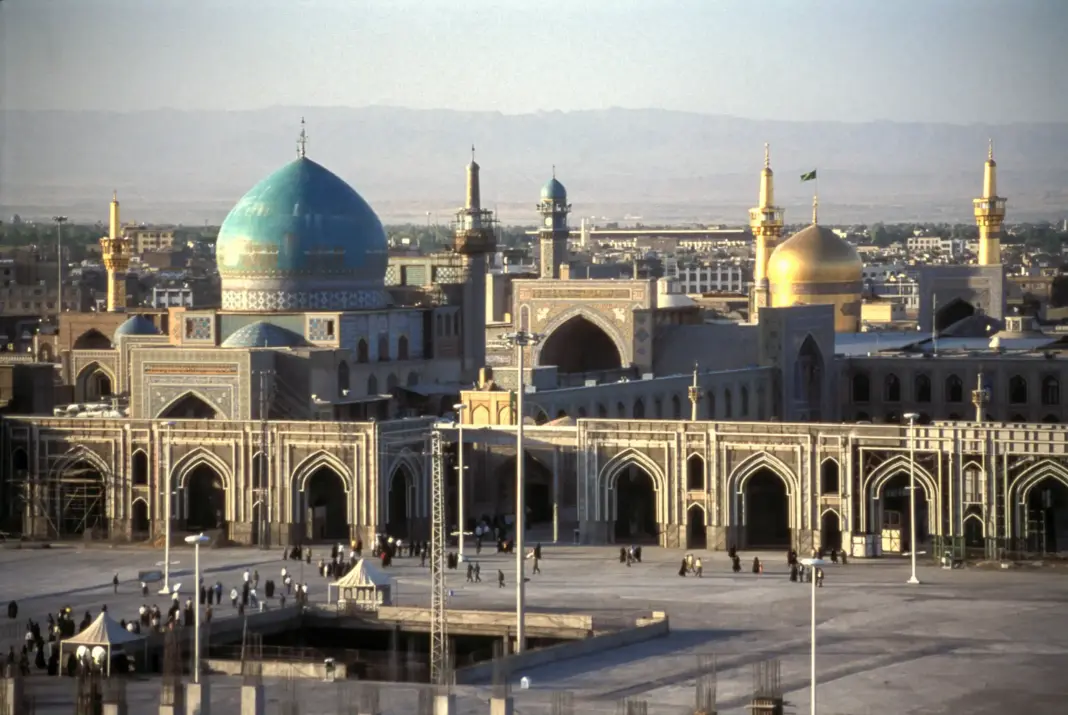
Iran’s holiest city about to run dry as terror chosen over water management

Mashhad
Water systems are on the verge of collage in Iran’s holiest city Mashhad, second in size only to Tehran

Iran’s second-largest city, Mashhad, is facing an acute water emergency after dam reservoirs feeding the city fell below three percent capacity, according to Iranian state and local media. Officials warn that without rainfall or improved inflows from neighboring Afghanistan, the city’s supply could soon collapse. It’s happened before that Iranian generals have accused Israel for stealing their clouds.

Iranians on X are talking about murdered bodies showing up in the dried sediment. “Reports that at least 74 bodies have been found in the Karaj Dam in Iran, all thought to be executed anti-regime dissidents,” says X commentator Nioh Berg.

“Because of the drought and lack of rain, this dam has dried up almost completely and revealed a MASS GRAVE. The victims had their hands and feet tied, and they were rolled into rugs, as well as wrapped in plastic. Their murderers didn’t account for the drought, and thought the bodies would never be found. This news story was published and then quickly deleted by regime media, after they realised it’s probably their own doing.”
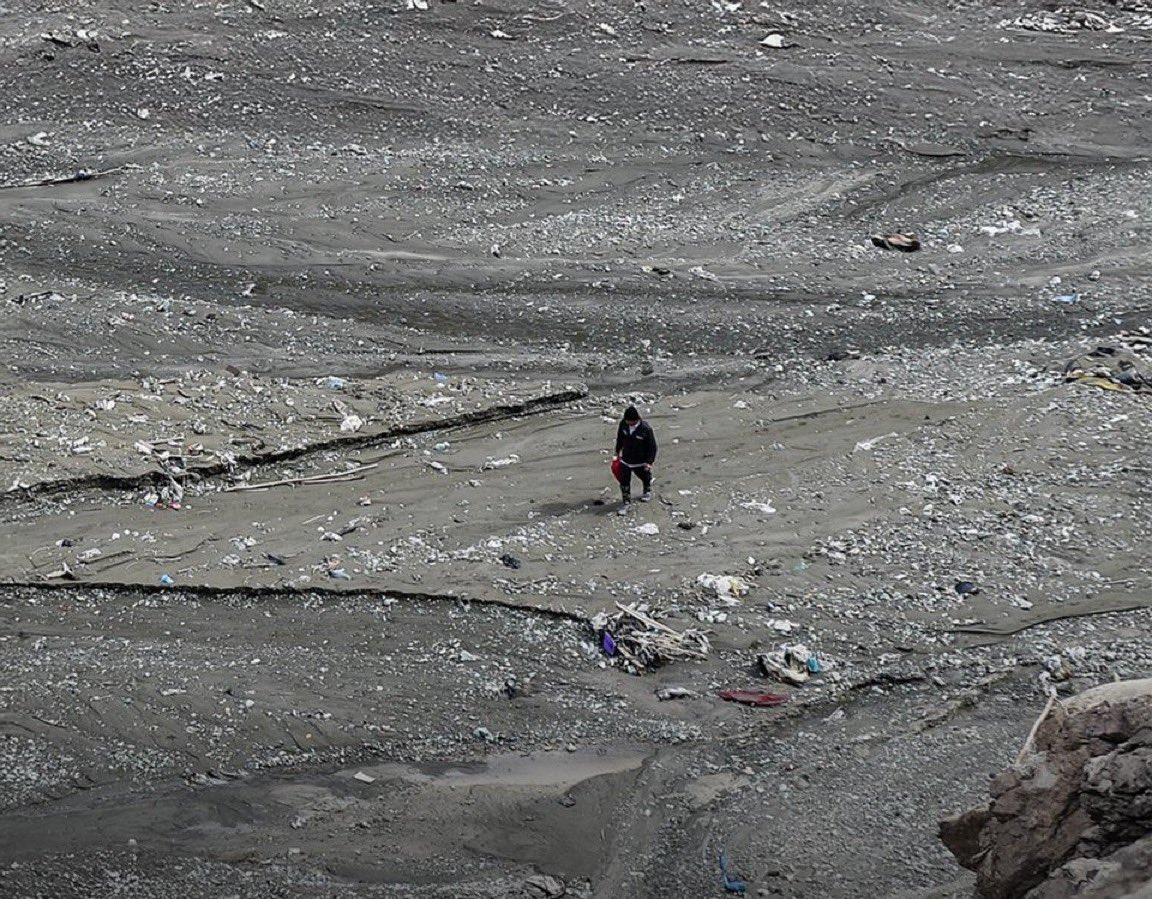
Dead bodies are being exposed in dried sediment of dams in Iran


“The water storage in Mashhad’s dams has now fallen to less than three percent,” Hossein Esmaeilian, the chief executive of the water company in Iran’s second largest city by population, tells ISNA news agency. He adds that “the current situation shows that managing water use is no longer merely a recommendation — it has become a necessity.”

Mashhad lies in Razavi Khorasan Province in northeastern Iran, a semi-arid region dependent on a small network of dams for drinking water, agriculture, and limited power generation. The most critical of these are the Doosti (Friendship) Dam, built jointly by Iran and Turkmenistan on the Hari (Harirud) River; and the smaller Kardeh and Torogh dams that directly supply the urban network.

The Doosti Dam, completed in 2004 near the Turkmen border, was designed to provide up to 60 % of Mashhad’s potable water. But its inflows have plummeted after Afghanistan’s Taliban government inaugurated the Pashdan Dam upstream on the Hari River near Herat earlier this year. Iranian officials accuse Kabul of violating cross-border water agreements and cutting off critical flows. The Iranian daily Jomhouri-e Eslami warned this week that the new Afghan dam “threatens the very survival” of Mashhad’s reservoirs.

qanat, qanat system, ancient water system, Persian qanat, Middle East irrigation, traditional irrigation, underground aqueduct, water channel, sustainable water management, desert irrigation, ancient engineering, qanat Iran, qanat Iraq, water conservation, historical water system, aquifer irrigation, traditional water technology, UNESCO qanat, old irrigation method, qanat architecture
An ancient Qanat system in Persia. Spread throughout the arid Middle East, these systems predated Roman aqueducts but the historical narrative isn’t told.

The Hari River — about 1,000 kilometers long — originates in Afghanistan’s central highlands, flows west through Herat into Iran, and ends in Turkmenistan’s Karakum Desert. Historically, its seasonal floods recharged aquifers and sustained farming along the Iranian border. But with multiple new Afghan dams under Taliban control, less water is reaching Iran’s northeastern provinces, even as rising temperatures and a prolonged regional drought accelerate evaporation.

Related: The Taliban kills Japanese water hero

Within Iran, years of poor water management compound the crisis. Kardeh and Torogh dams, both built in the 1970s, are now near “dead storage,” with barely enough volume for municipal use. Over-extraction of groundwater around Mashhad — home to more than three million people and millions of pilgrims annually — has further destabilized the system, causing land subsidence and salinization of wells.

Iran has also been spending billions normalizing terror by finding Palestinians to join Hamas, Lebanese to join the Hezbollah and for the Yemenites to become Houthis. Paying for conflict and not supporting your own people, comes with a high cost. The Iranian regime hates Saudi Arabia, the UAE and Israel so much that it will sacrifice anything in its global jihad.

Experts say the situation underscores both climate vulnerability and political risk in transboundary basins. Iran’s government is pressing for negotiations with the Taliban over shared water rights, as Afghanistan pulls the plug on its water by creating its own dams, but cooperation remains uncertain amid border skirmishes and mistrust.

Grand Ethiopian Renaissance Dam, GERD Ethiopia, Blue Nile hydroelectric project, Ethiopia Nile River dam, Africa’s largest dam, Ethiopian hydropower, GERD water security, Nile River dispute, Ethiopia Egypt Sudan water conflict, renewable energy Ethiopia
Grand Ethiopian Renaissance Dam (GERD) on the Blue Nile — Africa’s largest hydroelectric project reshaping East Africa’s power supply and sparking regional water security debates.

If inflows from Afghanistan remain restricted and rainfall fails again this winter, Mashhad could face mandatory rationing and long-term aquifer collapse — a warning sign for the entire region as climate change and geopolitics converge in Iran’s drying east. Could we see a bigger conflict between Iran and Afghanistan? A good possibility. Similar tensions have been brewing for years between Ethiopia building the GERD dam and Egypt which is being denied water upstream.

If you’ve ever travelled to cities like Amman, Jordan, the water-stressed city shows how life goes on with water stress. Some city folks get water piped in once a week, but because municipal supply is so limited, many households, businesses, and institutions buy extra water from private tanker trucks and store this in private reservoirs so they never run out.

LEAVE A REPLY

Please enter your comment!
Please enter your name here

TRENDING

Farm To Table Israel Connects People To The Land

Farm To Table Israel is transforming the traditional dining experience into a hands-on journey.

How does one start prepping?

Faced with an extreme winter storm this year, Americans wonder how to be prepared for catastrophe. Miriam has lived through wars in the Middle East - so she's prepared on giving you a guide to prepping.

Huge Fish Nursery Discovered Under Freezing Arctic Seas

In 2019, an underwater robot camera exploring the seabed...

Remilk makes cloned milk so cows don’t need to suffer and it’s hormone-free

This week, Israel’s precision-fermentation milk from Remilk is finally appearing on supermarket shelves. Staff members have been posting photos in Hebrew, smiling, tasting, and clearly enjoying the moment — not because it’s science fiction, but because it tastes like the real thing.

The US leaves 66 United Nations organizations to “put America first”

The world needs a reset and to restart well intentioned cooperation projects from start. Because right now the UN and EU projects look like software built on code from the 80s, rickety, patched, slow to adapt, and prone to crashing under the weight of outdated assumptions.

Qatar’s climate hypocrisy rides the London Underground

Qatar remains a master of doublethink—burning gas by the megaton while selling “sustainability” to a world desperate for clean air. Wake up from your slumber people.

How Quality of Hire Shapes Modern Recruitment

A 2024 survey by Deloitte found that 76% of talent leaders now consider long-term retention and workforce contribution among their most important hiring success metrics—far surpassing time-to-fill or cost-per-hire. As the expectations for new hires deepen, companies must also confront the inherent challenges in redefining and accurately measuring hiring quality.

8 Team-Building Exercises to Start the Week Off 

Team building to change the world! The best renewable energy companies are ones that function.

Thank you, LinkedIn — and what your Jobs on the Rise report means for sustainable careers

While “green jobs” aren’t always labeled as such, many of the fastest-growing roles are directly enabling the energy transition, climate resilience, and lower-carbon systems: Number one on their list is Artificial Intelligence engineers. But what does that mean? Vibe coding Claude? 

Somali pirates steal oil tankers

The pirates often stage their heists out of Somalia, a lawless country, with a weak central government that is grappling with a violent Islamist insurgency. Using speedboats that swarm the targets, the machine-gun-toting pirates take control of merchant ships and then hold the vessels, crew and cargo for ransom.

Leopoldo Alejandro Betancourt López Turned Ocean Plastic Into Profitable Sunglasses

Few fashion accessories carry the environmental burden of sunglasses. Most frames are constructed from petroleum-based plastics and acrylic polymers that linger in landfills for centuries, shedding microplastics into soil and waterways long after they've been discarded. Leopoldo Alejandro Betancourt López, president of the Spanish eyewear brand Hawkers, saw this problem differently than most industry executives.

Why Dr. Tony Jacob Sees Texas Business Egos as Warning Signs

Everything's bigger in Texas. Except business egos.  Dr. Tony Jacob figured...

Israel and America Sign Renewable Energy Cooperation Deal

Other announcements made at the conference include the Timna Renewable Energy Park, which will be a center for R&D, and the AORA Solar Thermal Module at Kibbutz Samar, the world's first commercial hybrid solar gas-turbine power plant that is already nearing completion. Solel Solar Systems announced it was beginning construction of a 50 MW solar field in Lebrija, Spain, and Brightsource Energy made a pre-conference announcement that it had inked the world's largest solar deal to date with Southern California Edison (SCE).

Related Articles

Popular Categories