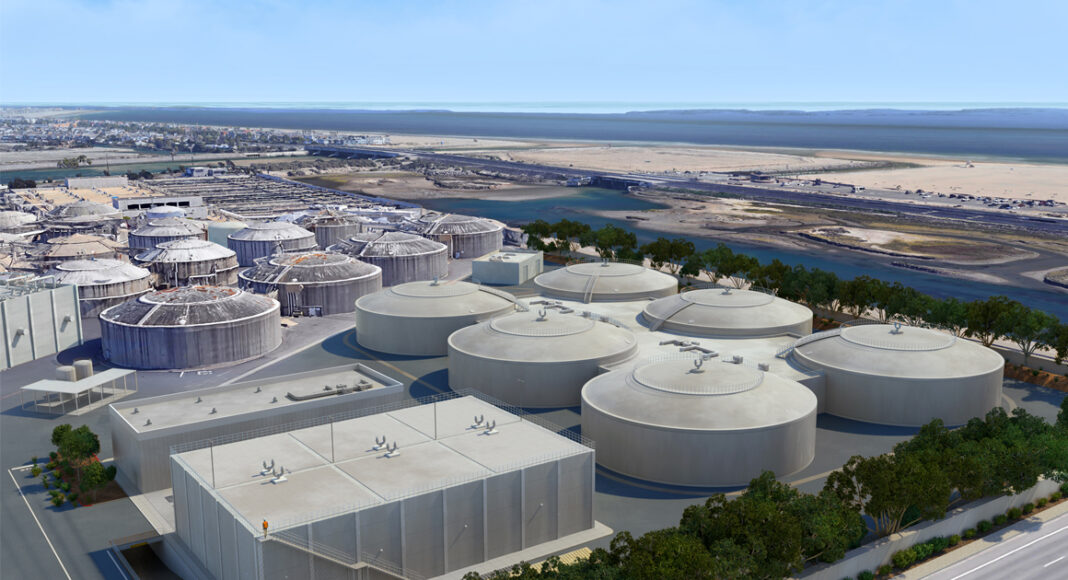


Wastewater treatment plants (WWTPs) are critical to modern cities, safeguarding public health by managing billions of liters of sewage and industrial discharge every day. But as the world races to reduce greenhouse gas emissions, a key source is slipping under the radar: the wastewater sector itself.
In a new review published in Environmental Science and Ecotechnology (July 2025), researchers from the Harbin Institute of Technology and international collaborators challenge current greenhouse gas accounting methods for WWTPs, warning that conventional approaches significantly underestimate the sector’s climate footprint—particularly when it comes to fossil carbon dioxide (CO₂).
It’s well known that WWTPs emit methane (CH₄) and nitrous oxide (N₂O)—two potent greenhouse gases—during biological treatment and sludge handling. What’s less understood is the role of fossil CO₂, released from synthetic chemicals like detergents and industrial effluents. Because this carbon originates from fossil sources, not organic decay, it adds to atmospheric CO₂ but remains unaccounted for in most emission inventories.
Using radiocarbon analysis, the study’s authors found that fossil carbon makes up 4–28% of the total carbon in incoming wastewater. That fossil carbon is mostly converted to CO₂ and vented during treatment—yet this invisible flow of emissions is ignored in most official climate reports.
Related: BioprocessH2O works with food and beverage wastewater

“Wastewater is not just a sanitation issue—it’s a climate issue,” said Dr. Haiyan Li, corresponding author of the study. “By overlooking fossil CO₂ and relying on outdated estimation methods, we’re underreporting a major source of greenhouse gases.”
Current greenhouse gas estimates from WWTPs largely depend on broad default emission factors provided by the Intergovernmental Panel on Climate Change (IPCC). These factors are often too generic, failing to reflect the variation in plant design, local climate, and wastewater composition—especially in urban areas with a mix of domestic and industrial sources.
To address this, the researchers analyzed two main approaches to monitoring emissions:
Unit-based methods (e.g., flux chambers, optical gas imaging) are good at pinpointing emission hotspots like aeration tanks but can miss the big picture. Plant-integrated methods (e.g., drone surveys, mobile labs, and aircraft) offer facility-wide data, often capturing higher methane emissions. However, they vary widely in accuracy and cost.
The review also calls for customized, technology-specific emission factors—especially for plants with advanced processes like sludge incineration or energy recovery, where fossil carbon emissions can increase total reported GHGs by more than 20%.
Toward Smarter, Climate-Responsive Treatment
To help cities transition to low-carbon wastewater treatment, the authors advocate for real-time, multi-gas monitoring systems and the inclusion of fossil CO₂ in national climate inventories. Doing so would empower local governments and plant operators to align their emission reduction strategies with actual site conditions—not assumptions.
“We need better data to drive better policies,” said the research team. “Smarter monitoring tools can bridge the gap between science and action.”
This research underscores a broader shift in thinking: that wastewater infrastructure—long seen as a hygiene utility—must also be recognized as a critical node in the fight against climate change.
American Industry’s Role
Some of the world’s largest wastewater treatment projects are spearheaded by U.S.-based engineering firms, including:
Jacobs Solutions Inc., a leader in global water infrastructure, which has delivered WWTP designs in cities from Los Angeles to Abu Dhabi.
AECOM, involved in large-scale wastewater upgrades across the U.S. and internationally.
Black & Veatch, which has helped develop climate-resilient treatment facilities with energy recovery systems.
HDR, known for advanced water quality treatment and smart monitoring solutions.
As climate regulations tighten and emissions tracking becomes more rigorous, these companies are well-positioned to innovate—if they adapt their designs and monitoring practices to reflect the new science.
Wastewater treatment plants are quietly contributing to the climate crisis—and our current accounting methods aren’t telling the full story. Recognizing the role of fossil carbon and deploying smarter monitoring tools may be the key to transforming this essential service into a truly climate-smart sector.