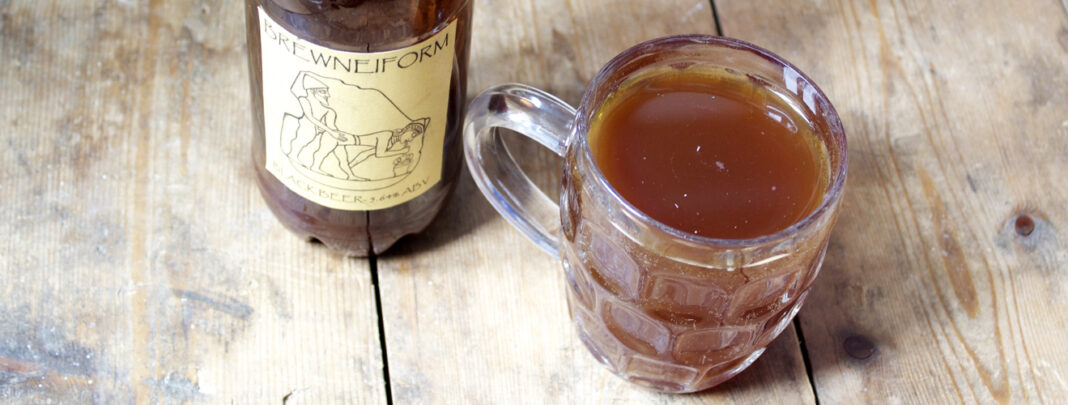


Below is one of the oldest written texts known to exist: a hymn in praise of the Mesopotamian beer goddess Ninkasi. Archaeologists surmise that brewing goes back to 3500 to 3100 BCE at the Sumerian settlement of Godin Tepe in modern-day Iran. But It’s not known exactly when the first beer was poured into a jug and tasted.
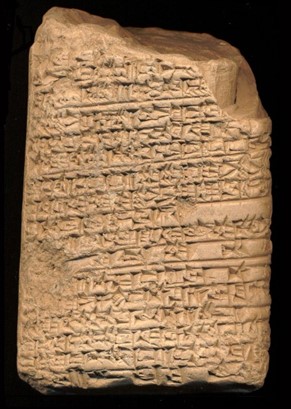
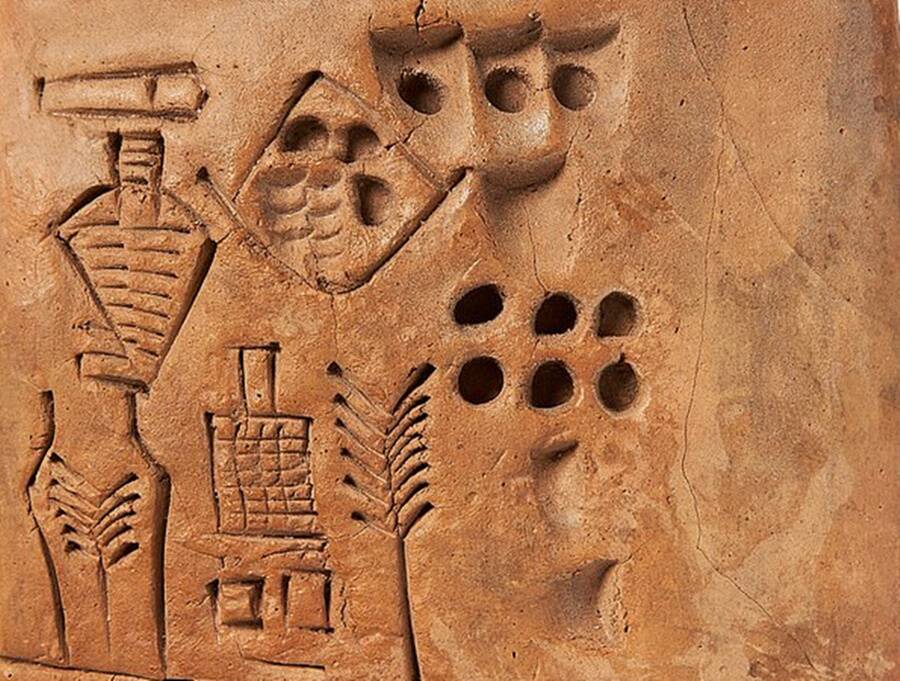
The Sumerians brewed many kinds of beer. The cuneiform tablet shown below is dated from “The sixth year of Prince Lugalanda,” ruler of southern Mesopotamia circa 2370 BC. It reports the deliveries of three kinds of beer to the palace and as offerings to a temple. The quantities of barley and other ingredients needed for making beer are carefully noted for inspection.
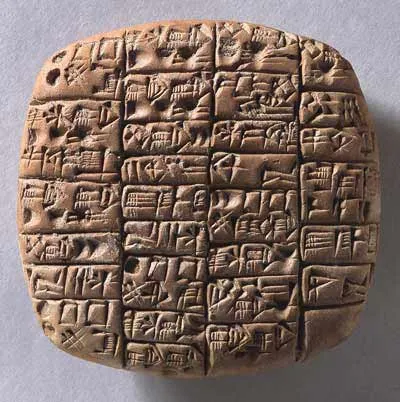
Beer was the everyday drink of the masses and of the gentry, as necessary as bread. Its nutritional value was high. It was also safer to drink than plain water, as the basic fermented liquor had to be boiled.
Barley was the grain used to provide the nutrients and sugars needed to ferment beer. It was used in the shape of barley bread dissolved in water, plus sprouted barley grains. It was a labor-intensive process, each ingredient matured separately and added in stages. Emmer, an ancient wheat variety, was added as well. Emmer is still around and is known as farro today.
Our dandelion beer recipe also relies on natural ingredients, but is much easier to brew up.
We have a partial recipe for Sumarian beer. It’s preserved in the Hymn to Ninkasi. The lyrical poem with its rhythmic verses was probably sung by workers in the brewing facilities. It illustrates the religious respect with which the Sumarians regarded beer, precious gift of the goddess.
“Ninkasi, you are the one who pours out the filtered beer of the collector vat,
It is [like] the onrush of the Tigris and the Euphrates.”
The poem goes on to describe the effects of the goddess’s gift:
“Drinking beer, in a blissful mood,
Drinking liquor, feeling exhilarated,
With joy in the heart [and] a happy liver…”
The whole poem may be viewed here.
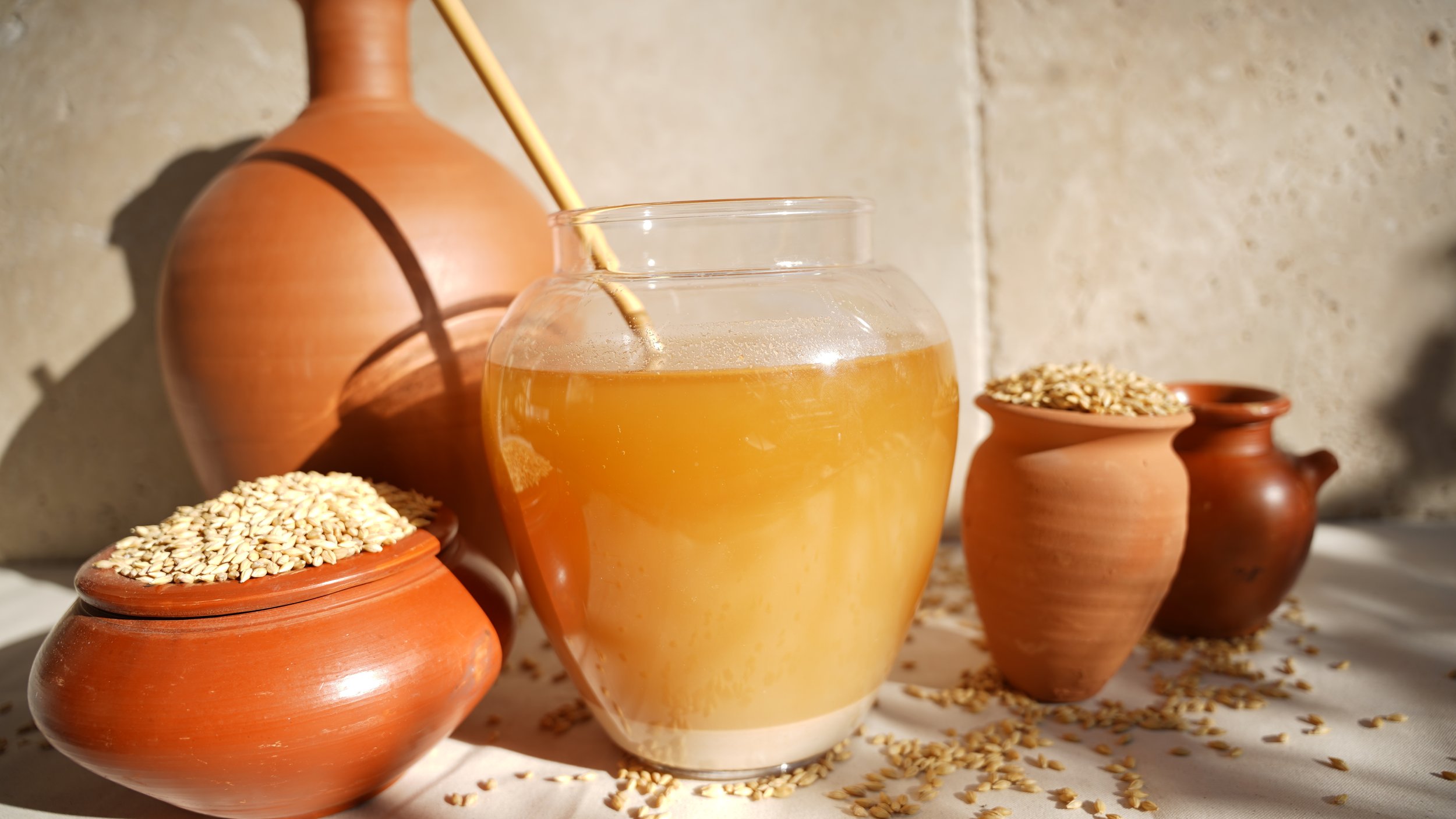
We’ve brewed our own ancient-style beer at home: Ethiopian Tej. The traditional procedure eerily almost matches the ancient Sumerian method as outlined in the Hymn to Ninkasi.

Women were the home bakers of the time, so the responsibility for beer brewing was first theirs. When beer became a commercial enterprise, men took over the production. As a home-brewer myself, it seems logical that the first beer was the result of water into which barley bread fell, making a new ferment. The alcoholic odor was tempting – someone dared to taste the liquid – and decided to make it again, on purpose. As good a theory as any.
What was ancient beer like? We know that although recipes varied from region to region, it was probably somewhat sour, although sweetened with dates whose sugar content would have boosted fermentation. Honey was included in some recipes for the same purpose. It’s thought that it usually had 2 to 4% alcohol by volume.
It was cloudy and rough, with floating husk particles of barley and wheat and field dust. People drank the beer through a straw, avoiding the gritty stuff at the bottom of the jar. Here’s an illustration from those times. Note the sideways smile of the second figure from the left.

The Sumarians’ brewing methods developed over the ages into the beer we know today. Yet making alcohol from bread mashed into liquid has never left people’s minds. We have a funny note on that: jailbird booze.
This story went around brewer’s forums for a while. It was said that convicts would fill a garbage bag with Kool-Aid left over from lunches, then floated a slice of moldy bread (great yeast) on it. The bag was stashed behind the toilet. After a while the sugary liquid had become alcoholic. Of course, today’s ubiquitous security cameras put a stop to that.
Not something I would recommend. But If you’re feeling ambitious, you can make Tej to sip while munching on Mersu candy. For that good old Mesopotamian feeling.