Can cuttlefish ink be “bear spray” against sharks?

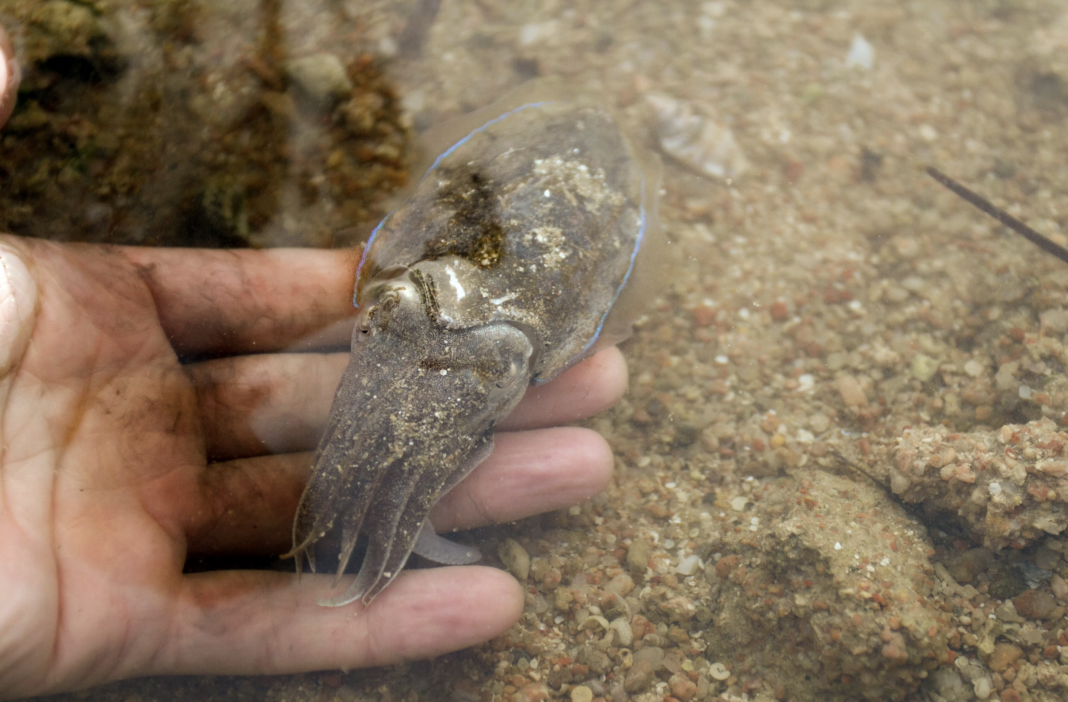
Close-up of a cuttlefish, Cuttlefish underwater, Cuttlefish displaying unique pattern, Marine life cuttlefish, Cuttlefish camouflaging in ocean

Diving in the crystal-clear waters of the Red Sea or exploring the vibrant reefs of Australia is an unforgettable experience. But sharing the ocean with sharks can be a nerve-wracking thought, even for the most seasoned divers. What if there were a natural, non-lethal way to keep sharks at a safe distance? Recent research suggests that cuttlefish ink might be the answer. It is much needed: a recent tragic dive boat accident in the Red Sea that led to 11 deaths was prevented from being rescued quickly because of sharks in the area, according to witnesses.

Cuttlefish (Sepia officinalis) are known for their impressive camouflage skills and their ability to release a cloud of ink when threatened. This ink isn’t just a visual smokescreen—it also contains chemical compounds that can overwhelm a predator’s sense of smell. Sharks, in particular, rely heavily on their acute olfactory senses to navigate and hunt. The compounds in cuttlefish ink are thought to disorient sharks, making them less likely to approach the source of the scent.

Recent research from University College Dublin indicates that cuttlefish ink, particularly its primary component melanin, may serve as an effective shark deterrent. The study found that melanin can bind to shark olfactory receptors, potentially overwhelming their sense of smell and causing them to avoid areas where the ink is present.

“Understanding how prey species like cuttlefish have evolved to exploit specific vulnerabilities in predators like sharks enriches not only our understanding of marine ecosystems but provides inspiration for conservation tools rooted in natural processes,” said Colleen Lawless, a researcher in the study.

Modelling the three-dimensional structures of shark olfactory receptors by using genetic data from several shark species including the Great White Shark, Colleen and her colleagues Dr Graham Hughes and Dr John Finarelli discovered melanin possesses a molecular structure that lets it latch onto the smell receptors of these ocean predators, disrupting their sensory perception.

And because sharks generally share the same core set of smell receptors despite differences in lifestyle and habitat, the binding effect likely extends to all shark species, making it likely effective across most shark species.

This discovery suggests that deploying cuttlefish ink, or synthetic analogs, could create safe zones for divers by deterring sharks without harming them. Such an approach could enhance diver safety in regions like the Red Sea and Australian waters, known for frequent shark encounters. Additionally, this method offers a non-invasive alternative to traditional shark deterrents, which often pose risks to other marine life.

By releasing cuttlefish ink—or a synthetic version—into the water, it may be possible to create a safe zone that deters sharks. This approach could provide a protective barrier, allowing divers to observe marine life without posing a threat to themselves or the sharks.

Practical Applications and Challenges

For this idea to work in real-world scenarios, several challenges need to be addressed:

  • Deployment Methods: The ink could be released from wearable devices, such as wristbands or diving suits equipped with small dispensers. Alternatively, underwater “ink bombs” could be deployed around high-risk areas. Or kept on hand during rescue dives. Divers from the Sea Story accident did not want to go on a rescue operation because of the number of sharks circling the floating wreck.
  • Environmental Impact: It’s crucial to ensure that the ink doesn’t harm other marine species or disrupt the delicate ecosystem.
  • Scalability and Production: Harvesting enough natural cuttlefish ink isn’t feasible, so researchers are exploring synthetic alternatives that mimic the chemical properties of the original ink.
  • One of the most exciting aspects of this technology is its potential to protect both humans and sharks. By steering sharks away from popular diving sites, we reduce the chances of negative encounters that could lead to harmful outcomes for the sharks.

While promising, further research is necessary to develop practical applications and assess the environmental impact of widespread use of cuttlefish ink as a shark repellent.

Karin Kloosterman
Karin Kloostermanhttp://www.greenprophet.com
Karin Kloosterman is an award-winning journalist, innovation strategist, and founder of Green Prophet, one of the Middle East’s pioneering sustainability platforms. She has ranked in the Top 10 of Verizon innovation competitions, participated in NASA-linked challenges, and spoken worldwide on climate, food security, and future resilience. With an IoT technology patent, features in Canada’s National Post, and leadership inside teams building next-generation agricultural and planetary systems — including Mars-farming concepts — Karin operates at the intersection of storytelling, science, and systems change. She doesn’t report on the future – she helps design it. Reach out directly to [email protected]

TRENDING

Ethiopians are Looking to Somaliland for Red Sea Access as Global Powers Move In

Somaliland, for its part, has operated as a de facto independent state since 1991. It has its own government, elections, currency, and security forces. It’s often described as one of the more stable and democratic political systems in the region, despite never being formally recognized internationally. 

Peace hospital opens between Jordan and Israel

The proposed medical centre, described by Emek HaMaayanot Regional Council head Itamar Matiash as “a centre for cancer treatment, so that people from Jordan or further away could come and receive treatment,” would become the flagship of a wider cluster of medical, academic and innovation-based services planned for the Israeli half of the zone.

Benban solar in Egypt and the companies that make the energy shine

Benban isn’t a single solar plant at all, but a collection of 41 facilities, each developed by different companies but connected through shared infrastructure. This structure is what makes Benban unique: dozens of developers working like nodes in a vast energy network, each feeding electricity into shared substations and Egypt’s national grid.

Dead shark on beach injured by fishing nets

  A dead shark that washed ashore this week at...

Musk’s Saudi Mega-Data Center Signals a Desert Arms Race for AI

For now, Musk’s partnership signals a deepening alignment between Silicon Valley and Riyadh — and a new chapter in the Middle East’s data-powered future. The satellites and robots may come later. The energy footprint, however, is already here.

Turning Your Energy Consultancy into an LLC: 4 Legal Steps for Founders in Texas

If you are starting a renewable energy business in Texas, learn how to start an LLC by the books.

Tracking the Impacts of a Hydroelectric Dam Along the Tigris River

For the next two months, I'll be taking a break from my usual Green Prophet posts to report on a transnational environmental issue: the Ilısu Dam currently under construction in Turkey, and the ways it will transform life along the Tigris River.

6 Payment Processors With the Fastest Onboarding for SMBs

Get your SMB up and running fast with these 6 payment processors. Compare the quickest onboarding options to start accepting customer payments without delay.

Qatar’s climate hypocrisy rides the London Underground

Qatar remains a master of doublethink—burning gas by the megaton while selling “sustainability” to a world desperate for clean air. Wake up from your slumber people.

How Quality of Hire Shapes Modern Recruitment

A 2024 survey by Deloitte found that 76% of talent leaders now consider long-term retention and workforce contribution among their most important hiring success metrics—far surpassing time-to-fill or cost-per-hire. As the expectations for new hires deepen, companies must also confront the inherent challenges in redefining and accurately measuring hiring quality.

8 Team-Building Exercises to Start the Week Off 

Team building to change the world! The best renewable energy companies are ones that function.

Thank you, LinkedIn — and what your Jobs on the Rise report means for sustainable careers

While “green jobs” aren’t always labeled as such, many of the fastest-growing roles are directly enabling the energy transition, climate resilience, and lower-carbon systems: Number one on their list is Artificial Intelligence engineers. But what does that mean? Vibe coding Claude? 

Somali pirates steal oil tankers

The pirates often stage their heists out of Somalia, a lawless country, with a weak central government that is grappling with a violent Islamist insurgency. Using speedboats that swarm the targets, the machine-gun-toting pirates take control of merchant ships and then hold the vessels, crew and cargo for ransom.

Related Articles

Popular Categories