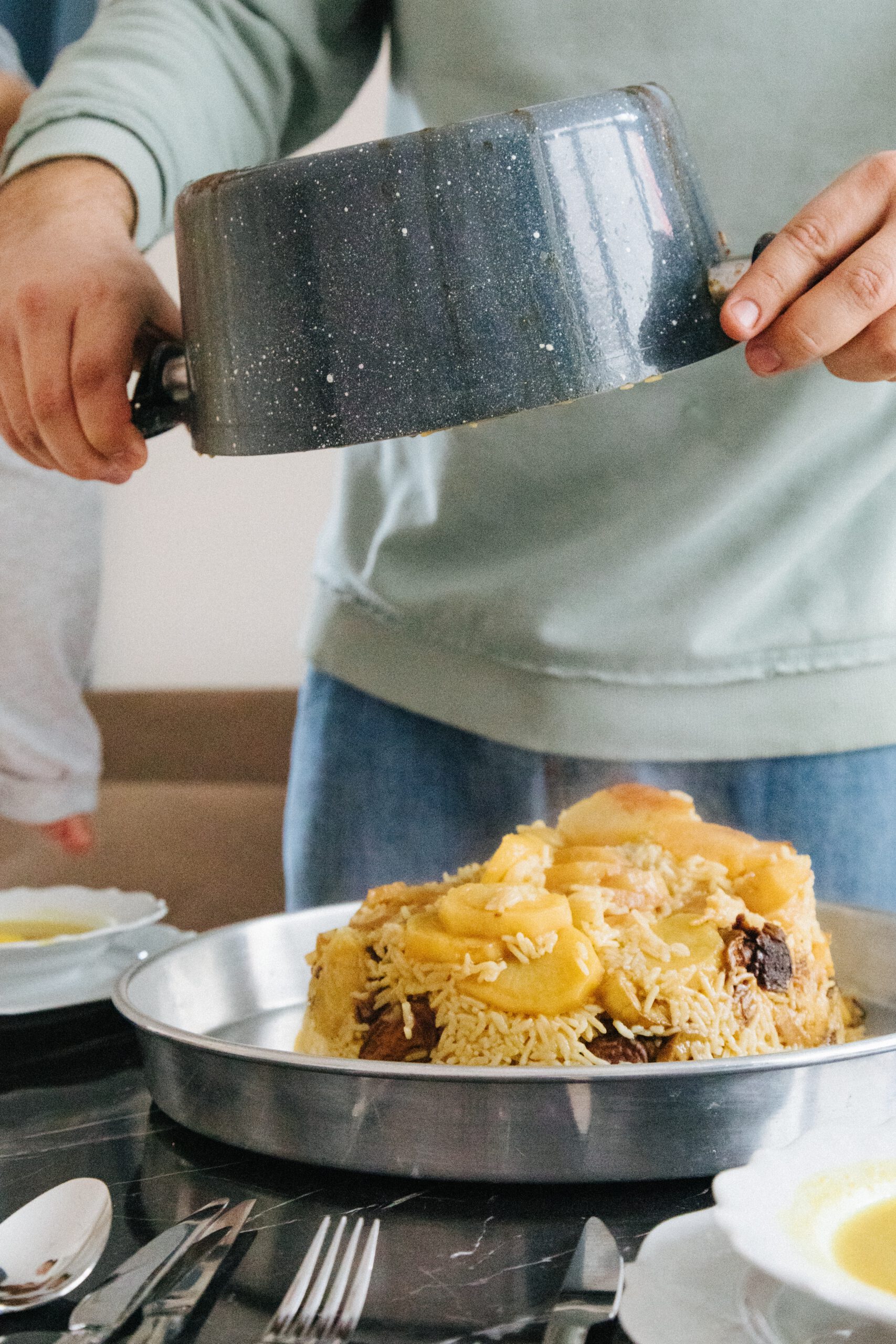
Would you like to taste the Arabic all-in-one-pot Maqluba, but prefer to keep it vegan? Green Prophet offers you a meat-free version, where carrots, fennel bulbs, and big, meaty Portobello mushrooms make great substitutes for the traditional chicken. It was inspired by the spin put on macrobiotic Maqluba by chef Moshe Basson, who runs the Eucalyptus Slow Food restaurant in Jerusalem.
And for dessert, try these amazing vegan tahini and chocolate popsicles!
Make Maqluba, The Vegan Version
Serves 6 generously.
DO-AHEAD: Soak the raw rice in cold water for 30 minutes. Drain before proceeding.
Ingredients for vegan maqluba:
3-4 tablespoons extra-virgin olive oil
1 tablespoon ground turmeric
Optional: 1/2 teaspoon saffron threads soaked in 2 tablespoons hot water
1/2 teaspoon dried thyme or 1 teaspoon fresh thyme
1 teaspoons ground allspice
1 teaspoon paprika
2 large onions, thickly sliced
3 medium potatoes, sliced thickly
1 small head cauliflower, separated into florets
1 large sweet red bell pepper, thickly sliced
1 medium eggplant, quartered and cut into 1-inch-thick slices
2 large carrots, peeled and sliced into thick rounds
1 fennel bulb, trimmed and sliced horizontally
6 big Portobello mushrooms, sliced into thirds
4 large cloves garlic, peeled and halved
3 large tomatoes, thickly sliced
Freshly ground black pepper to taste
2 teaspoons sea salt
2-1/2 cups raw brown basmati rice, soaked in cold water for 1/2 hour. Set aside 1/2 cup of it.
3-5 cups vegetable broth or lightly salted water
Optional garnish: a scattering of finely chopped parsley and/or toasted pine nuts
Set the oven to 400° F – 200° C.
In a large sauté pan, cook onions in 1 tablespoon olive oil over medium heat until golden. Salt and pepper the onions lightly. Set aside.
Add 1 tablespoon of oil to the pan. Cook the potatoes in it until lightly golden, but not cooked through. Salt lightly. Set aside.
Line a baking sheet with parchment paper.
Toss the cauliflower, bell pepper, eggplant, carrots, fennel, mushrooms and garlic in a large bowl with the remaining oil and the spices. Roast for 15 minutes, removing the garlic after 5 minutes, then the rest of the vegetables as they cook.
The vegetables should be cooked only until not-quite tender. They will continue cooking later.
In a large pot, spread sliced tomatoes along the bottom. Cover the tomatoes with the 1/2-cup of reserved soaked rice and sautéed onion.
Place the sliced vegetables in layers over the rice and onions. Tuck the garlic pieces here and there among the vegetables.
Spread the potatoes on top.
Press everything down in the pot with the back of a large spoon or spatula.
Spread 2 cups remaining rice over potatoes. Sprinkle 1-1/2 teaspoons salt over rice. Add broth or water to cover. If using saffron, pour the threads and their soaking water over everything.
Place the pot, uncovered, over a medium flame and let the liquid simmer 15 minutes. Then cover the pot, reduce heat to low, and cook for 30 minutes. Add more liquid by tablespoons if it seems to be drying out, but be careful not to add so much that rice becomes sticky.
Remove the pot from the heat and let it sit, covered, for 10 minutes.
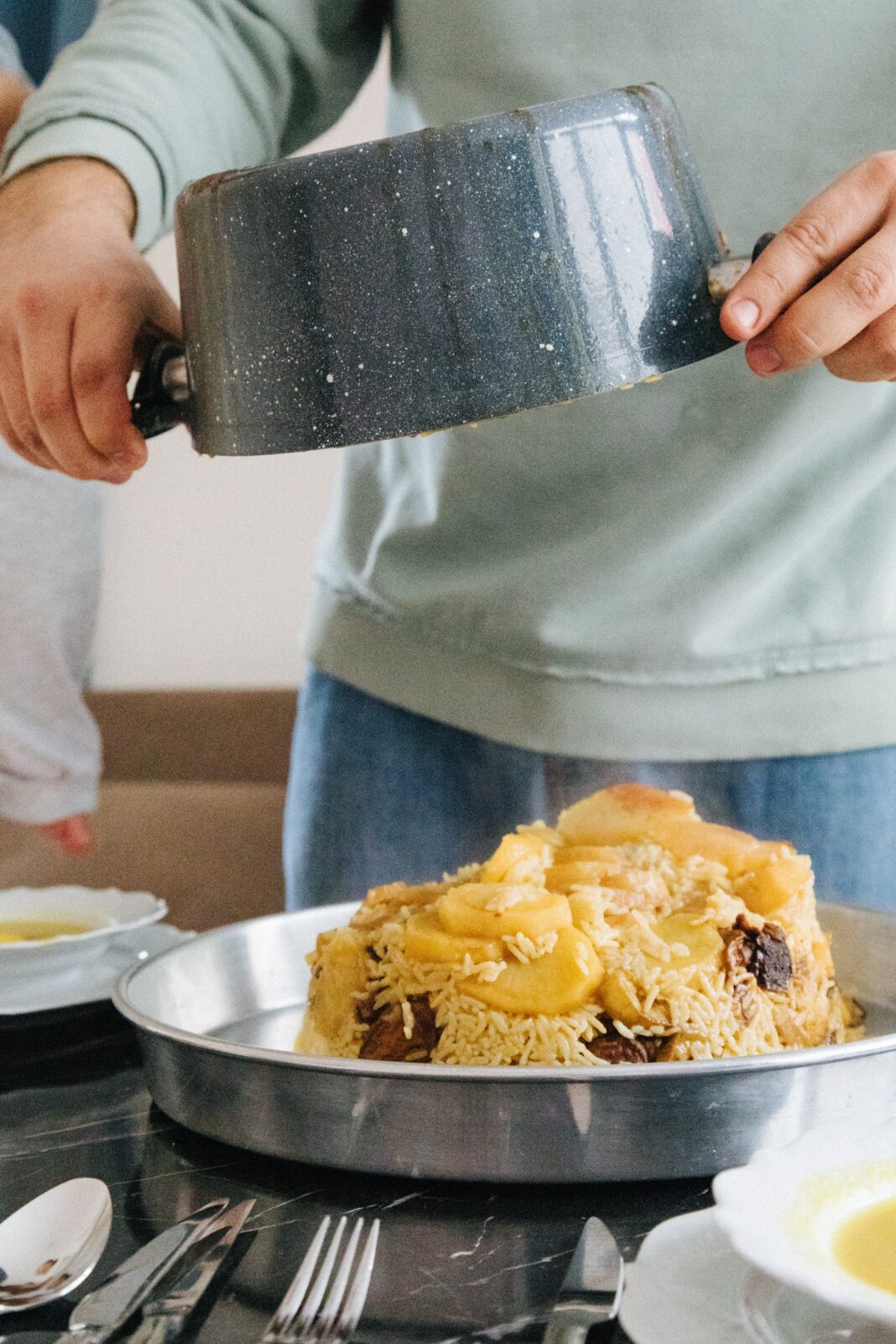
Take a round metal tray and place on top of the pot. Flip the pot onto the tray. You may need help to do that, if the pot is very large: it will be heavy.
Pat the pot on the top and sides to release the food. Wait a minute, then pat again. Carefully lift the pot to display a lovely “cake” of makluba, ready to be spooned out to hungry family and guests.
Garnish with finely chopped parsley and/or toasted pine nuts if desired.
Any slightly burned rice from the bottom of the pot is considered a delicacy to be scraped out and eaten.
Notes on variations: If you wish, substitute broccoli or zucchini for the cauliflower.
Some cooks substitute nutmeg for allspice.
Serve with a simple leafy salad.
Enjoy!
Editor’s note: Maqluba originated in the Levantine region, with its first written record appearing in a 13th-century cookbook from the Abbasid Caliphate. The name “Maqluba” means “upside-down” in Arabic, referring to the dish’s signature presentation where it is flipped onto a platter for serving. It is believed to have been influenced by Persian and Indian biryanis brought by Arab traders. It is eaten in Syria, Jordan, Lebanon, and by people in Israel with Palestinian heritage.