
Tunisia’s lagoon farms and hanging gardens recognized as world heritage sites

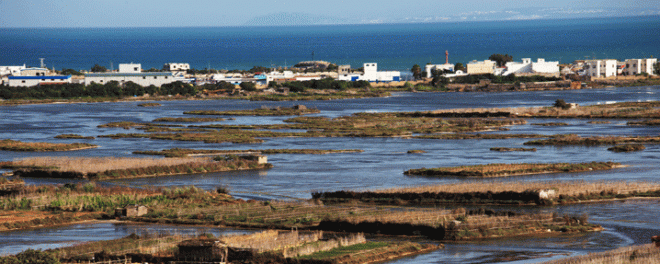
Tunisia’s traditional Ramli agricultural systems in the lagoons of Ghar El Melh (above) and its hanging gardens from Djebba El Olia, have been recognized as Globally Important Agricultural Heritage Systems (GIAHS), a designation managed by the UN Food and Agriculture Organization (FAO). It is the second time Tunisian sites have won the GIAHS recognition, after Gafsa Oases in 2011.

Both sites reflect profound bonds between the cultivated crops and the natural ecosystem, local fauna and flora, while promoting the preservation of traditional knowledge and biodiversity conservation. Their recognition as GIAHS sites will encourage local communities to better treasure and conserve their heritage for future generations.
Ramli cropping practices in Ghar El Melh

Ramli, meaning “on sand”, are agricultural practices that consist of growing crops on sandy substrates. Unique not only in Tunisia but in the whole world, these gardens were created in the 17th century by the Andalusian diaspora to cope with the lack of cultivable land and fresh water.

The ingenious practices are based on a passive irrigation system where the roots of the plants are fed throughout each season by rainwater stored and floating on the surface of the sea through the movement of the tides.

The traditional knowledge preserved over the centuries enables farmers to maintain the lagoon plots through the precise supply of sand and organic matter so that the crops reach the right height, allowing the roots to be irrigated by a fine fresh water and not to be affected by salt water.

Hedges of fruit trees and shrubs on the lagoon barrier protect the cultivated plots from wind and sea spray, help slow down evaporation and fix the sand. Such a multifaceted system makes it possible to grow crops all year round without artificial water supplies, even during periods of drought.

Today, fishing and agriculture are the main subsistence activities in the area. The farms of Ghar El Melh are small (81 percent have less than 5 hectares) and their primary production includes potatoes, beans and onions “on ramli”.

Hanging gardens of Djebba El Olia

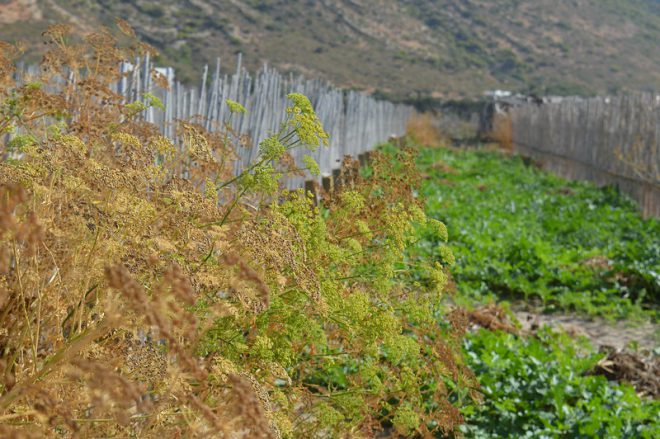
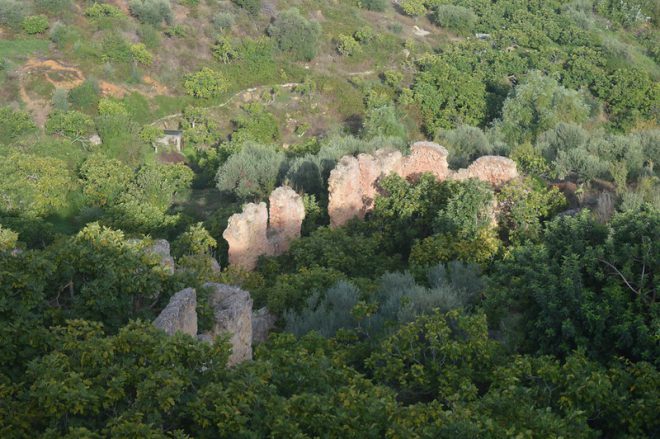
Perched on the heights of Mount el Gorrâa, the gardens of Djebba el Olia form a unique agroforestry system. At an altitude of 600 metres, farmers have been able to shape this mountainous landscape to their advantage by integrating agriculture on terraces derived from natural geological formations or by building them out of dry stone.
Hanging gardens of Djebba El Olia

Reinforced by an efficient irrigation system, the hanging gardens are examples of innovative and resilient agroforestry that meets the food needs of the local communities throughout the year. Thanks to the preservation of the forests at high altitude and the multitude of species in the tree stratum of the gardens, Djebba El Olia benefits from a particular microclimate.

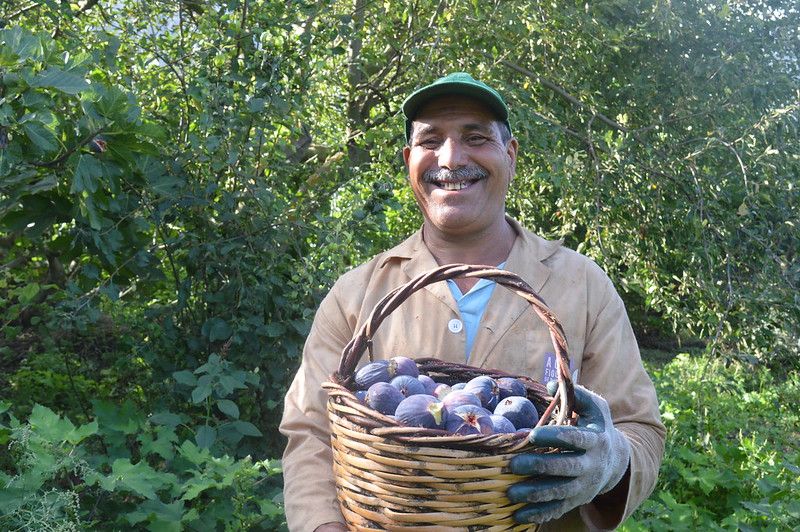
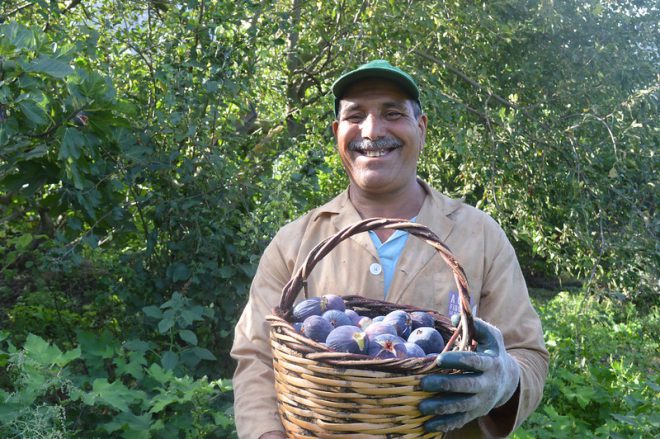
Based on practices combining agroforestry and agroecology, fig tree cultivation is the mainstay of a varied and resilient polycultural system supported by extensive livestock farming. Apart from figs, a large number of vegetables, pulses and fruit species are produced in the gardens, including  solanaceous plants (tomato, pepper) as well as squash, broad bean, onion, bean and potato.
Hanging gardens of Djebba El OliaLivestock breeding is also a big part of the site’s biodiversity, in particular the local breed of sheep “Black Thibar”, adapted to the rugged terrain, and the Brown Atlas cattle breed known for its hardiness.

These gardens benefit from the nearby forests and wild flora and fauna species ensuring that wild pollinators also support biodiversity. The art of managing cultivated and wild species is the basis of the site’s ingenious knowledge. The quality of products is highly appreciated – Djebba’s AOC labelled figs, fresh and dried fruits and  processed products (jams) are all highly sought after locally and abroad, representing an important source of income.

About the GIAHS Programme

The addition of the two Tunisian sites brings the total number of GIAHS worldwide to 61 in 22 countries. This FAO landmark programme highlights unique ways that rural communities have over generations forged to foster food security, viable livelihoods, resilient ecosystems and high levels of biodiversity, all while contributing to the formation of remarkable landscapes.

Karin Kloosterman
Karin Kloostermanhttp://www.greenprophet.com
Karin Kloosterman is an award-winning journalist, innovation strategist, and founder of Green Prophet, one of the Middle East’s pioneering sustainability platforms. She has ranked in the Top 10 of Verizon innovation competitions, participated in NASA-linked challenges, and spoken worldwide on climate, food security, and future resilience. With an IoT technology patent, features in Canada’s National Post, and leadership inside teams building next-generation agricultural and planetary systems — including Mars-farming concepts — Karin operates at the intersection of storytelling, science, and systems change. She doesn’t report on the future – she helps design it. Reach out directly to [email protected]
1 COMMENT

Comments are closed.

TRENDING

Can biochar reduce ‘Forever Chemicals’ in food if it’s used in farms?

Biochar is produced by heating organic material in a low-oxygen environment so it does not burn. This process, known as pyrolysis, transforms plant matter into a stable, carbon-rich material.

Sink holes from over-watering farmers’ fields

Sinkholes are rapidly appearing in Turkey’s central Anatolian farming region, particularly around Konya and Karapınar. These giant gaping holes in the ground in areas of farmland, known locally as obruk, are not random geological events. They are linked to prolonged drought, climate-driven heat stress, and heavy groundwater extraction for agriculture in one of the country’s most important breadbaskets.

EU’s CAP reform continues trend of supporting small farmers in hour of need

Despite mounting political opposition, growing scientific criticism and even the retreat of many former industrial supporters like Nestlé and Danone, certain member-states and supermarket chains continue to prop up Nutri-Score. The Commission must therefore remain vigilant to ensure these attempts do not undermine farmers, distort fair competition or compromise the integrity of the single market – particularly as other pressing threats loom on the horizon.

Ecomondo 2025: Italy’s Green Expo Powers Global Circular Innovation

Each November, a quiet city on Italy’s Adriatic coast becomes the epicenter of the world’s circular economy conversation. What began in 1997 as a local waste management trade show has grown into Ecomondo, a global forum for environmental innovation, resource regeneration, and ecological transition.

Arab agricultural land is on the brink

Across the Arab world, croplands face a perfect storm of stressors. Excessive fertilizers and pesticides erode soil ecology. Poor drainage and over-irrigation drive salinization, leaving fields crusted with salt. Rising temperatures, dwindling groundwater, and more frequent sand-and-dust storms—all amplified by climate change—compound the crisis.

Turning Your Energy Consultancy into an LLC: 4 Legal Steps for Founders in Texas

If you are starting a renewable energy business in Texas, learn how to start an LLC by the books.

Tracking the Impacts of a Hydroelectric Dam Along the Tigris River

For the next two months, I'll be taking a break from my usual Green Prophet posts to report on a transnational environmental issue: the Ilısu Dam currently under construction in Turkey, and the ways it will transform life along the Tigris River.

6 Payment Processors With the Fastest Onboarding for SMBs

Get your SMB up and running fast with these 6 payment processors. Compare the quickest onboarding options to start accepting customer payments without delay.

Qatar’s climate hypocrisy rides the London Underground

Qatar remains a master of doublethink—burning gas by the megaton while selling “sustainability” to a world desperate for clean air. Wake up from your slumber people.

How Quality of Hire Shapes Modern Recruitment

A 2024 survey by Deloitte found that 76% of talent leaders now consider long-term retention and workforce contribution among their most important hiring success metrics—far surpassing time-to-fill or cost-per-hire. As the expectations for new hires deepen, companies must also confront the inherent challenges in redefining and accurately measuring hiring quality.

8 Team-Building Exercises to Start the Week Off 

Team building to change the world! The best renewable energy companies are ones that function.

Thank you, LinkedIn — and what your Jobs on the Rise report means for sustainable careers

While “green jobs” aren’t always labeled as such, many of the fastest-growing roles are directly enabling the energy transition, climate resilience, and lower-carbon systems: Number one on their list is Artificial Intelligence engineers. But what does that mean? Vibe coding Claude? 

Somali pirates steal oil tankers

The pirates often stage their heists out of Somalia, a lawless country, with a weak central government that is grappling with a violent Islamist insurgency. Using speedboats that swarm the targets, the machine-gun-toting pirates take control of merchant ships and then hold the vessels, crew and cargo for ransom.

Related Articles

Popular Categories