
Forests can bounce back after acid rain

acid rain forests bounce back, sweet woman in the forest
Even though 70s and 80s suffered through Acid Rain, new research shows that forest soils can bounce back. You see, there is still hope that we can solve climate change.

If you grew up in the 70s or 80s no one was talking about climate change: they were talking about nuclear war and acid rain. Acid rain made Kimberly’s hair turn green in the TV show Different Strokes; Canada’s environmental minister called it the “malaria of the biosphere” and it kept me away at night worrying.  Acid rain was the fallout of industrial chemicals and pollution into forests and lakes. As it rained toxins were picked up by the water and the toxins were rained down in close and faraway parts of the world. 

Canada suffered a massive amount of acid rain from the United States as it blew northward. The Ukraine and the rest of Europe experienced more than acid, but nuclear rain, after the Chernobyl meltdown.

So in the 60s and even into the 70s, before the American Clean Air Act of 1970 came into full effect, rainfall over the United States and Canada was full of acid. It killed lakes all over Canada and I remember canoeing in beautiful, but dead, lakes when I was a kid. We talked about it all the time. Acid rain was a thing. 

Acid rain is precipitation that mixes with gases from industrial plants, emissions from cars, and especially coal and fossil fuel pollution. That caused the water to become acidic – also called “acid rain.” Coal plants can also actually cause rain. Read this article about it

Besides the air pollution hurting plants and humans and lakes, this acid rain also hurt our soil. Even dry deposits of these acidic emissions could be hurtful to humans, plants, soil and water. Acidic soil can bind nutrients so that plants can’t get them. It can hurt the microbes in soil, as well as plants. But new research suggests that soils can bounce back. 

One odd “helpful” thing acid rain did, though, researchers had found, was to provide a few nutrients to the soil. The sulfur in the acid rain – in the form of sulfates – actually provided nutrition to plants.

However, the benefit was negligible, and the overall effects of pollution required regulation. Occasionally, cities like Los Angeles will still experience “smog.” The incidents are even more common in China and India, where little regulation is in effect. (Read this good BBC article on the bittersweet story of solving acid rain).

Jennifer Knoepp, with the US Forest Service, has been studying how the reduction of air pollution and acid rain is affecting forests in the southern Appalachian Mountains. Her interest is to see how soils are recovering as our air gets cleaner.
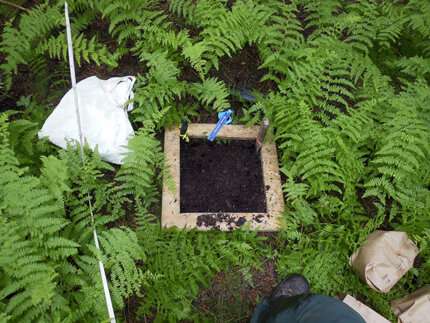
acid rain soils recovering, sampling of forest soil

How does soil fare after the Clean Air Act?

Both the 1970 Clean Air Act and 1990 Amendment regulated emissions across the United States, resulted in improved air and water quality. But what about the soil – the “skin” of the earth – that provides for food and shelter and is home to the world’s largest biodiversity?

“We have found significant movement of sulfate from the soils over time,” says Knoepp. “Sulfate is moving out of the surface soils and into the subsoil. In addition, the streams in our study site show improved water quality. However, soils and streams still exhibit chemical imbalances. This suggests recovery from decades of acid rain is a long-term process.”

forest bathing, woman hipster contemplating nature in dark green forest

To evaluate the soils and water, researchers sampled 24 high elevation spruce-fir forest sites and two watersheds in the southern Appalachians. The sites represent a region in the southeastern U.S. with high gradients in elevation and precipitation, as well as high biodiversity.

The research area includes sites within the Great Smoky Mountain National Park and the southern end of the Blue Ridge Parkway. Both are major tourist and outdoor recreation destinations. 

Recent soil collections were compared to archived soil samples from the 80s and 90s. Sample archives are essential to long-term research. They provide the ability to conduct tests not planned during an original experimental design. 
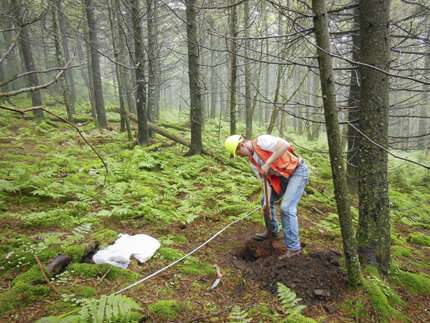
testing forest soil for acid rain

The research team analyzed both the newly collected and archived samples for “extractable sulfate.” All data were used to determine the long-term response of southern Appalachian forests to changes in sulfate deposition that occurred after the implementation of the Clean Air Act Amendment in 1990.

Data show that sulfate in precipitation and streams declined after implementation of the Clean Air Act Amendment. They also show that completely reversible sulfate has declined in surface soils. Sub-surface soils show either no change or an increase in partially reversible sulfate.

Knoepp presented her work at the November International Annual Meeting of the American Society of Agronomy, Crop Science Society of America, and Soil Science Society of America in San Antonio as the Sergei A. Wilde Distinguished Lectureship on Forest Soils. 

Karin Kloosterman
Karin Kloostermanhttp://www.greenprophet.com
Karin Kloosterman is an award-winning journalist, innovation strategist, and founder of Green Prophet, one of the Middle East’s pioneering sustainability platforms. She has ranked in the Top 10 of Verizon innovation competitions, participated in NASA-linked challenges, and spoken worldwide on climate, food security, and future resilience. With an IoT technology patent, features in Canada’s National Post, and leadership inside teams building next-generation agricultural and planetary systems — including Mars-farming concepts — Karin operates at the intersection of storytelling, science, and systems change. She doesn’t report on the future – she helps design it. Reach out directly to [email protected]

LEAVE A REPLY

Please enter your comment!
Please enter your name here

TRENDING

Fishermen sue tire manufacturers on behalf of the salmon

A federal trial in San Francisco has brought US tire manufacturers, fishing groups, and environmental scientists into court over a chemical most drivers have never heard of — but which scientists say may be silently reshaping aquatic ecosystems.

Huge Fish Nursery Discovered Under Freezing Arctic Seas

In 2019, an underwater robot camera exploring the seabed...

Remilk makes cloned milk so cows don’t need to suffer and it’s hormone-free

This week, Israel’s precision-fermentation milk from Remilk is finally appearing on supermarket shelves. Staff members have been posting photos in Hebrew, smiling, tasting, and clearly enjoying the moment — not because it’s science fiction, but because it tastes like the real thing.

The US leaves 66 United Nations organizations to “put America first”

The world needs a reset and to restart well intentioned cooperation projects from start. Because right now the UN and EU projects look like software built on code from the 80s, rickety, patched, slow to adapt, and prone to crashing under the weight of outdated assumptions.

Turkey named as climate change COP31 home in 2026

Murat Kurum as President-Designate of COP31

Qatar’s climate hypocrisy rides the London Underground

Qatar remains a master of doublethink—burning gas by the megaton while selling “sustainability” to a world desperate for clean air. Wake up from your slumber people.

How Quality of Hire Shapes Modern Recruitment

A 2024 survey by Deloitte found that 76% of talent leaders now consider long-term retention and workforce contribution among their most important hiring success metrics—far surpassing time-to-fill or cost-per-hire. As the expectations for new hires deepen, companies must also confront the inherent challenges in redefining and accurately measuring hiring quality.

8 Team-Building Exercises to Start the Week Off 

Team building to change the world! The best renewable energy companies are ones that function.

Thank you, LinkedIn — and what your Jobs on the Rise report means for sustainable careers

While “green jobs” aren’t always labeled as such, many of the fastest-growing roles are directly enabling the energy transition, climate resilience, and lower-carbon systems: Number one on their list is Artificial Intelligence engineers. But what does that mean? Vibe coding Claude? 

Somali pirates steal oil tankers

The pirates often stage their heists out of Somalia, a lawless country, with a weak central government that is grappling with a violent Islamist insurgency. Using speedboats that swarm the targets, the machine-gun-toting pirates take control of merchant ships and then hold the vessels, crew and cargo for ransom.

Leopoldo Alejandro Betancourt López Turned Ocean Plastic Into Profitable Sunglasses

Few fashion accessories carry the environmental burden of sunglasses. Most frames are constructed from petroleum-based plastics and acrylic polymers that linger in landfills for centuries, shedding microplastics into soil and waterways long after they've been discarded. Leopoldo Alejandro Betancourt López, president of the Spanish eyewear brand Hawkers, saw this problem differently than most industry executives.

Why Dr. Tony Jacob Sees Texas Business Egos as Warning Signs

Everything's bigger in Texas. Except business egos.  Dr. Tony Jacob figured...

Israel and America Sign Renewable Energy Cooperation Deal

Other announcements made at the conference include the Timna Renewable Energy Park, which will be a center for R&D, and the AORA Solar Thermal Module at Kibbutz Samar, the world's first commercial hybrid solar gas-turbine power plant that is already nearing completion. Solel Solar Systems announced it was beginning construction of a 50 MW solar field in Lebrija, Spain, and Brightsource Energy made a pre-conference announcement that it had inked the world's largest solar deal to date with Southern California Edison (SCE).

Related Articles

Popular Categories