
King David tolerated cults in Jerusalem? Archeology reveals religious diversity

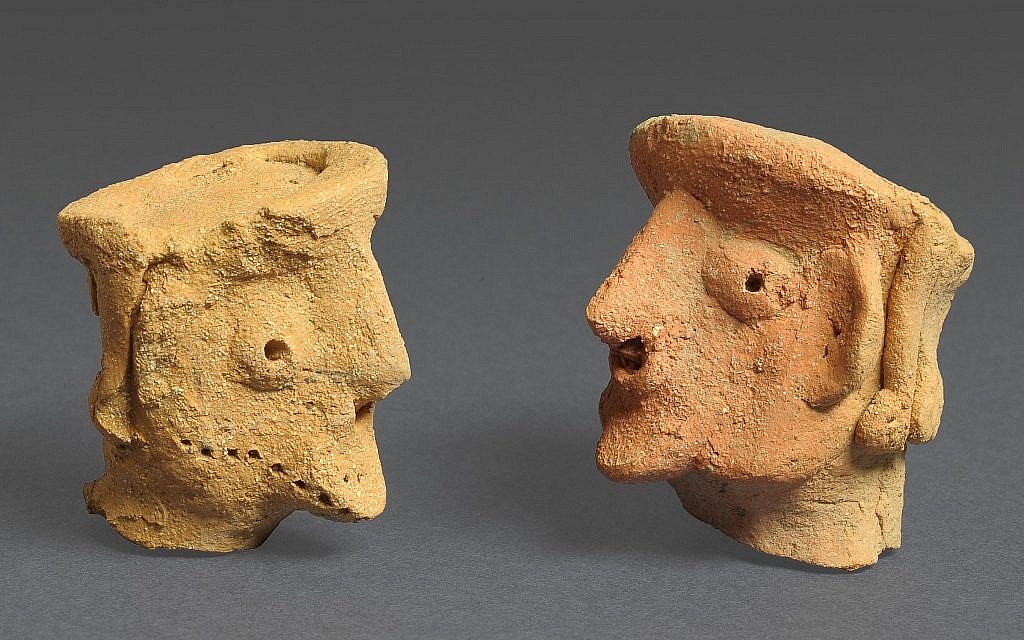
cult figurines motza excavationsHeads of human figurines excavated at Motza (Clara Amit/Israel Antiquities Authority)

Excavations in Tel Motza, four miles north of Jerusalem, reveal a huge Iron Age II temple where local ancients practiced cultic worship. This is surprising, given the recorded efforts of Biblical kings Hezekiah and Josiah to eliminate pagan religions in Israel.

It’s estimated that the temple was built in the late 10th or early 9th centuries BCE and was used for worship until the early 6th century BCE. These estimated dates bring it into the time during which the David’s Temple in Jerusalem functioned as the Holy Land’s religious center and governmental authority.

Archaeologists Shua Kisilevitz of the Israel Antiquities Authority and Oded Lipschits of Tel Aviv University’s Institute of Archaeology recently published research into the excavation in the January/February 2020 issue of Biblical Archaeology Review.

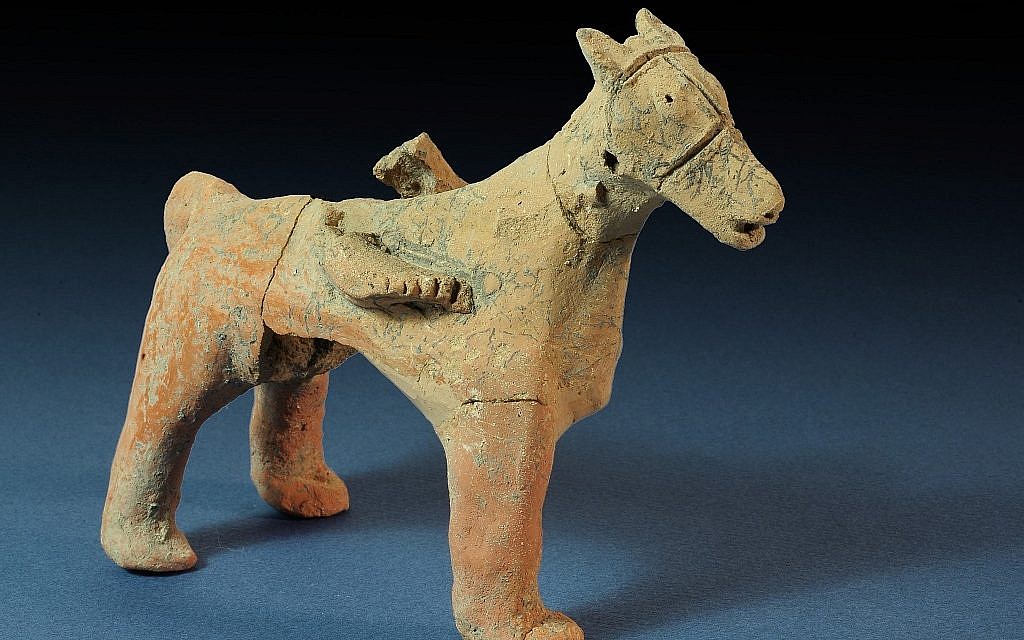
Horse figurine discovered at the temple complex at Motza. (Clara Amit/IAA)

Motza has been inhabited for close to 9,000 years. It was a fertile agricultural center, a major hub for grain storage, and famous for horse breeding in ancient times. Crucially, it was also a crossroads linking the south to Jerusalem, bringing pilgrims, merchants, and emigrants through the region, which increased its economic importance. ​

Findings suggest that the government centered in Jerusalem’s Temple recognized the religious needs of non-Hebrew populations. Or one might consider that as Motza was an important economic center largely populated by cult worshipers, it would have made sense for the government to allow the building of this temple. Being close enough to Jerusalem, it would have been easy to keep an administrative eye on it.

“You could not have built a major monumental temple so close to Jerusalem, without sanction by the ruling polity,” said Kisilevitz.

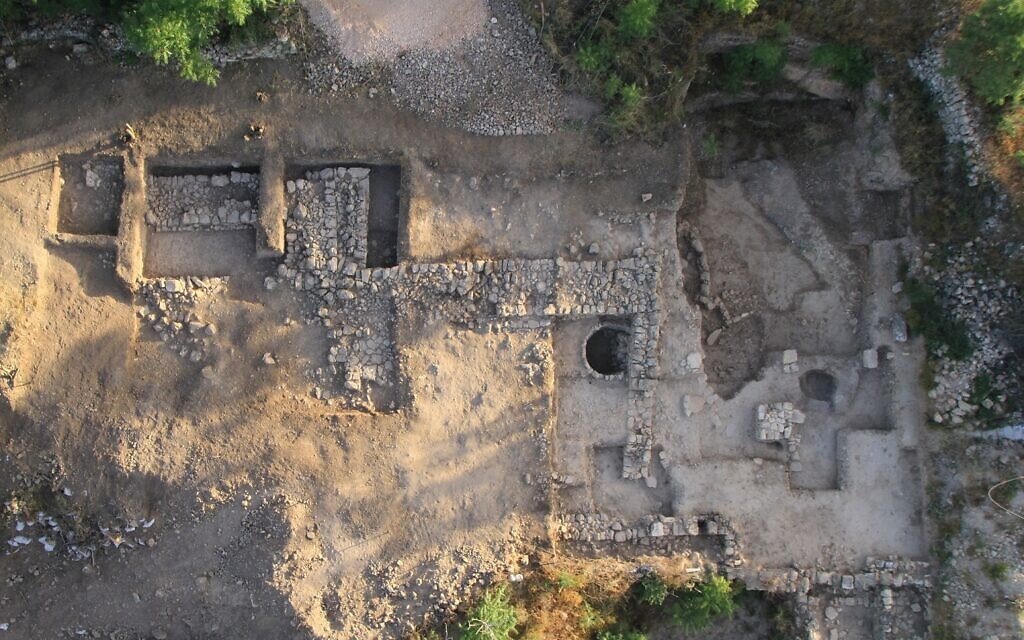
The cultic temple is laid out according to the same plan as David’s Temple, with the east-west orientation typical of sites of worship of those times; a rectangular building, and a fore-court where congregants would gather.  The archaeologists note that this plan was commonly used to construct temples in the Near East, such as those in ‘Ain Dara and Tell Ta‘yinat, Syria, The Motza temple feasibly could have been built  by Syrian workers, as was also the Temple in Jerusalem.
overhead view temple Motza

Aerial view of Motza excavations (P. Partouche, SkyView)

Kilievitz says,

“Definitely there was cultic activity going on throughout the region. I think at some point we will find more temples.”

Lipschits states, “Our discoveries thus far have fundamentally changed the way we understand the religious practices of Judahites.”

Among other findings are an altar and a wealth of artifacts, including animal and human figurines, bowls, cult stands (ceramic or stone stands for ritual use) and a pit where animal bones, presumably sacrifices, and discarded ritual objects were respectfully laid away.
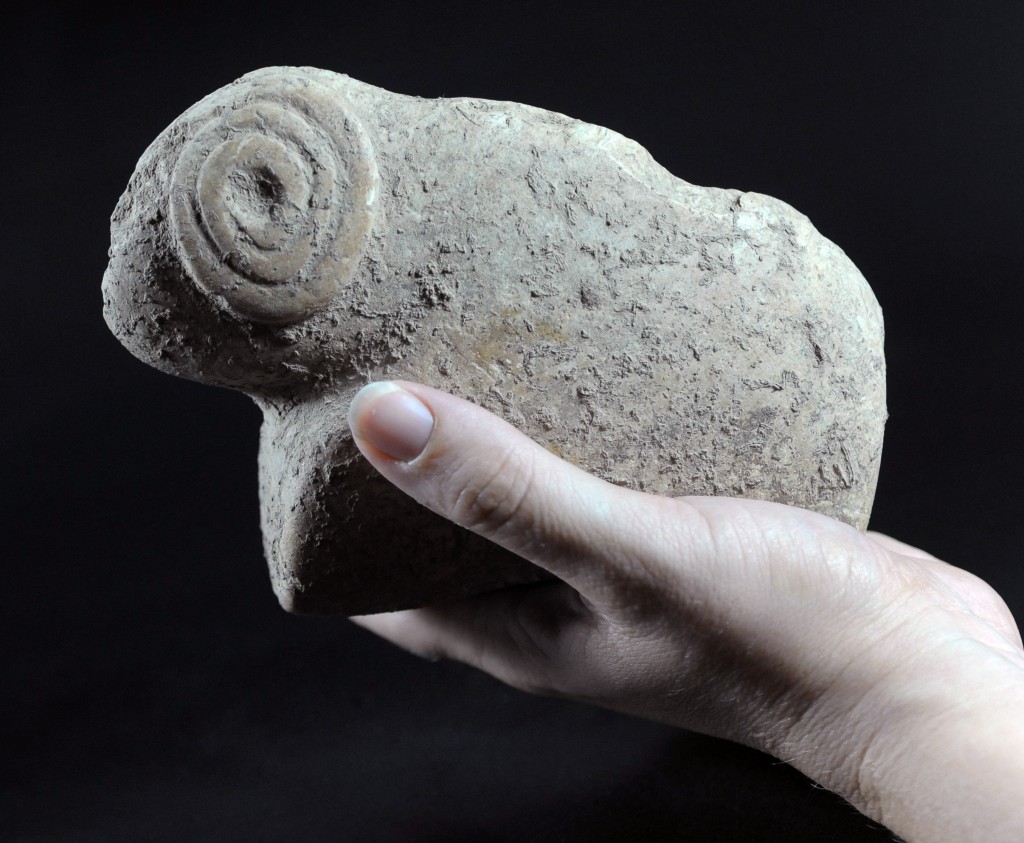
Two Stone Age animal figurines were found outside Jerusalem. Archaeologists say they are 9,500 years old (photo credit: Yael Yolovitch/Israel Antiquities Authority)(Yael Yolovitch/Israel Antiquities Authority)

The variety of gods identified by figurines and representations on other objects points to the temple being dedicated to no one particular god, but to a pantheon,  including  the  bloody Ba’al  and  the  fertility goddess Astarte.

The researchers say that discovering when the temple stopped being used as such is a key issue. King Josiah’s reforms, ca. 640-609 BCE, would have caused it to shut down for cultic worship – but when or if this site was affected by those reforms is still unknown. It would be nice to think that, through a stroke of luck, some sort of document will be unearthed to enlighten us.

“All we know so far is that when it was constructed, the Motza temple was likely the undertaking of a local group, but by the Iron IIB period, it was clearly under Judahite rule and must therefore have been royally sanctioned by the realm. The rest remains to be discovered,” the archaeologists wrote.

Excavations began in 2012 and continue, as the site has not been fully uncovered. The team working there in the 2020 and 2021 seasons will comprise staff from Tel Aviv University, Prague, Germany, and UCLA.

Miriam Kresh
Miriam Kreshhttps://www.greenprophet.com/
Miriam Kresh is an American ex-pat living in Israel. Her love of Middle Eastern food evolved from close friendships with enthusiastic Moroccan, Tunisian and Turkish home cooks. She owns too many cookbooks and is always planning the next meal. Miriam can be reached at miriam (at) greenprophet (dot) com.

LEAVE A REPLY

Please enter your comment!
Please enter your name here

TRENDING

Luxury tower in Jerusalem ruins its sacred heritage and eco-architects are worried

Critics of a new set of luxury towers including Israeli-Greek architect Elias Mesinas, warn that the scale of the towers, loss of public green space, and creeping luxury-led gentrification risk undermining Jerusalem’s historic skyline, community fabric, and long-standing planning principles — raising a fundamental question: not whether Jerusalem should densify, but how it can do so responsibly while preserving what makes the city unique.

Explore Balat in Istanbul for a perfect day of coffee, cats, and second-hand clothing shops

Balat is not a neighborhood you would visit in the standard tour to Istanbul. If you want a real taste of Istanbul and the people who live there, wander around a smaller craftsman, artisan, coffee shops and second hand clothing shops on cobblestone streets in the neighborhood of Balat.

Canaan’s sacred wine and folk worship in the fields

Around the press, the team uncovered dwellings and courtyards that hint at an early village economy. The winemaking enterprise was likely community-based, tied to the cycles of agriculture and celebration. Megiddo’s residents were already part of a regional network that shipped jars of oil, grain, and perhaps even wine to Egypt and the wider Mediterranean world.

Blackdot’s painless AI-based tattoos will make inked skin less taboo?

Blackdot’s AI-powered tattoo machine promises precision and less pain, but sparks debate over health risks, artistry, and spirituality. From religious prohibitions to smart tattoos, the future of ink is being rewritten by technology.

Battling the Blaze: Israel’s Wildfire Response

On a dry, windy afternoon in late April 2025,...

Qatar’s climate hypocrisy rides the London Underground

Qatar remains a master of doublethink—burning gas by the megaton while selling “sustainability” to a world desperate for clean air. Wake up from your slumber people.

How Quality of Hire Shapes Modern Recruitment

A 2024 survey by Deloitte found that 76% of talent leaders now consider long-term retention and workforce contribution among their most important hiring success metrics—far surpassing time-to-fill or cost-per-hire. As the expectations for new hires deepen, companies must also confront the inherent challenges in redefining and accurately measuring hiring quality.

8 Team-Building Exercises to Start the Week Off 

Team building to change the world! The best renewable energy companies are ones that function.

Thank you, LinkedIn — and what your Jobs on the Rise report means for sustainable careers

While “green jobs” aren’t always labeled as such, many of the fastest-growing roles are directly enabling the energy transition, climate resilience, and lower-carbon systems: Number one on their list is Artificial Intelligence engineers. But what does that mean? Vibe coding Claude? 

Somali pirates steal oil tankers

The pirates often stage their heists out of Somalia, a lawless country, with a weak central government that is grappling with a violent Islamist insurgency. Using speedboats that swarm the targets, the machine-gun-toting pirates take control of merchant ships and then hold the vessels, crew and cargo for ransom.

Leopoldo Alejandro Betancourt López Turned Ocean Plastic Into Profitable Sunglasses

Few fashion accessories carry the environmental burden of sunglasses. Most frames are constructed from petroleum-based plastics and acrylic polymers that linger in landfills for centuries, shedding microplastics into soil and waterways long after they've been discarded. Leopoldo Alejandro Betancourt López, president of the Spanish eyewear brand Hawkers, saw this problem differently than most industry executives.

Why Dr. Tony Jacob Sees Texas Business Egos as Warning Signs

Everything's bigger in Texas. Except business egos.  Dr. Tony Jacob figured...

Israel and America Sign Renewable Energy Cooperation Deal

Other announcements made at the conference include the Timna Renewable Energy Park, which will be a center for R&D, and the AORA Solar Thermal Module at Kibbutz Samar, the world's first commercial hybrid solar gas-turbine power plant that is already nearing completion. Solel Solar Systems announced it was beginning construction of a 50 MW solar field in Lebrija, Spain, and Brightsource Energy made a pre-conference announcement that it had inked the world's largest solar deal to date with Southern California Edison (SCE).

Related Articles

Popular Categories