Solving world hunger with hybrid potatoes

solyntaCan hybrid breeding effectively mitigate aspects of climate change? Across the planet, communities face a constant struggle to produce enough food to survive. Harsh climates, insect infestation, and a lack of affordable fertilizers and pesticides mean that crop yields are far lower in developing countries. The scientists at Solynta believe potatoes may be the solution.

One in eight people around the world are chronically hungry, and in the future things may get even worse. Human  population is expected to increase significantly, and climate change is making it harder than ever to grow healthy crops in more and more regions.

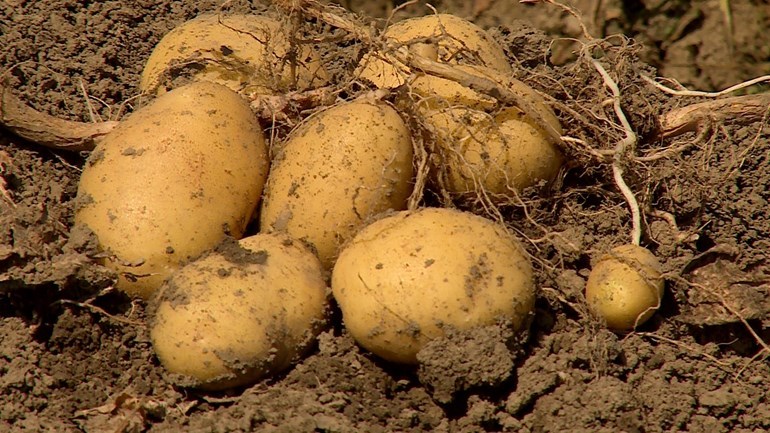
Netherlands-based Solynta is a leading seed breeding company which has developed an innovative technology for targeted breeding of one of the world’s fourth largest staple crops – potatoes. The mighty spud is relatively cheap, highly nutritious, and already eaten in most countries. The Food and Agriculture Organization (FAO) recommends potato cultivation for countries seeking to increase their food security, as they can be grown most anywhere.

Compared to other crops like rice, corn and wheat, potatoes produce far more food per hectare, and far more food per liter of water used, helping feed large numbers of people while also mitigating the effects of climate change. According to the FAO, up to 85 percent of the plant is edible human food, compared to around 50% in cereals.

Potatoes are highly nutritious and contain more of the 21 vitamins and trace elements than any other staple crops. They are rich in carbohydrates, making them a good source of energy, and boast the highest protein content (around 2.1 percent on a fresh weight basis) in the family of root and tuber crops. They are also rich in vitamin C and contain a fifth of the recommended daily value of potassium.

Currently, most potato farmers are forced to rely on poor-quality ‘seed tubers’ – specially-grown potato tubers which are used as starting material, but which are easily perishable and are infected with pests and diseases. The result is low yields.

Solynta’s “True Seed” technology has the potential to help solve all these problems, by delivering potatoes which can double yields over seed-tubers; are more resistant to drought; and require fewer harmful pesticides and fungicides. These hybrid seeds are completely disease-free and are also far easier to store and transport than tubers. On average, 25 grams of True Seeds produces the same crop as 2,500 kilos of seed tubers, resulting in significant reductions in transport costs and carbon emissions.

Agriculture consumes more than 2/3 of total available freshwater through irrigation. Depletion of water reserves could cause a 40% supply gap by 2030. An increase in the proportion of potato in the diet would alleviate pressure on water resources. Also, by breeding natural resistances into the crop there will be a significant reduction (>60%) of pesticide use and therefor limit the runoff of pesticides into the water system.

Faisal O'Keefe
Faisal O'Keefehttps://www.greenprophet.com/
Former First World tax attorney, appalled at the trajectory of world politics and public attitudes, and how his favorite vacation spots are being decimated by climate change and human disregard for nature. Took a six-month leave to consider his options. Seven years on, is still trying to figure out what to be when he grows up, and what actions he can take to best ensure he'll have a place to be it.

LEAVE A REPLY

Please enter your comment!
Please enter your name here

TRENDING

Has climate change created the first grue jay?

The bird was caught using a mist net, briefly examined, and released after a small blood sample was taken for genetic testing. Analysis by Stokes and his advisor, Tim Keitt, a professor of integrative biology at UT Austin, confirmed the bird was the male hybrid offspring of a green jay mother and a blue jay father.

Can we breed cows that don’t fart?

People are afraid of the cow supplement Bovaer added to animal feed and used in milk supplied to large chains like Aldi. Bovaer is touted to reduce cow farts in animals, and make rumination more efficient thus generating less methane gas. But people don'e want Bovaer in their milk and have been dumping it in response. Could there be a better way? By breeding the cows with more productive microbiomes? This is the question of a research team.

How to help Gaza fishermen

The destruction of Gaza's two main aquaculture farms, along with the hatchery facility, has also left the sector unable to produce alternative aquatic foods through aquaculture. 

Israelis want to know: Where has all the butter gone?

Butter has been missing from Israeli markets for well over a year. Why isn't supply meeting the demand?

Highschool kids develop algae superfood to feed Africa’s hungry

Algae as superfood? Countries like Japan have already known...

Qatar’s climate hypocrisy rides the London Underground

Qatar remains a master of doublethink—burning gas by the megaton while selling “sustainability” to a world desperate for clean air. Wake up from your slumber people.

How Quality of Hire Shapes Modern Recruitment

A 2024 survey by Deloitte found that 76% of talent leaders now consider long-term retention and workforce contribution among their most important hiring success metrics—far surpassing time-to-fill or cost-per-hire. As the expectations for new hires deepen, companies must also confront the inherent challenges in redefining and accurately measuring hiring quality.

8 Team-Building Exercises to Start the Week Off 

Team building to change the world! The best renewable energy companies are ones that function.

Thank you, LinkedIn — and what your Jobs on the Rise report means for sustainable careers

While “green jobs” aren’t always labeled as such, many of the fastest-growing roles are directly enabling the energy transition, climate resilience, and lower-carbon systems: Number one on their list is Artificial Intelligence engineers. But what does that mean? Vibe coding Claude? 

Somali pirates steal oil tankers

The pirates often stage their heists out of Somalia, a lawless country, with a weak central government that is grappling with a violent Islamist insurgency. Using speedboats that swarm the targets, the machine-gun-toting pirates take control of merchant ships and then hold the vessels, crew and cargo for ransom.

Leopoldo Alejandro Betancourt López Turned Ocean Plastic Into Profitable Sunglasses

Few fashion accessories carry the environmental burden of sunglasses. Most frames are constructed from petroleum-based plastics and acrylic polymers that linger in landfills for centuries, shedding microplastics into soil and waterways long after they've been discarded. Leopoldo Alejandro Betancourt López, president of the Spanish eyewear brand Hawkers, saw this problem differently than most industry executives.

Why Dr. Tony Jacob Sees Texas Business Egos as Warning Signs

Everything's bigger in Texas. Except business egos.  Dr. Tony Jacob figured...

Israel and America Sign Renewable Energy Cooperation Deal

Other announcements made at the conference include the Timna Renewable Energy Park, which will be a center for R&D, and the AORA Solar Thermal Module at Kibbutz Samar, the world's first commercial hybrid solar gas-turbine power plant that is already nearing completion. Solel Solar Systems announced it was beginning construction of a 50 MW solar field in Lebrija, Spain, and Brightsource Energy made a pre-conference announcement that it had inked the world's largest solar deal to date with Southern California Edison (SCE).

Related Articles

Popular Categories