

 Grow up near New York City, you’re forgiven for thinking that every mensch makes with the Yiddish.
Green Prophet informs you about enviro-issues, sheds light on other cultures, and keeps you hip to current green building news. Our effectiveness comes down to making nice with the words – like sustainability. Words help us hop cultural fences. Look to anyplace with a “melting pot” street cred: cities along the old Spice Road or places popular with conquering hoards. Their languages bend to become more accessible. Adopting each other’s words brings us all a step closer. I’ll paint my point with a bit of the Yiddish I absorbed as a non-Jewish American:
In Manhattan, Muslims, Jews, Protestants and atheists all schlep to work, grab a coffee and nosh. We rub schmutz off our bubkes after sitting on a subway, and schmooze in the elevator with the schlemiel with the big schnoz.
The Marx Brothers can be credited with nudging Yiddish words into American mainstream, taking their Lower East Side vaudeville act to motion pictures in the early 20th Century. The films of Jewish Brooklynites Woody Allen and Barbra Streisand further schmeared the fun-to-say vocabulary far beyond the city’s shoreline.
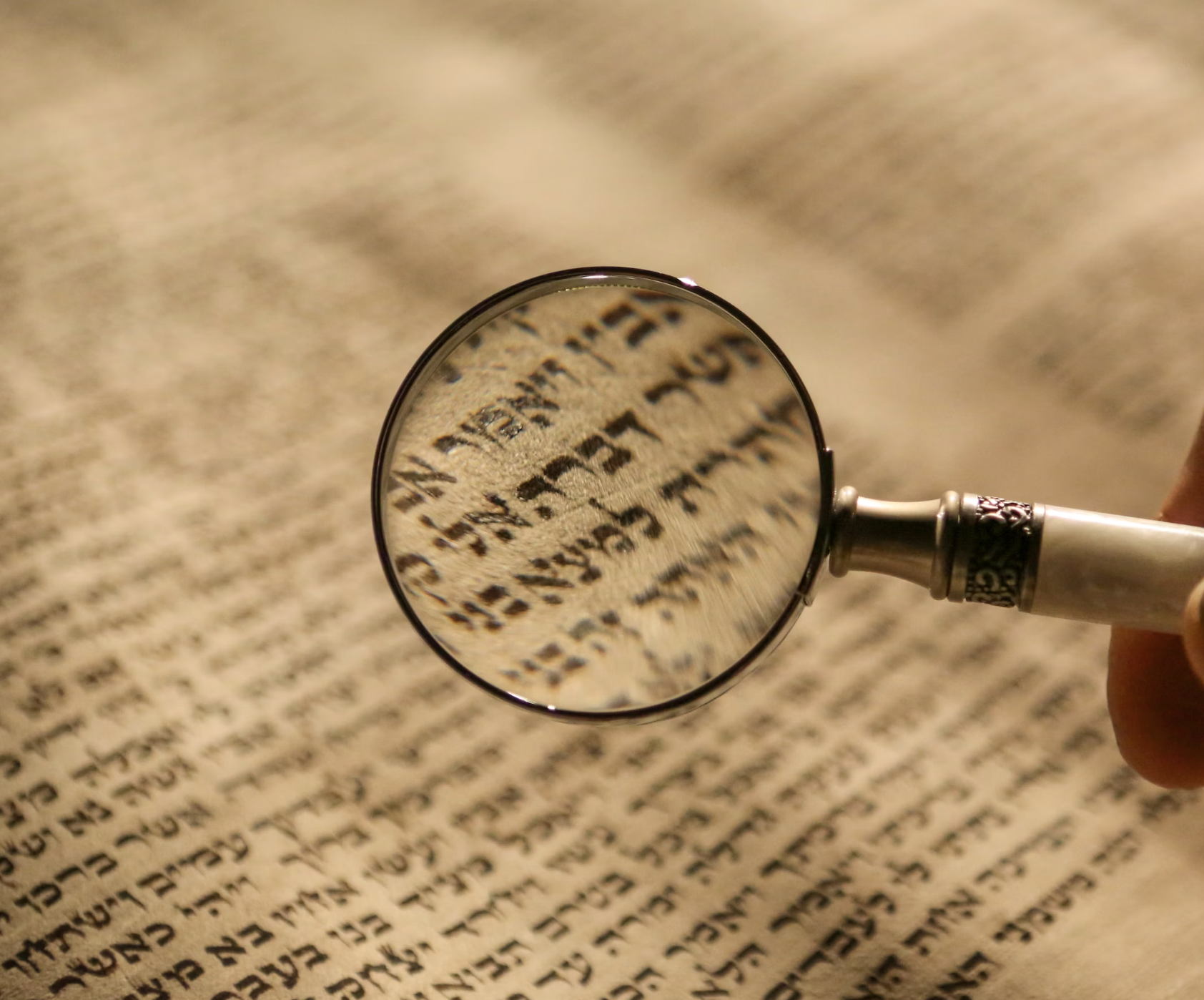
Yiddish is written using the Hebrew alphabet, but it’s not Hebrew. It’s a fusion of Aramaic and Hebrew and German, flavored with input from both eastern and western European tongues. So did the formal language of the Jews and Samaritans also seep into American English vernacular? Oy vey, did it ever.
- Cherub – (כרוב) – winged toddler darlings of Catholic stained glass windows grabbed their name from the Hebrew kerubh, or celestial angel.
- Satanic – (הַשָּׂטָן) – supremely evil Yin to chubby cherubic’s Yang, this comes straight from the Hebrew word for adversary: satan.
- Bath – (בַּת) – pours forth from its Hebrew homophone (bath) which is a liquid measure – about ten gallons.
- Brouhaha – (אשרי מי שבא)- likely sourced from the Hebrew phrase barukh hab-ba, meaning “blessed is he who comes” (makes sense today only of “he who comes” is the loud, Life-of-the-Party).
- Sabbatical – (שׁבת ) – no stretch to see how a break from work stems from shabbat, or ceasing.
- Maven – (מבין) – describes a pro in any field, an off-shoot of the word mebhin which means “someone who understands”. Think Oprah, or insert your favorite schmaltzy TV “expert”.
- Leviathan -(לויתן) – liwyathan, meaning coiled or twisted, was used to describe a Biblical sea monster: the whale of a word continues to describe “immensity”.
- Jot – (יד) – probably from “yodh” which means hand. But in this age of computer keyboards, the art of “jotting” may soon be as quaint as the art of “wooing”.
- Jubilee – (ובל) – did Queen Liz realize that her summertime celebration was named after a ram’s horn? Yobhel is the word behind today’s term for big party.
- Cider – (שכר) – shekhar means strong drink, which is what I’ll need when true Hebrew scholars drop comments to correct me on all of the above.
Modern languages are as fluid as the people who speak them and the places where they’re spoken. It’s always sound advice to think before we speak: but if we think on the origins of words we use, we’ll discover that we all share more than we might’ve guessed.
Key to Yiddish words: mensch = good guy; schlep = drag oneself; nosh = snack; schmutz =dirt; bubkes = bum; schmooze = chat; schlemiel = dopey guy; schnoz = nose; nudge = push; schmear = spread; oy vey = oh my; schmaltzy = cheesy
If you like this, read our post on the Arabic Roots of 10 English Words


See what happens when you take the girl out of the City?
Absolutely right, STS, seems I recall BUPKES about the old slang (kick me in my TUSH and send me on my way…)
Thanks for the correction and the clearer insight into “tokhes”.
Submitted too fast: Tokhes comes from the Hebrew word for
under, takhat, pre-Israel Ashkenazi pronunciation takhas or takhes.
As for bum/rear end, the well-known Yiddish word
is tokhes, from which we get tush and tushie.
Bupkes does not mean bum. It is not used to mean that at all.
It means nothing much.
‘I was paid bupkes’ means I was paid very little.
‘He sold it for bupkes’ means he didn’t get much for the item.
It means animal droppings, especially as in goat sh*t,
small worthless pellets.
Other words listed have derivations and definitions that
could be quibbled with at least or simply corrected.
Keep ’em coming: really interesting to see the connectivity between languages!
OED gives jot its origin with Greek iota, but does not offer much further by way of brouhaha. While possible, not plausible.
Kibbutz, being a unique term, is used in English to refer to the Israeli phenomenon.
How about philistine? Goliath? Messiah?
Better yet, how about loan words into Hebrew from foreign tongues, take Greek or ancient Egyptian, for example. There are a trove from either.
The list can go on and on, eh? Kibbutz for certain (does it hold any other meaning that it’s original Hebrew?), and abracadabra – that’s a brilliant addition!
Wikipedia wasn’t my source for these, but they do tag brouhaha as French by way of Hebrew (from French brouhaha, possibly from a corruption of Hebrew בָּרוּךְ הַבָּא) and the Collins English dictionary pins “jot” on Semitic origins…but who am I to argue?
Thanks for the great comment!
Hate to correct you, Laurie, but brouhaha and jot are not Hebrew-derived.
According to the OED, brouhaha is from French and jot is from Greek.
Had you mentioned shibboleth or abracadabra, paschal or kibbutz, you’d be onto something.