GMOs explained through an historical lens

GMO-corn-genetically-modified-corn

Are grandma’s heirloom tomatoes Genetically Modified Organisms (GMO)? What about Lebanese cucumbers or the maize that Native Americans transformed from a meager ankle-high grass into long-eared mazes of golden corn?  What is so scary about GMO?

Wasn’t corn GMO long before billion dollar agtech companies refined it into high fructose corn syrup for use in everything from baby food to automobile engines? If it doesn’t glow, is it GMO? It seemed a fair question and it led to a little bit of a debate between myself and one of my country cousins who raised livestock and spent some of her summers detasseling corn.

I shared my meager understanding of GMO and made a mental note to research it further. This is what I found.

Agriculture is a new invention

Humans survived and thrived via a hunter-gatherer lifestyle for millions of years, more than 90 percent of human history. They searched for food and if they didn’t find enough they moved somewhere else. Cities were unnecessary and impractical anchors to this nomadic lifestyle. Sorry Manhattan!

The first genetically modified organism was created only about 8 to 10 thousand years ago somewhere in the fertile crescent between the Tigris and Euphrates rivers when someone cultivated fig trees into the first domesticated plants.

This seems to have taken place in what is now southern Iraq– an area some believe to be the Garden of Eden.

GMOs start in the wetlands of Eden?

Why was this place known as the Garden of Eden and not the Wilderness or Marsh of Eden? The word garden suggests that the crops tended and take care of. The soil is turned, seeds are planted and tended with plans for a future harvest.

Just as the elders of our world complain about newfangled agtech gadgets, these early farmers probably had a love-hate relationship with the new technology of agriculture. But soon we became dependent on agriculture and there was no turning back. Populations quickly grew beyond what hunter-gatherer lifestyles could support.

People continued changing their environment. They bred and domesticated plants and animals to help meet their needs. This brings us back to our question, what is so unnatural and scary about modern Genetically Modified Organisms (GMOs)?

In the beginning, plants and animals were created as separate things. Show a toddler a picture of a cow and she might say “doggie!” or “tree!” but a few years later she’ll be able to distinguish these as the separate creations of our world. Animals can distinguish each other and, mythical chimeras aside, there is little evidence of natural breeding between birds and lions, unicorns and dragons, men and goats and… well, you get the idea.

Selective breeding and the difference between that and GMOs

Selective breeding is the oldest and most natural way for a farmer to domesticate a crop. Breeding only works for closely related animals and combinations with fertile offspring meet one of our definitions of a species. It takes several generations to selectively breed a tasty frost-resistant tomato, a horse that can pull a heavy load, a strong and loyal dog with a cute nose or a furless cat that is mildly tolerant of humans. (Agtech companies like Kaiima are speeding up the process).

For plants, the term heirloom is used for plants which are open pollinated and therefore capable of producing seeds. The term hybrid is generally used for plants which are closed pollinated.

Someone figured out that some animals from closely related species could breed, horses and donkeys for instance. But that their offspring couldn’t. So we have useful but sterile mules. Sterile apple and cherry tree grafts. This limitation becomes a feature for companies who wish to copy protect organisms and sell seeds each year.

GMOs involve transfer of DNA

But GMO is different than selective breeding in that special gene splicing techniques are used to transfer DNA between species which are not closely related. So you can have a tobacco plant with firefly DNA or a pig with human DNA.

Even the scientists who create (and often patent) these artificial forms of life don’t fully understand the risks of introducing them into our environment and food chain.

GMO seems to have confounded those who interpret the strict Halal and Kosher food laws.

Pretending that GMO is nothing new under the sun hides the fact that like any new technology, GMO will have unpredictable and unwanted side effects.

Understanding these risks as well as any applications where GMO can be a positive environmental force is something which should be done now and in the public light of knowledge, not in the back-office of a company whose primary goal is to show a profit in the next 90 days.

So what are you waiting for? Jump into the conversation below.

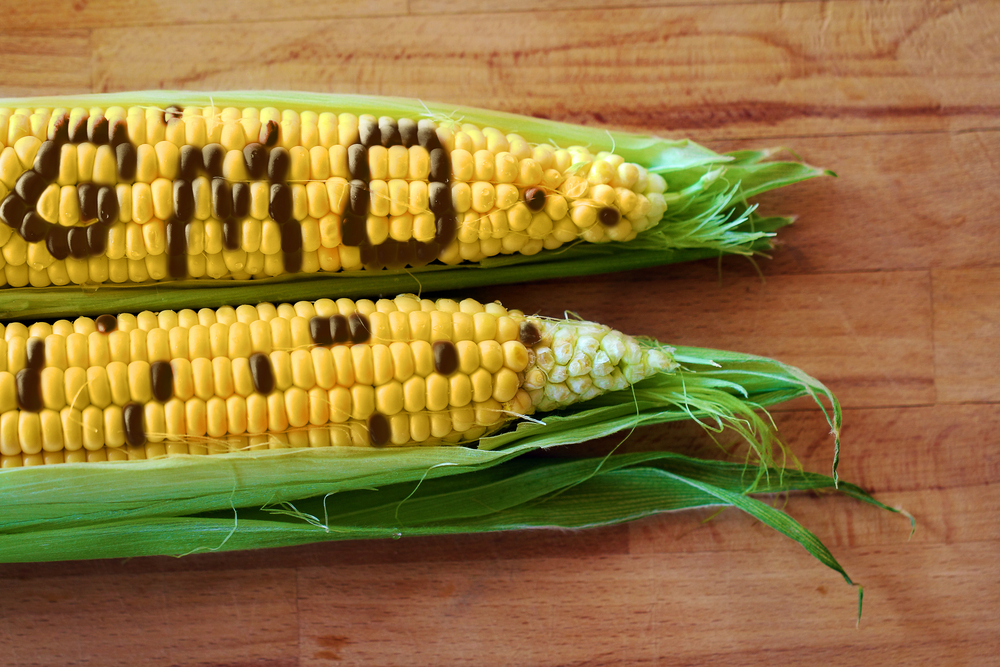
Image of GMO corn from Shutterstock

Brian Nitz
Brian Nitzhttp://www.greenprophet.com
Brian remembers when a single tear dredged up a nation's guilt. The tear belonged to an Italian-American actor known as Iron-Eyes Cody, the guilt was displaced from centuries of Native American mistreatment and redirected into a new environmental awareness. A 10-year-old Brian wondered, 'What are they... No, what are we doing to this country?' From a family of engineers, farmers and tinkerers Brian's father was a physics teacher. He remembers the day his father drove up to watch a coal power plant's new scrubbers turn smoke from dirty grey-back to steamy white. Surely technology would solve every problem. But then he noticed that breathing was difficult when the wind blew a certain way. While sailing, he often saw a yellow-brown line on the horizon. The stars were beginning to disappear. Gas mileage peaked when Reagan was still president. Solar panels installed in the 1970s were torn from roofs as they were no longer cost-effective to maintain. Racism, public policy and low oil prices transformed suburban life and cities began to sprawl out and absorb farmland. Brian only began to understand the root causes of "doughnut cities" when he moved to Ireland in 2001 and watched history repeat itself. Brian doesn't think environmentalism is 'rocket science', but understanding how to apply it within a society requires wisdom and education. In his travels through Europe, North America, Asia and the Middle East, Brian has learned that great ideas come from everywhere and that sharing mistakes is just as important as sharing ideas.
1 COMMENT
  1. Please, you need to dig further. Your article is true…..to a point. Everything could be labeled GMO, Nature does it all the time, the difference is when the product is manipulated in a way that we have no way of knowing how it will affect the human and animal body. Case in point corn seed produced by Monsanto that most of Europe and the Middle East has totally banned because no one knows what the end result of the corns ability to repel weed killers.
    There are three types of seed, of the three, one is a herbicide producing strain one is Roundup herbicide absorbing. All three were approved after only 90 days of Monsanto testing and the FDA approving those tests. What does that say?
    It is now coming to light that after studying for longer than the FDA approved 90 days that the Monsanto seed is being attributed to organ failure.
    Do you want to consume this product or put it into your children???
    I know and most people with a brain know that our foodstuffs have been modified by selective breeding from the time we became an agrarian civilization. That being said, until Monsanto and other companies like them no one would ever think to make a seed develop so that it will absorb chemicals which are transfered to those that consume them. Think of that the next time you bite into that nice juicy steak, think about how our pets are developing human diseases more and more……shame on us for believing the hype about our foodstuffs.

LEAVE A REPLY

Please enter your comment!
Please enter your name here

TRENDING

Farm To Table Israel Connects People To The Land

Farm To Table Israel is transforming the traditional dining experience into a hands-on journey.

Iran’s holiest city about to run dry as terror chosen over water management

Iran’s second-largest city, Mashhad, is facing an acute water emergency after dam reservoirs feeding the city fell below three percent capacity, according to Iranian state and local media. Officials warn that without rainfall or improved inflows from neighboring Afghanistan, the city’s supply could soon collapse.

The hidden chatter beneath our feet – how trees, mushrooms, and microbes speak

Mushrooms, microbes, and machine learning? Why does this matter? The underground networks built by fungi and bacteria are essential for healthy ecosystems—and for our ability to grow resilient crops in a changing climate. Fungi, in particular, act as “middlemen”, connecting roots across distances and helping move nutrients, water, and even chemical signals between plants.

The Satellite That Sees Earth Breathe: How NISAR Could Transform Sustainability From Space

Critically, NISAR’s data will be publicly available. That means not only scientists and governments, but also nonprofits, local planners, and startups can build tools and services using the data.

Arab agricultural land is on the brink

Across the Arab world, croplands face a perfect storm of stressors. Excessive fertilizers and pesticides erode soil ecology. Poor drainage and over-irrigation drive salinization, leaving fields crusted with salt. Rising temperatures, dwindling groundwater, and more frequent sand-and-dust storms—all amplified by climate change—compound the crisis.

Qatar’s climate hypocrisy rides the London Underground

Qatar remains a master of doublethink—burning gas by the megaton while selling “sustainability” to a world desperate for clean air. Wake up from your slumber people.

How Quality of Hire Shapes Modern Recruitment

A 2024 survey by Deloitte found that 76% of talent leaders now consider long-term retention and workforce contribution among their most important hiring success metrics—far surpassing time-to-fill or cost-per-hire. As the expectations for new hires deepen, companies must also confront the inherent challenges in redefining and accurately measuring hiring quality.

8 Team-Building Exercises to Start the Week Off 

Team building to change the world! The best renewable energy companies are ones that function.

Thank you, LinkedIn — and what your Jobs on the Rise report means for sustainable careers

While “green jobs” aren’t always labeled as such, many of the fastest-growing roles are directly enabling the energy transition, climate resilience, and lower-carbon systems: Number one on their list is Artificial Intelligence engineers. But what does that mean? Vibe coding Claude? 

Somali pirates steal oil tankers

The pirates often stage their heists out of Somalia, a lawless country, with a weak central government that is grappling with a violent Islamist insurgency. Using speedboats that swarm the targets, the machine-gun-toting pirates take control of merchant ships and then hold the vessels, crew and cargo for ransom.

Leopoldo Alejandro Betancourt López Turned Ocean Plastic Into Profitable Sunglasses

Few fashion accessories carry the environmental burden of sunglasses. Most frames are constructed from petroleum-based plastics and acrylic polymers that linger in landfills for centuries, shedding microplastics into soil and waterways long after they've been discarded. Leopoldo Alejandro Betancourt López, president of the Spanish eyewear brand Hawkers, saw this problem differently than most industry executives.

Why Dr. Tony Jacob Sees Texas Business Egos as Warning Signs

Everything's bigger in Texas. Except business egos.  Dr. Tony Jacob figured...

Israel and America Sign Renewable Energy Cooperation Deal

Other announcements made at the conference include the Timna Renewable Energy Park, which will be a center for R&D, and the AORA Solar Thermal Module at Kibbutz Samar, the world's first commercial hybrid solar gas-turbine power plant that is already nearing completion. Solel Solar Systems announced it was beginning construction of a 50 MW solar field in Lebrija, Spain, and Brightsource Energy made a pre-conference announcement that it had inked the world's largest solar deal to date with Southern California Edison (SCE).

Related Articles

Popular Categories