

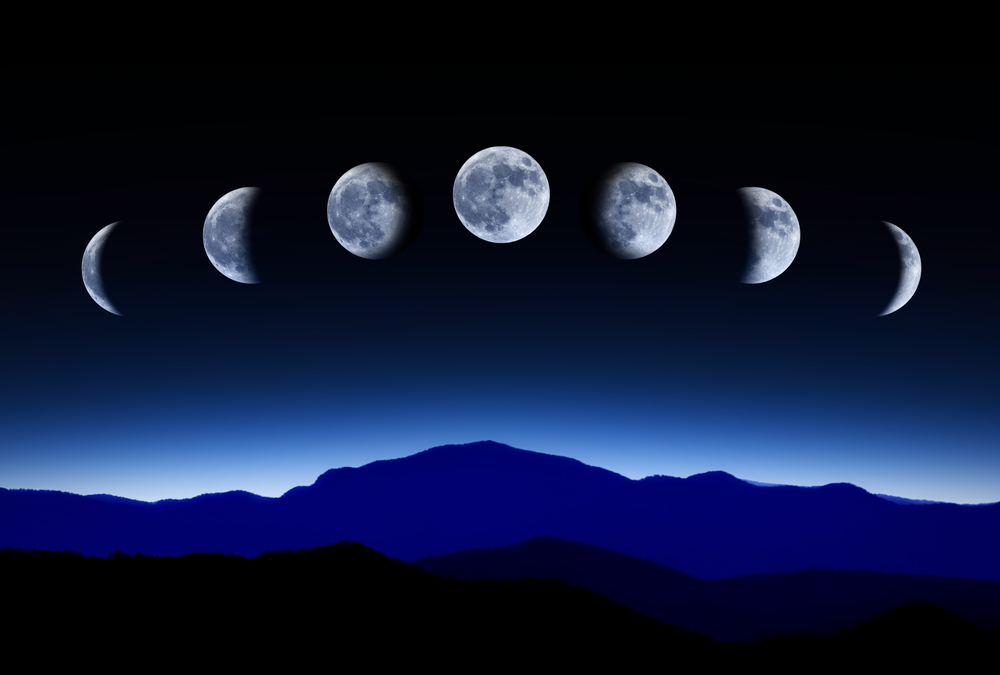
 Islamic nations defer to astronomers in Saudi Arabia, Iran, or Turkey (depending on political affiliation) to determine when the new crescent moon harkens the Holy Month of Ramadan. Dependence on real-time moon-spotting means heightened anxiety. Rumors reel about Ramadan’s start, leaving the requisite housecleaning and food prep open-ended. There’s a massive impact on worker productivity, too.
This year in France, the Muslim Council voted to start Ramadan based on astronomical calculations instead of moon spying. There are reports that the United Arab Emirates may also switch.
Nidhal Guessoum from American University of Sharjah, said the French vote was “a tremendous first.” The Algerian astrophysicist told The National, “There’s a good chance that by next year, the Turks will call in astronomers and Muslim jurists from Malaysia all the way to the US to make recommendations, which I know they will implement.”
The change allows Ramadan and Eid to be scheduled years in advance, making Muslim work and social calendars easier to coordinate with the holiday.
Arab astronomers have been computing planetary positions for millennia. As far back as the 9th Century, al-Khwarizmi published his Zij al-Sindh, with tables for movements of the sun, the moon and five known planets.
But that’s science, and we’re talking religion. For Ramadan, Islam specifically refers to moon’s position as observed by the human eye.
“Computer models are able to predict when the new crescent will be visible from a given region,” Guessoum told The National. “Islamic scholars say they haven’t been told to follow computer models, so there’s a literal versus spirit-of-the-law debate. Often we can’t tell when the crescent will be seen at every location, we can only tell them by region.”
That poses a major problem: if the crescent can be seen in Morocco, does Qatar accept that as the Ramadan kick-off? Scientific calculations can credibly state when the holiday starts for specific locations. Astronomers and clerics met in Mecca last year to debate the subject, and another meeting in Turkey is planned this year.
Although Guessoum suspects some Middle East countries will soon shift, others such as Saudi Arabia will take longer to adapt. “We need to know when Ramadan starts to find out when we should fast, travel to Saudi for the pilgrimage, working hours change,” he said. “There are plenty of implications. We can’t wait until the last evening before when people start rushing to buy food.”
While he clearly supports the change, many Muslim scholars predict resistance. “Starting from the mid-eighth century AH [the 14th century AD], there have been scholars who consider it permissible for individuals to fast based on their own calculations of the lunar months,” said Sheikh Musa Furber, a Mufti and research fellow at the Tabah Foundation in Abu Dhabi.
“If a mathematician or astrophysicist says that, by his calculation, Ramadan has started, the governor cannot declare that everyone has to fast. That requires witnessing the new moon or completing the previous month,” he added, “I don’t think that France doing this will change things since the best experts have already decided.”
In Jordan, Ramadan is probably going to begin on July 9.
Read more on greening Ramadan:
Vegetarian Recipes for Ramadan
Image of moon phases from David Carillet on Shutterstock



[…] crescent moon is a symbol of Islam. Muslim, Jewish and Christian holidays revolve around cycles of the moon. So it’s no big surprise that an ancient structure, devoted to the moon, has recently been […]
What will we adapt next, daylight savings time? Solar/Roman calendar? Is it so hard just to be patient. Follow the Sunnah & prepare in Shayban. Its very simple. Don’t make everything so complicated.