
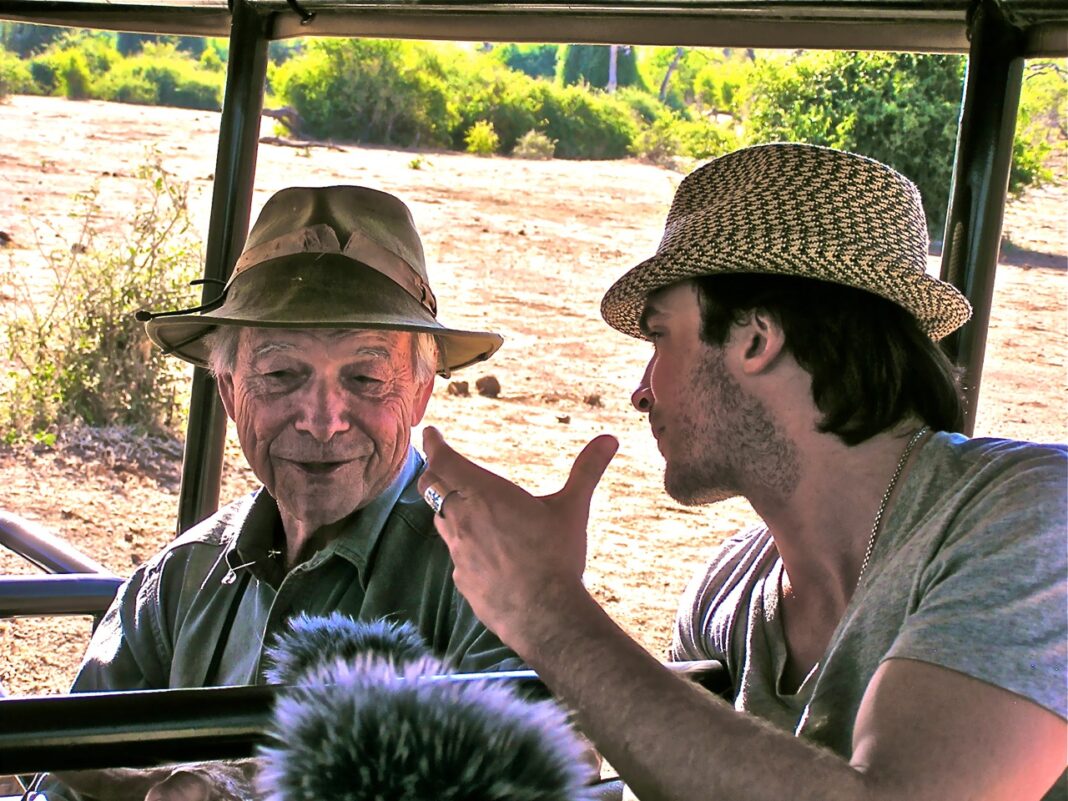

 When he first began his career as a young biologist, Allan Savory basically ordered the culling of 40,000 elephants. He and other scientists in Zimbabwe observed that former grasslands set aside as national parks were turning to desert and decided, after considerable research, that elephants were responsible. But it didn’t help to kill them. In fact, the situation got worse.
“Loving elephants as I do, that was the saddest and greatest blunder of my life, and I will carry that to my grave,” Savory said at a recent TED presentation. “One good thing did come out of it. It made me absolutely determined to devote my life to finding solutions.” He has spent the rest of his life trying to understand the causes of and solutions to desertification, efforts that earned the coveted Buckminster Fuller Award in 2010.
Desertification
“Desertification is a fancy word for land that is turning to desert, and this happens only when we create too much bare ground. There’s no other cause,” Savory said in his presentation.
And for the longest time, scientists have believed that overgrazing is the root cause of this phenomenon. But that belief system led to the kind of erroneous management policies that resulted in the unnecessary deaths of 40,000 African elephants.
In his TED presentation, an older and wiser Savory showed images of the Tihamah Desert in Yemen after a boatload of rain fell on the parched land, causing flooding and runoff.
“Over 1,000 drums of water fell on every hectare of that land that day,” he said. But the next day, the land was completely devoid of green or moisture.
“Where had that water gone?” he asked.
“Some of it ran off as flooding, but most of the water that soaked into the soil simply evaporated out again, exactly as it does in your garden if you leave the soil uncovered. Now, because the fate of water and carbon are tied to soil organic matter, when we damage soils, you give off carbon. Carbon goes back to the atmosphere.”
Ramifications for climate change
Savory says that desertification is not only harmful for people who depend on the land to grow food, but also for an already warming planet. Here’s why: when a small patch of land is devoid of what he calls “plant litter,” it is colder at dawn and hotter in the middle of the day than a similar patch of land covered in grass or plants.
Multiply that small patch by more than half of the world’s land that modern space imagery reveals as desert, and the total land mass is not only less able to absorb carbon emissions, but also absorbs more heat, thereby escalating the affect of global warming.
Yet all is not doomed. Savory has employed a strategy at the Savory Institute that reverses desertification and helps to divert what he calls “The most massive tsunami perfect storm [that] is bearing down upon us” on 15 million hectares of land in five different continents.
The secret weapon
What is his secret weapon? Livestock.
What we had failed to understand was that these seasonal humidity environments of the world, the soil and the vegetation developed with very large numbers of grazing animals, and that these grazing animals developed with ferocious pack-hunting predators. Now, the main defense against pack-hunting predators is to get into herds, and the larger the herd, the safer the individuals. Now, large herds dung and urinate all over their own food, and they have to keep moving, and it was that movement that prevented the overgrazing of plants, while the periodic trampling ensured good cover of the soil, as we see where a herd has passed.
Savory explained that by removing grazing animals and predators, we have deprived nature of the mechanism required to propagate healthy soil and grasses. He then offers several examples of how introducing massive herds of livestock to mimic nature has resulted in astounding success.
In Patagonia, 25,000 sheep were introduced to an eroded area and the land’s productivity doubled in the first season.
In the Karoo, a family converted their desert wasteland back into a productive grassland using livestock, and in the Horn of Africa, which suffered a devastating famine in 2011, pastoralists understand they will have to do the same if they have any hope of ever sprouting anything green on their land once again.
“…if we do what I am showing you here, we can take enough carbon out of the atmosphere and safely store it in the grassland soils for thousands of years, and if we just do that on about half the world’s grasslands that I’ve shown you, we can take us back to pre-industrial levels, while feeding people,” he concludes in his presentation.
“I can think of almost nothing that offers more hope for our planet, for your children, and their children, and all of humanity.”
Please visit TED for a look at the entire presentation. If you experience trouble with the video, as we did, a full transcript of this presentation is also available.
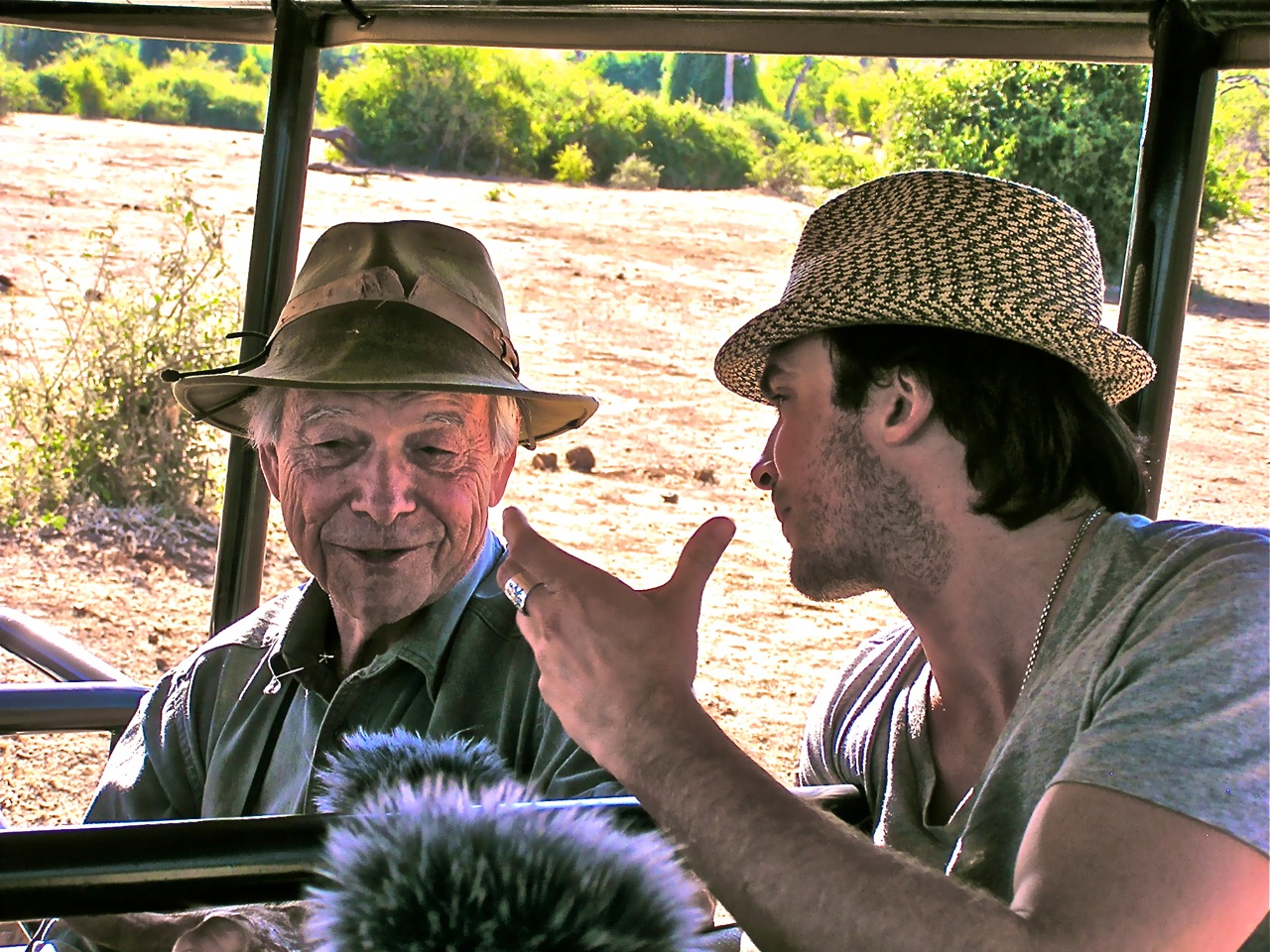
Image of Allan Savory (left) via The Savory Institute



Desertification and most of the other environmental dilemmas are caused by the ever-growing male-dominated populations in Asia, Africa, North and South America and Australia, 7 billion Worldwide and counting. But if all women were given the legally protected right to decide if and when to birth their children the vast majority would choose no more than 1, 2 or 3, in which case the human population would reduce and stabilize so there would be vast areas for wilderness and biosphere Earth would return to its natural order.