


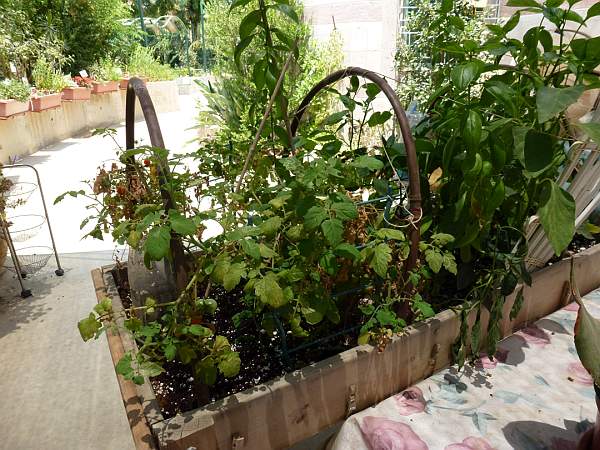
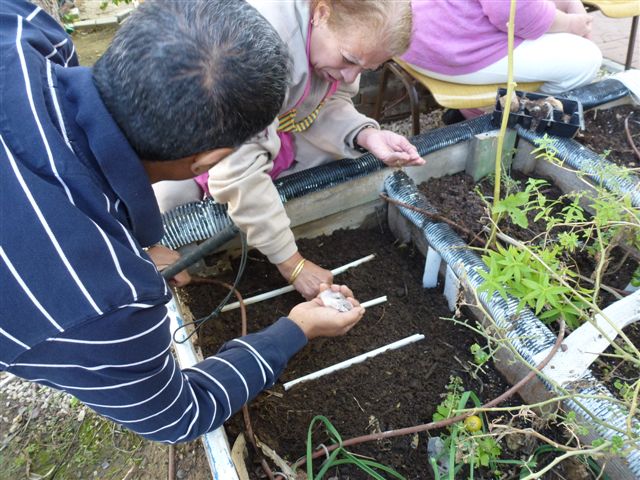
In September 2012, the Israeli desert city of Beersheva became the second municipality in Israel to staff the newly created post of community gardens coordinator. The multidisciplinary position was born through fruitful cooperation between two of the city’s municipality departments – environmental and welfare, following a strategic process aimed at reinforcing local community and environmental elements while encouraging activism amongst the city’s residents. This move marks a significant shift in policy as the municipality re-defined its role over the issue of community gardens around the city.
While previously it served mainly as aid-provider to environmental organizations that initiated and operated the gardens, now the municipality controls and formulates communal gardens.
Beersheva Municipality encourages this sustainable activity using diverse resources, including conducting training programs, holding round-tables events involving the environmental organizations, and daily liaison with the local residences’ groups.
To learn more about the subject, I recently had a talk with Achikam Averbouch, who was appointed for the job of community gardens coordinator.
Averbouch, 31, specialized on ecology during his Geography master’s degree studies, and a former teacher, is highly passionate about the opportunity to promote community empowerment via sustainability.
He further explained that “There are many aspects involved in the work of community gardens coordinator such as taking care of infrastructure; oversee the work done by garden contractors; provide training for the community activists; daily interface with residents, volunteers and obviously other city officials that are assisting in the process.”
Averbouch says that a community garden is a platform that can be beneficial in multiple ways – depending on the local needs and commitment of the residents – “from growing food such as vegetables and herbs, to improving a run-down area in the neighborhood, create a lovely place for community gathering and encourage green living including composting.”
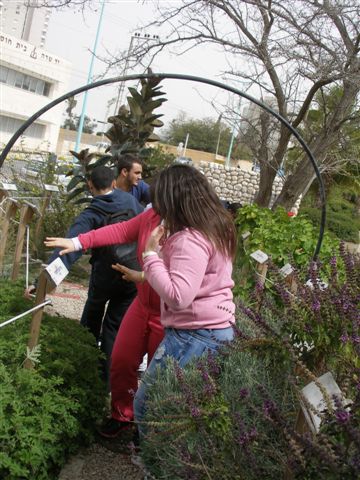 Community garden at the Center for the blind.
Averbouch said there are two basic types of community gardens available in Beersheva:
1. Gardens that are assigned only to a specific community, for example at the absorption center for new immigrants, which is open only to the centers’ residents.
2. Public community gardens, which anyone can join.
He also told me of another fascinating use – therapeutic community gardens, designed to assist people with a spectrum of disabilities via gardening.
One such therapeutic garden is located at the center for the blind and visually impaired, where a professional guide assists the residents as they carry out the work. This garden consists of specially selected plants: bristly plants and succulents, herbs and other strong-fragrant shrubs aimed at creating further stimuli of the touch and smell senses, while growing “green thumbs”.
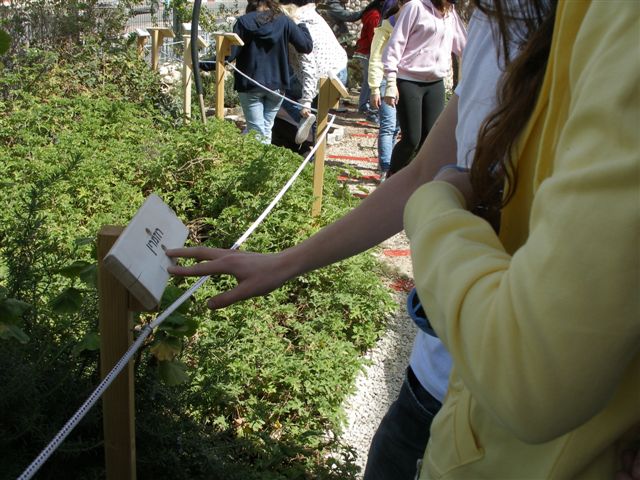 Community garden at the Center for the blind. Photo: Nitza Dahan
Averbouch supplies a current overview of the community gardens in the city, stating 19 gardens already established and attended to by the residents, while additional 4 groups are being formed these days by inhabitants wishing to create new gardens.
Most of the gardens are located at Beershevas’ older neighborhoods and Averbouch said one of the initial objectives he pursues is to improve the residents’ access to community gardens in other parts of the city, namely the newer neighborhoods.
Beersheva recently won the greenest municipality award, and it seems that the southern city has laid-out a plan, looking to render itself not only as greener but also as a community-oriented urban environment, promoting sustainable living. Let’s hope this lovely initiative will continue to grow.
Photos by Nitza Dahan




It’s hard to imagine anything more beautiful and profoundly basic than community gardens. It gives me hope for a possible human future.
Hi Elle, Thanks so much for your comment and practical advice!
I’m familiar with the use of strew and dry leaves etc to cover the ground in order to retain moist and conserve water – especially important in dry areas like Israel, but growing plants based on strew bales sounds like an interesting option, enabling it for small places too – do you have any photos you can send of this process? thanks again 🙂
It would be wise in this area to try growing food gardens in straw bales (not hay, straw). The technique is incredibly productive, water conservation minded and very easy. Straw is the stem left after gains crop seed heads are harvested. Straw is baled in the USA for animal bedding and garden cover, among other things. It takes up water during the conditioning process (18-days) before planting, retains it along with the necessary fertilizers and becomes the container for the crops. We live in a desert in New Mexico on top of almost solid rock. There is little soil. Bringing in proper soil for raised beds is quite expensive. Straw bales, although hard to find close by in our area, are inexpensive and can be set on top of anything, even asphalt. When the growing season is over, the bales have begun to turn to compost for next year. The system produces a wonderful closed system of return. The book to buy (in English) that will explain the step-by-step process is Straw Bale Gardens by Joel Karsten. He’s the American horticulturist who perfected the process. I’ve been very pleased.