
It Took 15 Years to Build This and That’s a Good Thing

Ne'ot Semadar, Kibbutz, green building, Negev Desert, Israel, Organic Agriculture, green architecture

Remember the good old days when it took decades to build major monuments? Historians estimate that 30 years passed before the back-breaking pyramids of Giza came to glory, for example, and more than a century after construction began in 1882, La Sagrada Familia in Barcelona is still not finished.

Although laborers might disagree, there’s something honest about the kind of construction that requires slow extraction, transportation and re-assembly of the earth’s materials – especially compared to our current obsession with erecting buildings as fast as possible. In China, a 15-story building was supposedly built in a record-breaking six days.

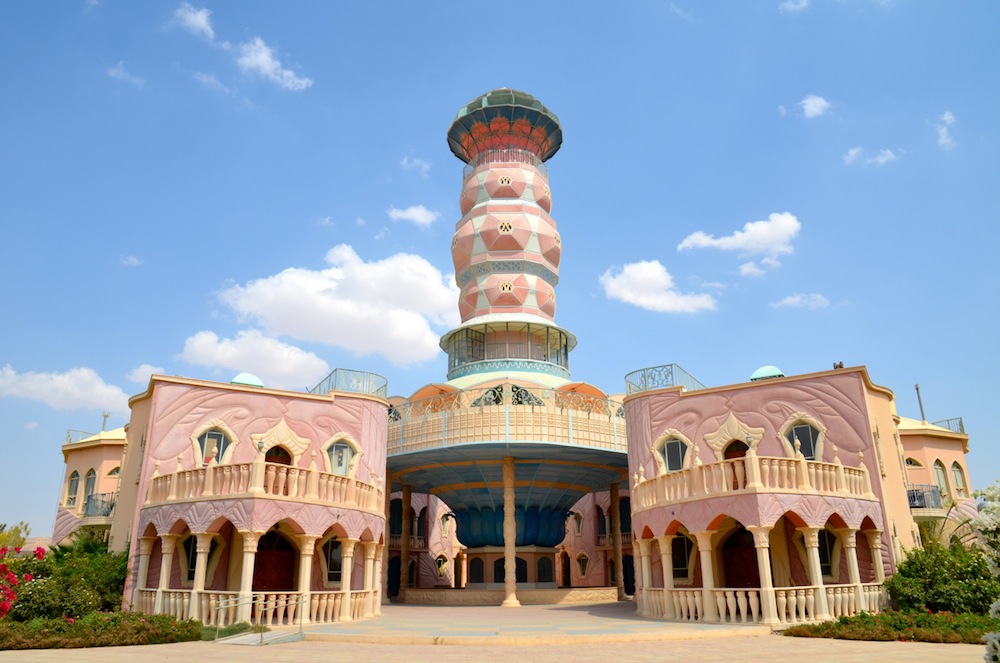
Fortunately, not all people are beguiled by speed. We recently visited the renowned Kibbutz Ne’ot Semadar and talked to one of its founders about their iconic, passively-cooled community arts center that took 15 long years to build. Step-by-step, a group of like-minded nature-lovers learned the skills necessary to construct a landmark, structurally-sound earth building in the heart of Israel’s Negev desert.

Ne'ot Semadar, Kibbutz, green building, Negev Desert, Israel, Organic Agriculture, green architecture

Our guide Dalit was one of the original six people who decided, 23 years ago, to close up shop in Jerusalem and build a sustainable, creative and conscious community in the middle of the desert. While such communities are increasingly common now, at the time this was a very bold move. And it wasn’t easy.

To begin with, the Israeli government wasn’t so keen on approving a building made of earth.

“At the time, adobe construction was not considered normal,” Dalit explained. “So we built the interior walls using earth and used concrete on the outside.”

Nobody knew how to build an earth building or grow food in the middle of nowhere, but the will to succeed was strong.

Ne'ot Semadar, Kibbutz, green building, Negev Desert, Israel, Organic Agriculture, green architecture

“It took two years just to learn how to build the floor,” said Dalit. While one can imagine that these were hard, hot and difficult years, our guide spoke wistfully about the spiritual benefits of this kind of cooperation.

“You learn how human beings an cooperate and you get to know your soul very deeply,” our guide told us. “At first we kept the glates closed, while we were still learning, but then we opened them to visitors. It’s very delicate here, so we had to prepare for them.”

Many of the members traveled far to learn about earth construction, including Egypt, and an engineer was brought in to ensure that the crafts center was strong.
Ne'ot Semadar, Kibbutz, green building, Negev Desert, Israel, Organic Agriculture, green architecture

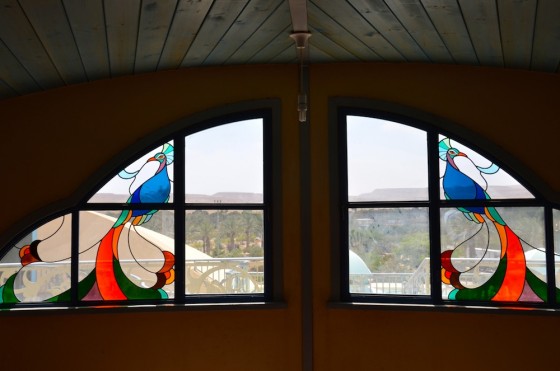
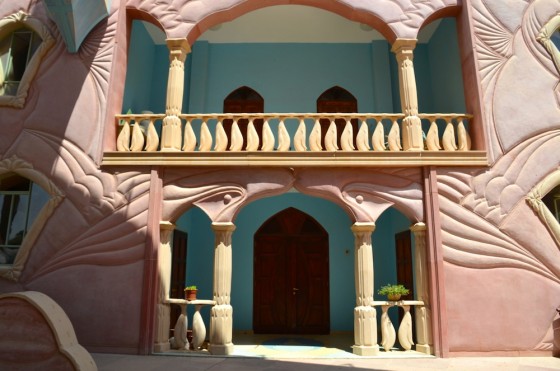
In addition to 40 cm thick adobe walls that provide excellent insulation and trap heat in cold winters, the building has a unique pastel-colored mosaic cladding that features penguins, peacocks, and other tributes to the natural world, along with a 46 meter tall wind tower that naturally cools the entire center.

Despite the hot desert sun, the temperature inside the building was very comfortable.

Almost all of the materials used for the structure were gathered locally and slowly. Inside the gallery there are images depicting how the team built mud bricks by hand. Dalit called the process primitive, but we call it sustainable.
Ne'ot Semadar, Kibbutz, green building, Negev Desert, Israel, Organic Agriculture, green architecture

“We each put our energy into the building. But in the end the energy of the building is larger than the sum of our energies. It has become the energy that moves us forward.”

For more information about Ne’ot Semadar, please visit their website. Visits can be arranged in advance and the nearby cafe sells and serves locally-grown organic food that will warm your heart and soul. All images via Tafline Laylin for Green Prophet.
Tafline Laylin
Tafline Laylinhttp://www.greenprophet.com
As a tour leader who led “eco-friendly” camping trips throughout North America, Tafline soon realized that she was instead leaving behind a trail of gas fumes, plastic bottles and Pringles. In fact, wherever she traveled – whether it was Viet Nam or South Africa or England – it became clear how inefficiently the mandate to re-think our consumer culture is reaching the general public. Born in Iran, raised in South Africa and the United States, she currently splits her time between Africa and the Middle East. Tafline can be reached at tafline (at) greenprophet (dot) com.

TRENDING

BM Studios is designing systems, not just buildings in the UAE

Balsam Madi is an architect and systems thinker whose work bridges culture, sustainability, and design intelligence across the Middle East and Europe.

How you create green steel on a blockchain

The thing about raw materials is that once they are melted down, you can't prove the source of the material. Same is true with gold, cucumbers and even forged products that look the same as the real thing. When it comes to steel, and how we produce it, it has a massive carbon problem. What's happening in Japan right now could change how we think about heavy industry and climate action.

New Discovery in the Negev Desert Sheds Light on How Climate Affects Earth’s Surface

The research reveals how climate fluctuations over the past 230,000 years have influenced the migration of drainage divides in the Negev Desert, shedding light on the dynamic relationship between climate and landscape evolution.

BIG Palliative Care: Denmark’s Nature and Spirituality in Dignified End-of-Life Care

Bjarke Ingels Group has won the competition to design the new Sankt Lukas Hospice and Lukashuset, a 8,500 m² palliative care center envisioned as a village nestled within nature. Building on the legacy of the Sankt Lukas Foundation, established in the 1930s, this project will significantly expand Denmark's palliative care capacity, tripling its current facilities to serve approximately 2,100 patients each year.

The Kibbutz Movement from Israel Revival

Want to learn about organic agriculture and how it's...

Turning Your Energy Consultancy into an LLC: 4 Legal Steps for Founders in Texas

If you are starting a renewable energy business in Texas, learn how to start an LLC by the books.

Tracking the Impacts of a Hydroelectric Dam Along the Tigris River

For the next two months, I'll be taking a break from my usual Green Prophet posts to report on a transnational environmental issue: the Ilısu Dam currently under construction in Turkey, and the ways it will transform life along the Tigris River.

6 Payment Processors With the Fastest Onboarding for SMBs

Get your SMB up and running fast with these 6 payment processors. Compare the quickest onboarding options to start accepting customer payments without delay.

Qatar’s climate hypocrisy rides the London Underground

Qatar remains a master of doublethink—burning gas by the megaton while selling “sustainability” to a world desperate for clean air. Wake up from your slumber people.

How Quality of Hire Shapes Modern Recruitment

A 2024 survey by Deloitte found that 76% of talent leaders now consider long-term retention and workforce contribution among their most important hiring success metrics—far surpassing time-to-fill or cost-per-hire. As the expectations for new hires deepen, companies must also confront the inherent challenges in redefining and accurately measuring hiring quality.

8 Team-Building Exercises to Start the Week Off 

Team building to change the world! The best renewable energy companies are ones that function.

Thank you, LinkedIn — and what your Jobs on the Rise report means for sustainable careers

While “green jobs” aren’t always labeled as such, many of the fastest-growing roles are directly enabling the energy transition, climate resilience, and lower-carbon systems: Number one on their list is Artificial Intelligence engineers. But what does that mean? Vibe coding Claude? 

Somali pirates steal oil tankers

The pirates often stage their heists out of Somalia, a lawless country, with a weak central government that is grappling with a violent Islamist insurgency. Using speedboats that swarm the targets, the machine-gun-toting pirates take control of merchant ships and then hold the vessels, crew and cargo for ransom.

Related Articles

Popular Categories