

 Lead and other pollutants are seeping into Israeli drinking water at alarming levels. Lutra numbers decimated; human health at risk.
Water pollution in Israeli lakes, streams and groundwater aquifers is reaching alarming levels. Although the country has regulations in place to prevent discharges, including a comprehensive Water Law, contamination is commonplace. And now scientists are finding that water quality problems threaten both wildlife and human health.
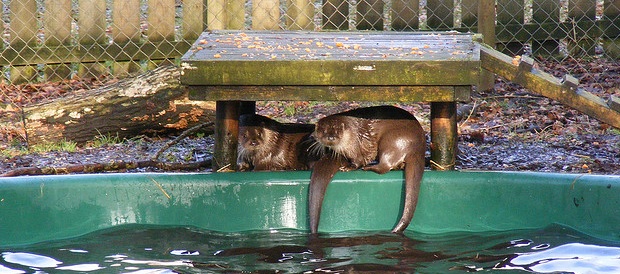
The lutra, a cousin of the otter found in lakes and rivers throughout Northern Israel, is in danger of extinction. Hunting is one of the threats to this fish-eating swamp dweller. Guest workers, mostly from Thailand, have been responsible for a great deal of lutra poaching. Arriving from areas in Southeast Asia where unrestricted wildlife trapping is the norm, these workers often clash with Israel’s stricter protections.
However, the more pervasive danger for the lutra is polluted water flowing through its habitat. In a recent study published in the Israeli journal Ecology & Environment, scientists reported that low water quality and lack of flow in the Jordan River has nearly wiped out the lutra south of Lake Kinneret (the Sea of Galilee). The population north of the lake is relatively stable, but its disappearance in other areas has shocked ecologists.
Additionally, industrial waste from factories in the Rotem Plain has been leaching into groundwater near Ein Bokek Nature Reserve for almost two decades. Ein Bokek is one of the most important reserves in Israel, hosting a myriad species of animals and plants.
Environmentalists filed a lawsuit shortly after the pollution was discovered. The Water Tribunal in Haifa eventually mediated a settlement agreement between NGOs, industrial facilities and the water company. Pursuant to that plan, the water company would pump out contaminated water and the Dead Sea Works would decontaminate it.
Despite this comprehensive treatment plan, however, Nature and Parks Authority ecologists Michael Blecher and Orna Blecher recently reported that the overall number of plant species in Ein Bokek is declining. They were particularly concerned about the disappearance of doellia bovei, a rare plant threatened with extinction.
Tests conducted by the Geological Survey of Israel determined that salinity levels are six times greater than before the industrial waste was discovered. But the companies and the Water Authority maintain they have executed their responsibilities as stipulated in the Water Tribunal agreement.
Finally, Israeli scientists recently presented findings that link pollution with autism. Diagnoses of the disorder have risen sharply in recent years. Scientists now believe that exposure to toxins such as lead, mercury and pesticides could account for 25 percent of that increase.
These pollutants are particularly dangerous for young children due to the way they alter brain development. According to Dr. Tamar Berman of Israel’s Health Ministry, two percent of drinking water samples exceed the maximum allowable levels of lead. Even this modest exceedance is dangerous due to lead’s serious impact on child development.
How has Israel’s water policy failed to prevent these problems? Lack of enforcement, sluggish political will and information gaps are the main culprits.
The country’s Clean Air Act came into effect last year. What about revamping the Water Law? Passed in 1959, this legislation needs to be updated to include proper contaminant classification, water quality guidelines that protect human health and the environment, and effective enforcement provisions. Such improvements could also reign in unchecked agricultural runoff and preserve the quality of Israel’s aquifers, which have suffered considerably in the last 50 years.
As for the embattled lutra, relief may be coming soon. The Environment Ministry has promised to release 1 billion cubic feet of water to restore the Jordan River in 2013. This influx of fresh water will help dilute sewage flows. Although environmentalists claim the amount falls short of a full restoration, it’s a good start. And it’s a step toward cleaner habitat for the lutra and other wildlife.
Image via zabdiel


Do anyone know the impacts of water pollution in Israel…?
Water pollution in Israeli lakes, streams and groundwater aquifers is reaching alarming levels. Although the country has regulations in place to prevent discharges, including a comprehensive Water Law, contamination is commonplace. And now scientists are finding that water quality problems threaten both wildlife and human health.
The lutra, a cousin of the otter found in lakes and rivers throughout Northern Israel, is in danger of extinction. Hunting is one of the threats to this fish-eating swamp dweller. Guest workers, mostly from Thailand, have been responsible for a great deal of lutra poaching. Arriving from areas in Southeast Asia where unrestricted wildlife trapping is the norm, these workers often clash with Israel’s stricter protections.
However, the more pervasive danger for the lutra is polluted water flowing through its habitat. In a recent study published in the Israeli journal Ecology & Environment, scientists reported that low water quality and lack of flow in the Jordan River has nearly wiped out the lutra south of Lake Kinneret (the Sea of Galilee). The population north of the lake is relatively stable, but its disappearance in other areas has shocked ecologists.
Additionally, industrial waste from factories in the Rotem Plain has been leaching into groundwater near Ein Bokek Nature Reserve for almost two decades. Ein Bokek is one of the most important reserves in Israel, hosting a myriad species of animals and plants.
Environmentalists filed a lawsuit shortly after the pollution was discovered. The Water Tribunal in Haifa eventually mediated a settlement agreement between NGOs, industrial facilities and the water company. Pursuant to that plan, the water company would pump out contaminated water and the Dead Sea Works would decontaminate it.
Despite this comprehensive treatment plan, however, Nature and Parks Authority ecologists Michael Blecher and Orna Blecher recently reported that the overall number of plant species in Ein Bokek is declining. They were particularly concerned about the disappearance of doellia bovei, a rare plant threatened with extinction.
Tests conducted by the Geological Survey of Israel determined that salinity levels are six times greater than before the industrial waste was discovered. But the companies and the Water Authority maintain they have executed their responsibilities as stipulated in the Water Tribunal agreement.
Finally, Israeli scientists recently presented findings that link pollution with autism. Diagnoses of the disorder have risen sharply in recent years. Scientists now believe that exposure to toxins such as lead, mercury and pesticides could account for 25 percent of that increase.
These pollutants are particularly dangerous for young children due to the way they alter brain development. According to Dr. Tamar Berman of Israel’s Health Ministry, two percent of drinking water samples exceed the maximum allowable levels of lead. Even this modest exceedance is dangerous due to lead’s serious impact on child development.
How has Israel’s water policy failed to prevent these problems? Lack of enforcement, sluggish political will and information gaps are the main culprits.
The country’s Clean Air Act came into effect last year. What about revamping the Water Law? Passed in 1959, this legislation needs to be updated to include proper contaminant classification, water quality guidelines that protect human health and the environment, and effective enforcement provisions. Such improvements could also reign in unchecked agricultural runoff and preserve the quality of Israel’s aquifers, which have suffered considerably in the last 50 years.
As for the embattled lutra, relief may be coming soon. The Environment Ministry has promised to release 1 billion cubic feet of water to restore the Jordan River in 2013. This influx of fresh water will help dilute sewage flows. Although environmentalists claim the amount falls short of a full restoration, it’s a good start. And it’s a step toward cleaner habitat for the lutra and other wildlife.
I don’t know as well
hi, would like to know if there is an ongoing survey of the pollution of the beaches/water in Israel?
thanks.
I’m not sure; you can probably contact the environment ministry to find out.