
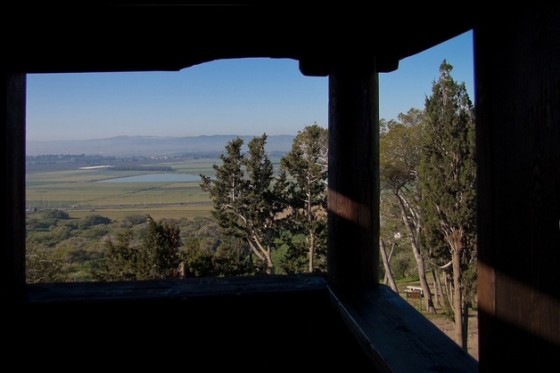
 A new international airport is slated to be built in Israel’s pastoral Jezreel Valley. Concerned activist Hadas Marcus explains why plans should be scrapped – for people and the birds.
Perhaps you are not aware of a major storm brewing, one that will affect many people living in Israel. Precious time is running out. If we act immediately maybe, just maybe we can halt the construction of an enormous airport in the Megiddo Junction of the Jezreel Valley. With the Hebrew holidays of Yom Kippur past and Sukkot in our midst, many Jews celebrate our ancient ties to ancient Israel. Nowhere are these bonds to the land more intimately felt than in the fertile Jezre’el Valley. Yet this tranquility may soon be eradicated by the constant blast of jet engines.
This month the Israeli government will allegedly make a final decision about constructing an enormous international airport next to the Megiddo Junction (known as the biblical Armageddon).
The Jezreel Valley has seen constant bloodshed for thousands of years between numerous different armies. Now another battle is raging between innocent citizens and the “powers that be,” as all protests fall on deaf ears.
If the proposal for this international airport is given a green light, it will lead to appalling detriment to the residents’ quality of life, and even greater damage to the environment as a whole. This airport could eradicate our rustic existence in ways that will soon become a worst-case scenario.
NATBAG 2, as it has been labeled, is to be constructed off the Kvish HaSargel in the same fields which attract thousands of visitors annually to see a stunning carpet of flowers. Besides the abundant flora here, literally millions of birds migrate through a bottleneck from one continent to the next. Planes and destroyed habitat will severely disrupt their migration routes. Human tragedies may also occur from collisions as documented by Dr. Yossi Leshem from Tel Aviv University.
I met with Azaria Alon, 93, the icon of environmental protection in Israel. He is the founder of the Society for the Protection of Nature in Israel (the SPNI) and has published countless volumes about nature. Alon is best known as a radio announcer on a weekly program on the Voice of Israel (Kol Israel). He was also the leader of a public protest against the building of NATBAG 2 that traveled in a motorcade last July throughout the designated area. As he explained to radio audiences regarding the airport (translation is mine):
“A landscape like this is a precious commodity in a densely populated, urban place like Israel. It blossomed slowly over a period of 100 years, since the founding of Kibbutz Merhavia, almost ninety years since “the Valley” was created with the vision of encompassing the area from Beit Alfa to Nahalal…This time, the objection to building an airport is not simply a matter of the “green” movement which supposedly wishes to obstruct any development or progress.
“All residents of the region, starting from the kibbutzim in the area and ending with the people of Afula see the construction of this airport as a disturbance which will cause only destruction… We can only hope that the rational mind and the economic costs in addition to the social protests will bring the decision-makers of this project to cancel this idea of an airport, and leave this tranquil Valley in peace.”
As someone with a lifelong commitment to environmental issues in Israel, I see this whole airport scheme as futile. To hear of these plans for this monstrosity close to my home is heart-wrenching.
Can we still halt the construction of the new airport in the North? Can this outrageous idea be transferred instead to the relatively uninhabited region of Nevatim, whose residents are in favor of an airport? Doesn’t it seem more feasible in the South, where it would cost less and do only a fraction of the environmental damage? While nearly all residents agree, unfortunately, the army does not approve of such a plan.
Miki Lifshitz , the Environmental Director for the Israeli Regional Councils created a Hebrew website called Amakim u’ Merhavim to convey this catastrophic plan to as many people as possible.
Concerned citizens should visit this website and are urged to write letters to the Ministry of Environmental Protection ([email protected]).
(This post was written by environmental activist Hadas Marcus [email protected]) Image via KKL