Make Moroccan Anise Flatbread

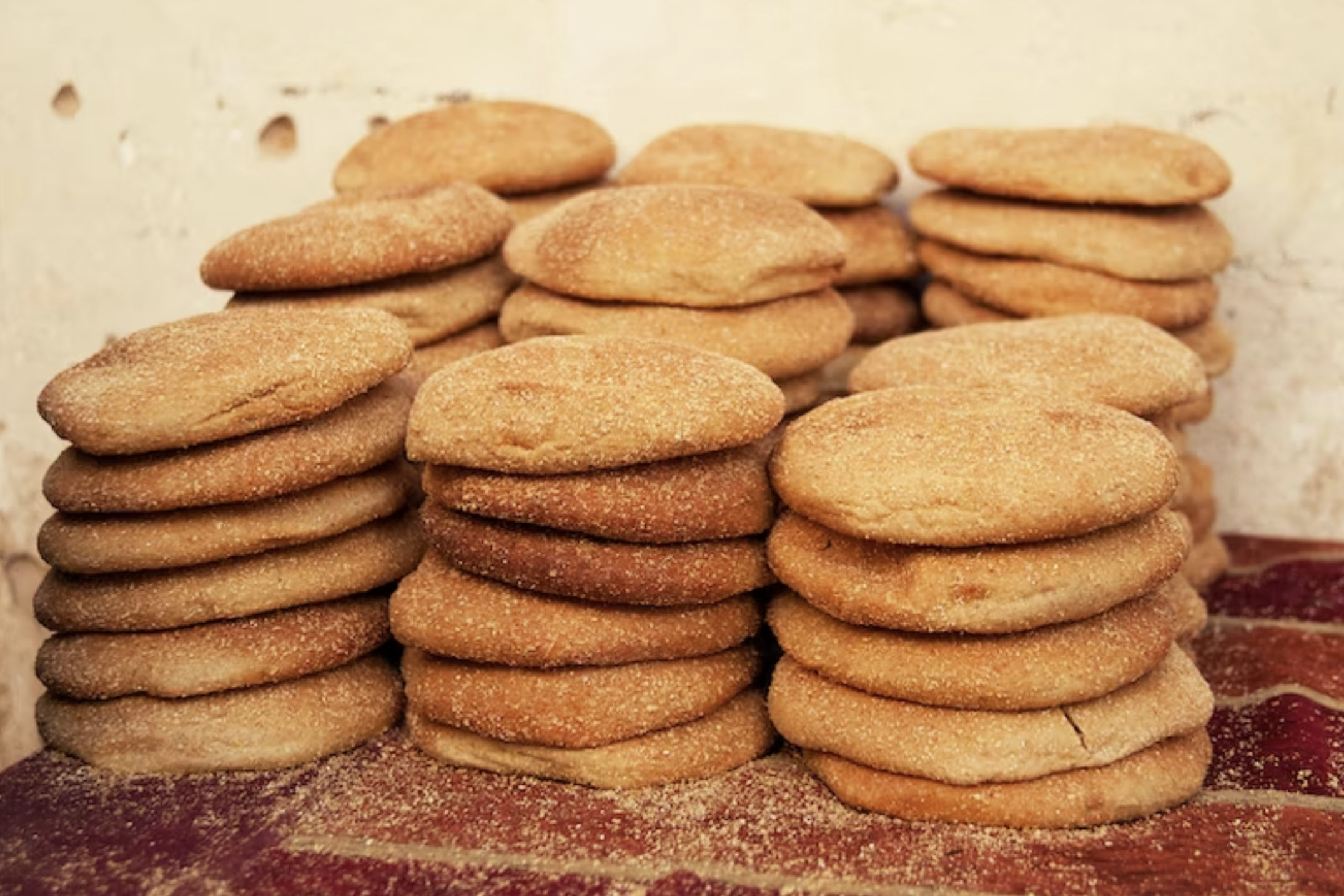
These warm, fragrant loaves bring Moroccan flavor to any meal.

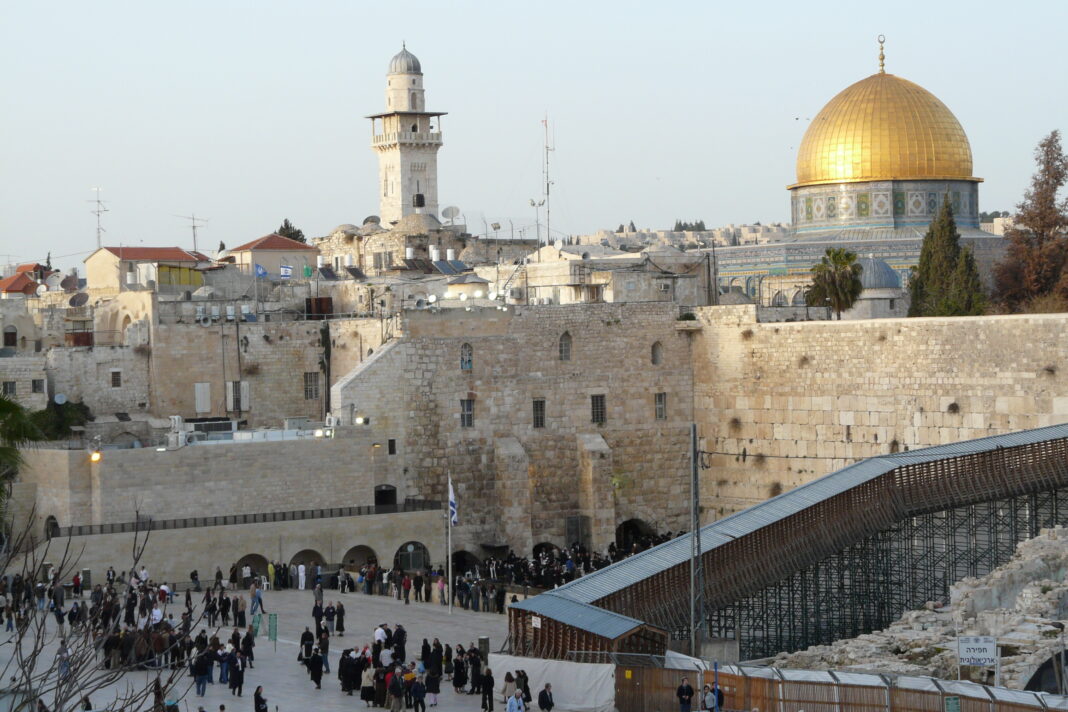
Karin’s stay in a beautiful eco-lodging high up in the Moroccan mountains, and Tafline’s intrepid hike up and down them, inspired me to find particularly Moroccan recipe. And I find that this flatbread, perfumed with anise and sesame seeds, puts dreams of Morocco in my head with every mouthful. Tear chunks off the warm loaves and eat it like that for maximum exotic-dreams effect.

Moroccan Anise Bread Recipe

Ingredients:

1 tablespoon active dry yeast or 1 cube fresh yeast

1- 1/3 cup warm water

1 teaspoon sugar or honey

1 tablespoon vegetable oil

2 1/2 teaspoons anise seeds

2 teaspoon salt

4 cups unbleached all-purpose flour

1 egg white, beaten with 1 teaspoon water

3 tablespoons sesame seeds

Semolina or corn meal for sprinkling on baking sheet

Dissolve the yeast in 1/4 cup of the water. Add the sugar or honey and let stand until foamy, 5 to 10 minutes.

Add the remaining water, oil, anise, salt, and 2 cups of the flour.

Gradually stir in the remaining flour until the mixture holds together. On a lightly floured surface, knead the dough until smooth and elastic, about 10 minutes.

Place in a greased bowl, turning to coat.

Cover loosely with a towel or plastic wrap and let rise at room temperature until double in bulk, about 1-1/2 hours.

Punch down the dough and divide in half. Shape each piece into a ball, cover, and let rest for about 10 minutes.

Grease the baking sheet and sprinkle it with semolina or corn meal. Place the rounds on the prepared baking sheet and with your palms, flatten each into a 9-inch disk. Cover, and let rise 30-40 minutes.

Preheat the oven to 400 degrees F – 220 C.

Prick the dough around the sides with the tines of a fork. Brush the tops
of the loaves with the egg white and lightly sprinkle with the sesame seeds.

Bake until golden brown and hollow-sounding when tapped, about 30 minutes.

Transfer to a wire rack to cool.

More breads to make you dream on Green Prophet:
 

Miriam Kresh
Miriam Kreshhttps://www.greenprophet.com/
Miriam Kresh is an American ex-pat living in Israel. Her love of Middle Eastern food evolved from close friendships with enthusiastic Moroccan, Tunisian and Turkish home cooks. She owns too many cookbooks and is always planning the next meal. Miriam can be reached at miriam (at) greenprophet (dot) com.

Hot this week

How Renewable Energy is Revolutionizing the Way We Power Our World

Solar has become the star of the transition thanks to modular hardware and straightforward installation. It fits dense cities and remote towns alike. Many companies are turning to rooftop arrays and carport systems - and exploring commercial solar installation as a practical way to lock in future savings.

How does one start prepping?

Faced with an extreme winter storm this year, Americans wonder how to be prepared for catastrophe. Miriam has lived through wars in the Middle East - so she's prepared on giving you a guide to prepping.

Fishermen sue tire manufacturers on behalf of the salmon

A federal trial in San Francisco has brought US tire manufacturers, fishing groups, and environmental scientists into court over a chemical most drivers have never heard of — but which scientists say may be silently reshaping aquatic ecosystems.

Listening to Water: Tarek Atoui’s Next Work for Tate Modern

Born in Beirut, Lebanon in 1980 and now living in Paris, Atoui has spent years building instruments that don’t sit comfortably in concert halls. Many of them involve water, glass, and ceramics — materials that react to sound instead of simply producing it.

Leading Through a Dual-Energy Transition: Balancing Decarbonisation with Energy Security

Experience in one area of the energy industry isn't enough to guarantee readiness across all the others. That's where a structured program like an MBA in energy can come in. Today's advanced curricula explore energy economics, finance, policy, and strategic management alongside the technical subjects. And when pursuing an energy MBA online, professionals can skill up and retrain without having to step out of the labor market -- an important perk at a time when skilled professionals are already in short supply.

Topics

How Renewable Energy is Revolutionizing the Way We Power Our World

Solar has become the star of the transition thanks to modular hardware and straightforward installation. It fits dense cities and remote towns alike. Many companies are turning to rooftop arrays and carport systems - and exploring commercial solar installation as a practical way to lock in future savings.

How does one start prepping?

Faced with an extreme winter storm this year, Americans wonder how to be prepared for catastrophe. Miriam has lived through wars in the Middle East - so she's prepared on giving you a guide to prepping.

Fishermen sue tire manufacturers on behalf of the salmon

A federal trial in San Francisco has brought US tire manufacturers, fishing groups, and environmental scientists into court over a chemical most drivers have never heard of — but which scientists say may be silently reshaping aquatic ecosystems.

Listening to Water: Tarek Atoui’s Next Work for Tate Modern

Born in Beirut, Lebanon in 1980 and now living in Paris, Atoui has spent years building instruments that don’t sit comfortably in concert halls. Many of them involve water, glass, and ceramics — materials that react to sound instead of simply producing it.

Leading Through a Dual-Energy Transition: Balancing Decarbonisation with Energy Security

Experience in one area of the energy industry isn't enough to guarantee readiness across all the others. That's where a structured program like an MBA in energy can come in. Today's advanced curricula explore energy economics, finance, policy, and strategic management alongside the technical subjects. And when pursuing an energy MBA online, professionals can skill up and retrain without having to step out of the labor market -- an important perk at a time when skilled professionals are already in short supply.

From Green Energy to Healthy Societies: Why old systems thinking is becoming relevant again

Across the Middle East and North Africa, large investments are being made in green hydrogen, renewable energy, water infrastructure and sustainability. Most of these efforts are discussed in the context of climate change, decarbonization and economic diversification. That framing is important, but it may not capture their full value.

We saw peace – an interreligious encounter deep in our eyes

They came from Israel, Palestine, Jordan, Iraq, Yemen, Morocco, Tunisia, Lebanon, Egypt… There are Sunni Muslims, Shiite Muslims, Jews (Orthodox and Reform), Orthodox Christians, Coptic Christians, Protestant Christians, Druze, Baha'is, a Scientologist.

Can biochar reduce ‘Forever Chemicals’ in food if it’s used in farms?

Biochar is produced by heating organic material in a low-oxygen environment so it does not burn. This process, known as pyrolysis, transforms plant matter into a stable, carbon-rich material.

Related Articles

Popular Categories