
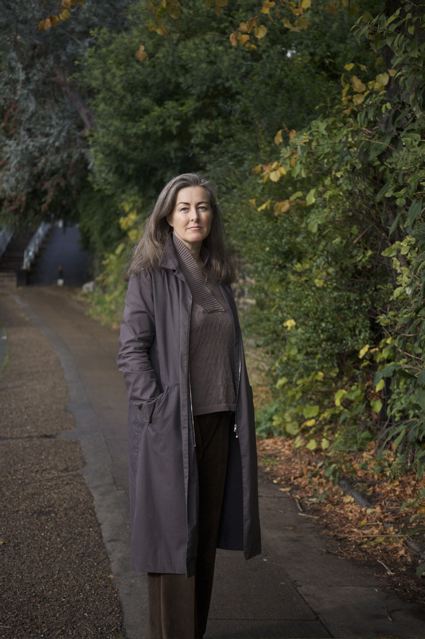

 Arwa speaks to environmental lawyer Polly Higgins about ‘Ecocide’, corporate eco-destruction, water scarcity and why we shouldn’t give up on climate summits just yet
Polly Higgins is a lawyer on a mission to bring serious environmental destruction to an end. Whilst this may seem ambitious, she insists that using the legal system to outlaw environmental crimes can make a real difference.
Voted by the Ecologist as one of the ‘World’s Top 10 Visionary Thinkers’, she has submitted a proposal to the United Nations to make the crime of ‘Ecocide’- or extensive environmental destruction- the 5th Crime Against Peace alongside genocide, war crimes, crimes against humanity and crimes of aggression.
I spoke to Polly, who recently published her book ‘Eradicating Ecocide’, to find out more.
Arwa Aburawa: You define ecocide as ‘the extensive destruction, damage to or loss of ecosystem(s) of a given territory, whether by human agency or by other causes, to such an extent that that peaceful enjoyment by the inhabitants of that territory has been severely diminished’. As such, you state that that ecocide like genocide and crimes against humanity are crimes against peace. In what ways does environmental destruction threaten the peace of the planet?
Polly Higgins: The way I see it is that we have a cycle of destruction involved here. We destroy, damage the planet and cause systems to break down- as a result of that we cause the depletion of our own resources. That damage or destruction is ‘Ecocide’ because when we deplete our resources we end up in conflict, literally at war, over what little is left and we know that’s happening already. Darfur was a war over water, Iraq was a war over oil and we know that we are looking at peak oil. Oil is now getting increasingly difficult to extract which is why we have to drill down two miles underwater to get to it- it’s no longer a matter of drilling twenty metres on land and it spurts back out. The reason we call the extraction of oil at the Athabasca oil sands unconventional is because it’s very destructive, five time more energy intensive, five time carbon intensive. So, what we have is a hermetically sealed cycle of destruction, where the destruction leads to loss (which is ecocide), the loss leads to conflict which leads to war and so we spiral out of control very quickly.
We have to break that cycle, it’s not a matter of slowing down that cycle it’s a matter of stopping it altogether. So, I see ‘ecocide’ as a crime against peace literally because we are seeing the planet as a thing that we commoditize and when you commoditize something you use and abuse it without consequence. It’s what all these climate meeting have been based on- creating markets and economies which of course, just adds to the problem and facilitate more damage and destruction. So, rather than seeing the planet as thing we need to see it a living being because once we view it as a living thing, then we recognise it’s intrinsic value and start taking responsibility.
Arwa: Some people are dubious about whether changing the law will actually translate into real change on the ground. Do you think that outlawing ecocide will really alter the way that the planet is treated?
Polly: Sure, it’s not going to stop overnight. The reason we need to make it a crime is to create what is known in the legal world as pre-emptive obligation, so you think before you act. This puts a legal duty of care on corporations who are creating ‘ascertainable ecocide’, which is where you can say that directly because of that action you are causing this damage. So, what I call corporate ecocide is the damage and destruction which is caused by corporate activity- they don’t intend to, they don’t sit around and say what are going to destroy today but it is a consequence of their actions. In fact, it caused by their drive for gain and profit at any price to the planet. And we have to close that door and the only we can do that is through the law. If we don’t use the law, then they will continue as they are and keep destroying the planet. We have to close the door to dirty energy companies who are facilitating the use of fossil fuels, who are mining, cutting down tress which is extracting resources from the planet- we have to stop these extractive businesses and they won’t stop unless the eco-legislation makes them.
 Now, the beauty of ecocide is that it is obvious. You can put into google earth ‘the Amazon’ and we can see which bits have been destroyed so it’s a lot easier to police in a lot of ways compared to genocide where the killing of thousands of people can be hidden. So, it’s about closing that door so that when dirty energy companies are making their decisions they take environmental protection seriously because they could face prison sentences. It’s about making ecocide a crime because at the moment it’s not criminal- it’s the norm, it’s accepted and actually it’s sanctioned by the state. Genocide was sanctioned by the German state until it was made a crime and we’ve managed to close that door. That’s not to say that genocide doesn’t happen anymore but a heck of a lot more is stopped as a result. One of our biggest problems was that although it had become a crime we didn’t have a criminal court. After the Nuremberg Trials which only dealt with crimes during world war two, there was a sixty year hiatus where we had no international criminal court and that only changed in 2002. The first case was in 2006, so we’ve only have four years and yet we’ve already seen a massive drop in genocide rates.
Also we already have a lot of the hardware in place. We have the United Nations which deals with international law, the International Criminal Court where people can be tried and international climate negotiations where we can put these ideas forward. At the moment what we’re doing is using the wrong hardware such as the REDD+ system which is all about creating markets and profiteering from forests and ultimately we have to ask ‘whose interests are protected here?’ By putting that in place we’re protecting corporate interest, it’s not protecting indigenous people who live in these places and forests. So it’s about stopping these mechanisms which don’t solve the problem and putting in place the rights of mother earth, outlawing ecocide and setting up an environmental court.
Arwa: In the Middle East, water scarcity is a real issue. How would making environmental destruction a crime against peace help resolve issues such as water shortage?
Polly: One of the biggest causes of water scarcity is how water is used within industry, so making corporate ecocide illegal is about closing the door for industry abusing water supplies. I’ve seen water poverty maps for Africa and the Middle East and most of the water poverty that we see has evolved over the last twenty years and that’s driven purely by corporate activities. It’s also caused by using water to support a modern way of living rather than understanding that when we take water out we need to put water back in. A very interesting example where people are putting back into nature successfully is in China where the Chinese government decided to restore the green wilderness of the Loess plateau. They set themselves the task of restoring one of the most decimated areas of land on the planet into a green oasis within a period of three years and they did it! The area is the size of England and Wales put together and would take around an hour to fly over.
They basically divided higher zones, which were harder to get to into ecological zones and the lower ones into agricultural zones, and got the locals to buy into the idea by giving them tenure-ship of the land. So it was for them to take forward but they first needed them to be the green army, to go up into these areas and to plant plants and grass. So they spent a couple of years doing that and then they left it to mother nature and what it created was a huge canopy of trees and leaves. So when there was heavy rain instead of it washing away the sand, it was soaked up by the planets and supplied a steady water supply to the agricultural areas. Last year they had their worst ever drought in China and the Loess plateau was feeding other areas- so we can create green oasis, we can give back to nature.
Arwa: Having ecocide recognised as a crime against peace is about taking action on a global scale. What opportunities do you think people have on a more local scale to make a difference where they live?
Polly: Local action is really important because of course little ecocides do happen and it’s not just about massive scale destruction. It’s also about asking the very important and powerful question about whose interest we’re protecting. The current Ratcliffe trail in the UK where twenty activists were taken to court just for planning to close down Ratcliffe-on-Soar coal power station is a very interesting example of the need to ask ‘whose interest were protecting by criminalising their activity?’ What the activists were trying to do is highlight the creation of excessive carbon emissions by the power station which is threatening our lives; so whose interests are protected by the UK’s legal system? Well clearly it’s corporate interests that are protected as it’s those twenty activists who have been criminally prosecuted. So, it’s a crucial question to ask yourself whose interests are being protected in any given situation: corporate, governmental, peoples or planet. And it’s very easy to see that it’s usually corporate interest that are being served and not the people or the planet.
As for supporting ecocide, people can help by using the word and getting it out there in the language. What the indigenous people say is ’embrace the shadow self’, which is about giving a name to the dark side. After world war two that’s what we had to do, we had to give a name to the atrocities – genocide- because we didn’t have a word for it until then and then we had to make the laws to stop it from happening again.
Arwa: You’ve talked about the fact that in a lot of situations it is corporate interests that are being served but what are the biggest obstacles you’ve faced in trying to make ecocide illegal?
Polly: Lack of political will. It’s really about us taking action and no matter how small it is it will make a difference- using a word, passing on a link, sending a letter to your local politician. There is even this guy who sang a song about ecocide on youtube whilst another made a video about ecocide which is on our own website. It about using whatever skills you have, awakening to it and saying ‘hey, we need to put this system into place’. This isn’t about hanging CEO’s up to dry, it’s about turning a problem into a solution. I want CEO’s of dirty energy companies to become clean energy companies because that’s what we need- we need the biggest green revolution to create enough green jobs. And corporations do work quite well with the law because when you shut one door it makes them go another way and then they shout for subsidies to help them make it work. For instance, fossil fuels are subsidized to the tune of $350 billion dollars- that’s huge! If that was to go into renewable energy it would make a huge difference.
Arwa: You attended the recent Cancun climate summit which was widely condemned as a failure. Do you think that something has to change for a fair and binding climate agreement to be reached?
Polly: Absolutely, something needs to change. It’s become patently obvious that these summits are not working but they do serve a purpose. Once a year, all the heads of state or their representatives meet to talk about this issue so we have a huge, golden opportunity each year for people to put forward big ideas to deal with climate change. It’s also important to encourage civil engagement because after Copenhagen a lot people gave up but to give up is actually to be complicit as it’s incumbent upon us if we care to be stand up and be counted. We need to call on our government to stand up and do something now- not in twenty years time, not in fifty years but right now.
For more visionary green activists see:
Interview: Bracing For A Warmer Future With Bill McKibben
Interivew: The ‘Moneyless Man’ Talks About The Middle East
From Rockstars To Recycling: Meet Kristiane Backer An Eco-Muslimah
Top image credit Jamie Harris


Hi Diane,
The best place to start would probably be the Ecocide site http://www.thisisecocide.com/ which has campaign information as well as more information on the campaign
Happy campaigning!
I would like to campaign to make ecocide a recognised crime. Can you please advise me how to do this? Do I organise mass lobbying of MPs? Please let me know what kind of a toolkit I need.