If Homo Sapiens Want A Home, They’re Gonna Need Some Biodiversity First

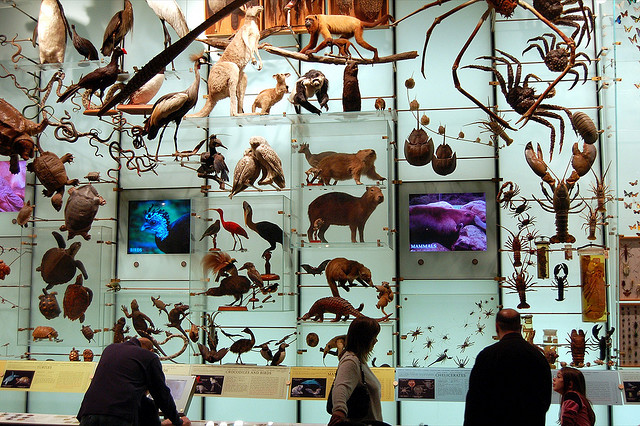
biodiversity-numerous-speciesIf our leaders don’t get their hands dirty and effect real plans to protect biodiversity, we stand to lose the land we live on

We have begun to reach the climatic “tipping points” environmentalists worry so much about – the point where the glass of (camel) milk is leaning, leaning and it hasn’t leaned so far that the milk has leaked out but then boom, the glass falls over, milk splatters everywhere, and someone has to come in to mop it up. The United Nations (UN) looks to the dismal health of the Amazon forest, certain freshwater lakes, and coral reef ecosystems like the Red Sea for signs that unless our leaders implement schemes that protect biodiversity more urgently, humanity is going to shed some serious tears.   

So what is biodiversity?

According to the UN, which will convene in 10 days to discuss the efficacy of the International Year of Biodiversity campaign, biodiversity includes: diversity of species, diversity within species, and diversity of ecosystems.

The more variety of grain and vegetables and fish we have to eat, the more likely we are to survive. But our survival depends on the ability of other species along the food chain to survive as well. Just as we need a variety of foods to survive, so do other species.

Genetic diversity within species is the reason you aren’t allowed to marry your relatives. Whereas a lack of genetic diversity leads to increased vulnerability to disease and in-breeding, the opposite makes species more adaptable to change and facilitates evolution, also necessary for survival.

Ecosystem diversity refers to the different kinds of ecosystems that each play their own complicated, intertwined role: wetlands, for example, keep our lakes clean, while forests and the ocean are “carbon sinks.” Each ecosystem represents a planetary limb. If we cut off all our legs and arms, we’ll have a hard time keeping up with all of nature’s work.

Habitat change, over-exploitation of resources, pollution, invasive species, and climate change are the five major pressures the UN believes are driving biodiversity loss.

Following are four conclusions among several derived from the UN’s 2005 Millennium Ecosystem Assessment:

  • The ability of the planet’s ecosystems to sustain future generations can no longer be taken for granted
  • Human actions are depleting the earth’s natural capital
  • Because of human actions, species are being lost at a rate of 100 x the natural rate of extinction
  • In the past century, 35 per cent of mangroves, 40 per cent of forests and 50 per cent of wetlands have been lost

The possibility that we can reverse these problems within the next 50 years exists because of universities in the Middle East that are going green with gusto, conservationists that work in heinous conditions, organizations such as FoEME that keep an eye on our rivers, and companies that invest in clean technology. It’s now time for our leaders to get their hands dirty, risk their political careers, cap carbons, and stop polluters dead in their tracks.

And they have to mean it, otherwise the land as homo sapiens have known it could be rendered unlivable.

:: image via Dano

Good News From the Middle East:
Too Hot To Handle? Mammals Scatter Pests With Their Breath

Organic Farms Growing in Dubai

World Breastfeeding Week Focuses on “Baby-Friendly” Policies

Tafline Laylin
Tafline Laylinhttp://www.greenprophet.com
As a tour leader who led “eco-friendly” camping trips throughout North America, Tafline soon realized that she was instead leaving behind a trail of gas fumes, plastic bottles and Pringles. In fact, wherever she traveled – whether it was Viet Nam or South Africa or England – it became clear how inefficiently the mandate to re-think our consumer culture is reaching the general public. Born in Iran, raised in South Africa and the United States, she currently splits her time between Africa and the Middle East. Tafline can be reached at tafline (at) greenprophet (dot) com.
2 COMMENTS

LEAVE A REPLY

Please enter your comment!
Please enter your name here

TRENDING

Ethiopians are Looking to Somaliland for Red Sea Access as Global Powers Move In

Somaliland, for its part, has operated as a de facto independent state since 1991. It has its own government, elections, currency, and security forces. It’s often described as one of the more stable and democratic political systems in the region, despite never being formally recognized internationally. 

Peace hospital opens between Jordan and Israel

The proposed medical centre, described by Emek HaMaayanot Regional Council head Itamar Matiash as “a centre for cancer treatment, so that people from Jordan or further away could come and receive treatment,” would become the flagship of a wider cluster of medical, academic and innovation-based services planned for the Israeli half of the zone.

Benban solar in Egypt and the companies that make the energy shine

Benban isn’t a single solar plant at all, but a collection of 41 facilities, each developed by different companies but connected through shared infrastructure. This structure is what makes Benban unique: dozens of developers working like nodes in a vast energy network, each feeding electricity into shared substations and Egypt’s national grid.

OECD: Renewable Energy Expansion Must Avoid New Ecological Trade-Offs

Overall, links between climate change and biodiversity are relatively well covered in national strategies, but the relationships involving pollution — including how climate and biodiversity pressures heighten pollution risks — are often missing. Policies designed to explicitly manage trade-offs, especially around pollution, remain limited.

Musk’s Saudi Mega-Data Center Signals a Desert Arms Race for AI

For now, Musk’s partnership signals a deepening alignment between Silicon Valley and Riyadh — and a new chapter in the Middle East’s data-powered future. The satellites and robots may come later. The energy footprint, however, is already here.

Qatar’s climate hypocrisy rides the London Underground

Qatar remains a master of doublethink—burning gas by the megaton while selling “sustainability” to a world desperate for clean air. Wake up from your slumber people.

How Quality of Hire Shapes Modern Recruitment

A 2024 survey by Deloitte found that 76% of talent leaders now consider long-term retention and workforce contribution among their most important hiring success metrics—far surpassing time-to-fill or cost-per-hire. As the expectations for new hires deepen, companies must also confront the inherent challenges in redefining and accurately measuring hiring quality.

8 Team-Building Exercises to Start the Week Off 

Team building to change the world! The best renewable energy companies are ones that function.

Thank you, LinkedIn — and what your Jobs on the Rise report means for sustainable careers

While “green jobs” aren’t always labeled as such, many of the fastest-growing roles are directly enabling the energy transition, climate resilience, and lower-carbon systems: Number one on their list is Artificial Intelligence engineers. But what does that mean? Vibe coding Claude? 

Somali pirates steal oil tankers

The pirates often stage their heists out of Somalia, a lawless country, with a weak central government that is grappling with a violent Islamist insurgency. Using speedboats that swarm the targets, the machine-gun-toting pirates take control of merchant ships and then hold the vessels, crew and cargo for ransom.

Leopoldo Alejandro Betancourt López Turned Ocean Plastic Into Profitable Sunglasses

Few fashion accessories carry the environmental burden of sunglasses. Most frames are constructed from petroleum-based plastics and acrylic polymers that linger in landfills for centuries, shedding microplastics into soil and waterways long after they've been discarded. Leopoldo Alejandro Betancourt López, president of the Spanish eyewear brand Hawkers, saw this problem differently than most industry executives.

Why Dr. Tony Jacob Sees Texas Business Egos as Warning Signs

Everything's bigger in Texas. Except business egos.  Dr. Tony Jacob figured...

Israel and America Sign Renewable Energy Cooperation Deal

Other announcements made at the conference include the Timna Renewable Energy Park, which will be a center for R&D, and the AORA Solar Thermal Module at Kibbutz Samar, the world's first commercial hybrid solar gas-turbine power plant that is already nearing completion. Solel Solar Systems announced it was beginning construction of a 50 MW solar field in Lebrija, Spain, and Brightsource Energy made a pre-conference announcement that it had inked the world's largest solar deal to date with Southern California Edison (SCE).

Related Articles

Popular Categories