Honey Is Bittersweet In The Middle East

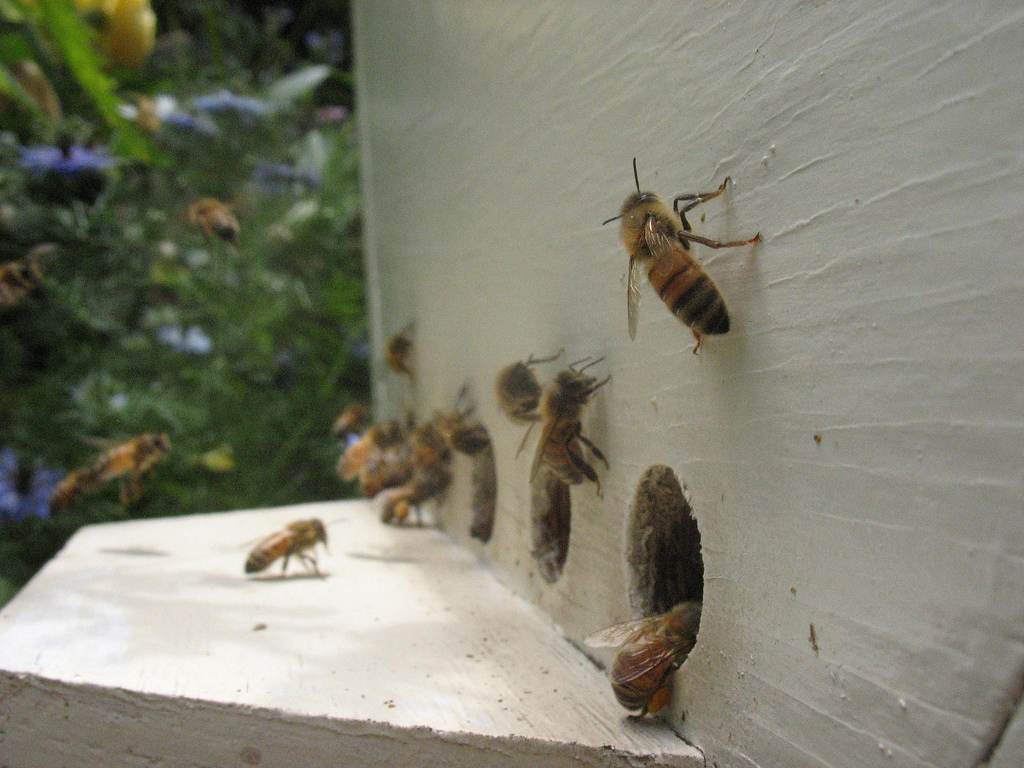
apiary beehive israel lebanonThe Honey Council, Hive Thievery and Bee Ecology education in Arabic:  In Israel and Lebanon, honey is both a problem and a solution. Image via orinrobertjohn

Archeologists have uncovered beehives in northern Israel that date back 3 000 years.  A courtyard in the  ancient city of Rehov was home to bees producing honey in at least 30, possibly as many as 100, hives. The discovery firmly establishes the fact that beekeeping was known and practiced here in the Middle East since Biblical times. Honey and beeswax, precious commodities then, are still valuable crops. You would think that everyone’s gotten used to the routine by now.

Yet the word “honey” leaves a bitter taste in many Israeli mouths. The Israel Honey Council backs claims made by  beekeepers who say that thieves carry night-time raids on unguarded orchards, stealing hundreds of hives yearly and selling them to contacts in Palestinian Authority territory.

Local courts take hive theft lightly, often releasing thieves the same day they’re arrested. The Honey Council’s deputy manager, Shimon Erlinger, told Green Prophet:

“The courts don’t understand the consequences of hive theft. It’s not only the farmer who suffers loss. Fruit crops diminish when the trees aren’t pollinated. Avocados, for example, depend entirely on pollination. No bees, no fruit.”

It seems that some judges need to become educated in the importance of bees to the ecology.

In Lebanon, though, honey and beekeeping are a positive note. The Daily Star reports that children in ten Lebanese schools study the importance of honey and beekeeping for the environment and the economy.

The project is sponsored by the Lebanese Association for Forests, Development and Conservation. In another progressive step, the Unity and Co-operation for the Development of Peoples organization from Italy hopes to launch a project to educate Lebanese farmers and beekeepers about the harm done to bees by pesticides.

Sustainable agriculture and conservation in the Middle East. In Hebrew, in Arabic. It takes educating adults and children to make it happen.

More on honey and bees:
Urban Beekeeping Keeps NYC Green
An Israeli Cure for Bee-Colony Virus

Miriam Kresh
Miriam Kreshhttps://www.greenprophet.com/
Miriam Kresh is an American ex-pat living in Israel. Her love of Middle Eastern food evolved from close friendships with enthusiastic Moroccan, Tunisian and Turkish home cooks. She owns too many cookbooks and is always planning the next meal. Miriam can be reached at miriam (at) greenprophet (dot) com.

TRENDING

Eco organization offices destroyed by Iran missile

Tel Aviv's eco organization, the Heschel Center, was impacted by an Iranian missile.

What are AWG air-water generators, and why they aren’t a golden-bullet solution (yet)

Atmospheric water generators (AWGs) sound like magic: machines that can pull drinking water out of air. The idea is mentioned in the Bible, where the elders would pray for water collected as dew on plants and the catch on turning this into a machine is in the physics. To turn invisible vapor into liquid, you must remove heat, especially the latent heat of condensation.

Jordan’s $6 Billion Aqaba–Amman Desalination Project from the Red Sea Moves Forward

In 2025, the Jordanian government signed agreements with a consortium led by Meridiam and SUEZ, alongside VINCI Construction and Orascom Construction. Under a 30-year concession agreement, the consortium will design, build, finance, operate, and maintain the system before transferring it back to the Jordanian government. The total investment is estimated at approximately $6 billion USD.

The Saudi Startup Turning Desalination’s Toxic Waste Into Its Own Disinfectant

For millennia, the Middle East's water crisis seemed an immutable fact of geography — a region defined as much by what it lacked as by what lay beneath its sands. Today, a convergence of plummeting solar costs, advancing membrane technology, and hard-won engineering expertise is rewriting that story.

Earth building with Dead Sea salt bricks

Researchers develop a brick made largely from recycled Dead Sea salt—offering a potential alternative to carbon-intensive cement.

Should You Invest in the Private Market?

startustartup Unlike public stock exchanges, which offer daily trading, strict...

How to build a 100-year-company

Kongō Gumi is a Japanese construction company, purportedly founded in 578 A.D., making it the world's oldest documented company. What can we learn about building sustainable businesses from them?

From Pilot Plant to Global Stage: How Aduro Clean Technologies’ 2026 Expansion Signals a Turning Point for Chemical Recycling Investors Like Yazan Al Homsi

The company's Next Generation Process (NGP) Pilot Plant in London, Ontario, has officially moved into initial operating campaigns, generating the kind of structured, repeatable data that separates laboratory promise from commercial viability.

How AI Helps SaaS Companies Reduce Repetitive Customer Support Work

SaaS products are designed for large numbers of users with different levels of experience, and also in renewable energy.

Pulling Water from the Air

Faced with water shortage in Amman, Laurie digs up...

Turning Your Energy Consultancy into an LLC: 4 Legal Steps for Founders in Texas

If you are starting a renewable energy business in Texas, learn how to start an LLC by the books.

Tracking the Impacts of a Hydroelectric Dam Along the Tigris River

For the next two months, I'll be taking a break from my usual Green Prophet posts to report on a transnational environmental issue: the Ilısu Dam currently under construction in Turkey, and the ways it will transform life along the Tigris River.

6 Payment Processors With the Fastest Onboarding for SMBs

Get your SMB up and running fast with these 6 payment processors. Compare the quickest onboarding options to start accepting customer payments without delay.

Related Articles

Popular Categories