Israel Camel Racing May Suffer for Lack of Humps

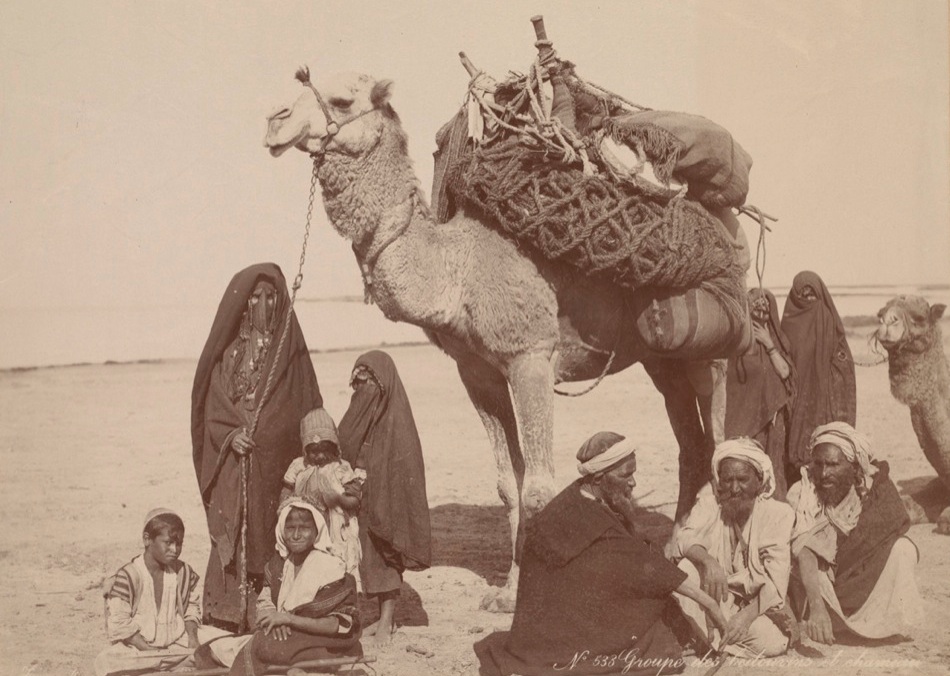
In Israel Bedouin still joke about the value of a woman “in the price of camels.” Now two Jewish Israelis have joined the tribe, and are looking to save the last of these Mohicans.

Camel racing is still a very popular sport in many parts of the Middle East, despite its reputation involved in child abuse and other non-green activities. Green Prophet covered this subject in February, noting that rich people in countries like Abu Dhabi, often pay thousands of dollars for racing camels and that small children are taught to race them at an early age.

Now this sport may soon be reality in Israel as well; according to an Los Angeles Times article about a couple of Israeli filmmakers, Ezry Keydar and Nadav Ben Israel who are making a documentary  movie about Bedouins who own Israel’s remaining camel herds. These two are entertaining the idea of racing these “ships of the desert” at an uncompleted airstrip outside the Negev city of Mitzpeh Ramon.

Most of the article deals with the plight of Israel’s camel population, now down to about 3,500 animals; as well as the Bedouins who still keep these animals and are now finding it harder to do so due to lack of natural grasslands in Israel arid regions and the high price of purchasing fodder.

The Bedouins themselves are a neglected element of Israeli society with the a severe lack of running water, sewage systems and other things that other segments of Israel’s population take for granted.

Since the Bedouin are the keepers of a camel herd population that once numbered into the tens of thousands, Keydar and Ben Israel will most likely enlist Bedouins to provide not only the racing stock but the riders or jockeys as well; which probably has resulted in the significance of the term “camel jockey” in reference to the romance place around the indigenous desert populations who in the past relied on these animals as beasts of burden, meat and dairy products, and even for the clothing they wear and tents they used (and sometimes still do) live in.

Referring back to our earlier article, in which wealthy people in UAE states pay large sums of money for pedigree breeding and racing camels, it’s not likely that the ones found in Israel’s Negev desert regions are of the same quality as those that wealthy camel fanciers in Abu Dhabi pay a small fortune for. The one comparison that might be made would be regarding who will ride these “splendid  beasts” as Lawrence of Arabia once noted them to be.

Nowadays oil trading rich people in the Middle East pay much for luxury cars, like gold plated Mercedes Benzes than they do for camels. And even in places like Abu Dhabi, the noble Dromedary racing camel may one day be only a nostalgic memory.

Over in Israel it’s debatable if Israel’s Bedouin population will do that much to restore their national pride as their nomadic way of life is quickly drifting into the sands of history, being replaced with more town life in large settlements like Rahat in the Northern Negev

who have also adopted many of the bad traits of living in towns such as piling up trash or disposing it in wadis (dry creek beds), as well as leaving their former occupations as herdsmen and farmers for  more lucrative ones like smuggling drugs and other illegal commodities into Israel.

As for camel racing, it may already be too late for this sport to catch on in modern Israel, but here’s what the Israeli filmmakers say:

Our choice of topic is not accidental. We see these people as the last of the Mohicans — they represent a vanishing culture.

Sadly, Israel is working systematically to push this culture and its symbols into extinction. It won’t recognize camels as an agricultural sector and won’t allocate grazing lands. Commercial feed is expensive, and many Bedouins are forced to give up camels. Israel is successfully eliminating a symbol of culture. And when you kill a symbol, the culture dies with it.

We see great value in preserving this culture — not in a museum, but as a way of life. We want to see Bedouins continuing to live as people of the desert, and this is increasingly less possible. We do not want them to vanish from our landscape.

::LA Times article

Read more about Bedouins and Camels:

Abu Dhabi Millionaires Pay Big Bucks for Camels

Meet Ahmed Amrani: the Green Bedouin

Ben Gurion University Makes Green Plan for Bedouin City of Rahat

Maurice Picow
Maurice Picowhttps://www.greenprophet.com/
Maurice Picow grew up in Oklahoma City, U.S.A., where he received a B.S. Degree in Business Administration. Following graduation, Maurice embarked on a career as a real estate broker before making the decision to move to Israel. After arriving in Israel, he came involved in the insurance agency business and later in the moving and international relocation fields. Maurice became interested in writing news and commentary articles in the late 1990’s, and now writes feature articles for the The Jerusalem Post as well as being a regular contributor to Green Prophet. He has also written a non-fiction study on Islam, a two volume adventure novel, and is completing a romance novel about a forbidden love affair. Writing topics of particular interest for Green Prophet are those dealing with global warming and climate change, as well as clean technology - particularly electric cars.
7 COMMENTS

LEAVE A REPLY

Please enter your comment!
Please enter your name here

TRENDING

Earth building with Dead Sea salt bricks

Researchers develop a brick made largely from recycled Dead Sea salt—offering a potential alternative to carbon-intensive cement.

Farm To Table Israel Connects People To The Land

Farm To Table Israel is transforming the traditional dining experience into a hands-on journey.

Remilk makes cloned milk so cows don’t need to suffer and it’s hormone-free

This week, Israel’s precision-fermentation milk from Remilk is finally appearing on supermarket shelves. Staff members have been posting photos in Hebrew, smiling, tasting, and clearly enjoying the moment — not because it’s science fiction, but because it tastes like the real thing.

An Army of Healers Wins the 2025 IIE Goldberg Prize for Peace in the Middle East

In a region more accustomed to headlines of loss than of listening, the Institute of International Education (IIE) has chosen to honor something quietly radical: healing. The 2025 Victor J. Goldberg Prize for Peace in the Middle East has been awarded to Nitsan Joy Gordon and Jawdat Lajon Kasab, the co-founders of the Army of Healers, for building spaces where Israelis and Palestinians — Jews, Muslims, Christians, Druze, and Bedouins — can grieve, speak, and rebuild trust together.

Peace hospital opens between Jordan and Israel

The proposed medical centre, described by Emek HaMaayanot Regional Council head Itamar Matiash as “a centre for cancer treatment, so that people from Jordan or further away could come and receive treatment,” would become the flagship of a wider cluster of medical, academic and innovation-based services planned for the Israeli half of the zone.

Qatar’s climate hypocrisy rides the London Underground

Qatar remains a master of doublethink—burning gas by the megaton while selling “sustainability” to a world desperate for clean air. Wake up from your slumber people.

How Quality of Hire Shapes Modern Recruitment

A 2024 survey by Deloitte found that 76% of talent leaders now consider long-term retention and workforce contribution among their most important hiring success metrics—far surpassing time-to-fill or cost-per-hire. As the expectations for new hires deepen, companies must also confront the inherent challenges in redefining and accurately measuring hiring quality.

8 Team-Building Exercises to Start the Week Off 

Team building to change the world! The best renewable energy companies are ones that function.

Thank you, LinkedIn — and what your Jobs on the Rise report means for sustainable careers

While “green jobs” aren’t always labeled as such, many of the fastest-growing roles are directly enabling the energy transition, climate resilience, and lower-carbon systems: Number one on their list is Artificial Intelligence engineers. But what does that mean? Vibe coding Claude? 

Somali pirates steal oil tankers

The pirates often stage their heists out of Somalia, a lawless country, with a weak central government that is grappling with a violent Islamist insurgency. Using speedboats that swarm the targets, the machine-gun-toting pirates take control of merchant ships and then hold the vessels, crew and cargo for ransom.

Leopoldo Alejandro Betancourt López Turned Ocean Plastic Into Profitable Sunglasses

Few fashion accessories carry the environmental burden of sunglasses. Most frames are constructed from petroleum-based plastics and acrylic polymers that linger in landfills for centuries, shedding microplastics into soil and waterways long after they've been discarded. Leopoldo Alejandro Betancourt López, president of the Spanish eyewear brand Hawkers, saw this problem differently than most industry executives.

Why Dr. Tony Jacob Sees Texas Business Egos as Warning Signs

Everything's bigger in Texas. Except business egos.  Dr. Tony Jacob figured...

Israel and America Sign Renewable Energy Cooperation Deal

Other announcements made at the conference include the Timna Renewable Energy Park, which will be a center for R&D, and the AORA Solar Thermal Module at Kibbutz Samar, the world's first commercial hybrid solar gas-turbine power plant that is already nearing completion. Solel Solar Systems announced it was beginning construction of a 50 MW solar field in Lebrija, Spain, and Brightsource Energy made a pre-conference announcement that it had inked the world's largest solar deal to date with Southern California Edison (SCE).

Related Articles

Popular Categories