
Red-Dead Canal Announcement Stirs Controversy

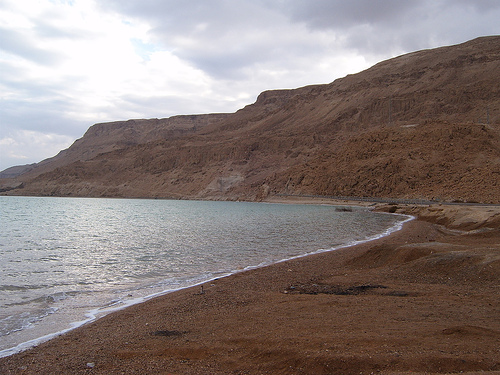
Dead Sea

The global contest for the Seven New Wonders of the World is not the only reason the Dead Sea is making news this week.

Last Saturday, Israeli Vice Premier Silvan Shalom announced that the World Bank  agreed to finance a $1.25 billion feasibility study on the Red-Dead Canal plan.  The plan, a joint venture supported by Israeli, Jordanian, and Palestinian officials, proposes a 180 kilometer (110 mile) pipeline between the Red Sea and the Dead Sea.  The pipeline will transfer 200 billion cubic meters of water to the Dead Sea, half of which will be pumped to the rapidly receding body and half of which will be used in desalination projects to provide drinking water to the drought-stricken region.

The World Bank launched a Study Program in 2008, based on terms of reference the three parties introduced (but did not agree on fully), to investigate the environmental, social, and technical costs of the canal.  Although the World Bank confirmed that Mr. Shalom did meet with its president, Robert Zoellick, during an official visit to Washington DC last week, it has not made an official commitment to finance the study.

Jordan was also quick to deny the Israeli official’s claim.  Fayez Batayneh, Jordan’s director for the canal project, told the Jordan Times he hopes the report is true, but did not receive any official correspondence from the World Bank confirming its agreement to fund the study.

Meanwhile, Friends of the Earth Middle East (FoEME), who strongly oppose the canal, issued a statement claiming that these news reports show “politicians are using the Red Dead Canal project for their own political image and not out of concern for the Dead Sea.” (Both Mr. Shalom and Prime Minister Binyamin Netanyahu have indicated this project is important for the advancement of the region’s “financial peace” as part of the broader regional peace agenda.)

FoEME also emphasized the fact that, although the Israeli, Jordanian, and Palestinian parties, as well as the World Bank, agreed to undertake a study of alternatives to the canal as a means of saving the Dead Sea, they have failed to launch this study or to appoint a panel of experts to oversee the integrity of the entire research project.  They called on the parties to establish an Independent Alternative Study, or for the World Bank to withdraw from the project.

The Dead Sea is shrinking one meter every year, largely due to diversion of the Jordan River water for agriculture and industry.  Estimates predict that if business continues as usual, it will be gone completely by 2050.

:: Ynetnews, World Bank, AFP, Jordan Times, FoEME
Image Credit: heatkernel

More on the Red-Dead Canal:
Jordan To Launch Red-Dead Canal Without Israel
Drought in Jordan Calls People to Pray for Rain and the Controversial Dead-Red Peace Canal
Strategic Solution’s Floating Gas Pipes Could Avert Red-Dead Environmental Catastrophe

Rachel Bergstein
Rachel Bergsteinhttps://www.greenprophet.com/
When her vegan summer camp counselor explained to a fifteen-year-old Rachel how the dairy industry pollutes the groundwater in poor rural communities and causes global warming, there was no turning back. Her green fire lit, Rachel became increasingly passionate about the relationship between human societies and the natural environment, particularly about the systemic injustices associated with environmental degradation. After snagging a B.A. in Peace and Justice Studies at the University of Maryland, where she wrote an undergraduate thesis on water injustice in Israel/Palestine and South Africa, Rachel was awarded the New Israel Fund/Shatil’s Rabbi Richard J. Israel Social Justice Fellowship to come and spread the green gospel in Israel for the 2009-2010 academic year. She currently interns for Friends of the Earth Middle East in their Tel Aviv office. When Rachel is not having anxiety about her ecological footprint, carbon and otherwise, she can be found in hot pursuit of the best vegetarian food Tel Aviv has to offer. She also blogs about her experience as an NIF fellow and environmentalist in Israel at organichummus.wordpress.com. Rachel can be reached at rachelbergstein (at) gmail (dot) com.
1 COMMENT
  1. I think it’s also important to mention the other side of the story, which may have sparked the Israeli side to react: if we recall about 6 weeks ago, Jordanian bankrollers said they would go ahead with their own canal project.

    http://greenprophet.com/2009/05/19/9077/jordan-red-sea-dead-sea-canal/

    Here Silvan Shalom refutes the report that the world bank had not given the green light:

    http://www.jpost.com/servlet/Satellite?cid=1246296540471&pagename=JPost%2FJPArticle%2FShowFull

    Of course politicians have been using the Dead Sea for their political motives. That’s been the whole story all along, no? I do believe these politicians think it can create better relations between Jordan and Israel.

LEAVE A REPLY

Please enter your comment!
Please enter your name here

TRENDING

Earth building with Dead Sea salt bricks

Researchers develop a brick made largely from recycled Dead Sea salt—offering a potential alternative to carbon-intensive cement.

Farm To Table Israel Connects People To The Land

Farm To Table Israel is transforming the traditional dining experience into a hands-on journey.

Remilk makes cloned milk so cows don’t need to suffer and it’s hormone-free

This week, Israel’s precision-fermentation milk from Remilk is finally appearing on supermarket shelves. Staff members have been posting photos in Hebrew, smiling, tasting, and clearly enjoying the moment — not because it’s science fiction, but because it tastes like the real thing.

An Army of Healers Wins the 2025 IIE Goldberg Prize for Peace in the Middle East

In a region more accustomed to headlines of loss than of listening, the Institute of International Education (IIE) has chosen to honor something quietly radical: healing. The 2025 Victor J. Goldberg Prize for Peace in the Middle East has been awarded to Nitsan Joy Gordon and Jawdat Lajon Kasab, the co-founders of the Army of Healers, for building spaces where Israelis and Palestinians — Jews, Muslims, Christians, Druze, and Bedouins — can grieve, speak, and rebuild trust together.

Peace hospital opens between Jordan and Israel

The proposed medical centre, described by Emek HaMaayanot Regional Council head Itamar Matiash as “a centre for cancer treatment, so that people from Jordan or further away could come and receive treatment,” would become the flagship of a wider cluster of medical, academic and innovation-based services planned for the Israeli half of the zone.

Qatar’s climate hypocrisy rides the London Underground

Qatar remains a master of doublethink—burning gas by the megaton while selling “sustainability” to a world desperate for clean air. Wake up from your slumber people.

How Quality of Hire Shapes Modern Recruitment

A 2024 survey by Deloitte found that 76% of talent leaders now consider long-term retention and workforce contribution among their most important hiring success metrics—far surpassing time-to-fill or cost-per-hire. As the expectations for new hires deepen, companies must also confront the inherent challenges in redefining and accurately measuring hiring quality.

8 Team-Building Exercises to Start the Week Off 

Team building to change the world! The best renewable energy companies are ones that function.

Thank you, LinkedIn — and what your Jobs on the Rise report means for sustainable careers

While “green jobs” aren’t always labeled as such, many of the fastest-growing roles are directly enabling the energy transition, climate resilience, and lower-carbon systems: Number one on their list is Artificial Intelligence engineers. But what does that mean? Vibe coding Claude? 

Somali pirates steal oil tankers

The pirates often stage their heists out of Somalia, a lawless country, with a weak central government that is grappling with a violent Islamist insurgency. Using speedboats that swarm the targets, the machine-gun-toting pirates take control of merchant ships and then hold the vessels, crew and cargo for ransom.

Leopoldo Alejandro Betancourt López Turned Ocean Plastic Into Profitable Sunglasses

Few fashion accessories carry the environmental burden of sunglasses. Most frames are constructed from petroleum-based plastics and acrylic polymers that linger in landfills for centuries, shedding microplastics into soil and waterways long after they've been discarded. Leopoldo Alejandro Betancourt López, president of the Spanish eyewear brand Hawkers, saw this problem differently than most industry executives.

Why Dr. Tony Jacob Sees Texas Business Egos as Warning Signs

Everything's bigger in Texas. Except business egos.  Dr. Tony Jacob figured...

Israel and America Sign Renewable Energy Cooperation Deal

Other announcements made at the conference include the Timna Renewable Energy Park, which will be a center for R&D, and the AORA Solar Thermal Module at Kibbutz Samar, the world's first commercial hybrid solar gas-turbine power plant that is already nearing completion. Solel Solar Systems announced it was beginning construction of a 50 MW solar field in Lebrija, Spain, and Brightsource Energy made a pre-conference announcement that it had inked the world's largest solar deal to date with Southern California Edison (SCE).

Related Articles

Popular Categories