

Here in Israel a few months ago we celebrated Yom Ha’atzma’ut or Independence Day with fireworks, barbecues, and mutual congratulations on how much we’ve achieved in 61 years –– absorbing millions of immigrants, sustaining a vibrant democracy, building a dynamic economy –– and a certain amount of soul-searching about how much we still haven’t: peace, intra-Jewish harmony, a national soccer team that qualifies for the World Cup finals and more.
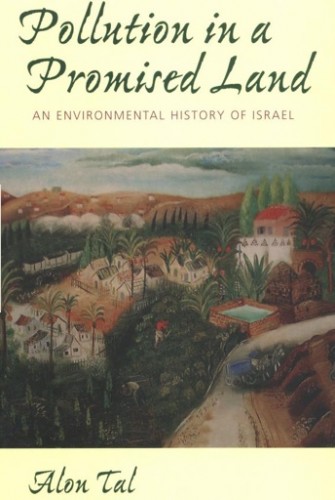
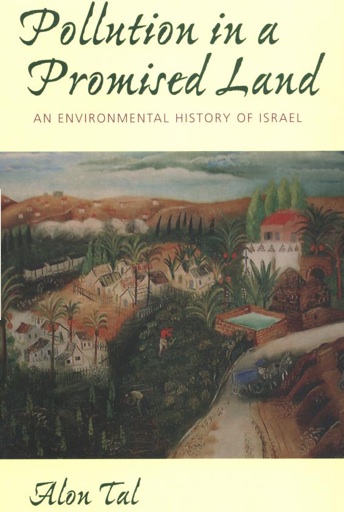
In honour of Yom Haatzmaut, I read a brilliant 500 page book ––rather sad, I know, but that’s the kind of kid I’ve always been ––Prof. Alon Tal’s “Pollution in a Promised Land: An Environmental History of Israel” is the definitive work on the subject. In retrospect it was also the perfect read for the day.
Tal’s book does much more than its subtitle claims. As you would expect it tells the story of how Israel’s rapid economic development has come at a high environmental price; it traces the roots of Israel’s current water crisis to bad planning and short sightedness in the early years of the State; one chapter relates the staggering success, or disastrous stupidity (depending on your perspective) of the Jewish National Fund’s (JNF) forestry policies.
The JNF planted over 200 million trees in Israel making it the only country in the world with a net positive tree balance over the last century; the only problem was that the fir trees that were mostly planted while perfect for Northern Europe, were inappropriate to the local environment and have caused great damage to local ecosystems.
Tal recounts the haphazardness of Israel’s urban growth, the lack of coherent transport policies and the adoption of car-based suburban development models which, today, people see are wrong for the United States, and all the more wrong for Israel, a country the size of New Jersey.
And he tells the inspiring story of the Israeli Environmental movement (in which he has played a key role), which has worked with growing success over the past two decades to set the country on more sustainable paths.
But even more than chronicling Israel’s environmental journey, ‘Pollution’ is a history of Zionism – the dream of the Jewish people’s return to its ancient homeland – told from an unusual but critically important standpoint.
Tal brings out and expands how the early Zionist pioneers were in love with the romance of the Land of Israel, but largely clueless as to its physical reality. Intoxicated by biblical accounts of the landscape, the actual mountains, rivers, flora, fauna and diarrhoea-inducing diet were initially strange and alien to the early pioneers.
Among many literary testimonies, Tal quotes Amos Oz’s description of his grandfather:
“My grandfather lived in the land of Israel forty-five years and never was in the Galilee or went south to the Negev. … But the land of Israel he loved with all his soul, and he wrote love poems in her honour (in Russian).”
In this framing, the history of Zionism has been a tragic-comic epic of the Jewish people re-learning how to live in the topographical and ecological reality of the homeland that it barely knew for nearly two millennia.
The drive for economic growth successfully added six million to the population rolls over the course of a century and catapulted living standards into the ranks of the world’s richest nations. But it was accomplished with scant regard to the carrying capacity of the country.
Today, environmental awareness in Israel is flowering. There are still immense and urgent problems yet there are also signs of hope that the country is learning to live with the actual rivers, deserts, verdant planes, crowded cities and diminishing open spaces that constitute its physical heritage.
It all strikes me as a little bit like inheriting your grandparents’ house. All your life you’ve heard about this wonderful home, the beautiful gardens, the rolling views, the high ceilings. You’ve heard stories about it. You’ve dreamed of living there, but you’ve never actually set foot in the place. And then, one day, you find yourself living there. It’s just like everything you were always told and at the same time you have no idea how anything actually works. The toilets flood, the garden becomes overgrown and you accidentally ruin half of the appliances. Yet gradually after a few decades of living there, you begin to figure things out.
Tal is optimistic that we’ll figure it out in time. As he concludes his book:
“The same Zionist zeal that allowed an ancient nation to defy all odds for an entire century can be harnessed to confront the newest national challenge. More than any of their ancestors, the present generation stands at an ecological crossroads—offered the choice of life and good, or death and evil.
“This “last chance” to preserve a healthy Promised Land for posterity is a weighty privilege indeed. Surely as it writes the next chapters in its environmental history, Israel will once again choose life.”
This Alon Tal Review: ‘Pollution in a Promised Land’ is written by Rabbi Julian Sinclair and first published on Climate of Change.
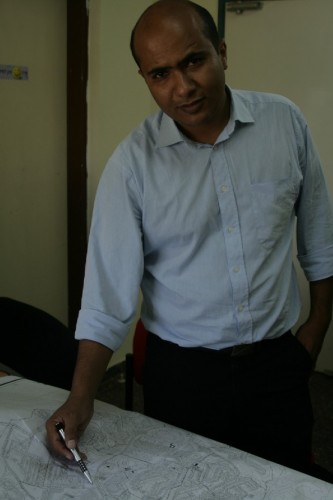


[…] In your book “Pollution in a Promised Land“, we account Israel’s story of atmosphere and H2O pollution. What has Israel finished recently […]
[…] In your book “Pollution in a Promised Land“, you chronicle Israel’s history of air and water pollution. What has Israel done […]