

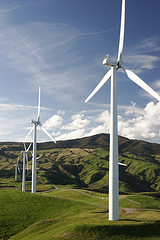
 In preparation for Israeli election day, we present a series of posts with a summary of the environmental positions of the parties running for the Knesset on the following topics: Open Areas and Beaches, Green Energy, Radiation and Global Warming, Sustainable Development, Recycling, Water, and Air & Industrial Pollution and Enforcement.
GREEN ENERGY
Green Movement – Meimad
1. Building a national plan for energy efficiency. The goals of the program should be: stopping the rise in energy consumption by 2012 (equivalent to a reduction of 4-5% a year). Reducing the consumption by an additional 3% every year until 2020 – in order to reduce the consumption by at least 20% relative to its level today. Technological improvements in power plants, standards for efficient electrical appliances, regulations for energy management in large buildings. Encouraging the design of energetically efficient buildings and Green Building. Incentives in electricity rates to save electricity. Short and long term education;
2. Development of renewable energies. Implementing the existing technologies for generating electricity from renewable energy, and promoting R&D on new technologies that utilize the energy of the sun and the wind in the most efficient way.
3. Regional cooperation – contacts with the countries in the region, especially Jordan and Egypt, for cooperation in establishing renewable energy power plants.
4. Investments in R&D – in order to promote research and bring back the best minds, the government must invest sums of tens and millions each year. This budget can come also from the energy market itself, by means of a dedicated surcharge.
Green Party
1. Production of clean energy from existing and inexhaustible resources that are local and clean. The most notable is the sun;
2. The Electric Company will be required to invest in alternative sources of energy: solar energy, wind and bio-energy.
Hadash
Promoting conservation of energy and the use of clean energy, e.g. sun and wind.
Israel Betenu
Promoting the transition to the use of renewable energy sources while combing economic development and establishing the economic independence of the state.
Israel Hazaka
1. Promoting renewable energies and a goal of 10% of the installed production capacity of electricity from solar and wind energy by year 2015;
2. Promoting efficiency measures in the electric market, including the establishment of stricter regulation for minimum allowable levels of efficiency of high-consumption electric devices, promoting wide spread understanding for conservation of fuel and electricity and the examination of new technologies for energy storage during off-peak hours when demand is low.
3. Extracting the full potential of landfills and waste sites for producing bio gas for energy.
4. Identification of desert areas suitable for the construction of thermal solar power plants, and which will allow an increase of the government’s goals in this field, including appropriate areas in Army bases – while avoiding damage to landscapes and nature.
5. Widening the search for new deposits of natural gas and oil.
6. Developing sources of shale oil as an alternative to importing crude oil.
7. Implementation of the interministerial master plan for the energy market in the fields of energy conservation, reduction of greenhouse gases and promotion of clean alternative energy and fuels from renewable sources.
8. Substantial increase of tens of workers in the engineering-professional manpower in the government offices, and especially the Ministry of National Infrastructure in the fields of energy conservation, green building, renewable energies, development of local energy sources and environmental quality.
9. Establishing a national plan for the junking and replacement of old air conditioners with modern and efficient air conditioners in order to save energy and avoid the need to build power plants.
10. Increasing the budgetary support for R&D in renewable and clean energies.
Kadima
Establishing policy in the energy field combining efficiency and conservation with the use of environmentally friendly energies.
Labor
Managing a sustainable energy market, supporting and incentivizing R&D in the field of renewable energies, will help establish Israel’s international standing as the cutting edge of scientific and technological development in the field. The State of Israel will establish national targets and a timetable for including renewable energy sources in the portfolio of electrical generation in Israel, achieving a goal of 20% of the electricity market based on renewable energy, with an emphasis on solar energy. Will oppose the establishment of coal-fired power plants and will change the composition of the Committee for National Infrastructures so that it will include a substantial influence from the representatives of the ministries of Environmental Protection and of Health.
Likud
1. Promoting policy and implementation of steps to reduce the amount of energy consumed in buildings;
2. Finding green alternatives to bridge the gap between the increasing demand for electricity and the generation capacity.
New Movement – Meretz
1. Implementation of a comprehensive policy of efficiency and conservation in state institutions, the defense system, and the industrial, agricultural, business and private sectors;
2. Establishing a progressive pricing system for electrical use – households that consume less will pay less for each kWh, a household that uses more will pay more.
3. Implementing the Government decision to build a solar power plant in the Negev, with consideration for sensitive regions that provide desert ecosystems. Encouraging the use of solar energy for residential , industrial and public consumption.
4. Legislating a law encouraging renewable energy in order to incorporate these sources into the Israeli electric market.
5. Promotion of the production of energy from solid waste via the allocation of resources, tools and space specifically for this purpose.
6. Forbidding the construction of new power plants based on such fossil fuels as oil, coal and natural gas, and a prohibition on the expansion of the existing ones.
7. Developing incentives and beginning a public campaign to replace incandescent bulbs with energy efficient bulbs.
8. Complete transparency and transfer of information regarding the use of nuclear energy in Israel and methods of burying nuclear waste.
9. Legislation regarding inspection and control of the development on nuclear energy in Israel
Sha”s does not relate to the issue of the open areas and beaches in their platform.
This summary was compiled in Hebrew ::Bar Ilan Environmental Clinic :: Chayim Usviva :: Translated by the greenprophet.com team.


I think solar paneling is the way of the future. We just put some solar paneling up at my house, and I saw a difference the first month. My husband made the panel himself using a DIY guide for less than $150. It’s the best thing for the environment and cheap! You can check out the guide at http://tinylink.com/?zhhtWd3PEd
President Barack Obama recently asked Congress “to act without delay” to pass legislation to double alternative energy production in the next three years and build a new electricity “smart grid.” This smart grid would be an updated digital version of the electric wires strung across our country in the past century. What makes it “smart” is that the lines would be buried and more efficient and would give homeowners feedback on how efficiently they were using the power inside their homes.
This new smart grid would cost about $400 billion over 10 years but would save between $46 billion and $117 billion over the next 20 years by reducing inefficiencies and power failures, according to the U.S. Department of Energy. It also would help to make us less dependent on imported energy and to reduce climate change. For example, if the smart grid were even 5 percent more efficient, it would keep as many carbon emissions from the atmosphere as eliminating 53 million cars.
A smart grid allows power from residential solar panels, small wind turbines, and plug-in electric vehicles to be fed into the grid. This would encourage the green energy industry by allowing small players, such as individual homes and small businesses, to sell power to their neighbors or back to the grid. It would provide another source of income for larger commercial businesses that have renewable or backup power systems that can provide clean energy for a price during peak demand, such as midday in July when the air conditioning is cranked.
Another brilliant feature of the proposed grid is the potential to use cars to store electricity and then feed it back into the grid during times of peak demand. “Vehicle to grid,” or V2G, technology helps balance energy loads by “valley filling” (charging at night, when demand is low) and “peak shaving” (sending power back to the grid when demand is high). This would help utility companies keep voltage and regulation stabler. It would be especially useful when more of our power came from intermittent power sources, such as solar panels, which only produce power during the day.
Power outages are less problematic for a smart grid because it quickly can isolate the problemand create energy pathways around it. This makes a smart grid “self-healing” by reducing power outages and saving money. Buried power lines also would reduce outages caused by harsh winter storms, when tree branches are likely to down power lines. In my community, residents are concerned about proposed power lines that would stretch through the centers of many small downtowns and across lovely vistas. If these same lines were buried, there would be fewer objections from the community.
The smart grid could help consumers use that energy more wisely and save money, as well. A sensor in your home can tell you the price of electricity when the demand is highest. This allows you to set priorities so that you use more energy when the price is lower and less during peak demand. You also can find out which appliances are energy hogs and identify energy vampires that you may not have known about.
Austin, Texas, has been working on a smart grid since 2003, when its utility company first replaced a third of its manual meters with wireless smart meters. Austin currently manages 200,000 smart meters, smart thermostats and sensors across its service area and expects to be supporting 500,000 devices this year. Boulder, Colo., started a smart grid project in August 2008. The smart grid extends into homes through home automation network devices. These devices automatically set thermostats, reduce energy loads during peak times, and shut off lights in rooms when no one is in them.
By investing in our infrastructure, we also would stimulate economic growth and increase green jobs. Thousands of peoplewould be put to work across the country designing, building and installing smart grid technology. Having the grid in place wouldmake electric carsmore feasible and affordable. Renewable energy would become more viable, and demand would increase as more electric carswere added to the grid. It also would bring the price of homeand business-scaled renewable power systems down because the payback periods would decrease. Businesses may make tidy profits by selling excess power back to the grid.
Want to learn more about the smart grid? The U.S. Department of Energy has an easy-tounderstand publication you can download online called “The Smart Grid: An Introduction.” The DOE is conducting a series of smart grid e-forums to discuss issues surrounding the smart grid, including costs, benefits, implementation and deployment. Thank you !