

Soaring temperatures and low precipitation could not occur at a worse time for many farmers in the United States, and around the world. Intensifying drought conditions are affecting corn and soybean crops throughout the Midwest, raising grain prices as well as concerns about future food prices.
The US Drought Monitor reports that 88 percent of this year’s corn crop and 77 percent of the soybean crop are now affected by the most severe drought since 1988. In response the Worldwatch Institute launched a 12 step guide to combatting drought and desertification. These tips can be used by policy makers around the world and in dry climates in the Middle East. Read on for the list.
1. Agroforestry: Planting trees in and around farms reduces soil erosion by providing a natural barrier against strong winds and rainfall. Tree roots also stabilize and nourish soils. The 1990 Farm Bill established the USDA National Agroforestry Center with the expressed aim of encouraging farmers to grow trees as windbreaks or as part of combined forage and livestock production, among other uses. See Green Prophet’s feature on the Nabateans to see how this idea can be applied in the Middle East.
2. Soil management: Alternating crop species allows soil periods of rest, restores nutrients, and also controls pests. Soil amendments, such as biochar, help soils retain moisture near the surface by providing a direct source of water and nutrients to plant roots, even in times of drought.
3. Increasing crop diversity: Mono-cropping often exposes crops to pests and diseases associated with overcrowding, and can increase market dependence on a few varieties: in the United States, almost 90 percent of historic fruit and vegetable varieties have vanished in favor of mono-cultured staples such as Pink Lady apples and Yukon Gold potatoes. Encouraging diversity through agricultural subsidies and informed consumption choices can help reverse this trend and the threat it poses to domestic food security. In the worst case, do what Syria does and seed bank your seeds to preserve biodiversity.
4. Improving food production from existing livestock: Improved animal husbandry practices can increase milk and meat quantities without the need to increase herd sizes or associated environmental degradation. In India, farmers are improving the quality of their feed by using grass, sorghum, stover, and brans to produce more milk from fewer animals. This also reduces pressure on global corn supplies.
5. Diversifying livestock breeds: Most commercial farming operations rely on a narrow range of commercial breeds selected for their high productivity and low input needs. Selective breeding, however, has also made these breeds vulnerable to diseases and changing environments. Lesser-known livestock such as North American Bison are often hardier and produce richer milk.
6. “Meatless Mondays“: Choosing not to eat meat at least one day a week will reduce the environmental impacts associated with livestock as well as increase food availability in domestic and global markets. Current production methods require 7 kilograms of grain and 100,000 liters of water for every 1 kilogram of meat. Livestock production accounts for an estimated 18 percent of human-caused greenhouse gas emissions and roughly 23 percent of agricultural water use worldwide. You can just become become more vegaware.
7. Smarter irrigation systems: The Ogallala High Plains Aquifer, which supplies essential groundwater to many Midwestern states, is experiencing record rates of depletion due to extraction for irrigation purposes. Almost 50 percent of commercial and residential irrigation water, however, is wasted due to evaporation, wind, improper design, and overwatering. Installing water sensors or micro-irrigation technology and planning water-efficient gardens or farms using specific crops and locations can significantly reduce water scarcity problems. Israel has great solutions for irrigating crops, as do ancients from Afghanistan.
8. Integrated farming systems: Farming systems, such as permaculture, improve soil fertility and agricultural productivity by using natural resources as sustainably and efficiently as possible. Research and implementation of permaculture techniques, such as recycling wastewater or planting groups of plants that utilize the same resources in related ways, are expanding rapidly across the United States. Permaculture is becoming more widespread in the Middle East too.
9. Agroecological and organic farming: Organic and agroecological farming methods are designed to build soil quality and promote plant and animal health in harmony with local ecosystems. Research shows that they can increase sustainable yield goals by 50 percent or more with relatively few external inputs. In contrast, genetic engineering occasionally increases output by 10 percent, often with unanticipated impacts on crop physiology and resistance.
10. Supporting small-scale farmers: Existing agricultural subsidies in the United States cater disproportionately to large-scale agribusinesses, 80 percent of which produce corn for animal feed and ethanol. This means that small-scale producers are affected more acutely by natural disasters and fluctuating commodity prices, even though they are more likely to be involved in food production. Government extension and support services should be adjusted to alleviate this deficit.
11. Re-evaluating ethanol subsidies: Although ethanol’s share of US gasoline is still relatively small (projected at 15-17 percent by 2030), in 2009 the Congressional Budget Office reported that increased demand for corn ethanol has, at times, contributed to 10-15 percent of the rise in food prices. Encouraging clean energy alternatives to crop-based biofuels will increase the amount of food available for consumption, both at home and abroad.
12. Agricultural Research and Development (R&D): The share of agricultural R&D undertaken by the U.S. public sector fell from 54 percent in 1986 to 28 percent in 2009, and private research has filled the gap. Private companies, however, are often legally bound to maximize economic returns for investors, raising concerns over scientific independence and integrity. Increased government funding and support for agricultural research, development, and training programs can help address issues such as hunger, malnutrition, and poverty without being compromised by corporate objectives.
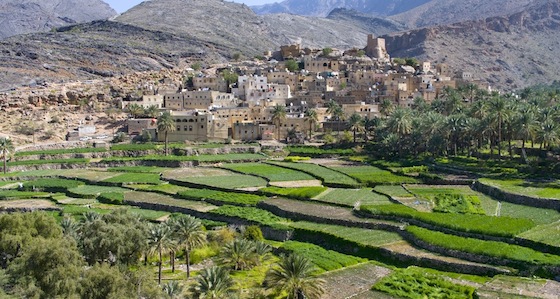
Image of Arabian oasis from Shutterstock



now a day 1/4 th population of India is affected with shortage of drinking water. In Indai, number of city, people are getting water once in week and 1/3 rd of their requirement only. the steps are taken by Government side are not even fulfilling the 1/10 th of population. Policy/scheme are being introduced but not implementing on ground. There is no hope in future to common people will get the safe drinking water
Irresponsible human behavior is causing the drought and only a basic change in that behavior will return the weather to the natural cycles we depend on.
There is another non-human factor in here to be dealt with. We (humanity) have many competitors for water resources. Aquatic weeds of many varieties clog our waters and dessicate the land. They transpire the water so that it cannot build up into sufficient quantity to support “lake effect” rains. The silt that they produce raises lake beds out of contact with the underground water, to the detriment of both. Weeds are all biomass that can be made into biofuel, fiber products, biochar, or sometimes food. The silt is all badly needed soil to replace eroded soils everywhere. Massive weeding and dredging is the way to fight the drought. But without population control, NOTHING works for very long.
None of the 12 reforms will have any decisive effect on the drought, wildfires, violent storms and flash floods, which are caused by the massive pollution pumped up into the air every day. But if we:
1. Safely recycle 100% of all human-generated waste materials, all the trash, garbage, junk, sewage, smoke and fumes, THERE WILL BE NO POLLUTION AND THEREFORE NO GLOBAL WARMING AND NO DROUGHT.
2. Then if we peacefully reduce the human population with family planning education there will be no growth pressure to expand the economy and cause the pollution in the first place.
Otherwise, the drought will continue as Nature struggles to heal itself by any means necessary.