

How plants buffer against climate change

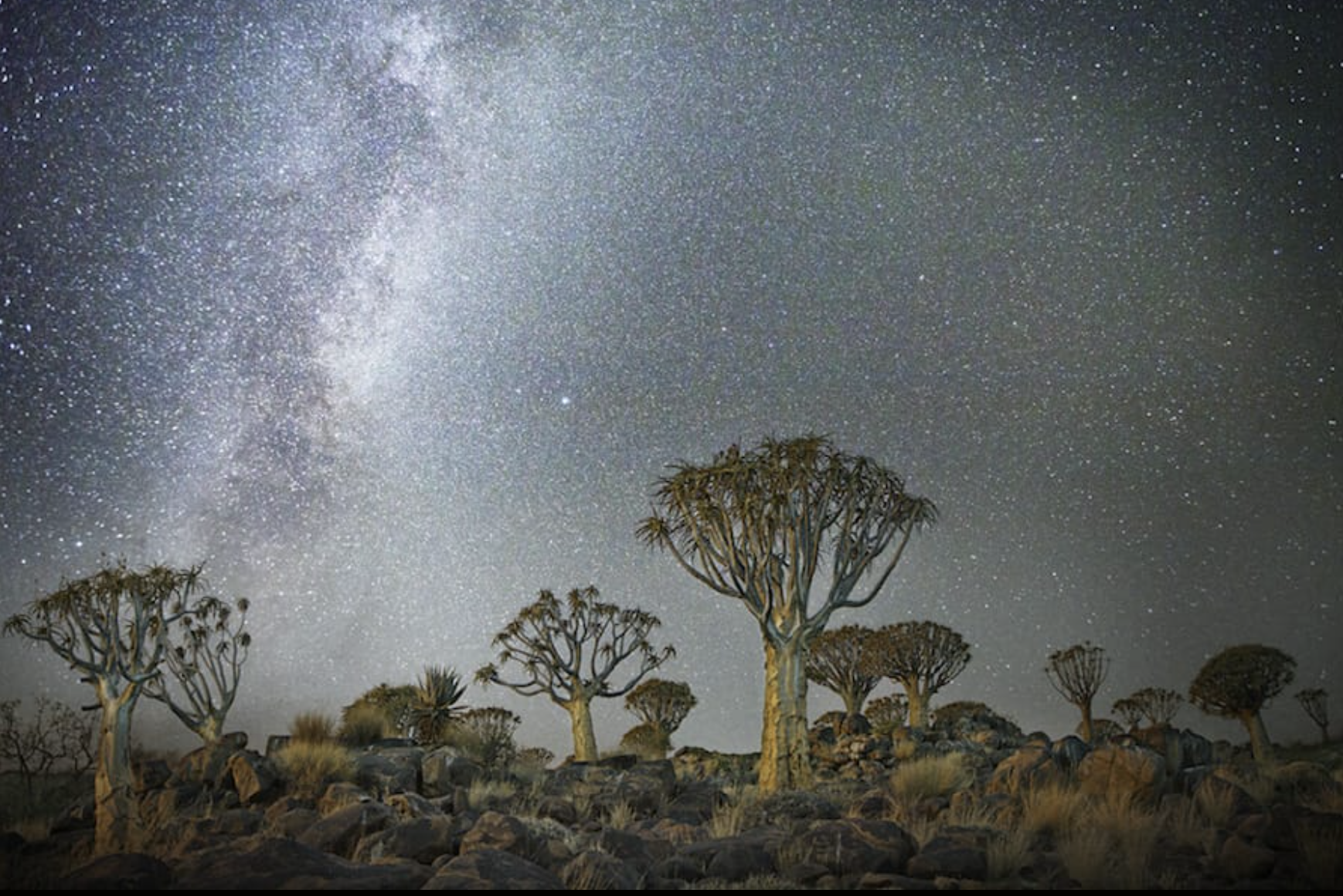
beth moon trees
The Galapagos of the Indian Ocean – Socotra Island, belonging to Yemen.

If you are of the 41 percent that lives in drylands, your future depends on supporting plant biodiversity.

An international team of researchers including Dr. Bertrand Boeken of the Jacob Blaustein Institutes for Desert Research at Ben-Gurion University of the Negev suggest in a new study that plant biodiversity preservation is crucial to buffer negative effects of climate change and desertification in drylands.

The study was published in the prestigious journal Science and is the outcome of a five-year research effort involving more than 50 researchers from 30 institutions in 15 different countries.

The results of this study indicate that the ability of ecosystems in drylands worldwide to maintain multiple functions, such as carbon storage and buildup of nutrient pools (multi-functionality) is enhanced by the number of perennial plant species, mainly shrubs and dwarf-shrubs, whereas increased average annual temperature reduces this ability.

Where is Socotra Island off the coast of Yemen and Djibouti?

While small-scale controlled experiments have provided evidence of the positive relationship between biodiversity and multi-functionality over the years, this study is the first in explicitly evaluating such relationship among real ecosystems at a global scale.

Drylands constitute some of the largest terrestrial biomes, collectively covering 41 percent of earth’s land surface and supporting over 38 percent of the global human population.

They are of paramount importance for biodiversity, host many endemic plant and animal species, and include about 20 percent of the major centers of global plant diversity and over 30 percent of the designated endemic bird areas.

However, dryland ecosystems are also highly vulnerable to global environmental change and desertification.

“This study provides empirical evidence on the importance of biodiversity to maintain and improve ecosystem multi-functionality in drylands, Dr. Boeken says: “Our results also suggest that the increase in average annual temperature predicted by climate change models will reduce the ability of dryland ecosystems to perform multiple functions, which are crucial to support life on earth.

“Plant biodiversity enhances this ability, therefore, maintaining and restoring it can contribute to mitigating the negative consequences of global warming and to promoting the resistance of natural ecosystems to desertification.”


 

12 COMMENTS
  1. thanks for the article. i have an empty sand lot next to my house where i’d like to do some planting. just native landscape type of stuff. what kind of plants would grow well and how should they be planted?

    could we have more articles about gardening please. in conjunction with miriam’s monthly seasonal produce posts i’d like to see a series about what to plant when for kitchen gardens.

    thanks again

Comments are closed.

Hot this week

How Renewable Energy is Revolutionizing the Way We Power Our World

Solar has become the star of the transition thanks to modular hardware and straightforward installation. It fits dense cities and remote towns alike. Many companies are turning to rooftop arrays and carport systems - and exploring commercial solar installation as a practical way to lock in future savings.

How does one start prepping?

Faced with an extreme winter storm this year, Americans wonder how to be prepared for catastrophe. Miriam has lived through wars in the Middle East - so she's prepared on giving you a guide to prepping.

Fishermen sue tire manufacturers on behalf of the salmon

A federal trial in San Francisco has brought US tire manufacturers, fishing groups, and environmental scientists into court over a chemical most drivers have never heard of — but which scientists say may be silently reshaping aquatic ecosystems.

Listening to Water: Tarek Atoui’s Next Work for Tate Modern

Born in Beirut, Lebanon in 1980 and now living in Paris, Atoui has spent years building instruments that don’t sit comfortably in concert halls. Many of them involve water, glass, and ceramics — materials that react to sound instead of simply producing it.

Leading Through a Dual-Energy Transition: Balancing Decarbonisation with Energy Security

Experience in one area of the energy industry isn't enough to guarantee readiness across all the others. That's where a structured program like an MBA in energy can come in. Today's advanced curricula explore energy economics, finance, policy, and strategic management alongside the technical subjects. And when pursuing an energy MBA online, professionals can skill up and retrain without having to step out of the labor market -- an important perk at a time when skilled professionals are already in short supply.

Topics

How Renewable Energy is Revolutionizing the Way We Power Our World

Solar has become the star of the transition thanks to modular hardware and straightforward installation. It fits dense cities and remote towns alike. Many companies are turning to rooftop arrays and carport systems - and exploring commercial solar installation as a practical way to lock in future savings.

How does one start prepping?

Faced with an extreme winter storm this year, Americans wonder how to be prepared for catastrophe. Miriam has lived through wars in the Middle East - so she's prepared on giving you a guide to prepping.

Fishermen sue tire manufacturers on behalf of the salmon

A federal trial in San Francisco has brought US tire manufacturers, fishing groups, and environmental scientists into court over a chemical most drivers have never heard of — but which scientists say may be silently reshaping aquatic ecosystems.

Listening to Water: Tarek Atoui’s Next Work for Tate Modern

Born in Beirut, Lebanon in 1980 and now living in Paris, Atoui has spent years building instruments that don’t sit comfortably in concert halls. Many of them involve water, glass, and ceramics — materials that react to sound instead of simply producing it.

Leading Through a Dual-Energy Transition: Balancing Decarbonisation with Energy Security

Experience in one area of the energy industry isn't enough to guarantee readiness across all the others. That's where a structured program like an MBA in energy can come in. Today's advanced curricula explore energy economics, finance, policy, and strategic management alongside the technical subjects. And when pursuing an energy MBA online, professionals can skill up and retrain without having to step out of the labor market -- an important perk at a time when skilled professionals are already in short supply.

From Green Energy to Healthy Societies: Why old systems thinking is becoming relevant again

Across the Middle East and North Africa, large investments are being made in green hydrogen, renewable energy, water infrastructure and sustainability. Most of these efforts are discussed in the context of climate change, decarbonization and economic diversification. That framing is important, but it may not capture their full value.

We saw peace – an interreligious encounter deep in our eyes

They came from Israel, Palestine, Jordan, Iraq, Yemen, Morocco, Tunisia, Lebanon, Egypt… There are Sunni Muslims, Shiite Muslims, Jews (Orthodox and Reform), Orthodox Christians, Coptic Christians, Protestant Christians, Druze, Baha'is, a Scientologist.

Can biochar reduce ‘Forever Chemicals’ in food if it’s used in farms?

Biochar is produced by heating organic material in a low-oxygen environment so it does not burn. This process, known as pyrolysis, transforms plant matter into a stable, carbon-rich material.

Related Articles

Popular Categories