
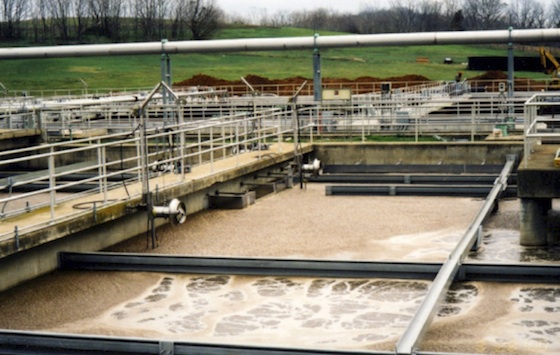
Emefcy Funded to Make Bugs Produce Energy

Two serial water technology entrepreneurs from Israel, Eytan Levy and Ronen Shechter, who also founded Israel’s AqWise, have come up with another way to put bacteria in wastewater to work for us. Their electrogenic bioreactor generates electricity directly during the process of treating wastewater.

Emefcy uses naturally occurring bacteria in an electrogenic bioreactor to treat wastewater. The organic material in the waste produces power and treated water.

Although exactly how it occurs is a little mysterious, Emefcy claims that the process is not the usual methane harvesting technique. Rather than using conventional energy-intensive aerobic processes or methane-producing anaerobic digestion to treat wastewater, Emefcy claims that they can harvest renewable energy directly from the wastewater.

Because wastewater treatment is itself an energy sink, consuming an estimated 2% of energy worldwide, this breakthrough is significant. Instead of guzzling power, Emefcy can feed power to the grid, creating an energy-positive wastewater treatment plant, transforming wastewater treatment from an energy-intensive, cost-intensive and carbon-intensive process, into an energy-generating and carbon-reducing process.

The primary initial applications would be for wastewater treatment in the food, beverage, pharmaceutical and chemical industries, with total market potential of US$10 billion annually. Emefcy’s simple modular equipment can be used “out of the box”.

The investment comes from a consortium of VC groups, that indicates the degree to which this innovation is taken seriously. Part comes from Pond Venture Partners, Plan B Ventures and Israel Cleantech Ventures, all VC groups that are already developing cutting edge technologies in Israel, which is fast becoming the Silicon Valley of clean tech water innovation.

In this round of funding the group was joined by Energy Technology Ventures, a joint venture put together between GE (NYSE: GE), NRG Energy (NYSE: NRG), and ConocoPhillips (NYSE: COP) in order to develop next-generation energy technologies.

Energy Technology Ventures is not a purely clean tech fund, because it does invest in nuclear, oil, coal and natural gas as well. But it aims to promote venture-and growth-stage energy technology companies in the renewable power generation, smart grid, energy efficiency, emission controls, water and biofuels sectors as well, focusing mainly in Europe, Israel and the US.

The group takes an agnostic approach to energy investment. So this investment is perhaps an indication that the time has come for alternative energy innovations like Emefcy’s to be considered as just another form of energy.

With Peak Oil looming, smart energy companies are looking for more energy, of every kind. Even energy made by bugs.

::Emefcy
::Energy Technology Ventures

Related stories:

Green Prophet Interviews Mekorot Water Company Head Eli Ronen
Abu Dhabi’s Costly Desalination Plants Prompt Waste Water Treatment Plans
Israel Reclaims Water Using Nuclear Technology – On CNN

1 COMMENT

Comments are closed.

TRENDING

Eco organization offices destroyed by Iran missile

Tel Aviv's eco organization, the Heschel Center, was impacted by an Iranian missile.

What are AWG air-water generators, and why they aren’t a golden-bullet solution (yet)

Atmospheric water generators (AWGs) sound like magic: machines that can pull drinking water out of air. The idea is mentioned in the Bible, where the elders would pray for water collected as dew on plants and the catch on turning this into a machine is in the physics. To turn invisible vapor into liquid, you must remove heat, especially the latent heat of condensation.

Jordan’s $6 Billion Aqaba–Amman Desalination Project from the Red Sea Moves Forward

In 2025, the Jordanian government signed agreements with a consortium led by Meridiam and SUEZ, alongside VINCI Construction and Orascom Construction. Under a 30-year concession agreement, the consortium will design, build, finance, operate, and maintain the system before transferring it back to the Jordanian government. The total investment is estimated at approximately $6 billion USD.

The Saudi Startup Turning Desalination’s Toxic Waste Into Its Own Disinfectant

For millennia, the Middle East's water crisis seemed an immutable fact of geography — a region defined as much by what it lacked as by what lay beneath its sands. Today, a convergence of plummeting solar costs, advancing membrane technology, and hard-won engineering expertise is rewriting that story.

Astro uses AI to help procure land for renewable energy

For oil-rich, environmentally vigilant Gulf states, Astro isn’t just another startup story. It is a blueprint for accelerating an energy transition that is now existential, not optional.

How AI Helps SaaS Companies Reduce Repetitive Customer Support Work

SaaS products are designed for large numbers of users with different levels of experience, and also in renewable energy.

Pulling Water from the Air

Faced with water shortage in Amman, Laurie digs up...

Turning Your Energy Consultancy into an LLC: 4 Legal Steps for Founders in Texas

If you are starting a renewable energy business in Texas, learn how to start an LLC by the books.

Tracking the Impacts of a Hydroelectric Dam Along the Tigris River

For the next two months, I'll be taking a break from my usual Green Prophet posts to report on a transnational environmental issue: the Ilısu Dam currently under construction in Turkey, and the ways it will transform life along the Tigris River.

6 Payment Processors With the Fastest Onboarding for SMBs

Get your SMB up and running fast with these 6 payment processors. Compare the quickest onboarding options to start accepting customer payments without delay.

Qatar’s climate hypocrisy rides the London Underground

Qatar remains a master of doublethink—burning gas by the megaton while selling “sustainability” to a world desperate for clean air. Wake up from your slumber people.

How Quality of Hire Shapes Modern Recruitment

A 2024 survey by Deloitte found that 76% of talent leaders now consider long-term retention and workforce contribution among their most important hiring success metrics—far surpassing time-to-fill or cost-per-hire. As the expectations for new hires deepen, companies must also confront the inherent challenges in redefining and accurately measuring hiring quality.

8 Team-Building Exercises to Start the Week Off 

Team building to change the world! The best renewable energy companies are ones that function.

Related Articles

Popular Categories