4 passive energy environmental solutions from the Middle East

windcatcher iranWhen we think of the environment today, the West looks like the clear leader. But did you know that some of the world’s most important discoveries originated in the Middle East?

The Middle East, perhaps because of its challenging environment, has seen the genesis of many environmental discoveries and techniques. Some of these are so ancient and ubiquitous that we take them for granted: domestic animals; agriculture; and of course cities. The five discoveries listed here range in age from seven thousand years to cutting-edge, and yet they all remain important today.

Irrigation qanats from Iran
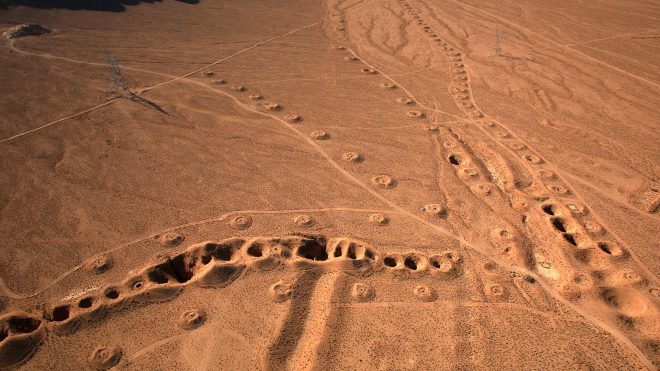
The Persian Qanat: Aerial View, Jupar

Agricultural irrigation has been invented at many times and places. However, by far the earliest civilizations to use irrigation were the Egyptians and Mesopotamians.

Irrigation systems in the fertile crescent were used to raise barley in otherwise arid land; they date back to at least 5,000 BC, and quite possibly earlier. Some of these systems, such as the qanats in Iran, are still in use today after nearly 3000 years of operation.

This very long history has been fraught with difficulties, and middle eastern societies have wrestled with problems of line failure, evaporative loss, and salinization. Today, for instance, Israel produces some of the most efficient point-irrigation technology in the world.

Windmills of Yadz

Nishatfun windmills in Iran

Windmills did not appear in Europe until the 1200s, but they are mentioned in Persian texts as early as the 600s AD, and al-Masudi’s description of Sistan in 950 AD makes it clear that they were already commonplace in that region. (It seems likely that waterwheels are also of Middle Eastern origin, but the earliest known examples are Roman.)

The vast bulk of all wind power, historically, has been used to drive sailing vessels. Still, after a millennium and a half, fixed-point wind power remains one of the most promising methods of generating clean energy.

Harvesting Fertilizer from Doves
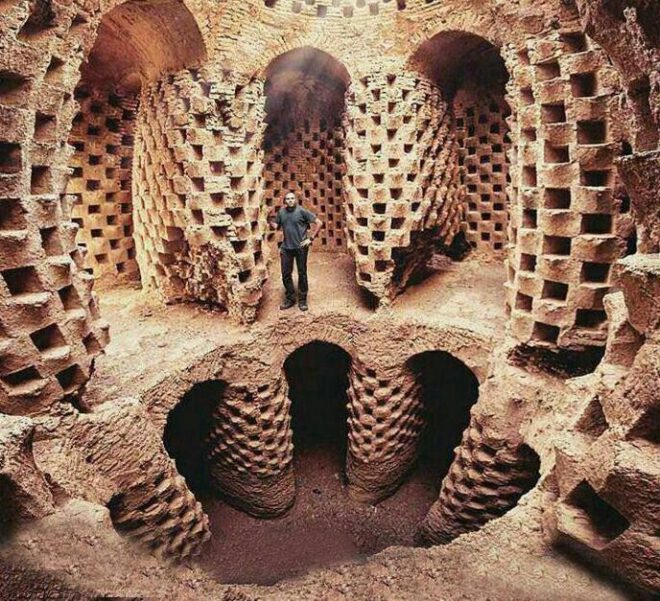
isfahan dovecoats fertilizer
Dovecoats in Isfahan

The famous medieval dovecotes or pigeon towers of Esfahan, in Iran, are usually regarded as architectural attractions. But they are also the most visible part of a larger technology: harvesting fertilizer.The purpose of the dovecotes is to harvest nitrogen and phosphorus from pigeon droppings, and replenish the marginal soils of the region.

A related, though less dramatic technique is to graze sheep and goats over gardens after the harvest. There is an important environmental lesson here.

Just as early societies struggled to avoid using high-quality fertilizer as low-quality fuel, modern societies struggle to recycle livestock waste, while we simultaneously expend large sums on producing synthetic fertilizer.
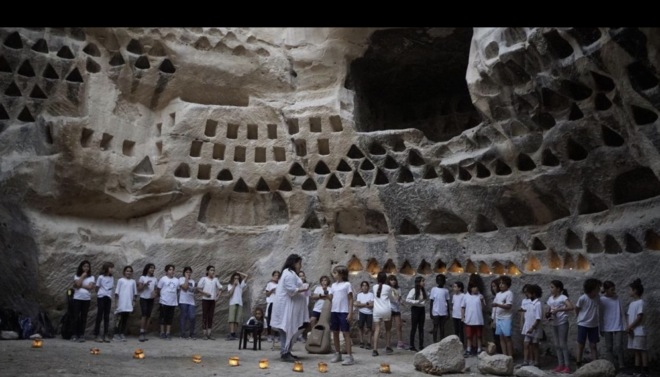
Dovecoats in Israel

Reforestation and Erosion Control

Ein Gedi Israel
Ein Gedi, Israel

The Middle East was heavily deforested by the dawn of history, and combatting erosion and desertification have been constant challenges. It has long been both the birthplace and the best testing grounds for erosion control techniques, ranging from ancient terracing to modern synthetic, modular water diversion blocks.

Israel has run a particularly successful reforestation campaign in the last half-century, being one of relatively few countries worldwide to show a net gain in forest cover. Israeli immigrant Moshe Alamaro has also been one of the major proponents of aerial reforestation, using repurposed military technologies to plant seedlings in remote or hard-to-access regions.

Karin Kloosterman
Karin Kloostermanhttp://www.greenprophet.com
Karin Kloosterman is an award-winning journalist, innovation strategist, and founder of Green Prophet, one of the Middle East’s pioneering sustainability platforms. She has ranked in the Top 10 of Verizon innovation competitions, participated in NASA-linked challenges, and spoken worldwide on climate, food security, and future resilience. With an IoT technology patent, features in Canada’s National Post, and leadership inside teams building next-generation agricultural and planetary systems — including Mars-farming concepts — Karin operates at the intersection of storytelling, science, and systems change. She doesn’t report on the future – she helps design it. Reach out directly to [email protected]

Hot this week

Why Health Systems Are Reaching a Turning Point

Health emerges from a continuous energy and material flow from water through food to human physiology. Technical energy systems support this cycle through water treatment, agriculture, and infrastructure.

Sustainability That Sells: How Profit and Purpose Come Together in the Hive

Whether you are a commercial grower, hobbyist beekeeper or retail equipment supplier, this system opens a new income stream with minimal environmental impact.

The Fitness App Revolution: Building the Future of Wellness Through Strategic Development

In an era where smartphones are ubiquitous and health consciousness is at an all-time high, the fitness industry has undergone a radical digital transformation. Fitness applications have moved far beyond simple pedometers, evolving into comprehensive wellness platforms that serve as personal trainers, nutritionists, and community hubs right in our pockets.

A Brief History of Basil From India to Italy

Beloved, fortunate, sweet, and royal; an herb with a long and storied history in Asia and across the world. Called by many names, basil has featured in previous Green Prophet articles, so enjoy another serving, a brief history of basil.

How Renewable Energy is Revolutionizing the Way We Power Our World

Solar has become the star of the transition thanks to modular hardware and straightforward installation. It fits dense cities and remote towns alike. Many companies are turning to rooftop arrays and carport systems - and exploring commercial solar installation as a practical way to lock in future savings.

Topics

Why Health Systems Are Reaching a Turning Point

Health emerges from a continuous energy and material flow from water through food to human physiology. Technical energy systems support this cycle through water treatment, agriculture, and infrastructure.

Sustainability That Sells: How Profit and Purpose Come Together in the Hive

Whether you are a commercial grower, hobbyist beekeeper or retail equipment supplier, this system opens a new income stream with minimal environmental impact.

The Fitness App Revolution: Building the Future of Wellness Through Strategic Development

In an era where smartphones are ubiquitous and health consciousness is at an all-time high, the fitness industry has undergone a radical digital transformation. Fitness applications have moved far beyond simple pedometers, evolving into comprehensive wellness platforms that serve as personal trainers, nutritionists, and community hubs right in our pockets.

A Brief History of Basil From India to Italy

Beloved, fortunate, sweet, and royal; an herb with a long and storied history in Asia and across the world. Called by many names, basil has featured in previous Green Prophet articles, so enjoy another serving, a brief history of basil.

How Renewable Energy is Revolutionizing the Way We Power Our World

Solar has become the star of the transition thanks to modular hardware and straightforward installation. It fits dense cities and remote towns alike. Many companies are turning to rooftop arrays and carport systems - and exploring commercial solar installation as a practical way to lock in future savings.

How does one start prepping?

Faced with an extreme winter storm this year, Americans wonder how to be prepared for catastrophe. Miriam has lived through wars in the Middle East - so she's prepared on giving you a guide to prepping.

Fishermen sue tire manufacturers on behalf of the salmon

A federal trial in San Francisco has brought US tire manufacturers, fishing groups, and environmental scientists into court over a chemical most drivers have never heard of — but which scientists say may be silently reshaping aquatic ecosystems.

Listening to Water: Tarek Atoui’s Next Work for Tate Modern

Born in Beirut, Lebanon in 1980 and now living in Paris, Atoui has spent years building instruments that don’t sit comfortably in concert halls. Many of them involve water, glass, and ceramics — materials that react to sound instead of simply producing it.

Related Articles

Popular Categories