Home Blog Page 782

Wanna Be A Rocket Man?

rocket-man-green-prophet.jpg

Afraid that this planet is doomed? Before global warming sets in, how about shooting a sample of your DNA into outer space? For a mere $87 you have the chance of being immortalized. Maybe your genes will drift back down to earth in a couple of billion years when the earth has calmed down. Or maybe you can take root on another planet?

A Tel Aviv University astrophysicist says it’s balderdash, but the Israeli visionary Agmon David behind this BeInSpace fantasy adventure (it’s an NGO!) disagrees:

“As an intelligent being we have an obligation to spread life to other planets,” says David who emphasizes, “Someday, somehow, life on earth will come to an end, perhaps due to wars, floods, diseases, or the expansion of the sun to a red giant. Our role as a civilization should be to help preserve life beyond earth.”

Israel’s Arava Institute on CNN

1

The Israeli environment school, the Arava Institute, works to train young Israelis – Jews and Arabs alike – on developing a sustainable Middle East. Its graduates are going out into the world and making a big difference, for the environment and in politics.

It’s the first model to bring Arabs and Jews together on behalf of the environment.

Palestinians, Jordanians and Egyptians are also learning through the Arava, although not always openly. It’s considered bad for politics (in their communities) for Arabs to study with Israelis, so they tend to keep their training to themselves.

The Smell of Money in Israel

0

smell-green-prophet-marketing.jpgBank Leumi has a new trick up its sleeve. It has decided to use smell marketing to get Israelis to invest more money. It is not a new concept, and one used by everyone from sleezy car salesmen to shop owners around the world. Smells play with our senses; they trigger old memories and can cause us to be more indulgent or relaxed when in the position to spend our cash.Last month a story in the Israeli paper Yedioth Aharonoth (in Hebrew) reported that Leumi has launched a pilot project that will waft green tea smells through the bank. The tea smell, plus some pleasant music in the background, will prod the Israeli consumer into investing more cash in the bank, the bankrollers probably hope.Now what in the world does this have to do with the environment, you might be asking yourself? Well a lot. We haven’t investigated the source of the smells this bank is using, but we can imagine they are synthetic compounds designed to give the most potent smell possible.

Greening the Old City Walls–Literally

2

 old-city2.jpg

Four days ago and in honor of the shortest day of the year, the Jerusalem Municipality covered the lights illuminating the walls of Jerusalem’s Old City with green filters–with the result that as we are writing this, the walls are glowing green against the night.

Why green? Apparently this special lighting, which was inaugurated in a ceremony with the mayor, no less, is meant to represent Jerusalem’s promotion of environmental issues. According to the Jerusalem Municipality, the illumination is being carried out with the cooperation of the Society for the Protection of Nature in Israel (SPNI) and Greenpeace.

While our first thought was that to have a bunch of lights burning in honor of energy conservation is an irony, the lights are also going to go on an hour later than usual, so that energy is saved. So far, so good.

Hebrew Union College Students Green Their Cafeteria

2

coffee.jpgThe other evening we were chatting with a friend from Hebrew Union College, which is located in the heart of Jerusalem’s city center.

She told us that the HUC students have taken the initiative to stop using disposable coffee cups and cutlery, in an effort to make their daily meals and beverages more eco-friendly.

Eco Rabbi on Solar Panels and Charity

0

Solar PanelsHaaretz reported today that the tender for building a massive solar power plant in the Negev will not be given preference to Israeli companies. The article explains that, “The decision was made, among other things, to avoid the impression that the tender was written for the benefit of the only two Israeli companies who could compete for the power station.”

In previous posts I discussed green aspects of the weekly Sabbath and the Sabbath of the land. Today I would like to delve into charity.

There are two major issues to take into consideration when giving charity, or tzedakah, according to Jewish Law. The first consideration is who one should to give to. According to Jewish law there is a pecking order. The basic rule is to start with those closest to you, your family, and work your way out: neighbors, city, country etc…

Homage to Israel’s Environmental Sculptor, Dani Karavan

0

dani-karavan-green-prophet.jpg

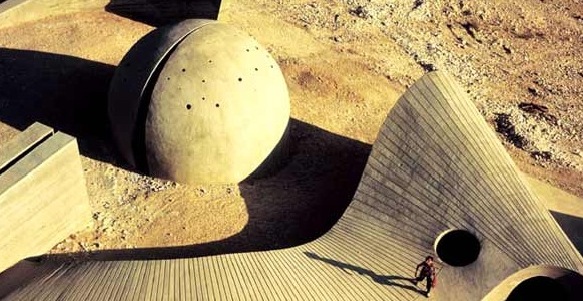
“Mending” is the theme of environmental sculptor Dani Karavan, whose massive works can be found from the barren deserts of the Negev all the way to gay Paris. And when he says mending, Karavan implies the mending of animals, plants, society and the near and far environments.

Celebrating the artist’s 77th birthday is a Dani Karavan retrospective now being held at the Tel Aviv Museum of Art, honoring Karavan’s 60 long years in the arts. We haven’t been there yet, but have seen the posters plastered around the streets of Tel Aviv and have had the pleasure of playing in Karavan’s sculptures a number of times. (We think you have to ‘feel’ them to enjoy them.)

Feel Better with Herbs of Kedem and Ancient Hebrew Medicine

5

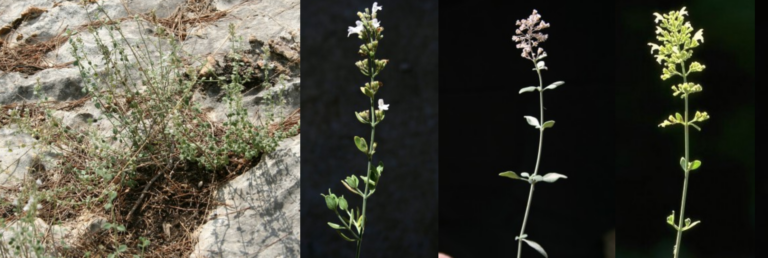
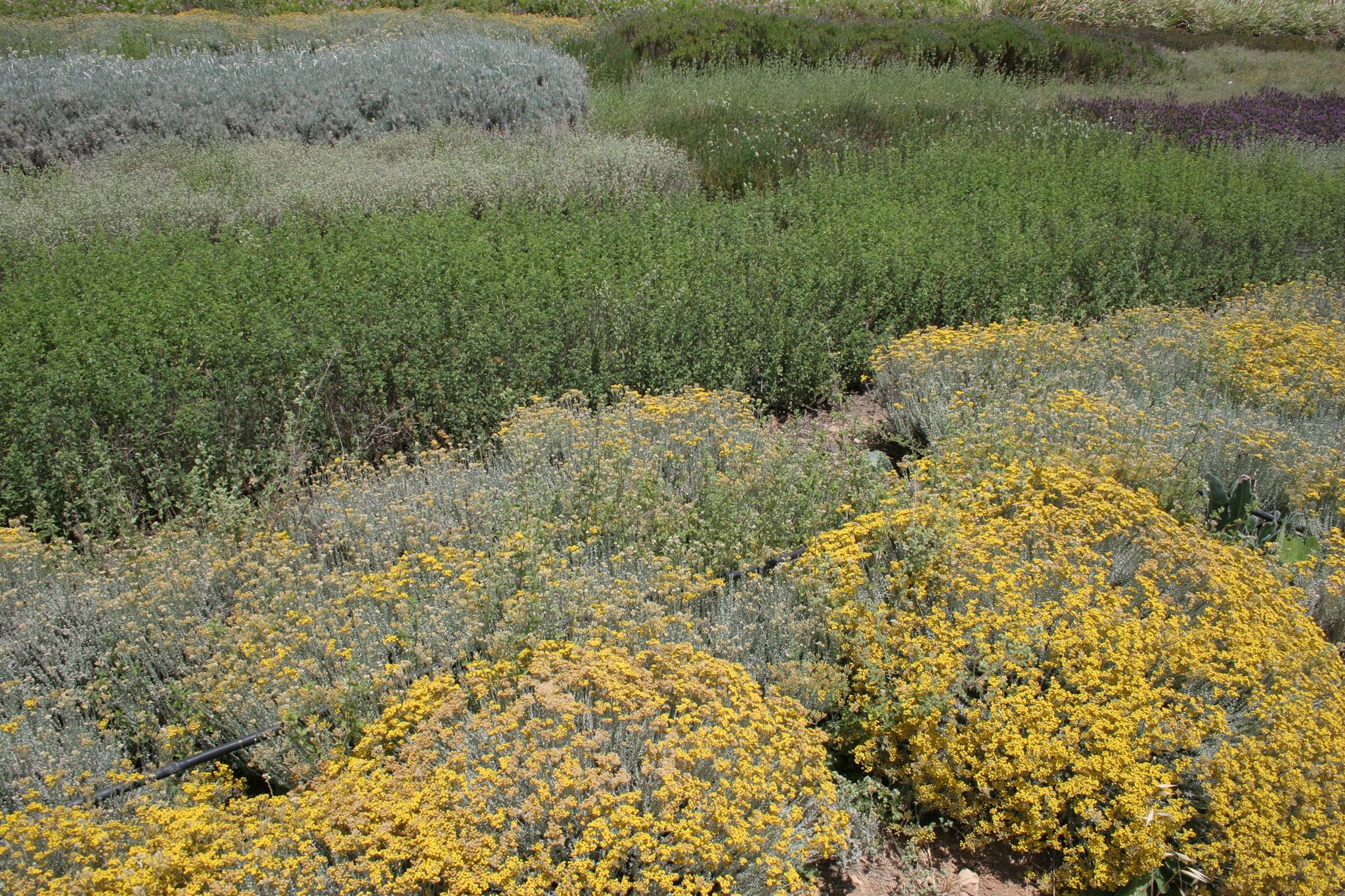
Ancient historians have described the export of ointments from the Judean Desert throughout the Roman empire and beyond, at least until the 2nd century BCE. Now the modern company, Herbs of Kedem, has revived the historical use of these herbs for medicinal uses.

Amazed by their extraordinary success, researchers at Rambam hospital in Haifa have even begun a scientific study of one of their products.
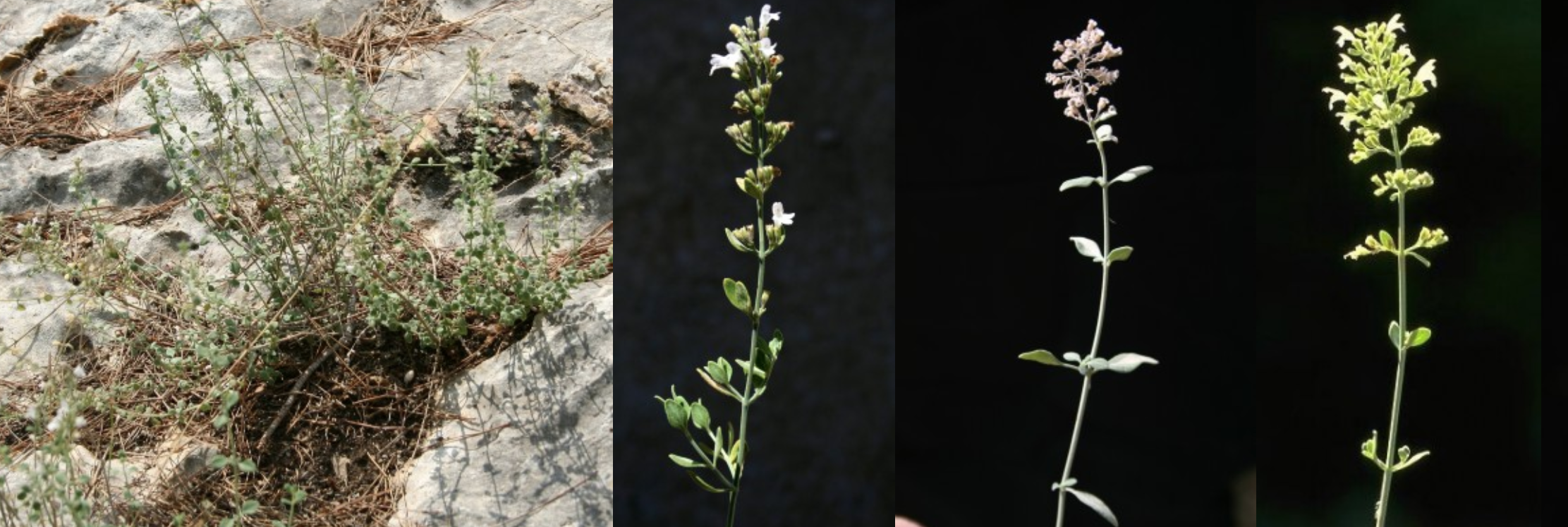
In addition to cosmetics, Herbs of Kedem sells creams to heal various skin problems such as eczema, acne, fungus, and scar healing, allergy and respiratory problems, pain relief, oral care such as gingivitis, immune system problems and chronic fatigue, and more.

In fact, doctors in one department at Tel HaShomer hospital were so impressed with an ointment to help prevent gangrene in diabetics, they now recommend it to many of their patients.

The effectiveness of these desert herbs is due to their unique location between the hot, dry Dead Sea (the lowest place on earth at 400m below sea level), and the Judean Hills, with a rainier climate and an elevation of 1000m above sea level.

These two climatic extremes in such close proximity put an enormous stress level on the herbs of the Judean Desert. The hardy plants adapt through production of various natural chemicals called phytosteroids, which are extremely useful for medicinal purposes. Herbs of Kedem bases its remedies on four basic principles:

1. Using materials from the whole plant, instead of just isolating one chemical. Many modern medicines are based on one chemical, meaning you have to use a higher concentration of the chemical, making the product more toxic.

2. Many products contain materials from more than 10 types of plants, preventing resistance (as happens with antibiotics).

3. Refraining from using dangerous oils, even when they also have medicinal uses. This decreases the toxicity of the products.

4. The counter-effect principle: sometimes your body reacts well at first to a new medicine, but then becomes resistant to it. Using a broader content of the plant instead of isolated chemicals help to counter this effect — the varying components sometimes slightly counteract each other, thus neutralizing the body’s resistance.

For more information about these intriguing remedies, ask at your local health products store or information websites like https://cpoe.org/, or visit the company’s website

::Herbs of Kedem

Locals From Rishon Fight IKEA

2

ikea-green-prophet.jpgA day out at the IKEA store in Netanya is a national pastime in Israel. While we don’t mind an outing once and a while to the superstore, we’re cautious about buying furnishings from there. Firstly for the quality issue and secondly because the business shuts out our smaller home furnishing stores in Israel.Big box stores are a pretty new concept in Israel, and thank God that not every Israeli city wants them in their backyard. A word from someone who has see the beautiful farmland around her hometown Newmarket, Ontario stripped and converted into vulgar strip malls of big box shops: they have no place in a healthy and sustainable town or city.

Dani Machlis' Artspace for the Everyman

1

green-prophet_danimachlis.jpg
(A photo from one of Dani Machlis’s online galleries)

In Israel, space is limited, but it doesn’t have to limiting. Take for example Dani Machlis from Be’er Sheva. The photographer recently discovered that owning his own gallery wouldn’t cost a fortune if he built it into his own living room.

Repurposing space in the home is not only spendthrift, it is environmentaly-friendly in our books. This way the “artiste” can spend more time on his/her muse and less on traveling to the studio, which are often set up in an industrial wasteland.

Transforming space is big in cities like New York and Japan, where a one-bedroom studio apartment functions as a bedroom, living room, and even office in some cases.

Machlis recently said in a Haaretz article, “I dream that someone who comes into my gallery will realize that you don’t have to invest funds in an additional appartment, and instead establish a similar venue in his own home. That will start a domino effect.”

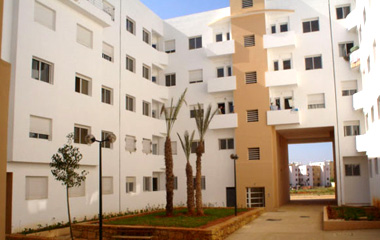
Rawabi offers suburban affordable housing Palestinians

0
east jerusalem, man on donkey
A man on a donkey, East Jerusalem

A few weeks ago, we were driving our “tourist” mom from Canada around the country, when we accidentally took the wrong cut-off and found ourselves somewhere in the middle of east Jerusalem.

Excited by seeing the children riding around on donkeys and the general sense of chaos, Mom commented on how very different this place seemed from the ‘other’ side of Jerusalem.

She was right. Now we are not going to get into the endless and tiring political debate over who/what/wheres and whys of why this is so – but the reality is that the two Jerusalems are like two different planets.

Now if you are riding around on donkeys and scraping together food to survive, how on earth can the environment be a top priority? That’s why we like the news of a new ‘modern’ and environmental housing project set for Bir Zeit, near Ramallah.

rawabi near ramallah

It will be called Rawabi in Arabic or “hills,” and some 4,000 housing units intended to house 25,000 residents are being planned by architect Sami al-Abid; the cornerstones could be laid as early as this spring.

Total cost amounting to $200 million and prices of the houses (small cottages “villas” and apartments) will cost as much as $75,000. (Later they updated that to about $150,000). Parks, playgrounds and attention to environmental aspects – such as solar energy – will be part of the project.

We hope when they say solar energy, they mean solar electricity and not the standard Dud Shemesh found everywhere in Israel. The latter is really the standard. Nevertheless, the Green Prophet loves this kind of news.

We believe people who are happy and housed, will have more energy for discussing and implementing environmental practices that can affect the whole Middle East. And peace on this planet.

Update: we interviewed Rawabi’s founder Basher Masri

The Qu’ran on the Environment

4

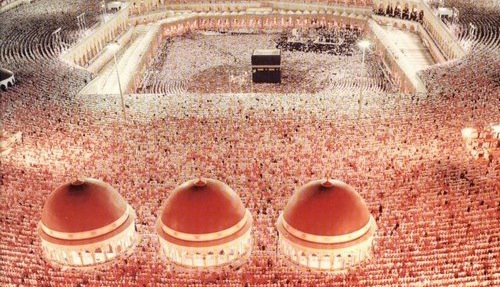
hajj-green-prophet.jpg

I was out walking about a forest around Jerusalem today and kept hearing gunshots firing off from the Arab village across the way. They’re celebrating Hajj now, said my boyfriend. And I thought of all the Muslims who must be aching to make their pilgrammage to Mecca.

With so many people converging in one small place, one must wonder the environmental impact to the surroundings. Using Google as my Great Oracle, I punched in some keywords to see if there are some groups working to green Hajj.

Instead, I found the following essay on the importance of the environment for Islam, “Ecology in Islam: Protection of the Web of Life a Duty for Muslims,” By Dr. Hasan Zillur Rahim. I have included the following excerpts:

The Jewish National Fund Meets An Inconvenient Truth

1

[youtube]http://www.youtube.com/watch?v=WO-gpsHNGEw&rel=1[/youtube]Everyone and their mother is doing it. Talking about global warming, that is. Stumbling around the net, we bumped into this YouTube video sponsored by the Jewish National Fund, which links nicely to our last post on tree planting in Israel.

Plant a Tree for Me in Israel With The Jewish National Fund

0

It’s really romantic to carve your lover’s name on a tree. But let’s admit, it’s so last century!

An even more romantic gesture, to show your love for ______ [insert name/s], would be to plant a tree in his or her name. And the act would even offset carbon emissions. Rather than going on a rogue journey into the forests alone, you can do it through the Jewish National Fund (JNF). They’ll give you a snazzy certificate to boot.

Since it became a state, Israel has had a national policy of greening the land.

There is no other country in the world, that has more trees now than it did 100 years ago.

We think that other nations of the world have a lot to learn from Israel and we are not just saying that because we love it here.

Here are some goodies from the JNF’s site:

From Goren Park in the north to Yatir and Lahav Forests in the Negev, JNF (or KKL in Israel) has planted some 220 million trees over and area of 800,000 dunams (200,000 acres, 80,000 ha).

Since the planting of the first tree at Ben Shemen in 1908, forests have played a significant historical role. First and foremost, they protected the national land purchased with funds from the Jewish People for the establishment of a Jewish state in the land of Israel.

Today, KKL-JNF continues to develop forests and make them welcoming, and you are invited to share in this work to help paint the land ever
greener.

Since this year is the Sabbatical year, the tree will only be planted next year. Let’s hope your love lasts that long 🙂

Walk the Walk for Israel’s Environment

1

We love the Heschel Center for reminding us about their fundraiser: Hike Bishvil Yisrael – March 23-27, 2008.

Israel’s outdoor scenery is breathtaking, writes Heschel, “and there is no better way to see it than with the people working to preserve it.

“This is an opportunity for a unique, challenging and rewarding Israel experience and a chance to literally ‘walk the walk’ for a sustainable Israel.”

If you’re new to the country, or want to come for a visit, the hike could be a great place to meet some of Israel’s cream of the “green” crop. We assume the cash raised will go to the Heschel Center and Hazon.