Before promoting sustainability progress, companies must ensure their initiatives are genuine and measurable. Today’s audiences are increasingly skeptical of vague environmental claims, particularly as awareness of “greenwashing” has grown.
Sydney is best known for the Opera House and the Harbour Bridge. If you’re looking to enjoy dinner with views of these landmarks, here are some great options.
It's sea turtles which may in the end save islands in the Seychelles. They may also better help us understand climate change. Like rings on a tree, scientists have found a way to read sea turtle shells and how they are impacted by climate change tells a story.
For centuries, the Sámi shaman drum was one of the most powerful sacred objects in northern Europe, and one of the most feared by church and state. If ISIS looks bad to us today for its religious fundamentalism, Christians were just as fervent.
Before promoting sustainability progress, companies must ensure their initiatives are genuine and measurable. Today’s audiences are increasingly skeptical of vague environmental claims, particularly as awareness of “greenwashing” has grown.
Sydney is best known for the Opera House and the Harbour Bridge. If you’re looking to enjoy dinner with views of these landmarks, here are some great options.
It's sea turtles which may in the end save islands in the Seychelles. They may also better help us understand climate change. Like rings on a tree, scientists have found a way to read sea turtle shells and how they are impacted by climate change tells a story.
For centuries, the Sámi shaman drum was one of the most powerful sacred objects in northern Europe, and one of the most feared by church and state. If ISIS looks bad to us today for its religious fundamentalism, Christians were just as fervent.
Before promoting sustainability progress, companies must ensure their initiatives are genuine and measurable. Today’s audiences are increasingly skeptical of vague environmental claims, particularly as awareness of “greenwashing” has grown.
Sydney is best known for the Opera House and the Harbour Bridge. If you’re looking to enjoy dinner with views of these landmarks, here are some great options.
It's sea turtles which may in the end save islands in the Seychelles. They may also better help us understand climate change. Like rings on a tree, scientists have found a way to read sea turtle shells and how they are impacted by climate change tells a story.
For centuries, the Sámi shaman drum was one of the most powerful sacred objects in northern Europe, and one of the most feared by church and state. If ISIS looks bad to us today for its religious fundamentalism, Christians were just as fervent.
Before promoting sustainability progress, companies must ensure their initiatives are genuine and measurable. Today’s audiences are increasingly skeptical of vague environmental claims, particularly as awareness of “greenwashing” has grown.
Sydney is best known for the Opera House and the Harbour Bridge. If you’re looking to enjoy dinner with views of these landmarks, here are some great options.
It's sea turtles which may in the end save islands in the Seychelles. They may also better help us understand climate change. Like rings on a tree, scientists have found a way to read sea turtle shells and how they are impacted by climate change tells a story.
For centuries, the Sámi shaman drum was one of the most powerful sacred objects in northern Europe, and one of the most feared by church and state. If ISIS looks bad to us today for its religious fundamentalism, Christians were just as fervent.
Before promoting sustainability progress, companies must ensure their initiatives are genuine and measurable. Today’s audiences are increasingly skeptical of vague environmental claims, particularly as awareness of “greenwashing” has grown.
Sydney is best known for the Opera House and the Harbour Bridge. If you’re looking to enjoy dinner with views of these landmarks, here are some great options.
It's sea turtles which may in the end save islands in the Seychelles. They may also better help us understand climate change. Like rings on a tree, scientists have found a way to read sea turtle shells and how they are impacted by climate change tells a story.
For centuries, the Sámi shaman drum was one of the most powerful sacred objects in northern Europe, and one of the most feared by church and state. If ISIS looks bad to us today for its religious fundamentalism, Christians were just as fervent.
Before promoting sustainability progress, companies must ensure their initiatives are genuine and measurable. Today’s audiences are increasingly skeptical of vague environmental claims, particularly as awareness of “greenwashing” has grown.
Sydney is best known for the Opera House and the Harbour Bridge. If you’re looking to enjoy dinner with views of these landmarks, here are some great options.
It's sea turtles which may in the end save islands in the Seychelles. They may also better help us understand climate change. Like rings on a tree, scientists have found a way to read sea turtle shells and how they are impacted by climate change tells a story.
For centuries, the Sámi shaman drum was one of the most powerful sacred objects in northern Europe, and one of the most feared by church and state. If ISIS looks bad to us today for its religious fundamentalism, Christians were just as fervent.
Before promoting sustainability progress, companies must ensure their initiatives are genuine and measurable. Today’s audiences are increasingly skeptical of vague environmental claims, particularly as awareness of “greenwashing” has grown.
Sydney is best known for the Opera House and the Harbour Bridge. If you’re looking to enjoy dinner with views of these landmarks, here are some great options.
It's sea turtles which may in the end save islands in the Seychelles. They may also better help us understand climate change. Like rings on a tree, scientists have found a way to read sea turtle shells and how they are impacted by climate change tells a story.
For centuries, the Sámi shaman drum was one of the most powerful sacred objects in northern Europe, and one of the most feared by church and state. If ISIS looks bad to us today for its religious fundamentalism, Christians were just as fervent.
Before promoting sustainability progress, companies must ensure their initiatives are genuine and measurable. Today’s audiences are increasingly skeptical of vague environmental claims, particularly as awareness of “greenwashing” has grown.
Sydney is best known for the Opera House and the Harbour Bridge. If you’re looking to enjoy dinner with views of these landmarks, here are some great options.
It's sea turtles which may in the end save islands in the Seychelles. They may also better help us understand climate change. Like rings on a tree, scientists have found a way to read sea turtle shells and how they are impacted by climate change tells a story.
For centuries, the Sámi shaman drum was one of the most powerful sacred objects in northern Europe, and one of the most feared by church and state. If ISIS looks bad to us today for its religious fundamentalism, Christians were just as fervent.
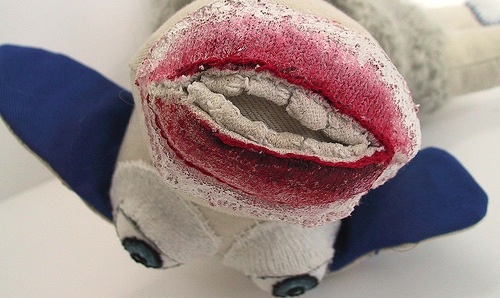
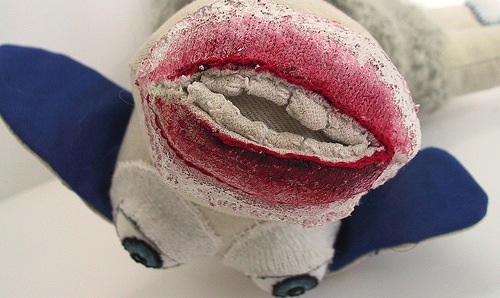
We bumped into Neta’s blog “bobilina” by accident and have been so charmed by her unique hand-made creations, often done with the help of recycled materials and socks (like the creature pictured above).
When we lived in Tel Aviv there was always such a bounty of neat fabrics – both at the pedestrian mall on Nachalat Binyamin where they sell end of the line high-quality fabrics for cheap, but there was also a lot of great material to be found on the streets, especially in the textile district in Florentine.
Not only does Neta make cuddly and charismatic sock puppets, she also makes slippers and dolls from recycled fabric, as well as purses from elegant vintage velvet that she’s found at Shuk ha Peeshpasheem in Jaffa.
We’ll be featuring more of Neta’s creations over here in the near future. In the meantime, a little more about Neta: “I create different kinds of dolls. My background is in fashion design, and my knowledge of sewing and pattern making led me to concentrate mostly on loth dolls. I have patterns that I use as basics for creating new dolls,” she says.
“I developed those patterns from the making of crochet dolls, and foam models. My crochet dolls don’t have any pattern I design them while I am crocheting. Every doll get its own personality by unique details, like embroidery, textile design, fashion accessory etc.
At the moment I sell my dolls through stores in Tel Aviv, New Mexico and at the Internet site.
You can buy her stuff through Etsy, or go straight to her blog.
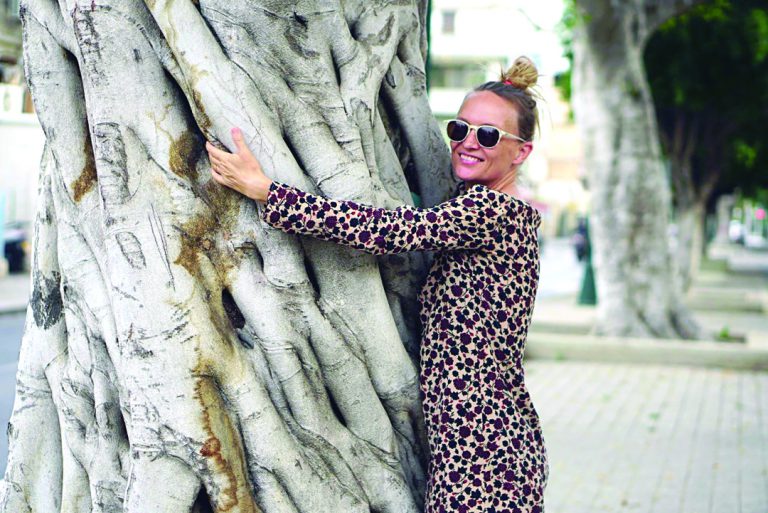
Karin Kloosterman, founder of Green Prophet, really does like to hug trees
Although Israel has grown into a modern post-industrial economy, the country still has strong agrarian roots, most famously, the agricultural socialist community of the kibbutz. But earlier than that, the Bible proscribes things to do to mark the passing seasons. There are rights and rituals for nature in Judaism and it all started thousands of years ago.
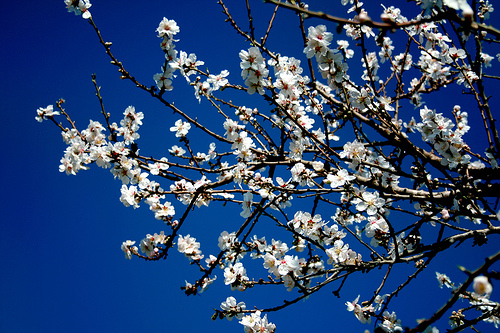
So it’s no surprise that the relatively minor Jewish festival of Tu B’shvat, which starts tonight, has been growing in importance. In recent years Tu B’shvat, the New Year of the Trees, has taken on a more ecological significance and represents an opportunity to reflect on one of today’s key environmental questions – the impact of what we eat on our environment. (Read 5 reasons to be grateful for the trees).
Israeli arbor day
For religious Jews the New Year of the Trees is the time when you start counting the age of a tree. All trees share the same birthday. This is important to know when it is acceptable to eat the fruit of a fruit tree, as a Biblical command does not let you eat fruit from a tree grown in the land of Israel that is less than 3 years old. At the age of four year, fruit from four year fruit trees were tithed at the Holy Temple in Jerusalem. Some it went to poor people who didn’t have food.
In the 16th century, the kabbalist Rabbi Yitzchak Luria of Safed and his disciples instituted a Tu BiShvat seder in which the fruits and trees of the Land of Israel were given symbolic meaning. The main idea was that eating ten specific fruits and drinking four cups of wine in a specific order while reciting the appropriate blessings would bring human beings, and the world, closer to spiritual perfection.
In a special essay, Professor Richard Schwartz, author of Judaism and Vegetarianism, reflects on how this festival encourages a more sustainable outlook to our food:
“While other Jewish holidays honor or commemorate events and people, Tu B’Shvat honors trees, fruits, and other aspects of nature,” he explains. “While people generally take the environment for granted, on Tu B’Shvat there is an emphasis on the proper stewardship of the environment.”
One of the special things about the fruit and vegetables in Israel is that they are almost entirely locally-grown. In such a tiny country, it’s rare for anything to travel more than 100 miles from farm to fork (apart from a few foreign commodities like coffee). That’s fantastic compared to my native UK where most food is imported and the proportion of home-grown food is falling each year.
While Israel’s self-sufficiency is an example to other countries – slashing pollution from transport and food storage – ‘food miles’ are not the end of the story. What about how the food is grown and the effects of synthetic fertilisers and pesticides, or the health and welfare of farm animals and workers?
“While there has been increasing interest in Tu B’Shvat recently, this holiday that is so rich in symbolism and important messages for today is still not considered to any great extent by most Jews,” says Schwartz.
“Let us hope that this will soon change and that an increased emphasis on Tu B’Shvat and its important lessons will help revitalize Judaism and help shift our precious, but imperilled, planet to a sustainable path.”
Some activities around this time can be planting trees, fruit trees especially.
Throughout history when a great event happened people would reset their calendar. When a new king became ruler the year would start again with one. Similarly, that is why we are in the year 2008 Anno Domini, Latin for: in the year of our Lord, referring to the birth of Jesus. In the Jewish calendar, I mentioned in my previous post that there are four heads of the year. One of them is: “for the kings.”
What this means is that when a king came into power when they reached this head of the year, the first of the month of Nissan, it was considered that he had reigned for a year. When the next Nissan came around, his second year and so on.
It could only happen in 2008. During the year of Shmitta, which is every seven years, Jewish law dictates that we not work the land of Israel in any way.
The Jewish National Fund customarily organizes tree-planting activities that attract thousands of people in honor of Tu B’Shvat…but not during Shmitta.
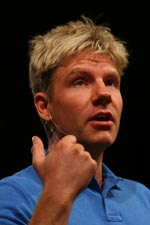
Controversial Danish Eco-Skeptic Bjorn Lomborg is currently in Israel.
Today he is due to present a lecture at the Knesset arguing that funds set aside for environmental protection would be better spent on research and development for the “possible” negative effects of global warming.Professor Lomborg, author of the book, ‘The Skeptical Environmentalist’, which ruffled many green feathers some years back for his dismissal of some scientists opinions upon the speed and rate of global warming, has recently set up the Copenhagen Consensus Centre to study human existence.
Sustainable cooking starts with an ecological kitchen
This kicks off the first in a series of tips to make you and your life, a little more green. Home is where the green heart is, and the kitchen is a great place to start making your home more environmentally friendly.
As children, who can’t remember the kitchen being the center of activity in the house? Kitchens are generally one of the most important rooms at home, for it’s here that we cook and eat and it is an important meeting point for families and friends.
In this heavily trafficked area, doesn’t it seem strange that most of us would store some of the nastiest chemicals for scouring and scraping dirt in the kitchen?
Today, many of us store our household cleaners under the sink. And the attractive, sparkling labels always give a double message, revealed on the back in smaller print: Poison! Caution! Warning!It is no longer a secret, that the use of harsh solvents and soaps in our homes cause respiratory problems, affect the nervous system of growing children and lead to other health problems.
Not to mention that the formulation of these cleansers release an unspeakable amount of pollutants into the environment during production and after their use.So when it comes to clean, what are the options of going green?
Sustainable cleaning products
If you are a clean-freak, buy environmentally-certified plant-based cleaning products. One widely available brand is Ecover, a company which sells everything from floor cleaner to dishwasher tablets. We recommend it, and it can be found in Israeli health stores, such as Anise.
The dishwashing soap of Ecover, doesn’t cut grease as well as traditional soap, and it is more expensive. But by using a plant alternative you go easier on the environment and your health, as even with a good rinse, a significant amount of dishwashing soap is left on the plate and consumed with your food.
If you are a little more adventurous and don’t mind the smell of pickles, a whole range of cleaning products can be made from the base of white vinegar.
Six cups water, two cups vinegar and a drop of your favourite essential oil makes a good floor cleaner. One cup of vinegar, three cups of water and a drop of tea tree oil makes a good cleaner and disinfectant for counters and walls.We tend to just use water, and a little traditional cleaner if necessary….
A third approach to going green in the kitchen is to simply clean less. Your grandma wouldn’t like to hear that.
Wash down sinks and floors with hot water, and get used to a little more grime on the floor.If there is one thing we can’t stand in Israel, it’s when people pour heavily fragranced water from their floors off their balconies.
If you do this folks (it’s great for watering the plants), please use a biodegradable cleaner and one that is not heavily perfumed. Floors naturally look cleaner if they are tiled with wood, terracotta tiles or cork, a sustainable alternative.
Avoid using white tiles on the floors in your home if you don’t have a flare for cleaning.
According to Blue Butterfly, a new US-based campaign for educating families on health in the home, prior to WWII, most household cleaning was done using relatively safe ingredients like baking soda and vinegar to disinfect and deodorize.
In the kitchen, adds Blue Butterfly, beyond modern cleaning products, one should avoid pesticides and insecticides. In order to keep files of ants from marching over your fresh cheesecake, or cockroaches from nesting under your pipes, keep surfaces clean and dry and keep food stores (and that cheesecake) away from the hungry mouths of little beasties.
Sustainable bug protection
Nettings, covers, sealed containers and the plugging of holes is not a conducive atmosphere for insects.
If these basic steps fail, green insecticides such as Battle for ants and roaches can be purchased online or at alternative health stores. We haven’t checked in to see if you can find this in Israel, though.Being green in the kitchen, or anywhere in the home always means being friendly to ourselves.
Try and avoid plastic containers in the kitchen. In the last 10 years, researchers have found that certain plastic dishes and containers even those used for storing dry food, emit hormone mimics, which disrupt our endocrine system, leading to diseases and cancer.
Plastics versus glass
While there are certain classes of plastics considered safe for use, who wants to take that risk? Consider buying cooking pots, storing containers and dishes made from inert materials such as glass, stainless steel and ceramic. Ceramics go well in the oven and a variety of clay can be used on the stovetop.
Now it’s time to cook and set the table. Table covers and napkins should be made from a reusable material such as cloth and not necessarily from a virgin source. Old sheets can be dyed and serve as a tablecloth and napkins.
When they get too worn, convert them to dish rags or floor rags.After your meal, veggie scraps, teabags and eggshells go into your compost pail for the garden (see James’ soulful post on starting your own), or an urban composter can be bought for use in the city home where green space is limited.
Tell the plastic film it is time for a wrap and invest in food-grade silicone food covers, which can go in the freezer. For a final touch, cover your florescent light with some pink rice paper and bask in the glory – your kitchen is on its way to being perfectly green!
Here is a video recap of Israel’s recent WATEC (water technologies), conference. We were there this past November, and collected tons of notes and brochures on clean technology and innovation you’ll be hearing about in the near future.See also the story on Israel21c.::WATEC
“There are four heads of the year… on the fifteenth of Shvat for the trees…” Mishna, Tractate Rosh Hashana, 1:1
As our home revolves around the Sun, the Jewish calendar is circular as well. How does one year have four beginnings? A circle does not have any beginning, nor does it have an end. Wherever you decide to begin counting cycles of a revolving wheel, that is the point you look for when looking to count the next cycle.
It reminds us a bit of the canary in a coal mine story – throw a living creature into a dangerous situation, and if it lives, forge ahead.If it dies, oh well. Rethink strategy.An Israeli company Checklight has put this concept into practice, using the luminscent bacteria found in the sea, like on the beaches of Costa Rica, to ensure that drinking water stays safe.We’ve yet to hear about animal rights activists lobbying over the rights of bacteria, so it’s probably pretty safe to say, that Checklight’s technology is a novel solution (although it’s being done already in the sewage treatment business, they say.)What they’ve done is culled a variety of “glowing” bacteria from the sea, and when placed in a special substrate with a sample of drinking water, they glow strongly if the water is polluted.
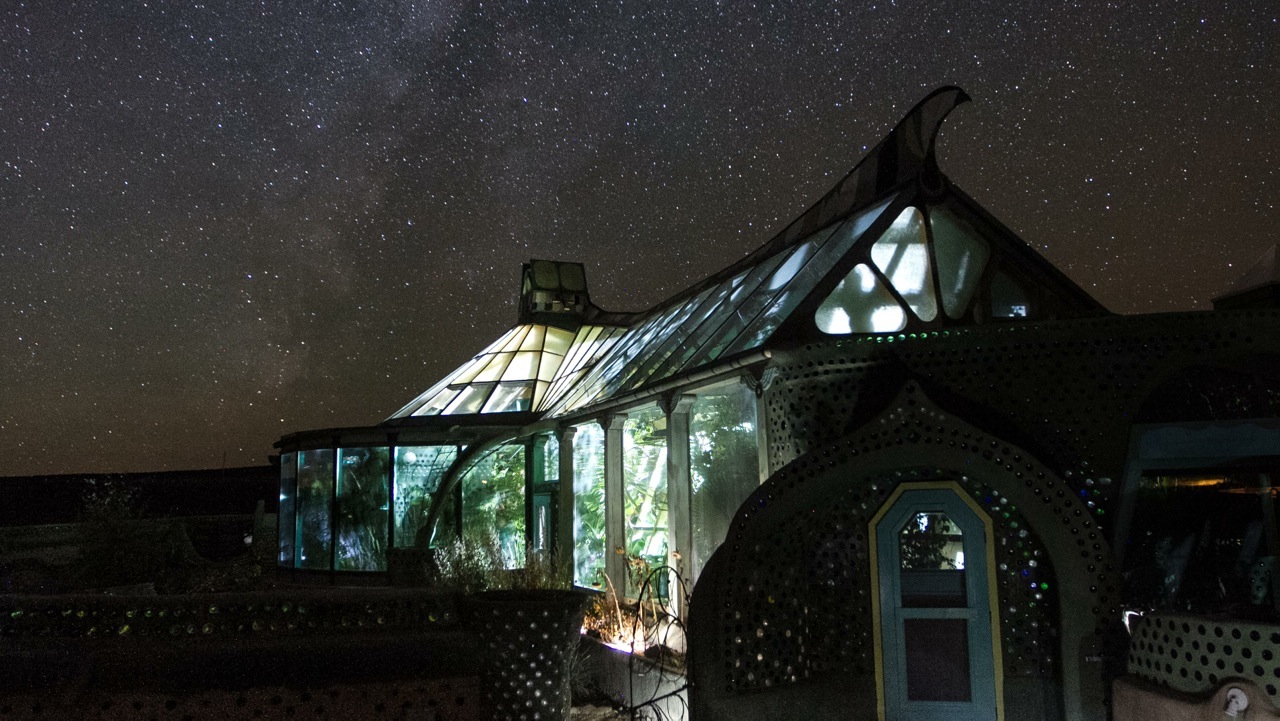
This earthship home in Phoenix is built from trash
Micheal Reynolds is a true visionary of a sustainable way forward for humanity, housed in buildings that use throwaway materials and don’t need external power or sewage systems. ‘Food, Energy, and Sewage’ is his mantra, and getting them or getting rid of them without reliance on the National Grid system is his pre-occupation.
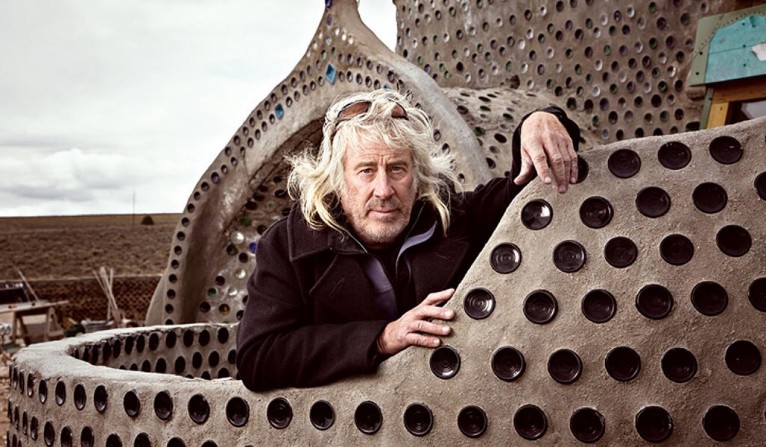
Michael Reynolds has been building earthships, homes from trash for decades
Thankfully, Reynolds, the ‘Garbage Warrior’ has been brought to the screen in an illuminating film of this title by Oliver Hodge. I’m just back from it, and fired up. I urge everyone to see this film, whether you are motivated to build a home in Israel’s Negev Desert out of plastic bottles and/or old tires (a classic Earthship), or just want to see someone act on their gut feeling and fly out to the Andaman Islands in the wake of the Tsunami, with his crew of 7 equally passionate builders, and built houses for the devastated Islanders.
In response to Hurricane Katrina, which flattened New Orleans and much of the land around it, Reynolds and crew leapt into action and built houses out of raw materials for victims there too. Reynolds is a true hero who talks the talk and delivers the goods.
The film has lots of humour: Reynolds is a self-confessed hippy, who, according to his wife, attracts “crackpots” (who seem to be a fiercely loyal and talented bunch). His long gray hair and lolloping gait, warm and open face and ‘Easy Rider’ attitude, endear him to the viewer quickly, and his passion for the earth and humanity shine through from the opening credits.
Watch the Garbage Warrior Trailer here:
His own reference to Noah, shunned for building a boat in a dry desert, seem to have many resonances to his own life – experimenting with solar gain and thermal mass in many hit or miss houses and communities scattered through thousands of acres of land deep in the New Mexico desert.
There is a low trough in the film, which Reynolds plunges right into, in his attempt to get a law passed in the New Mexico/Taos State legislature, allowing such experimental and sustainable buildings to be made. Endless shots of him roaming through the State Council Building looking for support from the Council members (many of whom are shown to be either filibusters or just plain sleeping on the job), just is a waste of this hero’s time, and shows the sad, slow passage of the body politic.
Director Hodge cleverly navigates through this, his camera glued to Reynolds, yet discreetly supporting him all the way.
An earthship in Normandy, France
Let’s use the vision and raw talent of this man to be inspired and carve out a real, sustainable future, turning our trash into walls and roofs to house us all. With effort, we can. Some diagrams below for getting started.
I recently had the opportunity to interview poet laureate and known environmental activist Robert Hass (full interview is here).Hass was in Israel for the “Poetic Natures” conference in Tel Aviv last week, and while he was here he explored some of Israel’s unique environmental features.Among many topics, Hass spoke about the environmental parallels between Israel and California, as well as Israel’s unique responsibility as a flyaway for nearly a billion birds a year. (Hass expressed an interest in seeing the Hula Valley, home to diverse species of birds.)
“I worry that the environmental movement is always in a defensive position. It’s always arguing against development, or a dam, or economic development someplace, and so then the developers say ‘We’ll be reasonable and take half.’ Ten years later, they take another half.”
In Judaism it is traditional to make blessings. In fact sometimes it can feel, for the initiated, that one makes blessings for everything! It can be inconvenient, however, I believe that what lies behind, is the true nature of what it means to be green.
From the same gal that brought us the inflatable kayak skirt (the Evacuation Skirt), which is great for flash floods when global warming sets in, comes the 2-in-1 slipper rocker chair.
This is our first season in Jerusalem and can we tell you – it is freeezing here.
We think if we had one of these rockers we’d be able to turn our little space heater down (save energy), warm our toes, and get some much-needed exercise at the same time.
Israel offers such an incredible potpourri of cultures. They all seem to melt together through Rachel Oren’s Ethnicware.There you can find one-of-a-kind cushions handcrafted by Bukarians, Ethiopian embroidery, a Bedouin bag… so many treasures and delights.We love the driftwood bowl, but imagine that it’s been imported from India.No matter, Green Prophet thinks it’s a good thing to support local craftswomen, wherever they live.On the site Tchotskes, where we first saw this link, they say buying locally is a mitzva. Can’t argue with that.Here are some words and rationale for Ethnicware, from Ms. Oren herself: Ethnicware Limited was created with a view to offering and selling to overseas markets a wide range of home furnishings, hand-crafted in Israel by the diverse ethnic groups and religious factions living together in this country.
The beginning of this year opened up a new hunting season, hunting smokers! According to Haaretz smokers beware! They’re out to get you! “It seems that no law has ever been enforced in Israel with such speed and efficiency. An army of municipal inspectors invaded cafes and bars, as did dozens of activists and volunteers acting independently, filing suits in court against smokers.”