Home Blog Page 768

Sustainable baby clothes

2

babyclothes1.jpgOur clothes are an integral part of our lives–they can reflect the type of work we do, our beliefs and even our moods. So it may come as a shock to know that our clothes can also pose a health risk and do serious damage to the environment.

Most people prefer to wear 100% cotton clothes believing this to be the best option. It’s a naturally grown fibre, what could be better?

But it turns out that your conventional cotton T-shirt just isn’t what you thought it was. Cotton is in the top three of worst offenders for environmental damage in agriculture, with a very high price to boot for the people growing it.

The World Health Organization estimates thousands of deaths annually from the use of highly toxic chemicals for growing cotton. Yet more highly toxic chemicals (at least 8,000) are used in the processing and manufacturing of cotton, and they then add chemicals such as formaldehyde, which leave residues in the fabric, exposing you to skin irritants. It is well known recommendation by doctors to dress children suffering from eczema in organic cotton clothing.

The good news is that more and more organic cotton clothing for children and adults is available today.

Organic cotton clothing falls into two categories: 1. Clothing made from organically grown cotton. 2. Clothing made from organically grown cotton which is then processed and manufactured following strict ecological guidelines. For example they do not use chlorine based bleaches to whiten the fabric, nor do they use heavy-metal based dyes, azo-dyes, nickel based zippers or accessories, and no chemical finishes are added. All this promises you the cleanest, highest quality cotton possible.

So how do I know which is which? Well to buy an 100% organically made T-Shirt, you need to look for certification. There are several organizations that inspect and certify the manufacturing process, including Demeter, EKO Sustainable Textiles (SKAL) and Agreco. It is always best to support organic agriculture and buy clothing made from 100% organic cotton, but if it has no certification for manufacturing, the chances are that the finished items have chemical residues in them.

It is also very important to know that babies and children are far more sensitive to these residues; their bodies are still developing and their bodies work and breathe faster, increasing their intake of chemicals in their environment. One of the biggest concerns is that when dressed, our bodies heat our clothing causing chemicals present to emit gases, making it a lot easier for our bodies to absorb them.

So where to find organic cotton clothes? Tinok Yarok sells baby clothes made from 100% certified organic cotton (SKAL), following fair trade practices for baby’s first year. It is highly recommended that the first layer of clothing next to the baby’s skin be organic, and the rest go second hand. Baby clothes have short lives and can be passed between friends and family, making it the best eco option and financially easy. “Cotton,” which has several shops throughout the country, also designs a range of women’s clothes using organic cotton.

Note: It is very important to understand why organic cotton clothing is more expensive:

1. You are paying the true price, which includes the farmer’s price, the factory worker’s wage and work conditions, as well as the toxin-free manufacturing process.

2. If you buy a baby suit for ten shekels on the market, chances are it was made in the Far East, where workers routinely work under sweatshop conditions and children are often employed. There is no inspection process to follow the manufacturing process; cheap highly toxic chemicals are run of the mill, threatening the environment, the workers’ health and your own.

3. And cheap often means very low quality, so in the end you end up buying and spending more!

Lastly, if your closet is feeling unmanageable, consider custom closet organization systems that can clear the clutter and provide a nice design accent for your child’s closet.

Before you buy anything though, first check with your family and neighbors if they have any storage systems to give away.

Leaky?

0

leak - green prophet.jpgDo you have any leaks? It’s time to take care of that! If you fix your leaky faucets and plumbing joints it can save 20 gallons per day for every leak stopped.

Putting the Pedal to the Heavy Metal

10

Keep your eyes open and your flashlights near tomorrow night between 8 and 9pm, because Tel Aviv will be taking part in Earth Hour – an international initiative that aims to reduce power consumption by turning off lights and, as a result, decrease greenhouse gas emissions. 

This will be the first time that Tel Aviv – or any Israeli city – participates in the global movement.  At least 24 cities worldwide will be participating in the event, including Bangkok, Chicago, Dublin, and Sydney (which inaugurated the Earth Hour concept in 2007).   

“Green Our Transportation!”

0

green course - green prophet.png

Green Course , the only nation-wide student environmental organization in Israel is organizing a demonstration this coming thursday. They are protesting the unreliability of the current public transportation.

Washing Dishes

0

dishes - green prophet.jpgWhen washing dishes by hand, don’t let the water run while rinsing. Turn the water on for each dish individually. If you are considering a dishwasher look for energy and water conservation ratings when making your decision.

Greening Local Politics

climate-change.jpg

Municipal elections will be held across Israel in November, and here in Jerusalem the current incumbent, Uri Lupolianski, will be challenged by Nir Barkat and Arcadi Gaydamek.

While Jerusalem is always hotly contested for many reasons, this year a coalition of green groups has launched an initiative to get the environmental agenda high on each candidates list of priorities. Hopefully local politics across the country will start to green.

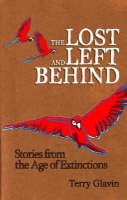
Review of ‘The Lost & Left Behind’ by Terry Glavin

0

lostleftbehind.jpg

“We are not gaining knowledge with every generation. We are losing it. A dark and gathering sameness is upon the world.”

– Terry Glavin – ‘The Lost & Left Behind: stories from the age of extinction’ 2007


This is one of those very few books that sit right in the hand – a few pages in, and the strength of the writing coupled with the clear message of the book, grip a reader, and the synergy of the authors words coursing through the reader has begun. In this case, Glavin, a Canadian journalist, blogger, author and professor of creative writing, has hit on the most urgent topic – extinctions: of species, habitats, languages, tribes, beliefs, stories …. that really should fire up our bellies and get us all responding.

The author has travelled the world, consulted scientists and talked to locals, read up on histories and teased out statistics, and herein presents a grim analysis of the situation. Each chapter structure is broken down into species headings: a tiger, a bird, a fish etc, but then within each chapter, a world around that species is contained and examined, and chiefly, how the human world has historically interacted with that species, and whether our actions have directly or indirectly caused that species to reduce in numbers, or like the famous dodo, simply disappear.

Israeli Scientists to “Freeze” Global Warming

2

freeze-global-warming-green-prophet.jpg

“At a time when steadily increasing atmospheric CO2 concentrations, coupled with the acidification of the ocean’s waters, precipitate the ongoing process of global warming, the importance of following long-term changes and trends in aquatic photosynthesis increases dramatically,” say Dr. Ilana Berman-Frank and Prof. Zvy Dubinsky, of Bar-Ilan University.

This is important since about 50% of global photosynthesis takes place in the oceans, which therefore are the major sink for atmospheric CO2, mitigating its mankind-driven increase.

Later this month, the Bar-Ilan team and colleagues from around the world will gather at a workshop at the Inter University Institute for Marine Sciences, on the shores of the Red Sea in Eilat, in order to monitor these trends – an important process they began thirty years ago.

Go Green Quickly to Avert Energy Crises, Say US-Israeli Economists

0

picture21.gifAnalysts from Tel Aviv University and San Francisco offer sound solutions for looming energy crises:
With electricity rates soaring as much as 150% since 2001, and predictions of severe and regular blackouts in states such as Washington and Virginia, there’s a clear need for new thinking about electricity.

A recipe for preventing a dark future comes by way of an Israeli and American team, who suggest effective and environmentally friendly ways to generate “healthy electricity” markets in the United States.

Israeli Green Funds Turn Red

1
shipping freight at sea from above
Greener shipping, cleaner fuel, less energy intensive. These are all calling for Impact Funds. 

It may pay to invest green, but Israeli green funds are momentarily in the red, reports the Israeli business newspaper, The Marker.

Israeli green mutual funds trading on the Tel Aviv Stock Exchange (TASE) invest primarily in foreign companies. The growth of the shekel, the nosedive of the dollar, plus a decline in the cost of oil have contributed to the crashing of green company stocks.

Altshuler Green Fund, the first green fund on the Israeli scene (founded in 2005) reached a high of NIS 550 million and now manages NIS 390 million in assets. Late last year the company launched the Green Extreme to fund cleantech companies who have not yet proven their feasibility.

Despite the recent weak performance of its green shares, Altshuler reports that many green companies are growing by about 30 percent a year.

Two other Israeli funds to look out for are Apex Green Energy (of Apex Mutual Funds), launched October 2007; and the cleantech division at IBI Investment House.

Says Elad Kook who heads the cleantech division at IBI, “figure we are at the beginning of an awakening to the global warming problem, and are just starting to understand the technologies of the companies in the green energy sector.”

For those with a green investment thumb, he recommends wind energy equipment manufacturers, such as Gamesa and Vestas, and energy demand management companies, such as Comverge, and Camco, which trades in carbon-dioxide emissions quotas.

But don’t stop here, read a Green Prophet interview on Israel green investments

A Green Shekel, Ethical Financial Investment in Israel.

Bjorn Lomborg Lectures Israel on Enviro-Funding

Israel’s Water at the Mercy of Heaven?

0

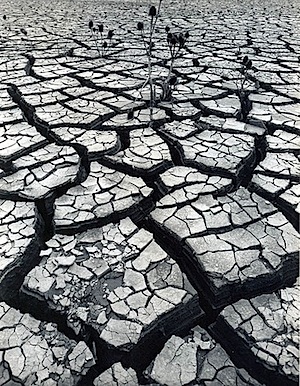
dry earth - green prophet.jpg

It seems that we’ve been too spend-thrifty with our water and it’s all running out. By the end of this year, if we do not do something drastic the water levels will become so low that our natural water sources will become polluted.

What is our government doing towards a solution? “By the end of the summer, [the water level may be so low that] we may not be able to pump water out of Lake Kinneret at all,” Water Authority spokesman Uri Shor told The Jerusalem Post that until the next desalination plant begins working, “we are at the mercy of the heavens.” This desalination plant is only due to be completed by the end of 2009.

Tread Lightly: An Update

0

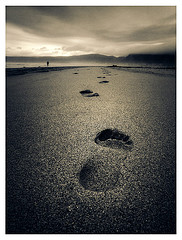
footprints.jpgBack in January I wrote about the ‘Tread Lightly’ environmental project run by the Guardian Newspaper in the UK, (you can read the previous post here) and promised an update, so 3 months later, I’ve reviewed my pledges and progress, and that of the entire community who signed up – to date, 4209 folk around the globe, doing their bit to cut carbon and reduce their impact on planet earth.
Hey planet, how will spaceship earth remember you?

0

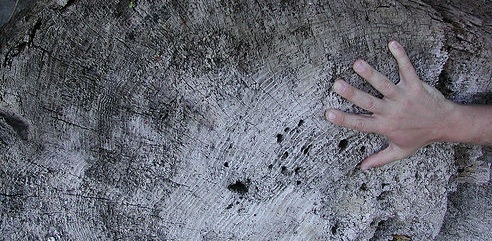
rings on a tree, earth memory

The Earth has a memory. It has records of African flowers blooming in the summer; it remembers cold, desolate Arctic winters since winters began, and the spawning of coral in the Great Barrier Reef one night, every spring.

I remember my first lesson as a child, on how the Earth remembers. The teacher had brought in a slice of wood from an old pine tree. Based on the number, thickness and colour of the rings we could tell how old the tree was when it was felled, if the tree was well watered, and if the summer of any given year was warm or cold.

Later, I learned, it is not only trees that Mother Nature imbues with memories. The Earth keeps mementos locked in time in most any place we look.

On the coast of Israel we can find traces of an anienct tsunami; in Canada we can see how the glaciers thousands of years ago dragged snow and rock across Ontario; in Mexico, we can see where a giant asteroid – the Chicxulub – pounded into the sea – an event that is believed to have caused a nuclear winter.

In recent years, along with the explosive population of humans, the Earth has started to record different memories. Pollen records from lakes, the chemical composition of corals, and the oxygen bubbles trapped in the glaciers reveal startling facts: that the amount of carbon released in the atmosphere every year is climbing steadily.

Carbon is the building block of life. Plants exchange carbon dioxide that our mammalian bodies exhale. Carbon also builds our bones, and it is the same material that makes trees strong.

Today, as more and more people inhabit the planet, the natural balance of carbon locked into the earth, and that which is released, has changed.

The result is Global Warming. We can no longer ignore that our planet is heating up. And unless we change the way we travel, heat our homes and consume our food, humanity, within the next couple of decades, could meet a very uncertain future.

“The world must embrace a carbon-neutral lifestyle,” says Al Gore, who produced a film about global warming, An Inconvenient Truth. “To do otherwise,” he says, “will result in a cataclysmic catastrophe.”

In this movie, Al Gore, presents the facts. We are currently emitting 70 million tons of global warming into the atmosphere every day, which means that we have doubled the amount of carbon dioxide in the atmosphere only in the last fifty years. If the frozen carbon dioxide in Siberia should melt (and with temperatures rising this is not so inconceivable – most of Greenland is melting) we will double the amount again, and ridiculous amounts of methane will be in the atmosphere.

Erin McKean, editor in chief of the New Oxford American Dictionary explained why the word carbon neutral was word of the year for 2006:

“The increasing use of the word carbon neutral reflects not just the greening of our culture, but the greening of our language. When you see first graders trying to make their classrooms carbon neutral, you know the word has become mainstream.”

The two greatest sources of carbon dioxide gases in the world comes from slash and burning of forests for cattle which produce methane gas; and fossil fuels that drive our cars and heat our homes.

With 6.5 billion people on the planet and counting, the future doesn’t look good.

How can we measure our individual impact and decrease our carbon footprint?

Action at the community and government level is clearly not working fast enough. Large corporations and politicians are thinking about profits, returns and gains on investment before thinking about responsible, non-polluting business practices.

It is easier for us to do something about Global Warming if we can understand what our own carbon footprint on the earth is. If public opinion and action changed the size of a growing ozone hole, we can certainly do the same for Global Warming.

To measure your carbon footprint, several organizations have developed a carbon calculator. With it, you can see how much carbon you and your family are adding. The goal is to become carbon neutral – where your carbon load is stabilized and offset by other carbon sequestering means such as through the planting of trees.

Adopting vegetarianism, use of public transportation and your bike, as well as purchasing local products that don’t involve long distance shipping can help; as well as the use of a clothesline to dry your clothes.

And since it is the shorter journeys before your engine is warm that produces the greatest amount of pollutants – jump on your bike for a quick trip to the store instead of using the car.

If you are going to idle for more than 2 minutes, turn your engine off and also make sure your tires are inflated. Avoid accelerating or braking quickly and park in the shade as sun on a hot car also produces smog. If you really want to make a big difference, drive a hybrid car.

Also signing up to invest in alternative and renewable energy such as solar and wind energy will counteract some of our negative habits. The sun, like a huge lightbulb, is only eight minutes away, and what is stopping us from having a solar powered planet?

Planting trees is also an important step forward, as they take in the carbon dioxide that pollutes our planet. At present the world’s forests are too quickly being destroyed.

Forest Fires are on the increase with lightning meeting rising climate temperatures and people are too readily using trees for living purposes. Last year in the USA, 57 million trees were used to make catalogues (that then pollute the street where you are living..)and it is estimated that 30 million dollars can be saved every year on greenhouse pollution by using recycled paper.

We can’t forget that the Earth has a memory. We have to wake up collectively and take responsibility for our actions if we want to minimize our carbon footprints on the Earth.

That way, the Earth and our future generations will be able to experience African flowers blooming in the summer; the cold, desolate Arctic winters since winters began, and the spawning of coral in the Great Barrier Reef one night, every spring.

Eco-Mum Says Toss Those Nappies With Elimination Communication (EC)

1

greenprophet-baby-environmental-ecology-health-israel.jpg

Well we have looked at the cloth nappy issue: now for the ultimate in eco-friendly baby practices – let’s go nappy free. No rubbish and no washing! You can’t get greener than that.

So how does it work?

Well it’s as simple as it sounds, your baby is nappy free. Elimination Communication (EC) is the practice of reading your baby’s expressions to understand when they need to do peepee or kaki and being able to respond to them. EC mums say that it strengthens their relationship with their baby.

Eco Purim

2

purim - green prophet.jpg

With the holiday of Purim drawing near it’s a great opportunity to rethink bad holiday habits. Here’s a few things to mull over:

  • Think reusable with the Mishloach Manot. Baskets look nice, but they usually go straight to the garbage.
  • Save those bottles, some places even give you money for them… (usually supermarkets)
  • Do you need to buy a costume? Be creative, see what you can find around the house.
  • Think eco when filling those baskets!