Home Blog Page 760

Uri Rosenwaks' "Garbage Country" Premieres at Eco-Cinema

israel film review bedouin environment ecology landThis is some advance publicity for a film I haven’t yet seen, but it comes from a highly talented Israeli director Uri Rosenwaks, who made ‘The Film Class’ (2006) about the black Bedouin tribes of Rahat two years ago, which I highly reccommend as an illuminating portrait of a fascinating and little-known part of society, or society within a society.

If you are feeling equally sore (as we at GP are) about the amount of trash left behind this week after Independence Day in Gan Sacher in Jerusalem, at the beach and in the forests, this film may show a lighter side to littering, or fire all us environmentalists up even further.

‘Garbage Country’ (2008) premieres on cinema screens this week at the Jerusalem Cinematecque’s ‘Eco-Cinema’ Film Festival.

One Industry's Junk Is a Child's Treasure: Recycling Workshops at the Israel Museum

israel museumThe Israel Museum in Jerusalem is currently undergoing a massive renovation of its structures, but it emphasizes renewal in more ways than one.  As part of the program geared towards children at the museum – which includes an imaginary prehistoric cave, water activities, and a special library – the Israel Museum’s Youth Wing offers a special recycling workshop.

15 ways to hack your old computer into something useful and great

11

recycled computer upcycling, e waste children, PC reusing

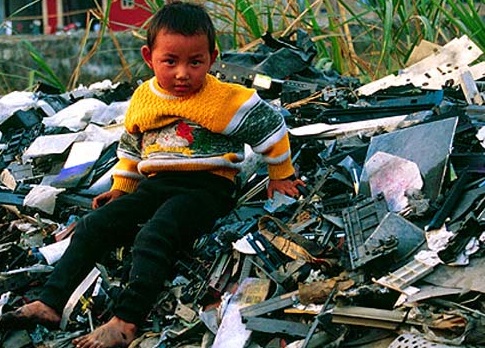
An old computer these days isn’t necessarily useless. It doesn’t work like it used to, but it may still have a function in your life, saving you resources, time and money –– plus all the environmental benefits of not having all the nasties in your computer end up in landfill, and endangering other people’s lives.

Green Prophet has scoured the web for some tips and has compiled a list of things you can do to extend the life of your computer. Score extra points with your friends –– these tips will not just turn you into a recycling champion, but possibly a tech-geek as well.

1. Downloading Tool
Popular downloading software such as eMule, Vuze or BitTorrent employs a download queue, meaning it can take days, possibly even weeks before you are able to download successfully. Time to put your old computer to use, while keeping your new computer free for other tasks. Use the old machine as a round-the-clock downloading device. When the downloads have finished, transfer them to your new computer with a mobile memory stick (disc on key).

Burning your files, movies and music to DVDs and CDs is so passe and so 2006.

2. Build a Poor Man’s Media Center
The older computer can be hooked up to your TV and stereo allowing you to see your downloaded films on a larger screen with high quality digital sound. If your old computer is a clunker from the 90s it probably won’t work well, but if only 3 to 4 years old, it should have enough strength to power your needs. A wireless keyboard and mouse is recommended.

3. Children’s Computer
Kids love messing around with computers (with sticky fingers!) and your old machine might be more than enough for them. You can teach them piano using a special keyboard; if your kids are in the age range of two to five buy them a Comfy keyboard, which comes with games and teaching software. Old computers work well in this incarnation, even if the computer is really rusty and the games advanced.

4. A Network Server
Create a local network between several computers using your older computer. This can help organize the flow of information between computers and connect all the computers to the Internet. Perfect for the home or office, connect using software such as NetLimiter, which gives a certain bandwidth to each computer, along with firewall software. This frees up memory in the newer computers.

By mod’ing your old computer into a “Smoothwall” firewall, you can rest assured that villains will have less chance of sneaking into your precious files and resources.

Consider using an old machine to host your website.

5. E-Mail Server
In business especially, keeping information private and confidential can be the utmost of importance. The old computer can be turned into an internal e-mail server to prevent emails meant for internal communication from leaking to the outside world. Not a simple task, there are some guides online that can show you how to do this.

6. Print Server
If more than one computer needs to be connected to the printer, consider turning the old computer into a print server. Always running, it can print out a job even if other computers are switched off.
Life Hacker has a great tutorial on how to do this.

We do recommend computers that are not in use at night to be switched off to save power.

7. The Computer Lab Rat
So you’ve always wanted to tinker with the newest and best computer languages or programs, but are afraid to muck up your new computer. How about using your old computer as a “lab rat” for trying a C++ test, C#, Javascript, Python, or other coding languages. Maybe you want to play around with Linux (free open source software platform), or Ubuntu but don’t have the energy or guts to set up a dual boot setup on your healthy new computer.

If your mother is like ours she is addicted to sending the latest beer commercials, powerpoint presentations of waterfalls from around the world, and animated jokes to all of her friends, obviously leaving her computer (which you’ve just fixed) vulnerable to viruses and spyware. Invite mom over on the weekends to download email files until her heart’s content. If there is going to be an “infection” it might as well be on the old computer.

8. An Audio Center
Your old computer can pump up the volume. Using Linux (which you have now learned), connect some decent surround sound speakers into a Creative Labs Audigy sound card and annoy the neighbours using MMS.

9. Fax
Some people are stuck in the eighties and still insist on working with faxes. It’s unavoidable and a waste of paper, but what can you do? Instead of losing business, or buying a machine you will rarely use, turn the old computer into a fax machine. Connect it to a telephone line with a modem and set up the fax software that comes with Windows XP.

10. Spare Parts
Some people make their business collecting spare parts from computers and building new ones with all the pieces — one of our Dad’s friends does this for a living with computers our Dad finds. Consider stripping out some of the old parts in your computer to mod your newer one. A hard disc, an optic disc or the old computer’s internal memory may be reusable if compatible with the new motherboard. Or consider buying a container for your old hard disc and turn the old standard disc into a mobile one. The container will need to be a strong aluminum box, a supplier of current and have a USB converter. *Make sure you don’t electrocute yourself in the process.*

11. Help Cure Cancer
Connect your old PC to a worldwide network and server farm by joining a distributed computing organization. Computer geeks, via the internet, connect hundreds and thousands of computers together to use combined CPU power to create a supercomputer. This new powerful tool is put to work as a “number cruncher” –– finding possible cures for cancer, Alzheimer’s disease or it keeps itself busy searching for extraterrestrial life. See Folding@Home, Boinc or SETI. Once you get it up and running, you’ll be able to disconnect the monitor and access remotely if necessary. See this Tel Aviv University project, as well.

12. A Poor Man’s TIVO/Kodi
With very little effort, you can mod your old PC into a digital video recorder (DVR). This method gives you more flexibility than what your cable company provides, and you’ll avoid the monthly fees. Clean out the old computer first, reformat it and install Windows XP. Then buy a video capture card, a TV tuner card, and invest another $100 (NIS 350 or more) on a bigger hard drive. Record your TV shows on the newer hard drive. Some software will let you zip through the dreaded commercials.

13. Donate to Charity
There are groups and associations around the world that are happy to collect old computers on behalf of schools and other charities. A Computer for Every Child in Israel upgrades 60 to 70 percent of the computers they receive –– the rest serve as spare parts for existing computers.

The old machine can also come in handy for typing and keyboarding practice at schools. Because let’s face it, how many of us are writing by hand these days? Keyboard practice is essential until they can make a computer that can read our minds.

Before you do give that old computer away, be sure to clear out all the vacation pics in Miami and the emails to all your true loves over the years. Clean up with CCleaner and execute a defrag.
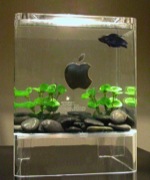
14. Arts and Science Projects
Ever looked inside the “guts” of your computer. What makes it tick? These machines (when handled with care) can be used in “dissection” classes for learning how to assemble and fix computers. And then the terminals can be turned into fancy aquariums.

15. Recycling
If your redundant PC has really had it, with no chance on earth to be put to good use elsewhere, make sure you donate it to a company specializing in recycling electronic waste. In Israel, see Rerouting Deadly Electronic Waste.

For Tech Geeks
For the extra extra geeky ones in the crowd, see more ways to “mod” your old computer here. And of course, consider buying a Mac, because they never seem to die.

Want to explore more ways of greening your life? See:
Green Prophet Green Guide to Your Living Room
Green Prophet Green Guide on the Bedroom
Green Prophet’s Green Guide to the Kitchen
Green Prophet Green Guide to the Bathroom

Gil Peled Creates Israel’s First Green Apartment Building

9

eco housing sign jerusalem gil peled

Designs for new technologies to green homes, or even building new ‘eco-friendly’ neighbourhoods from scratch like in Kfar Saba (Green Building or Greenwashing?), are coming in thick-and-fast in Israel. But what about the millions of people living in buildings that have been standing for decades?

One man who has come up with the answer is Gil Peled, an Israeli architect and green building consultant, who has rallied the neighbours residents in his Jerusalem apartment building to the cause. Since 2002, the Eco-Housing Pilot Project has succeeded in reducing energy use, waste and water consumption by over 30%. “When I began, not many people knew what I was talking about,” Peled told Green Prophet. “We all went through the process of becoming green together.”

Why Doesn't Tel Aviv's Carmel Market Compost (or Recycle)?

4

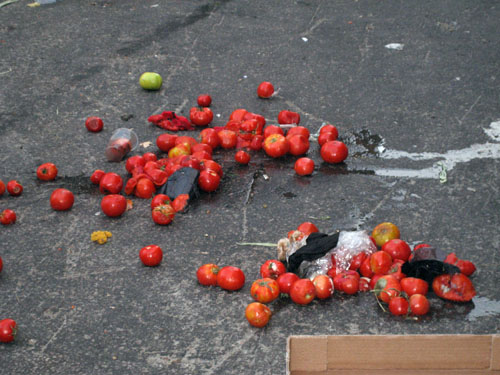
Late Friday afternoon at the Carmel Market in the center of Tel Aviv. Shabbat is approaching, and the “shook” is winding down for the weekend. Vendors are hawking the last of their merchandise, heavily discounted, to the few remaining stragglers. Straining to yell over cantorial Oriental music, the vendors ask each other what time Shabbat begins this weekend. “Seven-something,” one replies.

Everything that is not sold is either packed up and trucked out, or scavenged by Chinese and Filipino workers. Some fruits and vegetables are salvaged by a group of activists collecting donations for the African refugees living in south Tel Aviv’s improvised shelters, while other goods are given away for various Shabbat dinners. What remains becomes trash.

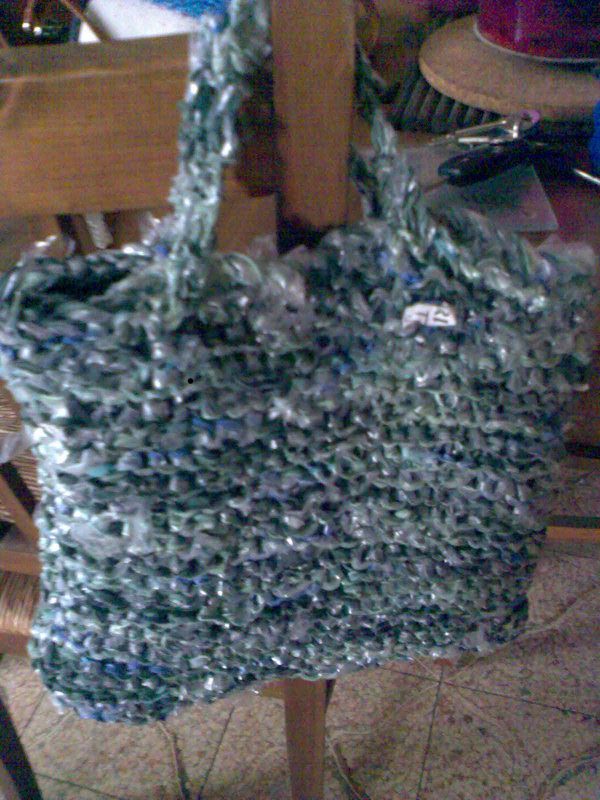
Recycling Plastic Bags Into…Beautiful Handbags

Here at Green Prophet we regularly publicize the bigger recycling initiatives around the country that we hear about, like our recent posts on Plastic Bags & Art Recycling , Smell the Recycled Roses, and Abu Yoyo: Closing the Loop in Banner Advertising.

While we hope these large scale inspiring projects keep coming, and we salute the artists, entrepreneurs and facilitators who lead the way by educating, elevating our minds and impressing us, while reusing loads of our thrown out garbage, it is important to note smaller personal projects, taking place every day in small ways in many homes and businesses across the land, and around the world.

Open Green Houses: Eco-Architecture Tours in Tel Aviv

9

tel aviv architecture green prophet design israel image pictureOne weekend a year, Tel Aviv’s architectural treasures open their doors and allow the public to learn about and appreciate the urban environment. 

In this unique annual event structures such as historical buildings, private homes, designer lofts, unique gardens, and even construction sites are made available in a project called Houses From Within.

This year there’s a twist.   This year environmentally friendly architecture and urban environmental issues are being made open to the public as well.

The Houses From Within weekend of events, which will take place on May 16-17, will include nine environmentally-focused activities ranging from open houses to bicycle tours to mud brick workshops.   These are truly unique events that will not likely be repeated very often, and so this is a great opportunity to learn about green Tel Aviv.

Guide to greening your wardrobe

There is no beauty in the finest cloth if it makes hunger and unhappiness
-Mahatma Gandhi

It was my first year of university and I had just settled into city life. There were lots of friends, parties – a great social scene. Burdened by the cost of having to support myself, I eyed the fancy clothes of my girlfriends who had wealthy parents to support them.

Unlike my peers, I couldn’t afford to shop at the trendy and expensive shops Uptown. And since I had gone to school where I wore a uniform, I hadn’t built up a stock of clothes. Raised to be industrious, I understood the only way to define myself clothing-wise, in a way I could afford, would be to shop second hand.

I went to scope out one of the most exciting rumors a 19 year old girl could have heard: there was a shop off of Jarvis Street in Toronto that sold clothes by the pound!

As I walked through the door of the Salvation Army clothing depot, I was handed a large plastic bag; and facing mountains upon mountains of clothes, I was debriefed that I could stuff anything into the bag and it would cost a mere $1 per pound. After a couple of hours, I emerged dusty and triumphant. Taking my treasures back home and after a good wash in hot water, they were ready to wear.

One of the best finds from the hunt that Saturday was what would be known among my girlfriends as the mythological red shirt. There was really nothing fancy about it: a short-sleeved tee from the ‘70s, somewhat worn and with a white-trimmed collar. But for some reason, every time I wore it, it gave me special powers.

Joking with my friends, I suggested to them that its previous owner left her karma in the sleeves of the shirt – maybe she was a sex goddess or model because every time I wore the red shirt, I attracted an unusual amount of male attention! My friends understood that I was onto something.

“That shirt, you know the red one? Do you think I could borrow it tomorrow night for a concert I am going to? I want to look extra good and test its powers,” asked my friend Nancy. Happy to oblige and to promote clothes sharing, I lent Nancy the shirt. Sure enough, she came back from the concert convinced and glowing.

“Oh this shirt,” she whispered with satisfaction. “It works!”

The story of the red shirt is one I like to tell when I meet people who don’t like the idea of wearing second hand clothing. There are plenty of good reasons why keeping clothes circling through a chain of wearers is beneficial to the environment.

The production of clothes is costly. Cotton grown in a conventional manner is chemically intensive and contributes to about one-quarter of the insecticides used in agriculture.

One simple tee, like the mythological red shirt, requires about a 1/3 of a pound of pesticides and fertilizer, explains Health Goods, an organic cotton store. As the wave of being healthy, green and environmentally friendly catches on, it only makes sense that people look deeper into the way we impact the earth. That’s why we can find words on the catwalk today such as eco-couture and eco-fashion.

But since the cost of organic and fair trade fashion is not attainable for most of us, we should stick with some of the old-fashioned methods for keeping our planet green. For instance, making use of an environmentally friendly dry-cleaner can help rid your closet and planet of pollutants.

Working to keep clothing in fashion and out of landfill is the mission of Swap-O-Rama-Rama, a global fashion event that attempts to repurpose old clothing into artsy or practical finds. There is a branch active here in Israel as well. (There is also Project Dlaat) I emailed the founder Wendy Tremaine and this is what she wrote:

“The fashion industry is perpetuated, in part, by the fashion industry, which encourages the purchase of new goods through a constantly changing vision of what is in style. Through advertising we are asked to view shopping as a creative endeavor, when in actuality it is only the designers who play a creative role in the process.”

To participate in one of the regular events, you have to bring a bag or two of unused clothing to a meet, pay a few dollars, and interact with designers, arts and crafts folks and seamstresses who can help you take old clothes from the pile of donations and turn them into something that is new and fashionable.

“Swap-O-Rama-Rama utilizes the existing surplus of clothing to create new-recycled goods, without consuming raw materials. In do-it-yourself spirit, through workshops and the collectivizing of ideas,” says Tremaine.

She continues, “Through hands-on experience it invites the discovery that the making of things is not an activity to be avoided in order to attain leisure, but rather a playful and leisurely endeavor unto itself.

Repurposed garments are far less likely to be kicked to the curb as garbage and so ultimately Swap-O-Rama-Rama not only reuses would be trash but sets in motion a way of living that reduces textile waste.”

Buying and selling clothes at second hand boutiques and markets are also important ways to keep your wardrobe fresh and green; a number of giveaway sites for clothing are emerging on the net: Freecycle.org and Clothing Swap are both worth checking out.

Upon taking your first step – the simplest way to weed the good from the bad is to look at each item in your closet and if you can’t remember wearing it within the cycle of one year, pass it on! You never know, it might, like my mythological red shirt, bring an enormous amount of good clothing karma to any number of people in the future.

And if you’re interested to know what happened with the red shirt – one day before leaving Toronto, I understood it was time to pass it on. Folded and sitting on some books by the curb, I imagine some lucky woman picked it up and is enjoying it. Maybe it is you?

Want to explore more ways of greening your life:
Green Prophet on the Living Room
Green Prophet on the Bedroom
Green Prophet Greens Your Kitchen
Green Prophet Greens Your Bathroom

Bag It Up: Inbal Limor Recycles Plastic Bags Into High Art

There are lots of ways that you can reuse plastic bags, but I bet most people have never considered putting them in a frame and hanging them up on the wall as one of them.

Luckily, Israeli artist Inbal Limor has used her creative vision to come up with another way to reuse these bags and, in the process, transform them into high art.

Limor, whose friends and family religiously collect plastic bags for her art, uses stitching and heat to fuse several bags together and create a design.  All of her designs are based on the materials being used at the moment, and so no two designs are alike.

Israel's National Bird Poll: Barn Owl & Lesser Kestrel

To follow up with some more candidates for Israel’s bird poll, here are two more beauties: the Barn Owl (‘Tinshemet’ in Hebrew) and the Lesser Kestrel (‘Buz Adom’). This whole exercise seems to be an interesting lesson in exploring human anthropocentrism in naming other species.

Barn Owl

Lesser Kestrel

We don’t really understand what’s “lesser” about such a fine creature as this, but we can reccommend some fine spots in the upper Negev where you can see these majestic soaring creatures.

The Cousteaus Set Sail For Israel

Growing up as a kid, my favorite nature shows were either the Mutual of Omaha’s Wild Kingdom or specials about Jacques Cousteau as he explored the great seas.

Some of those hours glued to the tube made me into who I am today.

Thanks to some key words penned into a story on ISRAEL21c, marine research collaboration is now taking place between Israel’s EcoOcean and the Cousteau Family.

After reading a story about EcoOcean’s unique ship and education center (we guess they use Google alerts), the Cousteaus approached Andreas Weil from EcoOcean. “I knew about the famous Jacques Cousteau since I was seven. I envisioned myself maybe in 10 or 20 years from now meeting someone from this foundation, in the same room, at a conference,” said Weil.

Genetically Modified Hype in Israel

2

Abbey Home Organic Farm, England Israel green prophet

A headline in the Israeli press last week went a little like this: “Scientists, activists debate if genetically modified foods are panacea or plague.”

Sounds great, but where exactly is the ‘debate’? The article in question reads more like a press release for the GM lobby: ”Distribution of new, genetically engineered crops can help solve world hunger, but the question is where they are used,” said Hebrew University professor Ayal Kimhi. However, absent from the 551-word article is the voice of GM-sceptics.

In fact, according to the trusted scientists, it is those who dare to question the merits of a risky and untested technology who are standing in the way of ‘progress’:

Israel's National Bird Poll: Hoopoe & Sunbird

Here as promised, bird lovers, are 2 more of the candidates in the Green Prophet/Israel National Bird Poll:

The Hoopoe

The Palestine Sunbird

Is the Palestine or Yellow Tufted Sunbird the same as the Olive Backed Sunbird? It looks very beautiful, and as the olive is the unofficial food/fruit of the Middle East, maybe that should be considered?

Anyway, please keep writing in with comments: let us know why you are voting for the bird you are, and any bird-related stories are welcome. Please keep those votes coming: VOTE HERE!

Celebrate Independence… From Pesticides in Your Falafel

7

israel falafelIsrael is celebrating 60 years of independence this week, and we’ve come a long way, baby. Long enough to have organic falafel on Tel Aviv’s Ibn Gvirol Street next to the City Hall.

Introducing Hippo, the hip falafel joint that ensures that every bite you take out of the national snack is pesticide free and therefore less harmful to the environment.

Located at 64 Ibn Gvirol, Hippo offers an organic, vegetarian, and undeniably patriotic way to celebrate this year’s Independence Day with some great food.

Hydrogen Peroxide

0

There are a lot of nasties on your fresh food. Do you know what goes into the fertilizer that your carrot sticks grew in? In the best case scenario … well … maybe I won’t get graphic.

To help kill bacteria such as E. Coli on fruits and vegetables, add a 1/4 cup of 3% hydrogen peroxide to a sink full of cold water. Immerse, rinse with cold water and drain. Killing these bacteria will help keep your fruits and vegetables fresher for longer. Alternatively you can also use a spray bottle containing equal parts 3% hydrogen peroxide and water – just spray and rinse!