Love the Middle East shisha, but not the mess? Try Ooka?
Who hasn’t been given a shisha pipe after a friend or family member visited the Middle East? The novelty may only be to some as shisha or hookah pipe smoking is common in all countries in the Middle East. My friend’s grandmother from Iran would smoke in her late 90s after dinner, despite convention and new research saying that fruit-flavoured shisha tobacco is as bad or worse than regular tobacco.
In the world of pods and convenience, a company has developed a new kind of shisha, one that uses pre-loaded fruit tobacco and no charcoal is needed. The device is called Ooka and can be bought in the United Arab Emirates along with “Criminally awesome flavors” that it “borders on criminal” advertises the gadget’s website.
Ooka pre-packed pods
In the world of pods and convenience, a company has developed a new kind of shisha, one that uses pre-loaded fruit tobacco and no charcoal is needed. Each pod delivers one session that can last up to 70 minutes depending on the intensity of the session.
You can pause the session for up to 10 minutes.
Lemon with mint, grape with mint, lemon, pear, candy, guava, lime –- are some of the flavor options.
If you are planning on trying hookah or shisha for the first time –> Don’t read this. The BBC’s Claire Hammond reported that since people end up smoking a shisha pipe for up to an hour, they end up taking 100 to 200 times more puffs than they would on a single cigarette.
The Ooka can be bought online for about $550 USD for the whole kit. Personal mouthpieces can be bought separate.
It is designed and developed in the UAE by a company called Air Global who hired Paul Dawson, a product engineer from Dyson.
The Muslim head scarf can damage hair, and lead to hair thinning and hair loss. Here’s a guide to keeping hair healthy.
In Islamic culture, the hijab stands as a symbol of modesty, identity, and faith for Arab and Muslim women. We firmly believe wearing a hijab or a Muslim head scarf should be an act of faith and a woman should always decide. Some women believe the hijab is empowering. But how to avoid hijab hair?
When your hair is tied up it doesn’t get air or the sun. Here’s a guide on how Muslim women can treat their hijab hair with care and reverence. Jewish women who cover their hair or who wear wigs can also use these tips. Some Jewish women call their head scarves a snood.
Understanding Hijab Hair and the woman Muslim head scarf
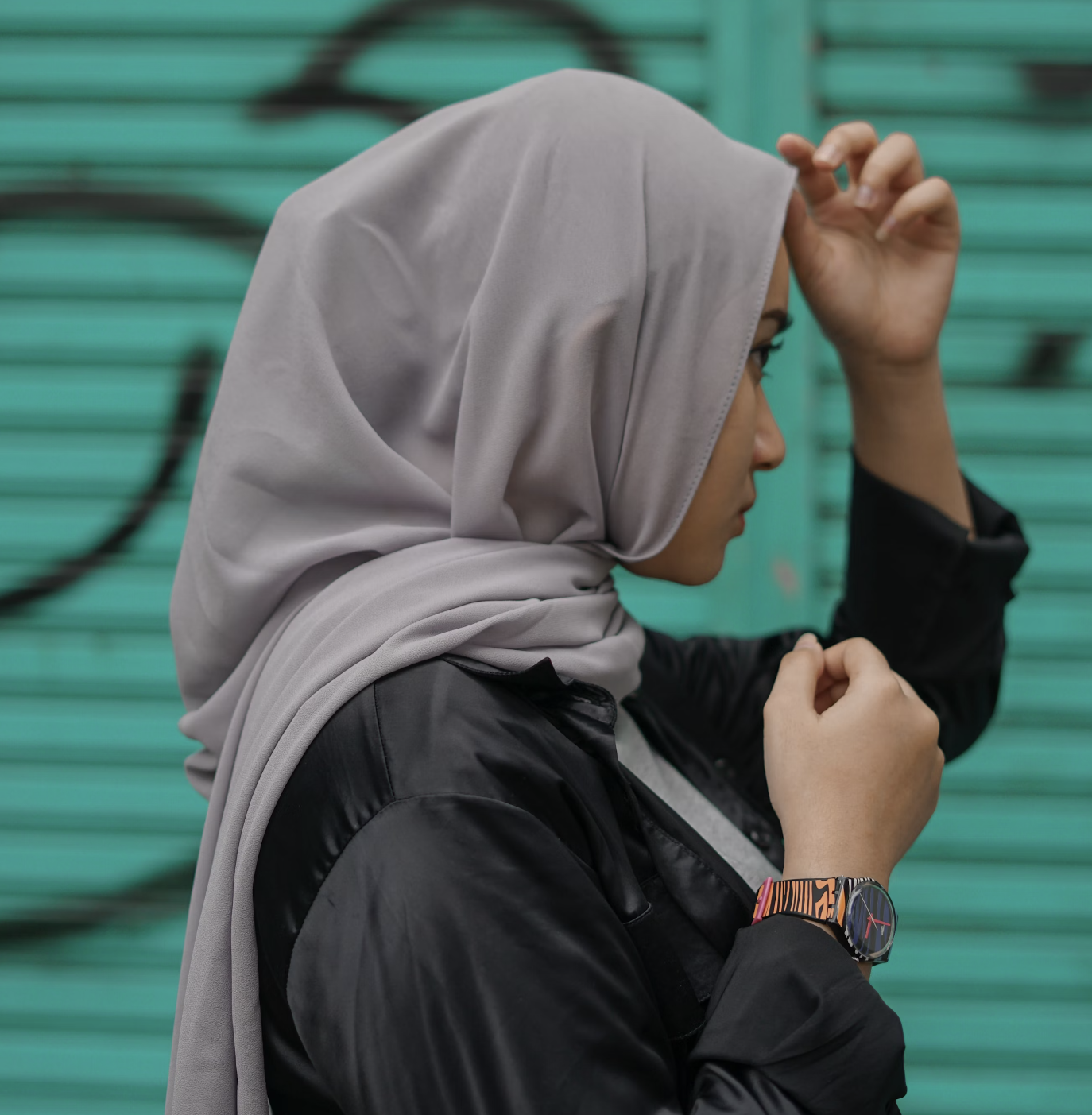
A Muslim head scarf or Muslim head wrap can look chic
Hijab hair refers to the hair of Muslim women who cover it with a headscarf as an expression of their faith. The hair may face challenges such as dryness, breakage, and lack of volume due to prolonged covering. Understanding these challenges is the first step towards effective care.
Consider the material that your head covering is made from. Silk, cotton, wool blends and linen will breath naturally. A Jersey hijab is made from cotton. Consider using an eco fabric, harvested sustainably.
The foundation of healthy hair lies in a balanced diet. Incorporating nutrient-rich foods like fruits, vegetables, lean proteins, and healthy fats can promote hair strength and growth. Additionally, staying hydrated ensures that hair follicles receive adequate moisture, combating dryness caused by the hijab. Some people take biotin to increase hair growth, and at a certain age your dermatologist might suggest some vitamins for your hair. Speak with your girlfriends. They will have tips too.
This Muslim head scarf is made from silk. It helps keep hair breathing.
Gentle Cleansing and Hydration
Frequent washing may strip hijab hair of its natural oils, leading to dryness and breakage. Opt for gentle, sulfate-free shampoos and conditioners to cleanse and hydrate without harsh chemicals. Focus on the scalp to remove buildup and promote circulation, but be mindful not to overwash, aiming for 2-3 times a week, not more.
Sealing moisture into hijab hair is essential for preventing dryness and brittleness. After washing, apply a leave-in conditioner or natural oils such as argan oil or coconut oil to the lengths and ends of the hair. This creates a protective barrier, keeping moisture locked in throughout the day.
When wearing the hijab, opt for loose and breathable fabrics to minimize friction and allow airflow to the scalp. Remember natural fabrics dyed with natural dyes. Avoid tight hairstyles that can strain the hair follicles and lead to breakage. Instead, choose gentle styles like braids or loose buns to keep hair secure without pulling or tugging.
Nighttime Care
Your hair out there
Before bedtime, loosely braid hijab hair to prevent tangling and breakage while sleeping. Silk or satin pillowcases can also reduce friction and help retain moisture, preventing dryness and frizz. We prefer cotton but it’s your choice. Additionally, consider using a silk or satin hair bonnet to protect hair from friction caused by movement during sleep.
Hair slugging is a trend some people swear by. The basic idea is to apply a thick layer of oil or petroleum jelly to your hair before bed, and then wrap it up to keep the moisture in. As mentioned, this can help to hydrate your hair, reduce frizz, and make it look shinier. We don’t believe petroleum is a good idea for the job. Try a natural oil instead.
The popular but expensive Ouai hair oil is said to work well. With the ingredients list you can make your own:
Rice Bran Oil – emollient plant oil with nourishing and moisturizing fatty acids (oleic acid: 40%, linoleic acid: 30%, linolenic acid:1-2%), antioxidant vitamin E, emollient sterols and potent antioxidant gamma-oryzanol.
Asian women use rosemary oil on the scalp and say it prevents thinning. Dilute one you might find with almond or another weak edible oil and do a test patch first to see how your scalp reacts.
Regular trims are essential for maintaining healthy hijab hair. Trimming every 8 to 12 weeks helps prevent split ends and breakage, keeping hair strong and voluminous. Even if the ends are not visible due to the hijab, regular maintenance ensures overall hair health.
Be mindful of the hair accessories used under the hijab. Avoid using tight clips or hair ties that can cause tension and breakage. Instead, opt for soft, fabric-covered hair ties or scrunchies to secure hair without causing damage.
Every woman’s hair is unique, and what works for one may not work for another. Experiment with different products and techniques to find what best suits your hair type and needs. By adopting a holistic approach to hair care, Muslim women can ensure that their hair remains healthy, strong, and beautiful, reflecting the beauty of their inner selves.
Cannabis packs picked up from the street. It rained cannabis one day in Tel Aviv.
If you walk the streets of Tel Aviv and Jaffa, the smell of cannabis burning isn’t something unusual. While countries like Canada have decided to fully legalize medical marijuana and recreational cannabis, Israelis may have felt that that was the path for the nation who was the first to study and classify the molecular compounds in cannabis and hashish. Professor Raphael Mechoulam, who I have interviewed and who died in 2023, was a chemist who was given a pile of hashish from the Israeli police and took it upon himself to study the medical applications of the illicit substance.
Telegrass online network, connecting 3,000 drug dealers to more than 200,000 clients. Amos Dov Silver is the founder.
He had all sorts of fanciful nicknames for the plant, such as Ananda from Sanskrit which means “supreme joy” and he believed that there are more than 100 molecules in the cannabis plant that play a role in its medication. He told me that the human body has special receptors for accepting these molecules, making for an interesting match between plant and man.
So in 2015 when I founded the CannaTech conference and hundreds of people came out for the event on last minute’s notice (it featured Israeli-American physician Alan Shackelford) it felt that cannabis use as medicine, but also recreationally would be accepted on the streets of Tel Aviv. Until then police turned a blind eye to smoking on the street, but selling or growing it could get you in jail.
Still, there was always people who believed they were above the law and that full legalization was around the corner. One of those people was the founder of a Telegram group called Telegrass. Join, say you want and it would be delivered. Finding cannabis was never so easy. Who needed to bother going through the hassle of getting a medical permit?
According to Israeli media Telegrass founder Amos Dov Silver was sentenced to eight years of jail this week following a plea agreement. Telegrass connected an estimated 3,000 drug dealers to more than 200,000 clients.
Silver was arrested in 2022 already. In the years before his arrest, Silver was an activist for cannabis legalization, including organizing The Big Bong Night in 2014. Israel has taken steps in recent years to make medical cannabis available and is poised to become a major exporter of the crop. Recreational use of the drug remains illegal, however. The Public Security Ministry partially decriminalized it in 2017, setting fines and treatment for initial offenders instead of criminal procedures.
Are you interested in sustainable investment and generational wealth? Green Prophet is working with 36North, an investment advisory in Canada on how to teach you how to build generational wealth. Email [email protected] for an introduction.
Ladakh unfolds like a transcendent tapestry in the rarefied regions where the majestic Himalayas pierce the blue skies. It is an ethereal expanse where nature’s extravagant glory converges with an ancient monastic tradition as timeless as the mountains themselves. Nestled between expansive glaciers and towering peaks, this high-altitude desert nation can be easily reachable with Air India booking and entices both adventurous travellers and those seeking spiritual enlightenment, creating a journey that is beyond physical limitations.
The Manali-Leh Highway: An enchanting journey through the magnificence of nature
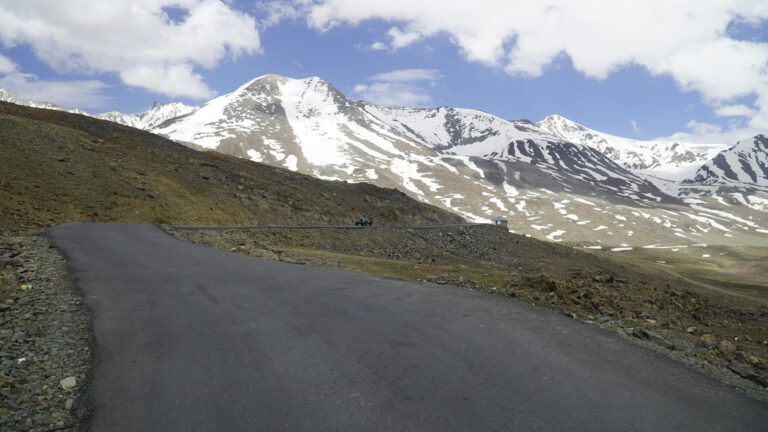
A tortuous adventure down the famous Manali-Leh Highway, a ribbon of tarmac that twists through the colossal arteries of the Himalayas, awaits travellers heading into this mythical area. The scenery changes dramatically as you rise past the imposing gates of Baralacha La and Rohtang Pass, revealing a magnificent scene of snow-capped giants watching over glacial streams and tumbling valleys carved by time’s unrelenting wrath. A new scene from nature’s masterwork emerges with every twist and turn, including views that leave a lasting impression on the spirit of the traveller, colourful panoramas of the Gata Loops, and waterfalls hidden behind gossamer veils.
Monastic Castles: Symbols of Enlightenment and Architectural Magnificence
With their inscriptions of Buddhist traditions carved into the very bones of the Himalayas, the ancient monasteries of Ladakh tower like sentinels. The imposing stupas and elaborately frescoed prayer rooms of Thiksey Monastery, a figurative twin of Lhasa’s famous Potala Palace, provide a window into the essence of Tibetan Buddhist spirituality and art. Here, the seeker is carried to regions where enlightenment reverberates by the musical chanting of monks that flow and recede like the waves of peace.
Pangong Tso and Nubra: The Ethereal Masterpieces of Nature
Pangong Tso and Nubra
Nature herself has created ethereal masterpieces inside this heavenly vastness that are beyond human understanding. Across the very spine of the Indo-Tibetan boundary, Pangong Tso is a high-altitude saline seascape whose crystal-mirror waters change from blue to turquoise to brilliant scarlet as the day wanes. This watery expanse is illuminated by a siren’s show of colour and light at each sunset.
Next, enter the bizarre Nubra Valley, often known as the “Valley of Flowers,” where tall apricot sand dunes rise in a defiant juxtaposition to the frigid Karakoram mountain while verdant meadows and orchards adorn the banks of the Shyok and Nubra rivers. This is a place where the intrepid traveller may ride a camelback over an endless sea of sand and see snow-capped titans—a scene out of a fever dream.
Adventure and Thrills in the High Altitudes
Ladakh provides two great options for those whose hearts long for the exhilaration of the pinnacle adventure pilgrimage. The first is the Chadar Trek, an ice trail carved into the frozen birthing bowls of the Zanskar River. The route crosses a petrified ribbon and goes past towering canyon walls that echo the crunching sound of bootfalls. Above, frozen waterfalls dangle their crystalline claws. The second is the wild Zanskar, which demands to be paddled in a whitewater raft and has a plunging rock wall and roaring spume.
A Tribute to Ladakhi Hospitality and Timeless Traditions
Even with all of its wild magnificence and experiences to excite even the bravest spirit, Ladakh’s most resonant soul thrums in its people and their timeless harmony with this elemental region. Join a traditional homestay where the rhythms of centuries-old life are still prevalent to fully immerse yourself in their culture. Enjoy breakfast with your hosts while sampling fusion cuisine, a speciality of the area. These banquets comprise foods from Tibet, India, and Central Asia, coupled with arias of trebly speech.
Let the vivid Losar celebrations or the Ladakh festival itself influence your spirit. Vibrant robes swirl amid clouds of smoke, while the pounding dance and echoing cadences of ceremonial music pulse through the raw elemental arteries that underpin Ladakh’s cultural history.
Conclusion
Ladakh is an adventure in and of itself; it is a narrative weaved from archaic magic, where the Himalayas have brought their wildest fantasies to reality. The human soul may be challenged, humiliated, and uplifted by this area. It is a mysterious heart, as old as the stones themselves, full of wild adventure and mysticism. As you enter the greatest epic of nature, let its majestic fortresses, ice-filled rivers, and kaleidoscope of colour and light embrace you and make a lasting impact on your own soul.
SHA Wellness Clinic has partnered with IMKAN to launch SHA Residences Emirates in Abu Dhabi. SHA Wellness Clinic is an exclusive health spa in Spain and a pioneer of integrated wellness taking the best from Eastern and Western medicine.
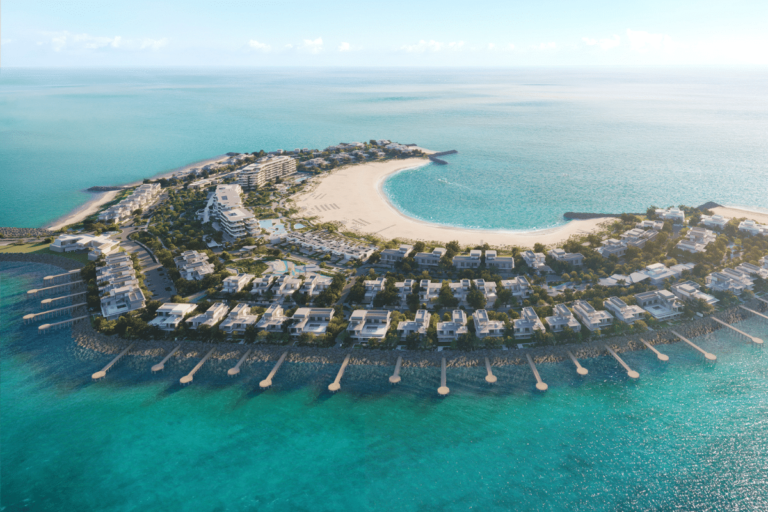
The new island will be an integration of SHA’s clinics in the UAE. Located on the private island of Al Jurf just over the Dubai border, SHA Emirates Island at Al Jurf combines a residential community, a wellness reset, pavilions for health and wellbeing, and a SHA clinic.
Consider nomad travel insurance when booking a spa holiday. To ensure peace of mind while traveling or living abroad, we recommend getting health insurance. SafetyWing’s Essential plan covers travel and medical emergencies with options for adventure sports and electronics theft. Their Complete plan offers comprehensive health coverage with routine healthcare, mental health support, and maternity, anywhere in the world, including in your home country.
Alejandro Bataller, co-founder and vice president at SHA Wellness Clinic said: “As we celebrate 15 years, we are excited to bring the unique SHA Method to the Middle East, making it possible for more people to benefit from our philosophy of integrative health and well-being.
“We travelled to dozens of locations in search of the perfect natural environment, warm weather and accessibility to create the world’s first fully integrated wellness island and found everything we could imagine and more at the seaside destination of Al Jurf.”
SHA Wellness Clinic claims to be a pioneer of medical innovation and holistic healing located in the picturesque Albir Beach, Spain. A 4-day detox session costs $2500 USD, so wellness and wealth go hand in hand.
Hard to imagine from the renderings how such a formidable construction project can maintain the habitat on the natural island.
When old food packaging, discarded children’s toys and other mismanaged plastic waste break down into microplastics, they become even harder to clean up from oceans and waterways.
These tiny bits of plastic also attract bacteria, including those that cause disease. In a study in ACS Nano, researchers describe swarms of microscale robots (microrobots) that captured bits of plastic and bacteria from water. Afterward, the bots were decontaminated and reused.
The size of microplastics, which measure 5 millimeters or less, adds another dimension to the plastic pollution problem because animals can eat them, potentially being harmed or passing the particles into the food chain that ends with humans.
So far, the health effects for people and micrplastics are not fully understood. However, microplastics themselves aren’t the only concern. These pieces attract bacteria, including pathogens, which can also be ingested. To remove microbes and plastic from water simultaneously, Martin Pumera and colleagues turned to microscale robotic systems, comprised of many small components that work collaboratively, mimicking natural swarms, like schools of fish.
To construct the bots, the team linked strands of a positively charged polymer to magnetic microparticles, which only move when exposed to a magnetic field. The polymer strands, which radiate from the surface of the beads, attract both plastics and microbes. And the finished products — the individual robots — measured 2.8 micrometers in diameter. When exposed to a rotating magnetic field, the robots swarmed together.
By adjusting the number of robots that self-organized into flat clusters, the researchers found that they could alter the swarm’s movement and speed.
In lab experiments, the team replicated microplastics and bacteria in the environment by adding fluorescent polystyrene beads (1 micrometer-wide) and actively swimming Pseudomonas aeruginosa bacteria, which can cause pneumonia and other infections, to a water tank.
Next, the researchers added microrobots to the tank and exposed them to a rotating magnetic field for 30 minutes, switching it on and off every 10 seconds. A robot concentration of 7.5 milligrams per milliliter, the densest of four concentrations tested, captured approximately 80% of the bacteria.
Meanwhile, at this same concentration, the number of free plastic beads also gradually dropped, as they were drawn to the microrobots. Afterward, the researchers collected the robots with a permanent magnet and used ultrasound to detach the bacteria clinging to them. They then exposed the removed microbes to ultraviolet radiation, completing the disinfection. When reused, the decontaminated robots still picked up plastic and microbes, albeit smaller amounts of both.
This microrobotic system provides a promising approach for ridding water of plastic and bacteria, the researchers note.
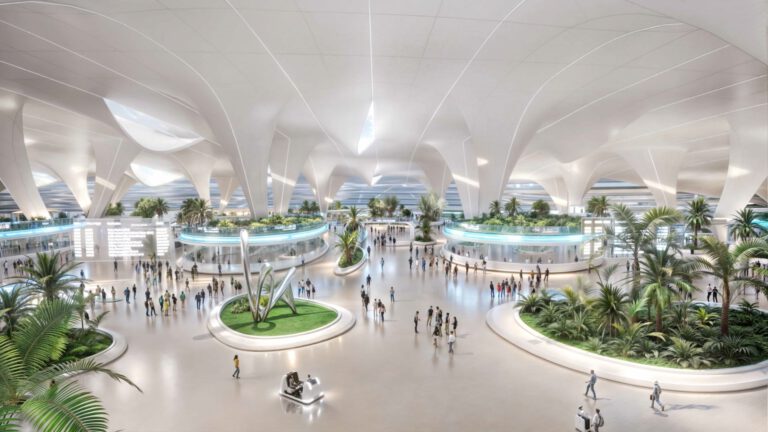
The airport will be the new home of flagship carrier Emirates and its sister low-cost airline Flydubai along with all airline partners connecting the world to and from Dubai, Dubai state-owned airline Emirates chairman Sheikh Ahmed bin Saeed al-Maktoum said.
There will be 400 aircraft gates and 5 parallel runways.
The move “further solidifies Dubai’s position as a leading aviation hub on the world stage”, said the CEO of Dubai Airports, Paul Griffiths.
Leaders in the UAE are hoping the Al MaktoumAirport expansion will boost Dubai‘s real estate, especially in Dubai South. “When we build a whole city around the airport in the south of Dubai, the demand for housing for a million people will increase. It will host the world’s leading companies in the logistics and air transport sectors,” Sheikh Mohammed of the UAE who approved the airport, wrote in a publication in X.
He promises a strong commitment to sustainability aimed at achieving LEED Gold certification.
We hope the UAE makes good on producing sustainable aviation fuel, SAFs. The world is going to need it if flights get cheaper, and more frequent. Germany just added a 20% green tax to flights.
Work on the new airport is due to begin immediately, with the first phase of the project expected to be completed within the next 10 years. It is projected to create an estimated labor and housing demand for more than a million people. We hope the immigrants building the airport get a fair wage and labor conditions.
The project involves collaboration with Turkish companies Doğuş İnşaat, Çelikler, and Özkar, with backing from the UK’s Department for International Trade. The funding includes a 1.027 Billion Euro credit from the European Export Credit Agencies and a 220 Million Euro commercial credit line supported by the Islamic Corporation for the Insurance of Investment and Export Credit.
The British Exporters Association believes these investments can stimulate UK business development, benefiting material and equipment suppliers. Meanwhile Turkey just rebuffed its export agreements with Israel siding with Hamas. Turkey has long sought entrance into the EU, but the UE has never considered membership seriously. Members place the blame for that not only on one side, but largely on one man: Erdoğan himself.
Meanwhile Turkey is moving on, solidifying agreements with Iran, China, and Russia.
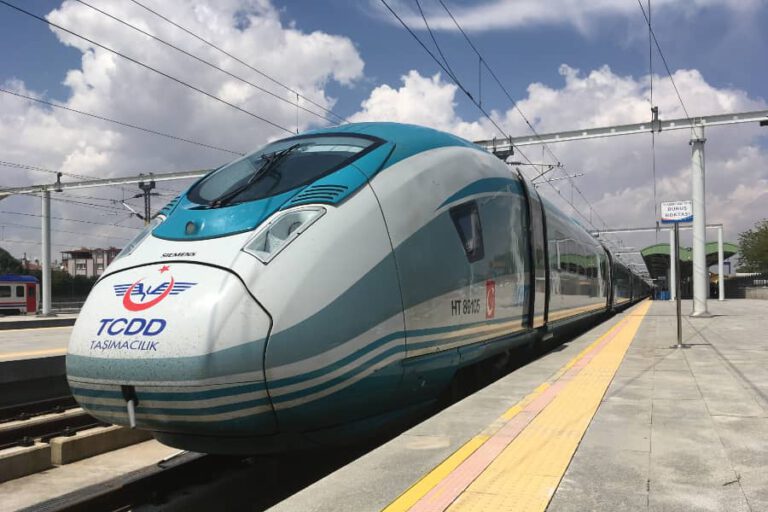
The new Istanbul-Sivas line will take seven hours and 18 minutes, serviced by trains accommodating up to 483 passengers.
Osman Boyraz, deputy minister of transport and infrastructure, emphasized Türkiye’s strategic importance in international freight and passenger transportation. According to Boyraz, Türkiye invested 57 billion US dollars in building and renewing its railways over the last 22 years, increased the line length from 10,948 km to 13,919 km, and built 2,251 km of high-speed train lines.
The line between the capital city of Ankara and Eskisehir was the country’s first high-speed rail that went into operation in 2009, and the line was successfully extended to Istanbul in 2014 with a total length of 533 kilometers.
China Railway Construction Corporation and China National Machinery Import and Export Corporation, in partnership with two Turkish companies, built parts of the Ankara-Istanbul line.
According to Boyraz, high-speed trains have facilitated the transportation of 85 million passengers since 2009.
Mitsubishi UFJ Financial Group is the sole authorized coordinator and bank agent, while parts of the credit are reinsured by financial institutions in Italy, Poland, and Austria.
This marks the third railway construction project in Turkey financed by the UK, SACE, and OeKB, with a combined length exceeding about 900 km.
The new high-speed railway, started in August 2022, will connect to the Ankara–Sivas high-speed line, reducing traffic on the Yerköy–Kayseri route and cutting harmful emissions by 6.5 million tons annually.
Japan is a fan of high-speed trains, with its bullet train exceeding 300km an hour. While prices of the bullet train in Japan have doubled over the last year (it costs about $125 USD one way between Kyoto and Tokyo), the quick link between cities means a 6-hour drive from Kyoto to Tokyo can be a swift 2.25 hours. Headaches, vomiting, and dizziness might be a side-effect for first time travelers. I’d rather drive but the cost of driving a car in Japan is on the limit of what people can afford as well. The drive from Tokyo to Kyoto cost over $100 USD in tolls for highway use over 3 days.
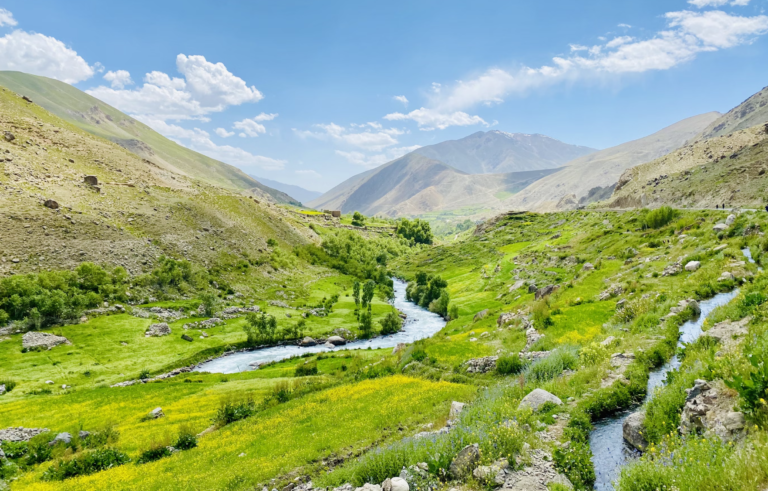
This the ancient valley of Paryan the starting point of Aab-e Tal and the relevant route of the Paryan district which leads to the beautiful scenery of Panjshir valley to the summit of Khawak. Is it the birthplace of jinn, genies?
There are various opinions about the name of Paryan and researchers believe that the area was originally called Paryan a place in that land where everyone who went there did not come back alive.
People thought that fairies would take anyone with them and yet no one knows about such a place. It is often thought to be a mythical place in the same area called Mehr Samar which due to lack of sufficient oxygen or the release of deadly perishable gases in the area and the people of that time believed in the existence of jinn and fairy (Pari) that the fairies would go there and take the humans; that’s why the valley is called Paryan (Fairies).
Paryan or Pari literally means a good-looking and beautiful creatures. However, the word fairy among the people of Ariana Kabir, and the land of ancient Khorasan has been used in tales and stories that includes tales of jinn.
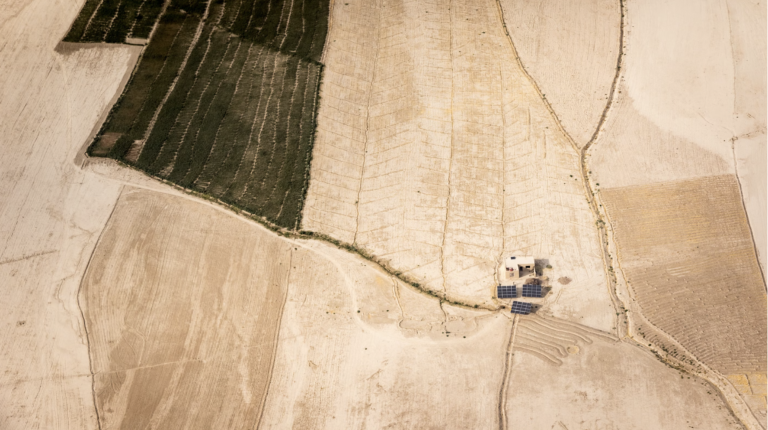
Afghanistan farm uses solar panels to pump water to the farm. Water management, climate change mitigation is needed to stop unrest, violence and conflict in the Middle East. The Taliban currently controls Afghanistan.
After a long dry spell last autumn and winter, Afghanistan and its neighboring Middle East countries have been witnessing unusually heavy rains and snowfall this year. In recent news, about 35 people are presumed dead from flooding in Afghanistan.
This comes less than a few weeks after the United Arab Emirates and Oman were flooded. According to the Emirati National Center for Meteorology, this April’s rain was the heaviest rainfall recorded in 75 years. Mid-April, more than a year’s worth of rain fell in a day on the Arabian Peninsula, one of the world’s driest regions.
Some suggest that ongoing experiments in cloud seeding is the reason for the freak weather. Others note that it’s a bigger experiment than that: human-made climate change.
From April 14 to 15 this year, the United Arab Emirates and northern parts of Oman say the rainfall accounted for at least 20 fatalities in Oman and four in the UAE.
Israel also clocked the hottest temperatures on record in April, at 40 degrees C beating a 30-year record. According to research from the University of Roehampton in England, the human body may lose the ability to rid of excessive heat and stop functioning optimally when outside temperatures reach beyond 40 degrees Celsius (104 F).
Syrians are currently under the thumb of a cruel dictator Basher Al-Assad and his British-born private-school educated wife Asma Al-Assad. The Syrian economy runs on drug money.
Why Afghanistan is especially vulnerable to climate change
Water Scarcity: Afghanistan heavily relies on snowmelt and rainfall for its water supply, particularly for irrigation in agriculture, which sustains the livelihoods of a significant portion of the population. However, changing precipitation patterns and the melting of glaciers due to rising temperatures are leading to reduced water availability, exacerbating existing water scarcity issues.
Droughts and Floods: Erratic rainfall patterns have intensified the frequency and severity of droughts and floods in Afghanistan. Prolonged droughts devastate agricultural output, exacerbate food insecurity, and drive rural communities into poverty. Intense rainfall events trigger flash floods, destroying infrastructure, homes, and crops, and displacing thousands of people annually.
Displacement and Conflict: The intersection of climate change impacts with existing socio-political challenges further compounds Afghanistan’s vulnerability. Displacement driven by climate-induced disasters strains already fragile social systems, exacerbates resource competition, and can fuel conflict over dwindling water and arable land, perpetuating a cycle of instability and insecurity.
If we don’t want to see more mass migrations from the Middle East to Europe and North America, we as people of the world need to help find solutions to those in vulnerable, dry lands in the Middle East and Africa. People will have no choice but to flee to cooler, more prosperous lands.
Priests and religious Sisters in Lebanon have explained how the solar panels donated by a Catholic charity have enabled them to survive soaring energy costs. Basic necessities like electricity are prohibitively expensive in Lebanon and Syria because of an ongoing economic crisis, making renewable energy systems crucial, according to the local Church.
Sister Yaout of the Maronite Sisters of the Holy Family in Lebanon – whose congregation runs an orphanage and supports those with learning disabilities – told Catholic charity Aid to the Church in Need (ACN): “The state provides one or two hours of electricity a day, but it is very expensive…
“We used to have to pay a subscription to the generator, which cost us $30 [£24], plus expenses of between $300 [£240] and $400 [£320] – but now with the solar panels it is down to $6 [£4.80], and for the autumn months it was nothing at all, so we have saved a lot.”
The Sisters’ orphanage in Jezzine, southern Lebanon – which cares for around 30 children – is now supplied with electricity converted from the sun’s rays. The new power system was supported by ACN.
Local Church contacts said that the recession has severely impacted Church activities, with parishes and religious communities being unable to organise pastoral programmes because of the high costs of heating and food storage.
Church-run institutions – such as orphanages and nursing homes – are also struggling to operate in the darkness, and food poisoning is rampant due to a lack of refrigeration.
ACN has provided solar panels for the Church in Lebanon and Syria as part of a support package worth more than £1.3 million ($1.7 million) over the last two years.
The beneficiaries of ACN’s help include 24 religious congregations, 37 parishes in 16 dioceses, 22 schools, 11 convents and seven seminaries and novitiates across the two countries.
Father Pierre Jabbour, bursar at the Maronite Patriarchal Seminary in Ghazir, Lebanon said: “After 4 years of crisis, we have learnt to save a lot and to reduce the budget for food, activities and other things.
“Thanks to your help, we have been able to install a solar panel system, which has enabled us to reduce our annual fuel bill.”
Father Jabbour concluded: “Thanks to the help of your generous donors, the seminarians were able to follow their formation courses and carry out their missionary activities in complete serenity, despite the circumstances surrounding Lebanon.”
Egypt is setting a benchmark in the region with the development of its first integrated waste management city in the Middle East, located in the 10th of Ramadan City.
This pioneering project, inaugurated in February, was attended by notable officials including the Minister of Environment, Dr. Yasmin Fouad, the Minister of Local Development, and the governors of Cairo, Qalyubia, and Giza.
10th of Ramadan is a city located in the Sharqia Governorate, Egypt. It is a first-generation new urban community, and one of the most industrialized. It enjoys close proximity to the city of Cairo, and is considered part of Greater Cairo.
It is spearheaded by a 100% Egyptian company, selected from a competitive pool of 33 candidates, and is part of the larger Cairo Air Pollution and Climate Change Management Project funded by the World Bank.
Strategically positioned near key locations, the waste management city is just 7 kilometers from Ismailia, 12 kilometers from Badr City, and 4 kilometers south of the industrial area of the 10th of Ramadan City.
Currently, about 25% of the initial phase has been completed, which focuses on constructing robust infrastructure.
This includes the installation of a 9-kilometer perimeter wall with a tree-lined fence, an extensive irrigation network, two 4-kilometer roads each 60 meters wide with two main gates, and beautifully landscaped areas with palm trees.
The initiative is a crucial element of the government’s effort to manage air pollution and climate change in Greater Cairo, as mandated by Presidential Decree 111 of 2021.
This project is designed to reduce air pollutants and aligns with Egypt’s commitment to enhancing environmental sustainability and urban development.
Pyramids from the plane, Cairo
Zabaleen, or Christian garbage workers handle much of the waste in Cairo but over the years have been forced out of work. They are known as Cairo’s Garbage People.
The Zabaleen (or Zabbaleen) which translates directly from Arab into English as “Garbage People” harvest and hand-sort 15,000 tonnes of waste every day, recycling nearly 80% of that. Although they are responsible for one of the most successful recycling programs throughout the Middle East, this community of roughly 70,000 Coptic Christians face all kinds of discrimination. We recently featured the cave churches that they built despite not being able to own land and construct to build their own churches.
One reader Nesreen El-Solamy points out on a past article of ours on the Zabaleen: “Thank you for pointing out this magnificent church. However, for someone who isn’t familiar with the country, your article passes an impression that christians in Egypt are treated as outcasts.
“The wealthiest and most successful families in Egypt are Christian, and all Christians live side by side with Muslims. Unfortunately, the garbage collectors are looked down upon and built there own living areas. Because of their job not religious belief. Historically, as you said, mostly Christians accepted that job on account of raising pigs on organic waste. Nowadays, it has become common for all, as it turned to be a very profitable field of work.”
Cairo, we know, is not as tolerant as some people would like to portray. Cairo contains a number of synagogues, though only a handful of Jews remain. As of December 2022, there were 12 remaining synagogues but only 3 native Egyptian Jewish inhabitants in the city down drastically from a population of 80,000 Jews in 1948.
CABI, an international research group that identifies and solves problems for invasive pests in agriculture and forestry, has published a ‘Guide to the naturalized, invasive and potentially invasive plants of Socotra, Yemen,’ a place designated in 2008 a UNESCO Natural World Heritage site rich in flora and fauna not found anywhere else in the world.
The guide, written by Dr Arne Witt, CABI’s Invasives Coordinator, South, and co-authored by Ahmed Said Suleiman Abdullah, provides detailed descriptions of 50 invasive alien plant species, including more than 200 colour images, with information on their impacts and management.
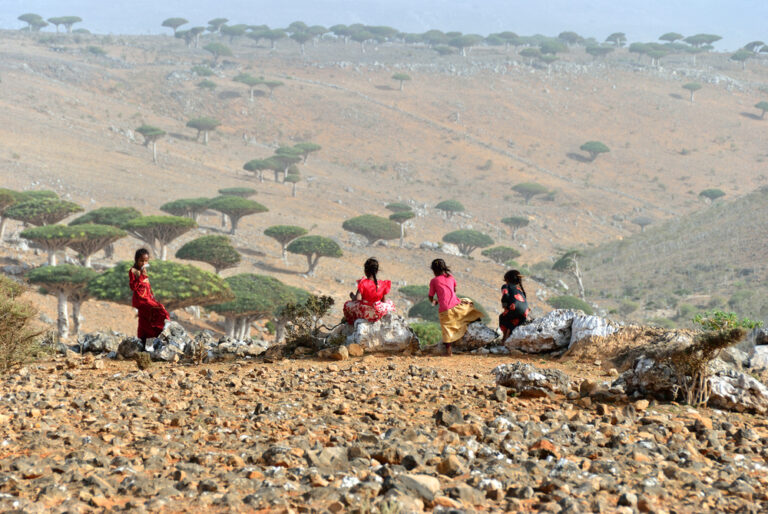
The dragon blood tree, the socotra of Yemen
This includes the species the authors consider to be the biggest threat to biodiversity – mesquite (prosopis juliflora)and erect prickly pear (Opuntia stricta)– as well as the most widespread and abundant species on Socotra, the medicinal herb billy goat weed (Ageratum conyzoides) and Mexican poppy (Argemone mexicana).
‘Galapagos of the Indian Ocean’
The Socotra Archipelago, in the Northwest Indian Ocean is often referred to as the ‘Galapagos of the Indian Ocean.’ Of the ca. 850 plant taxa known from the archipelago, 37% are endemic, while 90% of its reptile species and 95% of its land snail species do not occur anywhere else on earth.
However, much of this unique diversity is threatened by Invasive Alien Species (IAS). To help raise awareness and build the capacity of people and organizations to manage IAS, CABI developed this field guide after working with the United Nations Environment Programme (UNEP) and the Royal Society for the Conservation of Nature (Jordan).
The guide was funded by the Global Environment Facility (GEF) whose remit includes providing grants and finance for projects related to, amongst others, biodiversity, climate change, land degradation, sustainable forest management and food security.
Threatened by a host of factors
Dr Witt said, “The Socotra Archipelago is ranked among the richest island systems in the world in terms of biodiversity with a rich and distinct flora and fauna. Indeed, Socotra is among the top ten continental islands in the world in respect of botanical diversity alone.
“However, this extraordinary biodiversity is threatened by a host of factors including immigration, uncontrolled infrastructure development, poor governance at local and national level, over-use of the limited available natural resources (both marine and terrestrial) leading to increased land degradation, and plant and animal invasions.”
The authors say that several exotic species have been introduced to the Socotra Archipelago, either intentionally or accidentally, and are now widely established. Their impacts on Socotra are largely unknown but can be inferred from studies undertaken elsewhere. For instance, the black rat and brown rat are widely established and are known to have had dramatic impacts on island fauna and flora – having driven native species to extinction elsewhere.
Dr Witt and Ahmed Said Suleiman Abdullah added that there have been ongoing efforts to eradicate mesquite and erect prickly pear and the populations are low, but the seed bank, especially of mesquite, is a constant threat.
Another species, wild tobacco (Nicotiana glauca), has been eradicated, at least for now, the authors say. Other species, such as wild tamarind (Lysiloma latisiliquum) and Jerusalem thorn, are locally abundant. Then there are a few other species which they believe could become invasive in the future. In the guide, they include various species such as bush morning glory (Ipomoea carnea) and several Datura species.
Improving the lives and livelihoods of thousands of people
Co-author, Ahmed Said Suleiman Abdullah, said, “By managing invasive alien plants more effectively we will not only be contributing to biodiversity conservation, but also to improving the lives and livelihoods of thousands of people who depend directly on natural resources for their survival.”
The Guide, the authors say, will also contribute to Yemen meeting its obligations to various international agreements and treaties, such as the Convention on Biological Control (CBD). By managing IAS more effectively Yemen will also be facilitated in meeting many of the United Nations Sustainable Development Goals.
Taofeg Abdulwahd Al-Sharjabi, Minister of Water and Environment, Yemen, said, “There is no doubt in my mind that this field guide will contribute significantly to our understanding and management of invasive alien plants in the Socotra Archipelago, and even more widely in the region. I thank all of the contributors and donors that made this possible.”
Saudi Arabia is no friend to the Houthi terror group that has been firing on Saudi Arabia over the past years. But the wealthy oil nation neighbor does want to see prosperity for the Yemeni people. Saudi Arabia has launched a project that will secure water using renewable energy so 1.7 million people in Yemen can access clean drinking water.
Sanaa, the capital of Yemen, has been facing a severe water crisis, with water being drawn from its aquifer three times faster than it is replenished. The city is predicted to run completely out of water by around 2030, making it the first national capital in the world to do so.
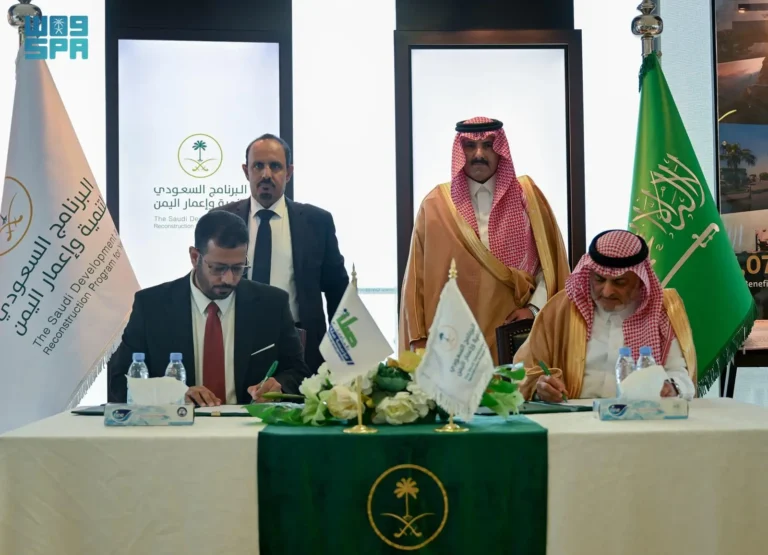
The Saudi Development and Reconstruction Program for Yemen has more than 229 active projects in 8 sectors, including education, health, water, transportation and agriculture.
The Saudi Development and Reconstruction Program for Yemen (SDRPY) and the Selah Foundation for Development will work in the coastal areas and and valley of Hadhramaut, Yemen.
The project to enhance water security in Hadhramaut governorate aims to increase water resources through solar energy in nine districts on the coast and valley of Hadhramaut.
Adopting clean energy will reduce dependence on fuel in operating wells and reduce production costs. The project will also work to build the capabilities of workers in fields in terms of the use and operation of solar energy systems.
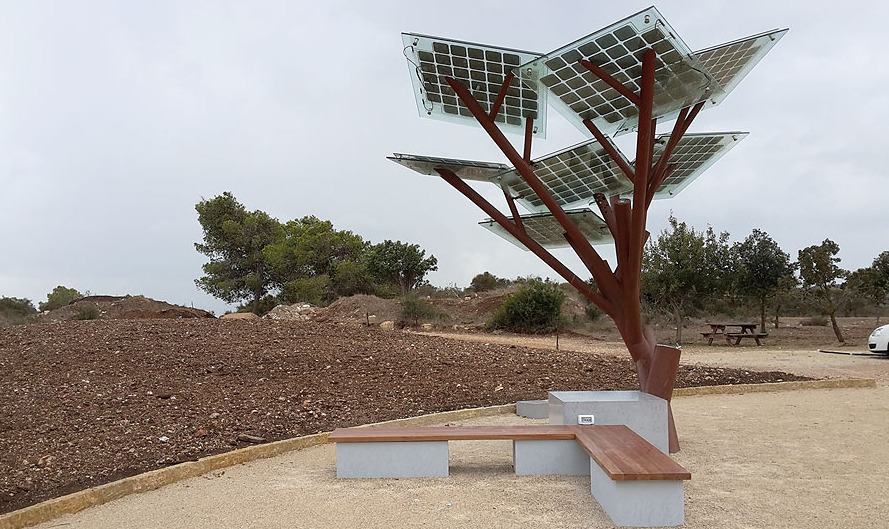
It caused a sensation more than 10 years ago in Israel. An Israeli solar power integration company called Sologic envisions a different kind of tree for societies, the eTree. This concept “tree” solar energy sculpture they developed for social good is a hybrid station for the wayward urban traveller.
Sologic solar tree invented in Israel 10 years ago
Now Masdar City, an Abu Dhabi, UAE-based sustainability and innovation hub dedicated to making all cities a solution to climate change, has revealed a new installation called Solar Tree as its latest eco-friendly addition to its Eco Plaza.
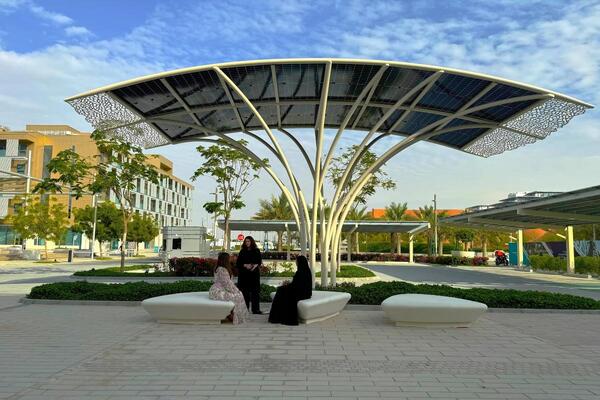
Solar Tree was designed as an art piece to spark public engagement around sustainability practices. It is also an example of multi-purpose urban development. It mimics a natural tree, with its slender, asymmetric columns and 16 gently curved solar panels, providing a shaded seating area while also producing clean and renewable energy.
Featuring 16 bi-facial solar panels that capture sunlight from both sides, Solar Tree has a capacity of 50 kwh and feeds energy directly into the Abu Dhabi power grid. It stands at 5.5 meters tall and 10 meters wide.
The placement of Solar Tree was informed by a 2023 heat study of Masdar City. In collaboration with a start-up called FortyGuard, Masdar City collected six million data points using sensors and drones over a period of nine months.
These data points provided a thermal map of Masdar City and Eco-Plaza that identified zones of high heat that needed to be addressed. Other recent measures to address hot zones in Eco Plaza include new trees, shrubs, and turf, removal of dark paving, and water features.