Home Blog Page 735

California and the Better Place $1 Billion Electric Car Company from Israel

shai agassi better place electric car california image

The financial crisis is hurting Americans, but months before the hit fuel costs were already gouging into people’s pockets. Some were forced to carpool to work, others took the bus or train. While creative forms of public transportation help deal with times of fiscal uncertainty (we personally love bikes!), the long-term plan for preserving the American way of life, and its auto industry, may revolve around an Israeli businessman.

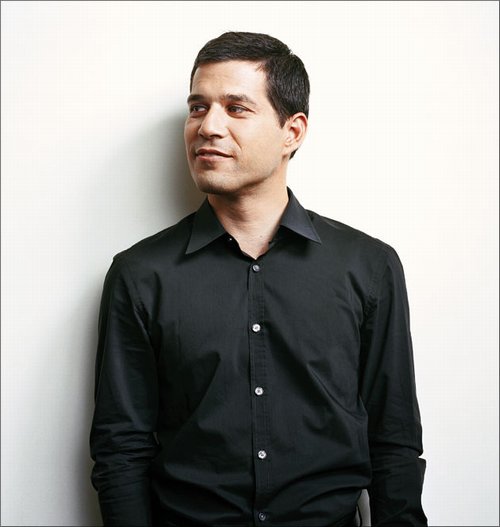
Shai Agassi, the CEO of Better Place, has big plans for America. Last Thursday, with the blessing of California’s Governor Arnold Schwarzenegger, Bay Area mayors met at San Francisco’s City Hall, along with Agassi. Their intent, they said, is to make the California region, already a green beacon in the world, an early adopter of Agassi’s electric car scheme. Israel, Denmark and Australia have already come on board.

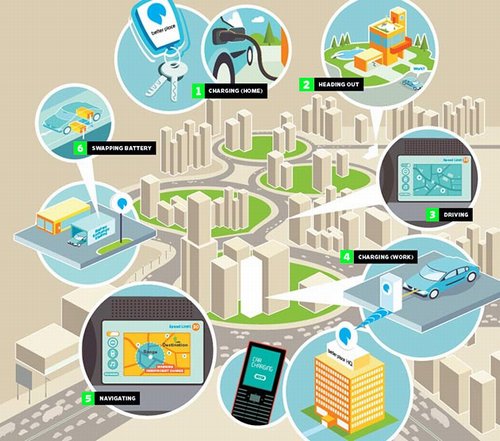
Similar to “minutes” in the cell phone industry, users will pay for leasing a car based on battery use. The scheme calls for electric battery recharging ports, and battery swapping stations throughout the region, but requires infrastructure and support for the project to work effectively.

Will Israel be the capital of electric cars?

The new $1 billion project is expected to encompass the cities of San Francisco, San Jose and Oakland. Similar deals have been signed with governments elsewhere, and now California marks the first stop in the US market. The United States is set to go electric.

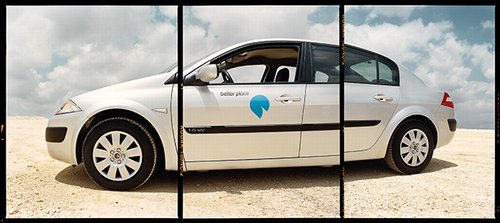
According to media reports, Better Place, which is headquartered in Palo Alto, will begin constructing the charging stations by 2010, with commercial sales beginning in 2012, a few short years away. The electric cars will be built by Renault-Nissan.
shai agassi better place electric car california image

The recent announcement to start work with the Bay area did not come as a big surprise. In Israel earlier this year, hybrid-car driving Mayor Gavin Newsom of San Francisco already showed great interest in the Israeli project.

“This is the start of a regional effort to become the capital of electric vehicles in the United States,” he told representatives from federal and state agencies, green organizations and automotive makers such as GM and Toyota, in a recent press briefing.
shai agassi better place electric car california image

With factory layoffs hitting car production plants all over America and Canada, an industry revolving around the electric car may breathe new life into the crumbing American economy.

It takes a region to make a great EV

Mike Granoff, head of oil independence policies at Better Place, and the first investor in the company told me: “Gavin Newsom and Shai have been friends for many years. The Mayor wanted San Francisco to be a leader in this, but it was not entirely up to him because our model does not work for just a city – it needs a region. He led an effort over the last year to bring the entire Bay Area on board, and ultimately the entire state.

“We are working with third parties on capital raises for Better Place Denmark and Better Place Australia. We intend to do the same thing in California. We have been inundated by inquiries about investment continuously, even through the downturn,” he adds.

“We absolutely look forward to working with additional automakers. Our goal is for all cars to ultimately be electric. The American auto industry is in shambles precisely because they have not moved toward ‘Car 2.0’.”

Earlier this week Granoff circulated an email explaining why he believes the US government’s response to the crumbling economy should be an “auto bailout, conditional on [a] rapid switch to all-electric, and then create a jobs program in parallel to put that infrastructure in.”

Plug in or swap the EV battery

In order to put the vision into practice, Better Place — already backed with about $200 million in venture capital — will raise additional capital so that charging stations in the three main participating cities, and between them, can be built. The stations will let vehicle owners recharge with ease, or in some cases swap spent batteries for fresh ones during longer trips.

The Bay area mayors are expected to use their authority to push through permits needed to create the charging stations, and also regulations that promote and offer incentives, such as tax breaks for those who install charge stations at workplaces, or who use the cars.
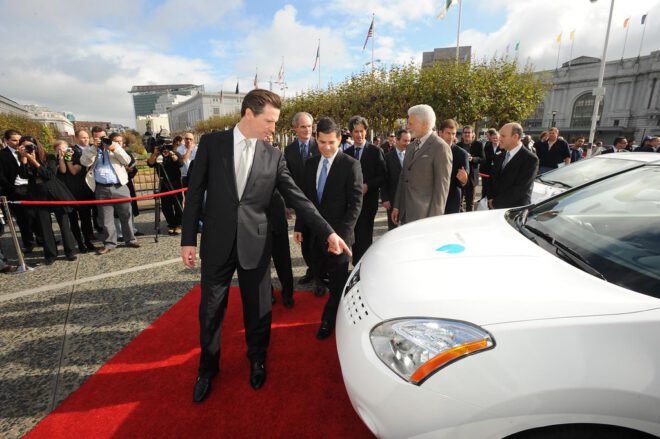
Gavin Newsom
Gavin Newsom and Shai Agassi of Better Place

At a press briefing, Newsom told reporters: “We’re going to get serious about advancing our local climate action plans, about getting into the business of alternative transportation. I don’t believe halfway is good enough. I’m a guy driving a hybrid (vehicle) and I don’t feel too good about that. For us to get to the next level, we need unprecedented regional collaboration.”

Aside from long-term environmental rewards, there are other benefits too: Better Place solves in part America’s dependence on foreign oil, owned by a cartel of dangerous countries that threaten global democracy. Agassi said, “We believe this is not just a model for California, but a blueprint for the United States.”

For a somewhat more critical look at Better Place, visit the Green Prophet article, Better Place’s Shai Agassi Gets Wired.

Will the Coral Reef at Aqaba Beach Be Destroyed By Litter?

5

Aqaba beach coral reef pollution image

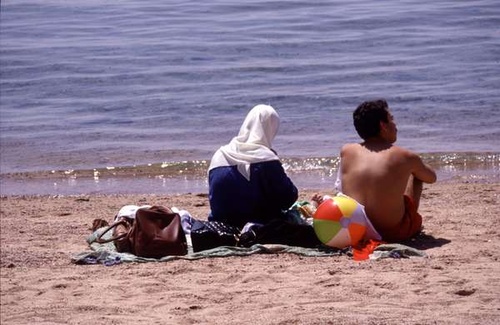
The lush marine habitat by Aqaba Beach in Jordan is among the richest in the world, attracting thousands of visitors per year. But the popularity of the beach is also its downfall: In just 20 minutes, divers recovered more than 150 kilos of garbage from the waters of the reef, including plastic cups, cans, and toxic substances.

The Royal Marine Conservation Society (JREDS) is spearheading an effort to clean up the beach, increasing the number of annual cleanup dives from eight to 18. Executive Director Fadi Sharaiha told The Jordan Times, “We continue to get complaints from tourists and divers about the litter and the damage it is causing to the marine habitat.”

Throughout the world, at least thirty percent of coral reef habitats have been devastated due to pollution. And if the coral reef disappears, marine wildlife is sure to follow.

The History of Thanksgiving and How to Green Yours!

1

One of the wonderful customs that the American settlers here in the Middle East has brought over from the old country is Thanksgiving. Here is my green tribute to them!

In 1621, the Plymouth colonists, led by William Bradford and Wampanoag Indians shared an autumn harvest feast which is acknowledged today as one of the first Thanksgiving celebrations in the colonies. This feast was actually in keeping with a long tradition, rooted in various cultures, of celebrating the harvest and giving thanks for a successful bounty of crops.

But it wasn’t until the 1863 that Thanksgiving was declared a national holiday.

Klil village showcases Galilee’s sustainable travel options

6

Klil Eco Village Israel

We’ve already written about Israel’s eco tourism industry and even about new eco study abroad options in Israel for overseas college students who want to make their positive green mark here.

And for the tourists Israelis who want to explore their home in an environmentally friendly way, or bring green living to their everyday lives?  There are lots of green towns in northern Israel, in the Galilee.

Kfar Kalil, in the western Galilee, is a town full of people trying to live simpler lives that are more in touch with nature.  The approximately 50 families living in Kfar Kalil get all of their energy from solar power and practice exclusively organic agricultural practices.

Since the plots of land in Kalil were purchased privately, the houses are spaced relatively far away from each other in order to try to preserve the look of the landscape.

Klil, which might also be spelled Kalil in some places has a few eco tourism options. Here are my 3 favorites:

Bein Haruv Le Zayit:

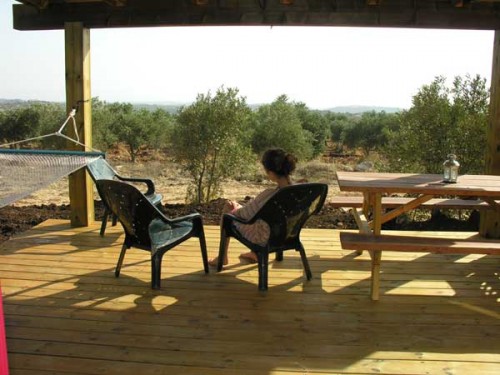
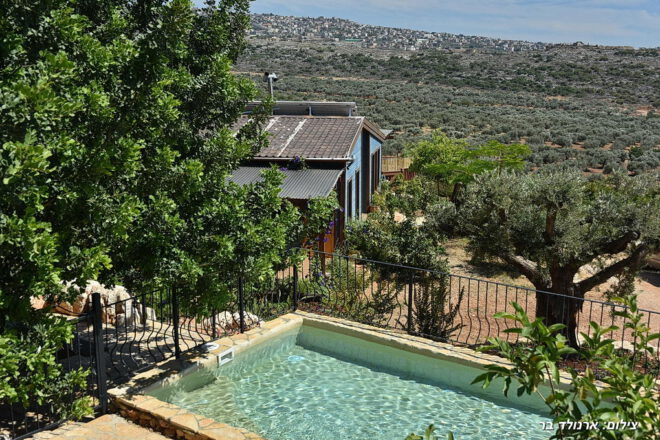
This bed and breakfast is located in Kalil and features a swimming pool with a natural (as opposed to artificial) design, yurts, and a small store with homemade organic soaps.

Habayit Betzel Etsei Hazayit:

This collection of three small cabins – the orange house, the earth villa, and the sky villa – overlooks the Galilee mountains and an expansive landscape view.

Ohalim:

Ohalim which means “tents” is a venue for workshops and quiet events held in a natural setting.  Its spacious plot faces an ocean view and contains walking paths, meditation areas, and an organic vegetable garden.

Update 2021: AirBnB has changed the way people find accommodation in Klil nowadays. Most nights are unusually pricy for the value – like renting a person’s 3 bedroom house – but stuffed with their stuff for US $350 a night. But with Israel being a tight market where cost of living is high, you will find people ponying up and paying that and even more for an “eco” experience closer to nature.

Also, Klil was way more fun for adventurers when the cafe Cafe Klil in the middle of the village functioned as a community outlet for families. It’s been closed since COVID as far as we know.

Read more about other green spots in the Galilee:

Israeli Eco-Conscious Town Nurit is in the Works in Gilboa

Green Prophet Visits Amirim, a Vegetarian Paradise in the Galilee

Guesthousing It In Israel: Get Your Eco-Farm On

Will Israel's Ben Gurion Airport Be the First In The Middle East To Go Green?

2

Ben Gurion airport green image

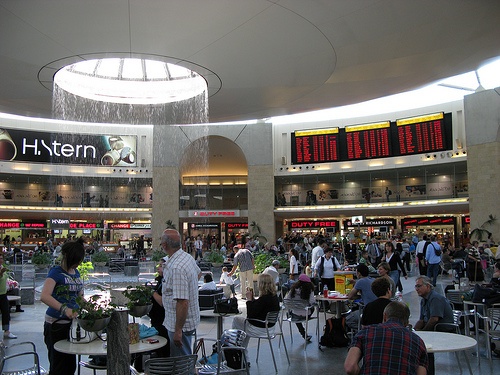
Israel may soon have its first green airport. The Israel Airports Authority (IAA) has ordered the management of Ben Gurion Airport in Tel Aviv to draw up a plan transforming Ben Gurion into “a leader in environmental protection.”

The plan must provide solutions for the reduction of air pollution, water pollution and noise pollution. Use of alternative energy sources, treatment of dangerous substances, recycling and green construction are also a vital part of the plan.

Lot Spa Hotel in the Dead Sea Goes Green With Solar Power

2

In the Bible, Lot is well known because his wife (Irit) looked back at Sodom when angels were pulling them out of the city (even though the angels had specifically told her not to look back).  As punishment, she turned into a pillar of salt.  Luckily, things have since changed.  Lot Spa Hotel in the Dead Sea is now looking forward and turning green.

Lot Spa Hotel, a mini oasis facing the mountains of Edom at the edge of the Judean desert and located 400 meters below sea level, boasts a luxury experience to its visitors.  In addition to their newly renovated rooms, they offer a variety of spa treatments such as Dead Sea mud wrap, sulfur treatment, stone therapy, shiatsu, reflexology, and more.

If you’re worried about the effects of these indulgences on the environment, though, have no fear.  Lot Spa Hotel is making it easier to feel good about treating yourself, thanks to the many steps they’ve recently taken to go green.  These steps include:

Gaza Teacher Promotes Solar Panels During Blackouts In The Strip

2

gaza teacher solar energy power palestine photo

Since Hamas took control of Gaza in the summer of 2007, Israeli citizens have been battered with rocket attacks in Sderote, and more recently Ashkelon. Some media outlets call Israel’s interference with fuel transfer across to Gaza “a seige” but for Israelis it is just a matter of survival. Looking beyond politics and focusing on solutions for today, a Gaza teacher has adopted Israeli solar energy technology to power his home during the latest blackout, according to Maan News.

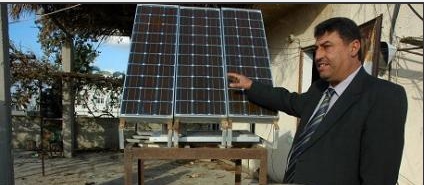
Not long ago, we reported on Palestinian taxi drivers souping up their engines to run on falafel oil; the latest is that a Gaza teacher, Mahmoud Shahin, is using solar panels to generate electricity. There have been weeks of rolling blackouts, the newspaper reports, and the 59 year-old Shahin, a chemistry teacher from the town of Jabaliya, in the northern Gaza Strip, has turned to solar power.

He’d purchased the panels eight years ago from a Palestinian who’d imported them from Israel. Only recently had Shahin obtained the electrical conductors he needed to start generating electricity for his house.

"Green Jerusalem" Councillor Naomi Tsur Lectures On Environmental Activism

1

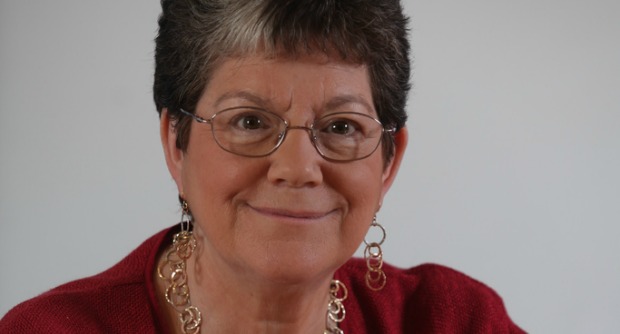
naomi tsur jerusalem green imageThe battle for the Jerusalem Municipality may be over (secular candidate Nir Barkat victorious over haredi rival Meir Porush or, in my view at least, a choice between dumb and dumber), but the struggle for the city’s environment is just beginning.

Last week Green Prophet told you that Naomi Tsur, former head of Society of Protection of Nature in Israel (SPNI) Jerusalem and founder of the Sustainable Jerusalem coalition, was elected to the municipality as part of part of Barkat’s ‘Jerusalem Will Succeed’ list – a move that has inspired optimism among the ranks of the city’s environmentalists.

This Wednesday 26 November, Tsur is giving a lecture on the subject of environmental activism and will no doubt have some interesting post-election insights to share.

naomi tsur
Naomi Tsur

The talk will be followed by a screening of the film, Bullshit, previously shown at cities across Israeli during May’s EcoCinema festival. The award-winning film follows Indian activist and physicist, Vandana Shiva, from her organic farm at the foot of the Himalayas to battles against globalisation, patenting and genetic modification of crops.

Starts at 8pm at SPNI Jerusalem, Sergei Courtyard, 13 Helena Hamalka. Entrance NIS 15, call 02-6252357 to reserve a place.

Top Photo by Michael Green

Israeli Clean Technology Companies Return from California Super-Tour

0

cicc california clean technology israel BotanoCap Canarius Cequesta Water Coriolis Wind logo image

The American economy has been flipped on its head, yet companies, authorities and investors in California know that the current financial woes can’t stop the advancement of clean technology. The future of the world depends on it. And Israel, they realize, may be a part of the solution.

As a recognized leader in the industry, California’s green business movers and shakers invited a dozen of Israel’s most promising clean technology startups to the United States two weeks ago. The mission was to familiarize the Californians with the opportunities presented by a handpicked group of Israelis, and to help the Israelis position themselves and polish their business plans.

Organized by the California Israel Chamber of Commerce (CICC) and the Cleantech Group, the participants in the “CICC Israel Cleantech Company Showcase” were selected by a steering committee that included some of the industry’s most prominent organizations – including PG&E, the California Public Utilities Commission and Israel Cleantech Ventures – who chose from a range of Israeli companies that could help fulfill California’s desire for energy independence, and an environmentally friendlier future.

The Israeli companies chosen from over 40 applicants included: 3G Solar, BotanoCap, Canarius, Cequesta Water, Coriolis Wind, CellEra, CES – Computerized Electricity Systems, Emefcy – Bio Energy Systems, HCL Clean Tech, Metrolight, SOVNA, and Tigo Energy.

Muslims Should Waqf for Water Because It’s Good for the Environment

Jaffa sea rocks
Waqf or wakf is an optional charitable donation made by Muslims as part of their faith. Some organizations are now focusing on the environment, like Wakf for Water.

The video is a bit slow to start and speaks to a somewhat unsophisticated audience, but it introduces an important concept of charity in Islam (sadaqah jariyah), and why Muslims should support “Waqf” –– for the environment’s sake. Or at the very least political stability.

According to the International Union for Conservation of Nature Waqf is an Islamic endowment, a model by which one makes a voluntary, permanent and irrevocable dedication of a portion of one’s wealth – in cash or kind, for a certain purpose for certain beneficiaries.

Once assets are set aside for Waqf, they can never be gifted, inherited or sold.

The idea here is that the capital remains intact, and the yield of investment is used for the beneficiaries. Hence the concept of sustainability is ensured.

Similar models of charity are put into practice in Judaism and fall under what the Jews call “tzedaka.”

The video above introduces the idea of a Waqf fund, a flexible and innovative financing mechanism targeting solving water problems in the Middle East region.

The concept of Waqf fund is similar to trust funds where the capital for the Waqf is invested and the returns on investments are utilized for activities related to conservation.

Sounds very similar to microfinance loans, now being put to use in Israel in areas from the environment to social good.

Now let’s see some action. Start a wakf for water, for organic food, for permaculture, for greener energy. And report back to us!

The flash before the flood

1
colin price flash flood lightning research photo
Prof. Colin Price

Flash floods are the most common natural disaster in the United States, and a big killer in the Middle East too (see Relief Web’s report on Yemen). And OneWorld blog here on the Yemen flash flood which recently displaced more than 20,000 people.

Because of the unpredictability of flash floods, they’re a leading weather-related cause of death, and are expected to worsen as climate change patterns (due to global warming) become more erratic. Flash floods usually arrive with little or no warning, but a Tel Aviv University researcher is trying to predict where and when they will occur ― using lightning.

Prof. Colin Price, coordinator of the international “Flash Project” is studying the link between lightning and subsequent flash floods. The three-year study includes scientists from five European countries, and its results are expected to be adopted by weather forecasting agencies around the world.

The goal is to develop an early warning system for people in the path of a flood. “Flash floods are different from normal floods, which are often the product of melting snow. Flash floods are short-lived and dump a lot of rain,” says Prof. Price, a climate change specialist.  “Using the radiation emitted from lightning flashes, we’ve developed a system that can give adequate warning to the public ― and save lives.”

Eventually, the Flash system may be used to send messages to cell phones, RSS feeds, GPS units and other devices to warn people in the path of a flash flood and avert disaster.

“Nowcasting” for Flood Warnings

Unlike normal floods which arrive slowly and with more warning, flash floods are particularly dangerous because they happen so quickly, developing from thunderstorms that form in a matter of hours. By measuring the radiation emitted by lightning, researchers can pinpoint the most intense thunderstorms, and the resulting rainfall can be located and tracked.

This data has been used to predict both the path of a storm and where heavy rainfall will appear ― crucial predictions, since the impact of flash floods depends on ground topography, slope and vegetation cover. “Nowcasting,” which predicts what conditions will be in the next few hours, versus “forecasting” a day or two in advance of expected weather conditions, is critical.

Looking at real-time lightning data, Tel Aviv University researchers can see where storms will travel over a period of a few hours, and can warn people in the path of the flood of impending danger. Such a tool will become even more relevant as erratic weather patterns, predicted by climate-change scientists today, become a reality tomorrow.

A Flood of Warnings Delivered in a Flash

The research from the Flash program can be extrapolated for use anywhere in the world, including the flash flood-prone regions of the U.S.  For example, the U.S. National Lightning Detection Network could easily apply the results of the Flash research.

“This is a tool for the future,” says Prof. Price. “And it will be even more exciting in the next decade, when we’ll have continuous real-time detection of lightning activity from satellites. That data will be used to predict floods anywhere.” The U.S. will also have geostationary satellites with lightning trackers that will take a picture every 15 minutes from 36,000 kilometers above the earth.

By mid 2009, Prof. Price says, real-time maps will be available to predict floods in a flash.

Updated May 20, 2020

Intel to Cleanse Waste Water for Agricultural Use in Israel

4

intel, computer chip, environmental technology

One of the problems with development and technology is its wasteful side effects (see our story on green chemistry). This is one of the reasons why the current growing green awareness in these fields is so important. It wasn’t until the industrial revolution that we began affecting our ozone and causing destruction to our habitat on such grand scales.

At the end of the last century Israel was a denuded country. The pine and oak forests of Biblical times had been cut by successive conquerors and laid bare by centuries of uncontrolled grazing. The final blow came in the 19th century when the ruling Ottoman Turks clear cut whatever forest remained to obtain timber for building the trans-Arabian railroad. They left the country more than 97 percent bare. This is only one example of a trend of development.

Cicleta Sprint Bicycle Messengers Take Over Tel Aviv

6

A couple of months ago we wrote about how the Israeli Ministry of Tourism is investing millions of shekels towards developing clean, green, eco-friendly cycling tourism.  That’s great, but how can we make green transportation part of our everyday lives – and not just something we enjoy on the weekends or on vacation?  How can cycling replace some of our normal modes of transportation?

Tel Aviv is working on figuring that out.  Earlier this year we learned that Buddha Burgers – Tel Aviv’s delicious vegan burger joint – makes its food deliveries by bike or by foot.  And now, thanks to Cicleta Sprint – all kinds of deliveries within Tel Aviv or the greater Tel Aviv area can be made via bike messenger.

Cicleta Sprint is a group of people who love to cycle and who love to help people and the environment in the process.  (Check out Amitai, above, whose nickname is Speedy, and Shachar on the right.)

In avoiding potential traffic and the constraints of the road, the Cicleta Sprint bike messengers can usually get your package to its destination faster.  They also cut down on the carbon emissions associated with your delivery (creating, instead, sweat emissions – which are much better for the environment).  And added bonus: they’re a lot cheaper.

Cicleta Sprint bike messengers are available 24 hours a day, 365 days a year and can be ordered by phone or by email.

Last we checked in 2022, Cicleta Sprint was long out of business. Wolt and 10bis drivers on electric bikes have taken over our city. The odd time we see a human powered bicycle out on a food run, but it’s very very rare. 

Read more about cycling in Israel:
Get on Yer Bike in Tel Aviv
The Cycling Nightlife in Jerusalem
Public Transportation Day 2008 –  Still Stuck in Traffic

Ran Morin And How He Relates to the “Nature” of the Middle East

ran morin photoFamous for his Orange Suspendu sculpture in Jaffa, I had the pleasure to interview environmental artist Ran Morin. Rarely granting interviews with the press, Morin spoke with me a little about living and working in Israel, and man’s place in the environment. Earlier this week Ran Morin sent me an invite to the launching of his 4-year project, at Hebrew University (Mt. Scopus Historical Botanical Garden, with some pictures below the fold).

The event is happening next week on November 25th. Below is a little bit more about the man, whose work translates some of the complicated political and spiritual reality in the Middle East.

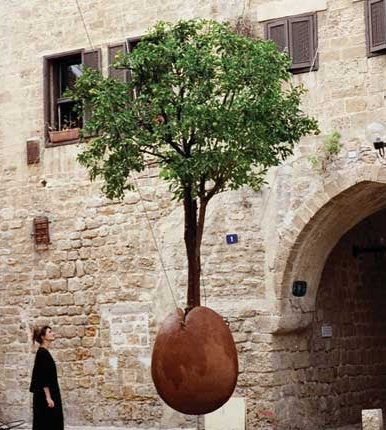
Like many others who admire his work, Israeli environment artist Ran Morin’s favorite sculpture is a centerpiece of Jaffa’s Old City. Although the artist labors years, sometimes decades, over projects spanning a number of Jerusalem’s historic archeology sites, it’s the orange tree, Orange Suspendu that hovers both in situ and in the mind.

Created in 1993, Orange Suspendu hangs in an entranceway to a cobblestone path leading to galleries and art studios, where it is held about a meter above ground by wires. The unusual city landmark – only seconds away from the Mediterranean Sea – draws thousands of tourists each year who stand beside it, marveling.

Orange Suspendu
orange suspendu jaffa photo ran morin

This is true even for those who don’t know the history of the famous Israeli export, the Jaffa orange which was packed and shipped from the Jaffa Port starting in the late 1800s, and which continues to be a favorite the world over. The Jaffa orange, now getting a carbon label, is also a symbol for the local Arab Israeli population, who share the multicultural city with their Jewish neighbors.

Not long after the installation, Morin started getting inquiries from people all around the world who wanted to commission their own hanging tree. It just wasn’t for him.

“I’m not a trademark tree hanger,” Morin says. “My projects need time.” Besides he explains, hanging trees require continual investment on the part of the owner: “These trees are living up there and the conditions are not easy to maintain. They need the right kind of soil and enough drainage, and a careful irrigation regime. It’s artificial – a bit like being in outer space.”

In comparison to the rest of Morin’s work, the orange tree was created very quickly. He calls it his baby. “It was the one that was easiest,” says Morin. “This one came as a flash, representing the end of a whole process.”

Sculptural gardens

It’s different with other works, where he labors over his art. Morin finds himself speaking to authorities from around the world to study the history of some of Israel’s overlooked archeology sites, and gain permission to rejuvenate with imaginative sculptural gardens that are literally acres in size.

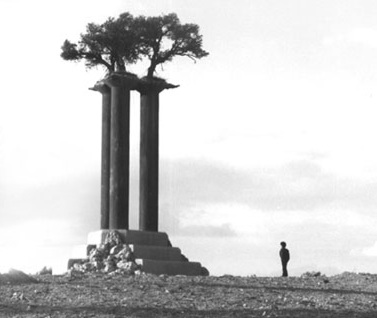
This was the case with “Hypothetical Ruins”, located at an archaeological site at Kibbutz Ramat Rachel outside of Jerusalem where he connected with Prof. Oded Lipschits, an archaeologist from Tel Aviv University who continues to work at this important excavation today.

Olive trees on columns at Ramat Rachel
olive trees on columns ramat rachel photo

It’s also true of his work now at Hebrew University’s botanical gardens. All are backbreaking endeavors that require painstaking attention to detail. “They take the blood, these projects,” says Morin. “There are literally millions of screws that have to fit in place. I have spent years in the sun.”

mount scopus sculptural garden photo

Some of his projects have political undertones, mainly because it can’t be avoided in Jerusalem and the areas where he works. Personally, however, Moran tries to stay away from such sensitive issues. It’s hard though: “I am dealing with earth and olive trees and actual places where there are borders. A Palestinian once told me, ‘Okay we don’t have to fight over the land; we can grow the trees in the sky’.”

Preserving Palestinian landmarks

Not long ago members from the Palestinian village Al Isawiya outside of Jerusalem called Morin. They wanted him to preserve their holy tree, believed by the locals to be a rainmaker. “And judging between people and all that,” says Morin, who proceeded to turn the immediate area around the tree into a sanctuary now called the “The Sacred Charub Tree of Isawyia.”

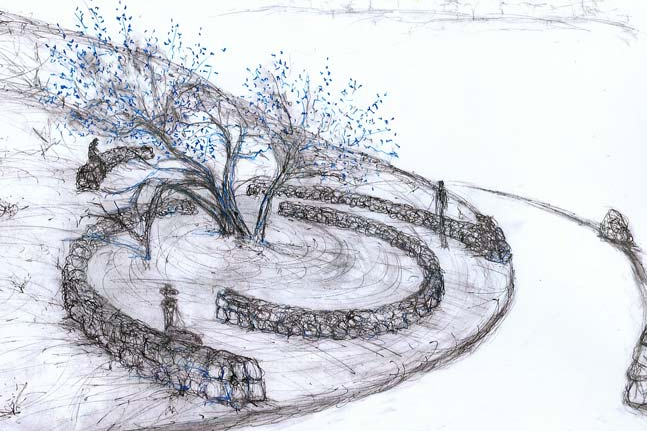
The Sacred Charub Tree of Isawyia sketch

The sacred Charub tree of Isawyia is the main symbolic relic of the village. Christian tradition claims that Jesus (Isa in Arabic) sat underneath this tree with his disciples. Moslems maintain that the tree was the meeting place of Saladin’s generals (1187), one of which was named Elmuadem Isa – hence Isa-wyia. The tree is believed to posses supernatural powers and can fulfill wishes, judge between opponents and even produce rain in years of draught.

This project and the much larger ones created outside of Israel in locations such as London and Rome, – fulfil Morin’s vision of preserving the landscape in a creative way. As he sees it, “historical memories [are] one of the elements of ecology.”

This is especially true in Jerusalem, where Morin was born, studied and lives, and where contractors are developing “like crazy” what could be “one of the most significant areas of the world.”

::Ran Morin website

Refill Your Kettle

4

water kettleAfter your kettle has boiled and you’ve emptied it, before it cools down, add some water for next time. While the kettle is still hot. This takes advantage of energy you have already used and paid for, and will help the cold tap water warm up and so save energy next time you brew.