Home Blog Page 727

Katan Adventures Puts the EcoloJEWcal (and Ecological) in Travel

0

[youtube]http://www.youtube.com/watch?v=9WqjOn1sxQw[/youtube]

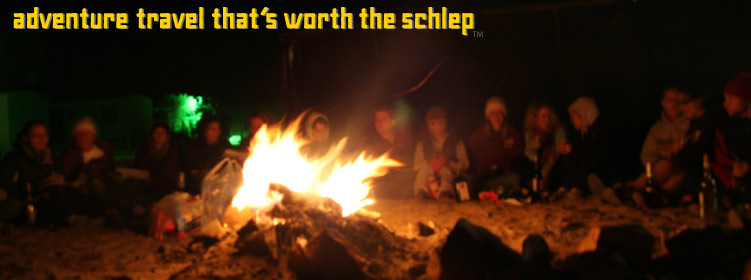
For those of you out there who may have been planning an eco tourist trip to Israel but have… ahem… postponed your plans for the time being, don’t cancel all of your vacation plans just yet.  Katan Adventures, a New York based travel company, might be able to provide help planning an alternative trip with the same kavana (or, intention).

Katan Adventures attempts to provide “action-packed, eco-centric, guided outdoor adventure trips and travel for Jews and friends of the Jew in their 20s and 30s.”  Their trips are not religious in the sense that they are not affiliated with any Jewish movement and do not promote any religion.

Katan Adventures does, however, operate in a manner that reflects the fundamental Jewish value of tikkun olam (heal the world).  In their own words, “this means that our guides will show you the best outdoor adventure activities that our destinations have to offer, such as surfing, skiing, rock climbing, mountain biking, hiking and more all while being mindful of our impact on the environment within which we travel and, ultimately, live.”

In other words, they’re putting the Jew in ecological.  (Or, as they so cutely put it, into ecoloJEWcal.)

Eco-Rabbi: Parshat Vayechi – What’s in a Blessing?

0

You're a donkey: Is this a good father's blessing?Orthodox Jews read a segment of the Five Books of Moses each week so that they can complete the entire Five Books within the course of a year. In last week’s Eco-Rabbi post we discussed Jacob’s descent to Egypt and the grand cedars that he brought with him.

This week’s segment, Parshat Vayechi, is the last segment of the book of Genesis. The story finishes laying out the setting to the background story of the ancient Jew’s slavery in Egypt.

Most of this segment deals with the Jacob preparing for his death.

In preparation Jacob blesses all of his children. But his blessings are not the classic blessings that one would expect. One son Jacob calls a donkey. For another two, he includes their extreme violent nature in their blessing; Jacob actually curses them to be dispersed amongst their brethren. So what is the deal here? Why would a father bless his children such?

The commentaries explain that a blessing, if it is to be authentic and have any affect, has to include the nature of the person that is being blessed. Jacob needed to include the nature of his children in his blessings for them to take effect. But this concept goes deeper than simple hocus-pocus.

Iran Inaugurates Its First CSP Solar Power Plant

9

 iran solar energy csp photo spain energy
(This AP photo shows a concentrating solar power (CSP) plant in Spain which reflects light to a central tower to produce power.  A pilot project using CSP is underway in Tehran.)

Does a country that “promises” to wipe Israel off the map have a right to create nuclear energy for “power?” I must admit, news that Iran is looking to create power from solar energy puts some of my (irrational?) fears of living in Israel aside. According to the Iran Daily, Iran’s first solar powered station has been inaugurated.

The new plant is a concentrating solar power (CSP) plant, similar to one in Spain which reflects light to a central tower. 

The plant was inaugurated at the beginning of 2009, in Shiraz, the Fars province. The CSP system uses parabolic mirrors which focuses sun onto a tube of water. Eventually becoming super-heated, steam in the tube is used to turn electricity-generating turbines. 

10 Common Misconceptions About Breastfeeding Your Baby

24

breastfeeding

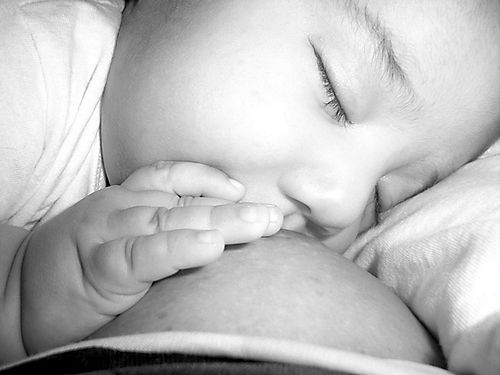
Breastfeeding is a natural and “green” way for a mother to feed her baby. Yet  misconceptions about how to breastfeed and for how long pervade our modern world. These misunderstandings can lead to frustration and distress for the whole family during a challenging period. Green Prophet gives you 10 reasons to shatter any myths and misconceptions.

Misunderstandings vary, depending on your country and culture, but in Israel, which is similar to European and North American countries, I preface my examples with a telling anecdote. Keep reading for 10 very important misunderstandings and tips about breastfeeding that can change the way your new baby is nourished.

A mother, who worked from home, had just enrolled her 14-month-old daughter in kindergarten (Hebrew: gan) in Israel. Until starting gan the toddler nursed freely throughout the day.

Eco-Art Goes Urban at Gebo Gallery in Tel Aviv

0

gebo eco-art gallery tel aviv photoMarlene Ferrer and Johanan Herson are “trying to be artists in the middle of Tel Aviv,” without relinquishing their environmental consciousness. Creating eco-art in an urban setting, Ferrer joined with Herson to found Gebo Gallery Studios as a working, teaching gallery that explores artistic choices in the context of social and ecological awareness.

The installation Wrapping Gebo – Art in Action celebrates the studio’s second anniversary. Ferrer and Herson will paint together on recycled paper that covers the gallery walls. “We are opening up a personal process and inviting people to observe,” says Herson.

Visitors will be able to interact with the work by adding words to the painting. The more introspective Ferrer prefers to work in silence; Herson says he will be open to talking to visitors while he paints.

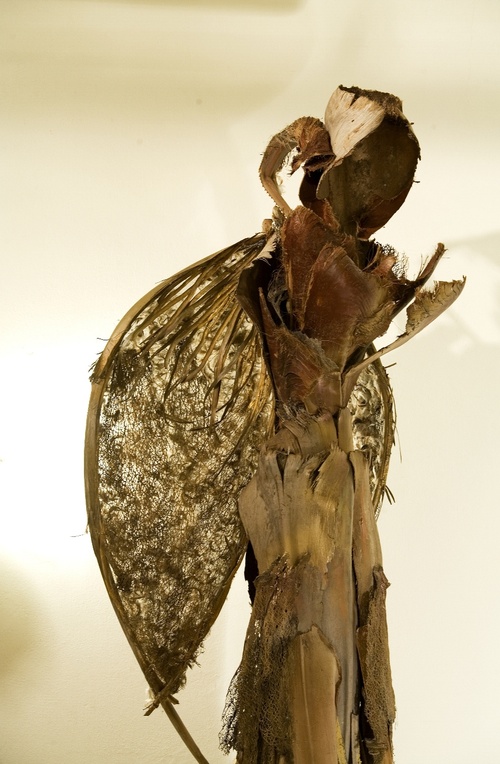
Canadian-born Herson, who immigrated to Israel in the 1970s, has an extensive theater background, which certainly makes him the artist more likely to talk to the audience. Ferrer, originally from South Africa, has always found her inspiration and materials in the natural environment. In the Galilee she collected stones which she either painted or used to construct sculptures. When living in Herzliya she created totems from wood scraps. A move to Tivon ten years ago was once more reflected in her work. She began to collect palm leaves, assembling them into tall human-like figures.

Architect Elias Messinas Brings Green Architecture to Israel

9

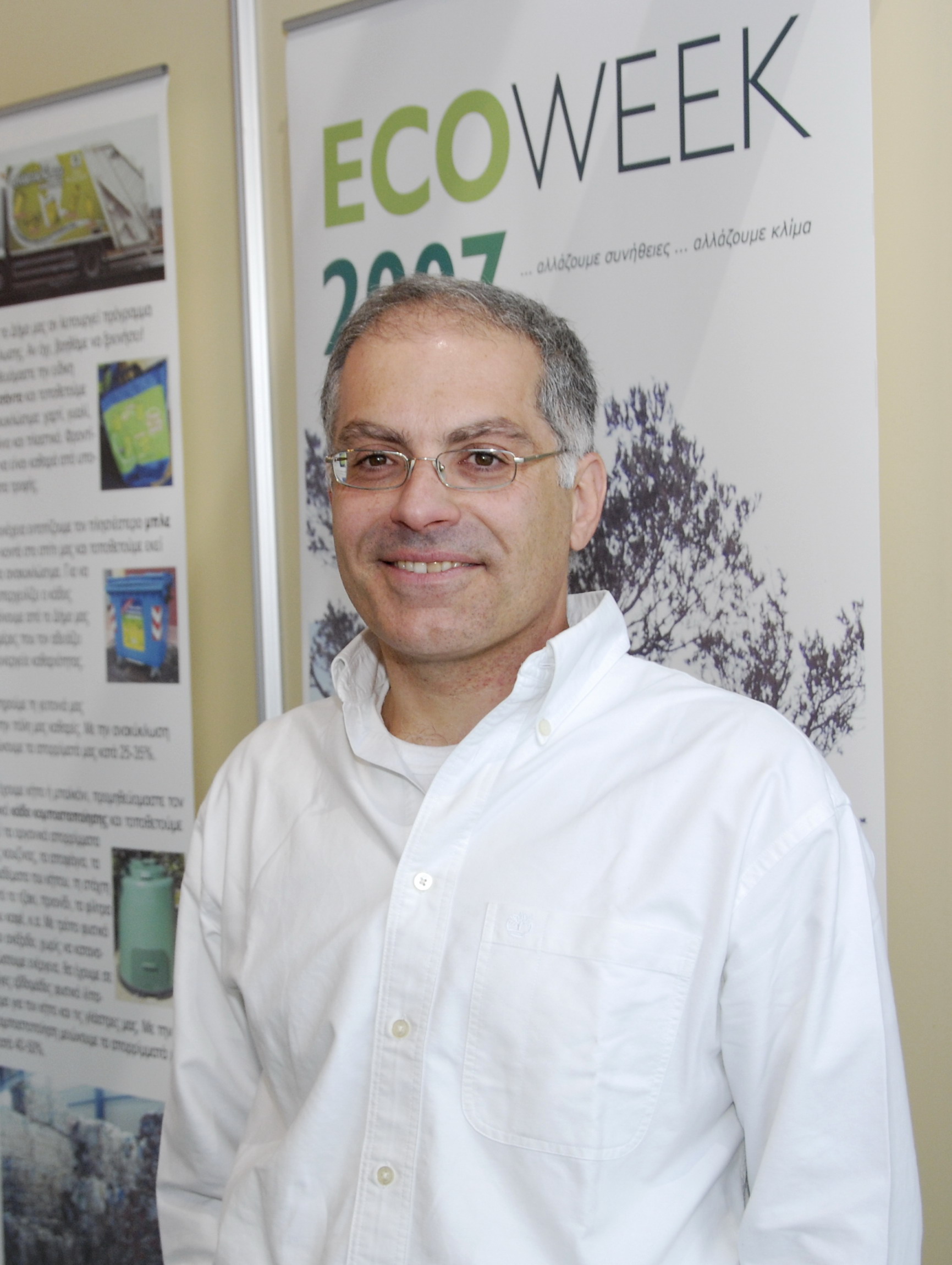
elias messinas green architect israel greece photoLast week we wrote about Kibbutz Kramim, a cooperative in the Negev that is currently working on building a multicultural model of environmental sustainability in the form of an eco village. 

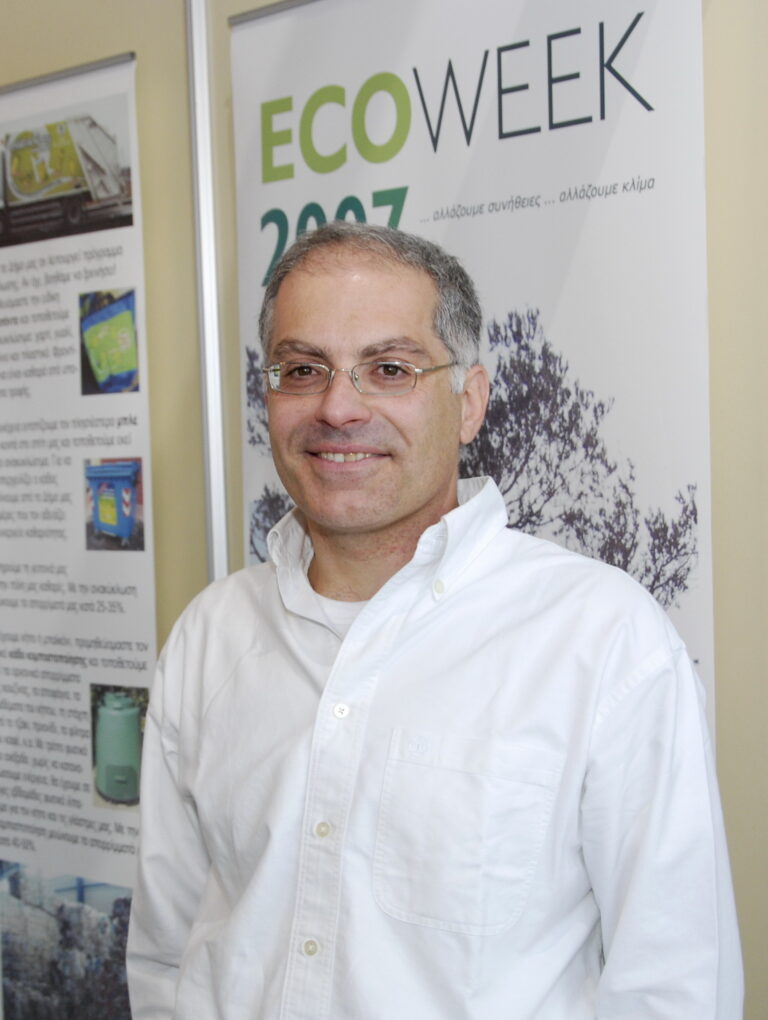
And this week we’d like to introduce you to Elias Messinas, the green architect behind the operation.

Messinas’ firm is the strategic environmental consultant to the Kramim Eco Village project, which will begin construction during the summer of 2009 and include LEED Platinum certification or compatibility, follow the European Directive for Energy Performance of Buildings, Israeli ‘Green’ Standard IS 5281, and the principle of “One Israel Living.” 

The materials used for construction will be local, with an emphasis on low-energy and low-emission materials found in the area such as earth (to make adobe bricks) and straw bale.

In addition to Kramim, though, Messinas works on a variety of architectural projects in Israel, Greece, Cyprus, and the USA.  His other projects in Israel include the Mei Mabuah Ecological Center (in the Negev).

Is Gianni Versace’s Refrigerated Beach One Excess Too Far in Dubai?

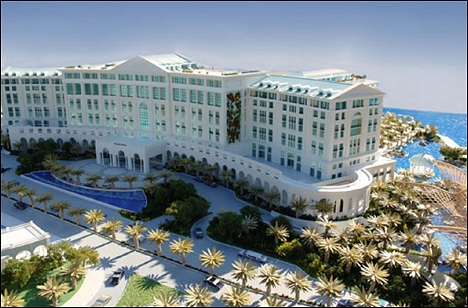
dubai refrigerated beach

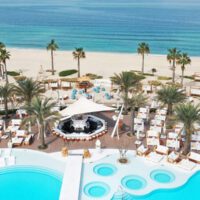
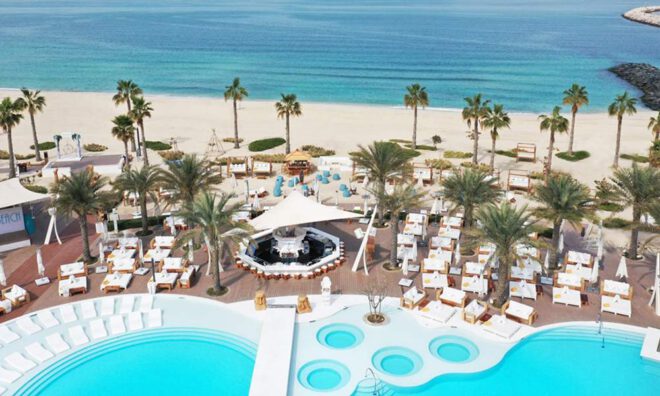
For those of you who hate scorching your feet on hot beach sand, the developers of one of Dubai’s latest luxury hotels has the ultimate pampering for you: the climate controlled beach.

No more toasted toes on the way to the waves of the Arab Gulf, promises the Palazzo Versace.  The beach will feature a cooling system that will cool the sands and allow the guests to bask in the sun without becoming overheated.

“We will suck the heat out of the sand to keep it cool enough to lie on,”  said the founder of the hotel, Soheil Abedian. “This is the kind of luxury that top people want.”

Technological solutions to cool the Middle East sand?

So, how do you keep the sands cool, and can you do it in an environmentally responsible way?

One reported solution is to run coolant pipes under the beach in order to draw the heat out of the sand, and bring it to a comfortable temperature in the scorching heat of the United Arab Emirates.

Sea water itself could be used, in conjunction with a refrigeration/air conditioner system, or on its own.  Another source reports that cool sands could be achieved by a combination of clever landscaping and shading by trees, or by forcing air conditioned exhaust air from the hotel and residential building under the beach.

Just roll out the red carpet

While the second solutions appear to be more environmentally responsible, the only effective solutions seems to be the ridiculous option of refrigeration.  Maybe putting down a carpet would be the best.

And does it really matter whether it is green, if  60% of Dubai’s power bill goes to air conditioning, and expensive luxury high rises with all of the latest amenities are springing up everywhere, causing traffic jams, congestion and pollution?

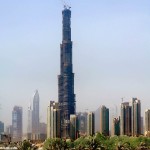
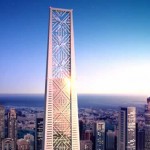
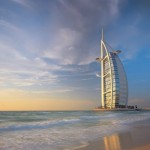
In keeping with the ever-expanding search for the ultimate tourist attraction, Dubai has an impressive:

Are Dubai’s building hey-days numbered?

But it appears that the party might be over, and Dubai’s grandiose plans, both wasteful and responsible, may be going nowhere.

The global economic crisis, causing a shortage of disposable income and a severe credit crunch, is bad news for an economy based on tourism, shopping and real estate projects: Dubai’s economy gets less than 6% of its revenue from petroleum and natural gas, as part of a calculated policy to depend on trade, real estate and financial services.

With dropping prices for the little oil it has, and a decrease in available foreign cash, Dubai might have to turn to low cost solutions and expand on its environmental projects:  A planned  fleet of electric cars, the Middle East’s largest solar panel factory, or bicycles in the 40 degree heat?  Maybe they will convert to eco-tourism, and join other eco-tourist destinations in the region.

EcoMum: Bathing Baby and Water Conservation

1

baby bathtime asian baby tub photoWell, winter is upon us and the rain is finally dampening the earth but that does not mean that we should forget about our water conservation efforts.

One way of saving water and keeping our little ones a little more dry-eyed is by cutting back on bath-time. Coming from England where water conservation was never at the top of the list I was surprised to know that we have a much more eco-friendly (and baby friendly) method for keeping baby nice and clean with or without the bath towel.

Here in Israel (and the Middle East), talking to friends and fellow mums, it seems most people are convinced that baby needs bathing every day. This is not really necessary from a water saving point of view, nor for your stress levels, as not every baby is fond of bath-time and most importantly it is not really beneficial for your baby.

Bathing your baby every day strips their delicate skin of their natural oils and can leave their skin dry and vulnerable. It simply is not a must.

An Eco-Farm Blooms Under Rocket Fire From Gaza

7

eco farm shokeda israel gaza photoWhile rockets fly overhead, Bat-Zion Benjaminson tends her garden. The religious mother of four hopes to establish an eco-village in the moshav (cooperative community) of Shokeda, which is located just six kilometers away from the border of Gaza.

According to Bat-Zion, the war being fought in the area is not just with rockets.

This is an ecological war zone,” Benjaminson told the Jerusalem Post.

We are on the edge of the desert here and our goal is to make it recede. This is a very logical place. That is why I am here. Because it is less expensive, I can achieve sustainability quicker. We are on the cutting edge of ecological living.

Bat-Zion hopes that she and her children will be the start of an eco-village within the existing moshav. Right now Eden’s Herbs Farm, as she has named it, is tended by Bat-Zion and volunteers from abroad. They grow herbs that are native to the region as their main cash crop, as well as bananas and other cultivations–all without pesticides, of course. Chickens roam free of any chicken coop.

Green Events at the Porter School of Environmental Studies at Tel Aviv University this Week

0

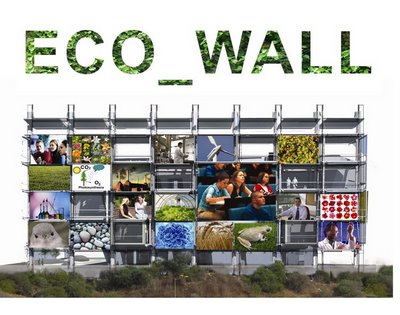
eco-wall green building rendering porter school environment tel aviv universityIf being more environmentally friendly is one of your New Year’s resolutions, you might consider going to one of the great “green” events hosted by the Porter School of Environmental Studies at Tel Aviv University this week.

First up is a screening of Urban Legend – an environmental documentary by Nitzan Horovitz that was presented a few months ago at the Tel Aviv Cinematheque. 

After the 50 minute film is shown, a panel discussion including Horovitz and Orli Ronen-Rotem (the CEO of the Heschel Center) will take place.  The movie will be shown on Tuesday, January 6th at 5:30 pm and is free and open to the public (RSVP required to [email protected]).

Daryl Hannah Splashes Into Sinai Eco-Tourism

0

daryl hannah, greedy lying bastards film review, executive director

Green Prophet would love to invite the Splash icon to Israel and other Middle Eastern countries. See the video below where Daryl Hannah, the foxy American actress-turned environmentalist, explores eco-tourism in Egypt.

Some tips to be learned from the vid. For more eco-tourism stops in Sinai-Egypt see our post on Eco-Tourism in Egypt.

Choose "The Environment" During Latest Middle East Conflict

1

This isn’t the forum for politics, but unfortunately so much of what decisions are made in the Middle East (ie funds allocated, prayers made) are determined by the conflict. Above, see a video of the consequences of the Israel-Lebanon war 2.5 years ago.

As an Israeli, I know that untold environmental damage happened south of Lebanon in Israel; thousands of trees burned, landscape devastated. But we know all too well, environmental issues are not confined by borders, and affect all of us on this planet.

Instead of choosing sides, would it be naive to ask people — especially those with limited understanding of what’s happening in the Middle East –– to fight for the environment instead?

Drought in Jordan Calls People to Pray for Rain and the Controversial Dead-Red Peace Canal

3

jordan-water-resources-rain-photo
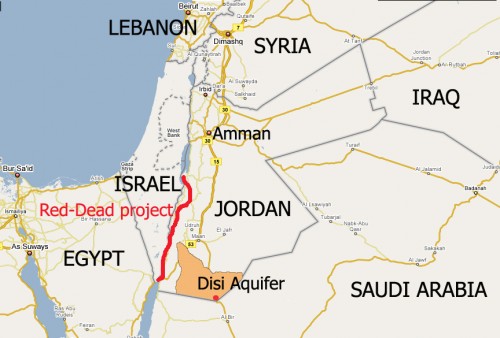
(A map of Jordan and the surrounding region highlighting the Disi Aquifer and the proposed Red-Dead project.)

With worrying frost alerts in Jordan getting farmers anxious, Jordanians are also seeing a rainless season this year, increasing their fears that crops will collapse. Last week, officials had been calling on its citizens to pray for rain, a common practice done in Israel among religious Jews as part of their daily prayer ritual.

Since the report of a persistent drought, by the IRIN news, rain has come to the region. So we hope the farmers prayers, at least for this week, have been answered. But, we learn, the rainwater insufficiently filled up Jordan’s storage facilities

By the end of December, almost no rain had fallen on Jordan, says IRIN, threatening crops of vegetables, wheat and barley. Farmers from Deir Ala, in the northern Jordan Valley, said that their government had stopped pumping water to their farms for irrigation in order to keep drinking water reserves stocked.

The Conflicted Middle East To Worsen As Global Warming Causes Rising Sea Levels

5

water global warming middle east climate change yemen privatization photo
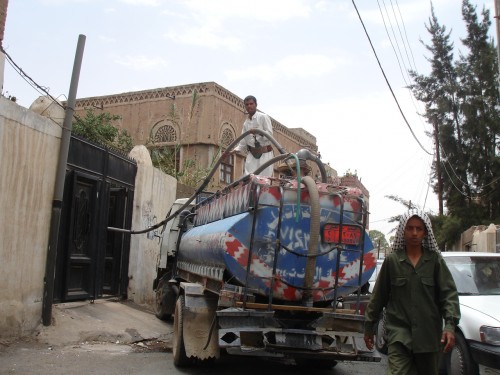
(Rapidly depleting water resources has forced residents of Sana’a to buy water from private sources. Water levels are dropping by 6 metres a year in the Yemeni capital. © David Swanson/IRIN)

If you think things seem pretty dicey in the Middle East right now with Israel and Hamas fighting, according to IRIN, expect tensions to become a whole lot worse, once global warming comes into play. Rising sea levels, they say, will have severe environmental, economic and political implications for the already water-stressed Middle East.

The report they site is called “Climate Change: A New Threat to Middle East Security,” written by Friends of the Earth Middle East (FOEME), who we’ve blogged about extensively.

Crops Safe, No Frost for Now, Reports Jordan

0

vegetable market shuk israel photo
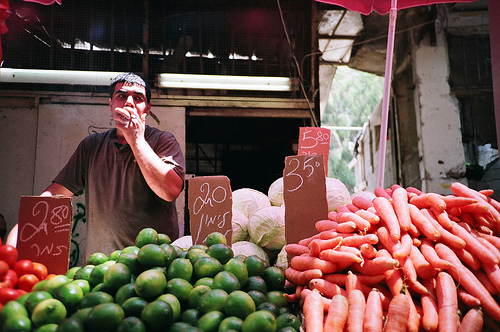
(Does this guy look worried about the frost? A smokin’ vegetable vendor in a Petach Tikva market, Israel. Credit anyalogic)

While North Americans in the higher latitudes are sipping hot cocoa, and have Jack Frost nipping at their noses, farmers in the Middle East pray that the frost won’t come. Last year, sub-zero temperatures wiped out millions of dollars worth of crops in the region, causing basics like lemons to cost a fortune in the supermarket.

Farmers so far, reports The Jordan Times, are in the clear from frost. Although temperatures dipped to sub-zero this week night as a cold and dry air mass overwhelmed the region, Jordan’s Agriculture Ministry officials said no reports on crop damage were received.

The officials, however, renewed a call on farmers to take precautionary measures against frost formation to avoid vast crop damages similar to what happened early last year when over 15,000 dunums of vegetables were damaged in Jordan alone.