The “WATEC 2009” Exhibition, along with an international conference featuring a problem-solving forum for water, energy, and environmental technology issues, will be held in Israel on November 17-19, 2009. Time to book your hotels, and airplane if you are planning on coming from abroad.
According to Oded Distel, director of the National Water Technology Program at the Ministry of Industry, Trade and Labor, approximately half of Israel’s water industry leaders are expected to present a sales growth in 2009 despite the global crisis.
Although Mr. Distel believes that the global decline in demand will affect the Israeli water industry – just as it does other aspects of the economy – there is an opposite and strong trend pointing toward an increased demand for solutions to increasing water production and optimizing its use, which will stabilize the current situation and ultimately generate growth in certain companies.
Israeli Researcher Finds Earth Cracks May Contribute to Global Warming
“Fractures breathe, and this process has direct relevance to the question of global warming,” says Dr. Noam Weisbrod –– With the ever increasing shortage in the world’s water resources and dire warning of Israel’s own ongoing drought, research to reduce contamination of existing water resources while developing new potable sources has become a pressing concern, here, as in the rest of the world.
For example, due to massive deterioration of groundwater quality, the Israeli coastal plain aquifer now provides less than 50 percent of its output 20 years ago.
Thus the need to halt or reverse the degradation of the country’s groundwater is crucially important.
Hydrologist Dr. Noam Weisbrod’s research is providing the basic knowledge that can help in solving this crisis by understanding how pollutants reach the subsurface and how they behave underground.
With people losing their jobs in America left, right and center, effects of the global economic crisis are being felt in the Middle East too. Israelis, whose Gross Domestic Produce relies so much on exports has to scale back dramatically when America loses spending power. Yet people are asking here, why isn’t there more recycling.
Today, Green Prophet’s Jeffrey Yoskowitz, a writer and researcher based in New York, asks if recycling is bad for the economy. To get some background on this piece, read his earlier post on Jeffrey’s tour of a recycling facility.
In a bad economy, it’s often the good environmental practices—using energy-efficient light bulbs, insulating homes, driving less, eating less meat—that end up prevailing, in part because they save people money.
But that’s actually not true of recycling, which, for better or worse, is intimately tied to the health of international markets—and the willingness of countries like China to buy our recycled materials. Right now, demand for those materials has shriveled up, which has been a huge blow to recycling plants.
“We were in the red by December,” says John Haas, the recycling coordinator of Ocean County, New Jersey—and it’s the same story throughout North America.
A factor in annual budgets
Ever since recycling centers became widespread in the early 1990s, they’ve turned out to be boons to municipalities, offering a reliable source of local revenue. The more prosperous and more productive the economy, the more revenue that recycling centers generate.
From the late 1990s up until last October, according to Haas, the price of raw materials was so highly inflated and recycling programs were so successful that many municipalities started factoring recycling revenues into their annual budget. Since 1995, for instance, Ocean County’s recycling plant had shared $16 million with its county government.
But, as a result of the current financial crisis, recycling centers aren’t generating enough money any more, costing the city and county governments much-needed cash.
Drops in demand reflect market prices
Since October, demand for manufacturing materials like aluminum, cardboard, and plastic have dropped precipitously, and so have prices. Aluminum, the most profitable material for the New Jersey recycling centers, was selling at $2,100 per ton back last July, but by January had dropped to $944 per ton, as big buyers like Anheuser-Busch lowered their bids to reflect current market values.
Plastics, cardboard, and paper have all seen a drop in demand as well, both because of the lack of new construction projects, and also—most startlingly—as a result of China’s economic slowdown.
“China is a major buyer of cardboard, newsprint and plastic, and usually pays high prices,” explains Haas. “When they stopped buying, it was very significant.” Until recently, the Chinese had been reliably high bidders on paper and cardboard products, which they would then reprocess into boxes to ship consumer goods back to the United States.
What happens when China stops buying
It was a standard formula that provided a stable relationship between recycling centers and Chinese manufacturing—and it helped prop up eco-conscientious recycling programs here in the United States. And it all made sense as long as China’s economy grew exponentially and its consumer goods poured into the U.S. market.
That fact alone raises a few alarming questions about the relationship between recycling and consumption. Is recycling wholly dependent on the reckless consumerism that is, in turn, responsible for many of our environmental problems today? Do, say, paper recycling and other eco-traditions here in the United States depend entirely on China’s continued breakneck growth?
To be sure, recycling will continue with the recession, and despite the hard times, things are looking up. “It will be a challenging year for everyone, but based on prices for March, we feel much better,” said John Haas. “Things are looking up, and we’ll be monitoring it on a regular basis.”
But for now, with fewer purchasers and lower prices, it seems that recycling centers will be forced to sell once-valued commodities for cheap, undercutting their expenses. And, if things worsen and the markets erode further, a great deal of recycling could halt altogether, putting stress on our landfills.
This, in turn could force manufacturers to seek out virgin raw materials to produce what were once products with multiple life spans. Let’s hope it doesn’t come to that.
No matter how sophisticated modern medicine becomes, common ailments like fungal infections can outrun the best of the world’s antibiotics. In people with compromised immune systems (like premature babies, AIDS victims or those undergoing chemotherapy for cancer) the risk is very high: contracting a fungal infection can be deadly.
Now Tel Aviv University zoologists are diving deep into the sea to collect unique chemicals — drugs of the future — to beat unnecessary death by fungal infection. And their secret weapon is the common marine sponge.
Prof. Micha Ilan from the Department of Zoology at TAU, who is heading the project, has already identified several alternative antibiotic candidates among the unique compounds that help a sponge fend off predators and infections. He and his graduate students are now identifying, isolating and purifying those that could be the super-antibiotics of the future.
The research group at TAU has found and isolated thousands bacteria and fungi, including a few hundred unique actinobacteria. So far, several tens hold promise as new drugs.
Just when we thought the whole world was in an economic slump: The Jewish Funders Network just announced a $750,000 pool of funds earmarked to match first-time major gifts by JFN members to Israeli non-profit environmental organizations, according to eJewish Philanthropy.
The Jewish Funders Network and the Richard and Rhoda Goldman Fund Matching Grant Initiative for the Environment in Israel, the website reports, will “offer donors an innovative and effective way to leverage an investment to impact the environment in Israel, a critical field which will have long-term impact on the health, economy, and quality of life.”
“JFN’s matching grants programs are a time-proven tool that produces real impact,” said Murray Galinson, the JFN Board Chair. “We are pleased to be able to be able to be able to offer this tool to help maximize the positive impact that donors can make on the environment in Israel.”
According to eJewish Philanthropy, over the past 4 years JFN’s matching grant initiatives have generated over $60 million in new funds for a wide range of causes. Grants will be $25,000 to $50,000.
Time to polish off your proposals: To qualify for the environmental grant in Israel, your NGO organization/group/project must be based in Israel and directly engaged in environmental work.
Priority will be given to:
activism
advocacy
community environmental activity
public environmental education
or youth environmental education
“The need for protecting Israel’s environment is a growing challenge, even as natural resource depletion and clean water shortages escalate,” said Richard N. Goldman, founder and president of the Richard and Rhoda Goldman Fund. “There is a pressing need to proactively and effectively address the environmental impact of rapid industrialization and population growth.”
The publicity surrounding the emergency landing of U.S. Air Flight 1549 in the Hudson River, was only the tip of the iceberg in regards to the growing dangers of collisions between aircraft and birds, particularly migratory waterfowl, at major airports around the world.
When theses risks have to do with areas located on major migratory bird flyways, however, the risks are even more apparent as they were pointed out in the near tragedy of Flight 1549, which had taken off from LaGuardia airport, located smack dab on one of the American continent’s major bird flyways; the Atlantic Flyway.
Israel’s main international airport, Ben Gurion International Airport, is in a similar situation, as it is also located in proximity to the Syria-African Flyway, where millions of migratory birds, including ducks and geese, storks, pelicans, cranes and egrets, raptors and other types fly across the length of Israel on their annual migratory flights.
Although no passenger airline as been downed so far by birds over Israel airspace, other types of aircraft including two fighter aircraft in which one pilot was killed when a pelican crashed into his plane in 1974, and in 1980 when a honey buzzard crashed through the cockpit of another fighter jet from which the barely injected in time.
The problem of bird vs aircraft has become an intensive area of study by a Tel Aviv University zoology professor Yossi Leshem, who said that the ability of Flight 1549 pilot, Chelsey Sullenberger, to land his wounded aircraft on the water was a sheer miracle, in light of it’s engines being disabled by a flock of geese being sucked into the plane’s engine intakes.
Leshem has been involved in the study of bird habits in relation to aircraft safety for several years, and was awarded a special prize, The Yithak Sade Prize for Military Literature, in 1994 for a book he wrote entitled Flying with the Birds. The book dealt exclusively with the problems that migrating birds have with aircraft in such a tiny airspace as Israel’s where more than 900 million birds, representing at least 300 species, pass through the country annually.
Because Israel depends so heavily on its air force for national defense, military airbases now use special tactics, advised by Leshem, to keep birds away for runways as much as possible. These methods include the use of trained dogs to scare the birds off, as well as certain sounds and “scarecrow” images placed in strategic locations to scare the birds and keep them away.
More recently, Leshem has been awarded other prizes for his work to protect civilian aircraft from being struck by birds, including a special award given during last May’s 60th Anniversary celebrations. As the risks of civilian aircraft, especially large passenger aircraft increases, due to the relative slowness of the planes when taking off and landing, the risks at commercial passenger airports is even greater, according to Leshem.
In addition to working to prevent accidents between birds and aircraft, Leshem is also involved in joint conservation projects with Jordan and the Palestinian Authority in which birds of prey, such as hawks and owls are encouraged to live on farms to protect crops from rodent infestation. Special nesting boxes for these birds are placed on the farms to encourage a natural form of pest control without the need for pesticides.
“Not only is this a good solution for the farmers; it encourages good relations between the people involved in these projects” he was quoted as saying.
Green Prophet received a press announcement that ZenithSolar, an Israeli start-up company that will license revolutionary solar energy technologies, will be launching its first “solar farm” in April 2009 based on Concentrated Photovoltaic (CPV) systems.
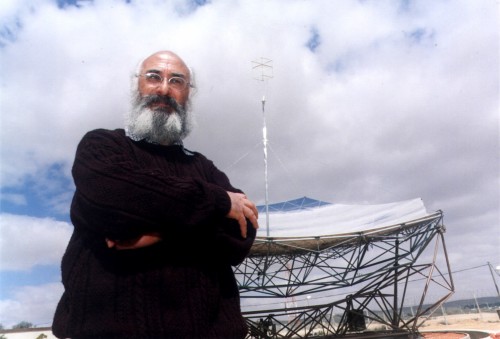
The technology was developed by ZenithSolar based on the technology of Prof. David Faiman working with Dr. Andreas Bett, head of Department of Materials – Solar Cells Technology and his staff at Germany’s Fraunhofer Gesellschaft for Solar Energy Systems to create a solar energy system that is more efficient than any similar solar product.
Prof. David Faiman is the Chairman of the Department of Solar Energy and Environmental Physics at Ben Gurion University’s Jacob Blaustein Institutes for Desert Research.
ZenithSolar is set to develop and mass produce the most reliable cogeneration solar power system – with a full vertically integrated strategy – that can be deployed as a distributed energy network. The system will harvest more than 70% of incoming solar energy (as compared to industry norms of 10% to 40%).
Founded in 2006, The ZenithSolar system is price competitive with traditional forms of energy without government subsidies. ZenithSolar concentrated solar energy generation system is based on a new paradigm in optical design and high-efficiency solar cells. www.zenithsolar.com
The Green Building in Manchester’s Macintosh Village. An Israeli version, coming soon?
Last month, the Tel Aviv municipality implemented some creative solutions to help solve Israel’s ongoing water crisis. It appears they are not stopping there in their efforts to green the City That Never Stops.
Soon, construction will begin on Tel Aviv’s first ecological housing project!
The building will be on Akiva Eger Street, near the central bus station, and “will include smart lighting systems, recycled use of grey water (water generated from laundry and bathing) for irrigation or cooling, [and] charging stations for electric motor scooters.”
Since this project is part of the municipality’s plan to renew areas in the southern part of the city, builders receive rights more generous than those in the central and northern part of the city, and they are also permitted to build smaller apartments. The affordable price and small size of these homes are expected to attract young people and investors.
(As if the coolness of living in an eco-friendly apartment wasn’t incentive enough. Where can I sign up?!)
As Westerners, there are some things we really can’t understand about Africa unless we’ve been there. That’s what Sivan Borowich-Ya’ari discovered over the last decade. While working for a clothing manufacturer and then the United Nations, the Israeli woman fell in love with Africa. She understood how very small things — like a single light bulb shining at night — could drastically improve peoples’ lives.
With this in mind, 30-year-old Borowich-Ya’ari founded the non-profit, A Jewish Heart for Africa, in New York, raising money in America but using technology developed in Israel. It is now called Innovation: Africa. In the year since it began work, she estimates that Innovation: Africa has changed the lives of more than 30,000 Africans in Ethiopia, Tanzania and Uganda.
Connecting America to Israel was logical for Borowich-Ya’ari. Noticing that Africans lack basic needs like fresh water, or a refrigerator to store medicines in their clinics, Borowich-Ya’ari got an idea.
“We started with solar power because without energy you cannot do much,” she says. And as an Israeli, she turned to the obvious: Israeli solar technologies are well known around the world.
Helping Africans catch the sun
Innovation” Africa’s first project, Project Sol, is designed to bring solar power to African clinics and schools. Solar power is an obvious choice in Africa where the sun shines about 12 hours a day.
“At night if a doctor has to treat patients, he has to do it with candles. With $4,000 we are installing solar panels and eight to 10 lights in a clinic. We put the lights both inside and outside so people can actually find the clinic at night,” she tells us.
The solar panels, bought at cost price from Israeli company Interdan, are also used to power refrigerators used to store and preserve medicines. “It gets so hot there that even when the clinics get vaccines they don?t keep for very long [without a fridge],” she explains.
Basic lighting is a first step, but another pressing concern, says Borowich-Ya’ari, is being able to pump water so that women and children don’t have to walk miles to collect it. With rapid deforestation in Africa, and the effects of global warming already felt, finding clean drinking water is becoming more of a problem every day.
Expanding food production with drip irrigation
Project Sol’s solar energy panels are also being put to use to power water pumps, now able to pull water from 200 meters below the ground. This is part of the NGO’s new venture in Africa, Project Agro. Borowich-Ya’ari and her team of 24 volunteers will install Israeli drip irrigation technology from the company Netafim in Tanzania and Uganda, where the company already has distributors in place.
Water pumped from beneath the ground will be fed into Netafim‘s water saving drip irrigation pipes to help African villagers expand agricultural production in locations where food is scarce.
“We are pumping 20,000 liters of water per day — it’s changed the entire economics of the village and the peoples? health. They can grow food,” says Borowich-Ya’ari, who came up with the idea for the solar power organization while studying at Columbia University in New York, where she received an MA in International Energy Management and Policy, and later at her job with the United Nations Development Program.
Innovation: Africa is also powering a synagogue in Uganda, for the Ugandan Jews who converted to Judaism 100 years ago. “We’ve powered their chicken farm and a community center; a library, synagogue and we’re powering their homes,” she says.
In about two years, Innovation: Africa plans to send volunteers to the field in Africa. In the meantime, says Borowich-Ya’ari, cash donations are most welcome to continue buying the much-needed infrastructure.
Disputes over natural resources are not a new part of the Israeli-Palestinian conflict. Water, for instance, is a famous bone of contention between the two parties. Recently, however, a newer twist developed in this ongoing battle between nations.
On Monday, Yesh Din – Volunteers for Human Rights, an Israeli rights group, petitioned the High Court of Justice, seeking both an interim order and an injunction against the operation of 10 Israeli-controlled quarries in West Bank.
Michael Sfard, a lawyer for Yesh Din, argued, “Israel is transferring natural resources from the West Bank for Israeli benefit, and this is absolutely prohibited not only under international law but according to Israeli Supreme Court rulings…This is an illegal transfer of land in the most literal of senses.”
A 2008 government study found that three-quarters of the resources extracted from these quarries goes to Israel, accounting for almost a quarter of the sand and gravel Israel uses annually. International law forbids occupying powers from exploiting natural resources in the territories they control. Although Israel does not consider its ongoing military control of the West Bank as an occupation in the classical sense, Yesh Din still maintains that the extraction of rocks and sand for building materials violates international law.
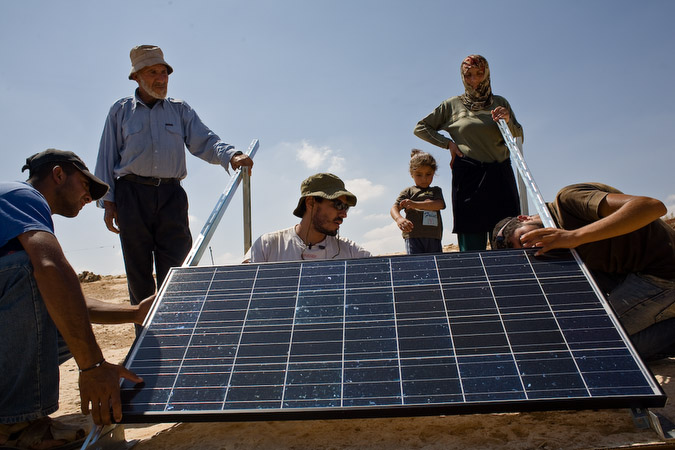
Rachel interviews Elad Orian, co-founder of COMET – Community, Energy, and Technology in the Middle East. He’s creating solar power for Palestinian villages.
Through sustainable energy development for off-grid villages, the project aims to socially and economically empower Palestinian communities of the South Mount Hebron region, one of the poorest and most marginalized areas within the Israeli-controlled Palestinian Territories. The project is small – Elad and his partner Noam Dotan run COMET in their spare time – but successful. Last summer, they installed 20 homemade solar systems in the village of Susya, as well as held a wind turbine construction workshop for Palestinians from all over the West Bank.
Elad’s views on renewable energy, sustainable development, and social and environmental justice in the Palestinian Territories are excerpted below.
Reduce, reuse, recycle: the three rules of green living. Thrift, second-hand, and vintage shopping all follow all three.
Firstly you’re reducing the need for new products to be manufactured.
Secondly you’re reusing things that have been through lord knows what.
And lastly, by putting things that you don’t want or need any more back into the cycle of reusing you’re recycling.
Vintage shopping is a big buzz word of our times, suddenly we’re realising not only the green aspect of all of these clothes that are hanging around.
We’re also realising the style value of not only wearing something that’s a little bit worn, but of the fact that no one else owns an identical garment, and even if they do it’s rare!
I run a blog about vintage shopping in Tel-Aviv and thought I’d share a few tips on first of all where to go shopping, and secondly what to look for when shopping.
Should I stay or should I go? It’s a common question vexing many people living in Jerusalem, a city suffering from negative population migration, particularly young, secular Jews who leave to seek opportunities in Tel Aviv and central Israel. Siah HaSade is a new permaculture centre in the heart of west Jerusalem which seeks to reverse this negative trend (in the local neighbourhood at least) by providing local people with tools to live more sustainably in the city.
“One of the things that makes the city liveable are green spaces,” says Shaul David Judelman, local green activist and one of the project’s founders, who hopes that centre will help strengthen the connection between more local people and their community. Officially launched on Tu B’shvat, the previously neglected space is being given a green make-over in the shape of raised beds to grow organic vegetables, compost facilities, planting native trees, demonstration porch and hanging gardens and, in the future, composting toilets and a grey water system to recycle waste water from the kitchen to irrigate plants. “We want to give people the tools to live in a more sustainable way in the city, whether it’s producing a small amount of food, or a place to make contact with nature without driving and burning fossil fuels,” says Judelman, who also runs the Yeshivat Simchat Shlomo Eco-Activist Beit Midrash.
Just the way disposable diapers are a nightmare for our environment and children’s health, so are all those disposable sanitary products being aggressively marketed.
Yes I know that for many, just as cloth diapers, the idea of cloth menstrual pads and moon cups are hard to swallow but really these days there are many converts, and more and more women are realising the multiple benefits of ditching those disposables.
So what are we actually talking about, what is available and just why and am I singing their praises so loudly?
Cloth pads for menstruation
Cloth pads are nothing new, and there are centuries of history dedicated to their us: although introduced to the market at the end of the 19th century disposable sanitary products only really became popular about 80 years ago with the market expanding to what it is today in the last 40 years. And women were doing just fine before that. Don’t let those big corporate money makers let you believe anything else.
Problems with disposable sanitary products
pollutants in the growing of cotton
paper production and plastics
health issues such as toxic shock syndrome
the actual disposal of the product
Hard statistics for women’s health
To get you started here are some of those entertaining facts and figures compiled from a study in the UK.
On average a woman will use around 12,000 disposable towels and tampons in her lifetime
98% of which are flushed down the toilet,
Of which an estimated 52% go directly to the sea untreated, not a pleasant thought,
They also cause 75% of blocked drains
Tampons take at least 6 months to biodegrade and towels are not biodegradable, the plastic may breakdown into smaller pieces (ideal fish food!) and they are filled with a cocktail of chemicals which keep them white and absorbent.
Disposable sanitary products put even more pressure on landfills than disposable nappies.
The other main environmental issue surrounding these products is the manufacturing process and the materials used. Tampons are made mainly from cotton and rayon, for issues surrounding the cotton industry read Greening Your Baby’s Wardrobe, but in a nutshell conventional cotton is one of the top 3 polluters in agriculture and the processing of cotton is just as chemically laden, not as innocent or as natural as we thought.
Rayon is made from woodpulp, again a chemical process, plus you have to chop those trees down first! And sanitary towels are made mainly from rayon and plastics.
Tampons and sanitary towels are toxic
One other issue regarding the environment and our health was the bleaching agent used, namely chlorine gas which causes dioxins, a known carcinogen, though thankfully due to pressure from health and environmental groups many manufacturers stopped using it and levels of dioxins found have dropped though occasionally trace levels can still be found.
It is not just the environment that these products pose a threat to, many health issues have been connected as well: Toxic Shock Syndrome, though rare is something every women should know about if using tampons, and if tampons are your preferred choice then avoid ones made from cotton and rayon (100% cotton tampons have shown no links TSS), or with lubricants as these may also contain parabens, choose organic cotton tampons (Natracare and Organyc are available in Israel).
It is also known that many women suffer from allergic reactions from the materials and chemicals used in towels, sometimes just heightened sensitivity and soreness though often increased rates of Thrush are also associated with these products.
Homemade Pad and Tampon Alternatives
So what are our options; well I am very happy to say that there are plenty available to us wherever we live. I live in Israel.
My personal preference are organic cotton towels which you can buy or make yourself. Find ones with certified organic cotton that come in two parts making them extremely comfortable, very effective and very easy to care for.
Organic cotton is very soft, highly absorbent and breathable (something that disposables are not being made from plastic).
Many women who have changed over to cloth pads due to health reasons say that their symptoms disappear instantly. Pads are available in a range of sizes to fit every woman’s needs, and unique two part design (if you can find it) allows easy change of liners throughout the day.
I know women who sew their own.
Cloth pads are very easy to look after, just soak after use in cold water and place in your regular laundry cycle.
Mooncup is a good alternative to tampons
For those of us who prefer tampons, the Mooncup offers an excellent alternative, available at Bishvilenu, this menstrual cup is made from soft silicone and comes in two sizes; before and after birth.
This week Jewish people everwhere, and in Israel, celebrate the festival of Purim, which I would call the festival of communal identity.
The beginning of the Megillah (what Jewish people read on Purim) opens with King Achashverosh’s party, a seven-day-all-out-eat-your-heart-out party.
After spending an entire half-year celebrating throughout the country, the king wanted to impress the people in his capital. If you were ANYONE, or wanted to be, you HAD to be there.
The commentaries describe how it was a celebration of the temple NOT being rebuilt, how Achashverosh took out the holy vessels to show off, and how there was blatant disregard of the commandments. Talk about low communal self-image.
The story is a story about a people coming into their own. This cannot be done without leadership, and is rarely done without some unifying experience.
There are several points during the story where people are forced to choose where their loyalties lie. Whether it’s loyalty to their personal tenets, as Mordechai decided NOT to bow to Haman; or loyalty to communal tenets, as Esther had to decide to stand up for her people, not to mention the Jews of the city fasting for three days along with Esther once she decided to take on the challenge.
It is clear by the conclusion of the story that the process that these people underwent is seen as a point of reunification of the community.









 Reduce, reuse, recycle: the three rules of green living. Thrift, second-hand, and vintage shopping all follow all three.




 My personal preference are organic cotton towels which you can buy or make yourself. Find ones with certified organic cotton that come in two parts making them extremely comfortable, very effective and very easy to care for.