Home Blog Page 710

Yediot Acharonot: Beer Sheva is Rebranding Itself

6

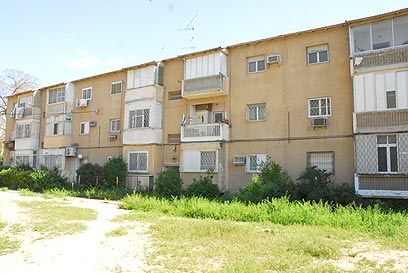
train-buildings-beersheva photoAs mentioned earlier this week on Green Prophet, Beer Sheva’s new mayor Rubik Danilovich has big plans for this city of 200,000 on the northern edge of Israel’s Negev desert.


He hopes to rebrand Beer Sheva through hiring a major architect to introduce common planning language, street furniture and greenery.
(Above: One of Beer Sheva’s trademark “train buildings,” photo from Yediot Acharonot).

The Israeli daily Yediot Acharonot ‘s Ilana Kuriel covered the ten-year development plan on Friday in Hebrew. Here is a summary of the piece in English.

“Presently, in some of Beer Sheva’s neighborhoods there aren’t even trash cans, the sidewalks are cracked, the roads are ridden with pot holes and the traffic circles are filled with undistinguished statues that uglify the landscape,” Kuriel wrote, before launching into a summary of the plan to improve the city.

Noi Positive Food is Tel Aviv's Newest Positively Organic Bistro

0

noi organic cafe tel avivWhen it comes to organic and environmentally conscious dining, Tel Aviv definitely has a reputation for getting with the program.  The white city (which is currently celebrating its 100th year) already has a vegan burger joint, organic hummus, organic falafel, organic coffee shops, and an environmentally friendly food festival.

We realize that dining out has its negative environmental effects, but for those moderate environmentalists out there – or for non-environmentalists who want better tasting food and a little bit of a cleaner conscience – its good that these places are sprouting up.  A moderate alternative is better than no alternative at all.

Joining the list of eco-healthy eating in Tel Aviv is Noi Positive Food near Rabin Square.  Located on tree lined, beautiful Sderot Chen (Chen Boulevard), Noi offers a relaxed atmosphere for busy Tel Aviv urbanites to slow down, enjoy some slow food, and take advantage of the shade.

While the menu is not completely vegetarian, there are lots of veggie options and the meat items are free range.  Eggs are also free range and organic, and whipped up into delicious sounding herb omelettes and Balkan cheese shakshukas.  Noi’s ingredients are preservative-free, and they also insist on slow, light cooking which is healthier for eaters and healthier for the environment.

Israeli Activists Urge Pope To Help Clean Up Jordan River

baptism-pope-israel-water-jordan-river
(Thousands of Christian pilgrims get baptized in Israel’s Jordan River every year. Are they risking their lives by immersing in the polluted waters?)

It’s the highlight of any Christian’s trip to Israel – a dunk in the Jordan River, the way Jesus did it thousands of years ago. But with increased pollution in Israel’s waterways, Israeli activists are using the Pope’s visit to Israel tomorrow to urge action on cleaning up the Jordan.

It is Pope Benedict XVI’s first visit to Israel, and as many as 15,000 Catholic pilgrims are expected to descend on Israel to see the Pope in action. 

According to Christian belief, the Jordan River is the site of Jesus’s baptism; when pilgrims come to Israel (including my mother), they not only immerse themselves in the water, but take samples of it home for souvenirs.

But Zalul, Israel’s water  protection association, says that the water is extremely polluted. They said so in an open letter to the Pope this past Friday.

Is Israel on the Brink of a Suburban Sprawl-a-Thon?

tract-housingAs the Green Prophet’s resident suburbs commentator, I read with interest this week that part of newly elected Prime Minister Binyamin Netanyahu’s economic plan includes privatizing the Israel Lands Administration. The ILA was established in Israel’s first Basic Law (1960) as the keeper of the land of the Jewish people. To date, 93 percent of land in Israel is under the jurisdiction of the ILA, which historically has given this government body a tremendous say in how the land is developed.

Netanyahu heralded the change, saying it “will end the dependence on inefficient and burdensome bureaucratic mechanisms,” and also “reduce the price of land and, correspondingly, the prices of apartments, putting them within the price range of young couples and newly discharged soldiers.”

But the privatizing the ILA will likely trigger a suburbanization free-for-all, as has-been farmers rush to cash in on their lands that are suddenly worth a great deal of money.

After Five Years Without, Syria's President Appoints Woman As New Environment Minister

5

syria-factory-lake-water

Syria, a country whose authoritarian government has often been rife with corruption and human rights violations, has again reshuffled its cabinet as President Bashar al Assad attempts to deal with a number of problems his country now faces.

With the economy being one of the top issues, some of the first “changes” appear to be appointing some new ministers in interior affairs, health, local governments (apparently rotten with corruption), justice, and presidential affairs.

The Syrian economy is in particularly bad shape, which also affects the country’s state of security as Syria owes arms suppliers like Russia and China considerable sums of money.

The concern about the country’s security also stems from the recent Israel attack on a Syrian nuclear facility as well as the January 2008 assassination of Hezbollah military commander Imad Mughniyah in Damascus.

But the state of Syria’s environment, especially pollution and desertification, has probably resulted in the reinstatement of the Ministry for Environmental Affairs to deal with a number of pressing issues; especially Syria’s increasing lack of adequate water supplies.

kawkab-al-sabah-mohammad-jamil-dayehSyria has not had an environmental ministry for over five years; and the new one, to be headed by a woman, Kawkab al-Sabah Mohammad Jamil Dayeh, will have the assistance of the President himself who has become more interested in the state of his country’s environment.
The Arava Insitute Teaches Palestinians, Jordanians and Israelis To Solve Water & Environment Issues Together

(Cousteau interviews students from the Arava Institute in Israel. It’s a unique learning center that offers environment degrees to students from around the world.)

We’ve been following Alexandra Cousteau as she documents her travels in Israel and the Middle East.

In this video recently uploaded, she interviews students at the Arava Institute in Israel where Palestinians, Israelis and Jordanians study together to solve water issues and other environmental problems in the Middle East.

::Friends of Arava

More on the Cousteau Family:
It’s The Water That Binds Us Finds Alexandra Cousteau in Israel
The Cousteaus Set Sail For Israel
Expedition: Blue Planet Finds The End of An Era In Jordan’s Azraq Settlement

Win The $1.5 Million Zayed Future Energy Prize

7

zayed-future-energy-prize

Once again, in the UAE Gulf state of Abu Dhabi, the Zayed Future Energy Prize contest is open for entries on new and innovative projects in various forms of alternative energy.

Inaugerated in January 2008 during the World Future Energy Summit in Abu Dhabi, the contest, under the sponsorship of the Abu Dhabi government as a legacy to the late Sheikh Zayad bin Sultan al Nehyan, the prize will be awarded for the person or company with the most innovation and leadership in their contributions to the global need for future energy solutions. A prize of $1.5 million is up for grabs.

"The Compost Guy" on Compost Awareness Week

garbagebins_clo

This week marks International Composting Awareness Week, a week meant to be celebrated in Canada and the US, but which as far as I’m concerned should be truly global in scope.  

Though I’ve been in transit on the West Coast, I’ve commemorated the week by throwing my food scraps in the city issued scrap bins that sit in the kitchens of San Francisco, Berkeley and Oakland residents–which are then emptied into the green bins pictured above.  

I’ve sifted through the newly harvested top soil from a compost of an Oakland Homesteader, and I’ve pined for such composting solutions in New York and the Middle East.

Boston Globe: Who wins and loses from wildland conservation?

native-inside-american-nature-preserve

Israeli nature advocates are proud of their efforts at both nature conservation and cultivating a love of hiking among the people. However, an article this week in the Boston Globe points out that creating nature preserves often means expelling the indigenous people who once lived in them. Author Mark Dowie writes that the practice began in the American parks of Yosemite and Yellowstone, but spread worldwide to places as diverse as Kenya, Botswana, Thailand, Peru and Panama. Conservation groups as a result must grapple with this unflattering picture:

“Not only has it dispossessed millions of people who might very well have been excellent stewards of the land, but it has engendered a worldwide hostility toward the whole idea of wildland conservation – damaging the cause in many countries whose crucial wildland is most in need of protection.”

A Jarring Reminder Why Bottled Water Conflicts With Green Values

12

water-bottle-spain

This article is not first one on Green Prophet dealing with water and other beverages sold in polyethylene and polystyrene bottles; and it probably won’t be the last either. But the increasing environmental damage, as well as health hazards being caused by this method on containerizing beverages, especially H2O, is something that should be dealt with more urgently, and the sooner the better.

Bottled water has become such an issue in spoiled, modernized societies (especially the USA) that people have this “commodity” at the top of their shopping list when they go to their neighborhood Costco or Walmart Super Center in American cities.

Although sometimes packaged and sold as “mineral water,” i.e. pure, mountain spring water that is free of chlorine and other chemicals, most bottled water is simply ordinary tap water that has gone through a filtration process to get rid of these chemicals and improve the water’s taste as well.

Bottled water sold here in Middle East, whether it comes from Lebanon’s Mt. Lebanon (where those stately cedars still grow and are threatened by climate change), the pristine springs and streams on Mt. Hermon (where Israel’s Mei Eden brand is made from), or the ones that flow into the Dead Sea (Ein Gedi brand), is still bottled water that came from somewhere, whether from an actual mountain spring or not.

Recently, even Israeli companies like Mei Eden and Netivot had to suspend their bottling temporarily when contamination was found in the water due to insufficient rainfall.

Forget Submarines, Send In The Robotic Octopus Instead

0

octopus-robot-israel

Explore where no man has gone before, with tentacles? Now building the world’s first robotic octopus, and the world’s first soft-bodied robot, Israeli “octopus” scientists have joined a seven group international team to help marine scientists explore nooks and crannies on the ocean floor, like an octopus would.

Instead of dropping down clunky metallic submarines to the seafloor, which offer little in the way of precision, scientists are working on a soft-bodied robotic device that can gingerly walk over delicate objects, making sure not to damage coral reefs and pristine marine environments.

The initial goal of the octopus robot is to monitor the effects of global warming on the sea. But Prof. Binyamin Hochner, from the Octopus Group, Life Sciences Institute at Hebrew University of Jerusalem imagines that when complete, the robot will also have applications in medicine – inside the body – and in search and rescue missions after devastating natural disasters, like the recent earthquake in Italy.

Top of Jerusalem Mayor Barkat's Agenda Is To Green Jerusalem

7

nir-barkat jerusalemAfter the recent Jerusalem elections Green Prophet hailed the new Mayor Barkat for placing an environmentalist so prominently on his list. Jerusalem Mayor Barkat not long ago presented his master plan for the city for the next two decades, and top on his list is to green the city.

His plan focuses on environmentally friendly construction as well as the use of solar panels, water recycling equipment, “green” roofing and other material for construction of public, commercial, industrial, residential and hotel buildings.

Daniella Unpicks Israel's Relationship With Land and Housing In Amiran Gonen's "Between City and Suburb"

herzliya pituach villa house israel photo

If you’ve heard about the demise of the kibbutz movement, then you may also know that financially strapped communal farms have recently climbed out of debt by building suburban-style detached housing developments and selling them to upwardly mobile Israelis.

Suburbanizing kibbutzim and moshavim (village settlements), along with several new suburban-style towns like Shoham (near Ben Gurion Airport), Kochav Yair (on the West Bank border in the country’s center) and Maccabim-Re’ut (between Jerusalem and Tel Aviv) are transforming the Israeli landscape from what used to be small villages surrounded by agricultural fields towards American conceptions of large, well-appointed homes in neighborhoods dependent on cars.

One of the best looks at the roots of this revolution is Amiram Gonen’s 1995 book ‘Between City and Suburb’, an extensive academic take on the changing forms of Israeli communities.

Looking for the Sustainable in Beer Sheva's Development Debate

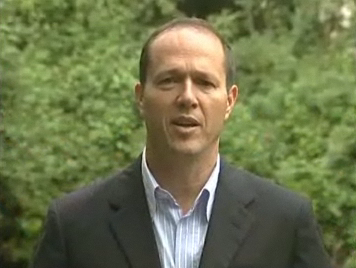
rubik-danilovichWhile in the center of the country, the concern is to improve food quality, public transportation and vehicle efficiency, in the periphery Israel’s decision-makers worry about building a satisfying enough environment to attract and keep young people who otherwise flee to Tel Aviv. This reality was clear at a conference this morning on industry in the Negev, organized by Ben Gurion University and attended by newly appointed Minister of Development in the Negev and Galilee, Silvan Shalom.

The opening remarks were telling. Beer Sheva’s newly elected mayor Rubik Danilovitch (photo) was the first speaker. He announced that long-delayed plans to erect a high-tech park in the city were finally moving along, which would hopefully provide quality employment. He also thanked the chemical industry, whose representatives were at the conference, for their recent steps to improve their environmental record.

Afghan Opium Growers Get Burned Out

6

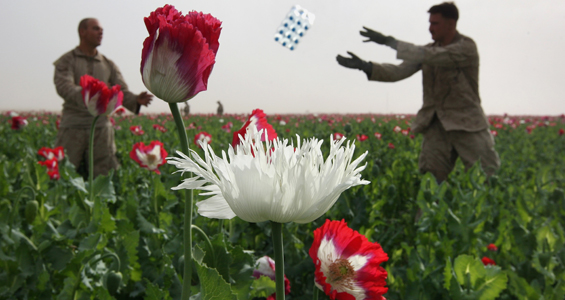
afghanistan-poppy-opium-heroin-photo growers farm afghanAfghan farmers get “burned out” as government tows to US pressure. But for poppy farmers, it’s poppies or starvation. Wheat crops, or biofuel crops cannot compare in value.

Molar (not his real name) is an Afghan farmer living in the central Hazzrajat Province of Afghanistan. His 60 hectare farm along the Helmand River has been in his family’s possession for generations. The crop that he and his family grow to subsist on has also been the same crop for as long as his family has been living there.

And that ‘crop’ is opium.

“This type of farming is all we have to live for,” the bearded father of 12 children said recently when he was informed by Afghan police that they were coming to cut down his crop of opium poppies as part of a continuing crackdown on the growing of this crop.

Molar and his two wives, as well as all of his children over age 8 help grow, and eventually harvest, the raw opium that when finally processed becomes pure heroin sold in places like New York and other major American cities.

As heroin continues to make its way into North America, the number of addicts seeking help for heroin abuse remains significant.

Growing opium is a tradition that has been going on in poor Asian countries like Afghanistan for more than two millennium. In fact, opium is considered as this country’s major export and amounts to more than 90% of the world’s raw opium. But farmers there are getting burned out — their crops destroyed as a method of cutting back on the illegal drug trade.

Life has never been easy for farmers like Molar and his family. Afghanistan is an arid, mountainous country with scorching hot summers and frigid winters.

What tillable soil is available is located on the plains and in mountain valleys, along rivers such as the Helmand, which is the country’s largest. For centuries, the numerous warlords who ruled there made considerable sums of money by selling opium to dealers who shipped the narcotic to markets that included the royalty of Europe and the opium dens of Shanghai and Hong Kong.

And in more recent years, processed opium, otherwise known as heroin, found a ready market all over America.

Opium is the only “cash crop” that farmers like Molar have grown, as it is relatively easy to cultivate and harvest, and does not require a big investment in modern farming equipment. The most important part of the plant, known by its Latin name papaver somniferine, are the seed bulbs that form when the opium flower withers; usually in late summer.

The opium-rich sap is harvested by making slits in the bulb and then collecting the sap when it oozes from the cut bulb. The sap is then mixed with ammonia, and cooked to form a thick paste, which is then dried. At this stage, the opium is ready to be used as a narcotic by smoking it in a pipe. Although this is still done in many parts of the world, the most financially lucrative use of opium is to refine it into a fluffy white powder, known as heroin.

As an indication of the difference in price between harvested opium and finished heroin, a farmer like Molar only receives the equivalent of around $300 for 100 kg of raw opium sap.

When processed into a kilogram of processed heroin, it has a ‘street value’ at destination of half a million dollars!

To give one an idea of how much this stuff is worth to Afghan farmers, it is estimated that they made as much as $3.4 billion in exports in 2008 alone. Of this the Taliban received a cut of at least $15 million.

Since the ouster of the fanatical Taliban regime from Afghanistan in 2001, intense efforts have been made to curtail the growing and export of opium. New projects, such as one called: “wheat instead of poppies,” have been introduced to try to wean farmers off growing opium poppies and into other crops, such as wheat and other grains.

So far, this hasn’t worked out as the land available for agriculture is much less suited for cereal grains, and not nearly as profitable.

Even with the financial assistance of America and other countries, including paying subsidies for growing alternative crops, this still doesn’t replace the profits made from growing poppies.

A 1970 edition of Encyclopedia Americana makes no mention of papaver somniferine poppy growing as part of the Afghan economy. Other crops, including wheat, corn, barley, cotton, and a variety of fruits, especially apricots and pomegranates are noted; as well as a variety of minerals, including extensive natural gas fields. Due to continuous military strife in that beleaguered land, growing opium poppies has sadly become the occupation of choice.

Though the Taliban are no longer ruling, their continued presence is still felt by all, and frustrated farmers are again turning to them for assistance in keeping government forces away from the poppy fields. Terrorist elements, including Al Qaeda, still have their influence with the poppy farmers, and incomes derived from the sale of opium help fund these movements in both Afghanistan and abroad.

“This relationship between farmer and terrorist is propping up the Taliban,” an Afghan narcotics enforcement official remarked recently while supervising the cutting and burning of several poppy fields. Government corruption is rampant, however, and often poorly paid government officials corporate with the Taliban and the drug traders, including the country’s judiciary system.

Due to the country’s virtually porous borders with both Iran and Pakistan, the collected and crudely processed opium sap is merely loaded on the backs of donkeys and camels and carried over the mountains into Pakistan, where it is shipped out to waiting markets in both Asia and the West.

American narcotic agents have been working actively with the Afghans to find and destroy the poppy crops before the opium can be shipped out. Many farmers have become very agitated with the source of their livelihood being threatened.

They have been involved in this form of agriculture for so long that they consider it as a natural part of their way of life; even though many are aware that even in their own country, many people, particularly young men, have become addicted to opium and to a crude, locally processed form of heroin .

A televised documentary by CNN concluded that despite intense efforts being made to stem the growing and export of opium form Afghanistan, the narcotic will continue to be grown and sold to both terrorists and drug dealers who are more than willing to accept the risks involved in marketing a commodity that is responsible for so much human misery and is worth so much on the open market.

And an article published by Al Jazeera, noted a large amount of confiscated opium was burned recently by Afghan police authorities, most likely under orders from Gen. Mohammad Daoud, the Deputy Foreign Minister, who himself was probably under pressure from American and other Western governments.

As for Molar and his family, trying to eke out a subsistence living on their 60 hectare patch of land, it’s either the poppies or starvation.

What’s the solution in Afghan? Could biofuel crops compete with opium?