Home Blog Page 702

Ancient Kabbalah Recipe New Vitamin to Fight Cancer?

9
Did Rambam's (Maimonides) ancient book of herbal recipes give clues to finding new anti-cancer vitamin?
Did Rambam’s (Maimonides) ancient book of herbal recipes give clues to finding new anti-cancer vitamin?

Dr. Fuad Fares has a huge secret. It’s big enough to make sure his laboratory is locked tight when he’s not there. The Israeli scientist has been looking into the potency of ancient herbal treatments, and has discovered what he believes is a new family of antioxidants.

He’s tested the secret compound based on an inedible plant that grows in Israel, and has found it shows excellent results in stopping prostate and colon cancer in mice, and in human cancer cells in vitro.

Unable to disclose the plant’s variety until further tests are made, Fares is hoping that this plant, first described for its medicinal value in Arabic centuries ago, produces an entirely new antioxidant molecule which can stop cancer in its tracks. It could be ingested as a food additive, or like a vitamin, he hopes.The body of research in scientific literature on antioxidants to stop the spread of cancer is growing. Scientists know that antioxidants such as lycopenes, found in tomatoes, fight free radicals, which can lead to cancer. They also know that glucosinolates found in cabbage varieties have anti-cancer properties too.

New tests on the mystery compound done at the University of Haifa lab, in the Carmel Medical Center in Israel, have been overwhelmingly good, and in the future could be added to our arsenal for fighting cancer.

A significant difference in fighting cancer

Using a crude extract of the plant, Israeli-Arab Fares gave his test plant to mice as a preventive “medicine.” Then the mice were introduced with cancer.

Those that were given the crude extract were able to fight off the cancer tumors much better than the control group — only 20 percent of the treated mice developed cancer, while 80% of the control developed cancer.

An additional point to note, Fares tells ISRAEL21c, is that in the test group, the tumors were significantly smaller than the control.

In a second test, mice with cancer were given the plant-based extract as a medicine. “When we looked at the cells inside the tumors we saw these compounds induced cell death and decreased the tumors by 70 to 80% compared to the control group,” Fares says.

He also tested the extract on human cancer cells in vitro and saw “a dramatic effect.”

After Fares purifies the compound, he hopes it will yield a brand new class of antioxidants.

Inspired by Kabalistic cures?

“Just used as an extract it seems to be effective,” says Fares, who besides hunting for the next plant-based drug, is also a director of Modigene, a company he created while doing postdoctoral work at Washington University.

Modigene is a biopharmaceutical company using patented technology to develop longer-lasting, proprietary versions of approved therapeutic proteins that currently generate billions in annual global sales.

Now Fares is working on identifying the mystery substance, and will apply for a patent — and release the secret — if the compound is indeed unique.

After purifying it, he might get even more startling results. And it could well be a medical breakthrough, agrees Fares, who found mention of the plant in an ancient herbal remedy book written centuries ago in the region.

“It’s known that antioxidants help cancer prevention and treatment. We are focusing on plants not known in the literature. It’s not food, but a medicinal plant,” says Fares, who declines to say whether or not inspiration came from a book by Rambam – Moses Maimonides, a famous Jewish doctor writing medical treatises in Arabic in the 12th century.

The plant he says, is something that grows in Israel and it’s something that people don’t eat. As for more details, he is sorry, but we will just have to wait.

(This story was first published on ISRAEL21c – www.israel21c.org)

What Slipped Through The Cracks, When We Measured Greenhouse Gases

1

noam-weisbrod-earth-cracksAl Gore may have given us a frightening picture of climate change and our future, but now new research suggests that even his predictions could be too modest, after an Israeli scientist discovered that cracks in the earth are emitting unrecorded greenhouse gases into the atmosphere.

This is the first time this phenomenon has been observed, and since gases from these cracks have never been included in previous measurements, the new findings could change the model of how science calculates the impact of greenhouse gases on climate change.

We’d written about this research on cracks in the earth earlier. Now for an update:

The discovery was made by hydrologist and soil physicist, Dr. Noam Weisbrod from Ben Gurion University. While he was studying fractures in the earth in the Negev Desert, he encountered an unusual phenomenon occurring on a daily basis – an unexpectedly quick accumulation of salt within fractures between flood events.

The phenomenon was even more pronounced in winter.

Tel Aviv's Artists' Market Offers Good Green "News" On Desy's Newspaper Designs

6

desy-designs-newspaper-recycled

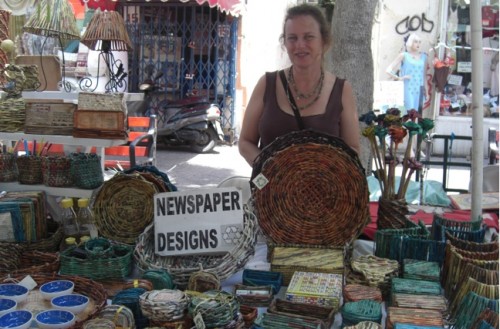
Strolling through the Nachalat Binyamin artist market in Tel Aviv, there are signs of recycling and eco friendly design all around. Old glass bottles are turned into clocks, kitchen objects are converted into sculptures, and recycled paper becomes creative stationary.

These are just a few of the creations that fill the artist market that runs for several blocks on Tuesdays and Fridays next to the Carmel Market.

Passing by a shaded booth filled with colorful baskets, picture frames, pencil holders, lampshades, and many creative designs, I noticed that everything was made from newspaper.

Israel's MSCI Upgrade and 9 Israel-related Cleantech Headlines, Week of June 14, 2009

0

water-israel-streams-photo

During the week of June 14, 2009, news continued that equity index provider, MSCI Barra would likely upgrade Israel’s current “Emerging Market” status to that of “Developed Market” before the end of 2009. Globes reported that the Israel United States Binational Industrial Research and Development Foundation (BIRD-F) is creating a new program to fund joint projects in the cleantech sector and it was suggested that greenhouse gas emission predictions might be too low. For these and the rest of this week’s stories, see below.

Investments
1. BIRD Fund now seeks cleantech projects

2. Israel MSCI upgrade could bring $2.1 bln – Merrill

Water
3. Light at the End of the Pipeline? Water Crisis 2009 Conference

4. Israel and Germany Launch Sustainable Irrigation Project in Ethiopia

Alternative Energy
5. GreenRoad Wins San Francisco Business Times’ Green Business Award

6. HCL CleanTech’s Cleaner Approach to Cellulosic Ethanol Production

7. Fifty Best Tech Startups

Solar
8. The Next Solar Frontier: Distributed Inverter Architecture

Environment
9. Greenhouse gas predictions may be too modest

Palestinian Mall Chain Could Bring Suburban Living to West Bank

4

Abdoun_Mall-Jordan jenin mall photo palestinian photo

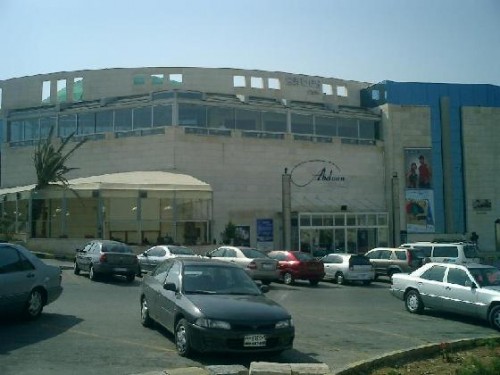
One of America’s most enduring gifts to the Middle East is the suburban indoor shopping mall. Israel’s first was the Ayalon Center outside of Tel Aviv (1986).  Istanbul saw the Atakoy Mall go up in 1987. Jordan’s pioneer was Amman’s Abdoun Mall in 2001 (Picture from virtualtourist.com), and Beirut‘s ABC Mall opened its doors in 2003.

This month, a new luxury mall opened on the outskirts of the northern West Bank city of Jenin. Haaretz reports that the five-story Hirbawi Home Center cost $5 million to build and is filled with foreign brands carrying upscale products, from espresso machines to plasma screens.

Most of the products are priced on par with Israeli figures, but furniture is a bargain in Jenin. 

Iran Needs A "Green" Revolution In More Ways Than One

2

kavir-national-park--salt-lake-photo

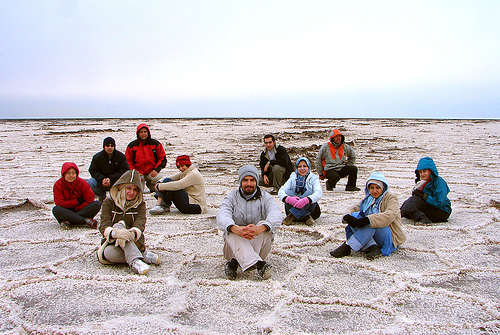
Recent political turmoil in the Islamic Republic of Iran, is only part of the problems facing this country of more than 70 million. The country’s fragile eco-cycle is also at risk, much of this due to developmental aspects which have been occurring in many parts of county, while environmental issues have taken a back seat.

A good example of this is the 4,000 sq. kilometer Kavir National Park, located in north-central Iran. Established years ago in 1964 as a protected area, the semi-arid reserve was declared a national park by Shah Reza Pahlavi.

The park is home to a number of rare and now endangered animal species, including Persian leopards and Asiatic cheetahs.

FoEME Helps Israel, Jordan Cut Down Flies

Boys-Manure-safi israel jordan flies photo

Although Israel and Jordan have not come to a joint stance on the Red-Dead Canal, Haaretz’s tenacious environmental reporter Zafrir Rinat reported Sunday that the two nations have banned the use of chicken manure as fertilizer in an effort to cut down a population of houseflies that thrives on manure and makes life miserable for both countries on the southern end of the Dead Sea. Regional environmental organiation Friends of the Earh Middle East brokered the deal, under which farmers will replace the traditional fertilizer with compost.

In 2006, I spent a summer working in the Amman office of Friends of the Earth Middle East, where I researched a housefly population that bred in Jordan and crossed the border to southern Israel.

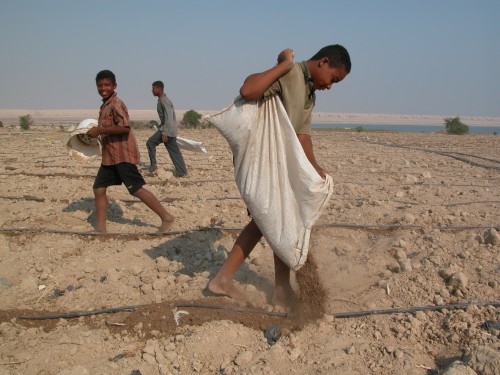
The research took me to Ghore Safi, the area of Jordan south of the Dead Sea where the sons of poor families walked barefoot through fields, spilling chicken manure behind them as a cheap fertilizer (photo above by Daniella Cheslow).

New Tel Aviv Bar The Rogatka Takes Veganism To The Extreme

19

green beerIf the combination of the words “vegan” and “bar” doesn’t make sense to you, you’re not alone. 

Because beer is made of hops, malt, and yeast, right?  No animals harmed or used in the production of any of those.

But The Rogatka (or “Slingshot”), a new “vegan” bar that opened up last week, defines itself not according to the content of its goods but by the ideals that it encourages. 

And so for all you meat and dairy avoiders out there – you are welcome with open arms at the bar’s location on Yitzhak Sadeh street.

The ideologically focused bar was opened by the same “anarchist collective” that used to run the Salon Mazal bar off of King George street.  The founders of the bar say that they hope their watering hole will attract environmentalists, left-wing activists, and other likeminded people with their cheap drinks and fair trade products.

Environmental Lecture Series at Beer Sheva's Ashan Hazman

watermelon-course-beer-shevaIf you’re in the South today and haven’t yet seen An Inconvenient Truth, the Watermelon series of six “Green and Red” lectures at Beer Sheva‘s Ashan Hazman cafe/bookshop kicks off with a movie screening and discussion (in Hebrew) at 7 p.m.

For the last few months, Ashan Hazman (The smoke of time) has gradually become a neighborhod sustainability center thanks to the tireless work of local Matan Golan.

He put up a compost heap in the cafe’s yard, replaced the bathroom sink pipes with a bucket for collecting grey water, and made benches by slathering mud on stacks of books that couldn’t be sold.

The Watermelon Series is sponsored by Ben-Gurion University and the Social-Economic Academy (SEA) a national organization which offers lectures on social issues around the country. 

Next week’s lecture, also at 7 p.m., covers the Israeli health system and features Michael Moore’s Sicko. Other topics include the meat industry, the Israel Lands Administration reform (see GP post here), the water crisis and the rising power of Israel’s capitalist class, featuring the movie Shitat HaShakshuka.

Each lecture is NIS 10, or you can buy tickets for all six for NIS 45. For more information, contact SEA Beer Sheva Director Eyal Kosowski at eyalkoso[at]gmail[dot]com.

And if you’re in Beer Sheva all week long, don’t forget about the upcoming Eco-Thiopia festival at Earth’s Promise.

:: Social-Economic Academy (English)

:: Ashan Hazman Bookshop and Cafe (Hebrew)

Israel and Germany Launch Sustainable Irrigation Project in Ethiopia

3

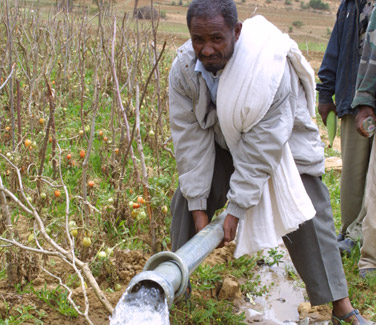
ethiopia irrigationIsraeli NGOs, such as Earth’s Promise, are involved with helping Ethiopian populations within the country (check out the Eco-Thiopia festival in Beer Sheva next week).  And the Israeli government, apparently, is involved with helping Ethiopian populations… in Ethiopia.

On Wednesday the German Environment Ministry announced that Israel and Germany have launched a joint irrigation project in Addis Ababa, the Ethiopian capital.  The initiative is the result of an agreement signed last year between former Israeli foreign minister, Tzipi Livni, and the German Environment Minister. The project aims to provide advice and assistance in implementing efficient and environmentally sustainable irrigation among Ethiopian farmers.

Eco-Thiopia Festival at "Earth's Promise" in Israel Helps New Immigrants Plant Sustainable Roots

festival-ecothiopiaIf you are planning to be in Beer Sheva next week, make it Thursday and drop by the Earth’s Promise community garden for a festival of Ethiopian culture.

Earth’s Promise founder Isaac Hametz started the garden about a year ago as a way to help newly arrived immigrants adapt to life in Beer Sheva.

The immigrants, who come from a farming background, tend 50 plots planted with vegetables from Israel and other plants from Ethiopia.

While they plant, their children play in the garden (photo below, by Daniella Cheslow). It’s one of the few green spaces around the Kalisher absorption center.

Don't Use a Sponge

1

luffaInstead of using synthetic sponges for your shower and dishes use a luffa! Sponges tend to collect bacteria and for heath reasons should be thrown out 1-2 times a week. But if they are not biodegradable, that is a LOT of waste filling up landfills. Additionally, the “antibactirial” sponges have a chemical called Triclosan which is officially a pesticide. Do you really want to be using that on your dishes? The best part about Luffas, are that they can be grown in your own backyard!

Energy Recovery Inc Delivers Fresh Water to Dry Sharem al Sheikh

0

eri-egypt-desalination

Those of you who have been to Egypt’s eastern Sinai coast can vouch that even though the area is quite lovely,  it’s also quite dry – from a freshwater standpoint.

An American desalination company, Energy Recovery Inc (NASDAQ: ERII), is now changing this fact by installing a very unique desalination plant in Sharem al Shiekh that not only supplies an ample amount of potable fresh water to the resorts and private residents of the town, but even enough to supply water for an 18 hole golf course.

Energy Recovery Inc (ERI) has patented a very special process that entails a rotary positive displacement pump that enables normal reverse osmosis desalination plants to “harness” the power from the high-pressure waste streams created by the desalination process.

Light at the End of the Pipeline? Water Crisis 2009 Conference

water-israel-streams-photo

Nature’s right to water was the focus of the latest conference in the wave of water crisis conferences in Israel in the past month (pun intended).

Giving water back to nature is not exactly top priority when Israelis are trying to limit consumption in order to ensure a source of drinking water for the future. The government is pushing drying up public and private gardens and parks to ease the burden on the already over-pumped Kinneret and underground aquifers.

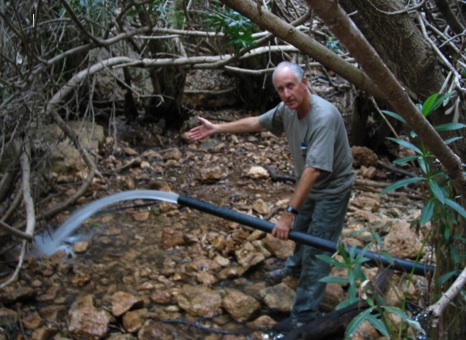
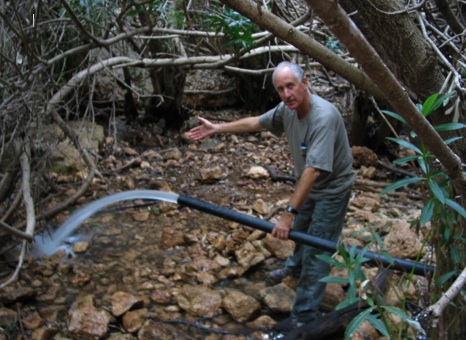
So it’s easy to understand the skepticism that surrounds the idea of pumping clean, drinkable water back into dried-up stream beds, which is exactly what is already happening in several streams in Israel (see below picture of Hillel Glazman of the National Parks Authority “watering” Nahal Betzet).

Saudi Sheikh says biofuel not Islamic

10
American ethanol
American ethanol is driving food prices up globally. And this Saudi sheik thinks it’s a bad thing. Time to rethink the allure of biofuels?

There is a lot of debate around the use of ethanol and other plant-based fuels.  Many claim that the energy required to produce ethanol (including fertilizers, farm equipment, transformation from plant materials, and transportation) just doesn’t sufficiently counteract all the environmental damage caused by the fossil fuels that is replaces.

So as if the discussion weren’t heated enough… Saudi Arabian scholar (and member of the Saudi Islami Jurisprudence Academy), Sheikh Mohamed Al-Najimi, warned Saudi Arabian students leaving the country for study abroad programs not to use ethanol or other fuels containing alcohol in their cars. It can be complicated avoiding ethanol at the pumps because in some US states it’s mixed in with every fuel type as a blend.

Why Muslims don’t like biofuel?

Because it could be a sin.

The sheikh of Saudi Arabia explained that his statement shouldn’t be considered an official fatwa, but was instead his own personal opinion.  And his opinion was based on a saying by the prophet that all kinds of dealings with alcohol – including buying, selling, carrying, serving, drinking, and manufacturing – were prohibited.

One Green Prophet reader writes: “Good old Scholar, Sheikh Mohamed Al-Najimi – considering the fact that ethanol alcohol hand cleansers are already in use all over Saudi Arabia in Hospital to kill bacteria, I’d say he’s a little out of touch with reality!”

The sheikh called for the issue of biofuel usage by Muslims to be discussed more widely by Islamic leaders.

It’s also a conflict of interest when the world’s biggest oil producer condemns biofuel as a replacement to more polluting fuel types like fossil fuels. It sounds more like a convenience to ban ethanol.

Already when we skip ahead to 2014 (this original article was written in 2009) we see that Indonesia is the world’s 3rd largest biofuel producer and it’s a predominantly Muslim nation.

In 2020, the Indonesian government launched the biodiesel 30 percent (B30) program in January 2020, which aims to reduce greenhouse gas emissions and fuel imports, as well as to help Indonesia meet its national renewable energy target, among other goals.

Over to Saudi Arabia… there has been little talk about biofuel and it being “haram” or forbidden since 2009. In fact in June this year ACWA, a Saudi renewable energy company signed an agreement this year to use biofuel in a Red Sea project.

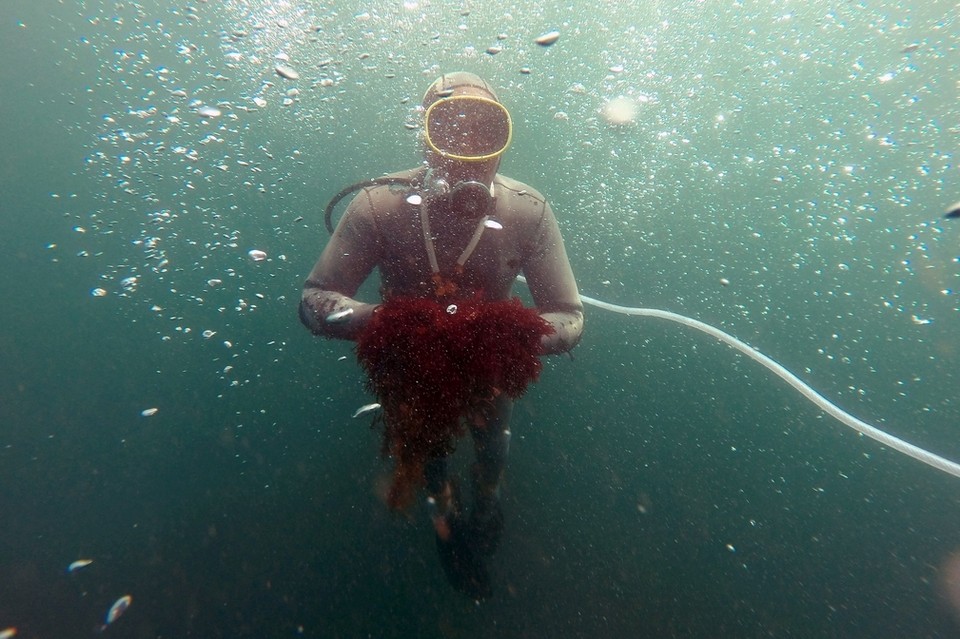
red algae, agar-agar, agar, veganism, Morocco
Red Sea tourism will rely on biofuels

“As the world seeks to satisfy the rising demand for affordable power and water, ACWA Power remains committed to being at the forefront of the energy transition and providing transformative solutions, including the early adoption of emerging energy solutions like biofuels, to deliver power responsibly.

“We are delighted to be collaborating with Neutral Fuels, enabling us to accelerate our commitment to support the Kingdom’s ambitions to deliver a tourist destination that limits the environmental impact through the provision of zero-carbon emitting utility services,” said Paddy Padmanathan, President & CEO of ACWA Power.

In the event that the sheikh’s 2009 opinion were made into law, though, it might pose a problem for some Muslim countries and companies that are beginning to support biofuels.  This includes Masdar, the renewable energy investment arm of Abu Dhabi’s government.

More on Islam and the environment:

Go on “Hajj” To Mecca and Medina On Saudi’s New High Speed Train

Muslims Should “Waqf” for Water Because It’s Good for the Environment

Environmental Conference for Imams Challenges Israeli Muslims to Go Green

Updated by Karin Kloosterman Oct, 2021