Home Blog Page 693

Qatari TV Program "Stars of Science" Focuses on Environmentally Friendly Innovations

8

Image from the final episode of Stars of Science: Contestants run to Bassam Jalgha after being announced winner
(Image from the final episode of Stars of Science: Contestants run to Bassam Jalgha after being announced winner. Courtesy of Porter Novelli)

Stars of Science, a Pan-Arab television show focusing on innovate project ideas, was launched by the Qatar Foundation and Education City.  The program is a competition across Arab borders intended to locate and support the development of creative Arab innovations.

See the clip below to hear audience members discuss their views about Stars of Science:

[youtube]http://www.youtube.com/watch?v=wqjaCGW1dB0[/youtube]

In season one of the TV show, many contestants focused on an issue that is on lots of Middle East innovators’ minds – the environment.

While other contestants proposed automated tuning devices for musical instruments, mobile nutritional information devices for grocery shopping, oxygen-based beverages, and ergonomic keyboards to prevent fatigue, Mazen Salah of Jordan, Sarah Al-Sammak of Bahrain, and Hassan Deeb of Syria all came up with ideas that would help promote a healthier environment.
Biofuels Spark Regional Cooperation Between Israel, Palestinians and Germany

1

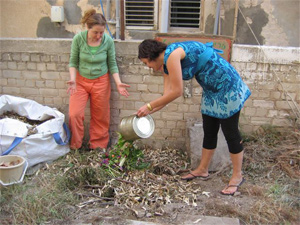
compost-tel-avivBeing oil-poor may be more of a blessing than a curse for both Israel and Jordan. A joint Israeli-Jordanian project-based on the production of biofuel from agricultural waste-will take center stage at Israel’s Water Technologies and Environmental Control Exhibition, WATEC this November.

Biofuels received a great deal of negative publicity last year after they were blamed for sparking the global food crisis.

This is in part due to the fact that farmers world-wide began growing crops solely dedicated for the production of bio-fuel, rather than food. This massive conversion of farm land – which left millions hungry and forced global food prices up by 75% -forced many governmental to rethink biofuel production.

Turkey Lands World Bank's First Smart Grid

9

turkey-wind-turbine-construction smart grid photo world bank

Although Smart Grids (electric networks based on renewable energy) are going up in the US and Europe, the World Bank is only now investing in green energy technology with a program in Turkey.

At the end of May, the Bank announced it is investing $600 million in developing renewable sources such as biomass, hydro, wind and geothermal. Funding is being channeled through banks, which will loan cash to private entrepreneurs to give the market a boost.

Banks will also give loans to business that want to become more energy efficient. The Turkish program is the first project of the Bank’s Climate Technology Fund, which is bankrolled by several countries.

Yacobi Plumbs Israel's Built Environment in 'Constructing a Sense of Place'

telaviv_levantfairIn Constructing a Sense of Place: Architecture and the Zionist Discourse (Ashgate, 2004), architect and planner Haim Yacobi has compiled a fascinating collection of essays on how the Israeli landscape was born.

The book begins with the 1934 Levant Fair, for which the flying camel logo (right) was developed to represent the growing Jewish community in Palestine – a camel representing the Middle East, the wings showing the Yishuv’s eye to progress.

The fair was Tel Aviv’s version of World’s Fairs going up at the time in Chicago, Paris and New York, and it showcased the Israeli adaptation of European-style Modernist buildings, adapted to give shade and shelter from the strong sun and wind in Palestine.

East Jerusalem Getting First Mall

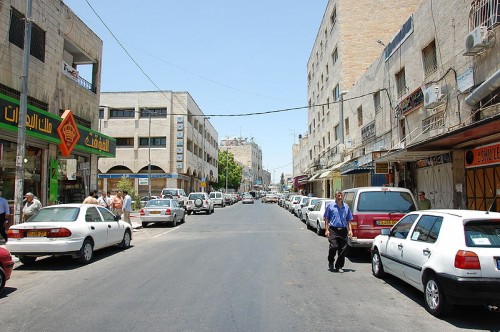
salah-a-din-street

You heard it here when Jenin got a mall-ish furniture superstore. Now East Jerusalem is also joining the trend.  According to Danny Rubinstein at YnetNews, the Nusseibeh family has started work on the A-Dar Mall on Salah-a-Din Street, right outside the Old City in the Sheikh Jarrakh neighborhood (Photo of Salah-a-Din Street from Wiki Images)

This is a recycling project, as the ten-story building has been in Nusseibeh hands since the Ottoman rule. In the past it was a children’s home, an infirmary and a school.

Israeli Oil Company Paz Launches Solar Energy Venture Today

paz-gas-logoWe told you things are heating up with the solar energy market in Israel. Will the country be a light unto the nations in the Middle East, and practice what it preaches in solar tech innovation, by turning the endless power from the sun into solar energy? 

The Israeli oil company Paz, which owns a chain of gas stations around the country, announced today that it will join the solar energy market.

They’ve created a new business unit called Paz Solar to market and install photovoltaic energy systems for producing electricity using photovoltaic technologies, according to Globes.

America's SunEdison Opens Sunny Solar Energy Office in Israel

sunedison-israelWhen it rains it pours, when it shines it blazes: the US solar energy company SunEdison has moved into Israel where it is setting up a subsidiary SunEdison Israel Ltd.

With the guaranteed and attractive feed-in tariffs offered in Israel, the company will build solar energy projects and make investments in the industry, according to the financial newspaper Globes

Israelis and Investors to Benefit from Feed-in Electricity Tariffs

1

meter(1)[1]The Israeli Electric Corporation, otherwise known as Hevrat HaHashmal, has agreed to  participate in what are known as feed-in tariffs for electricity supplied by independent private suppliers.

It’s part of Israel’s bid to reduce its greenhouse gas emissions by 20% by 2020

Feed-in tariffs apply to electricity that is supplied by renewable or “clean” sources such as geo-thermal power, solar and wind energy, and biomass energy (bio fuels, etc.). 

Offering attractive prices, entrepreneurs like Sunday Solar, and investors, are looking at it as an opportunity to take advantage of the guaranteed buy back rate. It means that consumers in Israel will be able to generate their own electricity using solar power and wind turbines and sell the surplus back to the national grid.

Jordan’s Feynan Eco Lodge One of the Top 50 Eco Hotelsin the World

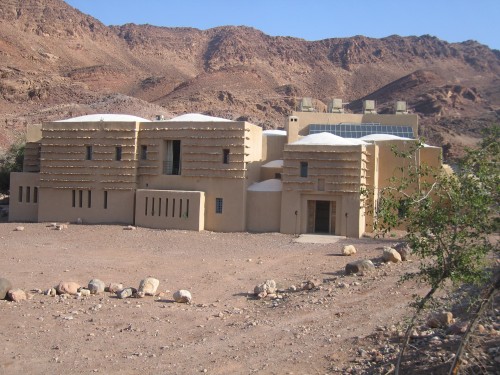
feynan eco lodge jordanFeynan Eco Lodge, one of several eco tourist destinations in Jordan, has been rated by National Geographic as one of the top 50 eco lodges in the world and one of the top 10 eco lodges located in deserts, jungles, mountains, and savannas.
Part of the reason that National Geographic considers Feynan to be so successful is due to its genuine conservation initiatives, which is due to the fact that the eco lodge was developed by Jordan’s Royal Society for the Conservation of Nature (RSCN).  RSCN developed and opened Feynan in the summer of 2005.

Yahya Khalid, the RSCN Directory, said that “the selection puts Jordan on the world ecotourism map… People who read the magazine will know that besides the archaeological sites, Jordan possesses a variety of nature reserves which offer different activities and allows visitors to explore its unique culture.”

Feynan is located within the Dana Biosphere Reserve, a 116 square mile nature reserve with diverse habitats and animal species.  The eco lodge helps raise funds for the reserve and also provides employment opportunities for local Bedouins.

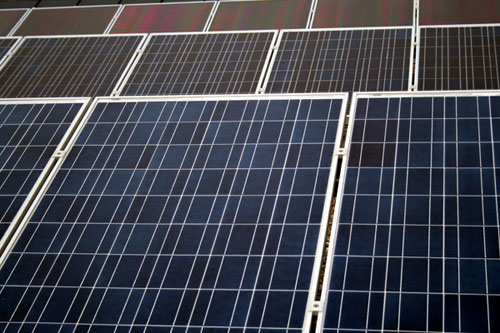
The 26-room eco lodge is completely solar powered during the day.  By night the lodge is lit by candles made on site by Bedouin women, serving both a romantic and an environmentally friendly function.

Designed by a local architect and constructed entirely from local materials, the lodge blends organically and unobtrusively into its natural surroundings.  Its location within the reserve (which is completely free of paved roads and, instead, houses a mountain bike trail) facilities hikes and the observation of animals.

Check out the video below to experience the views in the Dana Reserve, Feynan, and other natural Jordanian areas:

[youtube]http://www.youtube.com/watch?v=0RlTsJ0bdQk[/youtube]

Read more about eco tourism in the Middle East:
Eco Tourism in the Middle East: Lebanon
Eco Tourism in the Middle East: Egypt
Eco Tourism in the Middle East: Syria

Israel Cleantech Ventures and Capricorn Invest in Green Flame Retardants

3

israel-cleantech-ventures-logoIsrael Cleantech Ventures and Capricorn Venture Partners announced today that they have invested $6 million in FRX Polymers, the manufacturer of a new, environmentally friendly family of inherently flame retardant plastics.

FRX’s products are finding markets as polymeric flame retardant additives and as “stand-alone” inherently flame retardant engineering plastics.

FRX Polymers is currently in the commercialization stage for its unique family of polyphosphonate homopolymers and copolymers. These plastics are tough, transparent, possess high melt flow, and are inherently flame retardant, according to a press release announcing the investment.

Siemens On A Solar Streak With Investment News Around Arava Power

6

arava-power-photo

It’s the second Siemans-Israel solar news in as many months: the German energy giant Siemens, according to the Israeli business newspaper Globes, is not only interested in acquiring a stake in Solel Solar Systems, as we’d reported earlier, the company is believed to be negotiating a a second solar contract in Israel with Arava Power.

The reported deal is worth several tens of millions of dollars, says a source. 

For background, Kibbutz Ketura owns 40% of the company and a group of US investors own 60%. Great at marketing themselves, Arava owns cooperation agreements with about 20 cooperative villages and kibbutzes in Israel. Compared to other solar power companies, Arava Power controls the the largest amount of land available for installing its solar power farms.

Israel's Public Housing Blocks to Get Solar Roofs

0

solar-panel-test-abu-dhabi

Solar panels at a testing site in Abu Dhabi. (photo by Jesse Fox)

According to a report published this week in Globes, Israel’s public housing company Amidar is set to begin installing photovoltaic solar panels on the roofs of its buildings. And with 72,000 housing units in its portfolio, that could add up to a lot of renewable energy.

The plan, already approved by the company’s board, is to install photovoltaics in three small pilot projects in the south, and later in another ten sites in the center of the country. If everything works as planned, the company will begin installing solar panels on the remainder of its properties throughout the country. Amidar CEO Yaakov Brosh estimated that each building could eventually produce up to 50KW of clean electricity.

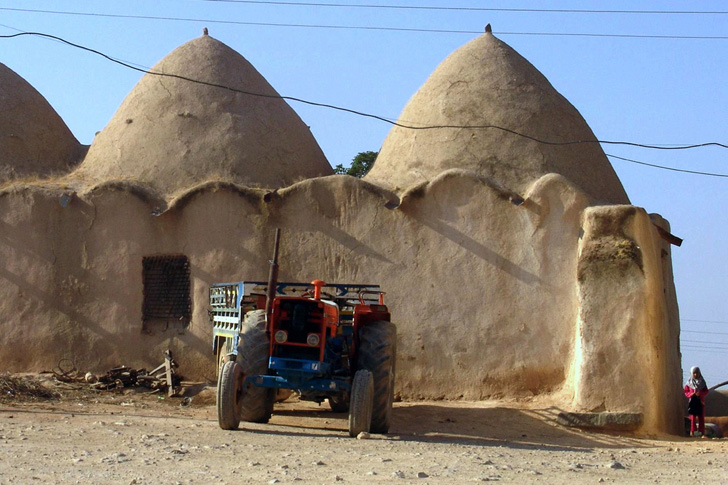
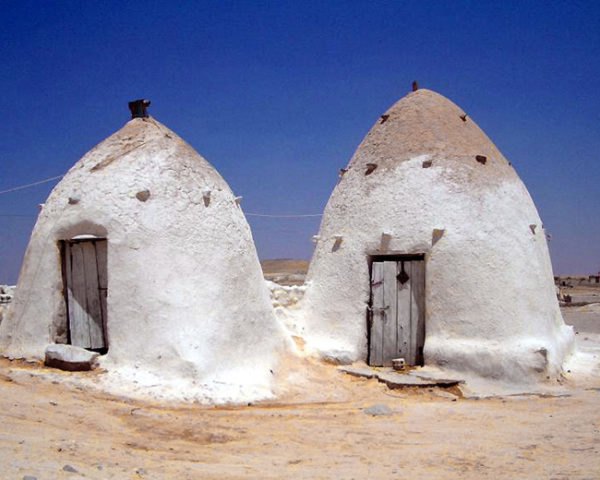
Passive cooling for Syria’s beehive houses

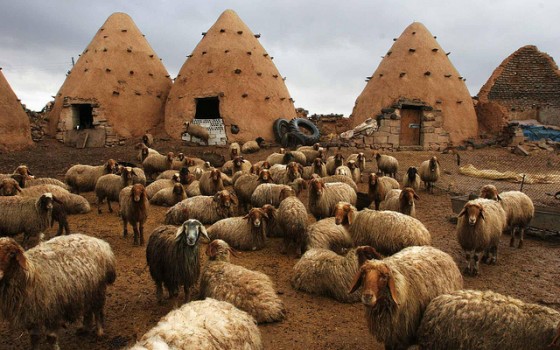
beehive house, syria, made from mud, sheep grazing in foreground

With the unbearable heat of a Middle Eastern July upon us, many of us try to find ways to stay cool.  Though regular energy-guzzling air conditioning is tempting, some of us will try to relieve our consciences with more energy effecient cooling methods, such as using the cross breeze or a solar powered air conditioner.

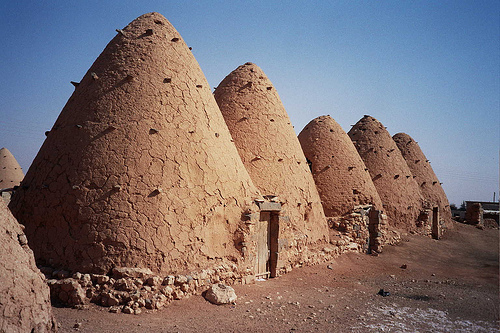
beehive house, syria, made from mud

But way before there were electronic ways to condition our temperatures, cooling methods were built into the architecture of traditional Middle Eastern homes.  Such as the beehive homes found in Syria.

beehive house, syria, made from mud, keep storage cool

Remaining beehive homes (nicknamed “beehive” because of their conical, tapered shapes) are located mainly in northern Syria – west and east of the Aleppo and along the Euphrates River.  Two towns that still have a number of these traditional beehive homes in good shape are Sarouj and Twalid Dabaghein.

beehive homes syria ,roof looking up to sun

The beehive homes keep the heat out in a few ways.  Their thick mud brick walls trap in the cool and keep the sun out as well (beehive homes have very few, if any, windows).  The high domes of the beehive houses also collect the hot air, moving it away from the residents sleeping at the bottom of the house.Combining natural elegance with architectural functionality, the shapes of the beehive homes keep interior temperatures between 75-85 degrees Fahrenheit.

beehive house, syria, made from mud

The beehive homes also protect their residents from cold temperatures, serving as a strong guard against powerful desert winds and maintaining a comfortable temperature.

beehive house, syria, made from mud

Kaiima Doubles Chromosomes To Make More Plant Power

1

kaima-ariel-krolzig-castor-oil-plants

Biofuels are alternative energy fuels produced from living organisms or metabolic byproducts . If we could just find a more efficient way to unlock their energy, and to minimize the amount of land and water resources needed to grow them, they could replace the polluting and limited reserves of fossil fuels currently in use. 

Now Kaiima Bio-Agritech  believes that it has found a way to do just that. 

“The oil is going to end,” Ariel Krolzig, product manager of Kaiima, tells ISRAEL21c. “It’s a question of time. In the last few years no new oil fields have been found. Why are countries like Brazil looking for alternatives?” he asks rhetorically. 

Sporting a sage-like beard, Krolzig is standing beside the star of his likely success story, a castor oil plant. He proceeds to describe the method developed by Kaiima that doubles a plant’s chromosomes from a set of two to a set of four. 

This doubling results in higher cell activity, increased photosynthesis and better adaptation to local conditions in the field. Most importantly, it more than doubles the plant’s biofuel potential.

Are Suburbs Making Israeli Kids Fat?

A study released last week shows that more than one in five Israeli schoolchildren is overweight. According to Haaretz, the towns Nahariya (37%), Bat Yam (34%), Or Yehuda (32.6%), Tira (31.1%) and Kalansawa (31%) lead the list.

In the Hebrew edition of the same article, a health specialist chalks up the trend to the unsurprising factors of children who eat too much bad food, and who don’t move enough.

Shortly after reading this piece, I tuned into the Kunstlercast, a weekly Internet podcast on “the tragic comedy of suburban sprawl. By happy coincidence this week’s topic is obesity and suburbia. James Howard Kunstler cites a study released last month by the American Academy of Pediatrics that lays blame on the built environment for fattening children.