Home Blog Page 692

The Elders and Eco Minded Businessmen to Visit Israel, West Bank, and Gaza

5

the elders middle eastThe Elders, a group of independent and eminent global leaders originally brought together by Nelson Mandela, have announced their plans to visit Israel, the West Bank, and Gaza at the end of August.    The delegation will be led by former Brazilian President Fernando Henrique Cardoso, and will include Ela Bhatt (India), Gro Brundtland (Norway), Jimmy Carter (former US President), Mary Robinson (Ireland), and Desmond Tutu (South Africa).

The delegation will also be joined by two eco minded businessmen who have already been environmentally active – Richard Branson and Jeff Skoll.

Skoll in particular has already been active in promoting a greener Middle East.  This year the Skoll Foundation awarded a $750,000 grant to EcoPeace/Friends of the Earth Middle East (FoEME) in order to expand its cross border community based activities and deepen its organizational capacity to advance water and peace issues in the Middle East.

Israel's Clean Tech Industry: A Broad Brush Overview

15

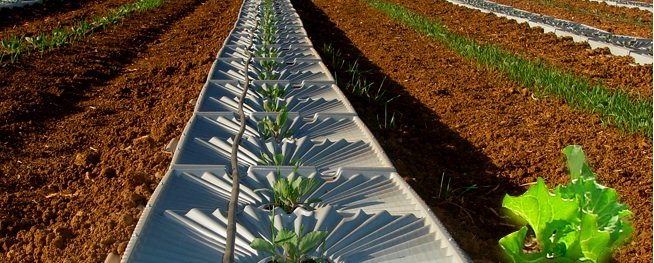
tal-ya-water-israel-dew-collectorsWater technology, solar innovation, Israel’s electric cars: I’d originally written this story for ISRAEL21c a few months ago when we were planning on launching its new Environment channel. The new channel was finally up this week. Consider it a good starting point if you’d like to know more about Israeli technology and investment opportunities and what the future may hold:

When green evangelist Al Gore visited Israel last year (and Green Prophet was there) he gave a clear message. “The people of Israel can lead the way to renewable energy,” he told audiences. With its unique geographical position, and clean tech know how, he announced, Israel is a natural leader in the field.

It’s a view that is echoed by many. Ian Thomson, the Californian co-founder of CleanTechies, a web site launched for clean technology professionals, agrees. “Israel has a natural incentive towards clean tech because of its political and natural geography,” he tells ISRAEL21c. The innovations that “make natural sense in Israel, are often good for the rest of the world.”

“Israeli innovators have proven themselves in high -tech, communications, Internet, biotech, medical devices and more,” says Mike Granoff, a general partner at Israel Cleantech Ventures, and the head of oil independence policies at electric car company Better Place.

“The same drive, talent and creativity will serve them well in the next great business frontier, technologies around sustainability,” he says.

The field of clean technology emerged about 10 years ago. It’s a natural space for Israelis, who for more than 60 years have been looking for ways to grow crops on barren wasteland, to re-use scarce water resources creatively, and to lower their reliance on oil from enemy states.

Gazans Smoke Sewage Peace Pipe With Israel

5

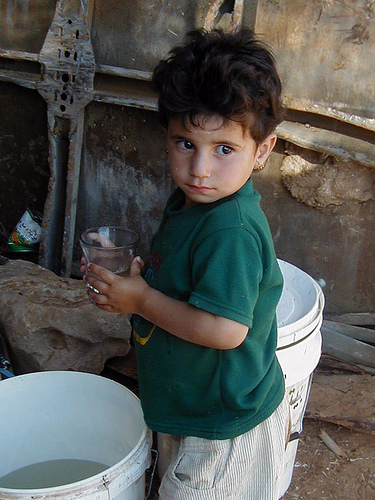
palestinian-child-drinking-water-green-prophetThe concept of achieving peace through pipes may have originated with Native Americans, but today, unbeknownst to most of us, Israelis and Gazans are seeking peace through sewage pipes.

It was a wild idea back in 1997, and perhaps it is even more unrealistic today. However, against the odds – and working around their governments – the mayors of the Israeli city of Ashkelon and the Palestinian Authority’s Gaza City have taken it upon themselves to try to cooperate with each other.

Ten years ago the vehicle was an educational project in high-tech. Today, they’re coming together over waste water, a major problem in Gaza City right now.

By car, the two cities are only about a 20-minute drive away from each other. But in fact, they are worlds apart. Most people in both cities have never met one another.

The only thing they can be sure that they have in common is a beautiful coastline that follows the Mediterranean Sea from Lebanon all the way down to Egypt. But that shining sea is heavily polluted, since Gaza has no water infrastructure and its raw sewage pours directly into the sea, as Green Prophet’s Rami reports here.

Thanks to one man’s vision, the two cities will soon be working together. Ilan Juran, an American-Israeli specialist in urban infrastructure, is seeing to it that the residents of Gaza will be equipped with the same sanitation and sewage systems that are enjoyed by their neighbors in their sister city on the coast.

Jewish National Fund Sponsors North America's Green Israel Program

The Jewish National Fund says it is proud to sponsor the Habonim Dror North America (HDNA) Green Israel Program.

The program brings together the values of Judaism, Zionism and social justice through a Zionist-based, environmentally friendly gardening project at HDNA’s seven summer camps located in California, Maryland, Michigan, New York, Pennsylvania, Toronto, and Vancouver. Its goal is to foster campers’ connections to Judaism and Israel while teaching them to live more environmentally conscious lives.  

Israel Railways Teams Up With Better Place To Refuel Electric Car Commuters

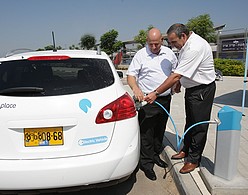
Satellite[5] Refueling newly developed electric cars in Israel may be one step closer to being commonplace with an agreement reached between Israel Railways and the Better Place electric car and energy terminal company.  

Better Place, which we’ve covered in depth currently in the process of developing practical electric powered cars, as well as recharging stations for them, has agreed to install up to 220 charging terminals in railway parking lots in a number of stations. They are Bat Galim, Central Haifa, Acre, Beit Yehoshua, Herzliya, Hod Hasharon, Rosh Ha’ayin, Petah Tikva Segula, Kiryat Arie Petah Tikva, Bnei Brak, and Pe’atei Modi’in.

Get your electric engines roaring? The agreement was reached by Yitzhak Harel, director -general of Israel Railways,  and Moshe Kaplinsky, CEO of Better Place. The terms of the agreement will mean that Better Place will construct the “charging posts” in designated sections of the train station parking areas, so railway commuters can charge up their electric powered vehicles while they are traveling to and from various locations by train.

"Green" Taiwanese Visiting "Green Village" in Israel

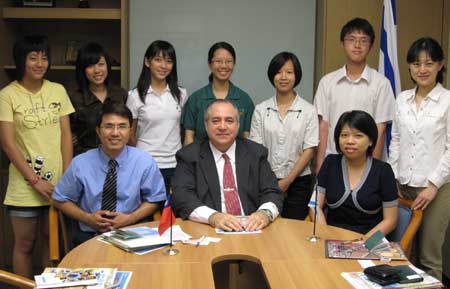
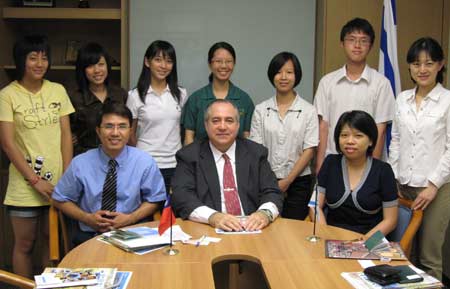
taiwan-israel-green-village-exchange-photoFive young people from Taiwan are visiting Israel this month and will
spend most of their time at Hakefar-Hayarok (Green Village),
according to government officials.

Take Chang Hsin-yu, Cheng Yu-shun, Lin Yun, Chen Wan-shiuan, and Hsieh Feng-ho, and send them off to far away Israel, at the invitation of the Israeli Youth Council, and a good summer adventure is in the works.

It’s a cultural exchange, a youth exchange, and a scientific exchange.

Jordan, Israel and Palestinian Reps Meet to Jumpstart Controversial Red-Dead Canal

2

Dead Sea-dying-israel-jordan-world-bank-photoRepresentatives of Jordan, Israel and the Palestinian Authority met last week to study ways to undertake a project known as the “Red Sea-Dead Sea Water Conveyance Study Program, according to Globes.

The meeting, hosted by Jordan, was headed by representatives of the World Bank, with the purpose of forming a committee to study ways in which the project of constructing a canal from the Red Sea to the Dead Sea in order to supply much needed fresh water from desalination as well as replenish the rapidly diminishing  Dead Sea water levels.

The Technical Steering Committee will study the options for undertaking the construction project, which would be done in stages.

The feasibility of mixing Red Sea and Dead Sea water will also be studied, as this issue has been one of the problems of such a project which some environmentalists fear will damage the sensitive regional environment.

Financing of such a project that would be handled through the World Bank, will depend on the outcome of these studies, and the total commitment that everyone will have to undertake such a project.

But isn’t this the same old song and dance we’ve been hearing about in the last 5 or 6 years? Earlier this year Jordan, we reported earlier, said they’d go it alone; later Israel said the World Bank had given them clearance and didn’t mention the Jordan partner. Isn’t this story becoming a bit like kids in a sandbox?

5 Must-See Green & Tech Travel Stops at Israeli Kibbutzes

12

aora-solar-power-picture

In past Green Prophet articles, we’ve visted Kibbutzes in Israel’s Negev region — ones involved in environmental and renewable energy projects. Negev’s Arava- Arabah in Arabic –  region north of Eilat) we take you on a journey visiting 5 of them.

While some of these are specializing in one type of project, like solar energy, others are involved in several projects, holistic ones including organic gardening and building ecological friendly homes. They are all must sees for the eco curious traveller and clean tech investor or business person.

1. Kibbutz Ketura: Located 50 km north of Eilat, Kibbutz Ketura owns 40% of Arava Power, one of Israel’s most promising solar energy companies.

Ketura, according to Wikipedia, is part of the so-called Green Kibbutz movement. It has pioneered many new ecologically sounder practices, as well as adopting more common environmentally friendly habits.

The Arava Institute for Environmental Studies, is also located here. The institute promotes regional cooperation between Israelis, Palestinians, and residents of other neighboring Arab countries in environmental matters. It also researches and draws attention to some of the ecological problems in the region, as well as researching the desert ecosystem.

The kibbutz owns Algatech, a company which produces algae and passes it through a filtration system to extract natural astaxanthin. The extract is then sold around the world as a natural high-quality ingredient for fish food; as a natural pigment for use in cosmetics, and as a nutraceutical.

2. Kibbutz Lotan: Also located in the Arava, and not far from Ketura, Kibbutz Lotan, which we’ve featured here for its solar powered Passover seder, is as close to a complete ecologically sustained environment as any community can get.

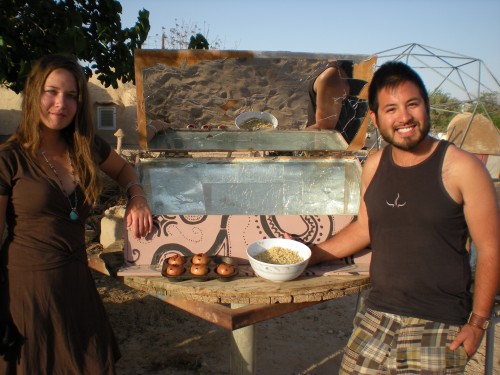
lotan-solar-seder-jews-photo-passover Its Center for Creative Ecology has a number of ongoing projects including a special wetlands area that attracts thousands of migratory birds, and bird watchers, each year; organic gardening and alternative building projects, a Green Apprenticeship Program, and an “eco campus” that offers a special semester live-in Peace, Justice, and Environment program to give students a firsthand experience of working together for the sake of peace and the environment.

Kibbutz Lotan ‘s has become well known for creating a totally sustainable environment in a most environmentally hostile part of  Israel.

The Kibbutz also runs a unique desert vacation resort where guests can avail themselves to special holistic health treatments, special country lodging, outrageous desert tours, and educational eco-workshops.

3. Kibbutz Samar.This kibbutz was founded in 1976 by people from other kibbutzim who wanted to form a different kind of community. The name “Samar” comes from a plant that grows in the Arabah and near the Dead Sea.

It is one of the few kibbutzim that continues to maintain a lifestyle consistent with the original socialist ideals of the kibbutz movement, according to Wikipedia. Today about 50 to 100 families live there as of 2007.

Kibbutz Samar is primarily engaged in growing and exporting organic dates. Dates from Kibbutz Samar and other kibbutzim in the Ardom Co-op can be purchased in the United States at Mrs. Green’s Natural Market.

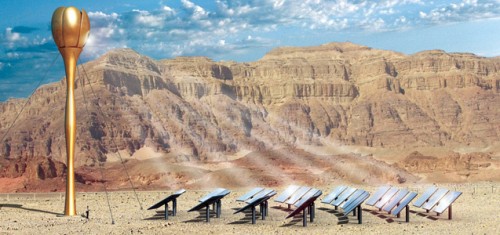
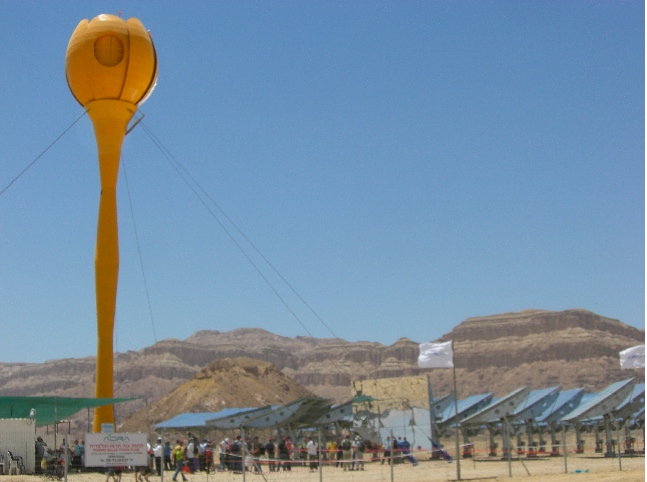
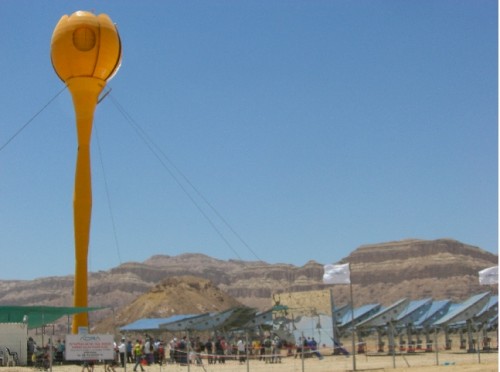
aora-flower-solar-energy-500x372[1]Samar has also become involved in renewable energy projects, and recently, a special solar energy pilot plant became operational by the Aora Solar Energy company  on June 24th.

The solar plant is one of most unusual designed ones to date, and involves a system of highly reflective mirrors called heliostats that move according to the position of the sun, heat is concentrated at 1000 degrees Celsius inside the “flower” part of the structure, elevated 30 meters above the ground. The tulip shaped flower has petals and contains a “solarized” micro gas turbine within; creating about 100 kw of electricity, which is enough for 70 homes.

4. Kibbutz Sde Boker: Situated south of Beer Sheva and on the northern edge of the Arava, Kibbutz Sde Boker (means Cowboy Fields) is the one where Israel’s first prime minister, David Ben Gurion, retired to with a call for young Israelis to “settle the Negev desert region”.

sde-boker

Although his philosophy never quite came to pass, Sde Boker became an open air “laboratory” and research center for a number of special environmental and scientific projects being carried out the his academic  namesake, Ben Gurion University of the Negev (BGU), which operates a branch in Sde Boker.

For years, research has been carried out in Sde Boker dealing with solar energy and with finding ways to cope with the harsh desert environment of the Negev and Arava.

Building specially designed homes to withstand the frigid winter nights (using special insulation and unique designed windows to absorb sunlight during daytime hours) as well as the hot summer temperatures that often rise to more than 40 degrees Celsius (the special windows face away from the sun during the summer months).

Academic degrees dealing with environmental science and alternative and renewable energy technologies, are taught at BGU’s  Sde Boker campus.

5. Kibbutz Yotvata: Like Sde Boker, Kibbutz Yotvata, was founded by young soldiers in the early 1950’s, and today has one of Israel’s must successful dairy farms and products plants, producing more than 63 million liters of milk per year and controlling more than 60% of Israel’s entire dairy products production.

fox-haibar-t[1]

(image via Ferrell’s travel blog)

Located in the southern Arava desert, Yotvata is close to other kibbutzim like Ketura, Lotan and Smadar, and receives milk from dairy herds in those kibbutzim for processing in Yotvata. The Kibbutz is well known for its chain of superb dairy restaurants which feature produce produced in the kibbutz, especially dairy products.

Yotvata’s most well known ecological achievement is its Hai Bar Nature Reserve, which covers 4,000 dunam (1,000 acres) and is home to a number of biblical animal species that have long become extinct in their native desert habitat.

Some of these animals include the onager or Asian brown ass , the  Arabian oryx (a beautiful antelope species with majestically “twilled horns”), the Scimitar Horned Oryx (another large antelope species) and the African wild ass (what most modern Middle Eastern asses or donkeys are descended  from). The African ostrich is being reintroduced, as well as a number of predators, including leopards, caracal wild cats, and desert foxes. Three striped hyenas are also in residence there.

More recently Yotveta also has a 40 kw “roof top” solar energy plant.

While each kibbutz is unique in itself, from an ecological and environmental standpoint, it’s easy to so that their combined efforts make the Arava desert region of Israel a very special place and well visiting and even living in.

Read more on Eco Travel:

  • Eco-Kibbutz Lotan Rolls Out Two Green Programs
  • Siemens On A Solar Streak With Investment News Around Arava Power
  • DYI Home for About a Thousand Bucks
  • Upcoming Event: Fundraiser Party for Biogas Electricity for Bedouin Villages
  • Study Abroad at Kibbutz Lotan, an Israeli Eco Village
  • UPDATE: In the first publication of this article Kibbutz Smadar was confused with Kibbutz Samar. The article has since been updated.

    Paz and 7 Israel-related Cleantech Headlines, Week of July 26, 2009

    paz-gas-logo

    During the week of July 26th, Israeli oil company Paz launched a solar energy venture. The Israeli government launched a program to save an aquifer on the coast and a bird sanctuary vital to half a billion of the world’s birds that’s in danger of closing made headlines.

    For these stories and more, see below for this past week’s headlines.

    Baby Crocodile Boards EgyptAir Flight

    0

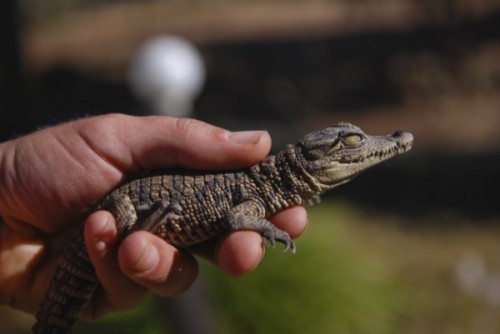
    baby-crocodileIf until now you worried about carbon offsets for your international flights, you may want to add baby crocodiles to the list of concerns.

    On Friday, a foot-long croc was found scurrying down the aisles of an EgyptAir flight from Abu Dhabi to Cairo. The Emirati paper The National reports that EgyptAir has claimed the animal was actually just a lizard.

    However, other passengers have boarded EgyptAir flights with carry-on bags stuffed with 250 baby crocodiles.

    Another passenger made it onto an EgyptAir flight with 700 snakes, and in 2003 a Swedish man prepared for takeoff with live cobras hidden in his pants.

    Airline officials say a passenger must have smuggled the crocodile on board in carry-on luggage; no passengers have admitted anything. The crocodile will be donated to the Giza zoo in Cairo.

    If you want to get close to nature in Cairo without airborne reptiles, check out GreenProphet’s guide to eco-tourism in Egypt.


    NASA Abandons Flying Cars for Greener Flight with a $1.5m Prize for Green Plane Innovation

    3

    Last month, after my search for green innovation in aviation turned up empty, I proposed that the aviation industry needed its own Steve Jobs to shake things up. Now, in a move that can only be interpreted as a direct response to my challenge, NASA has announced a competition for the greenest aircraft designs, with a grand prize of $1.5 million and a $150,000 prize for best bio-fueled aircraft.

    The competition calls for innovators to make room in their garage, and design and build an aircraft capable of  flying a 200-mile flight at an average speed of at least 100 mph while achieving greater than 200 passenger miles-per-gallon (more than 2.5 times better than what Airbus claims their green A380 can achieve at optimum capacity.)

    Until last year, the NASA/CAFE (Comparative Aircraft Efficiency Foundation) competition focused on flying cars Personal Air Vehicles – modified light planes that are cheap, quiet, and have folding wings for road driving.

    NASA even had its own Personal Air Vehicle program until 2005, when funds were cut, and the program shrunk into a CAFE run competition with the modest prize of $250k. Now, as a sign of our green tinted times, the competition reemerges in force with a more respectable $1.5m prize, and a green focus.

    The winners will be decided after a fierce (I hope) competition to be held on July 2011, in Sonoma, California. CAFE are expecting a variety of innovative experimental aircraft that fly with either electricity, solar, bio-fuel or hybrid propulsion. Several major universities and EAA aircraft builders have already expressed their intention to form teams to compete. The competition is now officially accepting entrants at cafefoundation.org.

    Palestinian Farmers Look to Export Fair Trade Grapes

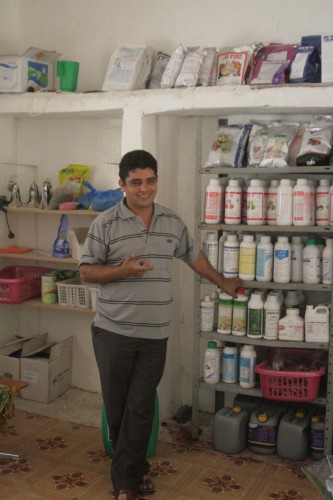
    odeh-sabarna-chemicalsThe southern West Bank is known for its grapes, which Palestinians grow with little to no water on small plots. Often the vineyards are simple grape trees, without wires to support or encourage the plants to spread out.

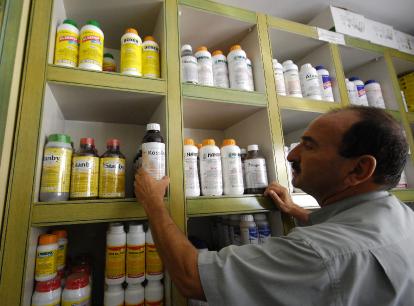
    This month, I wrote a piece for the Jerusalem Report on Odeh Sabarna (left), who runs  the Beit Ommar Cooperative Agricultural Products and Services Society out of the southern West Bank village of 15,000. Sabarna is trying to sell fair trade raisins to Germany. His cooperative also buys chemicals, both conventional and organic, in bulk in order to cut costs for small farmers.

    We’ve written here about the Israeli label SAHA: Fair Trade, which imports Palestinian olive oil, grape honey and za’atar to health food stores, mainly in Tel Aviv. Sabarna’s story is about the Palestinians who make it further away from home by using modern marketing to preserve centuries-old farming practices.

    The Organic Food Debate Rages On

    10

    organic-food-debate-green-prophetOrganic food. It may cost more at the shopping till, but it delivers priceless benefits for biodiversity, animal welfare and rural economies, as well as reducing reliance on fossil fuels. Many people also believe, and there is some evidence to back this up, that food fertilised with compost instead of chemicals will be nutritionally superior.

    It’s a debate that has been raging for decades, but the lack of scientific research has made claims by either side difficult to back up.

    Until now, that is.

    A review of scientific papers published last week by the London School of Hygiene and Tropical Medicine which concluded: “…there are no important differences in the nutrition content, or any additional health benefits, of organic food when compared with conventionally produced food.”

    But that’s not the end of the story.

    Turkey Bans 74 Pesticides for the EU

    2

    turkey-pesticideAs part of its long bid for European Union membership, Turkey has announced that 74 pesticides are off limits because they are poisonous. The Hurriyet Daily News reports that the EU has a list of 135 illegal chemicals, and Turkey is working on the others.

    This is part of several environmental moves afoot in Turkey, from ecological building to a new renewable energy initiative.

    Turkish agricultural officials say that the first 74 chemicals are relatively unimportant, and not often used in Turkish agriculture. Another six will get the axe next year. However, the remaining 55 will be harder to eliminate because they are some of the most crucial pesticides to local farmers. 

    Top 7 Middle Eastern Trips for the Eco-Curious Traveller

    11

    In a previous article dealing with eco tourism, Green Prophet o whet your desire to do some “eco-touring” of the Middle East, where there is a lot to see – both from a positive as well as a negative standpoint.

    Today we  feature 7 ‘must-see’ locations from an eco-tourism point of view. So let’s put on our trekking shoes and begin in a very special place:

    1. First stop: Masdar City in the UAE’s Sheikdom of Dubai, where futuristic cities are rising up out of the desert and self sustained environmental residential and commercial projects like Masdar City are being built.
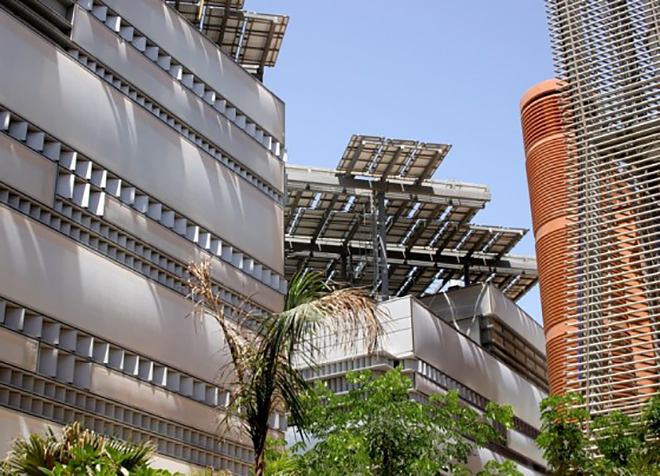
    Masdar City, K.A.CARE, Cooperation Framework, renewable energy, Saudi Arabia, Abu Dhabi, UAE, clean tech, cross border cooperation, green tech

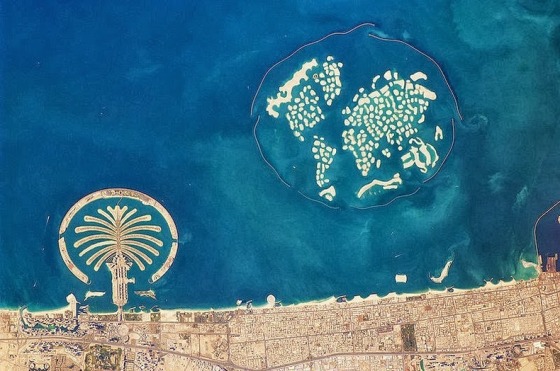
    The world’s tallest building, Burj Dubai, all 818 meters of it, is also being built in Dubai, complete with specially designed  cooling systems to conserve water and special energy conserving lighting. Dubai also has other on-going projects, such as The World, an off-shore artificial island project designed to resemble a map of the world’s major continents when viewed from the air.

    The World, and other artificial island projects, including Palm Island, are feared to be  causing considerable, and perhaps  irreparable  damage to the marine life of sections of the Persian Gulf  when the projects are being built.
    Although Dubai has a number of environmental projects, including those incorporating solar and wind energy, the entire building boom in the UAE’s part of the Gulf is said to be doing more ecological harm than good.

    Water created from desalination is also being wasted in recreational attractions like golf courses (Dubai’s professional course even hosts an annual international golf tourney) and a complete indoor international snow ski center, which we believe wastes not only a considerable amount of water, but energy as well. Better use can be found in using expensively made desalinated water.

    Desalination plant

    2. Desalination in Saudi Arabia. While we are still on the Arabian Peninsula, let’s not forget the Kingdom of Saudi Arabia, in which a number of desalination pants have been built; let’s make stop 2 at the desalination plant in Saudi,  reportedly the largest in the world at Jubail II Industrial City.

    These plants for the most part, however, are still being powered by fossil fuels – a resource that is still plentiful in Saudi Arabia. The Kingdom also has a smaller version of Dubai’s indoor ski slope, which also is wasting water that can be put to better use.

    Related: see the Middle East Travel Planner

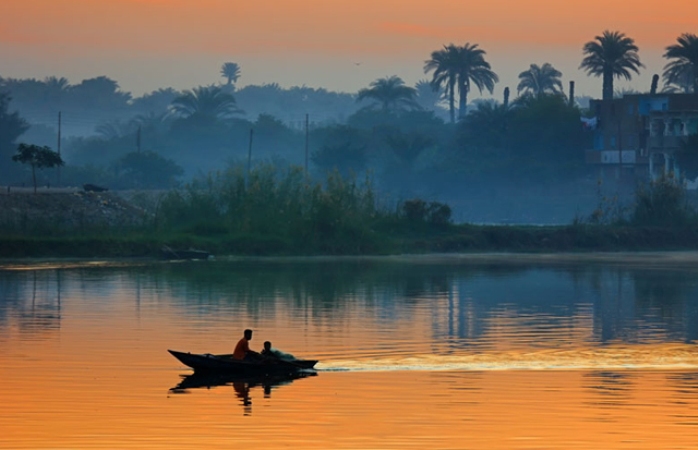
    3. The mighty Nile. Jumping across the Red Sea, west of Saudi Arabia, we reach the three African countries of Egypt, Sudan, and Ethiopia, all three of which have the mighty Nile River flowing through them. All three countries have chronic and even acute water problems, even though they have the Nile as a water resource.
    phosphate dump in Nile River

    These three countries were noted recently by a Green Prophet interview with environmentalist Courtney Nichols , who had  a lot to say about the severe water problems in these countries, especially Ethiopia (which has an ample underground aquifer that has not been tapped due to this country not having enough financial resources to drill deep enough to “tap” it).

    Sudan has more than a million people at risk, especially in the country’s southern and western regions. And, of course, there’s Egypt, with one of the fastest growing populations in the world. All three countries suffer intensely from “desertification” and are vitally dependent on a river that appears to have less water flowing through it each year – most likely the result of increasing drought caused by global warming.
    aora-flower-solar-energy
    (Israel solar company Aora powers up solar flowers in the desert)

    4. Israel’s clean technology companies. After, Egypt, we reach Israel (don’t get your passport stamped if you are planning to return to Arab countries). Israel, despite it’s small size is currently involved in a number of interesting environmental projects including solar energy power plants in the country’s southern Arava region, desalination plants (the one outside Ashkelon is one of the largest in the world); waste water reclamation projects in various parts of the country; and (probably it’s most famous soil and water conservation project to date) it’s country-wide tree planting projects dating back a hundred years, when the entire area was called Palestine and ruled by the Ottoman Empire.

    Tree planting, sponsored largely by the Jewish National Fund, has largely been responsible for the magnificent forests found in many sections of the country today, including the Carmel mountain range, the Galilee area, and the forests located west of Jerusalem.

    On the negative side of  the country’s environment is the Ramat Hovav waste dumping side in the southern Negev region (an ecological “time bomb”);  the “sinking” of the Dead Sea (due to less water reaching it from the Jordan River); the increasing pollution of the country’s cities and streams, including the Jordan; and the problem dealing with the decreasing water levels of the country’s main source of fresh water, the Sea of Galilee (Lake Kinneret). 

    The future of this lake as a major water resource is currently in question due to Syria’s claim on the Golan Heights, a major supplier of fresh water to the Jordan River and the Kinneret, and to part of the water in the Kinneret itself. This issue is far from being settled; with Syria becoming increasing more hostile regarding the future of the Golan Heights, and hence the lake itself.

    lebanon-cedars5. Water, war and the cedars of Lebanon. After Israel, we continue northward to Lebanon, whose environmental problems, due to the 2006 war with Israel, are from being solved.

    There is also the matter of intense pollution of the country’s coastline from sewage and wholesale dumping of garbage; and the future of the country’s stately groves of cedar trees. Lebanon’s cedars have been a historical part of the country’s culture ever since some of them were used by the Israelite King Solomon to construct the Temple in Jerusalem.
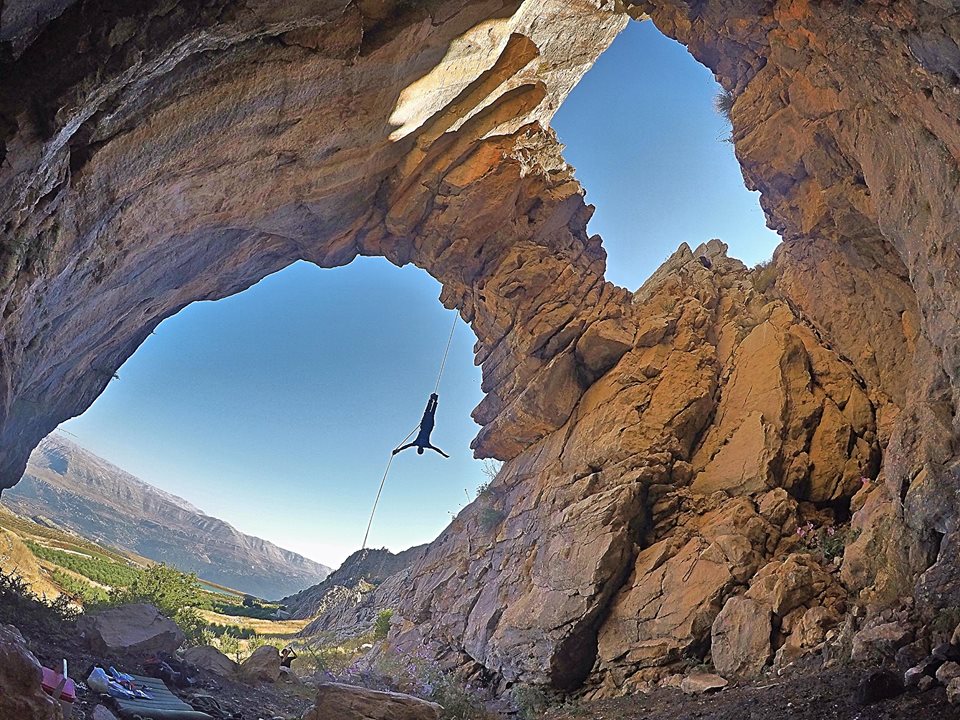
    The cedar is a national symbol and proudly displayed on the country’s national flag. Lebanon also is currently suffering from a chronic water problem, which is partly a result of global warming.

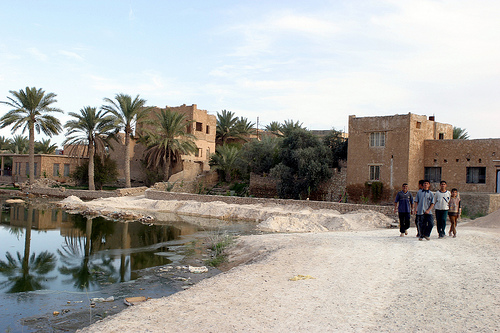
    6. The Euphrates in Turkey. Continuing eastward into Syria, we can visit the Euphrates River which has its sources in Turkey, another country currently experiencing a severe water problem.

    Turkey is also the source of another great river, the Tigris, which together with the Euphrates flow into Iraq and eventually come together at the southern Iraqi city of Basrah, and then flows into the Persian Gulf.
    euphrates-river-iraq-photo
    (The Euphrates in Iraq)

    Iraq is still suffering from a number of environmental problems; many of which have occurred from the aftermath of the 2003 invasion of Iraq, as well as years of neglect under the tyrannical rein of dictator Saddam Hussein.

    There is still much to be done to solve this country’s environmental problems.

    7. Water stops in Jordan. The last stop on our 7 eco-curious sites Middle Eastern tour is the Hashimite Kingdom of Jordan.
    yarmouk-river
    (Yarmouk river)

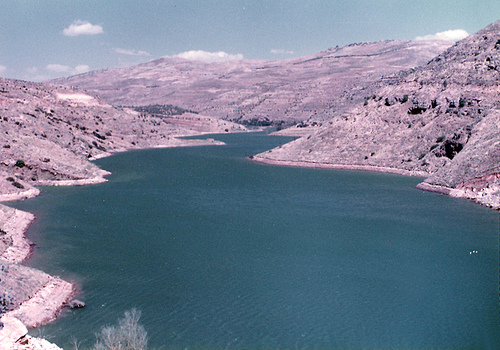
    Jordan has one of worst water shortage problems in the world, despite agreements with neighboring Jordan, requiring Israel to share water from the Jordan River and a further agreement for some water from the Sea of Galilee as well.

    Jordan’s main water sources are currently the Yarmuk and Jordan Rivers, which it shares with both Israel and Syria, as well as some ground water resources. The Kingdom is currently in the midst of constructing desalination plants on the Gulf of Aqaba,; and is also planning to construct a canal to run from Aqaba to the Dead Sea, the Red-Dead Canal, to re-supply it with water as well as create fresh water by desalination. Since Jordan shares the Dead Sea with Israel, the sea’s decreasing water levels are its concern as well as Israel’s.

    As you can see from our seven sites tour, there is much to see and learn, regarding the environmental aspects of this important section of the Middle East. As travellers evolve from eco-tourists to eco-curious travelers, we hope some of these stops will be visited and your thoughts shared here.