Home Blog Page 694

New Israel Vehicle Green Tax Stiffs Hybrids

Elon Musk Tesla - Israel
Hybrid or full electric?

A new Israeli government “green tax”, scheduled to come into effect next month on new imported cars, is being contested by car importers, and is apparently headed to the High Court of Justice, Israel’s Supreme Court.

The new tax ordinance, already signed by Finance Minister Yuval Steinitz, and on the desk of Transport Minister Israel Katz for his approval, is a take off on legislation being proposed by the US Administration, which is also advocating new laws to make non-fuel efficient vehicles more expensive, while giving tax rebates for hybrid models and ones running on alternative energy such as hydrogen and bio-fuels.

For US citizens, you can get a better estimate of green tax breaks by visiting a tax calculations site. You can find many of them online.

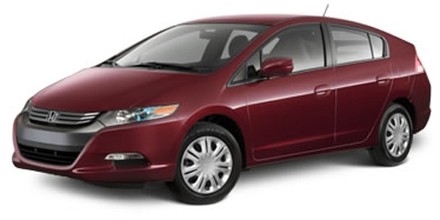
The new Israeli law will  increase the tax on the car’s landed value to 90%, up from the present 75%. A tax rebate of up to NS 15,000 (US$ 3,850) will be allowed, however, on cars that are fuel efficient; which includes the handfull of hybrid models presently sold in Israel (mostly the Toyota Prius and Honda’s Civic Hybrid and new Insight models), and other models that will be designed to require less fuel; as well as run on alternative fuels.

The current situation, as noted in Globes,  is almost contrary to our June 13 article, which noted that cars like hybrids would be “rewarded” by the government tax man; while gas burners, especially ones like 4 by 4s would wind up being penalized.

This is not the first time that the Israel Finance Ministry has looked for new ways to bring in increased revenues from the population’s increasing love for the automobile; which are now clogging Israeli motorways and have resulted in the death of more citizens than all the country’s wars to date.

Three large car importers: Peugeot-Citroen importer David Lubinksi Ltd., Renault and Nissan importer Carasso Motors Ltd., and BMW importer Kamor Motors Ltd. are petitioning the government to cancel the new tax increase, on the grounds that it is nothing less than government intervention in the free market of automobile purchase, and has little to do with preserving the environment; such as the new US auto and European greenhouse gas emissions standards.

Nothing was mentioned in the petition in regards to electric cars and other environmentally friendly modes of auto propulsion; most likely because  these have not yet become commercially feasible, and probably won’t be for several more years.

So according to the car importers, this new tax law is not even offering much benefit to purchasers of hybrid and other fuel efficient models since these cars are at least 20% more expensive than ordinary 100%  gasoline powered ones and even with the  “rebate”, the difference won’t wind up being that much.

David Anthony from 21Ventures on the Future of Israeli Clean Technology

4

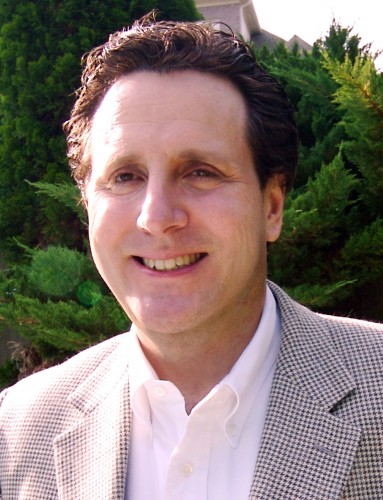
david-anthony-21ventures-photoMany articles have been written claiming that Israel can become a leader in clean technology over the next ten years. Maybe, maybe not.

Defining the terms: In order to make this prediction with any degree of accuracy, we need to define ‘clean’ technology. To date, clean or green technology, often referred to as clean tech is composed of several categories and sub-categories including, although not exclusively:

* Renewable energy (Solar, Wind)
* Energy efficiency
* Storage
* Pollution remediation
* Water purification/desalinization
* Agricultural advancement

Dispersion of clean tech knowledge: Part of the challenge of establishing a center of excellence for clean tech is that, unlike IT, its genesis can take place at any university or laboratory around the world.

The necessity of a Silicon Valley or Route 128 has been lessened by the fact that electrical engineering is no longer the only academic background required to solve environmental and energy challenges. Microbiology and chemistry graduates are more likely candidates to find employment at clean tech startups than their electrical engineering counterparts. The universe of clean tech companies which been created in the Internet age have cropped up all over the globe, seemingly with no bias toward any particular climate or time zone.

Israel as the Future Clean Tech Epicenter – The Pros:

Various places lend themselves to certain clean or green technology sectors; solar technology in the Middle East, for example. Due to the country’s urgent need for reliable solutions to deal with its own environmental challenges (mainly the water crisis) Israel’s clean tech market has become very attractive to foreign investment.

Despite being one of the world’s most arid regions, experiencing ever-growing water consumption and alarmingly low levels of rainfall, Israel has succeeded where others have failed.

Water demands have been answered over the past few decades by effective water management, including rain harvesting, flood reservoirs and the introduction of innovative irrigation methods serving their agricultural demands.

Significant advances in desalination of seawater, recycling and purifying municipal wastewaters, and reclaiming sewage waters have been achieved by Israelis. At least 30 percent of agricultural water is drip-irrigated to orchards and non-food crops. Relatively speaking, Israel has devoted more resources to the development of wastewater treatment and reclamation than any other country in the world.

Israel has a head start in experience with solar thermal as nearly all apartment buildings there have simple solar thermal panels on their roofs. Motivated more out of will to survive than a hunger to solve environmental issues, Israel has more reason than most nations to wean itself off of crude oil.

While every country wants to lessen its dependence on crude oil, for Israel it’s personal. This may prove to be one of the most compelling arguments for why the relatively small nation state may indeed become the next epicenter of clean technology innovation.

Israel is home to Ormat, one of the leading companies in the world for geo-thermal power plants and recovered energy in the world. In agriculture, Israel is the birthplace and world leader in drip irrigation, literally turning a dessert into an agricultural country. Netafim is the world leading company in this field. In the storage arena, Israeli Tadiran has become one of the leaders in long-life industrial strength batteries. The fact that Israel is located centrally, with easy access to Asia and Europe have enabled these companies to realize customers on several continents while operating from Israel.

Israel as the Future Clean Tech Epicenter – The Cons

To date, there are no leading Israeli solar power companies on the market today and Luz 1 was a failure. There is an innate inertia at work in Israel to stick to what it knows best – I.T. and telecom, stifling potential investment and devotion of talent toward clean technology. While there is no shortage of smart scientists and clean tech research, there is a surprising lack of clean tech entrepreneurs.

Historically, Israelis are good at improvisational thinking within an already established category (think ICQ). Clean tech, however is a completely new paradigm that requires category builders more than improvements. One need only look at the mass of ‘technology refugees’ to see that Israeli’s have been slow to adapt to the new opportunities in clean technology.

Conversely, technology entrepreneurs within the US have been migrating over to the clean technology sector in greater numbers. Part of the reason that this migration has been slow is that the Israeli entrepreneurs and scientists are too isolated from one another. Overtures from one side to the other are missing. Furthermore, scientists are slow to leave their tenure posts at universities for business ideas that are admittedly a few years out from proving themselves.

Lastly, Israel is a small country. Currently, there just aren’t enough demonstration projects to show to the rest of the world. Without the significant helping hand of a large government endowment, Israel’s chances of competing with the likes of the US, China and India seem unlikely. The same location that provides regular and dependable exposure to the sun leaves Israel in a region of the world almost bereft of wind when compared to Europe and the Americas. Not surprisingly, there isn’t much wind energy in use, nor are there many wind experts.

What must be done?

More dating between university research and entrepreneurs is the only way to create a marriage of industry and science. This effort, coupled with a shift in focus from the Office of the Chief Scientist, placing more grant money in the hands of clean tech companies (currently it represents less than 15 percent) needs to occur for Israel to distinguish itself from its alternatives.

In summary, Israel must realize that clean tech is certain to be one the growth industries of the next ten years. To truly lead the world in clean tech investment and innovation, Israel must have greater support from the state.

David Anthony is the founder and manager of 21Ventures, virtual technology incubator focusing on the ideas and innovations that will dominate the 21st century. He took his own life in 2012, around the same time when renewable investments tanked. 

Green Building Takes Off in Turkey

2

turkey-eco-home leed houses istanbul photoThe global ecologically friendly building trend is taking hold in Turkey as well, according to the English-language daily Hurriyet News and Economic Review.

We’ve covered Turkey’s water agreements with Iraq, along with the country’s hard line against coastline development.

Green construction in Turkey includes waste disposal systems, solar energy, and rainwater collection, Hurriyet reports:

Reghnumj’s Astrum Towers in Haramidere will also collect rainwater. A-Z Yapı’s Meritlife Kent will utilize a system where all domestic waste will be recycled. Soyak’s Mavişehir will consist of houses that reduce heat dissipation, while Milpa’s Milpa Konutları in Esenyurt will help reduce water waste by 50 percent.

Doğa Gayrımenkul will use only wood in the construction of Doğa Meşepark, while Hektaş İnşaat’s İdealist Kent project will include a system to collect rainwater.

Hurriyet adds that in financially bad times, the energy, water and other savings from eco-homes can be up to 50 percent.

I find it heartening to read about eco-friendly towers and not just homes; this leaves hope for creating truly green walkable communities that don’t depend on cars.

Trekker's Electric Scooters Fly Around the Streets of Tel Aviv

trekker-israel-electric-scooter

Bicycles (as we learned when Tel Avivians got naked last month to protest local laws) are great for the environment, but you can’t arrive at work or school dripping with sweat. A new earth-friendly solution hitting the streets in New York and Tel Aviv this summer comes in the form of electric powered scooters. 

With little noise, no fumes and low power needs, green hipsters everywhere are looking for Trekker, an Israeli-made and relatively inexpensive solution to get around town. 

You can’t yet buy a Trekker in New York – the ones on the streets were bought in Israel and taken back by plane or shipped over – but Trekker factories are about to open in pilot sites in Europe, as a step to bringing its production one “putt” closer to the United States market.

How Lack of Water Drives Piracy Into the Gulf of Aden

somali-pirates-water Piracy in the Gulf of Aden continues to thrive despite international efforts at joint maritime patrols along the Somali coastline.

Combating the menace has proven futile, with international laws ill equipped to address what is fast becoming a threat to the lives of crewmen and global trade.

Barring a few incidents, the pirates have, and will continue to indiscriminately attack merchant vessels with the knowledge that their actions are irreprehensible for lack of a recognised mandate which allows the world’s navies to engage and prosecute the 21st Century buccaneers.

As the stakeholders debate over a solution, there has been little to suggest that they are learning from the current crisis; after all, piracy has not been synonymous with Somalia since time immemorial, it has grown out of necessity and dire circumstances, admittedly to represent a thriving business for people in the East African nation.

Yet if one was to study the cause of Somali piracy from its inception, it could be applicable to any corner of the world – one in which people are pushed to the brink of existence and forced to embrace violence and informal work for lack of basic necessities, in this case water.

Israeli Land Reform Takes a Beating, But Not Dead

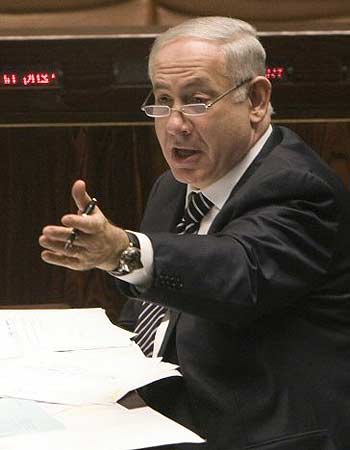
netanyahuLast week, a scowling Israeli Prime Minister Binyamin Netanyahu (left, photo from Ynet) sat in parliament while his land reform took a beating. Key members of his coalition did not show up to vote (they hid in the cafeteria and offices), and so Netanyahu delayed the vote for fear it wouldn’t pass without his supporters. Read more at the Jerusalem Post.

To see some strong reactions to the reform, check out privategrounds.co.il, an Israeli site collecting semi-nude photos of “private people against privatization.”

In May, Green Prophet reported on a pending land reform that would dismantle the Israel Land Administration, a government body that controls 93% of the country’s lands. Today, most land “owners” in Israel actually lease their grounds from the government, which gives the ILA some say in directing development.Two months ago, the reform would have put an unlimited amount of land for sale to the highest bidder. The ILA reform was also packaged with the general budget bill, making it very difficult to reject it.
WWOOF Your Way to Organic Food in the Middle East

9

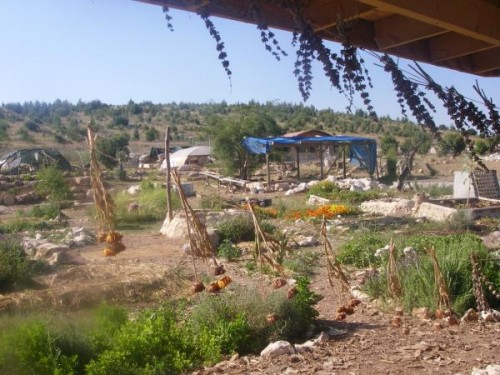
organic farm middle eastIf you think that WWOOF is the sound that a dog makes… well, you’re right.  But it also stands for “Willing Workers On Organic Farms,” or “World-Wide Opportunities on Organic Farms.”  So keep your ears tuned in for that term, because the WWOOF movement is spreading globally – including right here in the Middle East.

Established in the UK in 1971 as a way to facilitate the interaction between organic farmers and willing volunteers, the international WWOOF network has now spread to over 35 countries, including Turkey and Israel.

The WWOOF experience is a good option for local residents interested in getting their hands dirty, learning about organic farming, and eating some fresh (and free) organic produce.  And it’s also a good option for travelers looking to experience eco-tourism in a unique way.

So if you’re interested in WWOOFing Turkey, check out the following farms:

Dive Into WATEC – A Not To Miss Water Clean Tech Conference in Tel Aviv This November

0

water-pump-afghanastan

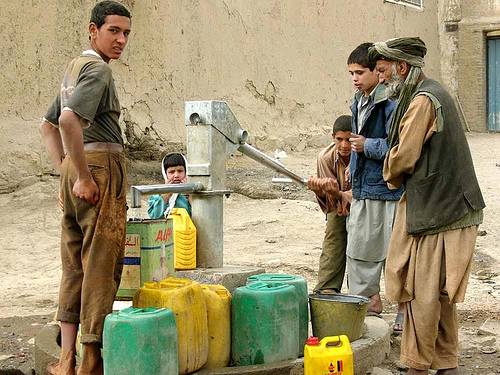
The world economic chill is not cooling global warming, says organizers from the international water tech symposium and conference WATEC. This is part of their announcement for the 2009 conference happening this November in Tel Aviv.

I’ve been to a couple WATEC conferences in the past — they happen once every 2 years — and if you are looking for innovation and water solutions for your company, community or state, this is the place to be.

Some 150 ministerial delegations, company directors and business people are expected to visit the 5th International Water Technologies and Environmental Control Exhibition – WATEC Israel 2009 – on November 17-19 at the Trade Fairs and Conventions Center in Tel Aviv.

At the same time, an international conference will examine the need for a sustainable economy to reduce environmental damage, for the benefit of future generations. The conference will address the problems and challenges facing different countries – more efficient water consumption, limiting environmental pollution and the increasing use of alternative energy sources.

Will Radiation Sickness Vaccine Transform Hazards of Nuclear Into Energy Innovation?

5

American nuclear reactor
One of the dangers of exploring the nuclear energy option in the Middle East is radiation sickness and the risks it poses to power plant workers.

Of course we are all too aware of the risks of explosions like in Chernobyl too.

Radiation sickness, which by many is considered to be even more devastating than a possible nuclear bomb explosion itself, may be on the way to being greatly alleviated by the efforts of researchers such as Professor Andrei Gudkov, a chief staff member at the Roswell Park Cancer Institute in New York  as well as being a researcher at Cleveland Bio-Labs; a branch of the Cleveland Medical Institute, in the USA.

In a special, exclusive article in the July 17 weekend edition of the Yediot Ahronot newspaper, and available on-line in English on Ynetnews.com, Prof. Gudkov, who received a PHD in molecular biology from Moscow University, came up with the idea of developing a protein based “vaccine” against the effects of radiation against radiation. It came to him while working on a medication that would enable cancer patients who undergo radiation therapy to withstand being exposed to radiation without suffering the usual harsh side affects – and with less damage to healthy, non-cancerous tissue.

SeaGen Develops Underwater Storage Sytem for Gas

0

gas tank environmentalThe use of gas as an energy source is expected to increase globally, which also increases the need to find safe and economic solutions for storing large quantities of gas.  The current solution is to store large gas tanks near populated areas, occupying expensive and valuable areas of land.

In the upcoming WATEC Conference (the 5th International Water Technologies & Environmental Control Exhibition & the 2nd International Conference) being held in Tel Aviv in November 2009, an innovative Israeli solution to the problem will be presented.

SeaGen Systems Ltd. – a company under the umbrella of Yozmot HaEmek Ltd. – has developed an underwater Liquefied Petroleum Gas (LPG) storage terminal that would enable the storage of gas out at sea.  (Liquefied petroleum gas has many uses, such as cooking gas, car fuel, and industrial fuel.)

These terminals are based on a clean technology that eliminates the risks involved in current gas storage and, at the same time, is economically beneficial.  Within the maritime terminals, gas would be stored in “smart tanks” that are unique in being able to withstand high levels of underwater pressure.  The tanks enable the LPG to be stored as a liquid (not a gas) and therefore enable more efficient, cheaper storage.

Lots of Sunshine Power in the Holy Land as China and Israel Complete Solar Plant

1

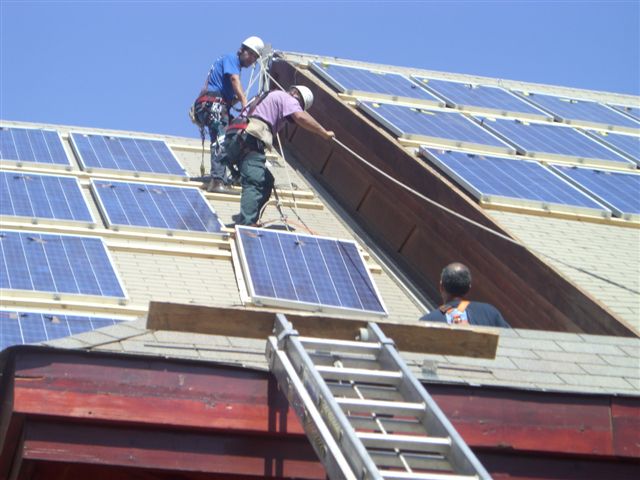
Laying Solar Panels Israel’s northern town of  Katzrin is the first town in Israel to receive its electricity from solar energy with the installation of a 50 KW “rooftop” solar power plant.

The solar installation was installed by a cooperative agreement between the Chinese Sun Tech Power Holdings, based in Wuxi China, and Ramat Gan based Solarit Doral, which develops commercial and private solar energy projects.

When in full operation, the plant is expected to generate around 85,000 kilowatt hours of electricity, and surplus electricity will be sold back to the national electricity grid for NS 2.01 per KWH, which amounts to about $0.55 US. Cleantech reported on the start of the project last year.

The joint agreement is an example of joint economic projects now going on between both Israel and China. Sun Tech Power Holdings, which specializes in the manufacture of solar energy roof tiles for private homes and commercial enterprises, is also involved in projects with American companies, including the California based Open Energy company, which will manufacture under license the SolarSave line of 50-watt, 4-foot solar roof tiles.

Brown Seaweed Liquid Morphs to Heart-Healing Gel

9

biolinerx-seaweed-gel-photo

Come on guys: this is just another umpteenth reason why people need preserve nature and our seas and respect them — BioLineRx just got a $282 million deal to license its heart healing medicine based on the common brown seaweed.

No doubt it is the most expensive seaweed known to medical history – the Israeli company BioLineRx, founded in 2003, just released the news that one if its two compounds – the BL-1040 – to repair damaged heart muscles after cardiac arrest, has been licensed by the New Jersey-based company Ikaria Holdings in a $282.5 million deal, confirms a BioLineRx representative, Dganit Bar.

Ikaria now owns the worldwide exclusive license to BL-1040, and what could be a potential breakthrough treatment for preventing repeat heart attacks after an initial event.

City Waste Dubai Event Sets To Manage Middle East Garbage

0

pile-of-trash-shook photo

City Waste is an inaugural four-day event that will take place from 11-14 October 2009. The Middle East’s rapid growth over the past years has brought about significant waste management challenges to the region.

In response to these challenges, the City Waste 2009 will be a platform to discuss and share strategies on the increasing quantities of generated waste as well as the need for innovative waste management solutions.

The event will be officially inaugurated by the UAE Minister for Environment & Water, H.E. Dr. Rashid Ahmad Bin Fahad, on the first day of the main conference, Monday 12 October 2009.

Eng. Hassan Mohammed Makki, Director of Waste Management Department, Dubai Municipality, will provide a keynote presentation on strategic insights into the Clean Up the World Campaign. He will reveal new waste systems and upcoming green technologies that are being utilised by the municipality, such as vacuum waste collection systems, underground storage facilities, and underground compactors for commercial districts.

Will You Be A Middle East Climate Refugee? Escape To An Underground Desert Living Unit

8

loki-underground-desert-unitCan’t stand the climate change heat? Why not move underground?

For Reynard Loki and Jennifer Daniels, the future might lie, for some people in places such as Israel or Australia, in what they are calling Underground Desert Living Units, UDLU for short.

Loki began working on the idea in March 2008, and he later found Daniels to do the illustrations.

When asked how he was inspired to create UDLU, Loki said a news article titled “Exotic climate study sees refugees in Antarctica” got him thinking about where such refugees might live. Another news article titled “Global Warming Threatens Australia’s Iconic Kangaroos” spoke of climate models showing up to a six-degree rise in Australia’s temperature by the year 2070.

The article predicted that large swaths of Australia will become dry and parched.

And then a radio interview with British scientist James Lovelock about New Zealand serving in the future as a “lifeboat” for climate refugees in the southern hemisphere convinced Loki that the idea of UDLU might be useful to think about and envision.

“You’ve seen it happening in Australia already: Desert is spreading and things just won’t grow,” Lovelock told a New Zealand radio station reporter last year. “The island nations like New Zealand will be spared that kind of damage.”

IQWind and 7 Israel-related Cleantech Headlines, Week of July 12, 2009

shari-arison-miya-waterDuring the past week, IQWind raised $500k from U.S. investors and N-Viro launched a clean soil facility in Israel.

Israel’s water situation was compared to Tanzania’s and Shari Arison (pictured left) made the news about looking to increase her solar-energy holdings.

For these stories and the rest of this week’s 7 headlines, check below.